

A 10-inch rack suits small gear on a desk: single-board computers, mini PCs, small switches and a compact gateway. A 19-inch rack suits full-size rack servers, rack-mount UPS units and 24 or 48-port switches. Both use the same 1U height of 1.75 inches, so what differs is width, depth and what you plan to put in it. Mine is a 10-inch DeskPi RackMate T2, and the parts that do not fit in it sit beside it.
The short version
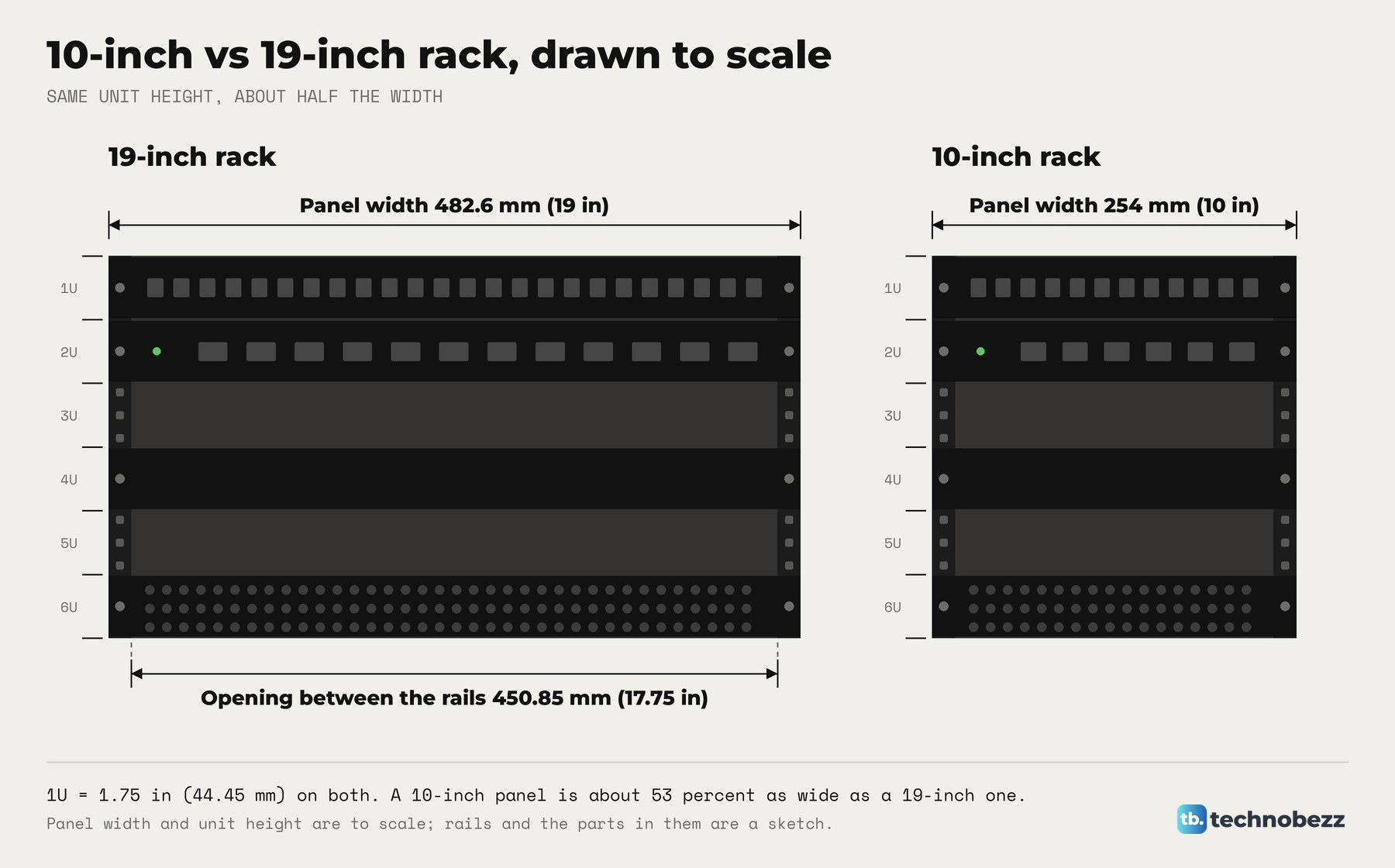
- A 19-inch rack takes equipment with a 19-inch (482.6 mm) front panel and has a 17.75-inch (450.85 mm) opening between the rails.
- A 10-inch rack takes 10-inch (254 mm) panels and leaves about 8.75 inches (222.25 mm) between the rails.
- 1U is 1.75 inches (44.45 mm) in both, so a 12U rack has the same usable height either way.
- Go 10-inch for small boards, mini PCs and a desk. Go 19-inch for rack servers, rack UPS units and big switches.
How wide is a 19-inch rack?
The 19 inches is the width of the equipment's front panel, ears included, not the width of the cabinet. Each front panel is 19 inches (482.6 mm) wide, and the two mounting posts are 0.625 inches wide and 17.75 inches (450.85 mm) apart. The formal standard is EIA-310, and its current version, EIA-310-E, is essentially equivalent to IEC 60297-3-100. A cabinet built around those rails is wider again, usually 24 inches (600 mm) for a standard enclosure.
Height is counted in rack units. One rack unit, or 1U, is 1.75 inches (44.45 mm). A 42U rack provides 42 rack units of mounting height, and the rack also has to be deep enough for the equipment and rated for its combined weight. The 1U spacing is the part 10-inch racks share with 19-inch ones.
What is a 10-inch rack?
A 10-inch rack is the narrow version, often called a mini rack or half-width rack. It keeps the unit height of a standard 19-inch rack in a narrower format, and it is popular with hobbyists who are short on space. It is not an exact half of a 19-inch rack, though. Its opening between the rails, about 8.75 inches, is a little narrower than half of a 19-inch rack's 17.75 inches.
There is also no single published standard for 10-inch racks. Most makers have settled on the 19-inch 1U height with 236.525 mm (9.312 inches) between the screw holes. That leaves around 220 mm of clearance, so plan for gear that fits within about 210 mm to allow for tolerance.
10-inch rack dimensions
A 10-inch rack is exactly 10 inches (254 mm) across the front plate, screw area included, with 8.75 inches (222.25 mm) of clear space between the rails. Depth is not standardized for either size, but 10-inch racks are usually shallow, and few are deeper than 30 cm.
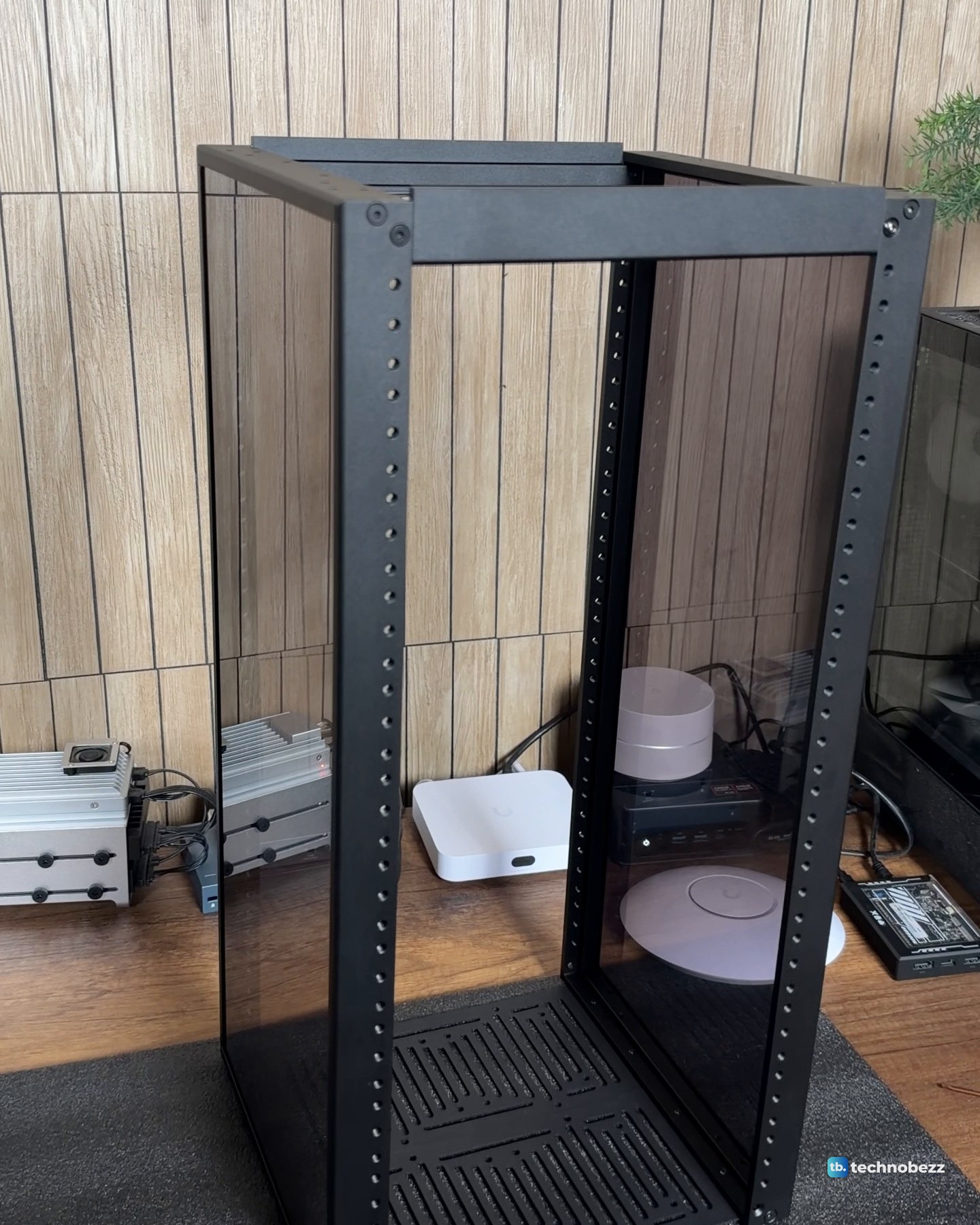
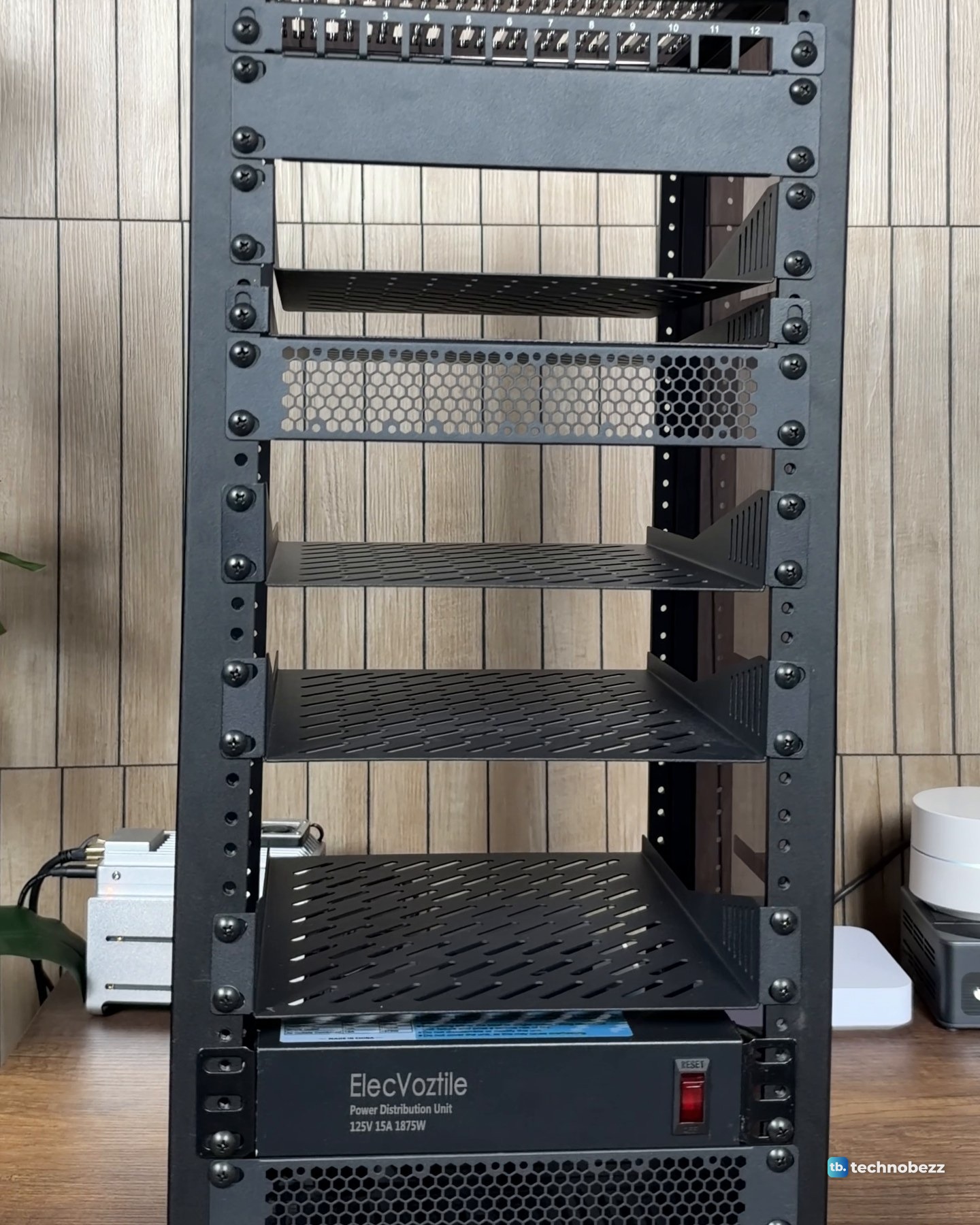
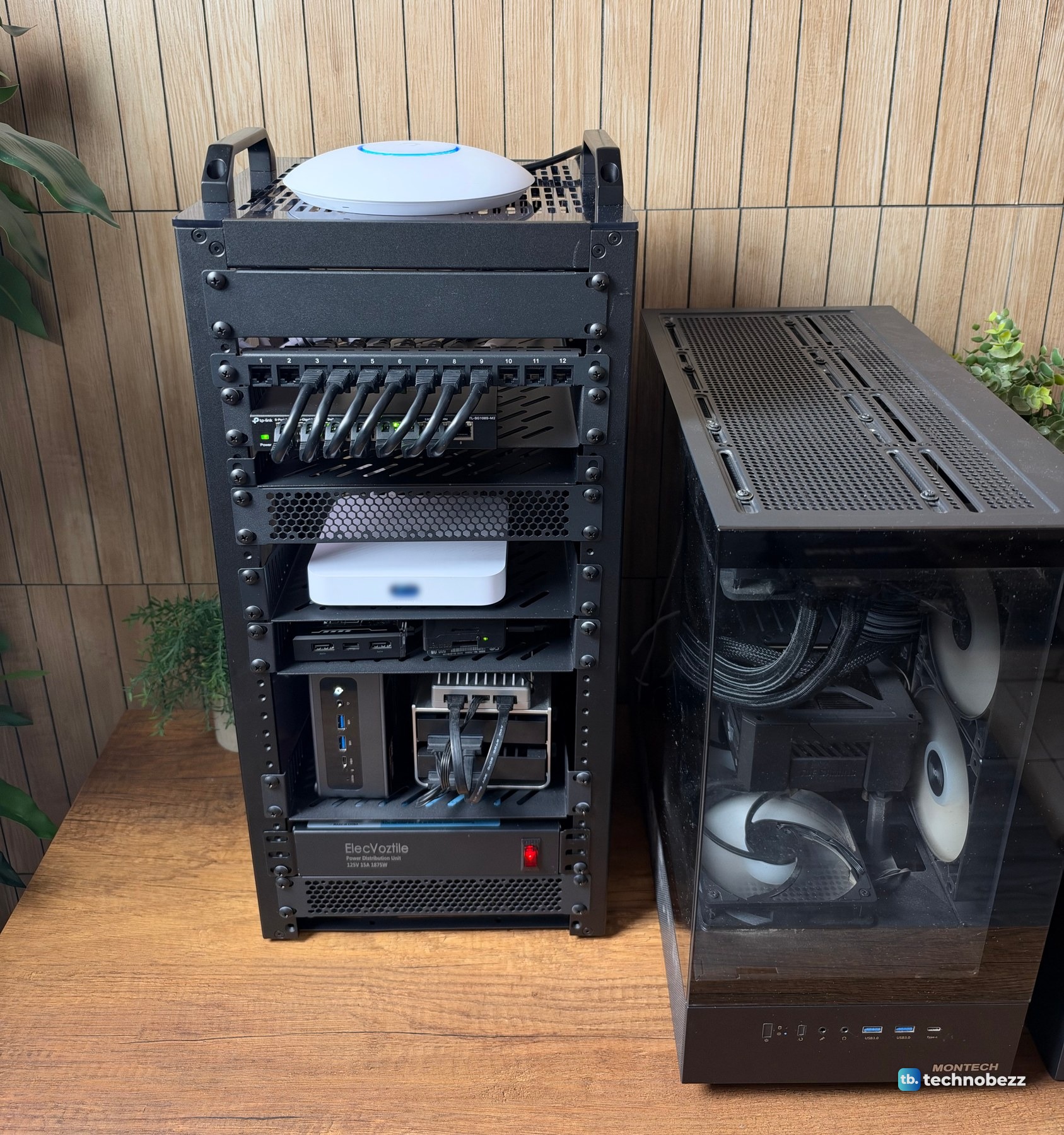
My rack, the DeskPi RackMate T2, is a 12U rack in the 10-inch mounting format. It measures 281 mm (11.06 inches) wide and 260 mm (10.23 inches) deep outside, with a 596 mm chassis height and a 629 mm overall height including the handle. Its internal width is 212 mm (8.34 inches), and its nominal mounting height is 21 inches (12 x 1.75). It is an aluminum alloy frame with acrylic side panels. The vented 1U shelves that fit it are 10.23 inches (260 mm) deep.
10-inch vs 19-inch rack compared
| Spec | 10-inch rack | 19-inch rack |
|---|---|---|
| Front panel width | 10 in (254 mm) | 19 in (482.6 mm) |
| Opening between rails | About 8.75 in (222.25 mm) | 17.75 in (450.85 mm) |
| Rack unit (1U) | 1.75 in (44.45 mm) | 1.75 in (44.45 mm) |
| Typical depth | Usually shallow (my T2 shelves are 10.23 in deep) | Enclosures around 42 in standard, 36 in mid-depth, 32 in shallow |
| What fits | Single-board computers, mini PCs, small switches, compact gateways, 10-inch PDUs | Rack servers, rack UPS units, 24 and 48-port switches |
| Where it goes | A desk or shelf | A closet, server room or floor |
Wall-mount 19-inch cabinets are shallower, with usable depths of around 12, 16, 20 or 32 inches.
What fits in a 10-inch rack
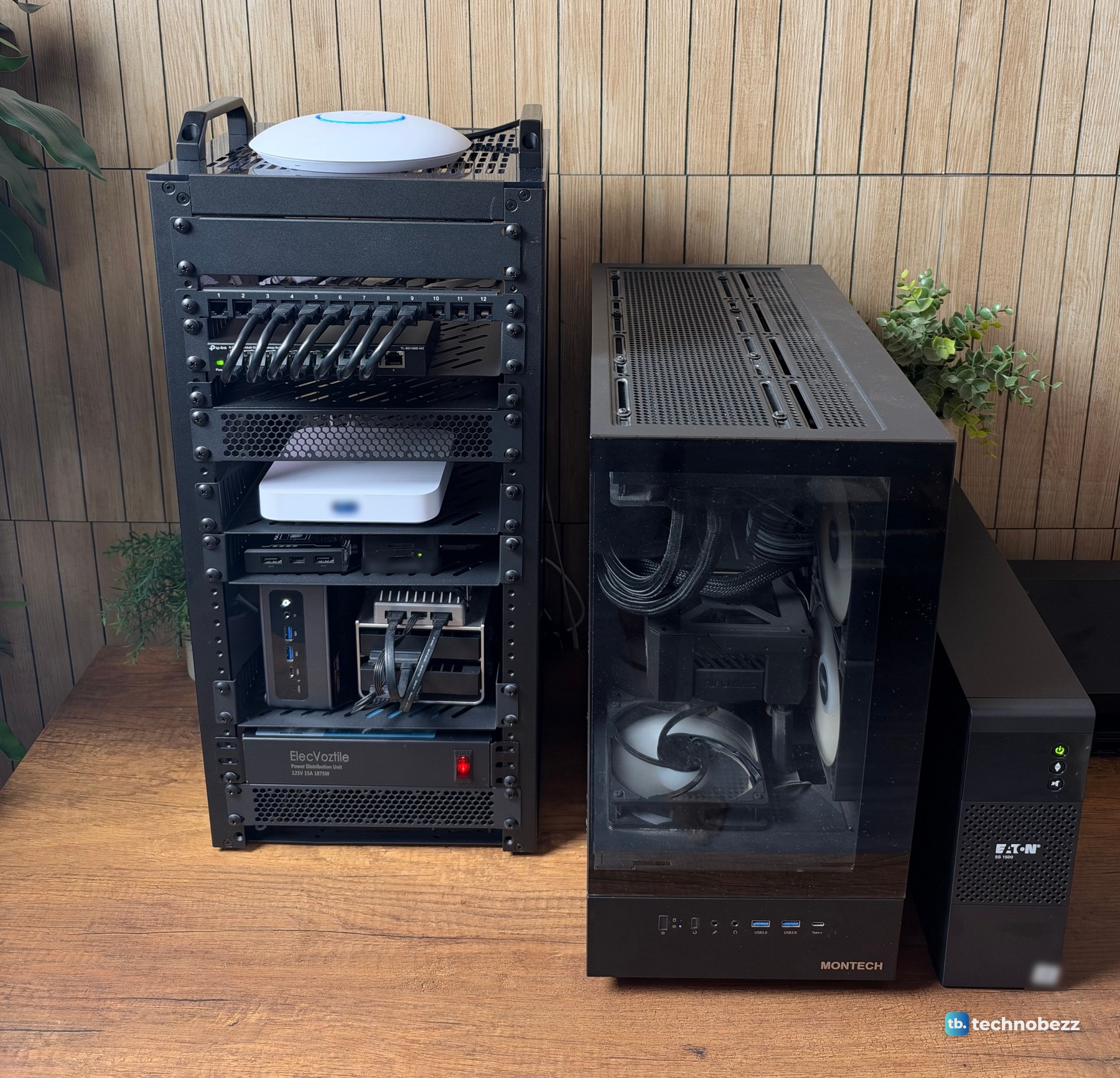
My gateway and small computers sit on 1U shelves, but the devices need room above the shelf too, so a shelf with a tall box on it takes more than 1U of height. The UniFi Cloud Gateway Ultra, for example, is 141.8 mm wide, well inside the T2's 212 mm internal width. The ACEMAGIC F5A mini PC stands on its side beside the ZimaBoard 2 on one shelf, and the Raspberry Pi 5 and the ZimaBlade share another. The steps are in our guide to rack mounting a Raspberry Pi and a mini PC.
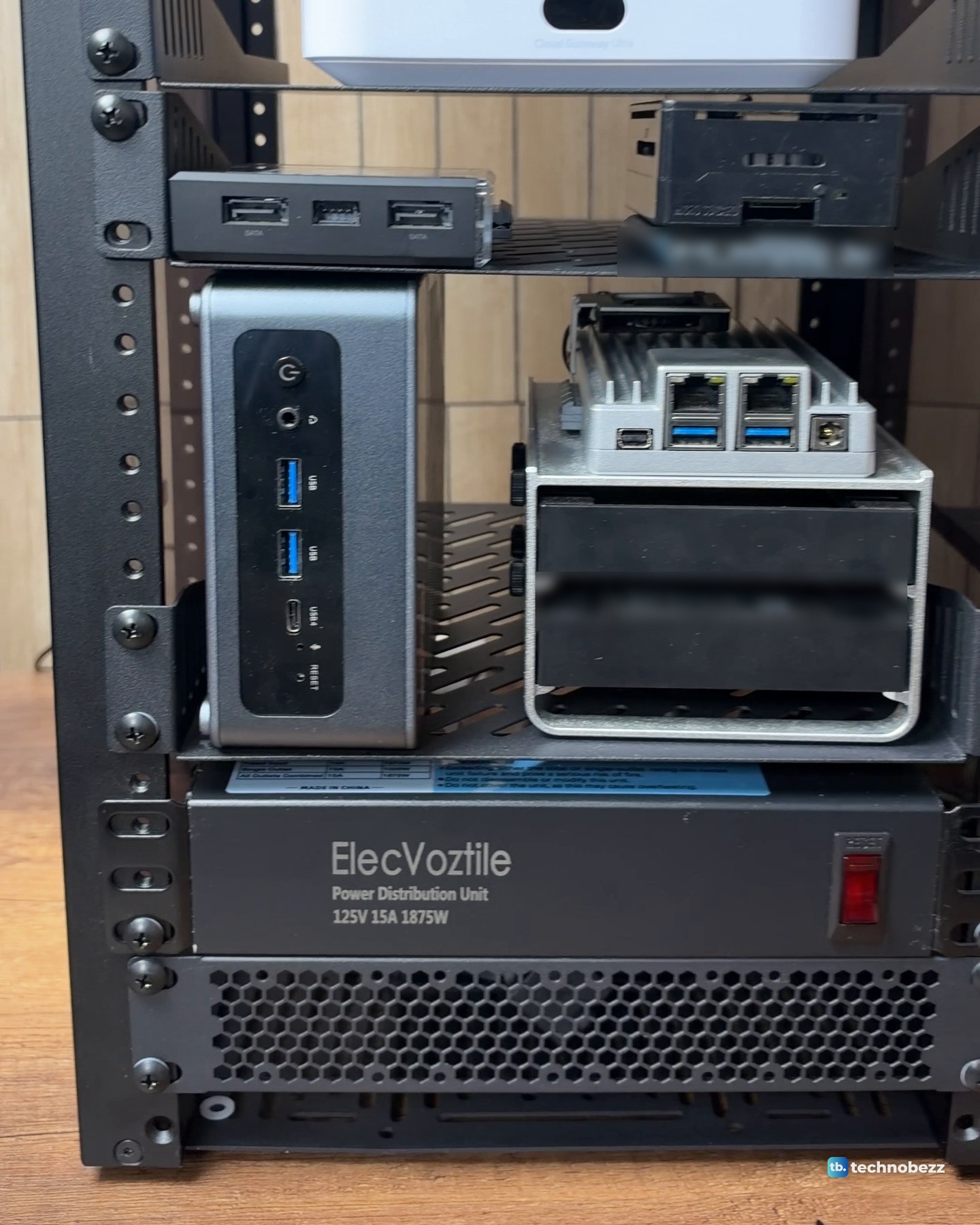
The ACEMAGIC F5A, ZimaBoard 2 and ZimaBlade were sent to us for review. You can read the full ACEMAGIC F5A review and ZimaBoard 2 review. The network side fits too: a 12-port patch panel that takes half a rack unit, and a TP-Link TL-SG108S-M2 8-port 2.5 Gigabit switch on a shelf right under it. Our guide to using a patch panel in a home lab covers the wiring.
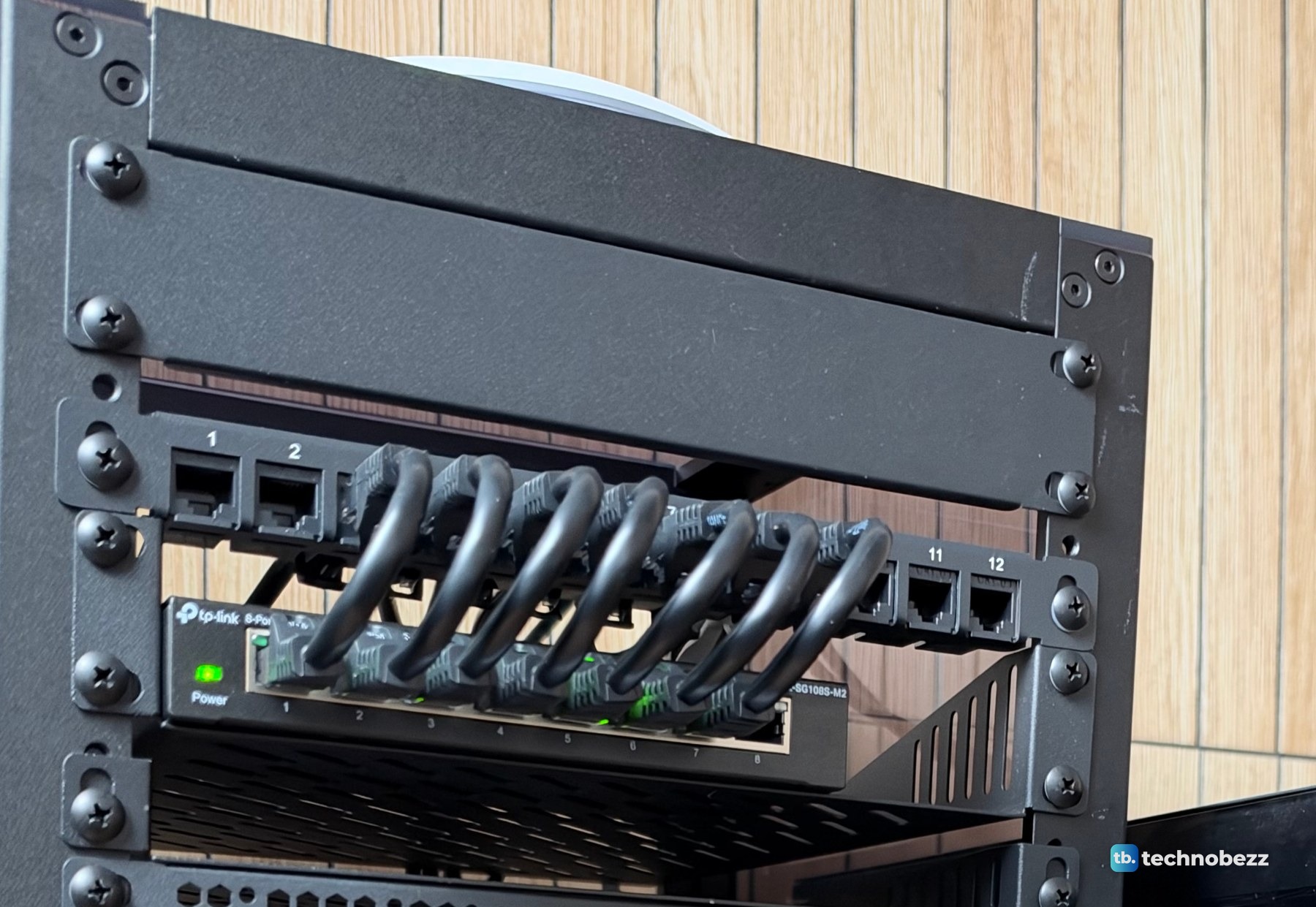
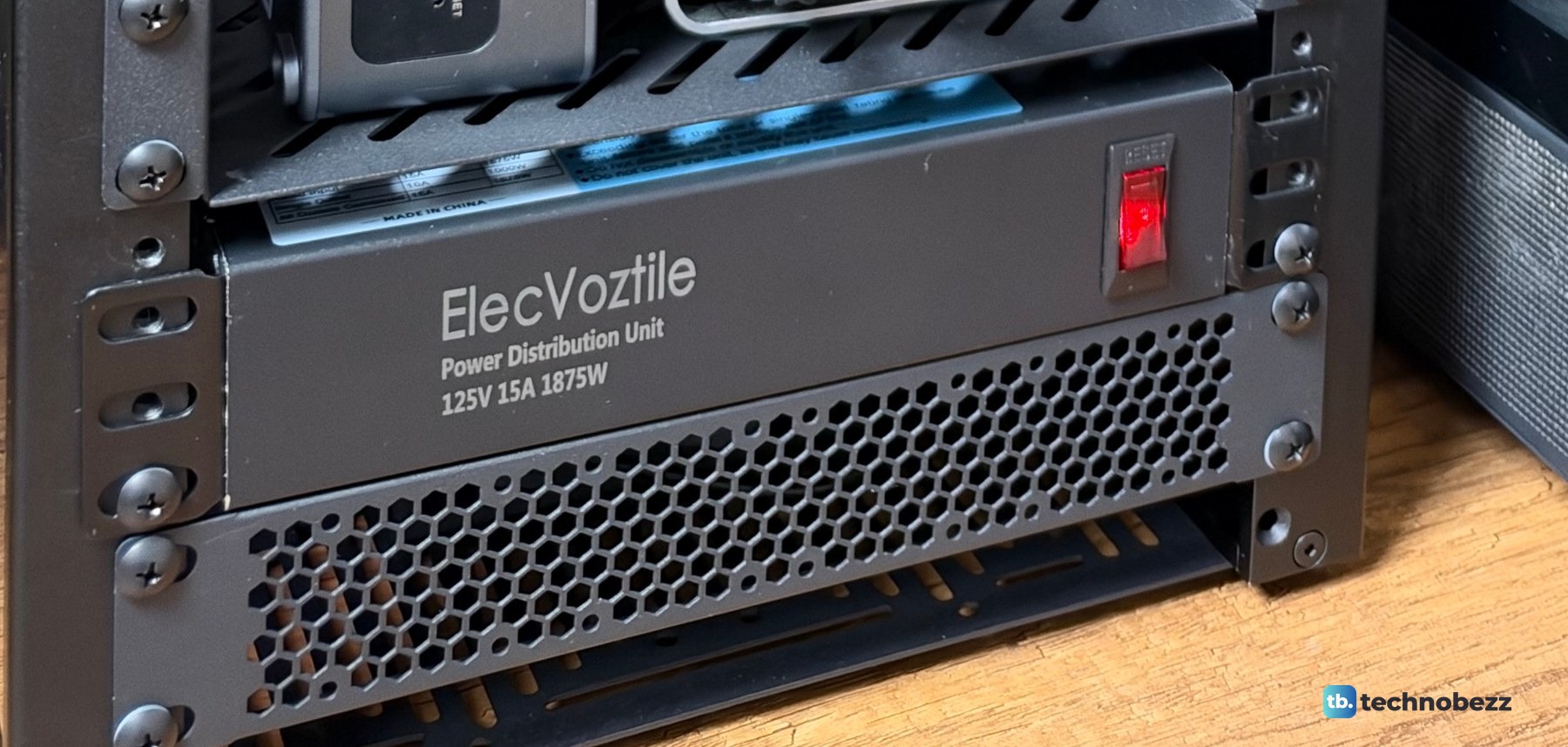
Power has a 10-inch version as well. Mine is an ElecVoztile 1U PDU with eight outlets at the back and a switch on the front. It is meant for mini racks of 6U and up, because the eight extension cords take extra room.
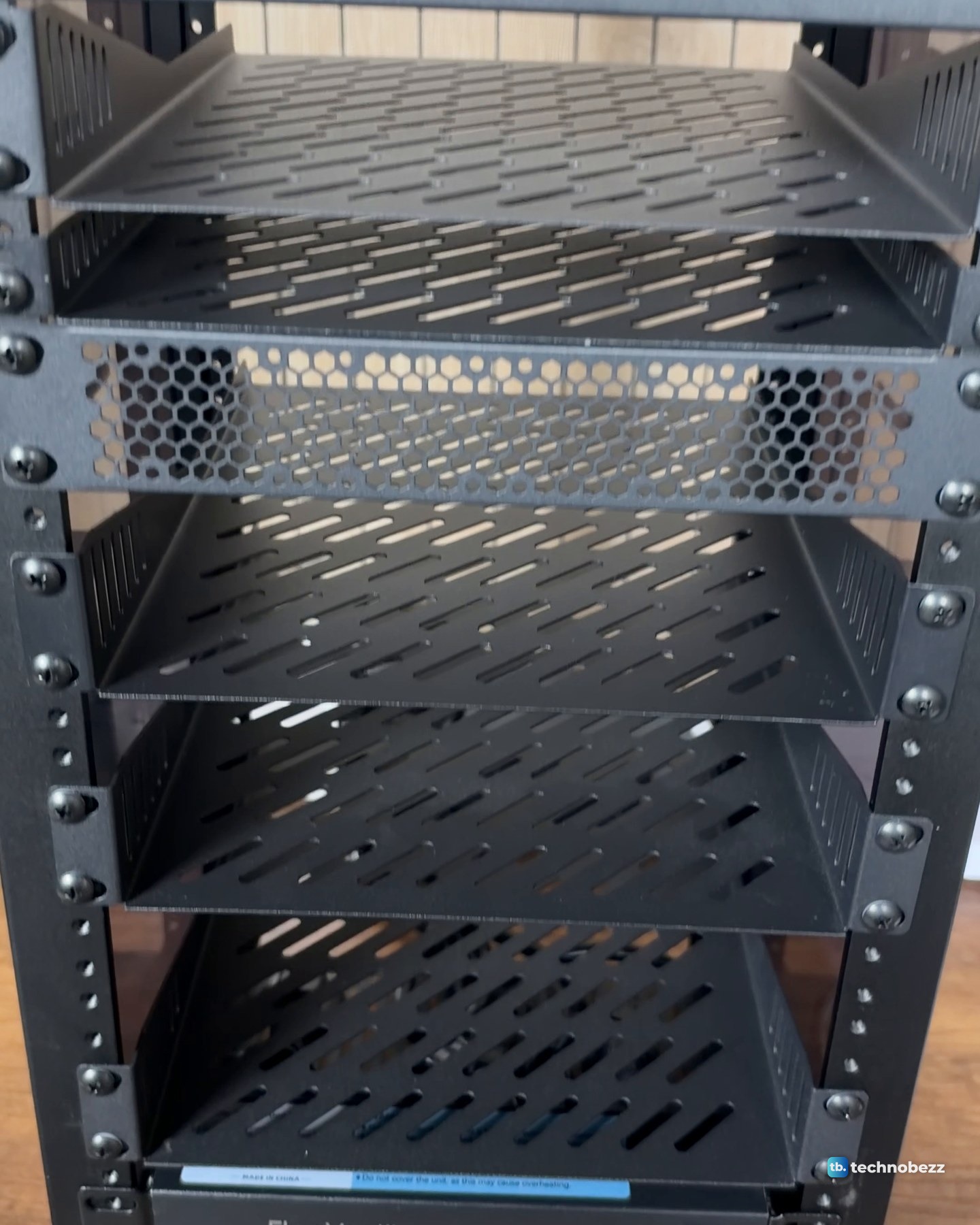
I bought six vented 1U shelves for the rack. They now hold the switch, the gateway and the bigger computers, and in the empty frame their perforations are easy to see.
What does not fit in a 10-inch rack
Full-size rack gear. A 48-port rack switch such as the UniFi USW-Pro-48-PoE is a 1U unit 442 mm (17.4 inches) wide, about twice the opening of a 10-inch rack. The T2 does not take standard 19-inch enterprise equipment at all, and only a few UPS units are made for mini racks.
In my setup, two things stay on the desk beside the rack. The main server is a tower PC with a Ryzen 7 9800X3D, 64 GB of RAM and an RTX 5070 Ti, running Proxmox. The UPS is an Eaton 5S 1500, a tower unit that can also sit flat as a desktop monitor stand. If you want a UPS in the same setup, our guide on connecting a UPS to a home lab explains how it plugs in.
Why I chose a 10-inch rack
Before the rack, every device sat on the desk in a row, each with its own spot and its own cable going somewhere. Apart from the main server and the UPS, all of it was small: a gateway, switches, an access point, a Raspberry Pi, a ZimaBoard 2, a ZimaBlade and a mini PC. So it all went into a 10-inch rack, the DeskPi RackMate T2. Now every network cable runs to one patch panel and every plug to one strip. The full story is in my DeskPi RackMate T2 build, and the order of the shelves is in my home lab rack layout.
The clip shows the desk before and the rack after.
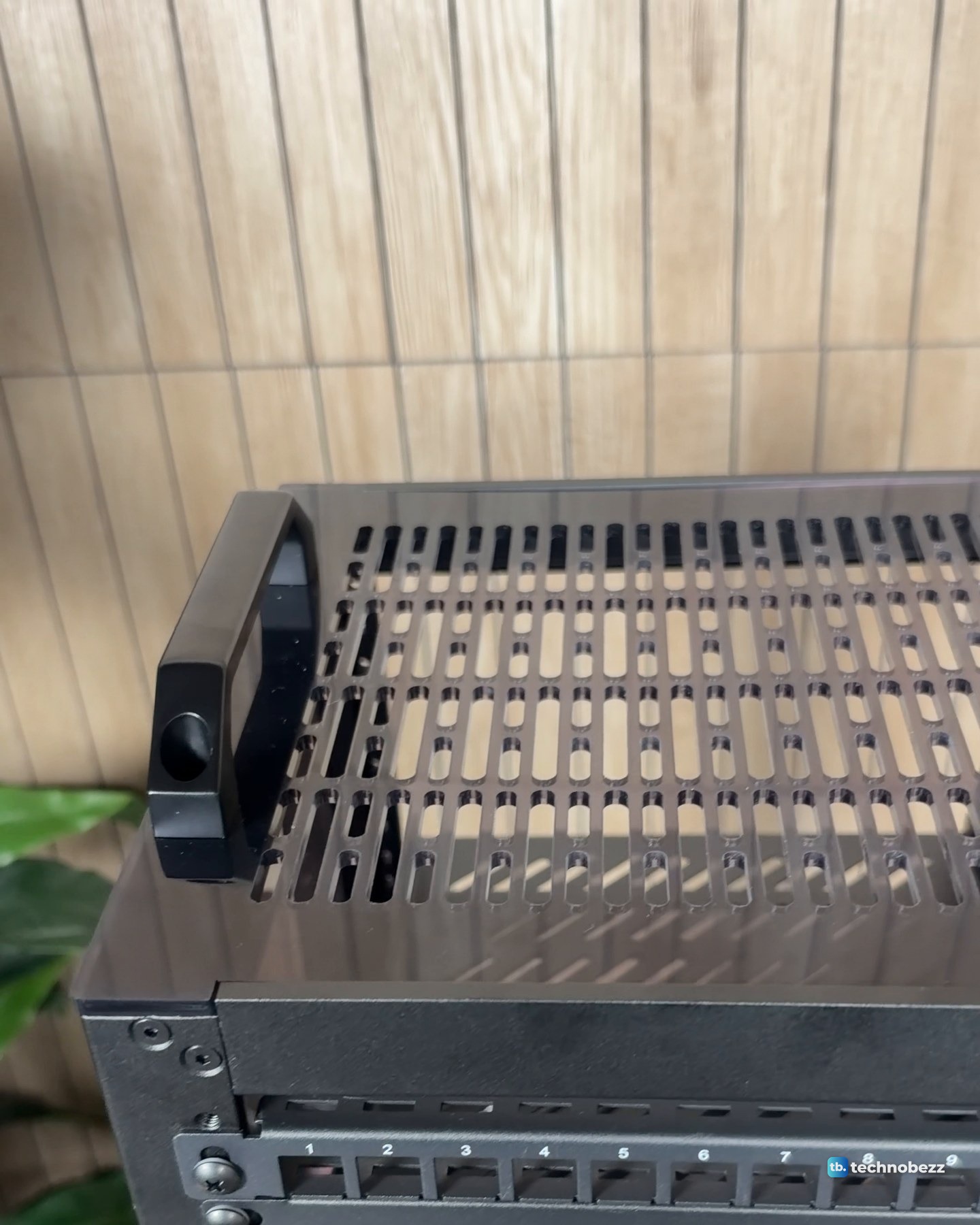
The T2 also has two carry handles screwed onto the top plate, and the top plate itself is vented. The U7 Lite access point now sits on that plate.
When to go 19-inch instead
Pick a 19-inch rack if you plan to run rack-mount servers, a rack-mount UPS, or a 24 or 48-port switch (our best network switches list is a place to compare switches). Those are built for the 19-inch width, and there is more of it to choose from, while the range of 10-inch accessories is still smaller. A 19-inch rack also takes half-width gear, and mounting two narrow devices side by side in one 19-inch rack unit is common.
Weight and room matter too. Put the heaviest equipment, such as UPS systems and battery packs, toward the bottom of the rack so it does not become top-heavy. If you are still working out what a home lab needs at all, start with what a home lab is and what it is used for.
10-inch vs 19-inch rack FAQ
Can 19-inch equipment go in a 10-inch rack?
No. The panel is wider than the whole 10-inch rack. For shelf-mounted devices, plan on about 210 mm of width to allow for tolerance. Check the shelf's usable width, depth and load rating, the height available, and room for connectors and cables.
Can 10-inch equipment go in a 19-inch rack?
Yes, on a shelf or with an adapter. Narrow devices are often mounted two to a rack unit in a 19-inch rack.
Is 1U the same height in both?
Yes. 1U is 1.75 inches (44.45 mm) in a 10-inch rack and in a 19-inch rack.
The 10-inch parts in my rack
| Product | What it does here | Where to buy |
|---|---|---|
| DeskPi RackMate T2 (12U, 10-inch) | The rack frame | Check it on Amazon |
| GeeekPi 1U vented shelf, 10.23 in deep | Holds each box without rack ears | Check it on Amazon |
| GeeekPi 12-port 0.5U Cat6 patch panel | Where every network cable lands | Check it on Amazon |
| TP-Link TL-SG108S-M2 | 8-port 2.5G switch | Check it on Amazon |
| ElecVoztile 10-inch PDU | Eight rear outlets, one front switch | Check it on Amazon |
For what all of it adds up to, see how much my home lab cost.
Technobezz may earn a commission when you buy through the Amazon links on this page.