To turn on a Samsung TV without the remote, press the TV Controller button on the TV itself. Look under the bottom edge, in the middle or at the right corner, usually close to where the red standby light glows, and then on the back near the lower right corner. A phone with the SmartThings app can turn the TV on too, but only if it was set up for that beforehand.
Samsung has fitted several kinds of built-in control over the years, and they do not all work the same way. The single Controller button in Samsung's current guides turns the TV on with one press, while its instructions for some 2018 designs say to press and hold. Below is where to look on your model, how each button works, and what to use for everything else once the TV is on.
The short version
- Find it: feel under the bottom edge, in the middle or at the right corner, usually near the red standby light, then behind the lower right corner.
- Turn it on: press the Controller button once. If the TV stays off, press and hold it.
- Use the menu: with the TV on, press again for the Control menu. On a single button, short presses move and a press and hold selects. On a control stick, push to move and press to select.
- Get around the menus: plug in a USB keyboard and use the arrow keys, Enter, and Windows for Settings.
- Next time: SmartThings with Power On with Mobile, an HDMI device with Anynet+, or a Fire TV Stick remote can switch it on, if set up first.
Where the power button is on a Samsung TV
Samsung calls it the TV Controller button, and its own pages say the spot varies by model. Its guides keep pointing to the same few places, so check them in this order: under the bottom edge in the middle, under the bottom edge at the right corner as you face the screen, then on the back panel near the lower right corner. Some models have a button in the center of the front bezel instead.
The red standby light is the best clue. Samsung's support page says the Controller button is generally located where the red light appears, and Samsung's 2023 TV manual labels the part "TV Controller button / Remote control sensor", the small unit at the bottom of the TV that glows red when the set is off. Run a finger along the underside below that light and feel for a small button.
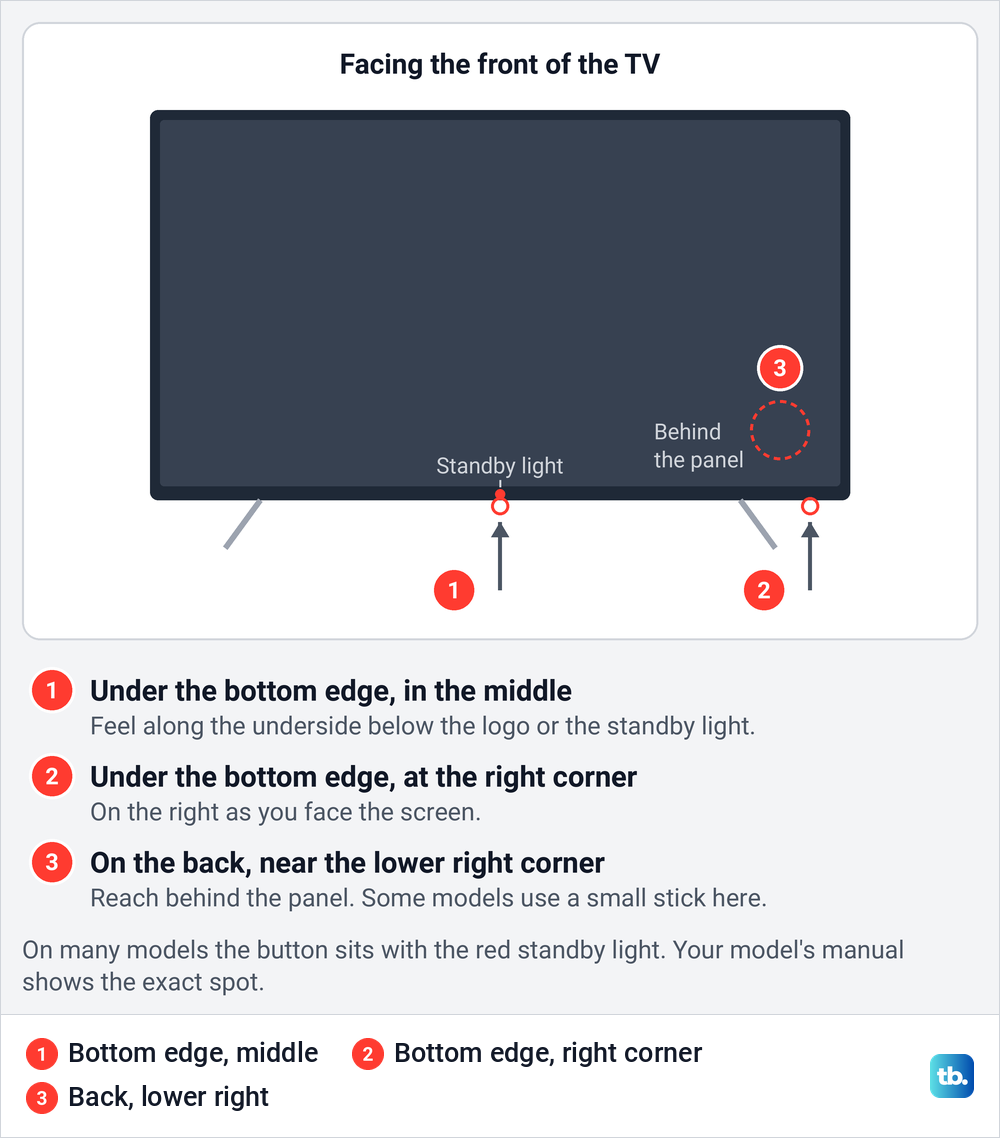
Buttons on the underside are hard to see from the front, so it is easy to decide the TV has none. Crouch down and look under the edge, or use a phone's flashlight, rather than searching the bezel. On a wall-mounted TV, run your fingers along the underside first, then reach behind the lower right corner.
Find the button for your exact model
Samsung's support pages give the spot for several series, and they show why one rule for every TV does not work. The table collects what those pages and manuals say, with our advice for any other model in the last row. Your model code is printed on a label on the back of the TV, and our guide to find your Samsung TV model number shows where to look.
| Model or series | Where Samsung puts the controller | How it works |
|---|---|---|
| DU7 | Bottom right corner | Turns the TV on, then opens the Control menu when pressed while on |
| NU8000 | Bottom right corner | Turns the TV on, then opens the Control menu when pressed while on |
| CU7, CU8, Q6*C, S90C | Bottom of the TV, in the middle or at the bottom right corner | Turns the TV on, then opens the Control menu when pressed while on |
| Q6*B, Q7*B, Q8*B, QN85B, QN90B | Bottom of the TV, in the middle or at the bottom right corner | Turns the TV on, then opens the Control menu when pressed while on |
| Single-button models in Samsung's controller guide, pictured on a 2025 TV | Bottom center or bottom right | Press once to turn the TV on or off |
| Q9FN | A control stick under the Samsung logo, at the bottom center | Directions change the channel and volume, and a press opens the Control menu |
| Certain 2018 models with a front button | Center of the front bezel | Press and hold the center button to turn the TV on |
| Any other model | The diagram in your model's user manual | Check the manual. Until then, our advice is to press once, then press and hold |
Samsung's 2023 manual adds that the position and shape of the buttons at the bottom of the TV may differ depending on the model, so treat the table as a starting point. The exact diagram is in the user manual: enter your model code on the Samsung Downloads page to find it.
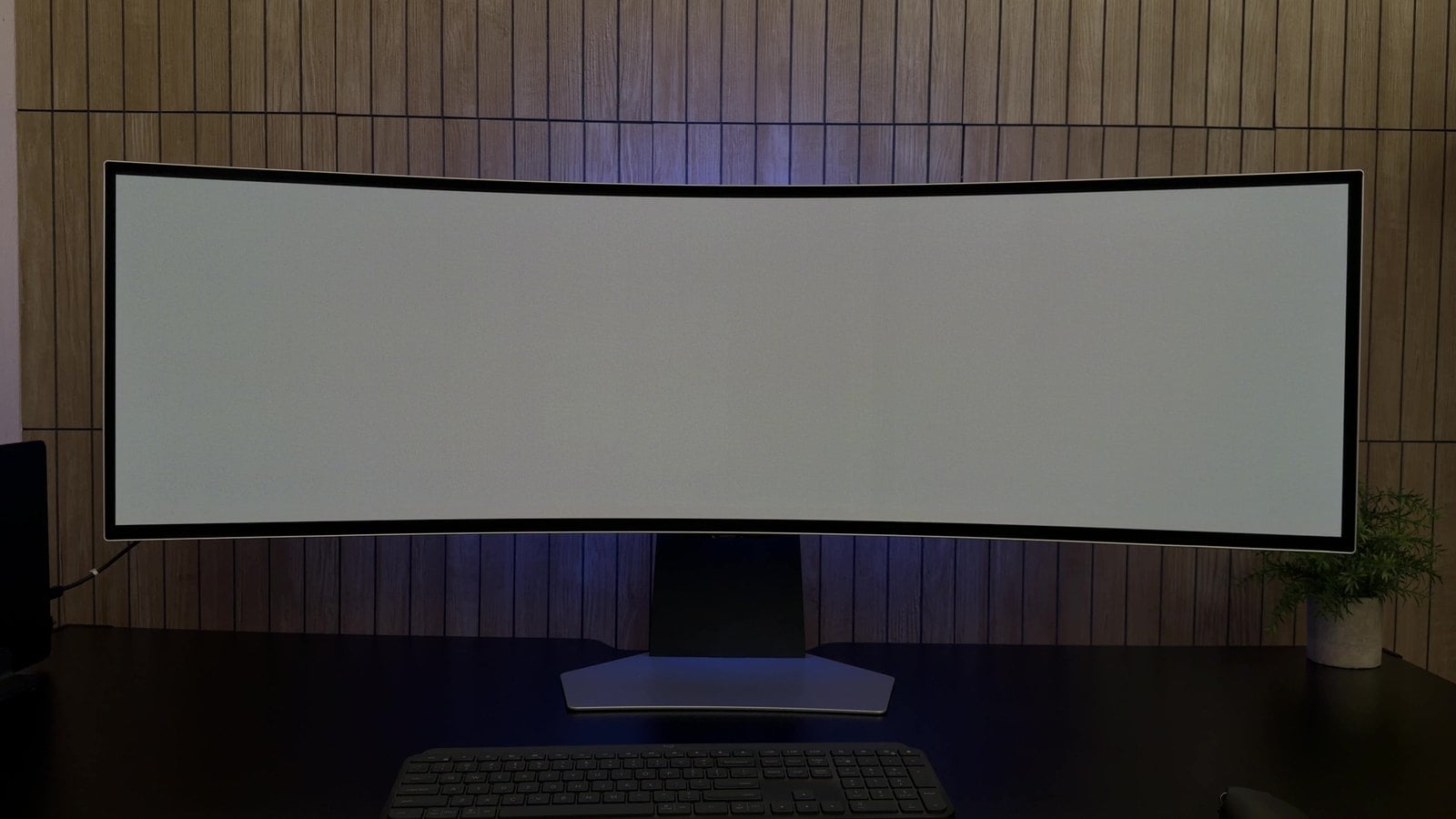
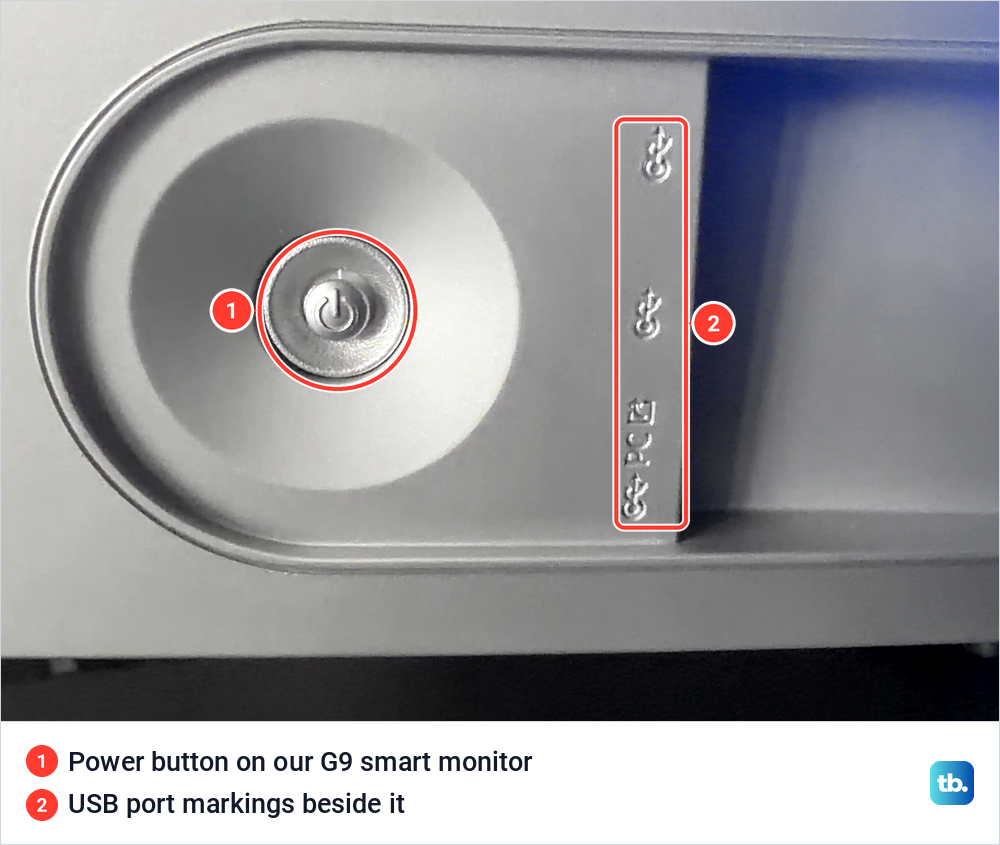
Our photos come from our Samsung Odyssey OLED G9, a smart monitor that runs the same Tizen software as Samsung's smart TVs. Its power button is a round metal button with the power symbol, set into a recess in the rear housing beside the USB port markings. A TV's Controller button sits somewhere else, so go by the table rather than by our monitor.
Press or hold the button to turn the TV on
How you press it depends on the design. On the single Controller button in Samsung's current guides, one press turns the TV on or off. Samsung's guide to the built-in buttons describes a center button on certain 2018 models that needs a long press to power on, and it gives the same long press as its general way to switch a TV on with the built-in buttons.
So press once and give the TV a moment. If the screen stays dark and the red light stays lit, press and hold the button instead. The standby light tells you when it worked, because Samsung says it is on while the TV is off and goes out when the TV is in use.
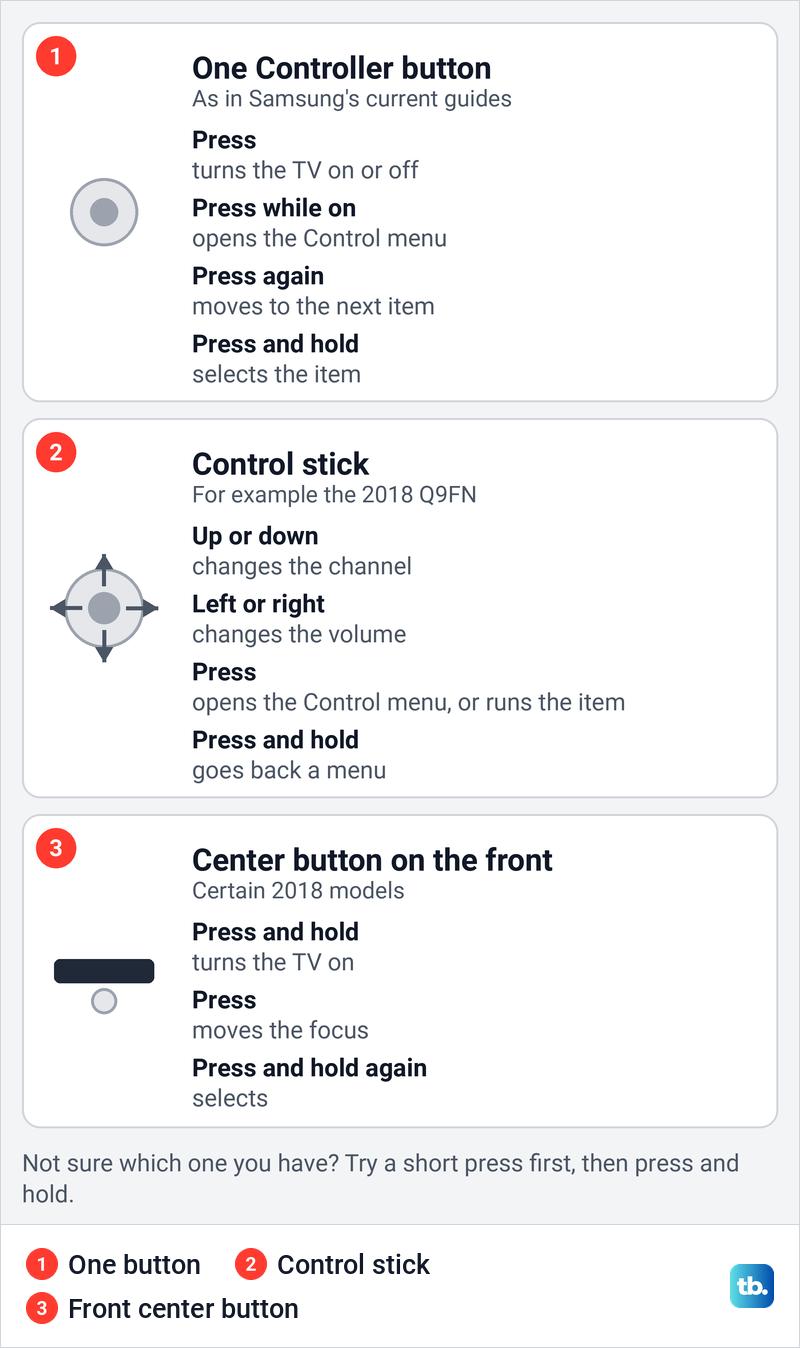
The control stick is a third design. Samsung's manual for the 2018 Q9FN says up and down change the channel, left and right change the volume, and pressing the stick opens the Control menu or runs the item you have moved to. Holding the stick does something different from holding a single button: it takes you back to the previous menu.
Use the Control menu without a remote
With the TV on, a press of the Controller button opens the Control menu at the bottom of the screen. On a single-button model, Samsung's steps are to keep pressing to move along the menu and to press and hold to select. On a control stick, push it toward the item and press it to run that item.
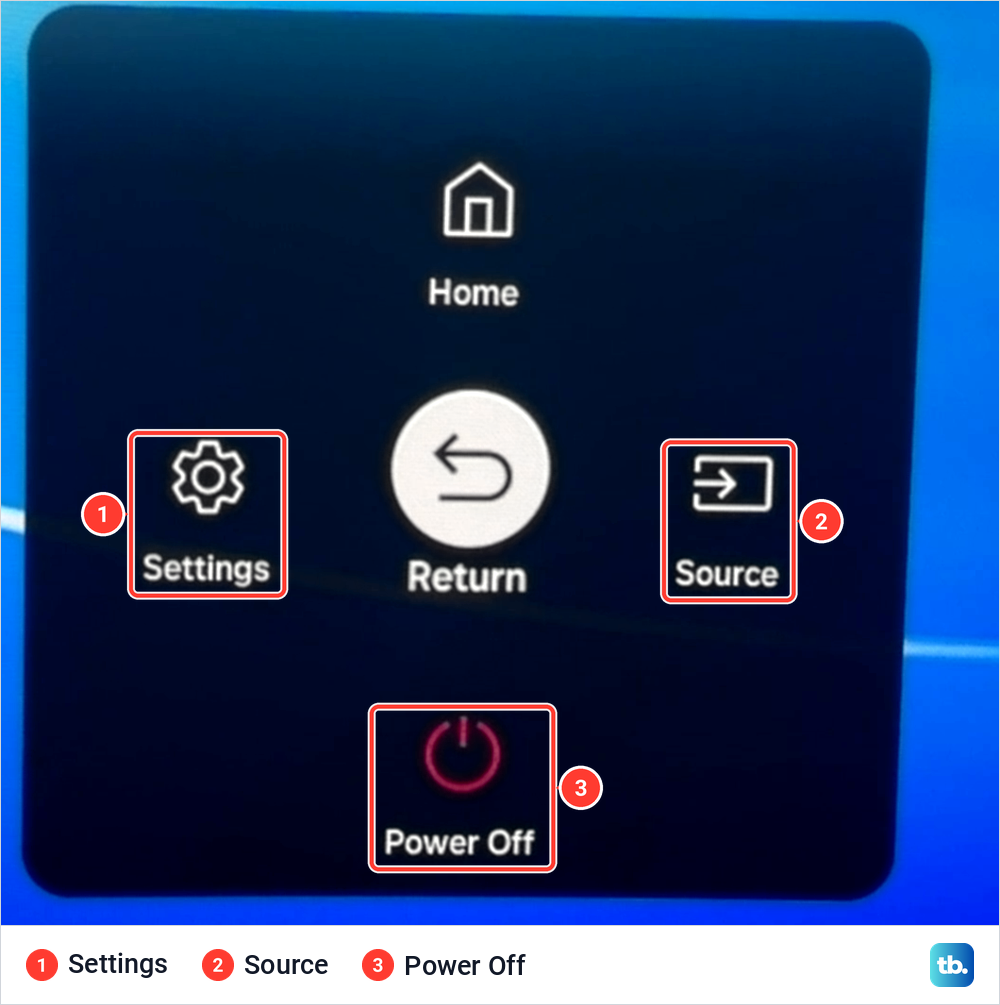
What the menu offers depends on the model. Samsung's Q9FN manual lists Home, Source, Settings, Power Off and Return, and Samsung's controller guide shows Power off and Mobile Remote on the model it illustrates. To switch the TV off, move to Power off, then press and hold the button to confirm on a single-button model, or press the stick to run it on a stick model.
Our monitor shows a menu with the same five items when it is opened with its remote, arranged in a ring around Return. On single-button TVs, Samsung's guides put the Control menu along the bottom of the screen, while the Q9FN manual draws the same five items in a cross much like ours.
Samsung also warns that the TV Control button has limited functionality, and that certain features and settings cannot be reached without a remote. That is why the next sections matter: a phone, a keyboard or a connected device can fill the gaps.
Change the input or volume from the TV
Source is the item to pick when the TV is on the wrong input, for example when your console is on HDMI 2 and the TV is showing HDMI 1. Select it in the Control menu and the source list opens. On our monitor, the source tiles open from Connected Devices in the Home menu, and the selected source carries a tick.
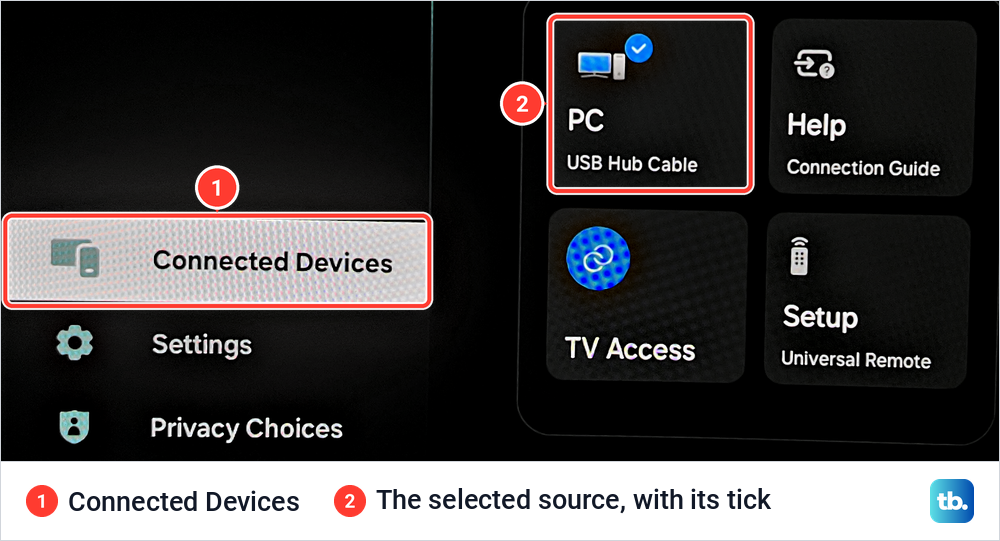
Move to the port your device uses and select it, with short presses and a hold on a single button. Our guide to change the HDMI input on a Samsung TV covers the Source screen in more detail. If the right input is selected and the picture is still missing, fix the Samsung TV HDMI connection.
Volume depends on the controller. The Q9FN's stick changes it directly with left and right. On single-button models, Samsung's controller guide pictures its Control menu with power, channel and volume options, so move to one and press and hold to use it. If no control changes the loudness, work through our steps for Samsung TV volume not working.
Turn your phone into a remote with SmartThings
The SmartThings app is the fullest stand-in for a lost remote. Samsung says its remote has volume and channel controls, Mute, Home, Back and Guide, and arrows to move through menus. Samsung's conditions are that the TV has been added to SmartThings as a device, and that you have a Samsung Account and an internet connection. The card below shows what each route needs before you can use it.
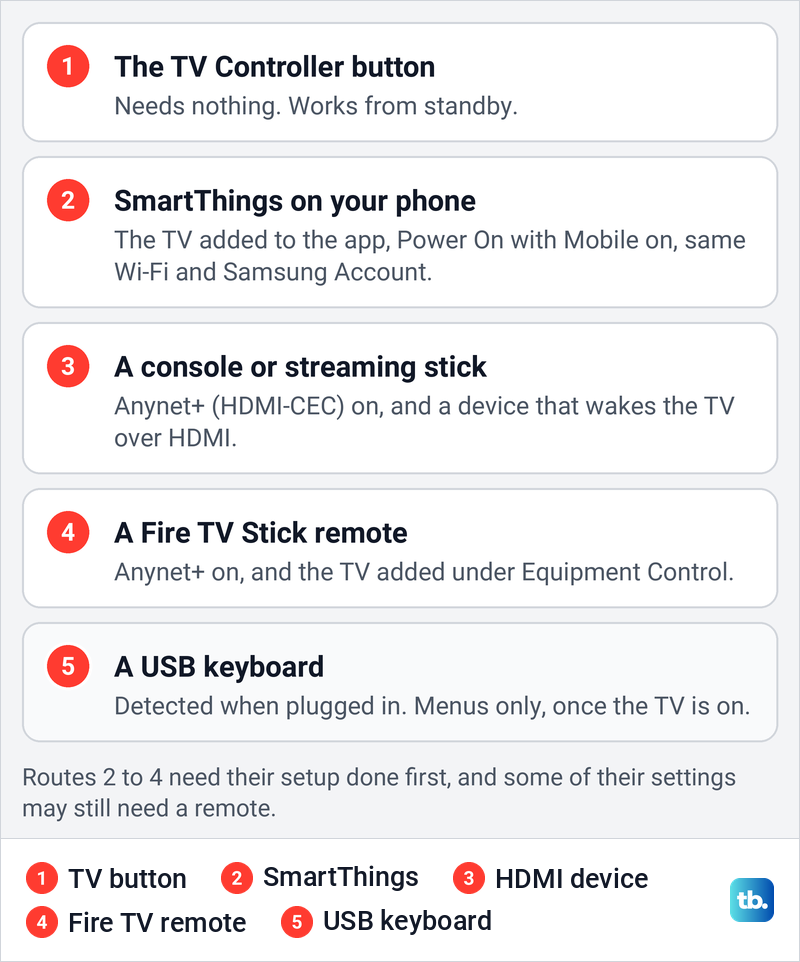
If the TV is already in the app, turn the TV on with its Controller button first, because Samsung's steps start with the TV powered on. Open SmartThings, tap Menu, then All devices, and select the TV. An on-screen remote appears, and Samsung notes that its buttons vary by device.
If the TV is not in the app yet, add it from the phone by selecting + and then Add device, which needs a Samsung Account and an internet connection. Samsung's controller guide also shows a Mobile Remote item in the Control menu, on models that have it. Move to it, press and hold the Controller button, and scan the QR code that appears with your phone.
Some owners report that the TV asks them on screen to allow the phone while it pairs. On a single-button model, short presses move to the right choice and a press and hold selects it. If your controller cannot reach the prompt, try a wired USB keyboard, which Samsung documents for moving around the menus, as shown further down.
Turn the TV on from your phone next time
The app can also switch the TV on from standby, which is the closest thing to a spare remote. It needs one setting on the TV, Power On with Mobile. Samsung is plain about it: if you disable this setting, you will not be able to power on your TV through the SmartThings app.
On 2022 to 2026 models, Samsung Australia's path is Settings > All Settings > Connections > Network > Expert Settings > Power On with Mobile, and our monitor uses the same path. On 2017 to 2021 models it is Settings > General > Network > Expert Settings > Power On with Mobile. Samsung's Gulf page gives another route, General > Network > Mobile & Remote Control, so if your menus differ, look for the setting by name inside Network.
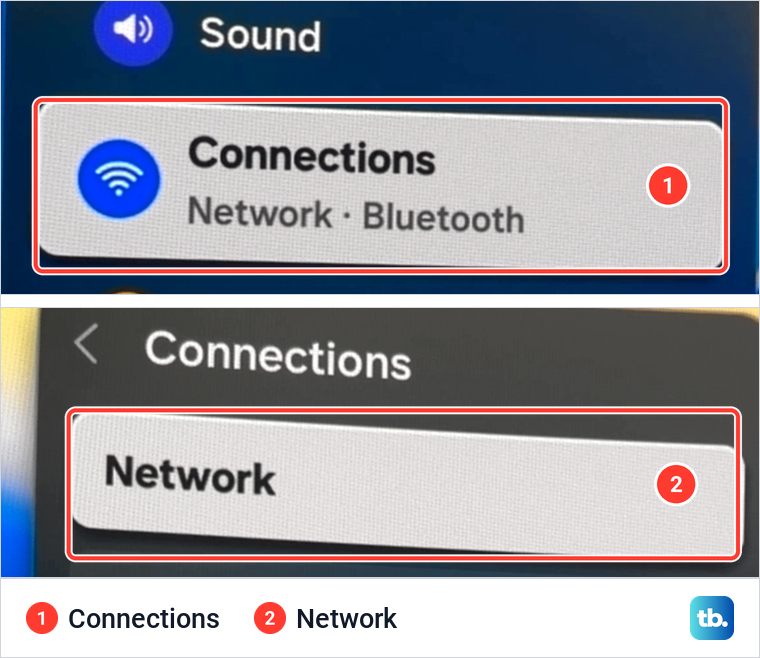
On our monitor, All Settings has the same Connections group, with Network as its first row. Inside Network, Expert Settings opens with Power On with Mobile at the top, and on our monitor it was switched on. Samsung's description there says it lets smartphones and tablets on your network turn on the Smart Monitor, the name our screen uses for itself.
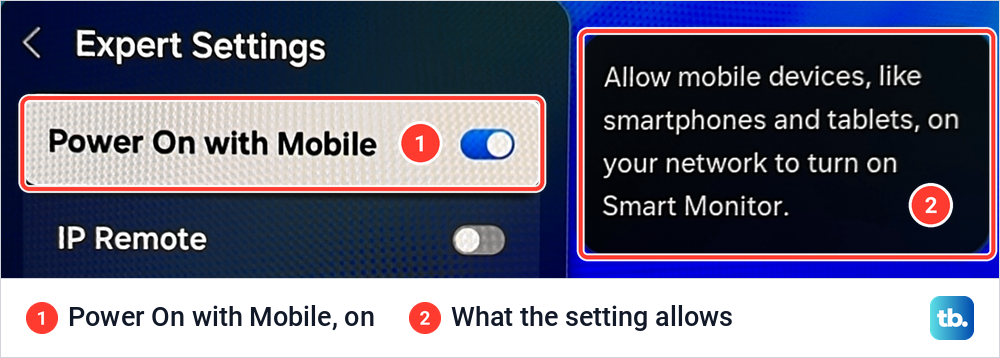
To reach it without a remote, use the Settings item in your Control menu if it has one, or a USB keyboard. Once the setting is on, Samsung's last step is to open SmartThings and tap the TV's power tile.
Samsung's power-on guides add a few conditions. The phone and the TV should be on the same Wi-Fi network and registered to one Samsung Account, and the feature is offered on select Samsung TVs from 2017 onwards.
Use a USB keyboard to get around the menus
A spare wired keyboard makes a good stand-in remote. Samsung says most of its TVs from 2014 onwards support keyboards and mice. Plug a USB keyboard into a free USB port, wait a few seconds for the TV to detect it, and follow any on-screen prompt. It works once the TV is on, because Samsung documents it for moving around the menus, not for waking the TV.
Samsung's key map is short. The arrow keys move the focus, Enter selects, Esc goes back, and the Windows key opens the TV's settings menu. F5 shows the Home Screen, F6 opens Source, F8 mutes, and F9 and F10 change the volume.
That makes a keyboard the easiest way into Settings on a TV whose Control menu has no Settings item, for example to turn on Power On with Mobile. Bluetooth keyboards have to be paired first from the TV's keyboard settings, which Samsung's guide puts under External Device Manager, so start with USB. On our monitor the keyboard settings sit in General & Privacy as Keyboard and Mouse, just above Remote Control.
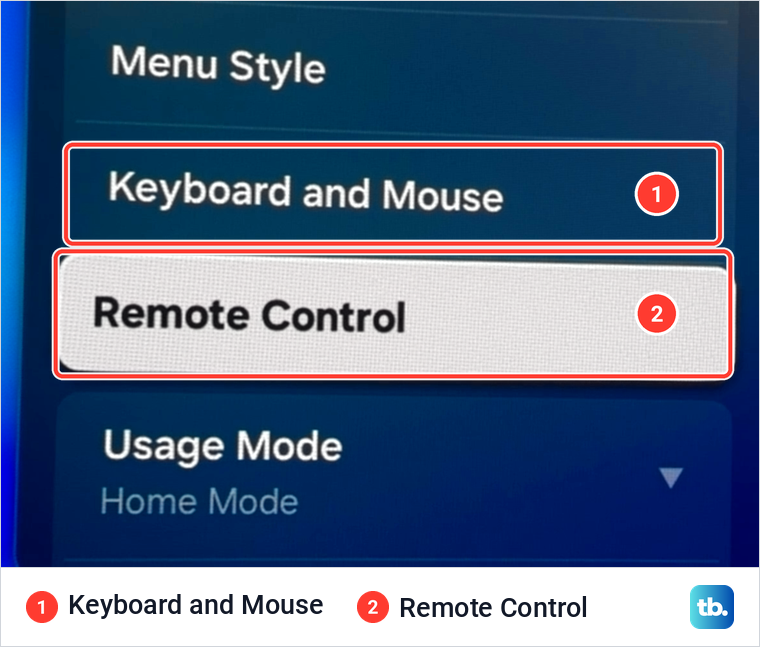
Let a console or streaming stick wake the TV
Anynet+ is Samsung's name for HDMI-CEC, which lets the TV and its HDMI devices control each other. Samsung says some HDMI devices are set by default to turn the TV on when they turn on, so switching on a games console or streaming stick may bring the TV up with it. The device has to support HDMI-CEC and be plugged into one of the TV's HDMI ports.
Samsung says Anynet+ is typically on by default, but that its settings can only be set up with the Samsung TV remote, so this route suits a TV where it is already on. On 2022 and newer models it sits in Settings > All Settings > Connections > External Device Manager, and on 2021 and older models in Settings > General > External Device Manager.
On our monitor, External Device Manager is under General & Privacy, and Anynet+ (HDMI-CEC) was switched on. The monitor adds an Easy Wake Up switch for waking its screen from a connected device, but on a TV, Anynet+ is the setting that matters.
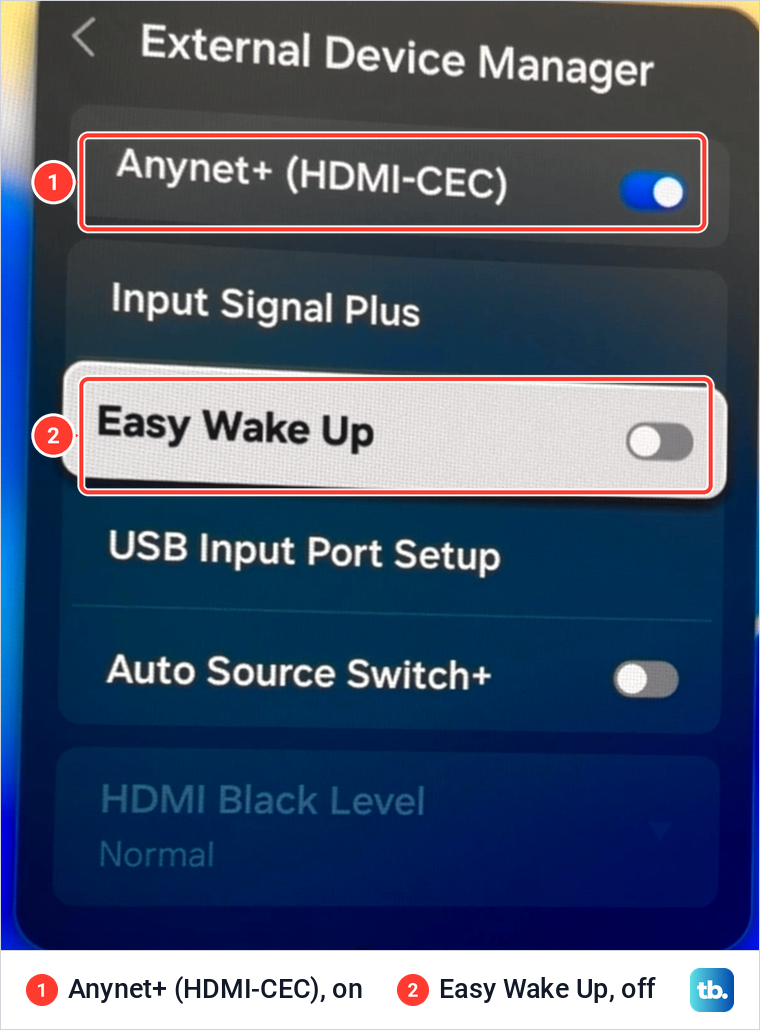
With Anynet+ on, a Fire TV Stick remote can take over the TV's power button. Samsung's steps are to press Home on that remote, open Settings, select Equipment Control, then Add Equipment and TV, and select Yes and OK when it finds your TV. If Manage Equipment appears instead of Add Equipment, the TV is already added. Samsung says the Fire Stick remote can then turn the TV on or off and adjust its volume.
Turning Anynet+ off stops a device from switching the TV on, and Samsung notes that you then lose control of that device from the TV remote. If the TV wakes when you do not want it to, our guide to a Samsung TV that turns on by itself covers the settings involved.
If the button does nothing
Start with the light. Samsung says that if the TV turns on with its physical button, the remote is the problem, and that if the red standby light is lit but neither the remote nor the TV's button turns it on, service is needed. Samsung's 2023 manual adds a check before that: the power cord should be firmly plugged into the TV and a working wall outlet, and the sensor at the bottom of the TV should glow a solid red.
If there is no light at all, the TV may have no power or may already be on with a black screen. Samsung's next steps are to unplug the TV for 30 seconds and plug it into an outlet you know works. Our guide to a Samsung TV that won't turn on goes through each light state, and a blinking light has its own steps to troubleshoot a flashing red light.
If a press brings up a menu or you hear sound but the picture stays black, the TV is on, so diagnose a Samsung TV black screen instead. If the menus appear but freeze, restart a Samsung TV before you change anything else.
When the TV's own button works and the remote does not, the remote needs attention. On the white Samsung remote we use with our monitor, Power is the round button at the top left, and Home sits in the row below the navigation ring.
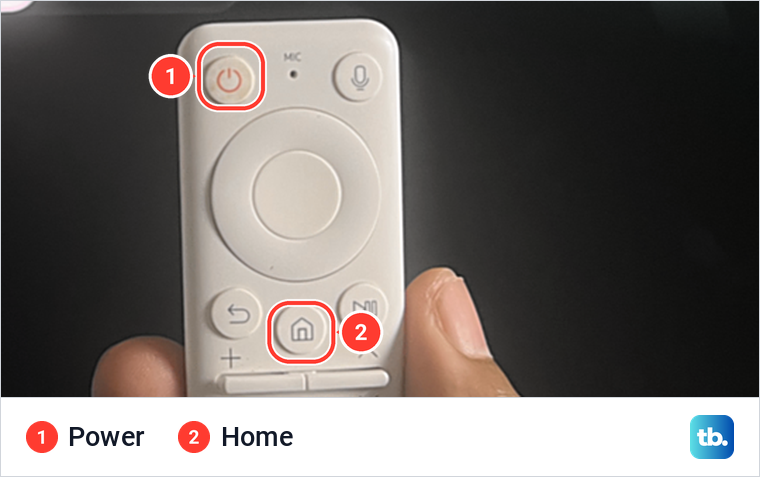
Check its batteries or its charge first, then pair your Samsung remote again while standing close to the TV. If it still does not respond, work through our fixes for a Samsung remote that stops responding. If the remote is lost for good, Samsung suggests a third-party remote, such as a universal remote, as a replacement.
How we tested this guide
We tested this on a Samsung Odyssey OLED G9 smart monitor, which runs the same Tizen software as Samsung TVs, checking its own power button and Power On with Mobile.
Frequently Asked Questions
Where is the power button on a Samsung TV?
Look under the bottom edge, in the middle or at the right corner as you face the screen, usually near the red standby light. Some models have a stick on the back near the lower right corner, and your model's manual shows the exact spot.
Do all Samsung TVs have a power button?
Samsung's support pages show a TV Controller button on the series they cover and say its place and shape vary by model. Samsung also notes that some older models may not have built-in buttons, so check the manual for your model code.
Do I press or hold the button to turn on the TV?
Press once on the single Controller button in Samsung's current guides. Samsung's instructions for some 2018 designs say to press and hold, so hold it if a short press does nothing.
Can I turn on my Samsung TV with my phone?
Yes, with SmartThings, if the TV was added to the app beforehand and Power On with Mobile is switched on. The phone and the TV should be on the same Wi-Fi network and Samsung Account.
Can a USB keyboard turn on a Samsung TV?
Samsung documents keyboards for moving around the menus once the TV is on, not for waking it. Turn the TV on with its button, then use the arrow keys, Enter and the Windows key.
Can a console or Fire TV Stick turn on my Samsung TV?
Some HDMI devices turn the TV on through Anynet+ (HDMI-CEC), which Samsung says is typically on by default. A Fire TV Stick remote can also switch the TV on once it is added under Equipment Control.
What if the TV's button does nothing?
Check whether the red standby light is lit. If it is and neither the button nor the remote works, Samsung says service is needed, and if there is no light, unplug the TV for 30 seconds and try an outlet you know works.