
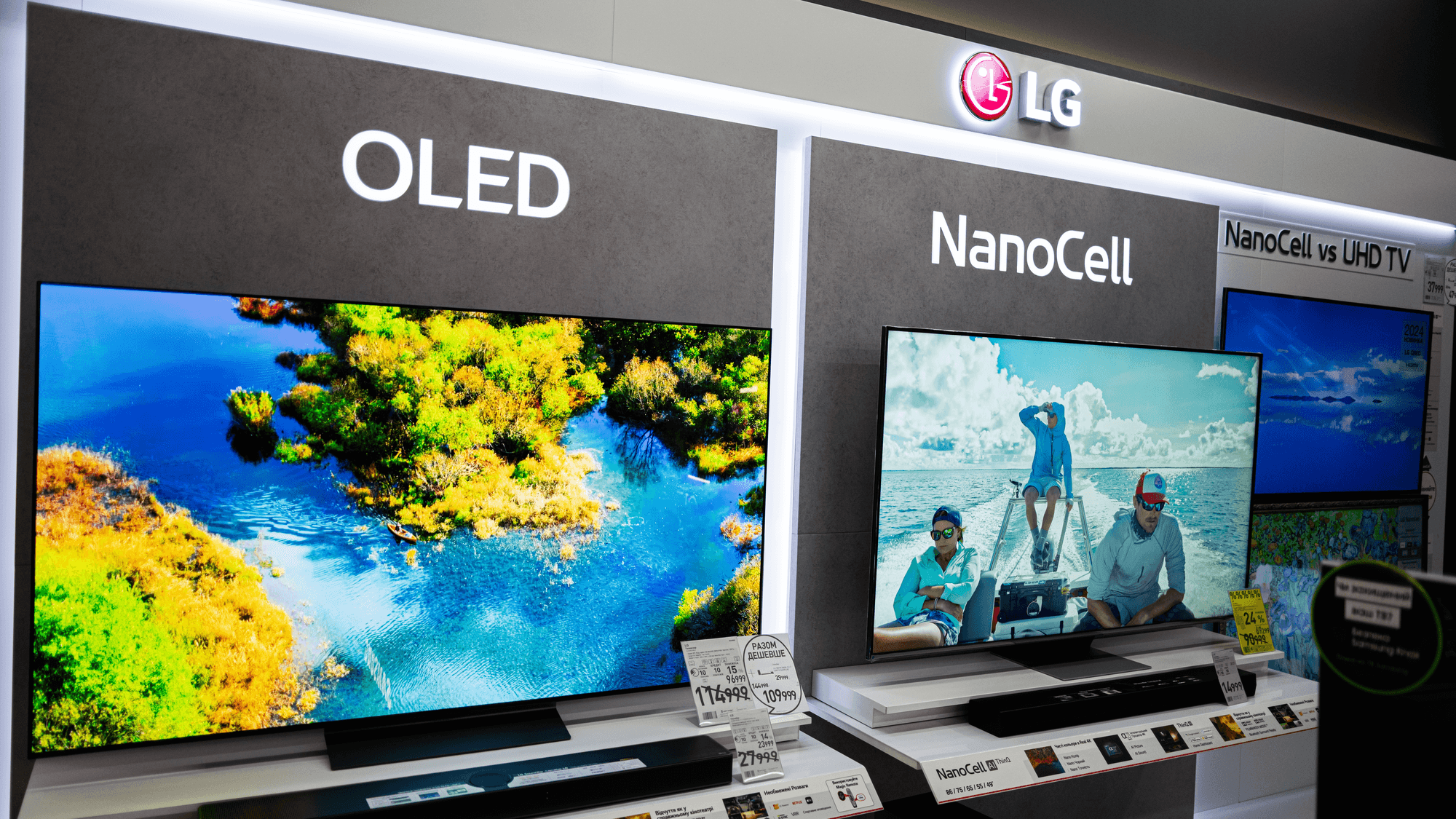
A Mini LED TV lights its picture from behind with small LEDs that dim in separate zones. An OLED TV has no backlight, because every pixel makes its own light and switches on or off by itself. In the lines listed here, Mini LED sets start at lower prices and TCL publishes the highest brightness figures, while Samsung, Sony and LG all publish burn-in or image retention notes for OLED.
How each one lights the screen
Samsung's Mini LED buying guide describes the technology as backlighting built from smaller LEDs, with local dimming that controls backlight zones independently. Hisense says its 2026 U7 uses thousands of Mini LEDs with full-array local dimming. LG notes that Mini LED and dimming zone specs vary by screen size, model and region.
OLED skips the backlight. LG says each self-lighting pixel turns on or off independently. Sony says its 2026 BRAVIA 6 uses over eight million self-lit pixels, individually controlled to produce black and contrast.
A newer branch is RGB Mini LED. Sony says the BRAVIA 9 II and BRAVIA 7 II control separate red, green and blue light sources.
Brightness and blooming
TCL publishes specific Mini LED numbers, labeled as series maximums that vary by screen size.
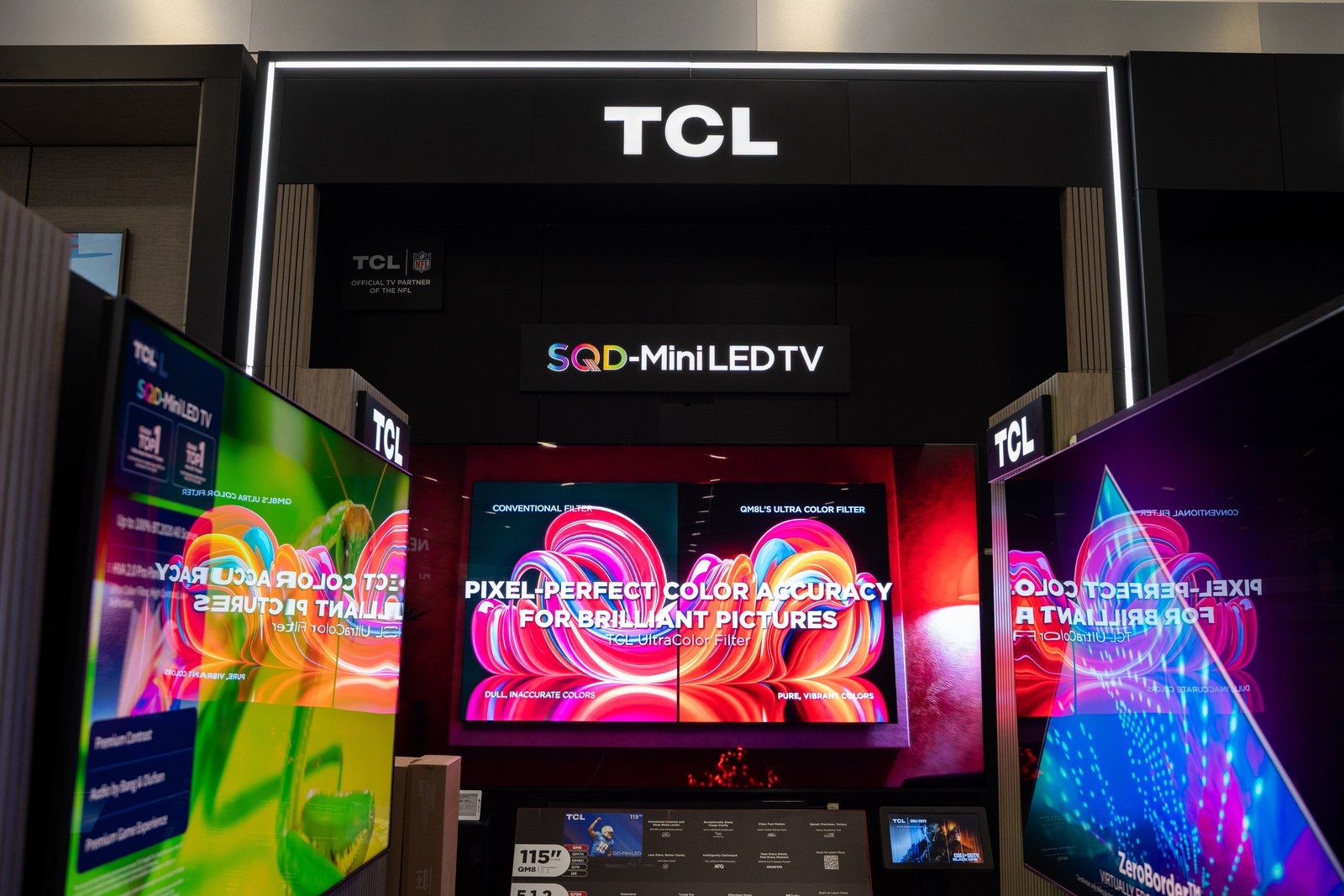
- TCL QM7L: up to 3,000 peak nits and up to 2,100 dimming zones.
- TCL QM8L: up to 6,000 peak nits and up to 4,000 local dimming zones.
- TCL X11L: up to 10,000 peak nits, which TCL calls an HDR rendering maximum, and up to 20,000 dimming zones.
LG frames OLED brightness against its own regular OLED models. It claims the G6's Brightness Booster Ultra gives up to 3.9 times the brightness of a regular OLED TV on the 55, 65, 77 and 83-inch sizes. For the W6, LG's footnote says the same 3.9 times figure comes from internal measurements with a 3% window.
Blooming is the Mini LED trade-off the makers themselves name. Samsung describes it as bright areas bleeding into darker areas, and says the smaller, more numerous LEDs in Neo QLED virtually eliminate it. TCL claims its 2026 Halo Control System leaves "virtually no blooming". Sony says its RGB backlight control reduces blooming compared with conventional Mini LED displays. An older LG product sheet for the G4 and G5 OLEDs states that LED and Mini LED displays can suffer from a halo effect. These are maker claims, not independent measurements.
Burn-in and warranty terms
Samsung states that static images or logos can cause OLED burn-in over time. Sony's BRAVIA 6 reference guide warns that showing the same image repeatedly or for long periods can cause image retention. LG says burn-in is no longer a major everyday concern for most users under normal viewing, though it remains technically possible.
Sony also publishes a routine for it. Its BRAVIA 6 support article recommends panel calibration each day the TV is used, preferably by turning it off with the remote and leaving it plugged in overnight.
On the Mini LED side, TCL said in a 2024 announcement that its QD Mini LED TVs came with no worries about burn-in or afterimages. TCL's US warranty runs one or two years for parts and labor depending on the model, and it excludes panel markings that result from viewing fixed images such as banners and video game elements.
Samsung, Sony and Hisense also list one-year warranties. LG goes further on two OLED lines, with five-year panel coverage on the G6 and W6. Year one covers panel, parts and labor, and years two through five cover only the panel, with labor charged. LG's G6 FAQ says burn-in coverage depends on the cause and the warranty terms.
What the 2026 models cost
These are the makers' US launch or list prices as of November 2026.
- Mini LED: Samsung's M70H starts at $349.99 for 43 inches and the Neo QLED QN70H at $599.99 for 43 inches. TCL's QM7L starts at $1,199.99 for 55 inches and the QM8L at $2,499.99 for 65 inches. Hisense's U7 series starts at $1,299, with no size named in the release. Sony's RGB sets start at $1,599.99 for the 50-inch BRAVIA 7 II and $3,599.99 for the 65-inch BRAVIA 9 II.
- OLED: Sony listed the 48-inch BRAVIA 6 at a $1,299.99 MSRP at its US launch in August 2026. Samsung's S85H starts at $1,199.99 for 48 inches and the S90H at $1,399.99 for 42 inches. LG's C6 starts at $1,399 for 42 inches, the G6 at $2,499 for 55 inches and the W6 at $5,499.99 for 77 inches.
Which one fits
If the lowest price matters most, Mini LED is the cheaper entry point here, because the cheapest 2026 line here starts at $349.99 against $1,199.99 for the cheapest OLED listed here (Samsung's 48-inch S85H). If a news ticker, channel logo or game menu stays on your screen for hours, note that Samsung and Sony warn about static images on OLED. If halos around bright objects would bother you, OLED avoids a backlight entirely, because each pixel switches on or off by itself.
For specific sets, see the best Mini LED TVs and the best TVs for gaming. Quantum dot sets are covered in OLED vs QLED.