A Mini LED TV is an LCD TV lit by a backlight made of many small LEDs, so it can control light across the screen more precisely than a basic LED set. This page is for US shoppers who want a bright 4K TV for living rooms, sports, streaming, and gaming, and who want the main Mini LED options from LG, Samsung, and Hisense side by side.
Technobezz is supported by its audience. We may get a commission from retail offers.
5 Best Mini LED TVs in 2026
The LG QNED84B 75-inch leads our picks of the best Mini LED TVs in 2026, with Samsung, Hisense, and LG options for bright rooms, huge walls, and small spaces.
T
Technobezz
Editorial Team
Updated November 8, 2026Nov 8, 2026
•11 min read

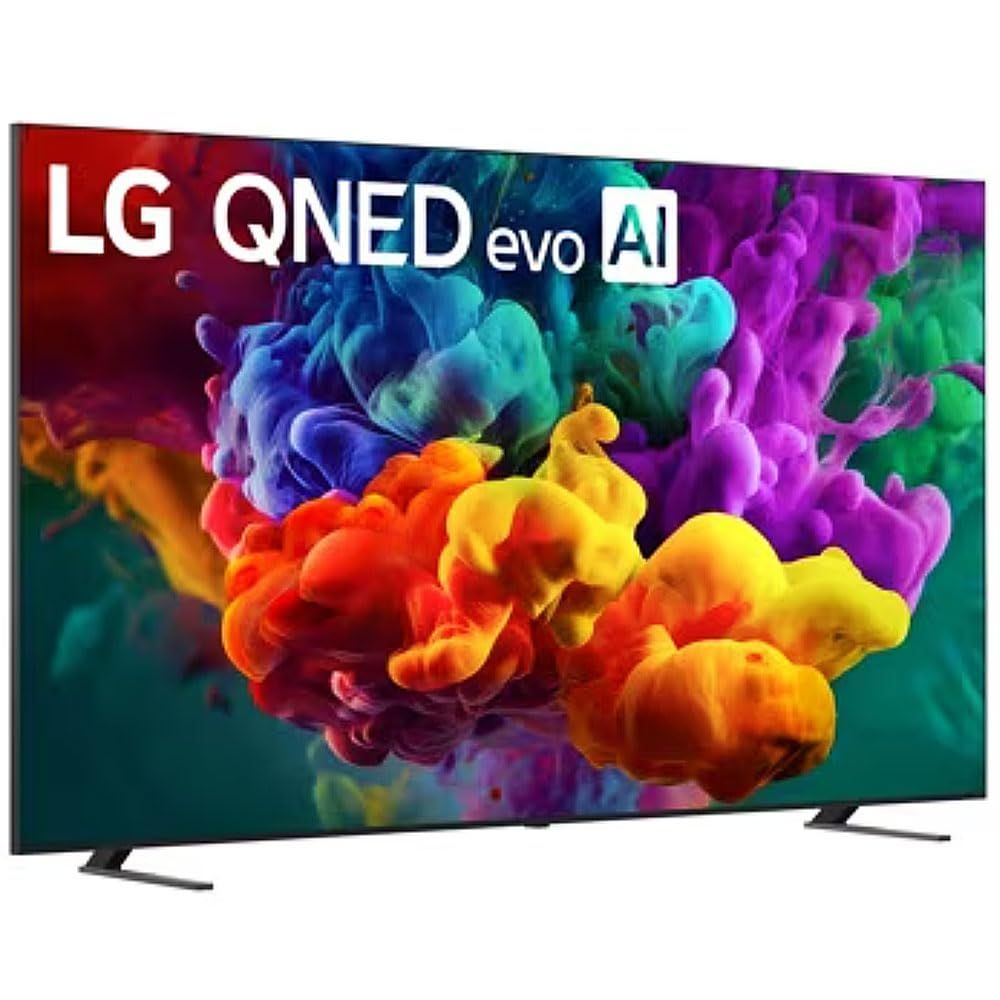
Get Deals Like These in Your Inbox
The best prices, straight to your inbox.
Add Technobezz on Google:Preferred SourceGoogle Discover
The LG QNED84B 75-inch is our top pick. It puts a Mini LED backlight, the a8 AI Processor 4K Gen3, VRR 144Hz, HDR10 Pro, and webOS 2026 on a 75-inch screen, which makes it a well-rounded choice for most living rooms.
The other picks each cover a specific need: long software support, rooms with a lot of glare, a very large 115-inch wall, and a smaller 55-inch space.
At a Glance
| Category | Product | Why We Picked It |
|---|---|---|
| Best overall | LG QNED84B 75-inch | Mini LED, 100% Color Volume, VRR 144Hz, and webOS 2026 |
| Best for long-term updates | Samsung QN70H Neo QLED 65-inch | Quantum Mini LED with 7 years of OS updates |
| Best for bright rooms | Hisense U7 Mini-LED 65-inch | Anti-glare screen treatment and Devialet-tuned speakers |
| Best giant screen | LG QNED92B 115-inch | 115-inch Mini LED with Precision Dimming Ultra and Dolby Vision |
| Best smaller screen | Hisense U6 Pro Mini-LED 55-inch | ULED MiniLED 4K and Fire TV in a 55-inch size |
How we chose
We compared the specifications published on each maker's US product page, looking at backlight type, dimming, processing, refresh rate, HDR support, screen treatment, and smart platform. We also checked that each pick is sold new on Amazon.
The best Mini LED TVs right now
LG QNED84B 75-inch - Best overall
The LG QNED84B 75-inch pairs a Mini LED backlight with Dynamic QNED Color Pro, which LG says is certified for 100% Color Volume. It runs on the a8 AI Processor 4K Gen3 and ships with webOS 2026, which LG says adds AI recommendations and free LG Channels.
For gaming, LG lists VRR 144Hz and Motion Booster 288. LG's footnote says Motion Booster 288 reaches 144Hz at optimized Full HD resolution. HDR10 Pro uses LG Dynamic Tone Mapping on HDR10 content, and FILMMAKER MODE is there for viewers who want the picture the way the director intended.
Key highlights
- 75-inch class screen
- Mini LED backlight with Dynamic QNED Color Pro
- Certified 100% Color Volume
- a8 AI Processor 4K Gen3
- VRR 144Hz and Motion Booster 288
- HDR10 Pro and FILMMAKER MODE
- webOS 2026
Pros
- Large 75-inch screen with a Mini LED backlight
- VRR 144Hz listed for smoother gameplay with less lag, with a 144Hz PC per LG
- FILMMAKER MODE for movie viewing
- webOS 2026 includes free LG Channels
Cons
- LG says the Motion Booster 288 figure of 144Hz applies at optimized Full HD resolution
- The maker page lists HDR10 Pro but does not list Dolby Vision
- The maker page does not give an HDMI port count or a dimming zone count
Who it is for: Buyers who want one 75-inch Mini LED TV for movies, streaming, and casual gaming in a typical living room.
Skip if
You need Dolby Vision, or you want confirmed HDMI 2.1 port details before you buy.
Samsung QN70H Neo QLED 65-inch - Best for long-term updates
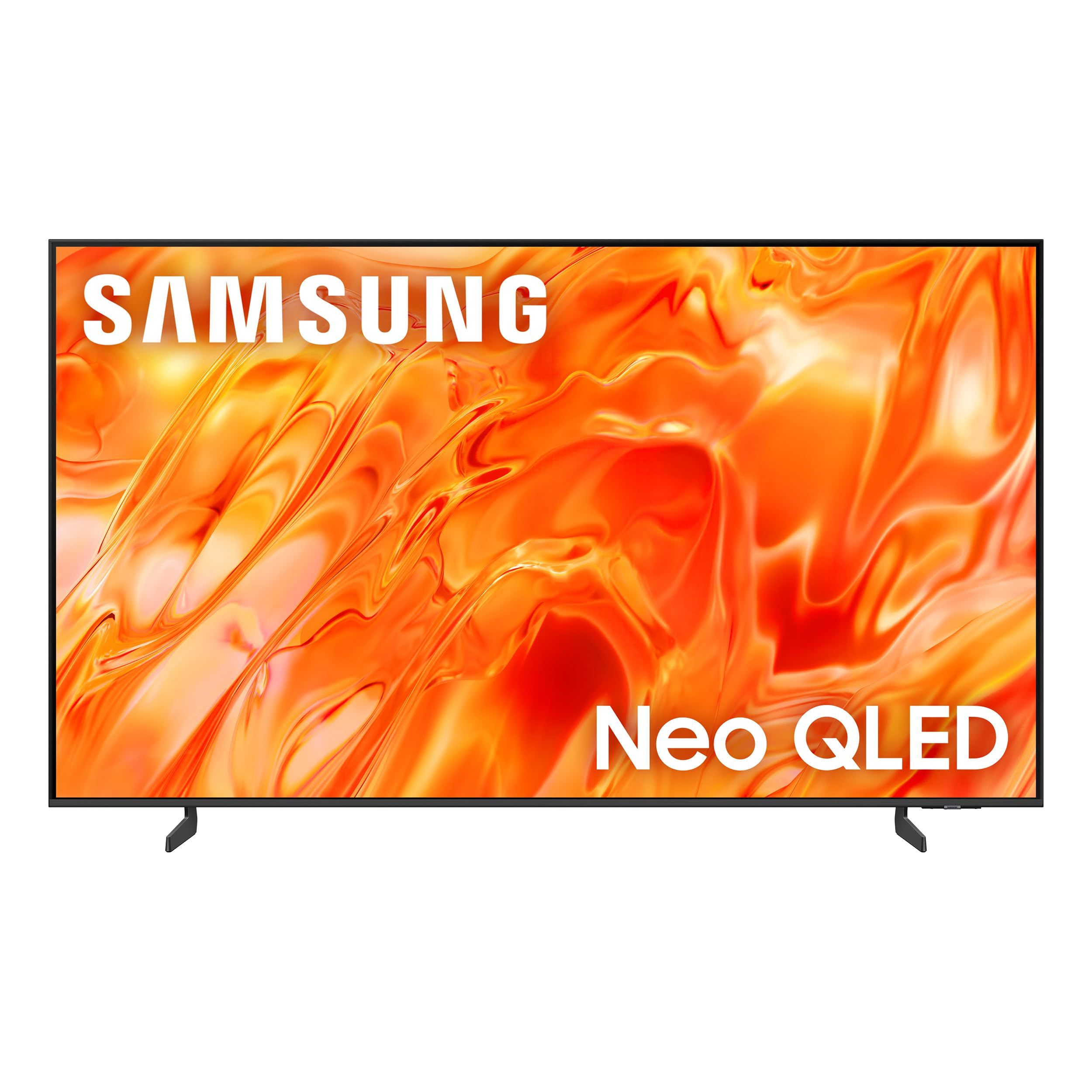
Samsung's QN70H uses Quantum Mini LED with a Real Quantum Dot display, and Samsung lists 100% Color Volume with Quantum Dot. The NQ4 AI Processor handles 4K Upscaling, and AI Customization Mode detects the type of content you are watching and adjusts the picture settings for it.
Its One UI Tizen platform comes with 7 years of automatic OS updates. LG's QNED84B page states up to 4 years of software updates. Motion Xcelerator and Gaming Hub cover gaming. Adaptive Sound Pro, Active Voice Amplifier Pro, and Object Tracking Sound Lite handle audio, and Samsung says the color is Pantone Validated.
Key highlights
- 65-inch screen
- Quantum Mini LED with Quantum Dot
- 100% Color Volume
- NQ4 AI Processor with 4K Upscaling
- Motion Xcelerator and Gaming Hub
- One UI Tizen with 7 years of automatic OS updates
Pros
- 7 years of OS updates suits owners who keep a TV a long time
- Pantone Validated color
- Active Voice Amplifier Pro emphasizes voices when the room is noisy
- Gaming Hub brings console, cloud, and app games together
Cons
- The maker page does not give a refresh rate figure
- The maker page does not list HDR formats or HDMI details
- Its 65-inch screen is smaller than the 75-inch top pick
Who it is for: Buyers who plan to keep their TV for many years and want stated long-term software support from the maker.
Skip if
You need published refresh rate and HDMI figures for PC or console gaming.
Hisense U7 Mini-LED 65-inch - Best for bright rooms
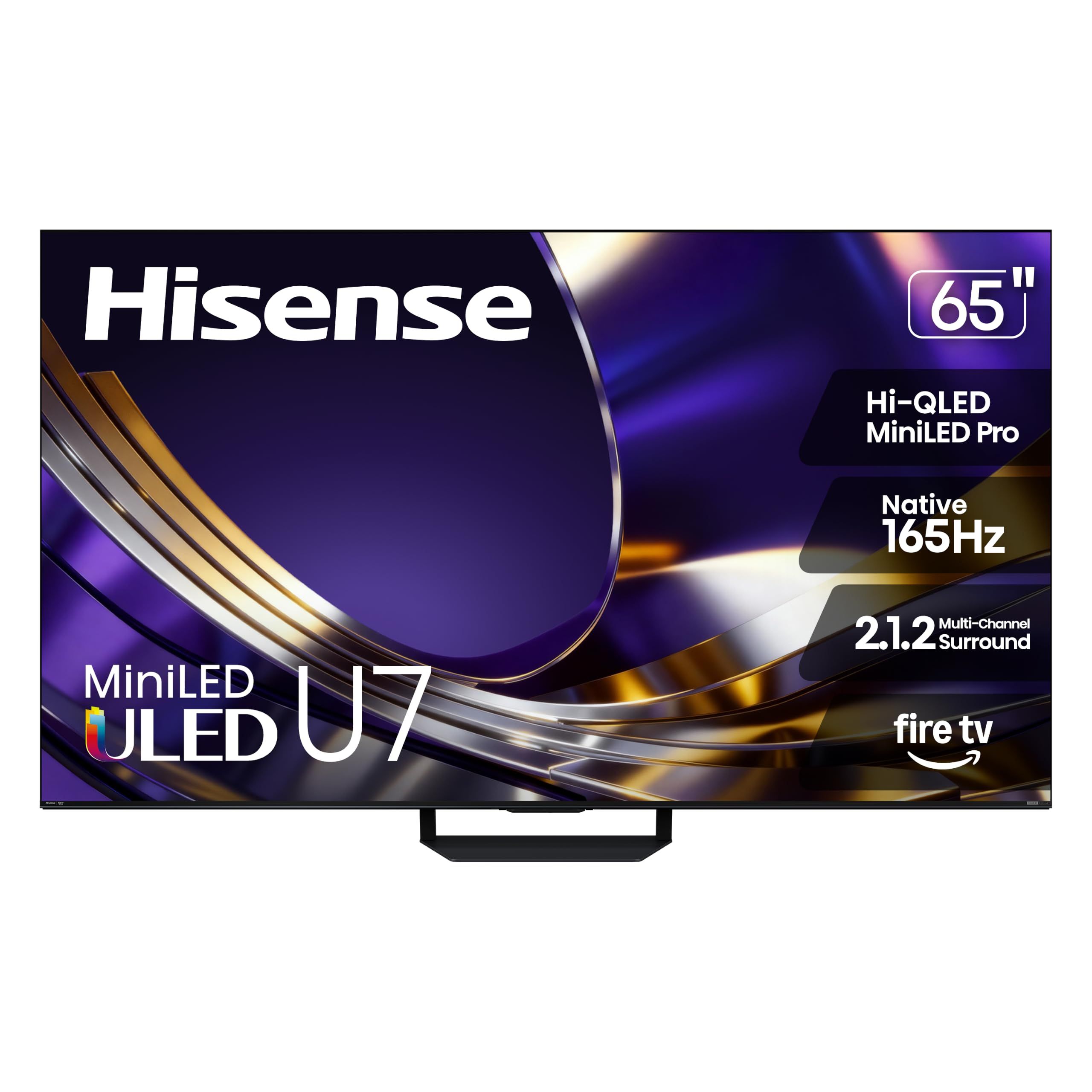
Hisense says the U7 uses thousands of Mini-LEDs to control light across the screen for brighter highlights and deeper blacks. Its standout feature for this slot is an advanced screen treatment that Hisense says minimizes glare from lamps and windows, which matters in rooms that get a lot of daylight.
Hisense aims the U7 at fast movies, live sports, and next-gen gaming, and it describes the refresh rate only as "ultra-high", with no figure. Multi-channel speakers tuned by Devialet handle sound, AI processing adjusts color, contrast, and clarity scene by scene, and Fire TV runs the smart features.
Key highlights
- 65-inch class screen
- ULED MiniLED with thousands of Mini-LEDs
- Anti-glare screen treatment
- Ultra-high refresh rate performance
- Multi-channel speakers tuned by Devialet
- Fire TV
Pros
- Screen treatment aimed at glare from lamps and windows
- Built for sports and gaming, according to Hisense
- Devialet-tuned multi-channel speakers
- Scene-by-scene AI picture processing
Cons
- The maker page gives no figures for brightness, refresh rate, or dimming zones
- The maker page does not list HDR formats or HDMI details
Who it is for: Households with a bright living room that watch a lot of daytime sports and already use Fire TV or Alexa.
Skip if
You want published brightness and refresh rate numbers before you buy.
LG QNED92B 115-inch - Best giant screen
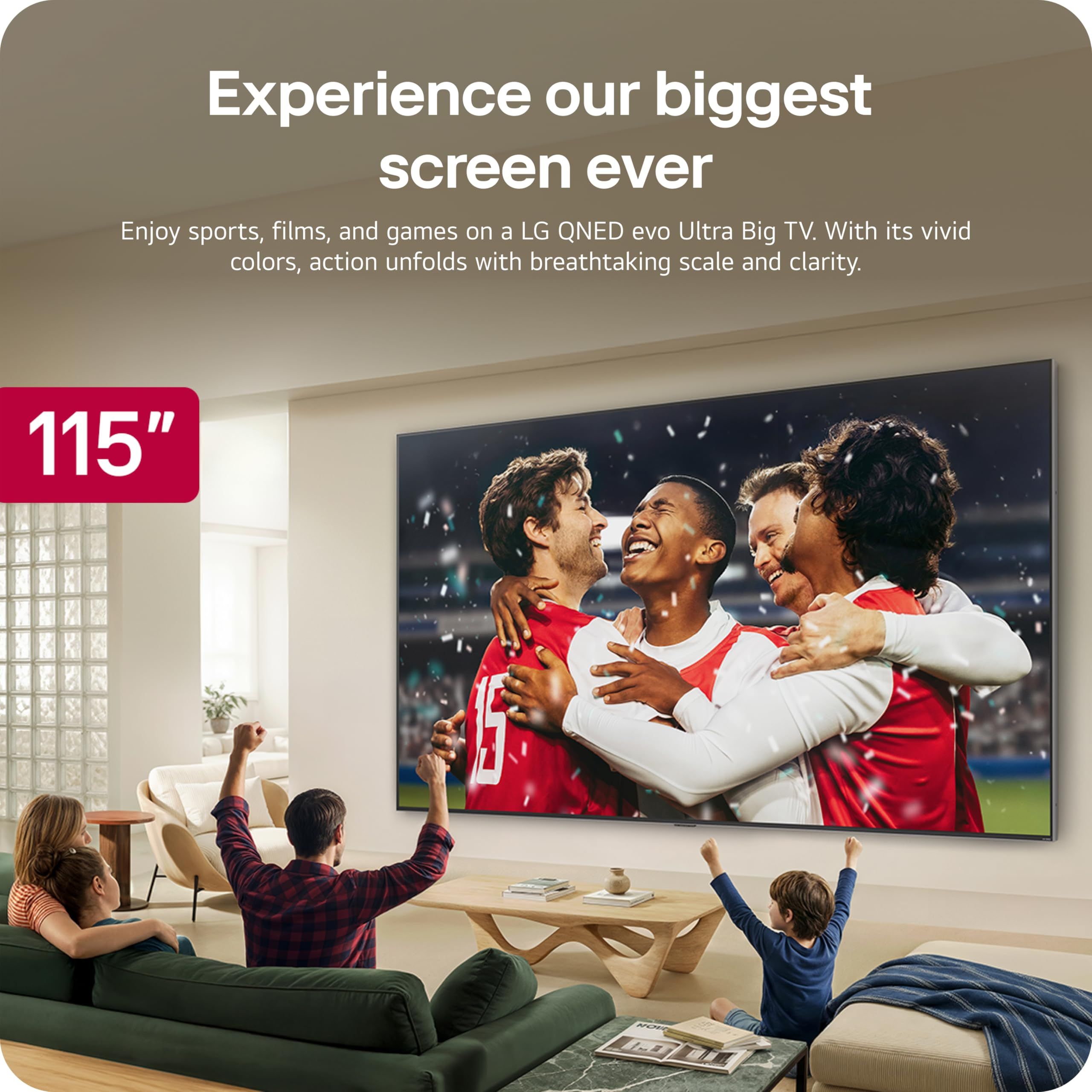
The LG QNED92B 115-inch is a very large Mini LED TV for rooms that would otherwise need a projector. Along with the Mini LED backlight, it adds Precision Dimming Ultra, which LG says brings deeper blacks and brighter highlights. It also has Dynamic QNED Color Pro with certified 100% Color Volume and the a8 AI Processor 4K Gen3.
It supports Dolby Vision, Dolby Atmos, and FILMMAKER MODE for movie nights. LG lists VRR 165Hz, but its footnote says a PC with a 165Hz graphics card is required. The footnote for Motion Booster 330 says it reaches 165Hz at optimized Full HD resolution. The webOS platform includes access to Google Gemini.
Key highlights
- 115-inch class screen
- Mini LED with Precision Dimming Ultra
- Certified 100% Color Volume
- a8 AI Processor 4K Gen3
- Dolby Vision, Dolby Atmos, and FILMMAKER MODE
- VRR 165Hz and Motion Booster 330
- webOS with Google Gemini
Pros
- Huge 115-inch screen
- Precision Dimming Ultra for contrast
- Dolby Vision and Dolby Atmos support
- High refresh rate support for PC gaming
Cons
- VRR 165Hz requires a PC with a 165Hz graphics card
- Motion Booster 330 reaches 165Hz only at optimized Full HD resolution
- A 115-inch screen needs a very large wall and room, and it is a premium purchase
Who it is for: Dedicated home theater or large media rooms with space for a 115-inch screen.
Skip if
Your room is an ordinary living room, or a 75-inch screen would already fill the wall.
Hisense U6 Pro Mini-LED 55-inch - Best smaller screen
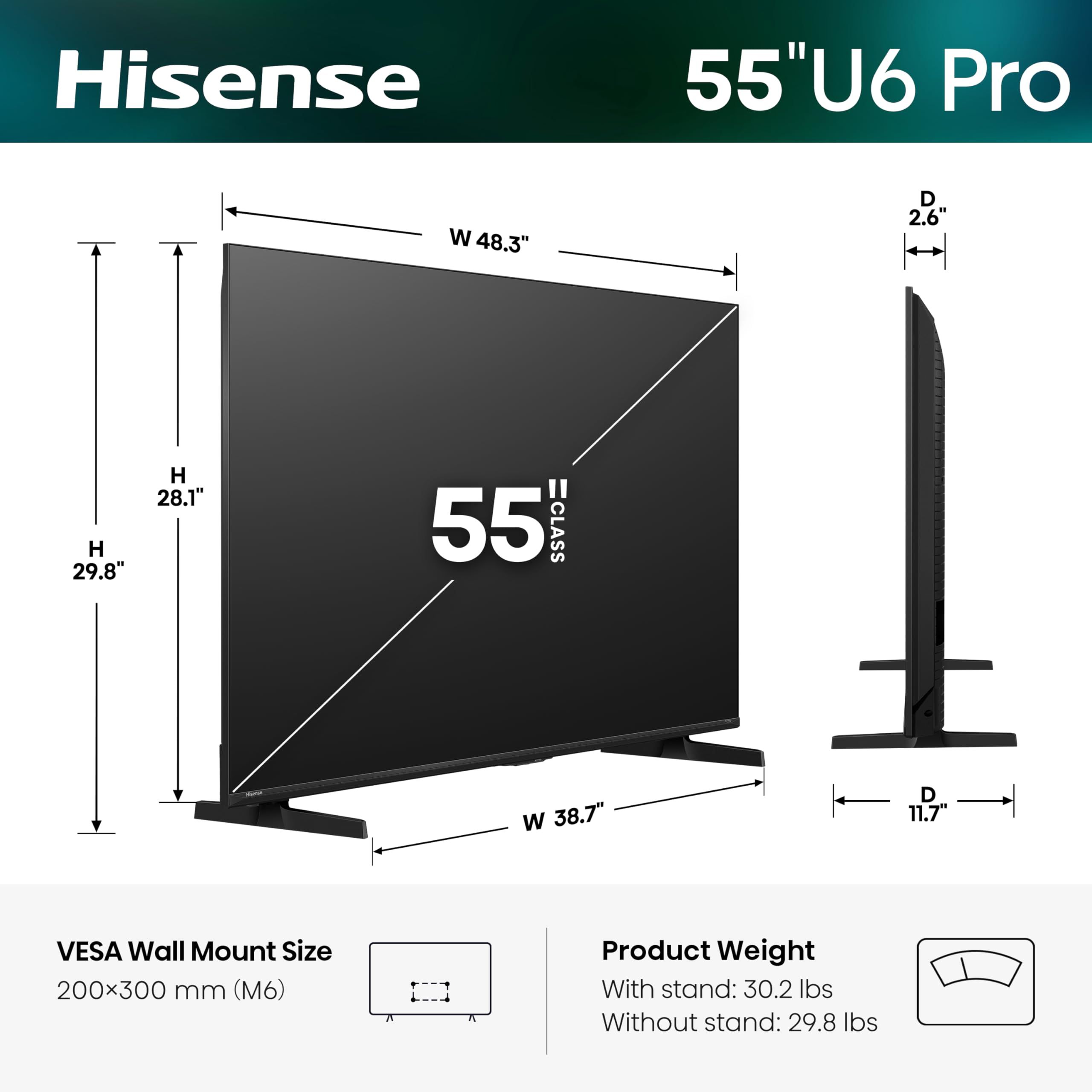
The Hisense U6 Pro 55-inch puts a ULED MiniLED 4K panel and Fire TV into a 55-inch class size, the smallest screen on this list. That suits bedrooms, apartments, and living rooms where a 65-inch or larger TV would be too much.
The Hisense page for this model, 55U6SF Pro, is a support page that confirms its name and screen size but lists no detailed specifications. If refresh rate, HDR formats, or HDMI details matter to you, check them on the full spec sheet before buying.
Key highlights
- 55-inch class screen
- ULED MiniLED backlight
- 4K resolution
- Fire TV built in
Pros
- 55-inch size fits smaller rooms
- Mini LED backlight in a compact size
- Fire TV platform built in
Cons
- The maker page lists no brightness, refresh rate, HDR, or HDMI specifications
- Smallest screen among these picks
Who it is for: Buyers who want Mini LED in a smaller room and are happy with Fire TV.
Skip if
You want a large living room screen or detailed maker specifications before buying.
How to Choose
- Match the size to the room. These picks range from 55 to 115 inches. Measure the wall and the seating distance first, since a 115-inch screen needs far more space than a 55-inch one.
- Read the refresh rate footnotes. Some headline figures apply only at lower resolutions. LG's footnotes say Motion Booster 288 and 330 reach 144Hz and 165Hz at optimized Full HD resolution.
- Check HDR format support. Dolby Vision, HDR10, and HDR10+ are separate formats. Make sure the formats your streaming services and discs use are on the maker's list.
- Think about glare. A room with windows or bright lamps benefits from a screen treatment that cuts reflections, such as the one Hisense describes for the U7.
- Pick a platform you like. These TVs run webOS, One UI Tizen, or Fire TV. Update support varies too, and Samsung states 7 years of OS updates for the QN70H.
- Look past the backlight label. Mini LED describes the backlight, not the whole TV. Dimming control, processing, audio, and ports still differ from model to model.
FAQ
What is a Mini LED TV?
It is an LCD TV whose backlight uses many very small LEDs. More LEDs allow finer control of light, which LG and Hisense both say brings brighter highlights and deeper blacks.
Is Mini LED the same as OLED?
No. Each OLED pixel makes its own light, while a Mini LED TV is an LCD panel lit from behind. The QNED, Neo QLED, and ULED names on this list are brand names for LCD-based Mini LED sets.
Do all QNED, Neo QLED, or ULED TVs use Mini LED?
Do not rely on the brand name alone. Check that the product page says Mini LED. Every pick here does: LG lists Mini LED, Samsung lists Quantum Mini LED, and Hisense lists ULED MiniLED.
Do I need a high refresh rate?
For movies and TV shows, it matters little. High refresh rates matter most for gaming, especially on a PC. LG says the 165Hz VRR on the QNED92B requires a PC with a 165Hz graphics card.
Published November 8, 2026 Last updated November 8, 2026
Add Technobezz on Google:Preferred SourceGoogle Discover
More on TVs
Buying guide
6 Best 85-Inch TVs in 2026
Buying guide
3 Best Rolling TV Monitors You Can Buy Right Now
Buying guide
6 Best OLED TVs for 2026
Deal
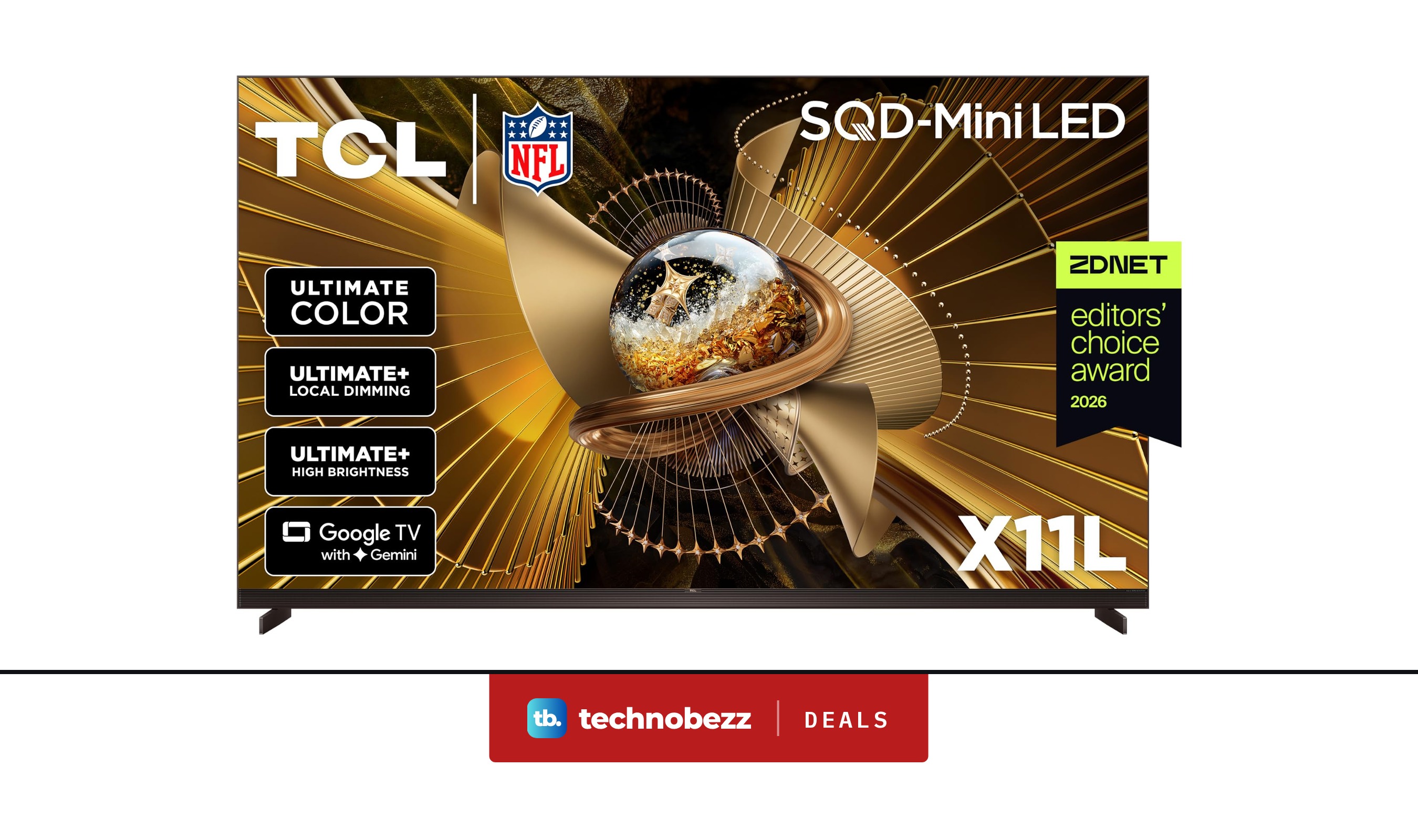
TCL 85-inch X11L SQD-Mini LED 85X11L TV marked down to $3848.60
More buying guides
Buying guide5 Best Gaming Earbuds in 2026Buying guide5 Best 6x9 Car Speakers in 2026Buying guide5 Best Bluetooth Adapters for PC in 2026Buying guide6 Best 24-Inch Monitors in 2026Buying guide6 Best Monitors for Photo Editing in 2026Buying guide7 Best Wireless Mice in 2026Buying guide5 Best Gaming Chairs in 2026Buying guide5 Best Vacuum Cleaners in 2026