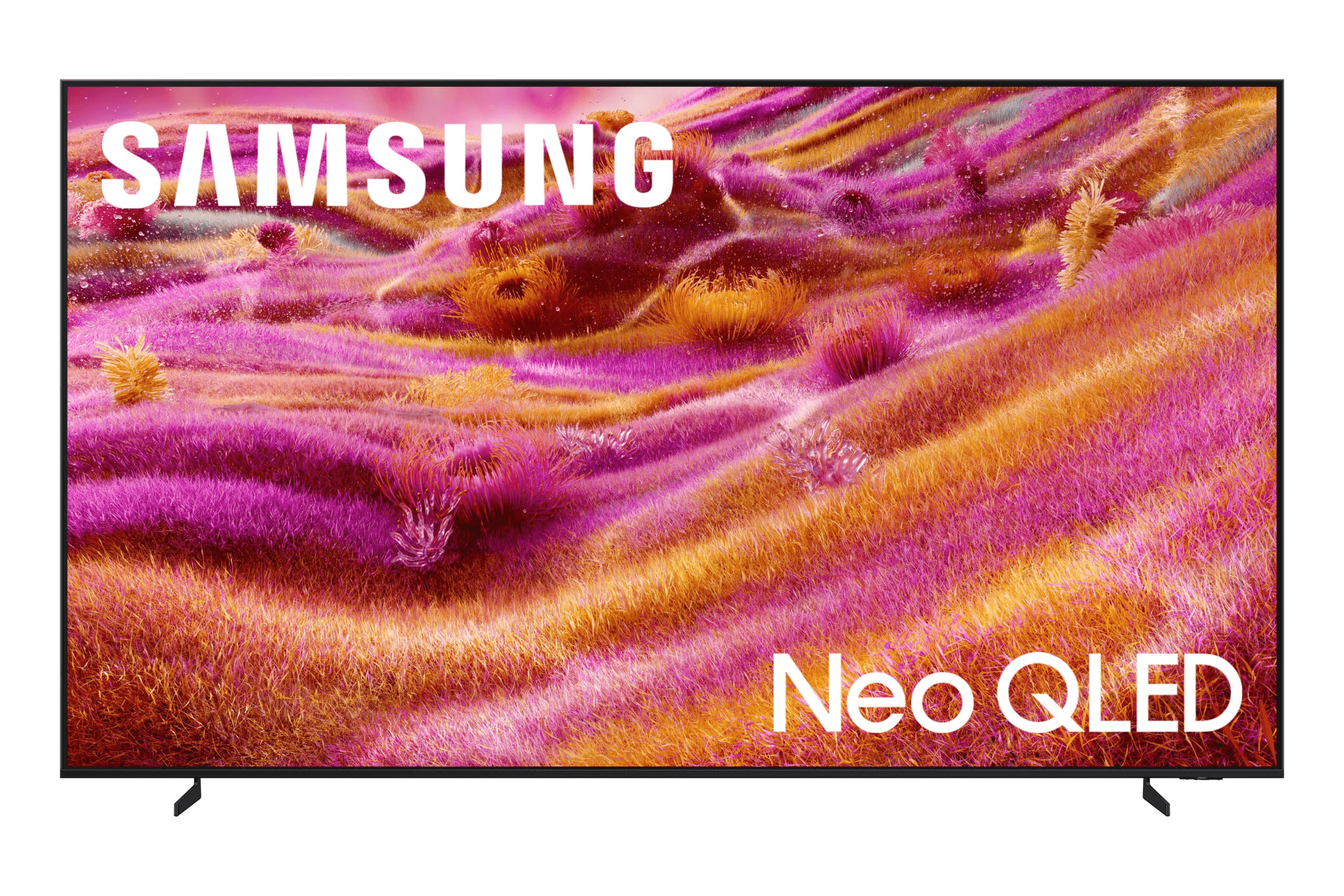
Samsung describes LED and QLED TVs as similar. It says both use LCD panels with LED backlights, and that QLED adds a layer of quantum dots. Samsung's QLED guide also says the backlight depends on the series, so the QLED name on its own does not identify the backlight.
What the two labels mean
An LG document printed in January 2016 defines an LED TV as an LCD TV with LED backlighting. Samsung's QLED guide describes QLED as an LED backlight that projects onto a quantum dot layer. Hisense's QD7N page pairs the name with the phrase Quantum Dot color technology.
- Panel: LCD in both, per Samsung.
- Light source: an LED backlight in both, per Samsung.
- Quantum dot layer: the part Samsung says QLED adds.
- Backlight type: on Samsung's QLED TVs it depends on the series, per Samsung's guide.
- HDR formats: named on some product pages, such as HDR10+ and HLG on Samsung's Q8F.
The backlight is a separate question
LG's backlight guide names three layouts. Edge-lit places LEDs around the perimeter of the screen, while full-array and direct-lit place them behind it. LG describes direct-lit as using fewer LEDs without local dimming.
Samsung describes Mini LED as backlighting that uses LEDs smaller than standard ones, with local dimming zones that are controlled independently. Local dimming, in Samsung's words, lets different areas of the backlight brighten or darken independently according to the content, which it says improves contrast. LG describes it in similar terms: the TV dims the areas that should be darker while preserving the bright ones.
Samsung's QLED guide lists the backlight on its QLED TVs as Direct Full Array or Dual LED, depending on the series. On its Neo QLED QN90H page, Samsung names the backlight Quantum Mini LED Full Array.
Which lines carry which label
These lines appear on Samsung, Hisense and LG US pages as of November 2026. The catalogs include older model years, and this is not a complete inventory.
- Samsung QLED: Q8F, Q7F, Q6F and QEF1, plus The Frame LS03HE.
- Samsung Neo QLED: the 2026 QN90H, QN80H, QN70H and QN1EH in 4K and the QN990H in 8K.
- Samsung Crystal UHD: the 2026 U9000H, U8000H and U7900H, plus the 2025 U8000F and U7900F.
- Hisense Hi-QLED: the E6, QD50R, H5Q, QD5030G, QD6030G, QD5, QD4, QD6 and QD7 families.
- Hisense LED and UHD: the A6, listed as LED 4K UHD, and the R6, listed as 4K UHD.
Hisense also uses the ULED MiniLED label for its 2026 U7 and U6 lines. LG's US UHD range includes the 2026 Nano UHD NU70, NU71 and NU85 alongside 2025 UHD lines such as the UA7000, UA75 and UA77.
What HDR formats each line lists
Samsung's Q8F, Q7F, Q6F and QEF1 QLED pages list HDR10+ and HLG. Its Crystal UHD U9000H, U8000H and U7900H pages list HDR10+, and the U8000F page lists HDR10+ and HLG. On its QLED comparison page, Samsung also uses the name Quantum HDR+ for the Q8F and Quantum HDR for the Q7F, Q6F and QEF1.
Hisense's QD7N QLED page lists Dolby Vision, HDR10, HDR10+ and HLG. Its QD50R Hi-QLED page and its A6 (A65H) LED page each name Dolby Vision HDR and HDR10.
Which one fits
If the quantum dot layer is what you are after, the QLED label is the one to look for, because Samsung says that layer is what QLED adds and Hisense pairs the QLED name with Quantum Dot color technology. If local dimming matters to you, check the backlight listing for the exact line, because Samsung says the backlight on its QLED TVs depends on the series and LG describes direct-lit backlights as using no local dimming. If you watch a lot of content in one HDR format, read the HDR listing for the exact line, because Hisense's QD50R Hi-QLED page and its A6 LED page each name Dolby Vision HDR and HDR10, and Samsung's Crystal UHD U8000F page lists HDR10+ and HLG as its QLED pages do.
See also QLED vs Neo QLED, OLED vs QLED and OLED vs LED.