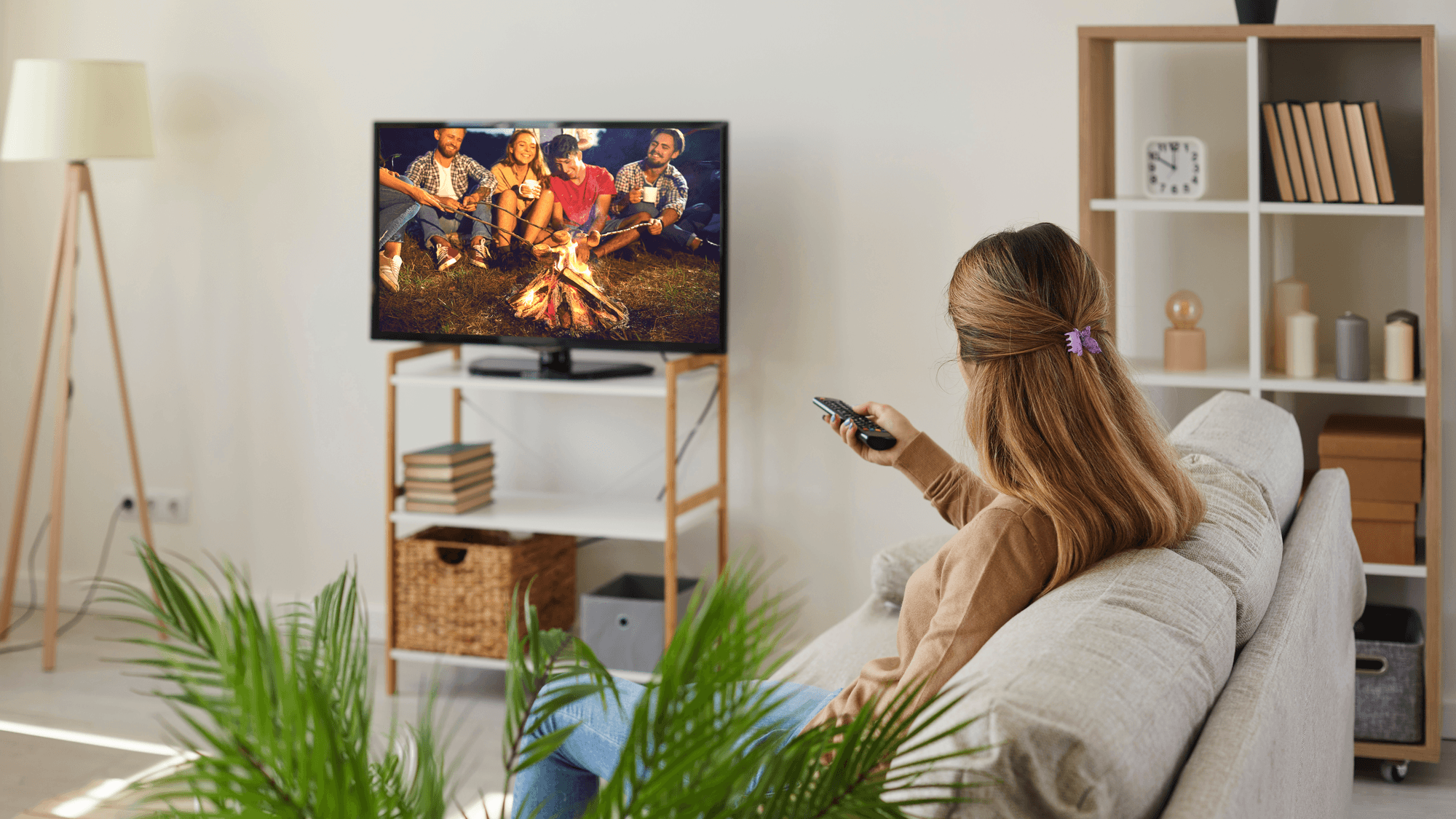
An LED TV is an LCD panel lit from behind by LEDs, while an OLED TV has pixels that make their own light and can switch off one at a time. On the makers' own US stores, TCL lists a 32-inch LED model at $159.99, while Samsung's 48-inch S85H OLED lists at $1,199.99. If the budget is tight, LED sets go much lower; if deep blacks in a dark room matter most, OLED is built for that job.
How each panel makes light
Samsung defines an LED TV as an LCD television backlit by LEDs instead of the fluorescent tubes older sets used. In an OLED TV, Samsung says, each pixel produces its own light with no separate backlight. A QLED set is still in the LED family, since Samsung describes it as an LED-lit LCD with a quantum dot layer added, a split covered in more depth in OLED vs QLED.
LED TVs do not all handle their backlight the same way. TCL's 32-inch Q3L uses Direct LED lighting, and its spec sheet lists local dimming zones as not applicable. Local dimming splits the backlight into zones, and Sony explains it with its 2022 X90K, whose full array system controls the backlight in zones so bright and dark areas show at once. TCL's QM7L series goes up to 2,100+ dimming zones, and Samsung says its Neo QLED sets use smaller Mini LEDs for finer control, the type compared in Mini LED vs OLED.
Blacks, brightness and viewing angles
Black levels are OLED's strength on paper. Samsung says each OLED pixel can turn off completely, which avoids light bleeding from a backlight. Sony describes the self-emissive pixels in its 2026 BRAVIA 6 as giving infinite blacks and images visible from any angle, and Samsung says its OLEDs keep accurate colors at extreme viewing angles.
Several LED makers stress brightness. Samsung's own guide comparing its OLED and Neo QLED sets credits Neo QLED with brighter screens, though it gives no shared measurement. TCL advertises up to 3,000 peak nits for the QM7L series, a figure for the series rather than every size. Hisense says its 2026 U7 pairs thousands of Mini LEDs with full array local dimming for brighter highlights and deeper blacks in bright rooms.
On a budget LED set, viewing angle figures need a closer read. TCL lists 178 degrees horizontal and vertical for the 32Q3L, but the spec does not say how much color or contrast holds at that angle. Samsung says its higher-end Neo QLED models and The Frame use wide viewing angle technology for off-center viewers.
Burn-in and image retention
Samsung warns that static images or logos can cause OLED burn-in over time. Its US QLED page says the inorganic materials in those LED-lit sets help prevent burn-in issues, which is not a promise that no LED TV can ever retain an image.
LG's support page on burn-in separates two problems. Image retention usually fades, while burn-in lasts much longer and stays visible while other content plays, and prolonged static images are the usual cause. LG also says burn-in is no longer a major everyday concern for most people under normal viewing, while it remains technically possible.
Both LG and Sony build in safeguards. LG's logo brightness adjustment detects static logos and dims them. Sony lists panel refresh, panel calibration, pixel shift, screen savers and automatic brightness adjustment among its image retention protections.
Entry prices for LED and OLED
These are list or launch prices from the makers' own US stores and price lists, before tax, as checked in November 2026. Temporary sale prices are left out.
- TCL Q3L: $159.99 for the 32-inch Full HD model. The 43-inch 4K Q6LR lists at $299.99. Neither page states a model year.
- Samsung Crystal UHD U8000H: $249.99 for the 43-inch 2026 model on Samsung's US business store.
- Sony BRAVIA 3 II: $599.99 for the 43-inch.
- Samsung S85H OLED: $1,199.99 for 48 inches and $1,499.99 for 55 inches, from Samsung's April 2026 price list.
- Sony BRAVIA 6 OLED: $1,299.99 for 48 inches, Sony's MSRP at its US launch in August 2026.
Which one fits
If you need a small TV for a bedroom or kitchen for under $300, an entry LED set is the only route in this list, since no OLED here comes close to that price. If you watch mostly at night with the lights off and can spend about $1,200, OLED is built for that, because its pixels switch off fully.
If your room is bright, LED models with Mini LED and local dimming are where makers aim their brightness claims, so check the spec page for dimming zones, since sets like the Q3L have none. If a news ticker or game menu stays on screen for hours each day, note that Samsung and Sony warn about static images on OLED.