
In daylight, the iPhone 18 Pro Max and the iPhone 17 Pro take very similar photos. I shot the same scenes on both, side by side, and the differences were small. In these pairs, the 18 Pro Max comes out a touch deeper on plants and a little brighter on sea and sky, and the 4x lens data matches. The one upgrade I could really see is the variable aperture, which my 17 Pro does not have. A second afternoon added matched 4K video, where the two measured within a few percent of each other on plants, and photos of skin, where the 18 Pro Max came out redder and truer to life.
Technobezz is supported by its audience. We may get a commission from retail offers. Reviews ethics statement.
iPhone 18 Pro Max vs iPhone 17 Pro Camera Comparison in Daylight
The same scenes on the iPhone 18 Pro Max and iPhone 17 Pro in daylight: photo pairs, matched 4K video and skin tones, with the data.
Updated October 14, 2026Oct 14, 2026
•15 min read

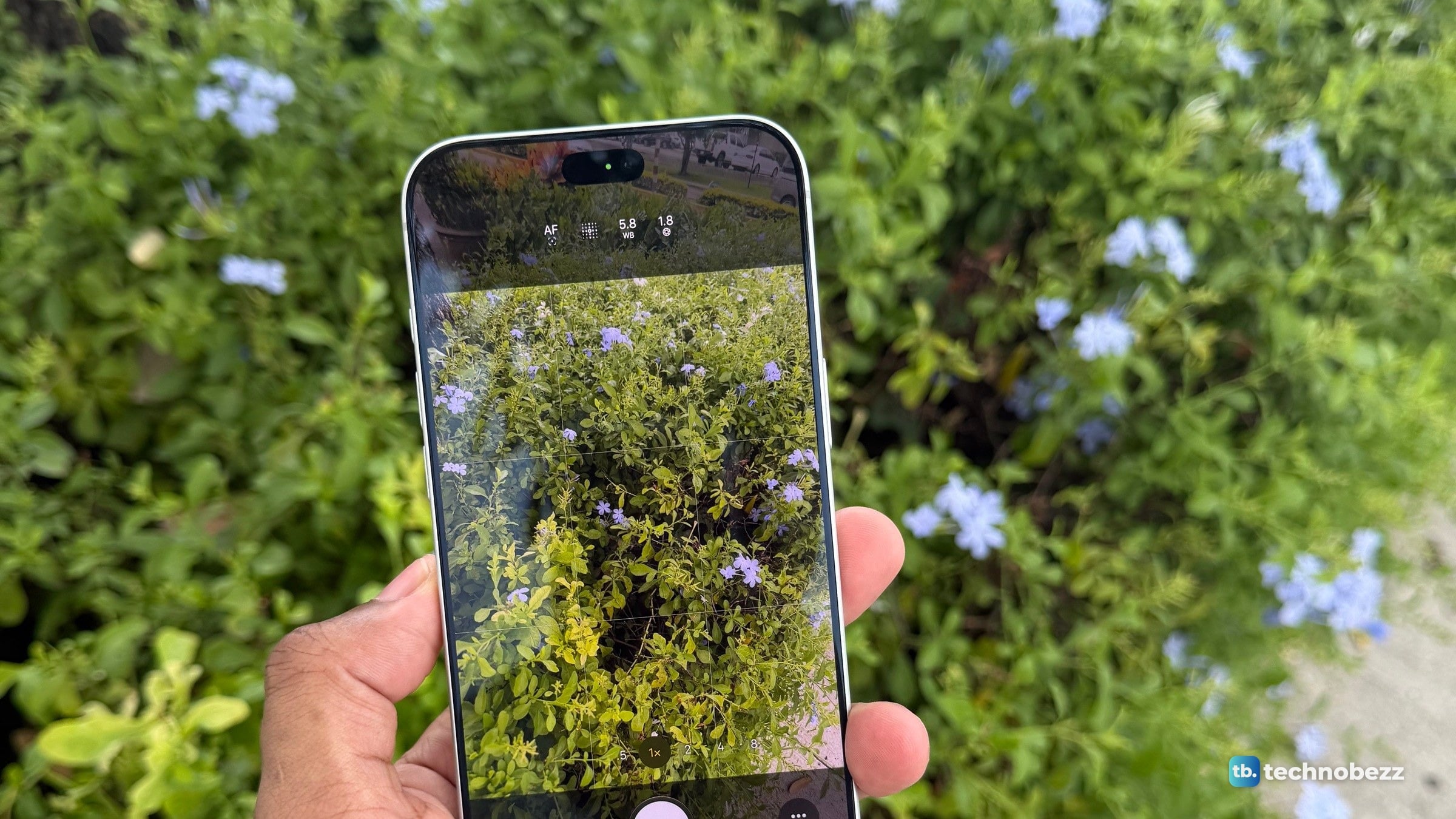
Credit: Technobezz
Get Deals Like These in Your Inbox
The best prices, checked by our editors.
In This Review
Apple iPhone 18 Pro Max
Display6.9-inch all-screen OLED
Height6.43 in (163.4 mm)
Width3.07 in (78.0 mm)
Depth0.34 in (8.75 mm)
Weight8.78 oz (249 g)
Main camera48MP Fusion Main with variable aperture
The short version
- Thirteen matched scenes, handheld, in one afternoon, most shot within a second of each other.
- Plants: the 18 Pro Max is a touch deeper and richer. Sea and sky: it exposes a little brighter, and the 17 Pro keeps a deeper blue.
- In these scene pairs, the main cameras shot at nearly the same aperture, f/1.8 on the 18 Pro Max and f/1.78 on the 17 Pro. In the 4x and 8x sea pairs, the telephoto lens data matches.
- 4K video recorded in the same second measured within a few percent on plants, and the 17 Pro kept the deeper blue sky.
- Skin: the 18 Pro Max rendered my arm redder, which is the truer of the two. Not covered yet: night and low light.
How I shot the comparison
I took both phones out for one afternoon, the day after the 18 Pro Max came out of its box, and shot roadside planters, a lawn, the sky, the open sea from a sea wall, and the paint on my own car. Everything was handheld.
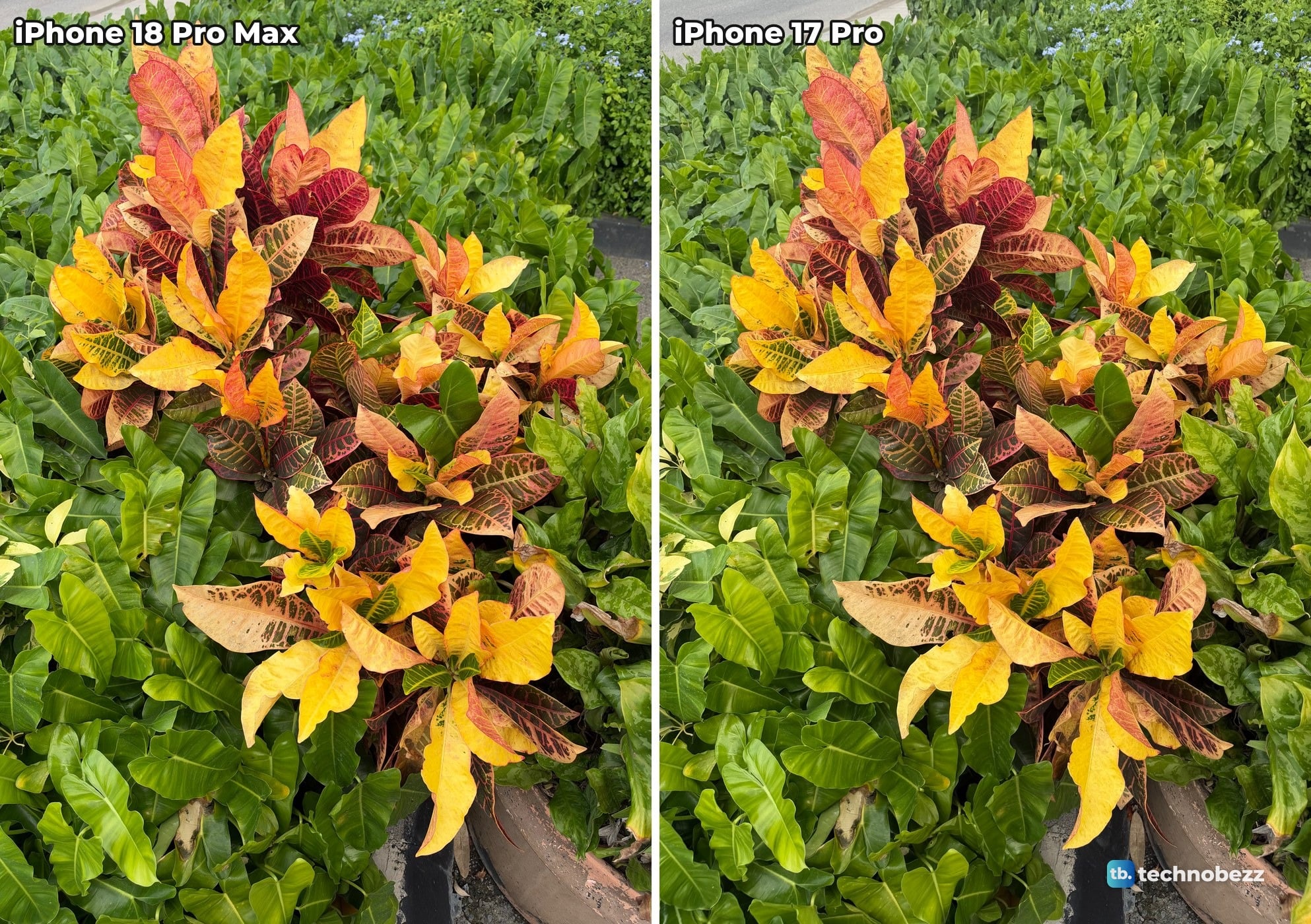
Each pair has the iPhone 18 Pro Max on the left and the iPhone 17 Pro on the right. The phones were side by side, not in the same spot. The plant, sea and sky pairs are trimmed to the view both phones share, and the car paint pair is shown whole because its frames could not be lined up. Color and exposure are as the phones saved them.
The photo data shows automatic exposure and automatic white balance on every frame in the pairs. The Photographic Style settings on the two phones were not verified, so the color findings describe the saved photos from this afternoon. Where a frame is described as measuring brighter or more saturated, that is the average over the shared part of the scene.
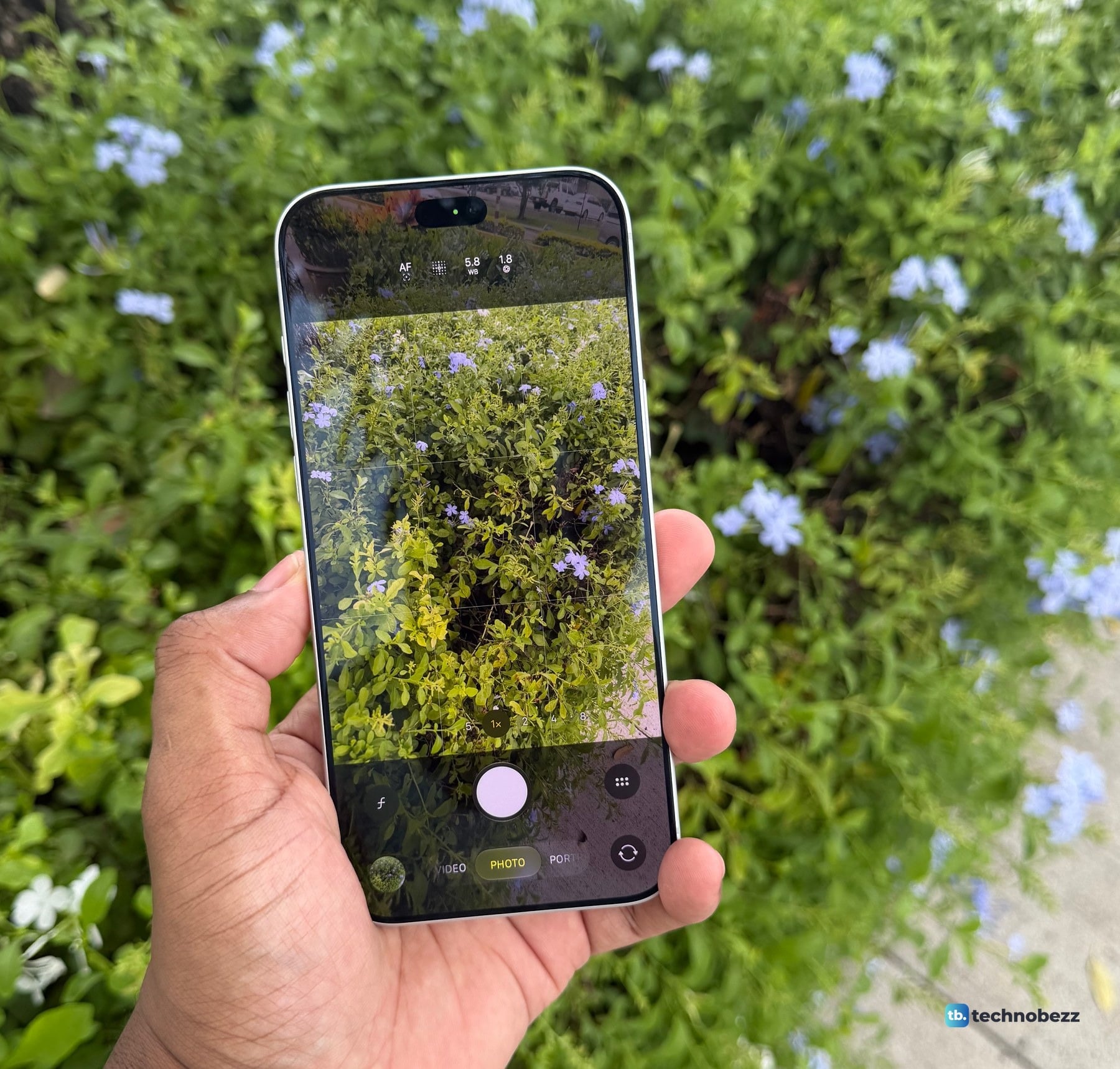
One detail in the photo data matters for everything below. The 18 Pro Max's main lens opens to f/1.48, but every main camera frame in these pairs was taken at f/1.8, and my 17 Pro's main camera is fixed at f/1.78. So the two phones were working at practically the same aperture. Apple says the camera can widen to f/1.48 for low-light shots, and nothing here is low light.
This Short runs through the video and skin results from the second afternoon.
Plants and color on the iPhone 18 Pro Max vs iPhone 17 Pro
Across the seven plant pairs, the 18 Pro Max measured more saturated in four, about level in two and slightly less in one. It measured slightly darker in four of the seven. A touch deeper is the honest size of it.
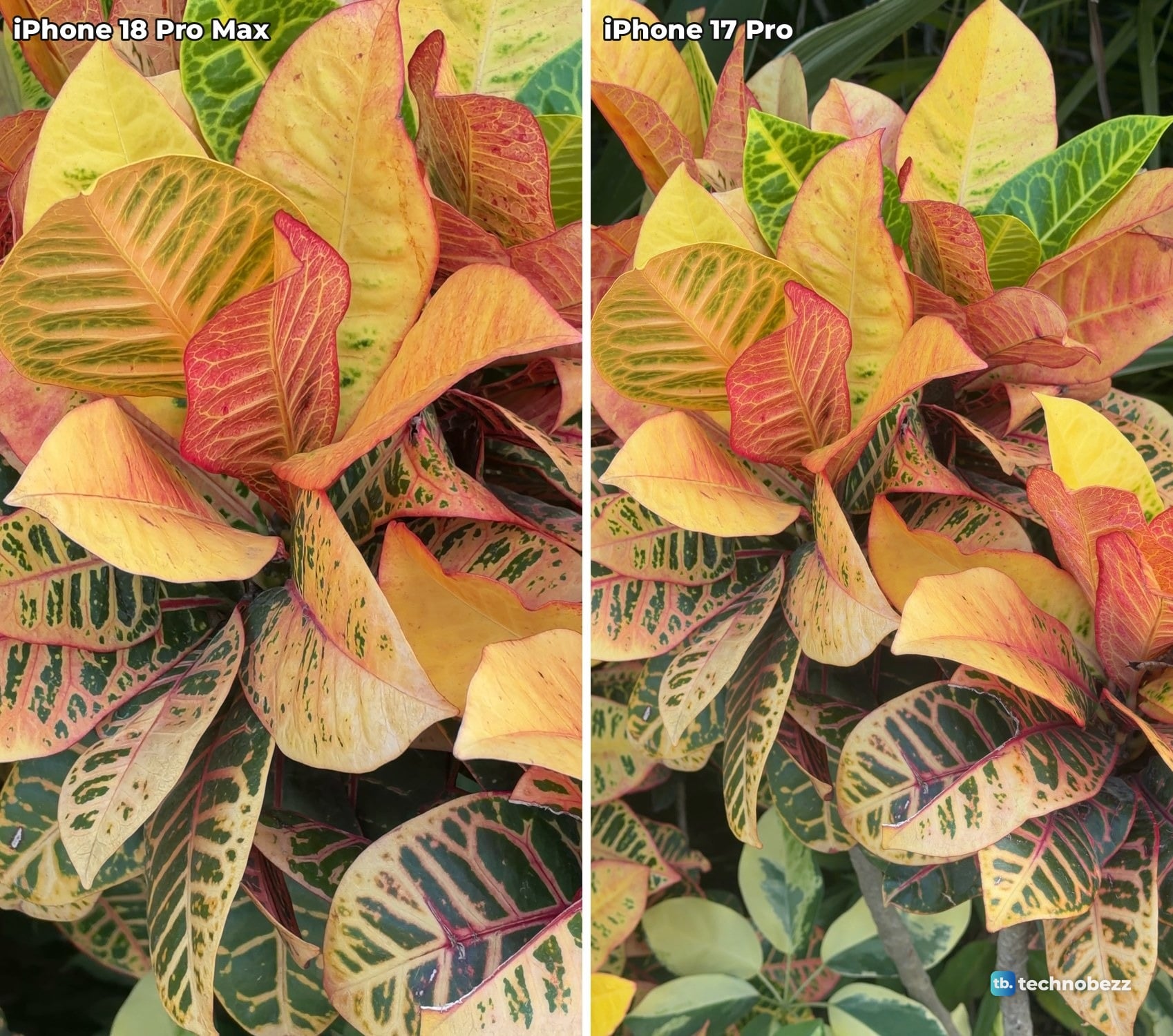
Start with the orange croton. Both frames carry the same time stamp, 2:43:22 PM, and at this size they are close to interchangeable.
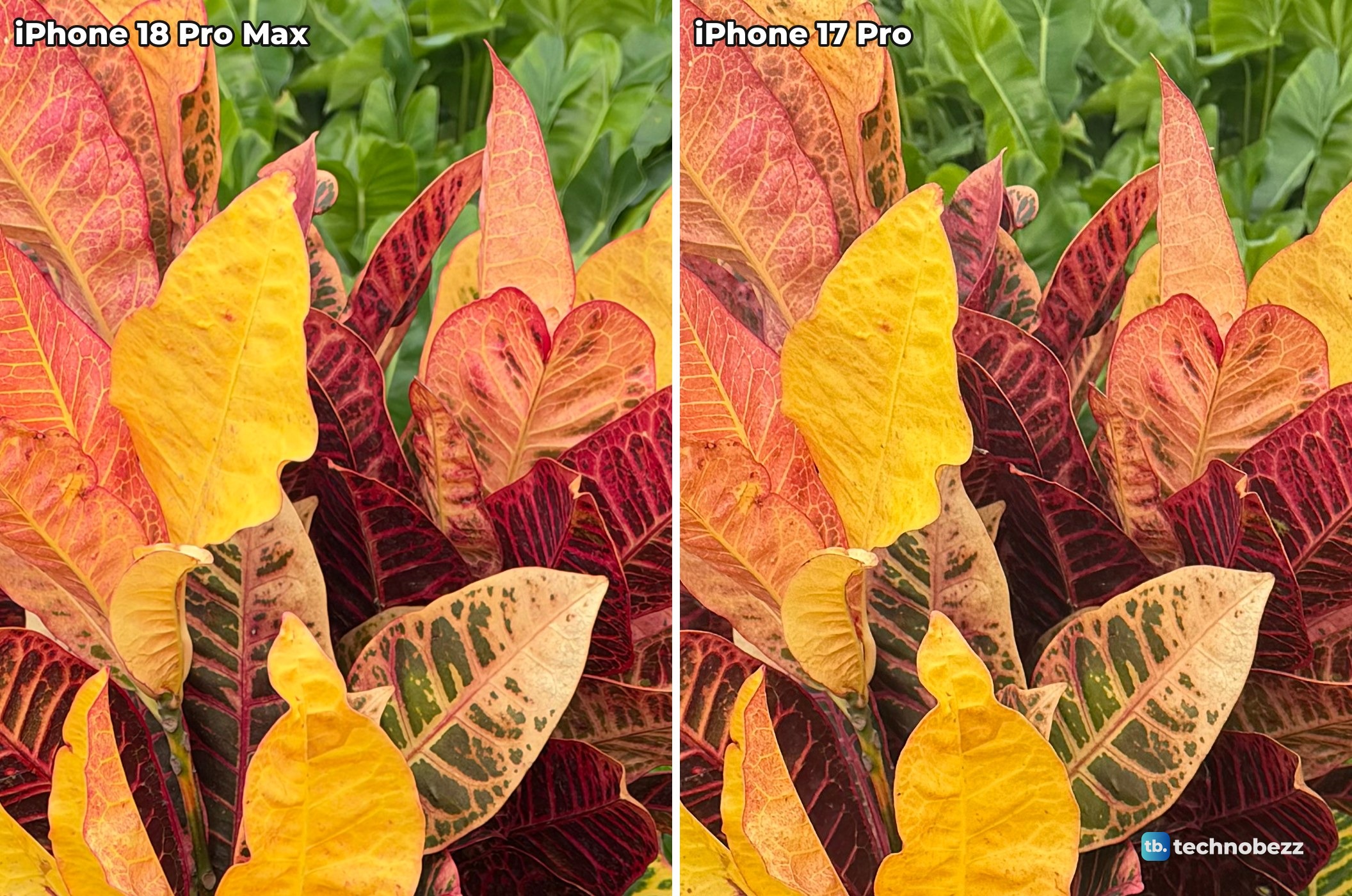
At full size the two part ways a little. The 17 Pro holds slightly finer vein texture in these leaves, and the 18 Pro Max is a little smoother.
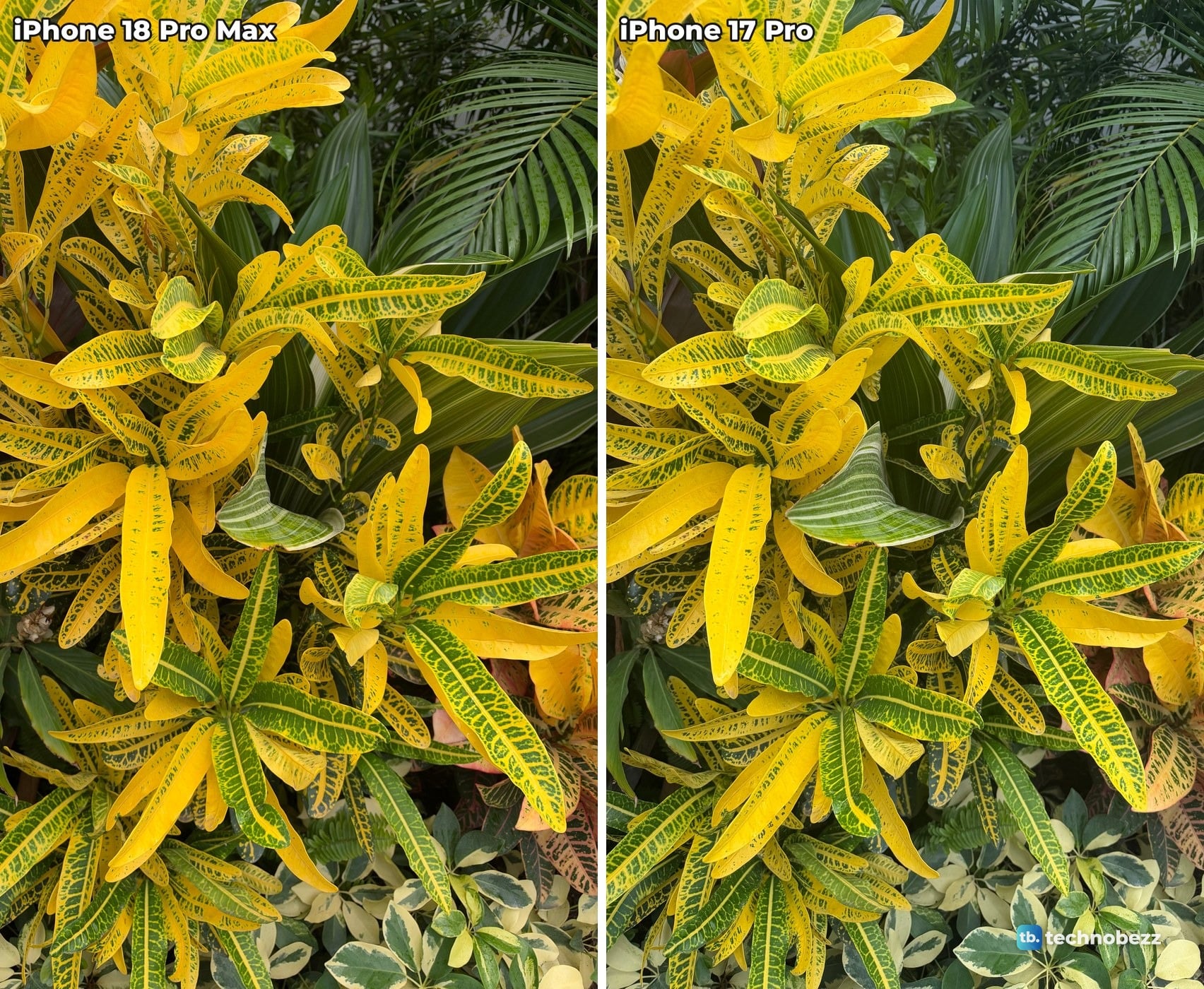
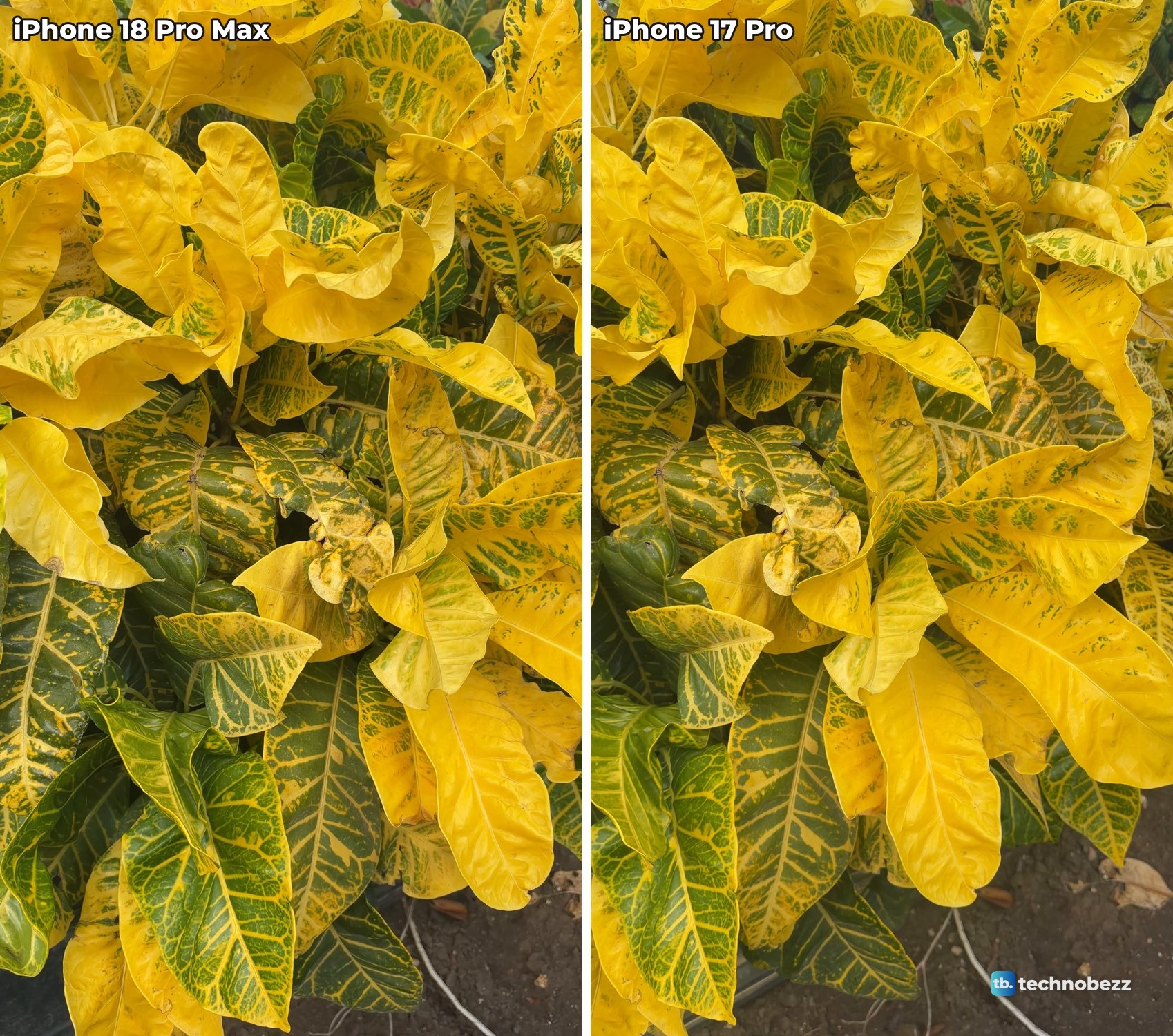
The yellow croton is where the color difference is easiest to see. The 18 Pro Max frame is darker and more saturated, so the yellows sit deeper and the greens behind them go darker. The 17 Pro frame is lighter.
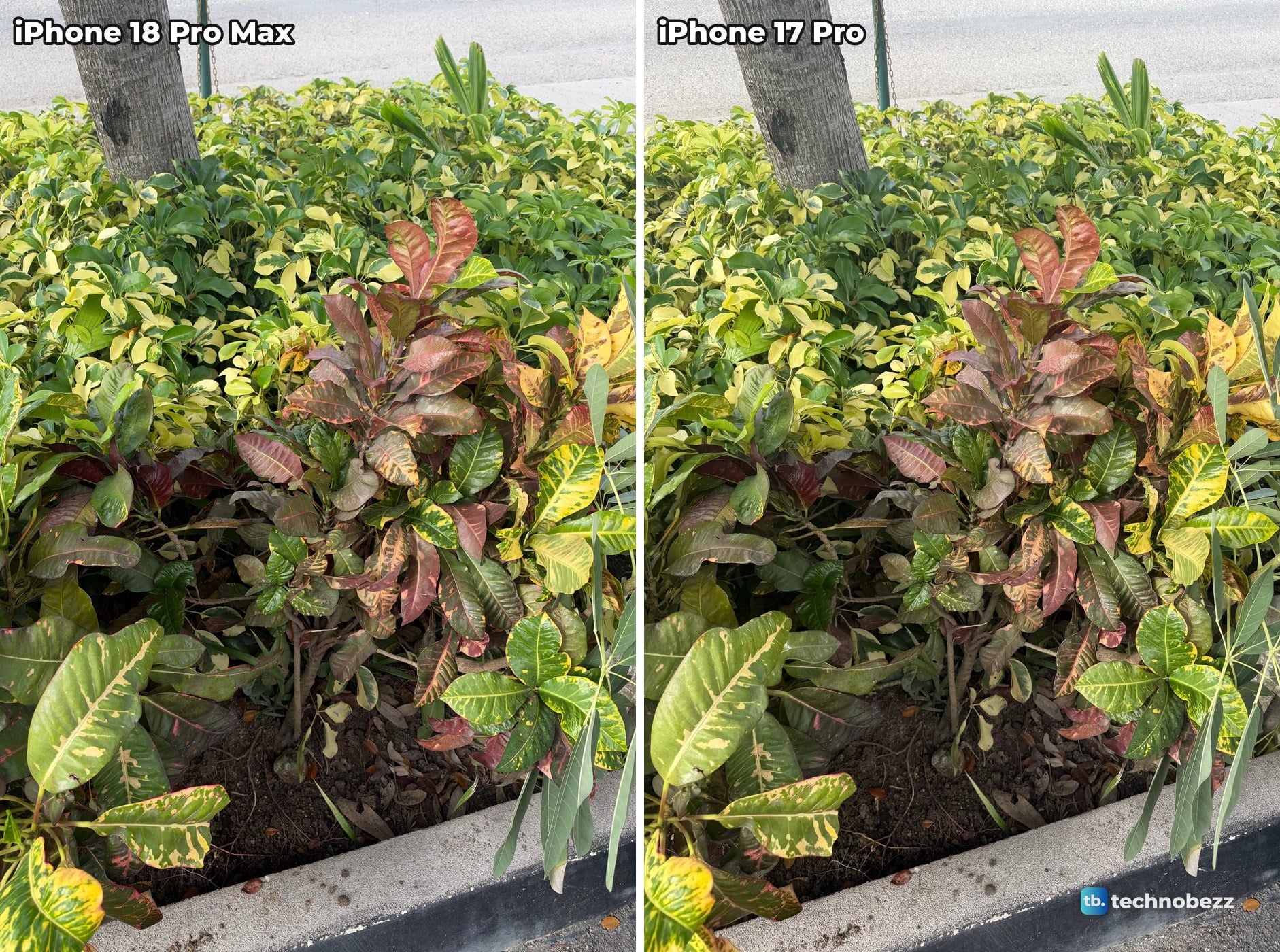
The croton bed under a tree is the same story at lower volume. The 18 Pro Max is a touch darker and richer, and you have to look for it.
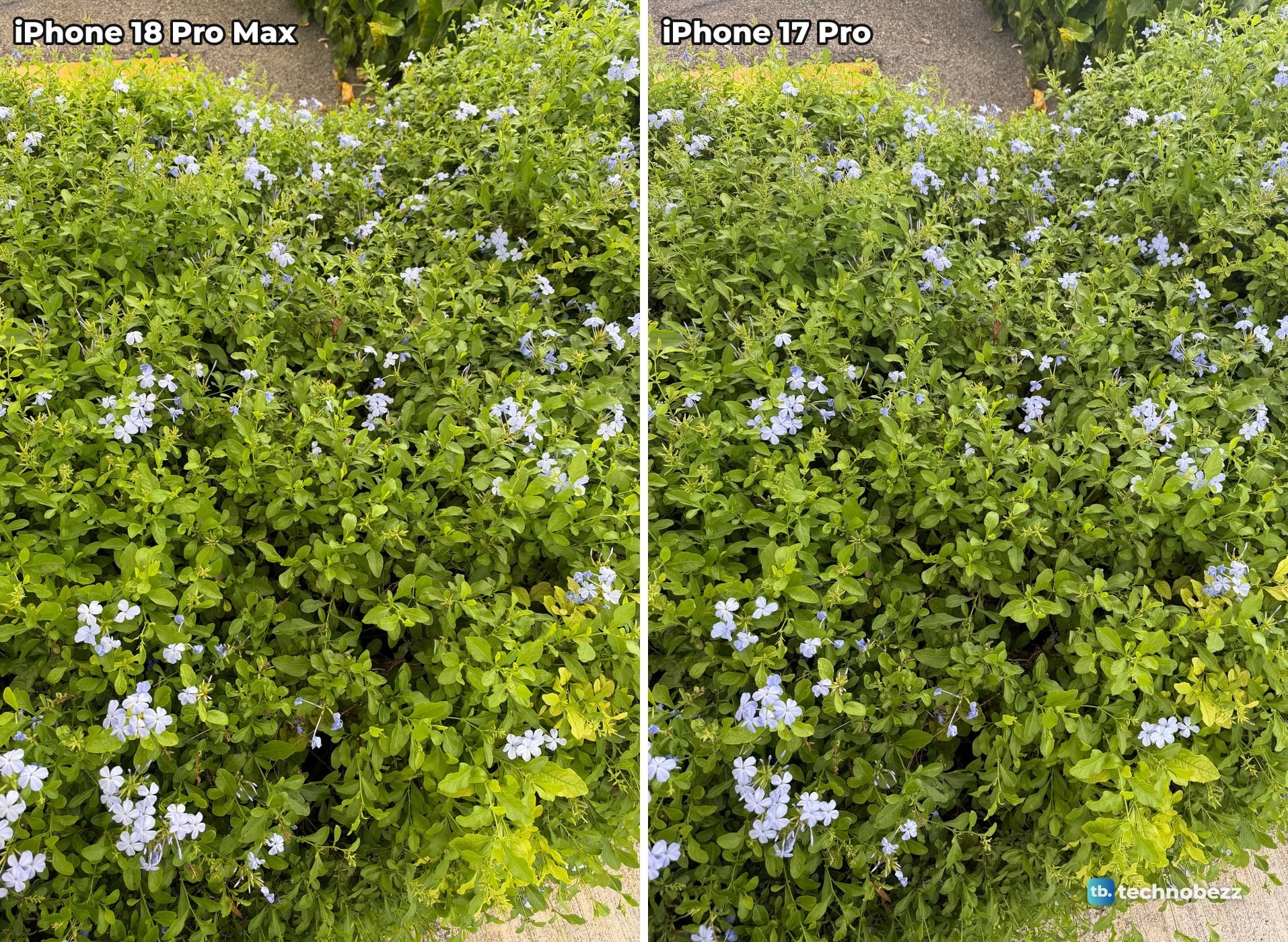
On the plumbago hedge the greens are deeper on the 18 Pro Max, and the pale blue flowers are close on both.
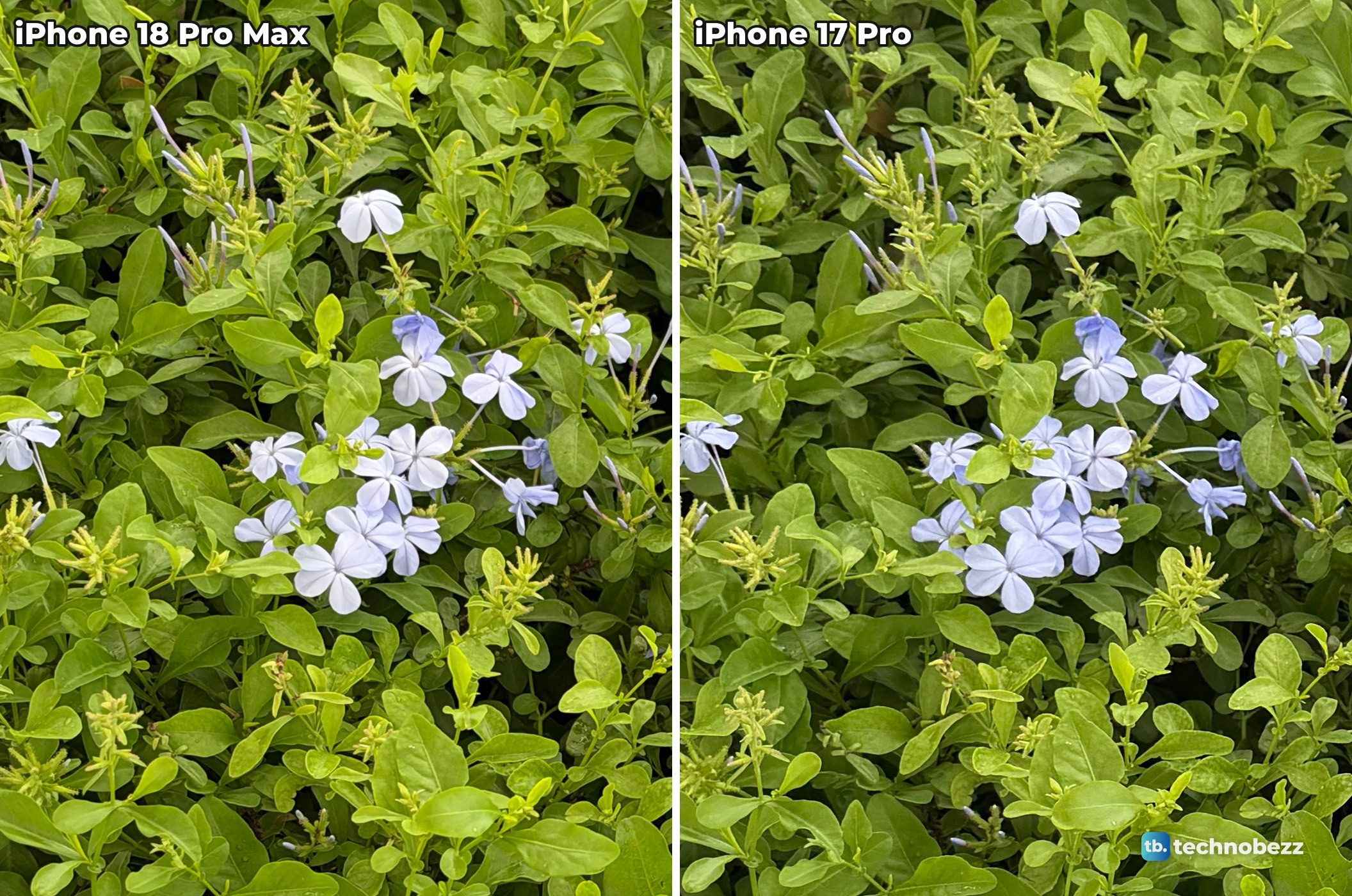
Cropped to full size, the flowers and leaves look much the same on both phones.
The palm went the other way. The 17 Pro frame measured slightly more saturated, and the two were level on brightness. So the deeper color is a tendency, not a rule.
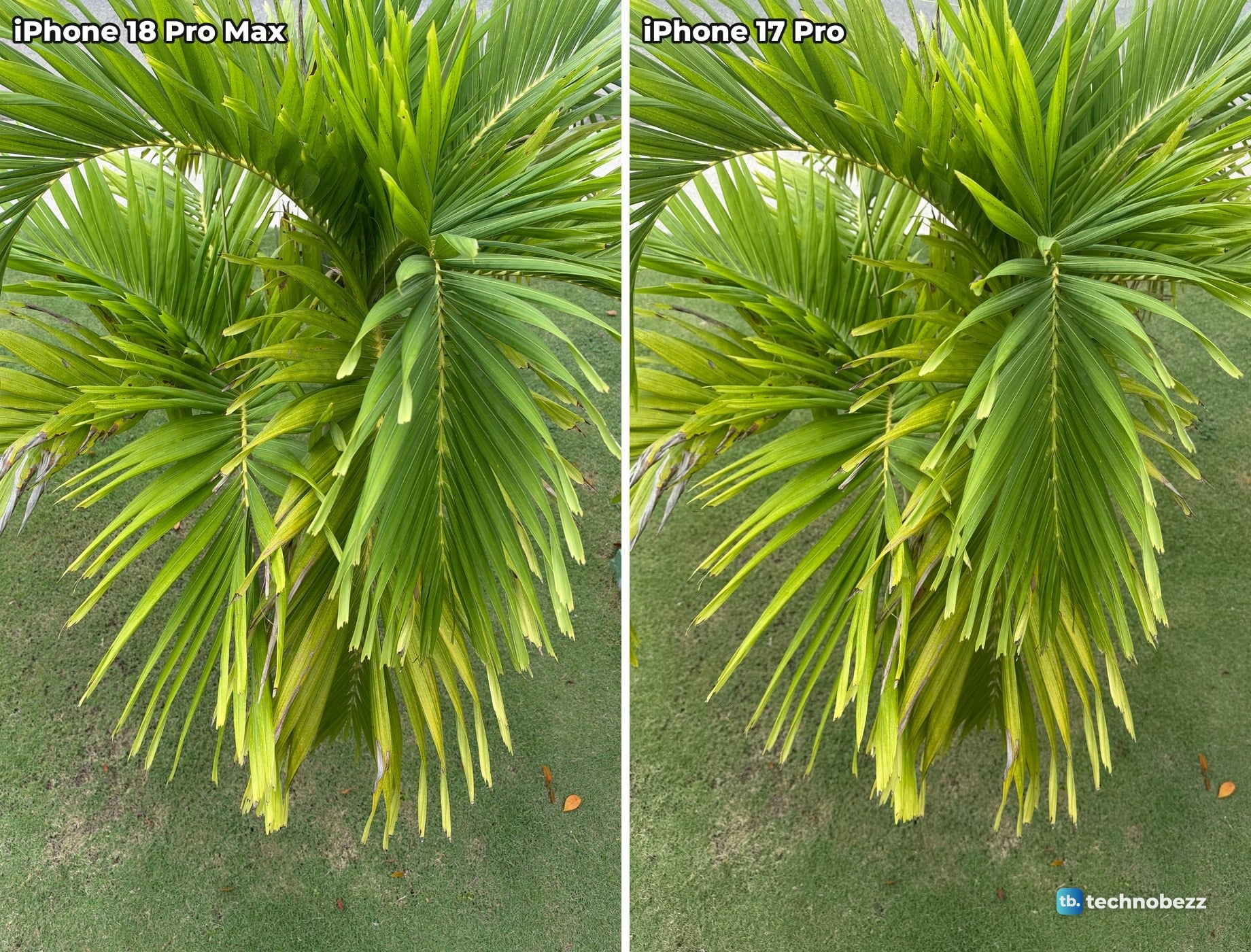
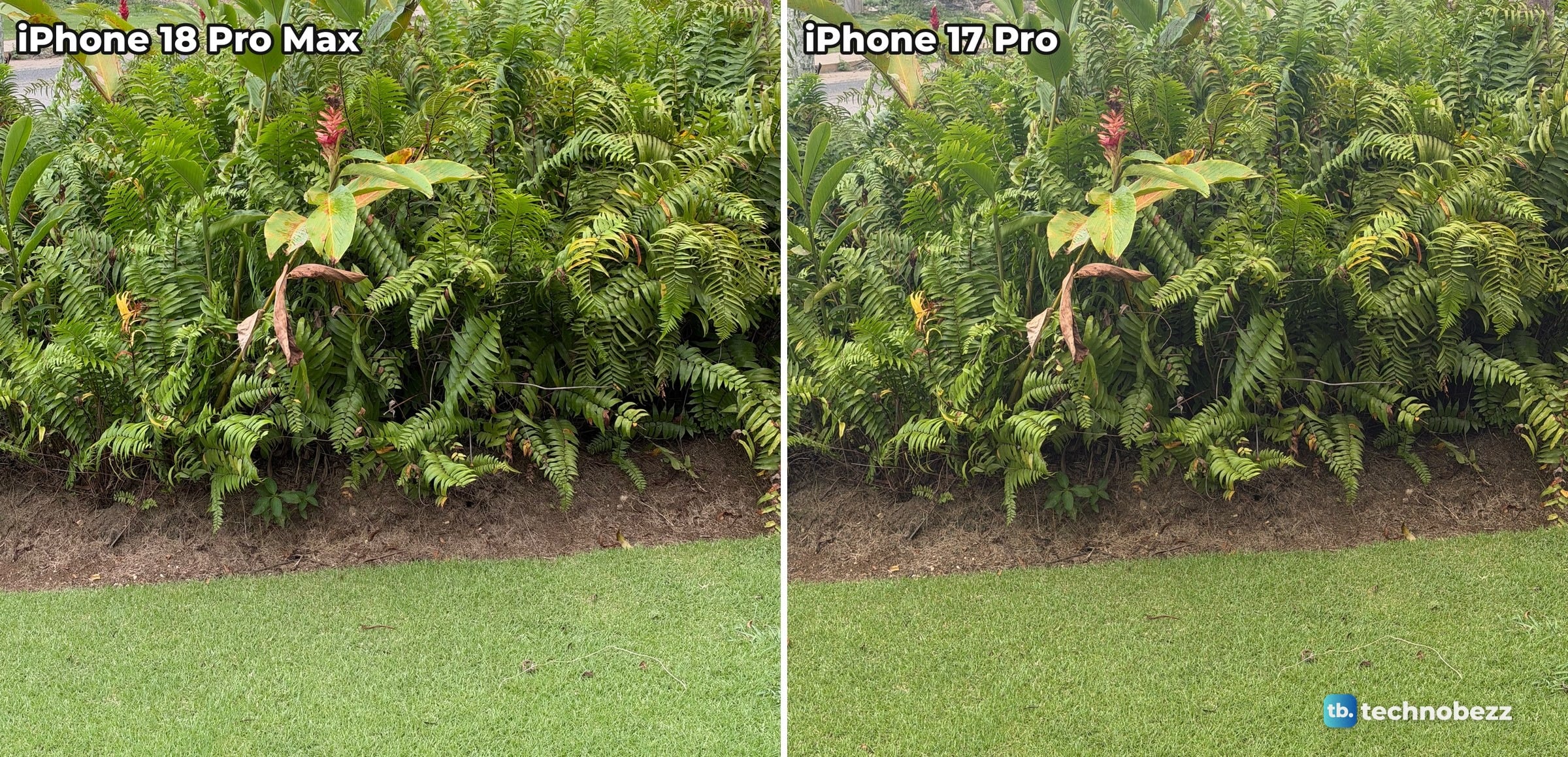
This 2x pair came from the main camera on both phones, not a separate lens. The lens data says so, and the files are 12MP. The fern border is the widest color gap among the plants, with clearly stronger greens from the 18 Pro Max.
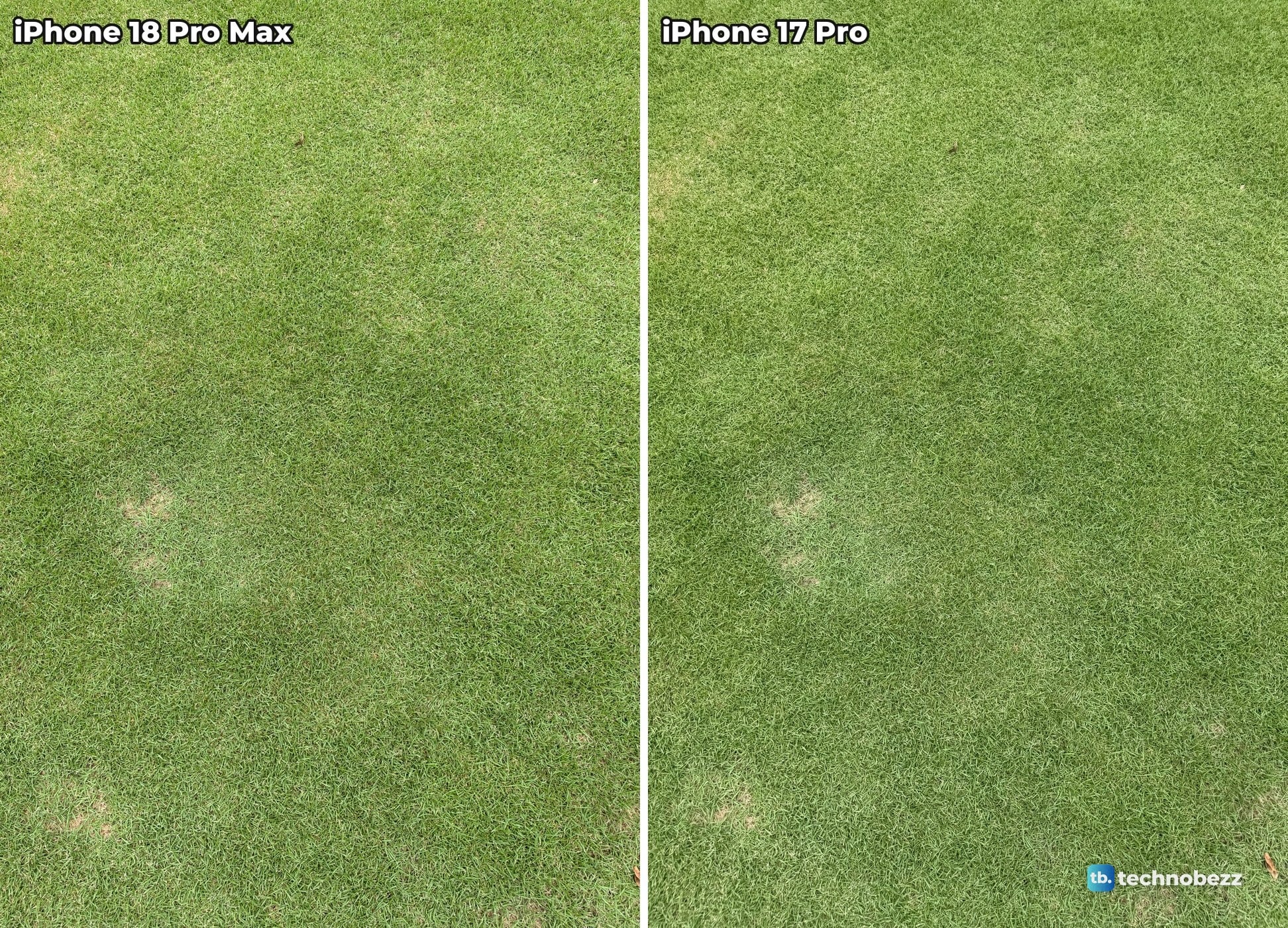
A lawn is one color and all texture, which makes it a dull photo and a useful one. The two frames are level on color, and the 18 Pro Max is a shade brighter.
Sea and sky on the iPhone 18 Pro Max vs iPhone 17 Pro
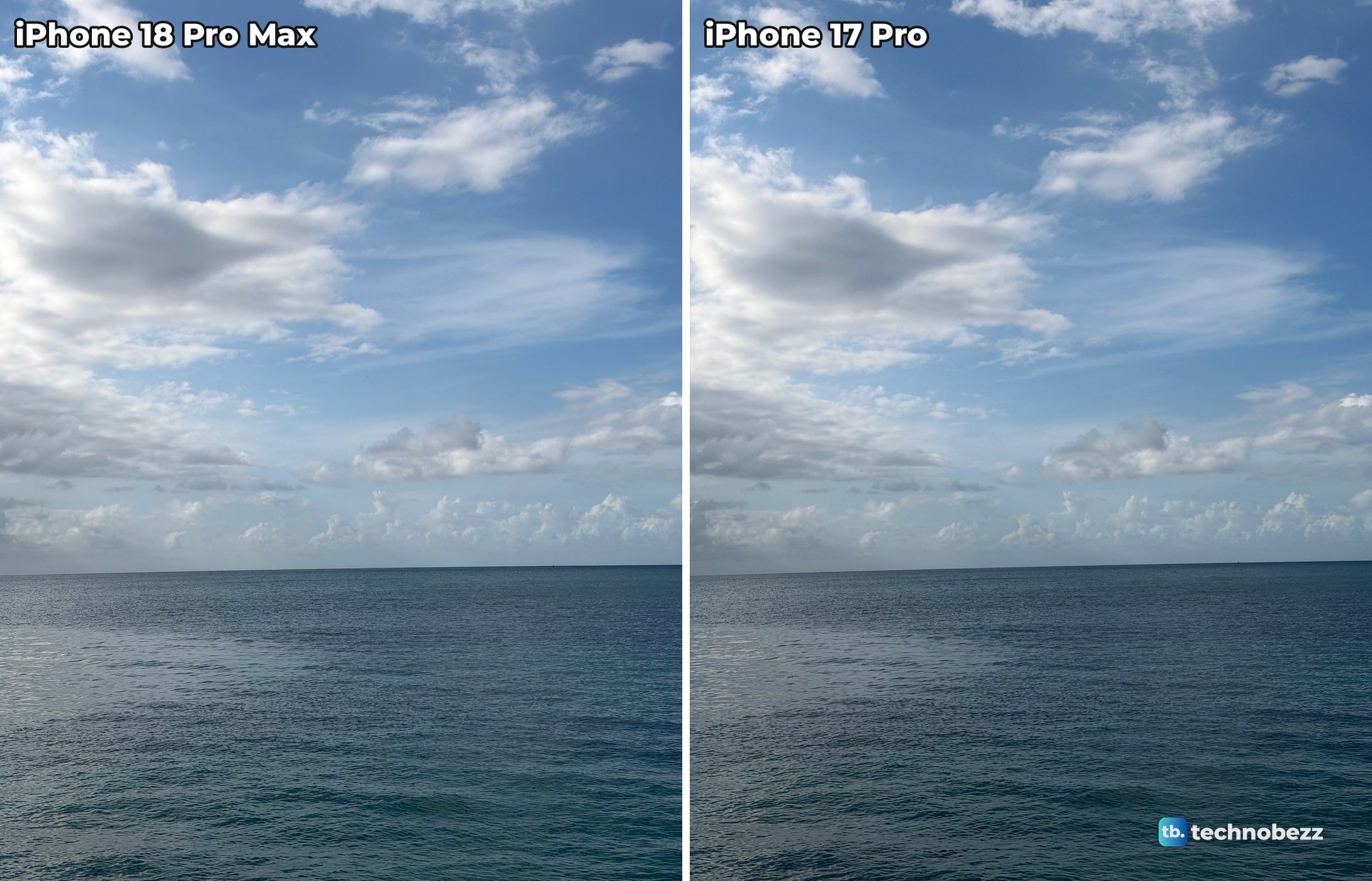
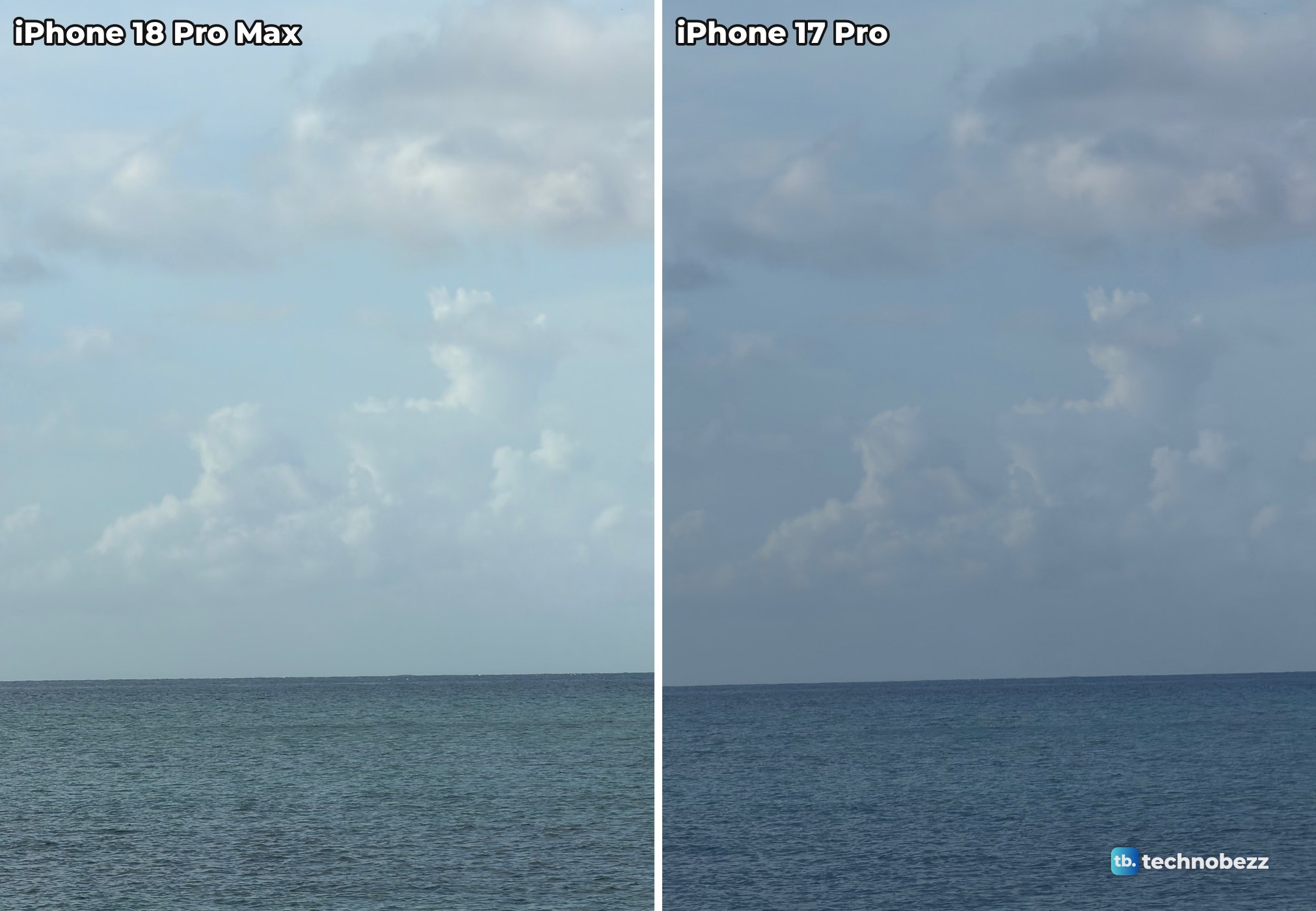
Point the phones at the sky and the tendency flips. In all five sea and sky pairs the 18 Pro Max frame measured brighter, and the 17 Pro frame measured more saturated, which shows up as a deeper blue.
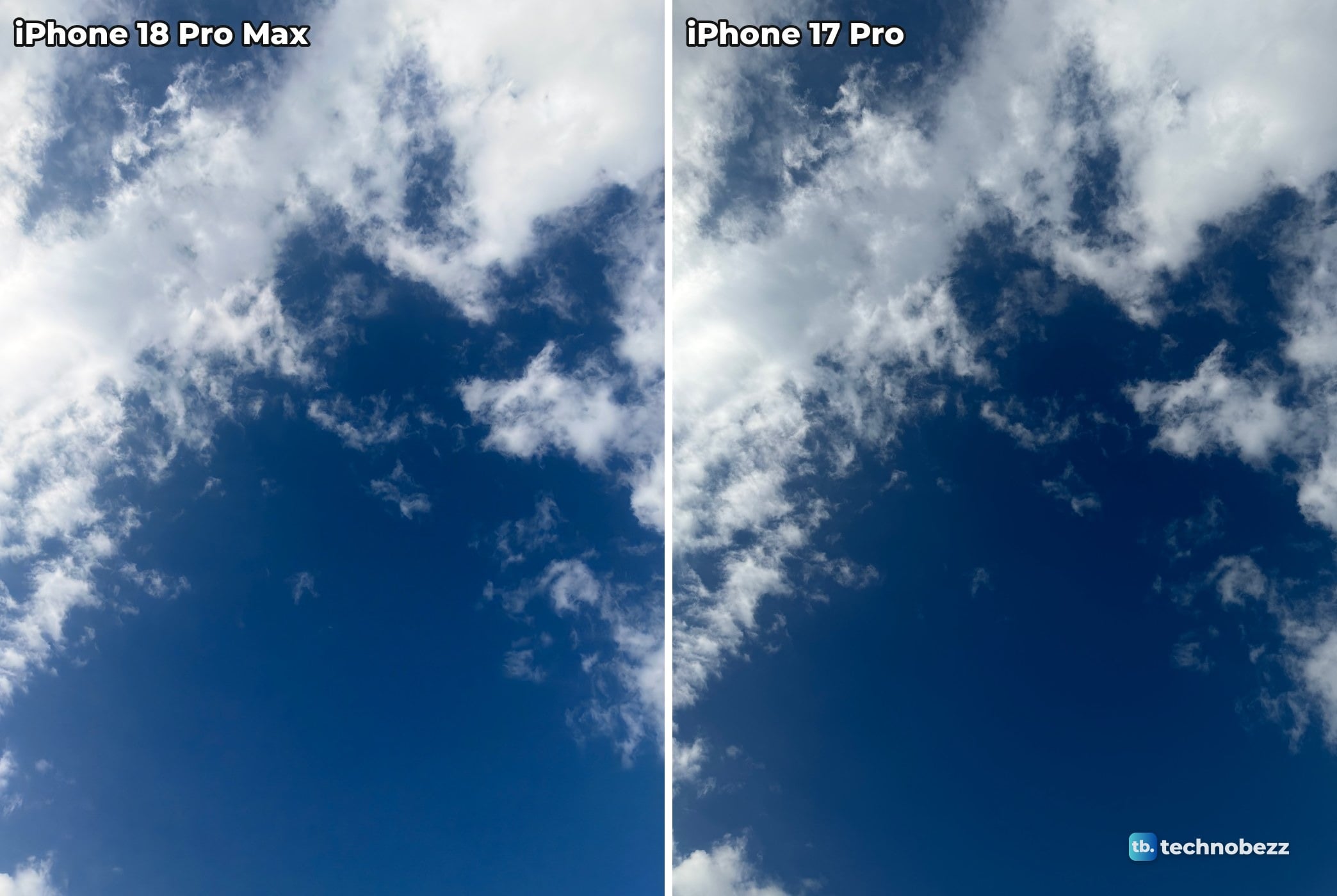
From the sea wall the gap is smaller, but the 18 Pro Max still lifts the water and the clouds a little.
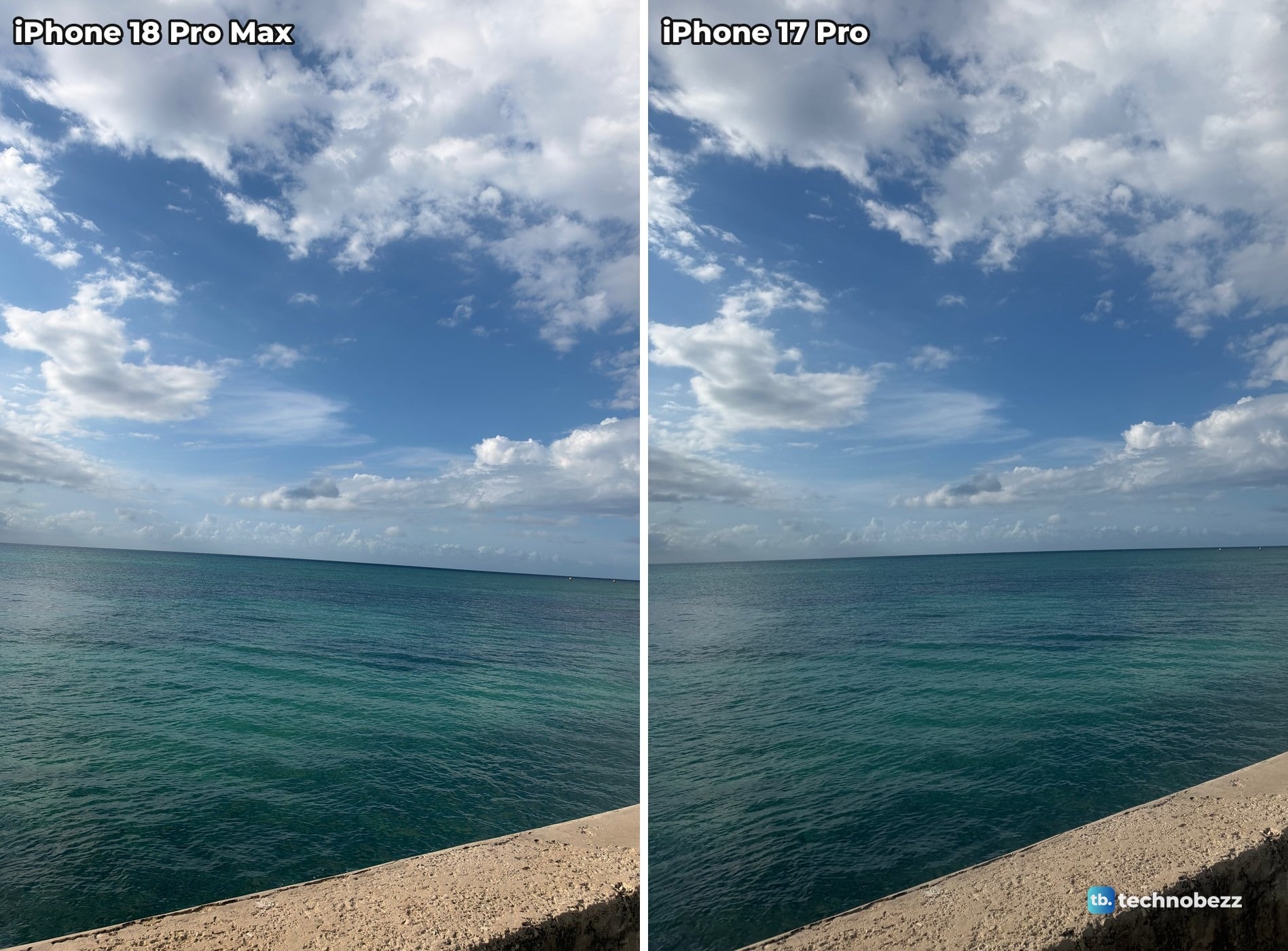
At 2x over open water the two are closer still, and the 17 Pro's sea is a slightly deeper blue.
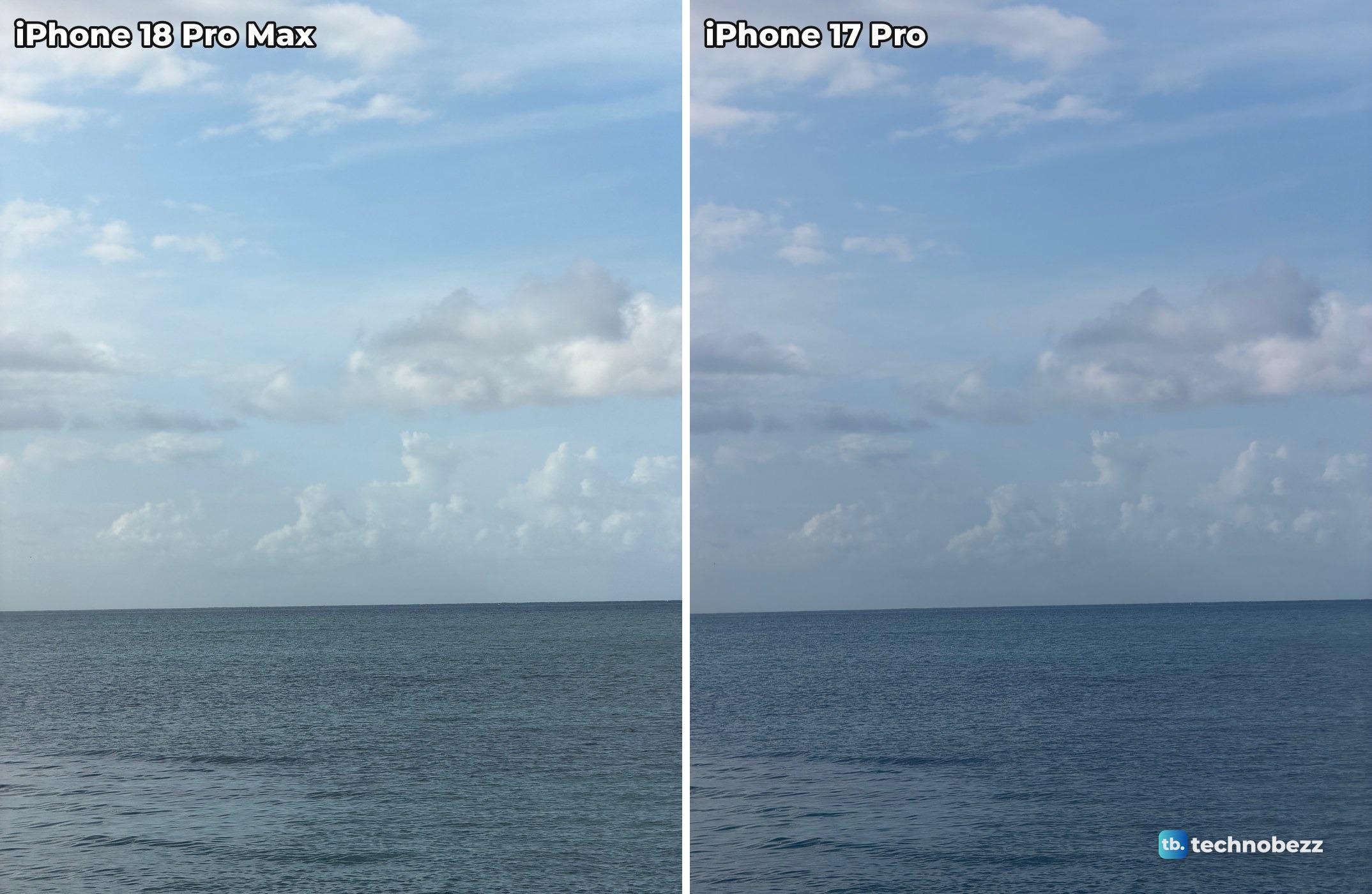
iPhone 18 Pro Max vs iPhone 17 Pro zoom at 4x and 8x
For this sea pair at 4x, both phones used the telephoto, and both files report 16.891 mm, f/2.8 and 100 mm equivalent. Both files are 24MP. That is what the files say, not proof that the parts are identical.
The pictures are not identical. The 18 Pro Max exposes brighter again, with a grayer sea, and the 17 Pro gives a deeper blue.
At full size the 18 Pro Max holds more texture in the water, and the 17 Pro's water is smoother. That is the reverse of the croton leaves, so there is no clear winner on detail in these handheld shots.
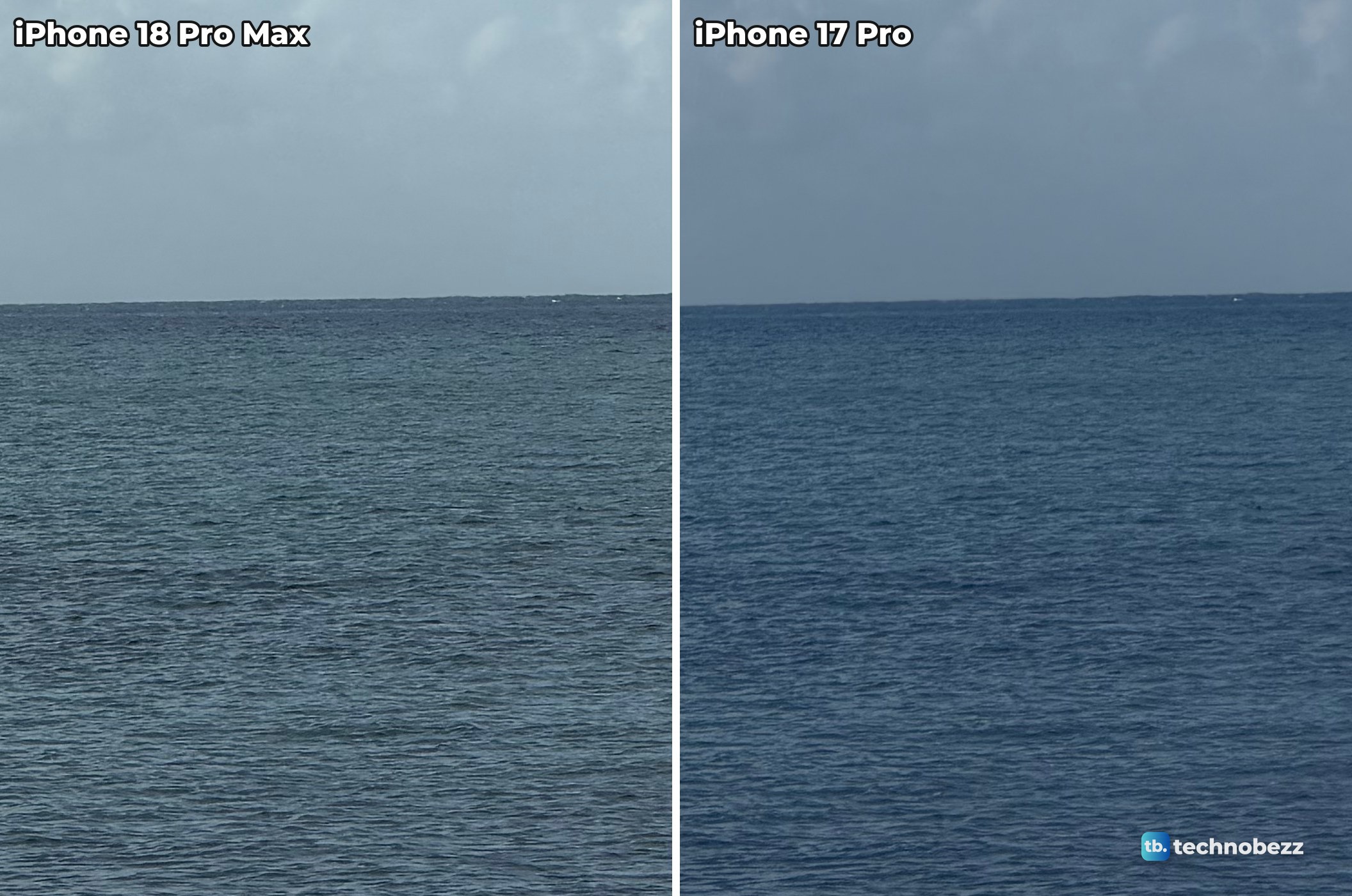
At 8x both files read 200 mm equivalent, f/2.8 and 12MP. The brightness gap is the widest in the set here.
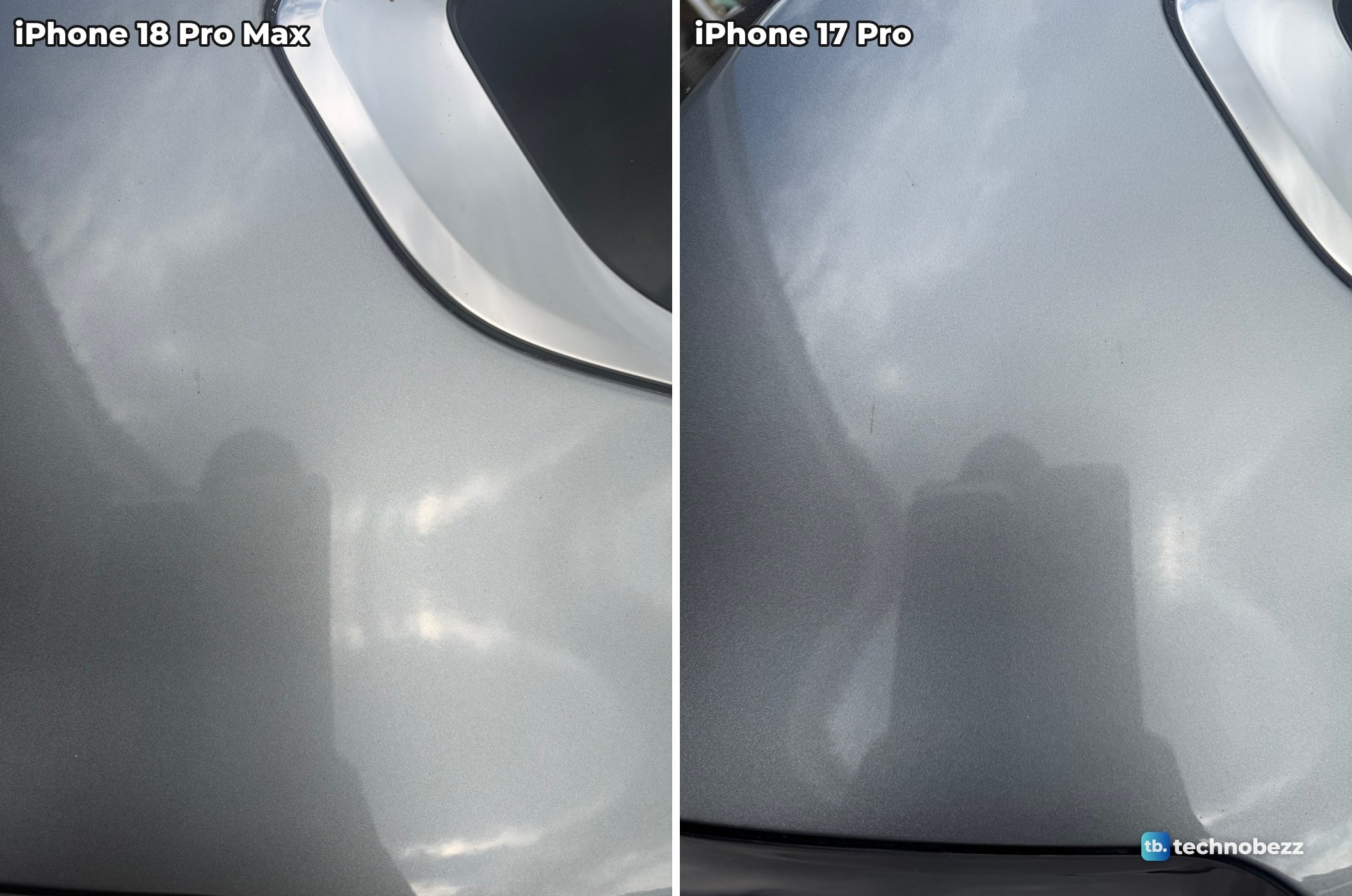
Gray car paint
Gray paint mirrors whatever is above it, so it is hard to match. The 17 Pro frame came out cooler, with a blue tint, and the 18 Pro Max kept the paint a more neutral gray. That is the same lean toward blue as in the sea. The framing is looser here and the frames are shown whole, so it is weak evidence either way.
iPhone 18 Pro Max vs iPhone 17 Pro video in 4K
The next afternoon I recorded matched video with both phones. This time HDR video was off on both, and both recorded in 4K at 30 frames per second. The files for each pair of clips carry the same start time, to the second.
I lined the clips up by their sound and compared them frame by frame. On plants I can't pick a winner. Across nine stretches of the longest clip, brightness differed by 0.2 to 3.3 percent and color strength by 0.2 to 3.9 percent. Over the whole clip the 18 Pro Max averaged 1.3 percent darker and 1.5 percent less saturated, which is too small to call.
The yellow croton further along the walk told the same story, in the strongest color of the afternoon.
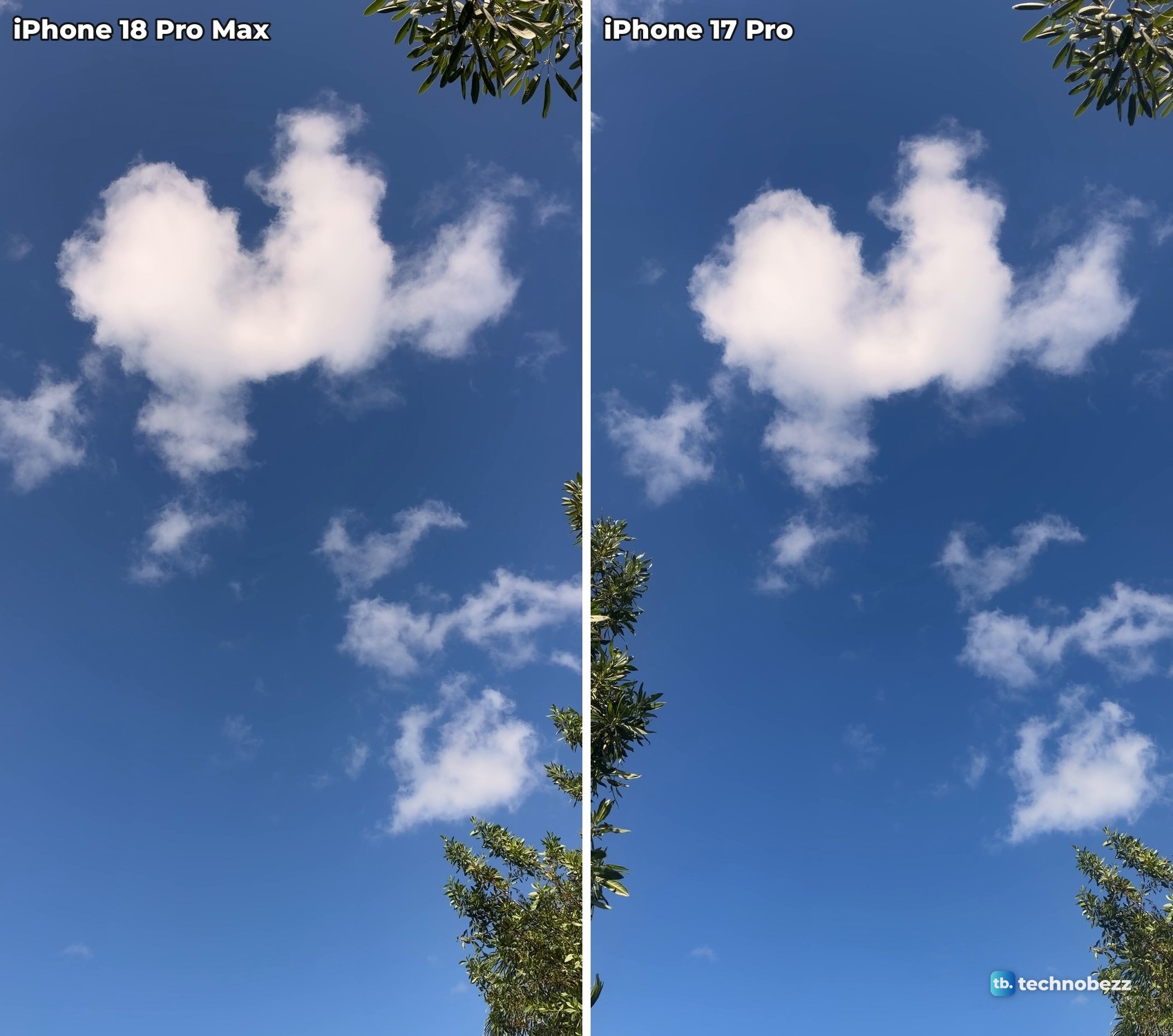
The sky is where the two split, and in the same direction as the photos. With the same cloud in both frames, the 17 Pro's blue measured about 9 percent more saturated, and the 18 Pro Max's frame about 3 percent brighter.
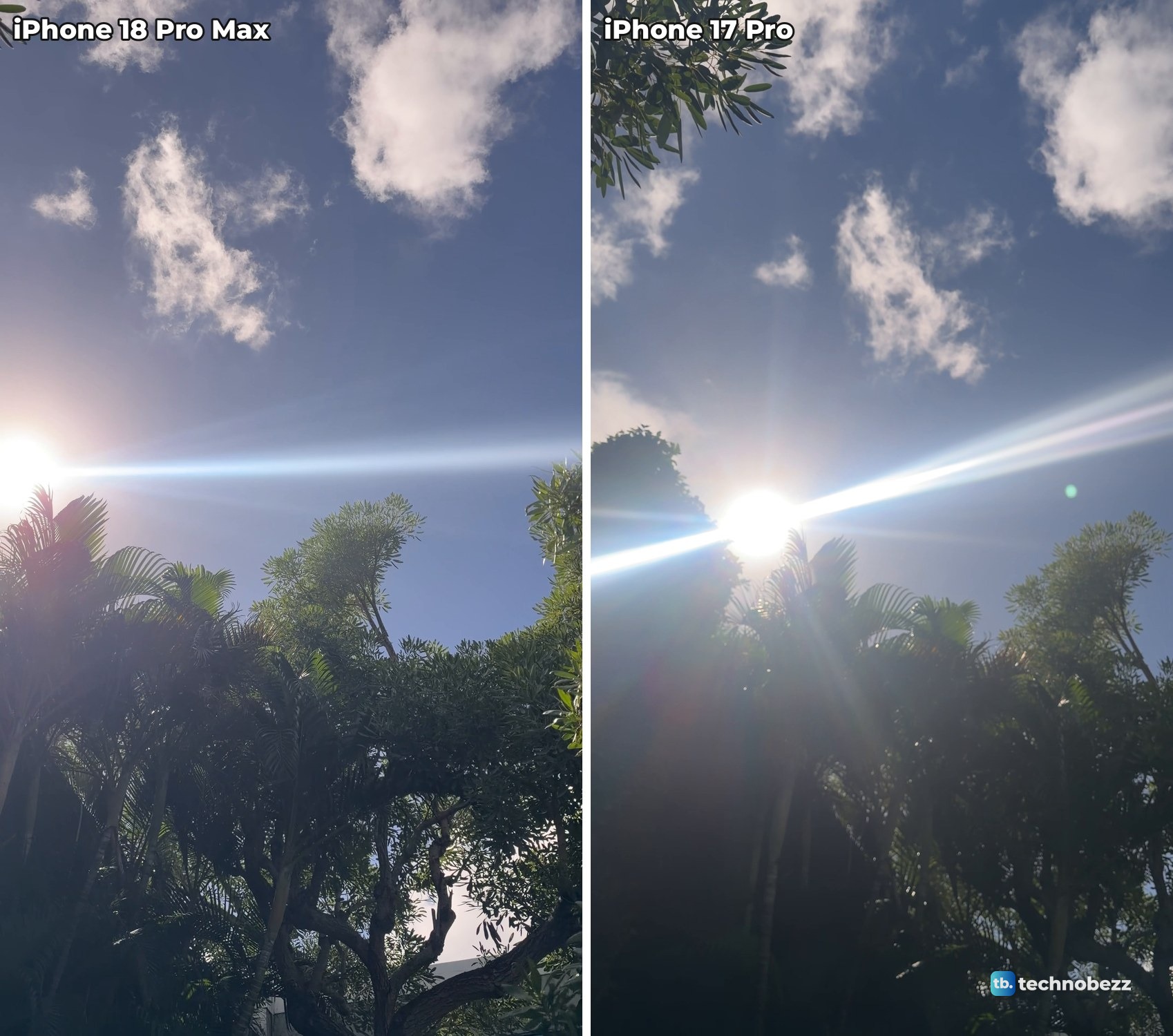
Pointed toward the sun, both phones threw a streak of flare across the frame. The two were not aimed at exactly the same spot, so I am not saying which one flares more.
I also measured how much each clip shook from frame to frame. The result flipped from one stretch to the next, so there is no finding on stabilization here.
Skin tones on the iPhone 18 Pro Max vs iPhone 17 Pro
The first set had no skin in it. On the second afternoon I photographed my own hand and forearm with each phone, over the same stretch of pavement, within about two minutes. That gave me 17 photos from the 18 Pro Max and 15 from the 17 Pro. There are no faces, so this says nothing about portraits.
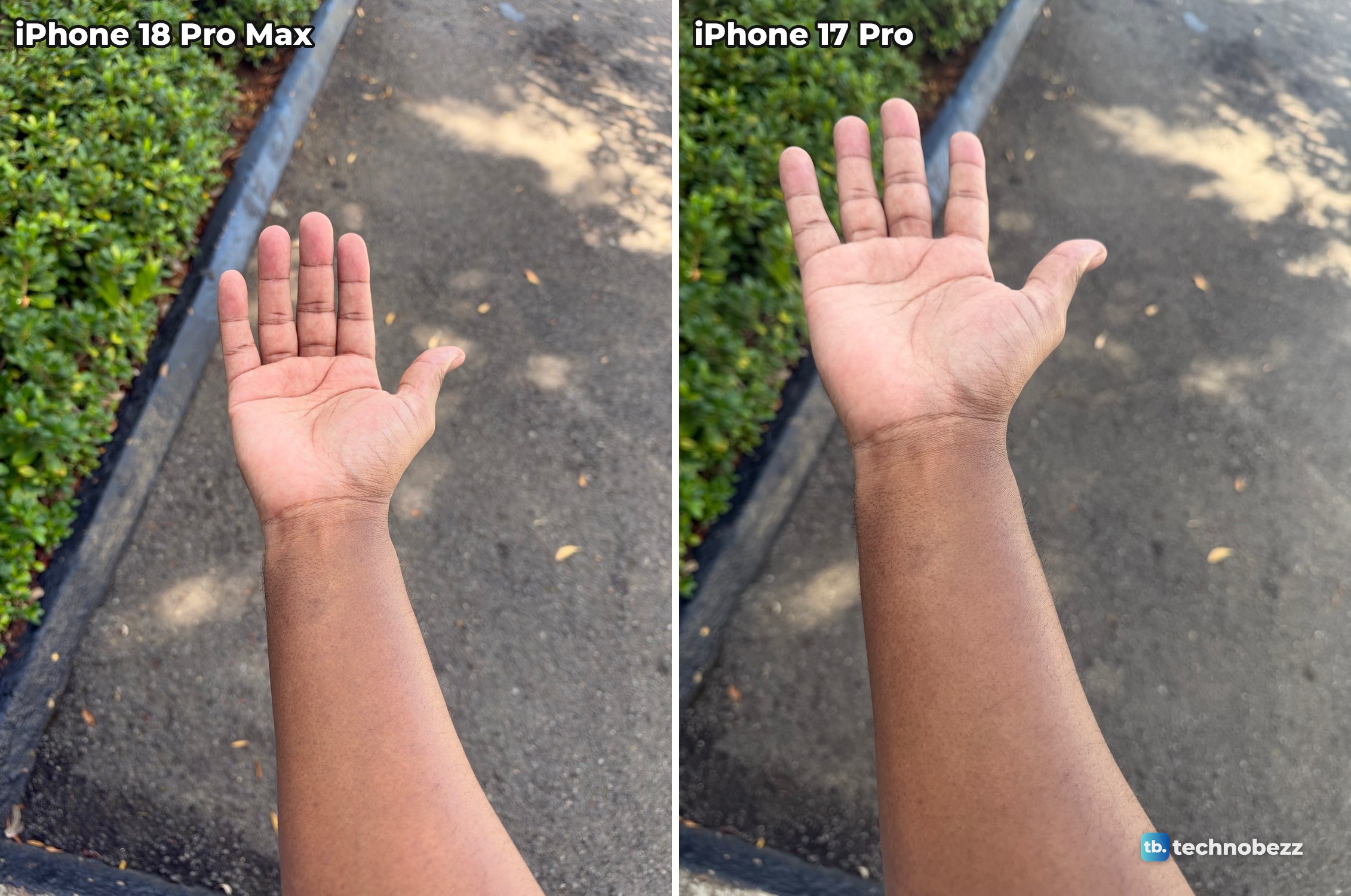
The pavement works as a neutral check. Its gray measured the same on both phones, so the white balance matched. The skin did not match. On the 18 Pro Max my arm came out redder and about 6 percent more saturated, at the same brightness. On the 17 Pro it came out browner.
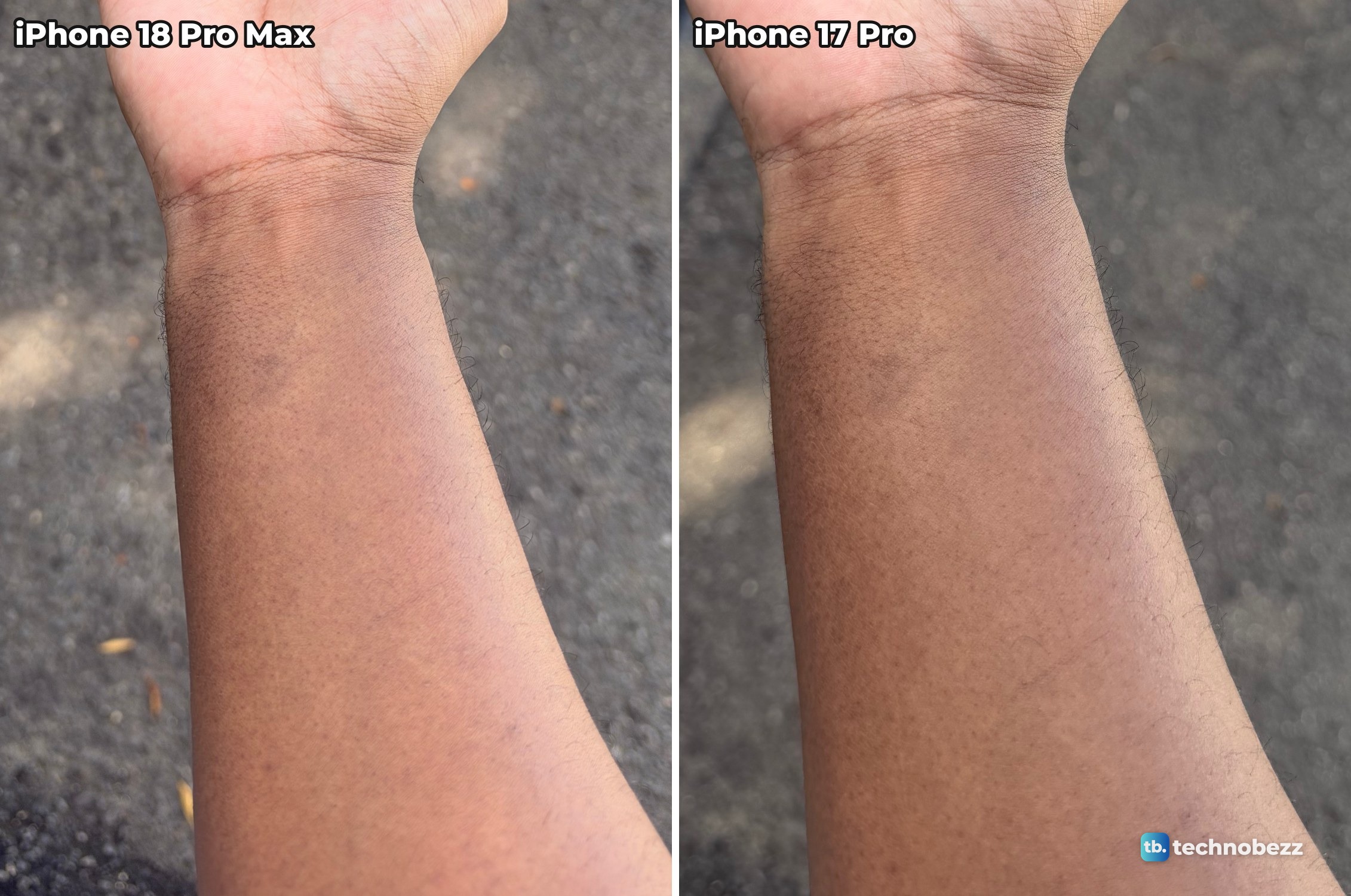
Which one is right is a call only the owner of the arm can make. To my eye, the redder one from the 18 Pro Max is the truer of the two.
Photo data for the thirteen scene pairs
All of this comes from the files. In eight of the nine 1x pairs the 18 Pro Max ran ISO 64 where the 17 Pro ran ISO 80, usually with a slightly slower shutter.
| Scene | Focal length (35 mm equivalent) | iPhone 18 Pro Max | iPhone 17 Pro |
|---|---|---|---|
| Orange croton | 24 mm, 24MP | f/1.8, 1/1100 s, ISO 64 | f/1.78, 1/1271 s, ISO 80 |
| Yellow croton | 24 mm, 24MP | f/1.8, 1/496 s, ISO 64 | f/1.78, 1/602 s, ISO 80 |
| Croton bed under a tree | 24 mm, 24MP | f/1.8, 1/625 s, ISO 64 | f/1.78, 1/780 s, ISO 80 |
| Plumbago hedge | 24 mm, 24MP | f/1.8, 1/379 s, ISO 64 | f/1.78, 1/461 s, ISO 80 |
| Palm fronds | 24 mm, 24MP | f/1.8, 1/740 s, ISO 64 | f/1.78, 1/920 s, ISO 80 |
| Fern border at 2x | 48 mm, 12MP | f/1.8, 1/665 s, ISO 100 | f/1.78, 1/906 s, ISO 100 |
| Lawn | 24 mm, 24MP | f/1.8, 1/566 s, ISO 64 | f/1.78, 1/689 s, ISO 80 |
| Sky, straight up | 24 mm, 24MP | f/1.8, 1/7874 s, ISO 80 | f/1.78, 1/9091 s, ISO 80 |
| Sea wall and sky | 24 mm, 24MP | f/1.8, 1/7874 s, ISO 64 | f/1.78, 1/10309 s, ISO 80 |
| Open sea at 2x | 48 mm, 12MP | f/1.8, 1/9174 s, ISO 80 | f/1.78, 1/9901 s, ISO 64 |
| Sea at 4x | 100 mm, 24MP | f/2.8, 1/1050 s, ISO 25 | f/2.8, 1/1167 s, ISO 20 |
| Sea at 8x | 200 mm, 12MP | f/2.8, 1/825 s, ISO 20 | f/2.8, 1/1190 s, ISO 20 |
| Gray car paint | 24 mm, 24MP | f/1.8, 1/3226 s, ISO 64 | f/1.78, 1/3021 s, ISO 80 |
The lenses and what variable aperture changes on the iPhone 18 Pro Max
The lens data in the files reads 6.93 mm f/1.48 for the 18 Pro Max main camera and 6.765 mm f/1.78 for my 17 Pro, both 24 mm equivalent. Apple's iPhone 18 Pro spec page lists four aperture settings for the 48MP Fusion Main camera: f/1.48, f/1.8, f/2.8 and f/4. My 17 Pro has one. The telephoto reads 16.891 mm f/2.8 on both phones.
My older phone is the 17 Pro, not the 17 Pro Max. Apple's comparison page lists the same rear cameras and zoom options for both 17 Pro models, but I only shot the one.
The variable aperture Apple announced in September is the part my 17 Pro does not have, so I shot it on the 18 Pro Max alone. I pointed it at the Mercedes badge on my car and took the same photo at all four settings. The badge stays sharp the whole way. The paint in front of it does not. Wide open at f/1.48 it blurs away, and at f/4 you can see the flake in it, with about 3.2 times more fine detail by measurement.
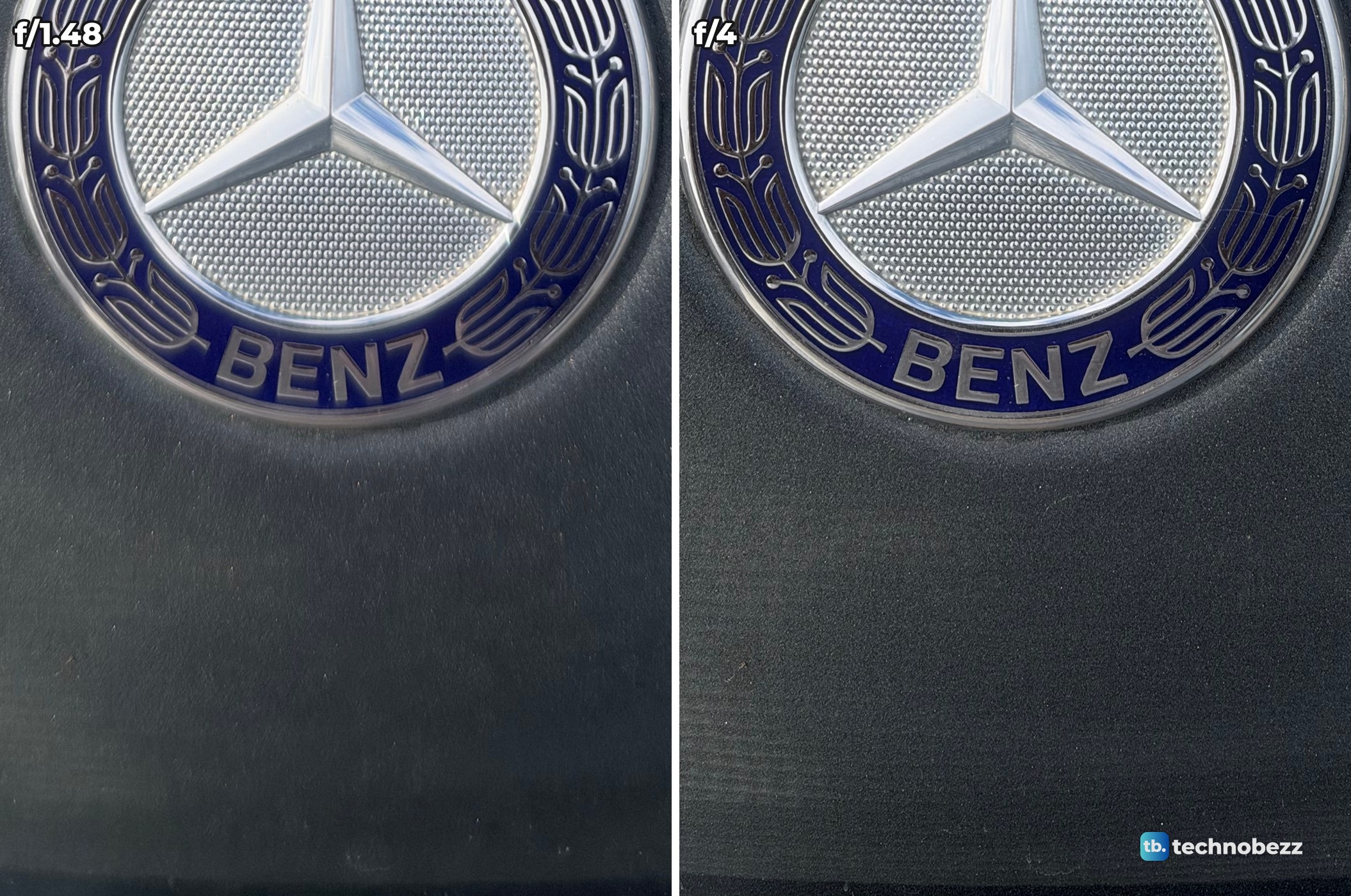
Closing down from f/1.48 to f/4 lets in about seven times less light, and the shutter went from 1/3378 s to 1/561 s, six times longer. On a tree further back, I could not tell the settings apart without zooming in. It matters most up close.
What this comparison does not cover
This is two afternoons in good light. I have not tested night or low light against the 17 Pro, where the wider aperture should help gather more light. Skin here means my hand and forearm, so there are no portraits and no selfies, and there are no ultra wide pairs in this set.
The video is daylight 4K with HDR off. I filmed on the first afternoon too, but the 17 Pro recorded in HDR and the 18 Pro Max in standard color, so those clips are not a fair match and are not used. There is no low-light video, no zoom in video, and no finding on stabilization.
Low light and night are up next. For another hands-on test in this style, see my OLED burn-in test.
Is the iPhone 18 Pro Max camera better than the iPhone 17 Pro in daylight?
In daylight, it is a difference in taste, not in quality. If you like plants a little deeper, the 18 Pro Max leans your way. If you like a deeper blue in the sea and sky, the 17 Pro does that. On detail the two traded places depending on the subject. In 4K video I could not separate them on plants.
Skin is the exception. The two phones agreed on the gray pavement and disagreed on my arm, and the redder rendering from the 18 Pro Max is the one closer to the real thing.
The upgrade that shows is the aperture. For close subjects, the 18 Pro Max lets me adjust the physical aperture to change depth of field. My 17 Pro's main camera stays at f/1.78. If daylight photos are the only reason to move from a 17 Pro, these pairs do not make the case by themselves.
Not sure which phone you are starting from? Here is how to know what iPhone you have. If you move up, see how to transfer data to an iPhone 17 and how to erase an iPhone before selling it.
More from my iPhone 18 Pro Max testing
- iPhone 18 Pro Max variable aperture test
- iPhone 18 Pro Max camera samples
- iPhone 18 Pro Max hands-on
- iPhone 18 Pro Max Dynamic Island
This product was provided to Technobezz for review. We independently select what we review. The manufacturer had no input on this article and did not see it before publication. All opinions are our own.
Share this article
More in News
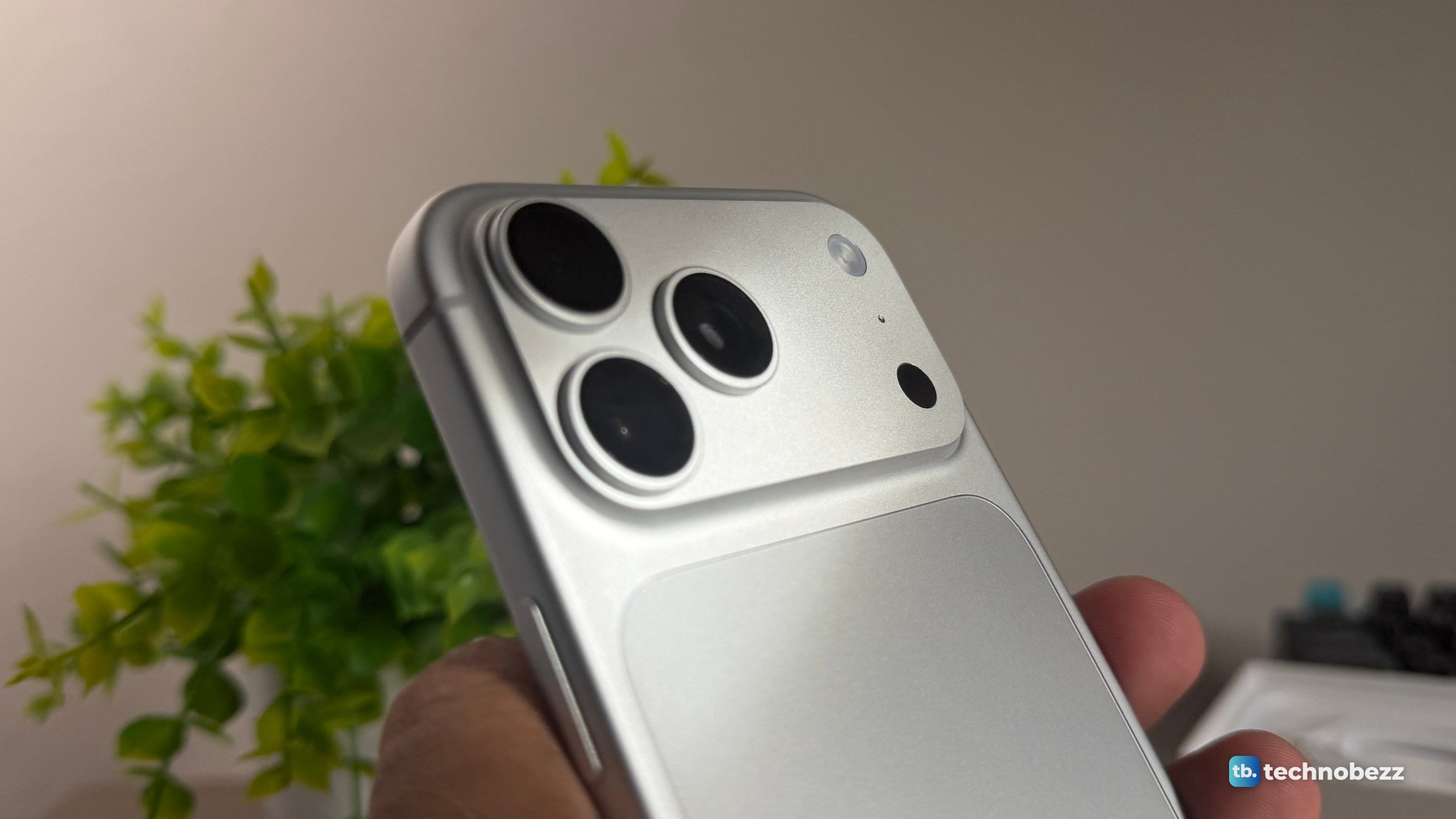
iPhone 18 Pro Max Variable Aperture Explained With Real Photos
Daylight and indoor photos show how the iPhone 18 Pro Max's four aperture settings change close-up detail, background sharpness and brightness.
4 min read
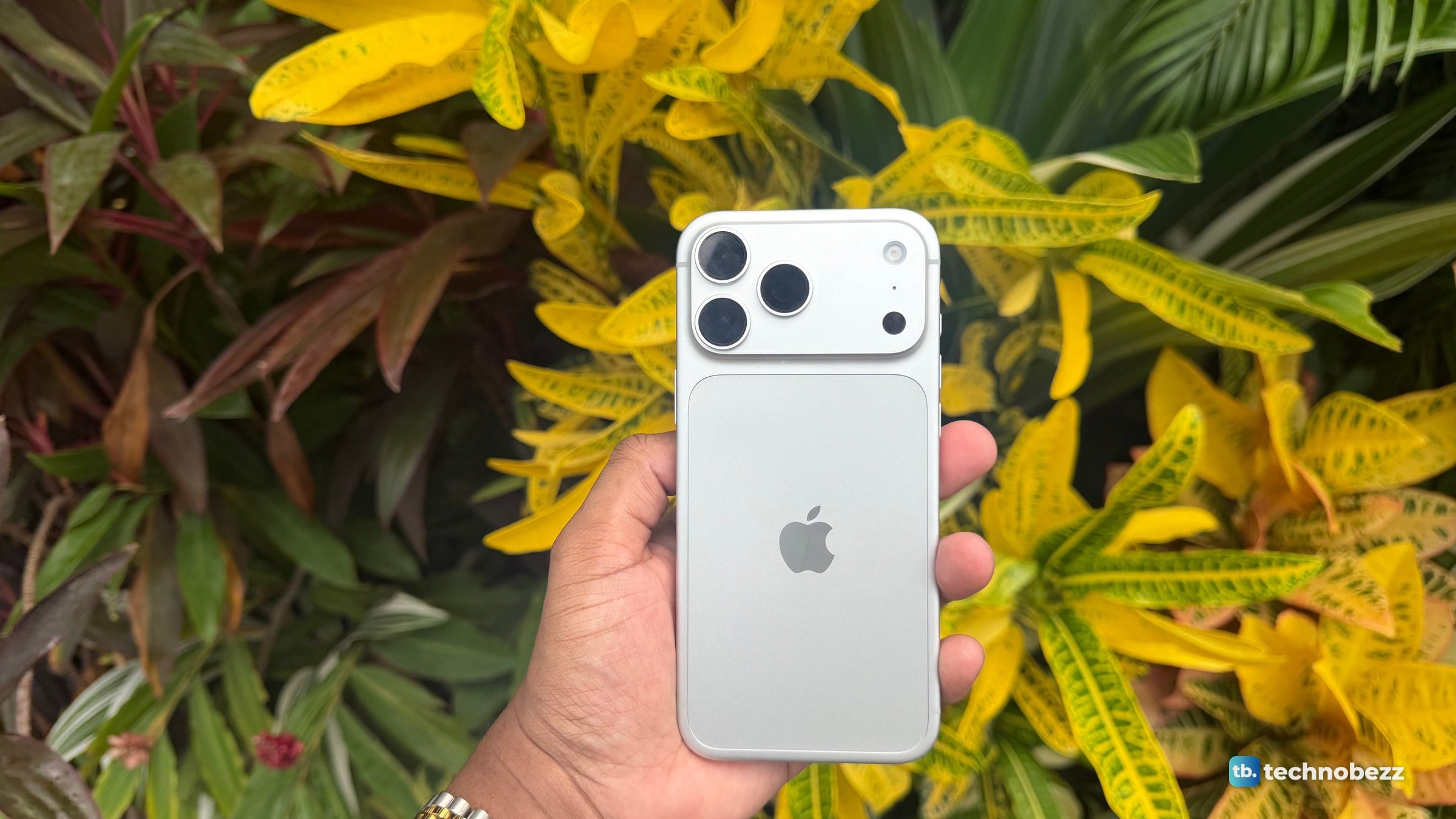
iPhone 18 Pro Max Hands-On After Two Days, What Stood Out and What I Still Need to Test
An early hands-on with the silver iPhone 18 Pro Max. A narrower Dynamic Island, an aperture change you can see up close, and what is still untested.
3 min read
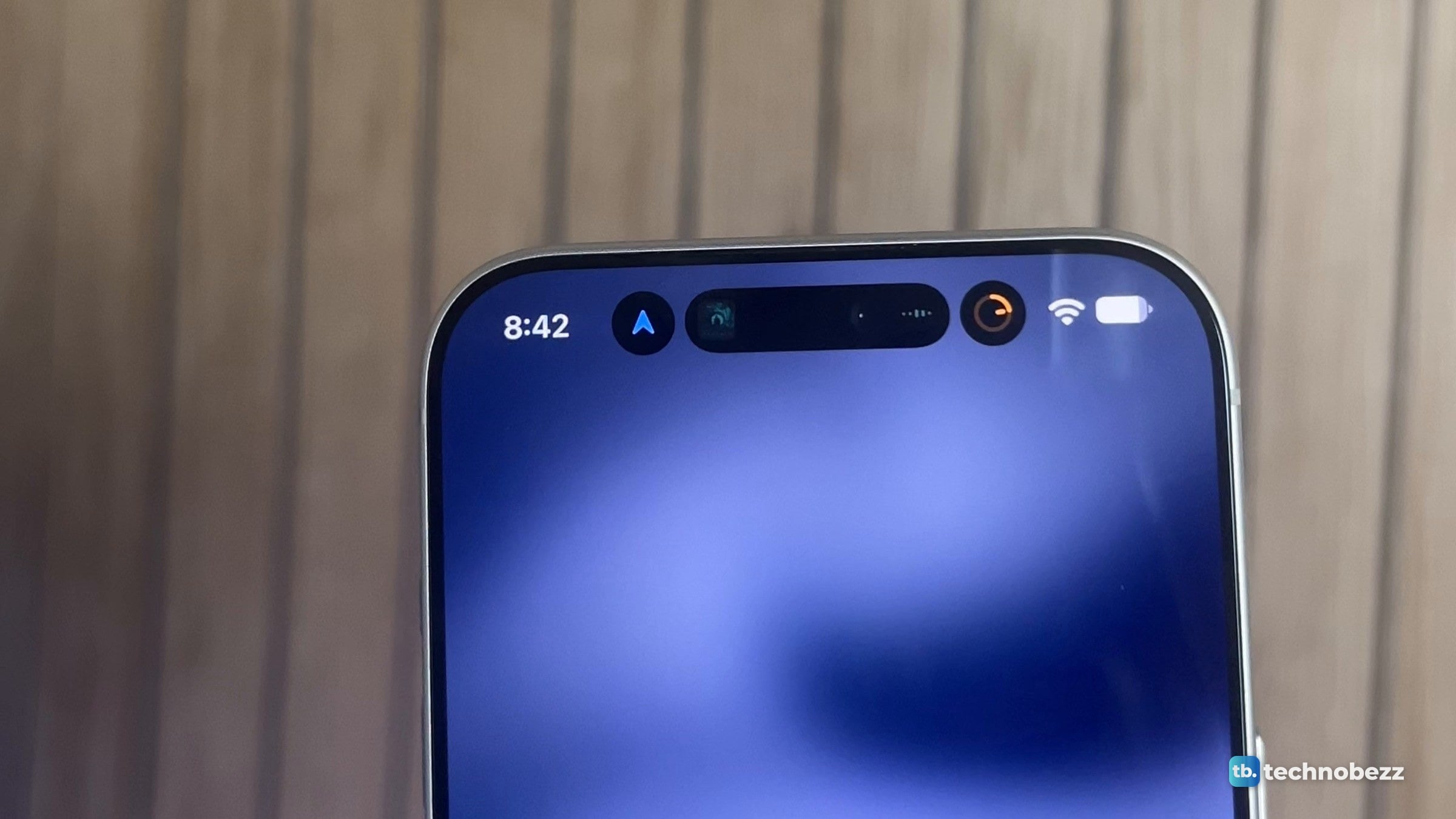
iPhone 18 Pro Max Dynamic Island Is Smaller and Shows Three Things at Once
I put the iPhone 18 Pro Max next to my iPhone 17 Pro. Its Dynamic Island is about 24 percent narrower in my photo and shows three things at once.
4 min read
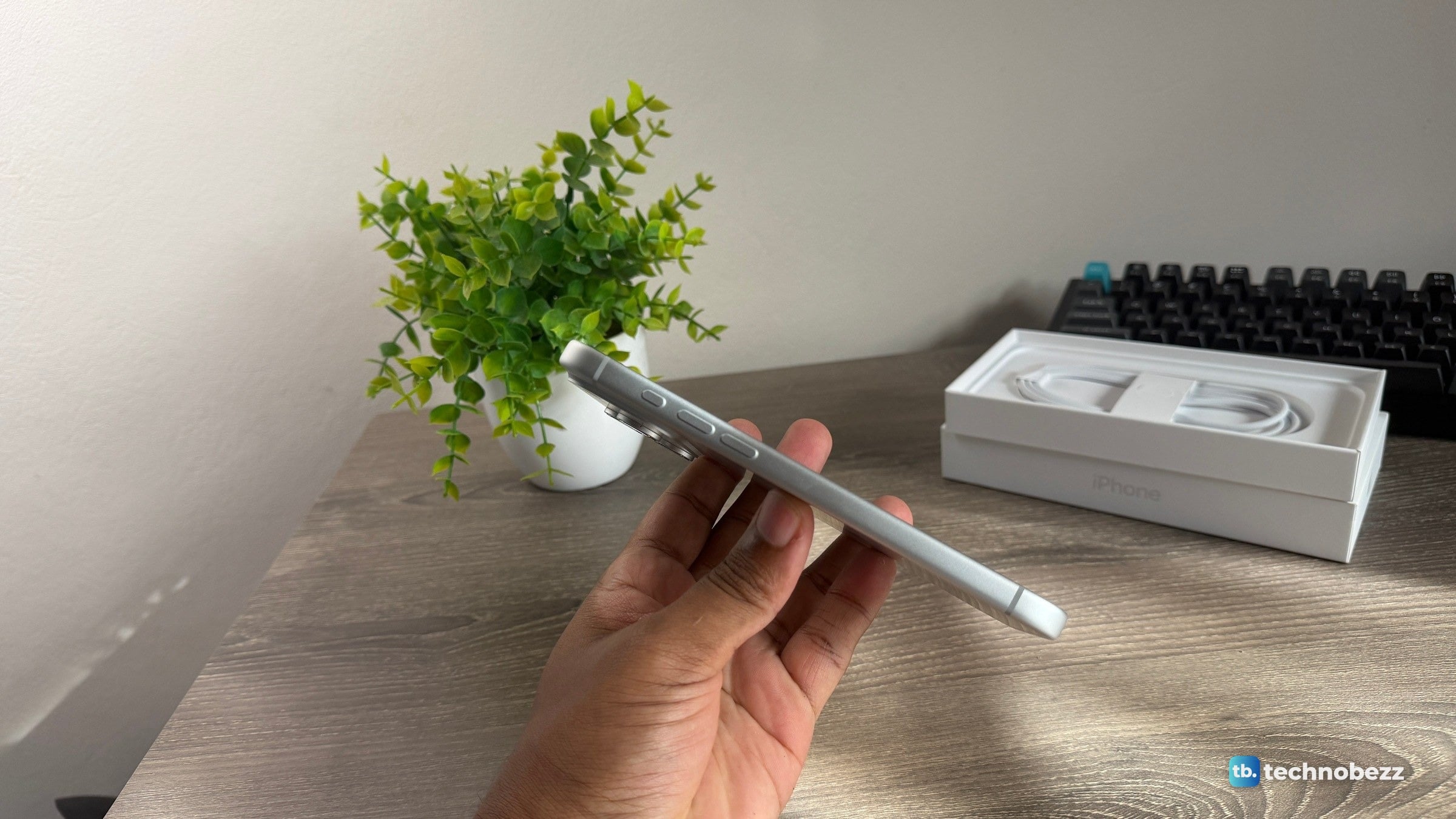
iPhone 18 Pro Max Size, Thickness and Weight in Real Life
Apple's iPhone 18 Pro Max and 18 Pro dimensions in inches and millimeters, plus my photos of it in the hand, side on and going into a trouser pocket.
4 min read
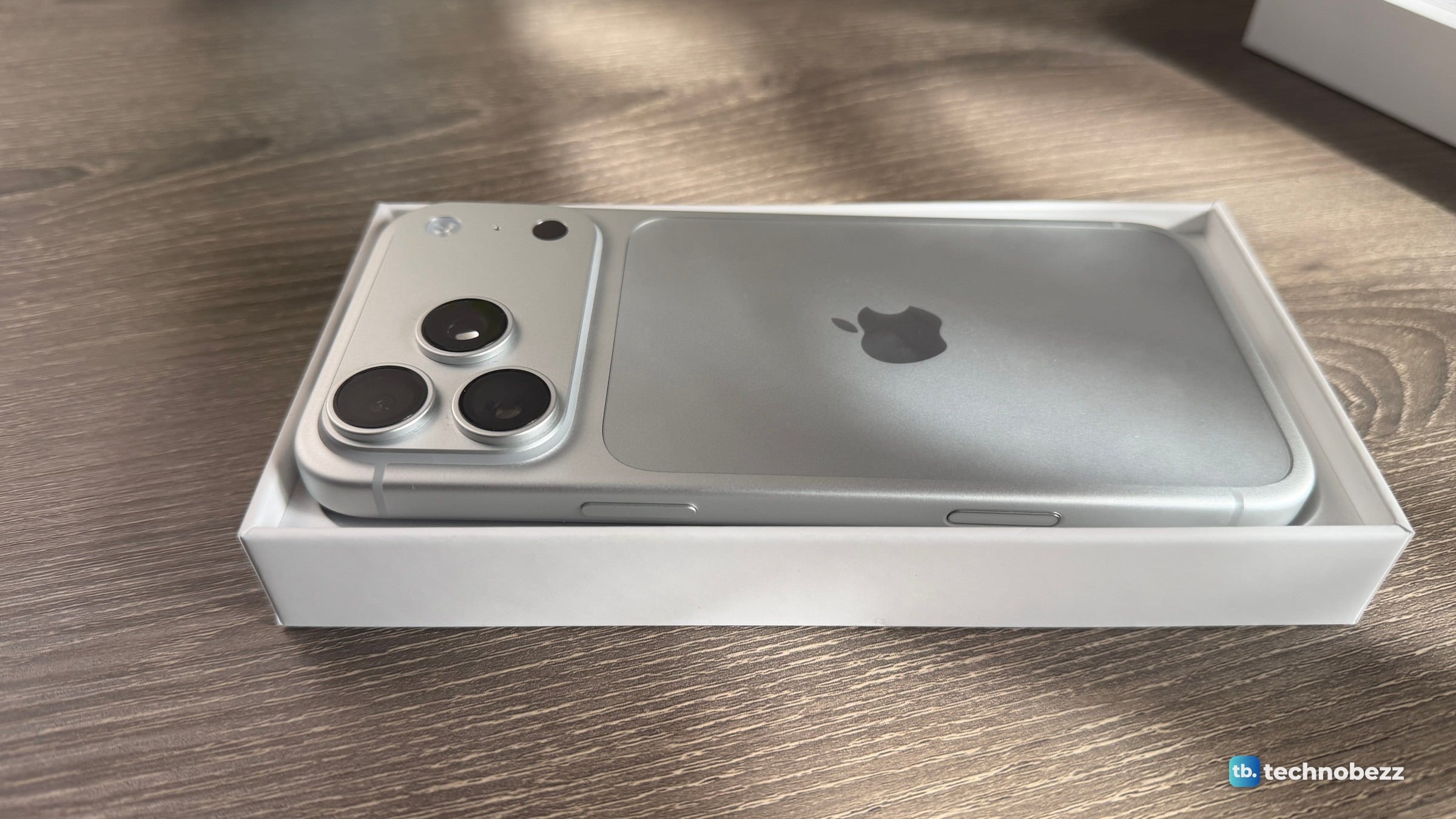
iPhone 18 Pro Max Unboxing and What Comes in the Box
5 min read
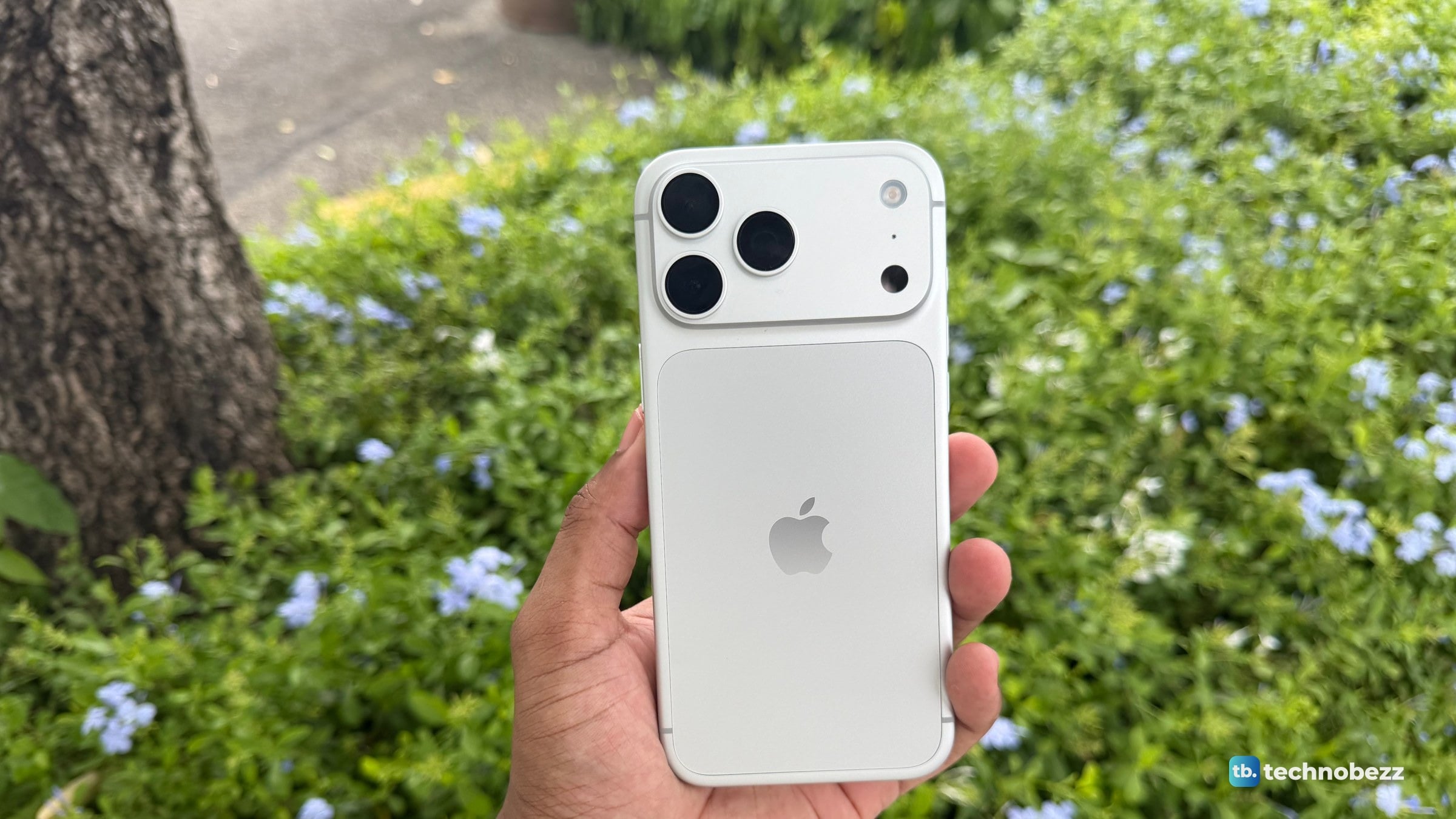
iPhone 18 Pro Max Silver in Real Life, From White to Blue
5 min read
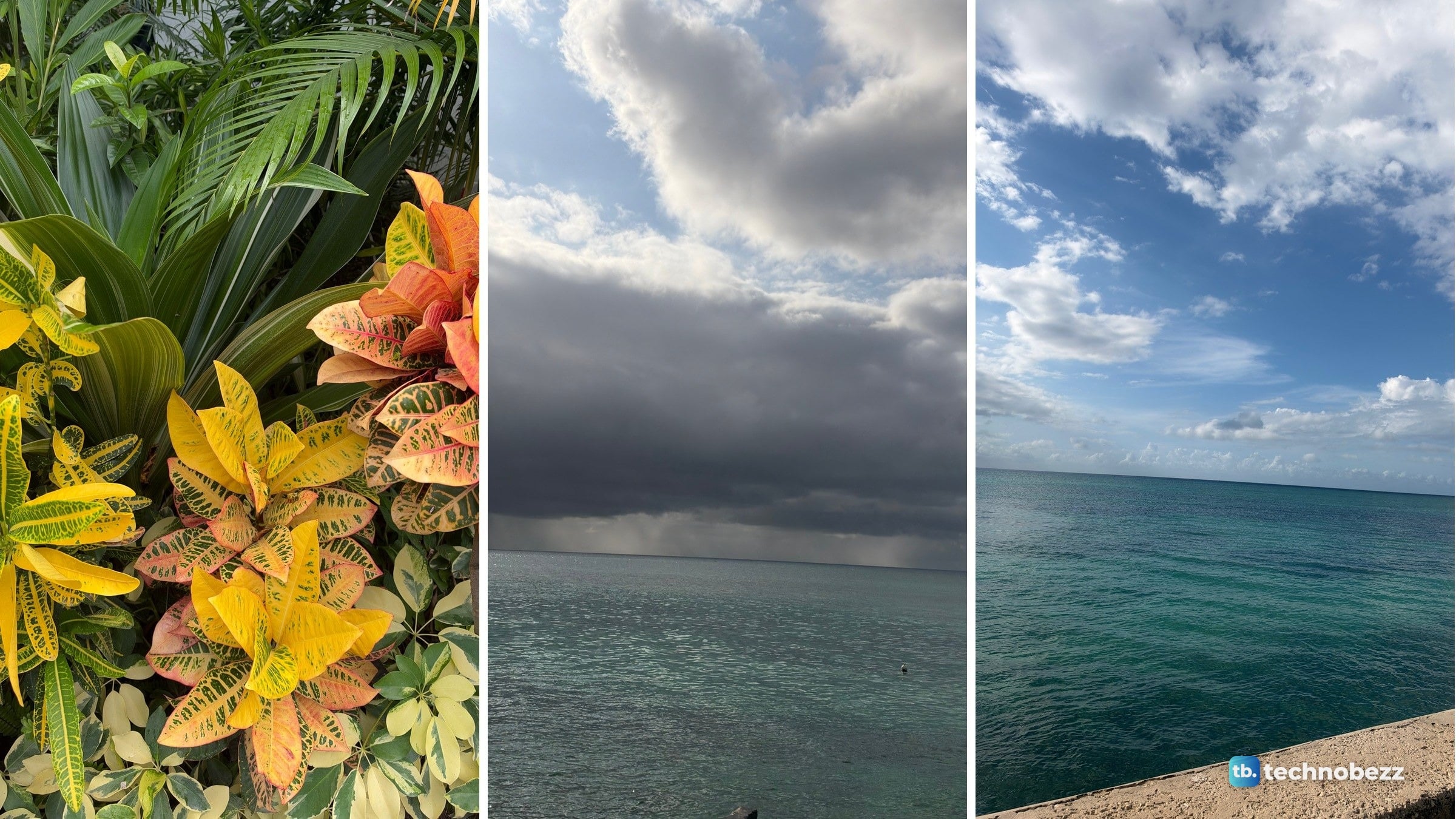
iPhone 18 Pro Max Camera Samples From One Afternoon Outdoors
5 min read
Sennheiser HD 490 PRO Leads 3 Headphone Deals All Under $346.40
3 min read
TP-Link Archer BE12000 Tri-Band Wi-Fi 7 Router on sale for $229.99
5 min read
OSCOO 2TB PCIe 4.0 NVMe SSD slips to $269.99
4 min read
Razer Moray in-Ear Monitor dips to $99.99
4 min read
TCL 75-inch F7D QLED 4K UHD HDR sees price cut to $599.99
3 min read