
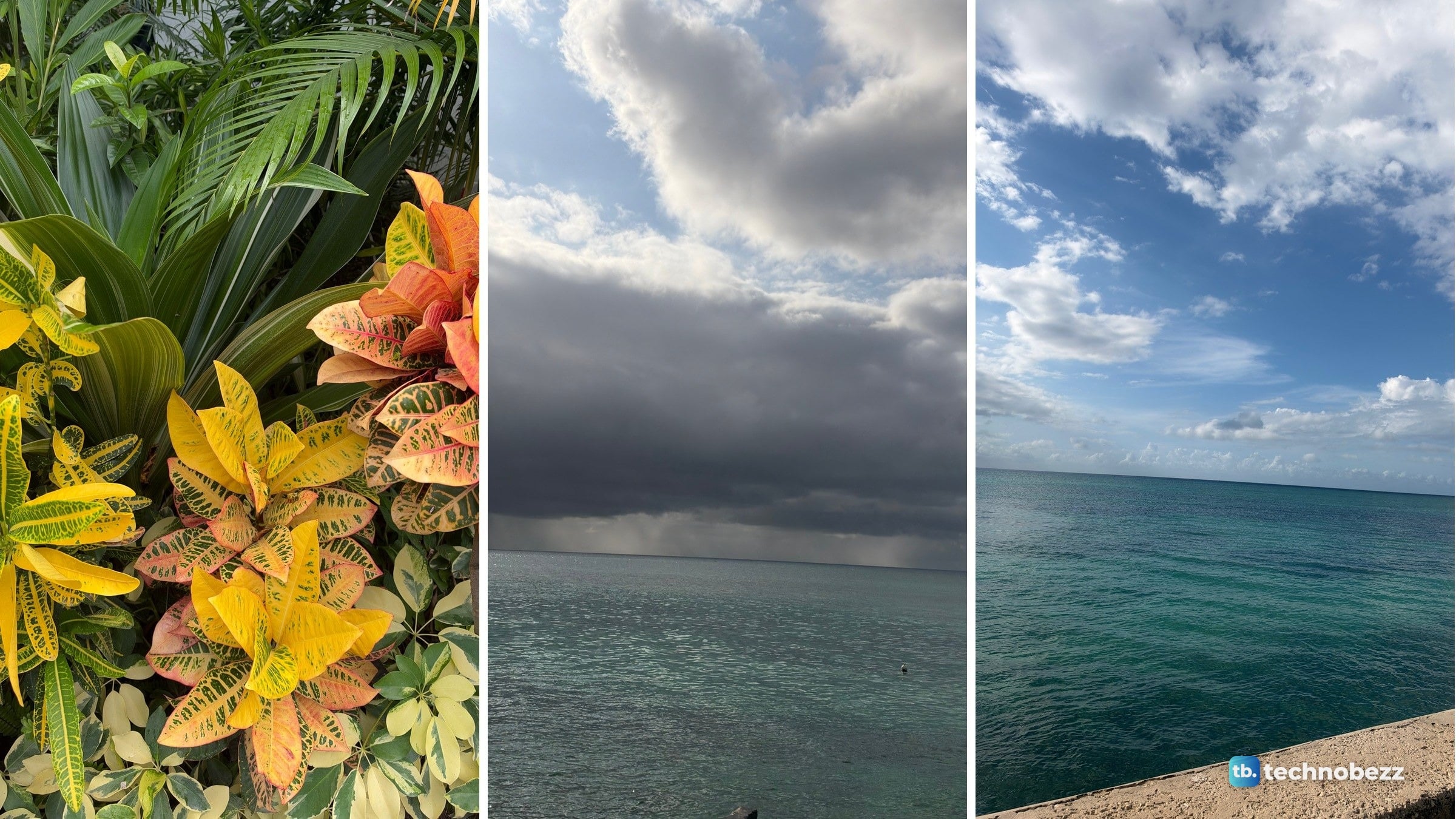
In good daylight the iPhone 18 Pro Max gives you strong color that still holds leaf veins and cloud edges. The main camera and the 4x telephoto are sharp at full size, and 8x is visibly softer. That is what these 22 photos and three video frames from one afternoon show. Everything was shot handheld, with no filter and no color correction. The full-frame photos are resized for the web, and the detail crop and the cropped zoom panels are identified in their captions.
Technobezz is supported by its audience. We may get a commission from retail offers. Reviews ethics statement.
iPhone 18 Pro Max Camera Samples From One Afternoon Outdoors
22 handheld iPhone 18 Pro Max photos from one afternoon, each with its focal length, aperture, shutter speed and ISO, plus three video frames.
Updated October 14, 2026Oct 14, 2026
•12 min read

Credit: Technobezz
Get Deals Like These in Your Inbox
The best prices, checked by our editors.
In This Review
Apple iPhone 18 Pro Max
Display6.9-inch all-screen OLED
Height6.43 in (163.4 mm)
Width3.07 in (78.0 mm)
Depth0.34 in (8.75 mm)
Weight8.78 oz (249 g)
Main camera48MP Fusion Main with variable aperture
The short version
- 22 photos and three video frames, all handheld, from one afternoon outdoors.
- Every photo caption gives the focal length, aperture, shutter speed and ISO stored in the file.
- The light was easy. Across all 73 photos I took with it, the ISO never went above 100.
- The sea zoom set used the real telephoto at 4x and 8x. The bush zoom set is digital zoom and is labeled that way.
- Not covered: night, indoor light, portraits, selfies and the ultra wide camera.
How these photos were taken
The phone was a day old. I unboxed it and moved my data over from my older iPhone the day before, then took it outside the next afternoon. The photos here run from about 2:40 PM to 3:50 PM. The plants came first, in soft light under cloud, and the sea and sky came later, with rain moving in.
I came back with 73 photos and 19 video clips from this phone. My earlier OLED burn-in test is another hands-on test.
One thing in the data is worth knowing first. The main camera has a variable aperture with four settings, from f/1.48 to f/4, and every main camera photo in this gallery reads f/1.8, not the widest setting. The only files from the afternoon that read anything else on that lens come from a separate aperture test, which is not part of this gallery.
Color and close-up samples
Crotons make a good color test because one plant carries yellow, orange, red and green side by side. This is the full frame from the main camera.
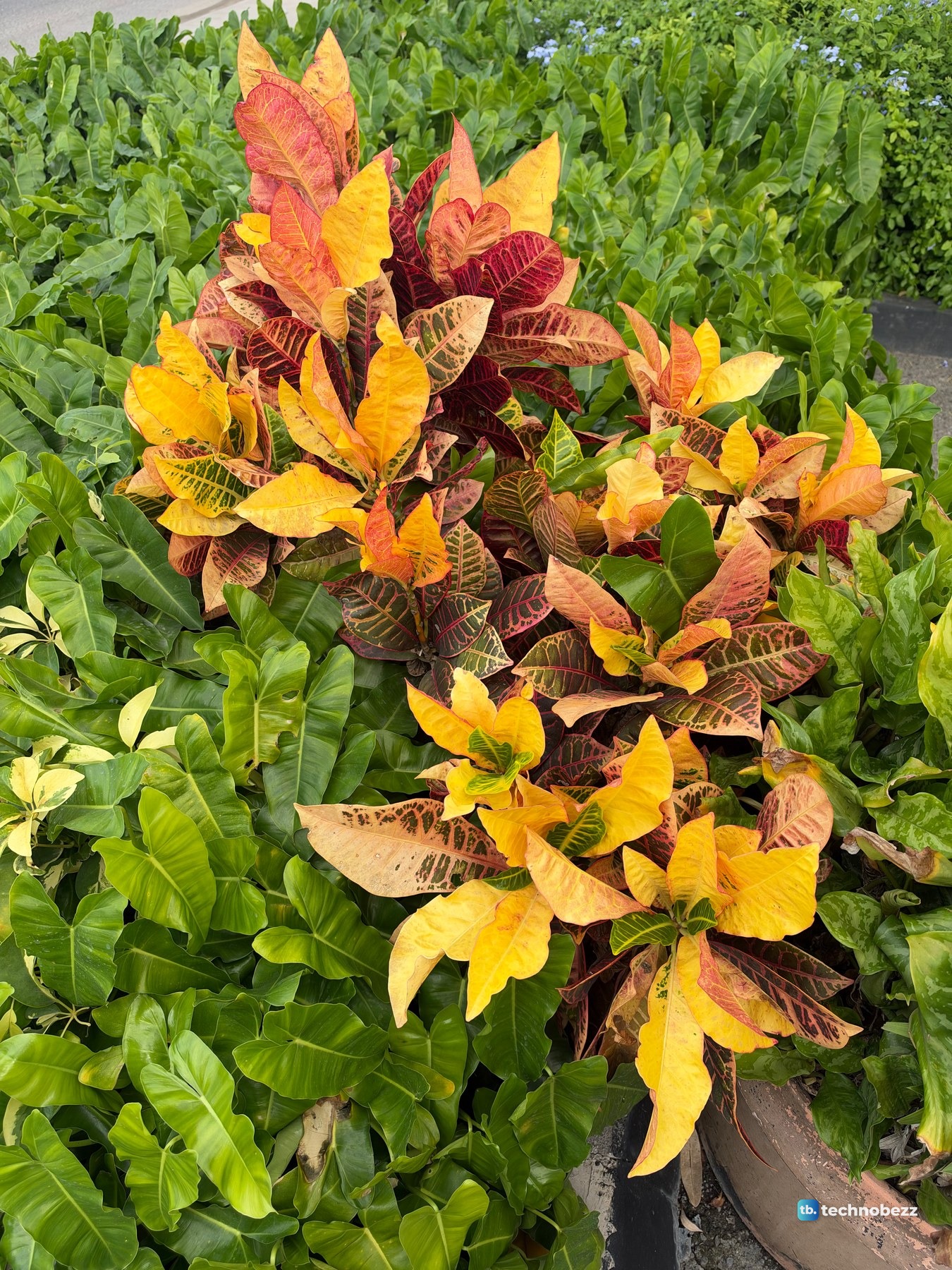
Here is a piece of the same photo at full size. It is 1,800 pixels wide, cut from a file that is 4,284 pixels wide.
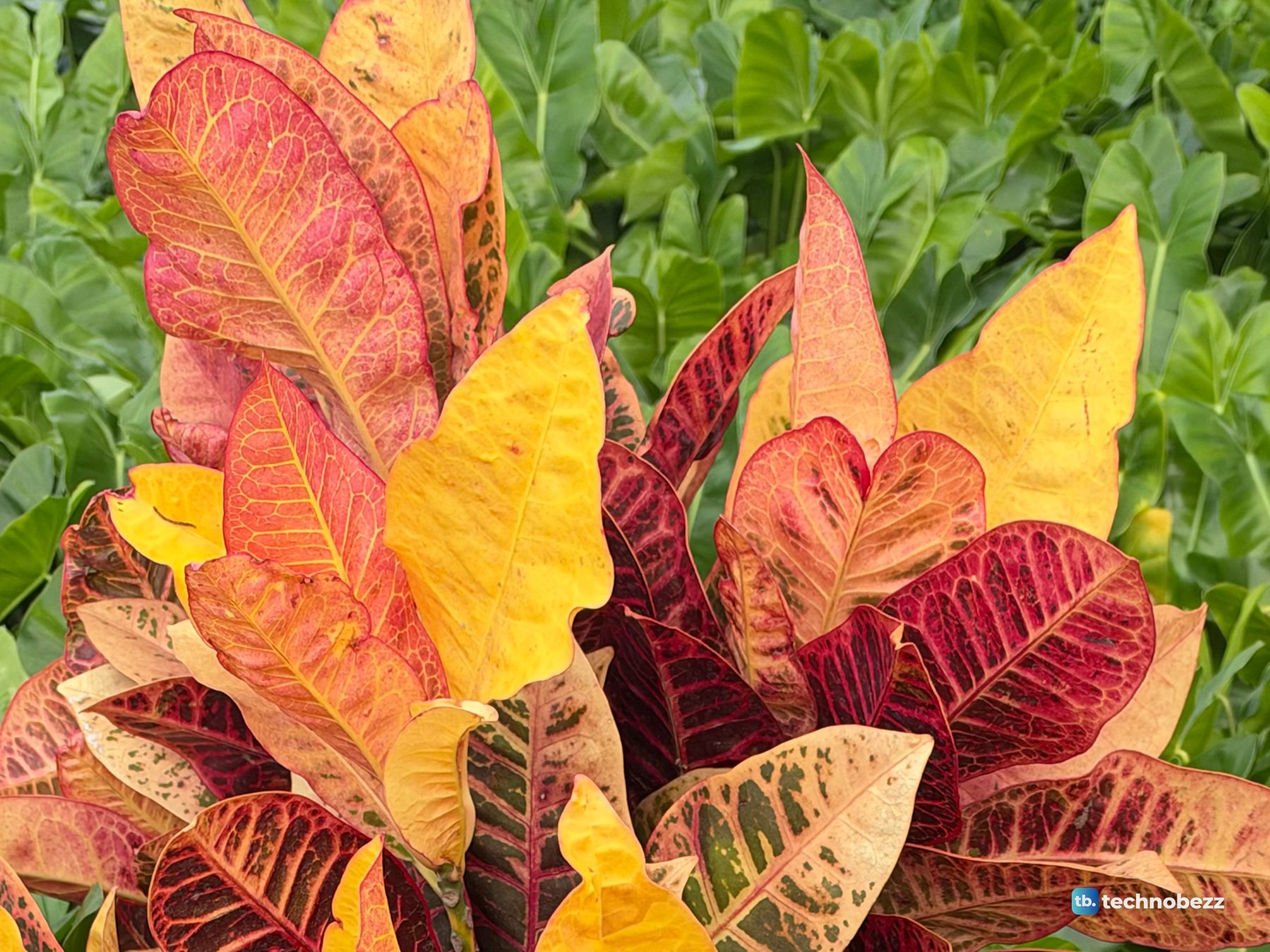
Yellow is harder. Push the saturation too far and a yellow leaf turns into a flat yellow shape. Here the green flecks and the center vein of each leaf are still there.
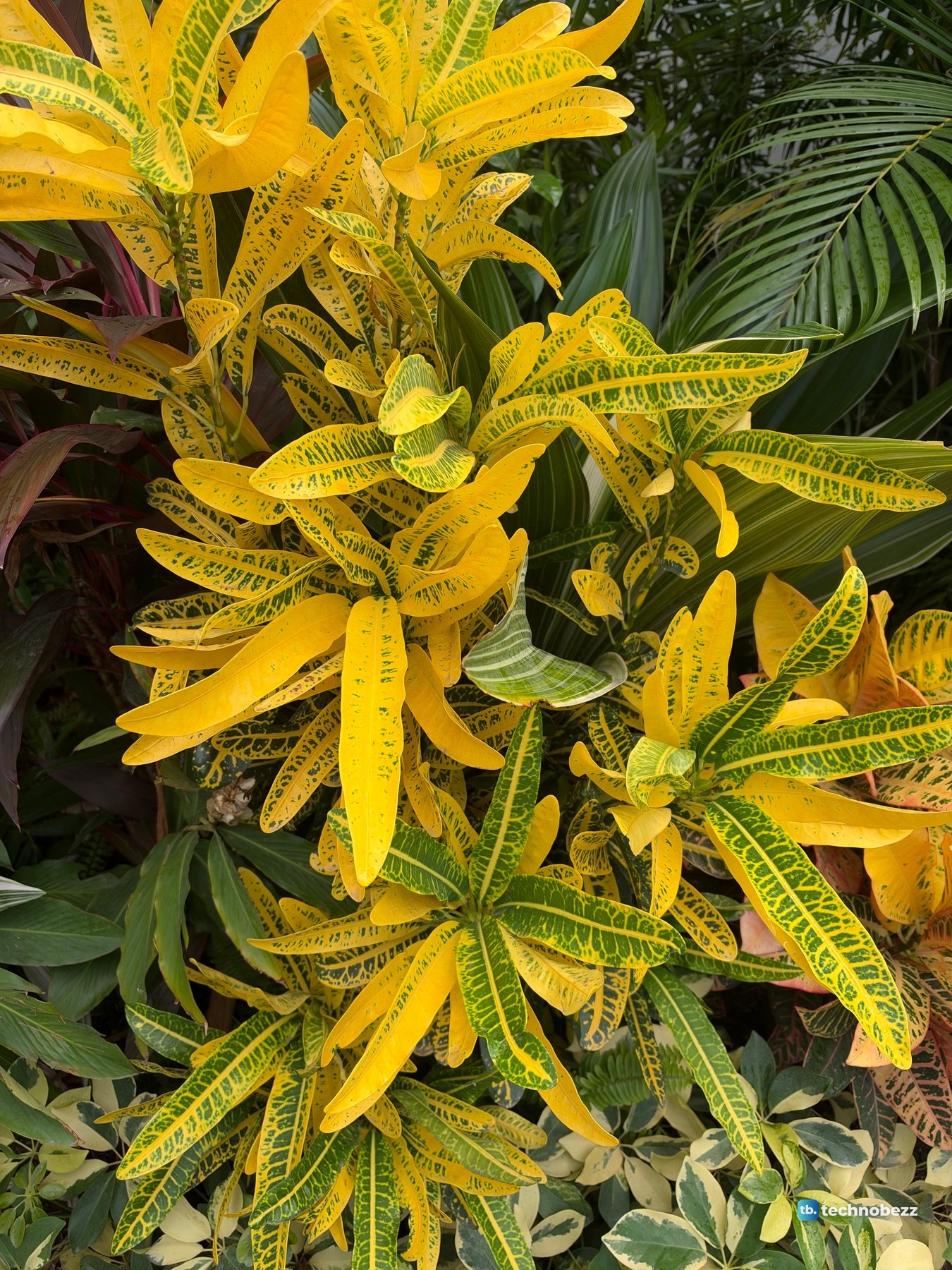
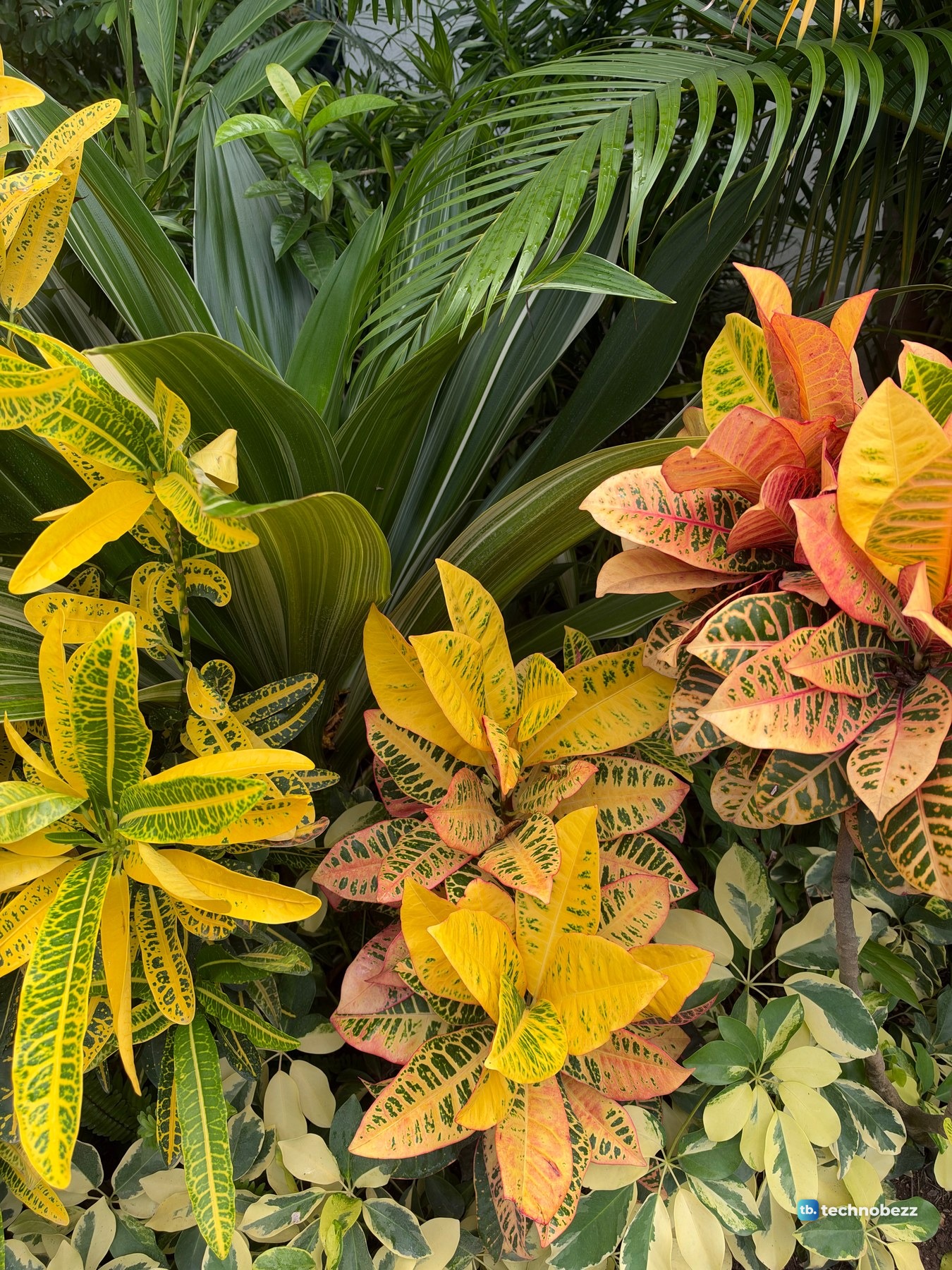
The next frame was taken five seconds later, a little to the right. The broad striped leaves behind the crotons stay a deep, dark green, and the pink edges on the leaves in front are thin and clean.
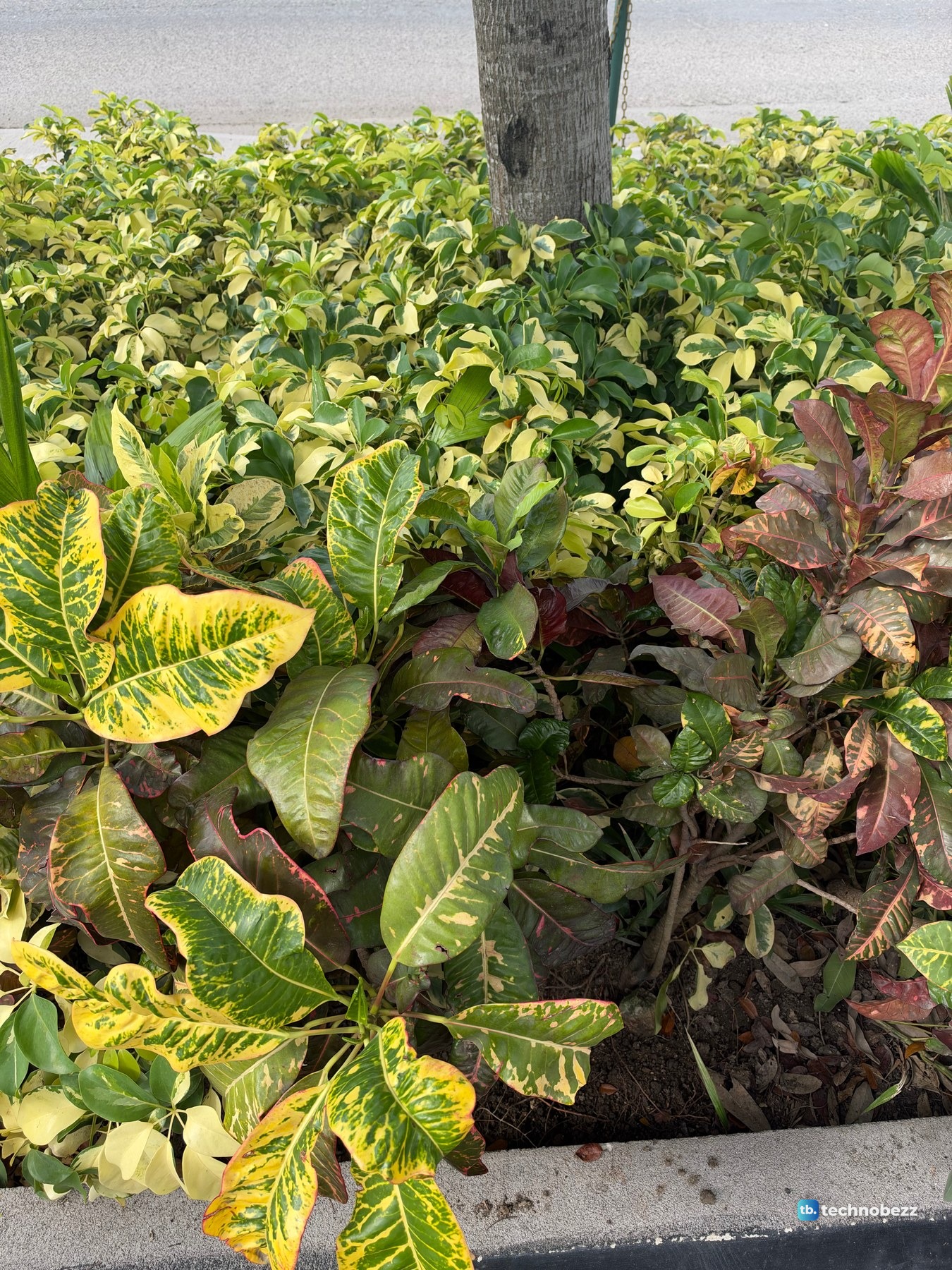
Not every planter was that tidy. This one has a tree trunk, bare soil, dead leaves and a concrete curb.
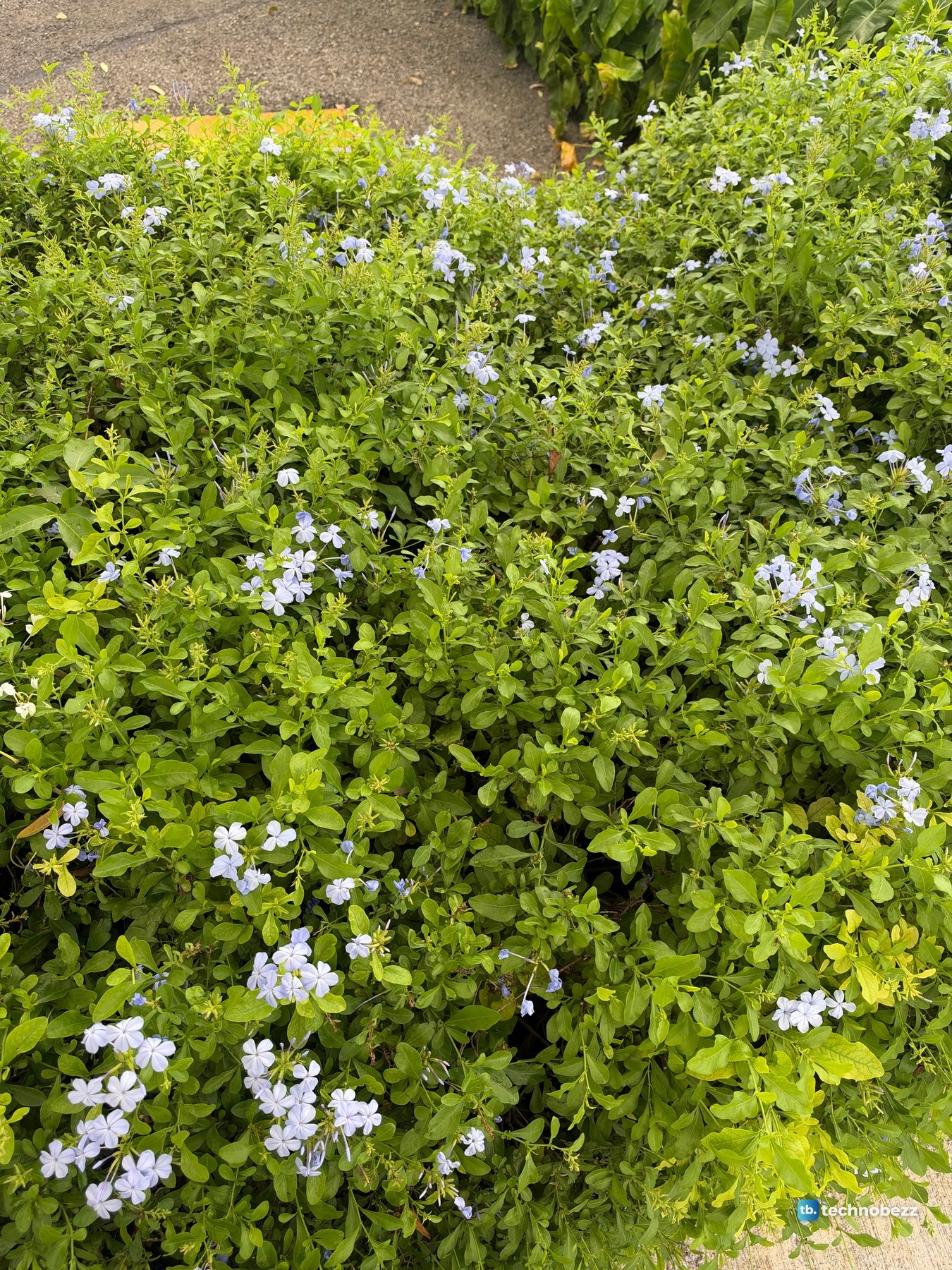
The plumbago hedge is a test of small detail: hundreds of small leaves, and pale blue flowers that sit close to white.
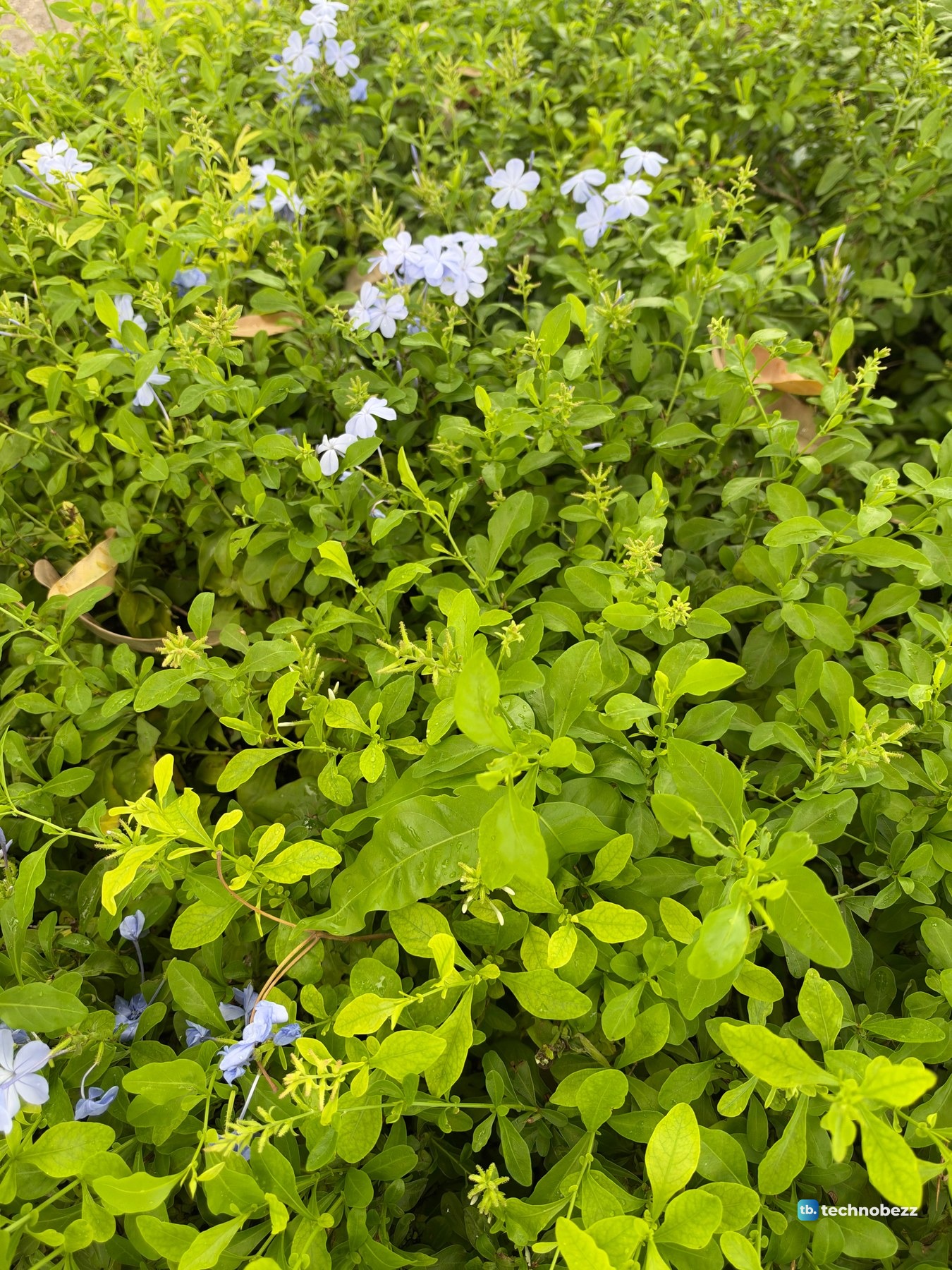
In the closer view, the flowers are softer than the leaves. At full size the leaves below them are sharp enough to show water drops.
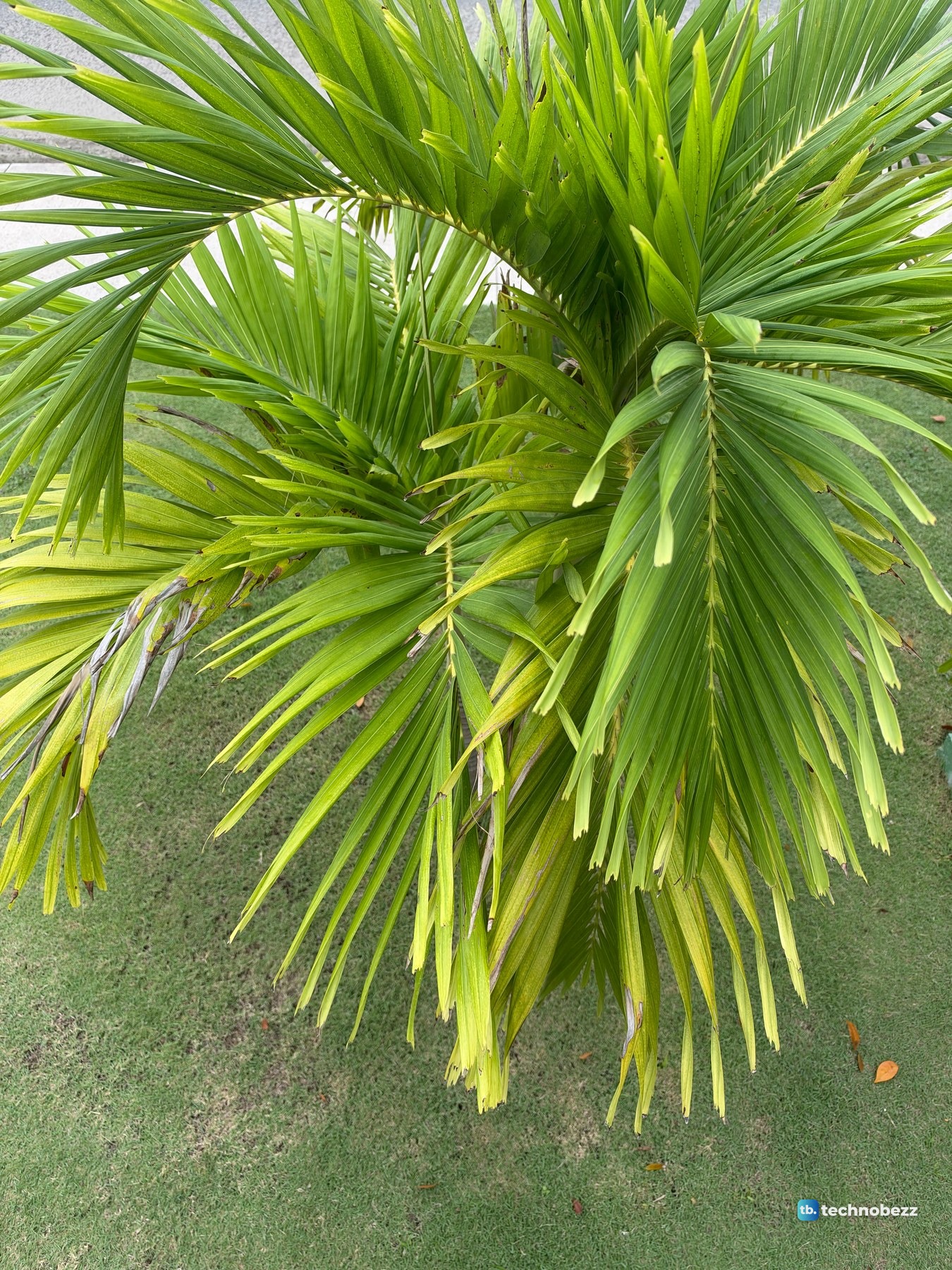
Two plainer subjects to finish. Palm fronds from above are mostly fine parallel lines. At full size the lines stay separate, right down to the yellowing tips.
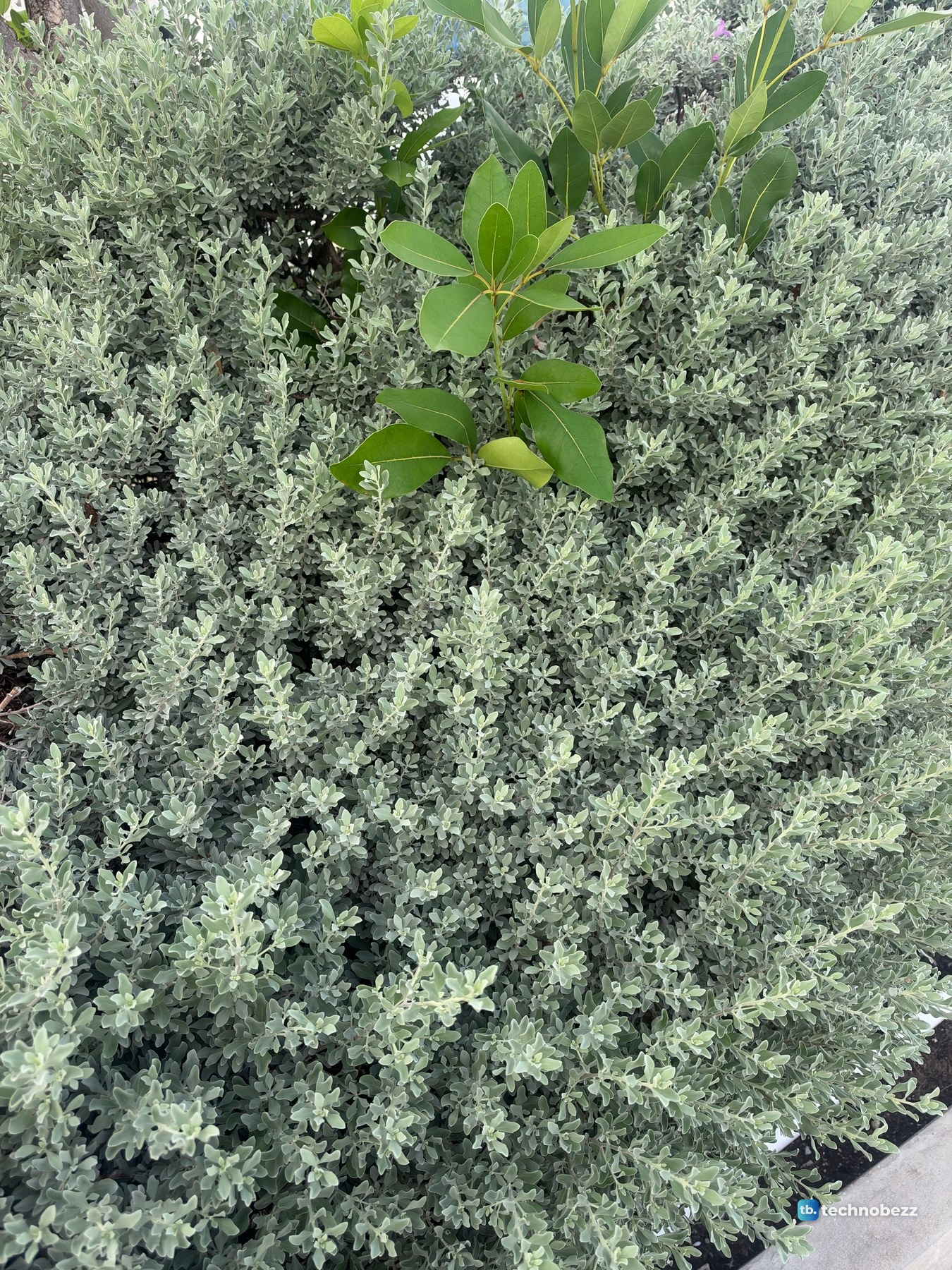
And a shrub with almost no color in it. The small leaves come out a silvery gray green, and the sprig of ordinary green leaves on top gives you something to judge them against.
iPhone 18 Pro Max focal lengths and photo sizes
Four focal lengths did nearly all the work that afternoon, from two physical lenses. Apple's spec page lists the 2x and 8x steps as 12MP "optical-quality" options, and the sizes of my files agree.
| Zoom step | Focal length (35 mm equivalent) | Lens in the photo data | Aperture in the photo data | Photo size |
|---|---|---|---|---|
| 1x | 24 mm | Main, 6.93 mm | f/1.8 in this gallery | 24MP (4284 x 5712) |
| 2x | 48 mm | Main, 6.93 mm | f/1.8 | 12MP (3024 x 4032) |
| 4x | 100 mm | Telephoto, 16.891 mm | f/2.8 | 24MP (4284 x 5712) |
| 8x | 200 mm | Telephoto, 16.891 mm | f/2.8 | 12MP (3024 x 4032) |
The 2x and 8x photos carry the same lens data as 1x and 4x, so they are a tighter crop from the same lens at half the pixel count. Two of the sea photos below read 40 mm at the full 24MP. No photo in the set came from the ultra wide camera.
Zoom samples at 1x, 2x, 4x and 8x
From the sea wall I shot the horizon at each zoom step. Open water has little fine detail, but the lens data confirms the phone used the real telephoto for 4x and 8x. The 1x frame was taken about half a minute after the 8x frame.
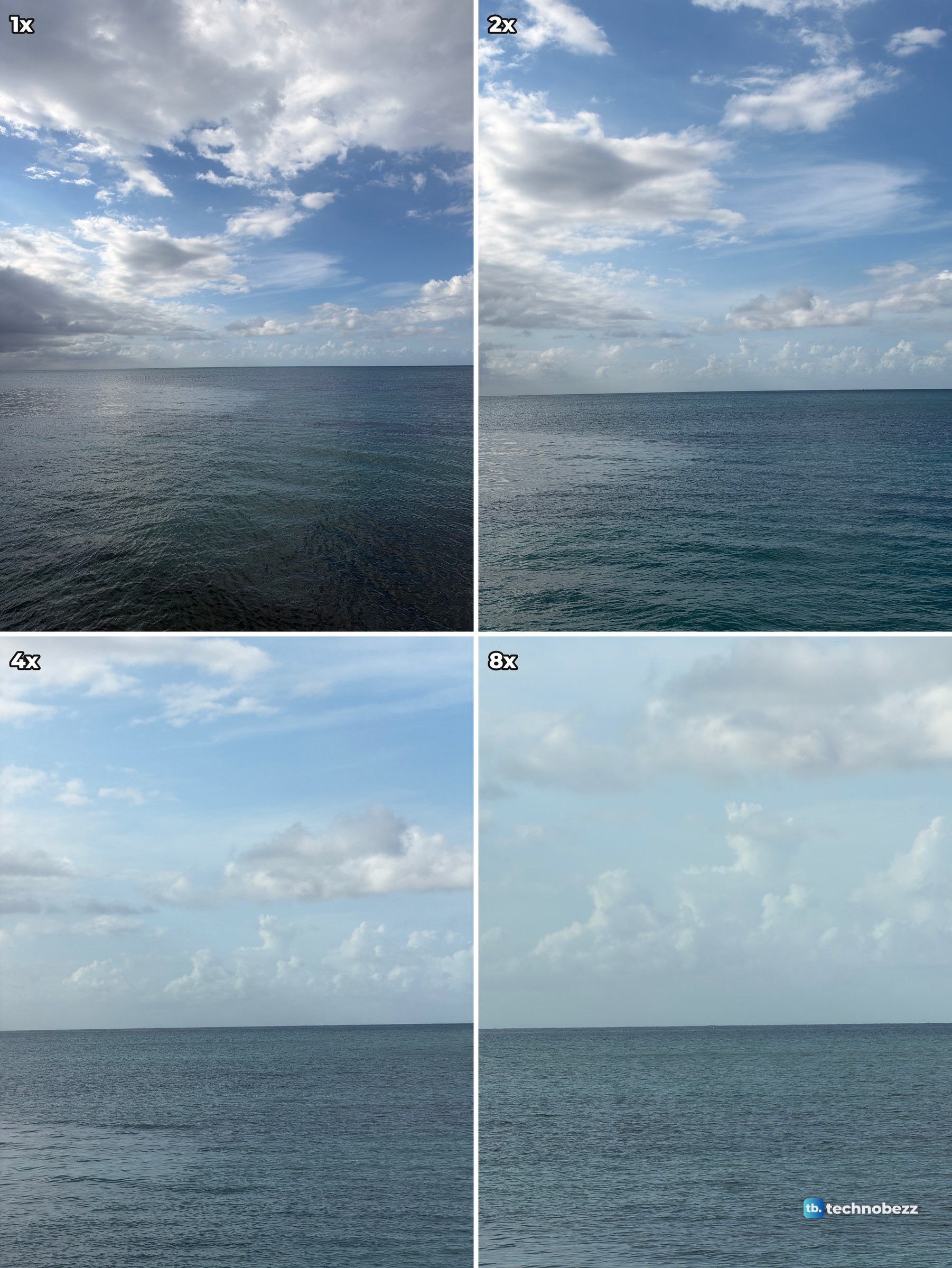
The 4x and 8x frames are paler, but they are filled with the hazy band of sky just above the horizon, so I would not read that as a color difference between the lenses. At full size the 4x photo holds the individual ripples on the water, and the 8x photo is softer. The telephoto frames sit at ISO 20 and 25, the lowest readings of the afternoon.
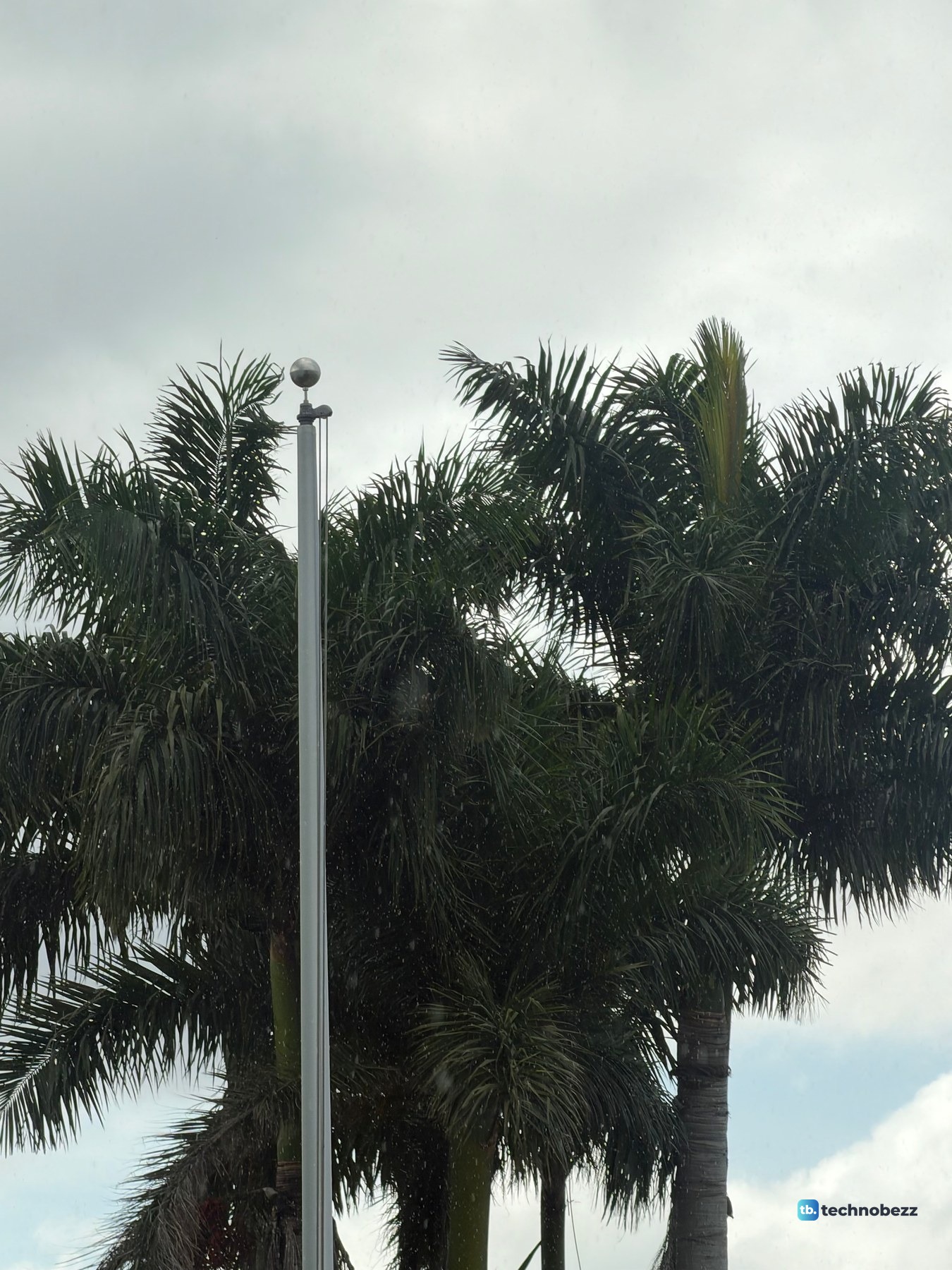
One more from the telephoto, taken earlier in the afternoon: palm trees and a bare flagpole against a bright gray sky, a little past 8x.
Digital zoom on a close subject
I shot a purple-leaf bush in a pot at the same four steps, and the lens data shows the phone stayed on the main camera for all of them. The 4x and 8x frames here are digital zoom, not the telephoto. The data does not say why. The bush was a lot closer than the horizon, and that is as far as I can take it.
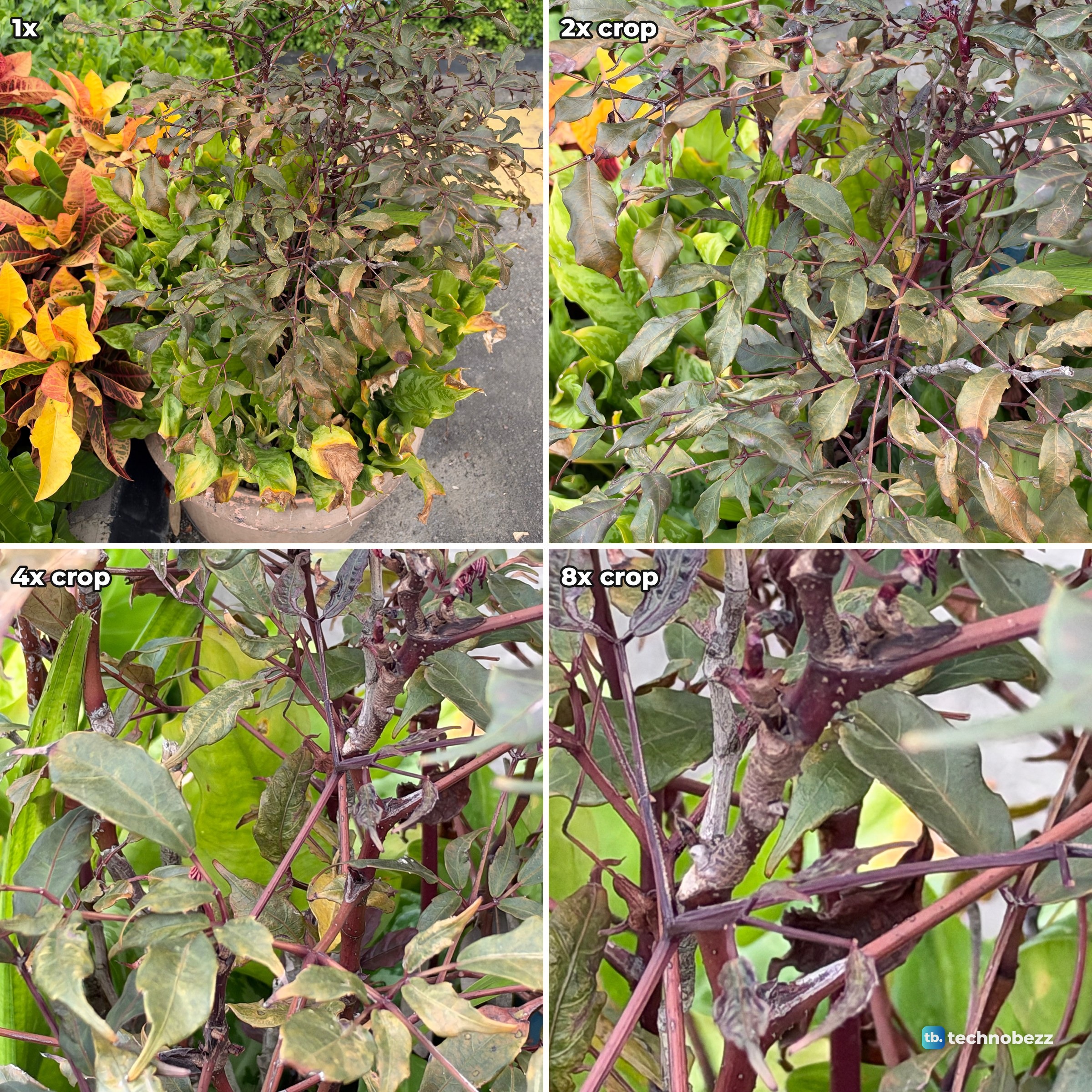
At this size all four look fine. At full size the 2x frame is still crisp, the 4x frame is starting to look processed, and the 8x frame has the smooth, painted look of heavy digital zoom.
Sea and sky samples
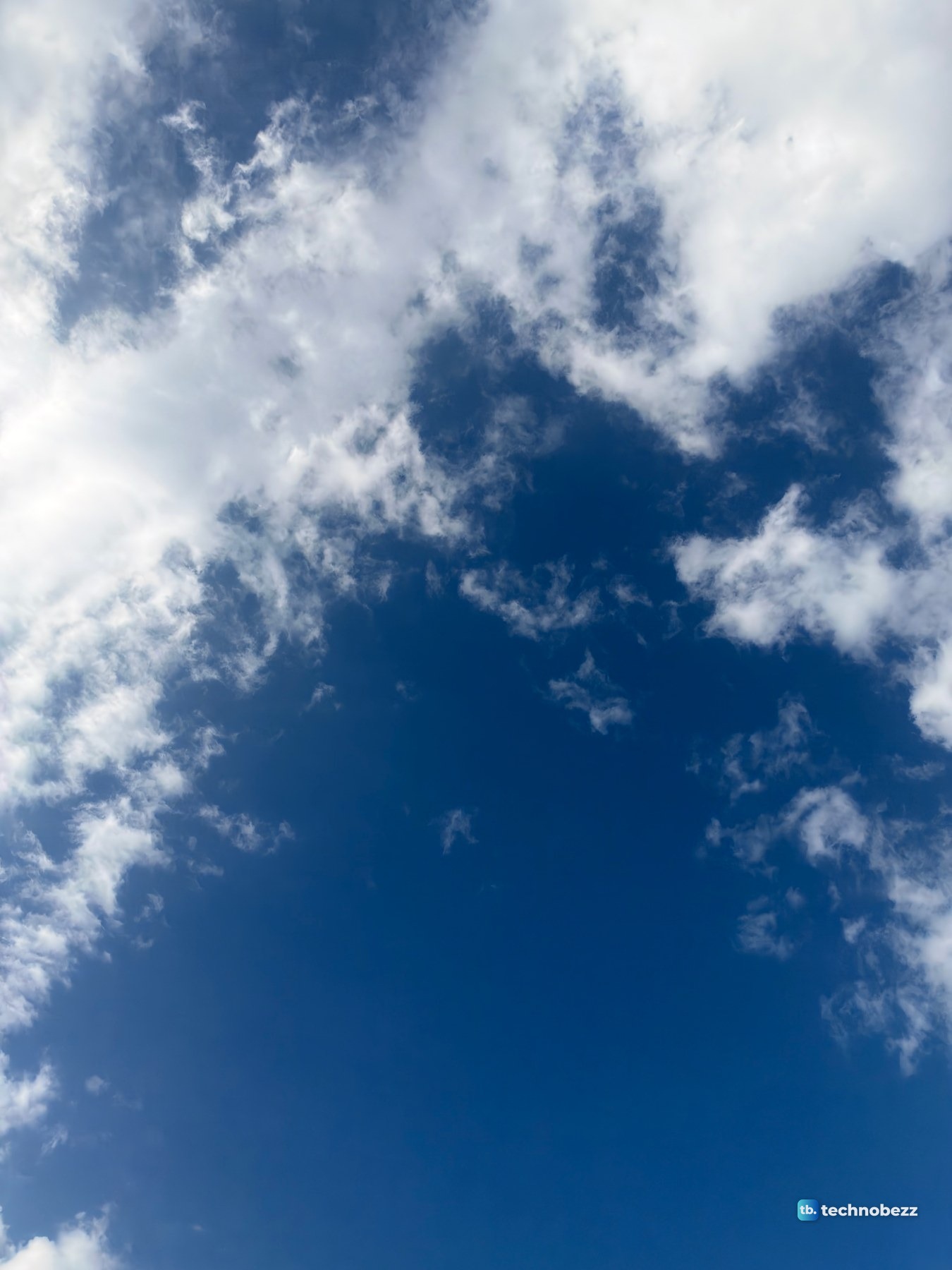
First the sky on its own, with the phone pointed straight up.
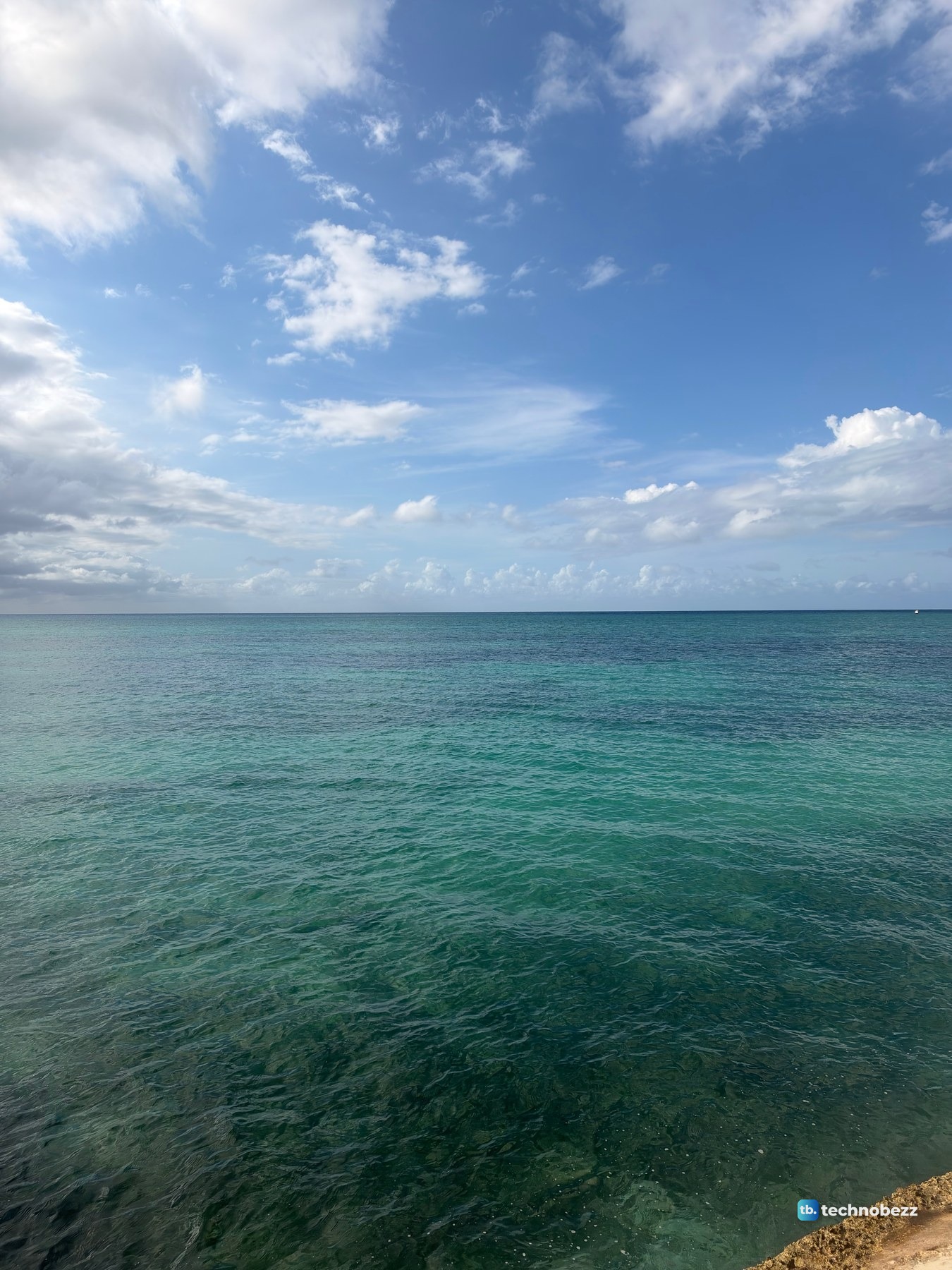
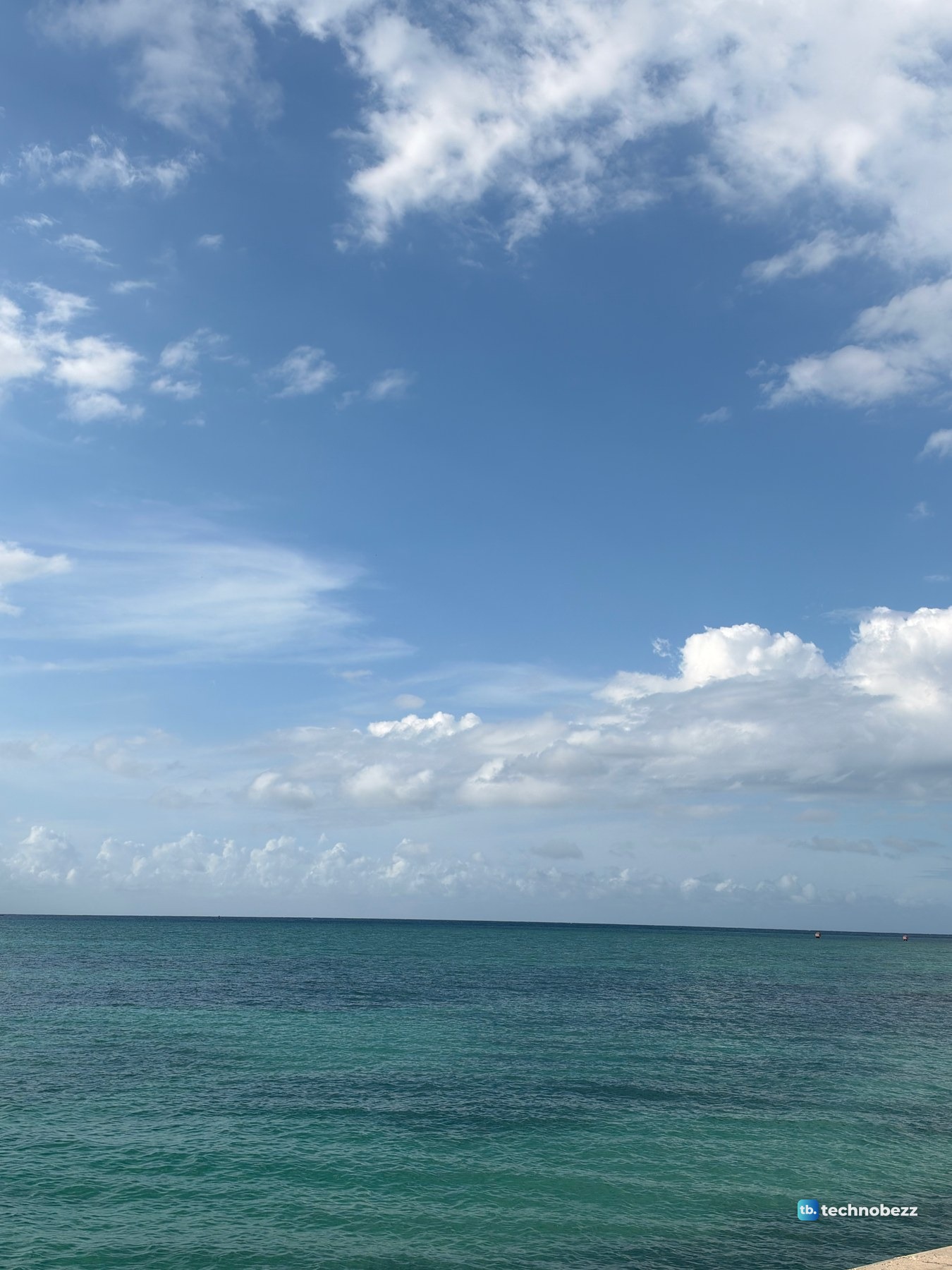
From the wall, the water is the subject. It goes from clear green over the seabed in the foreground to teal and then a dark blue band near the horizon, and the photo keeps those bands apart.
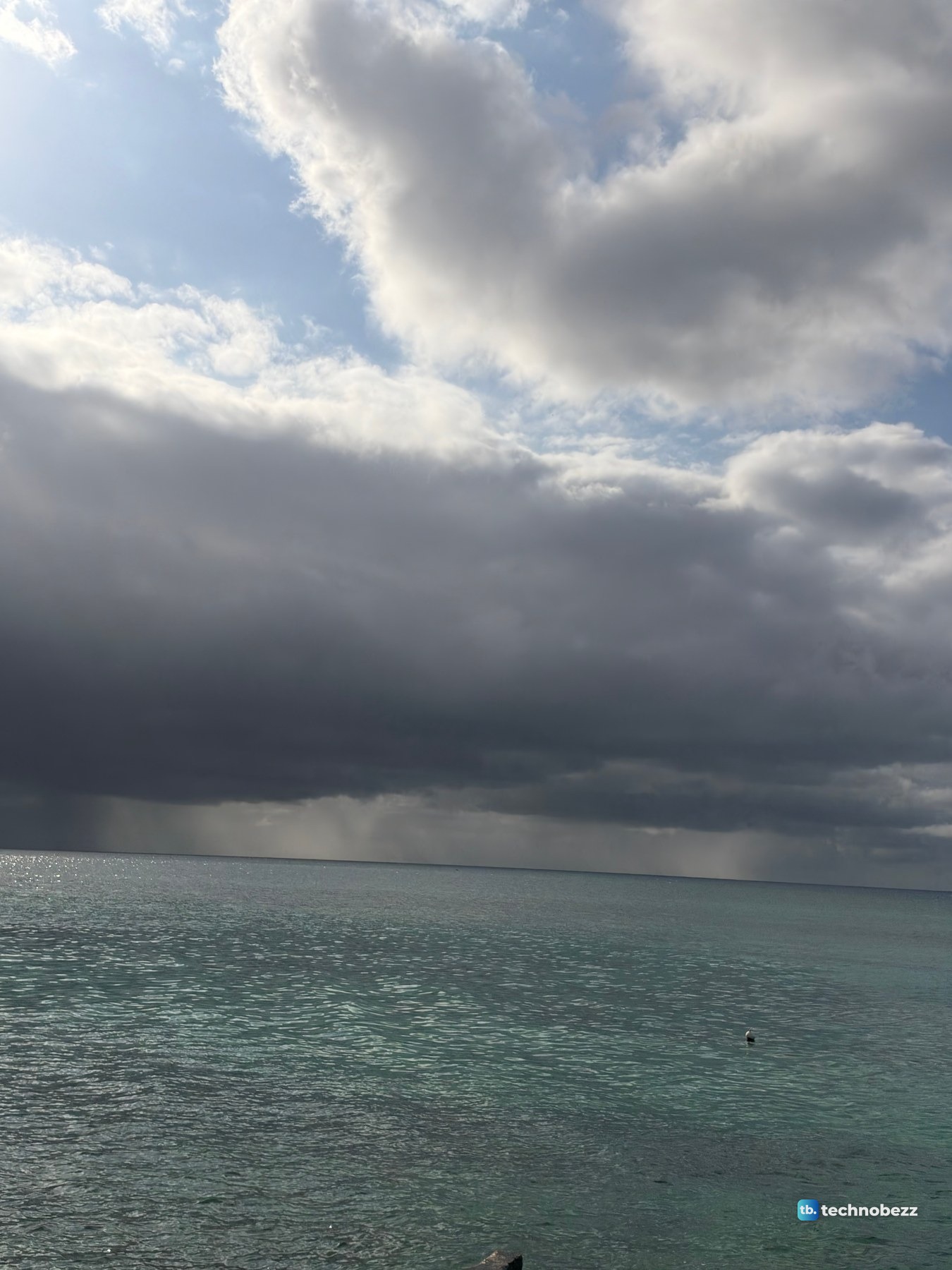
The next photo was taken 35 seconds later, zoomed in a little, with rain on the way. Its shutter speed, 1/20408 second, is the fastest of the afternoon. The top left corner is glare and the middle of the frame is a dark cloud bank.
Eleven seconds after that, at the same 40 mm, a clear patch of sky over the same water.
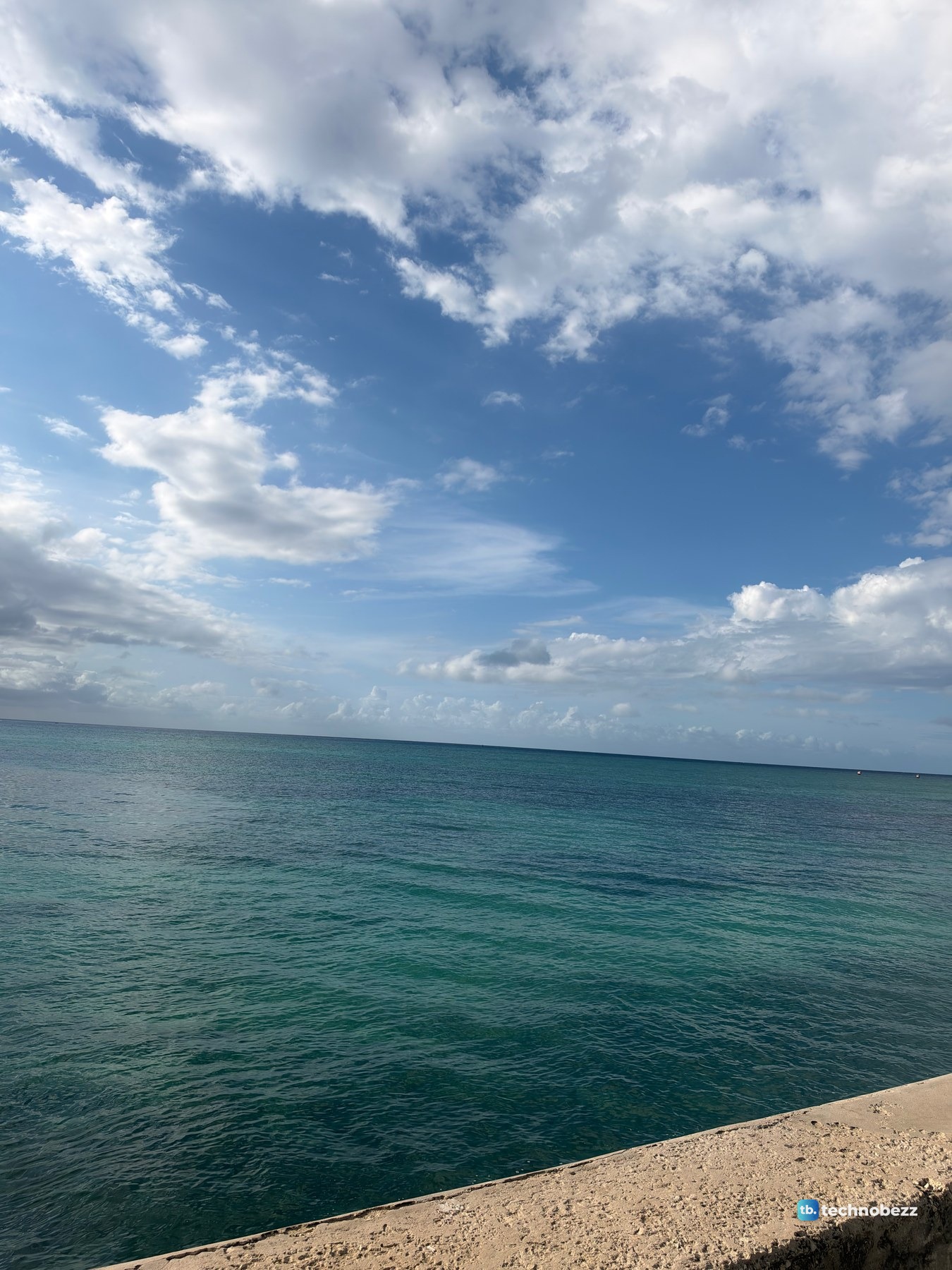
And the wall itself. The horizon is slightly tilted in this handheld frame. The wall in the corner is in shade and still shows its rough surface.
Video frames of a plane coming in to land
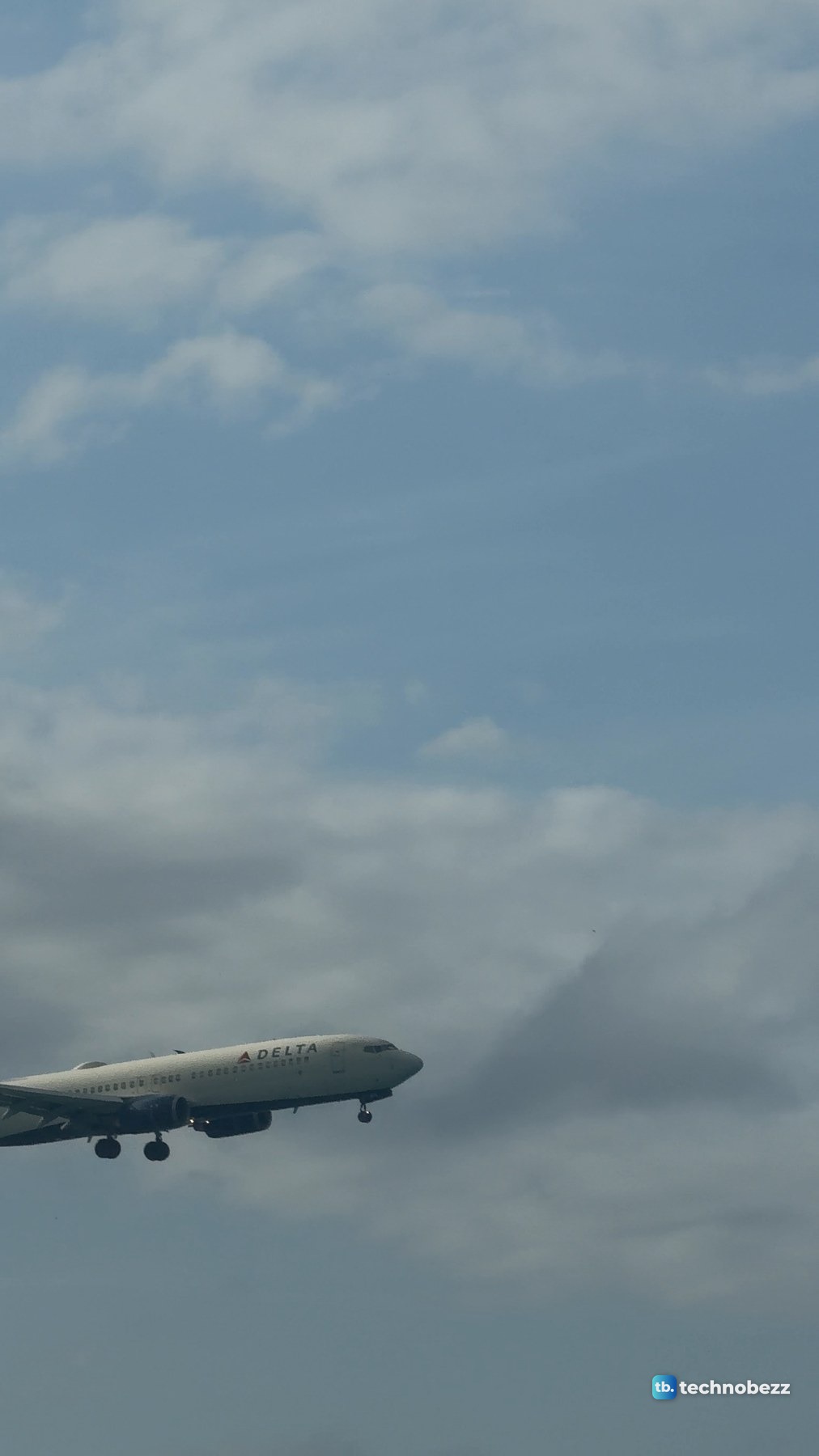
While I was shooting the sea, a plane came in over the water, so I zoomed in and followed it down. These are frames from a 16 second 4K clip at 30 frames per second, not photos, and each is about 8 megapixels before resizing. The video data I have does not include the zoom level. The clip starts wide.
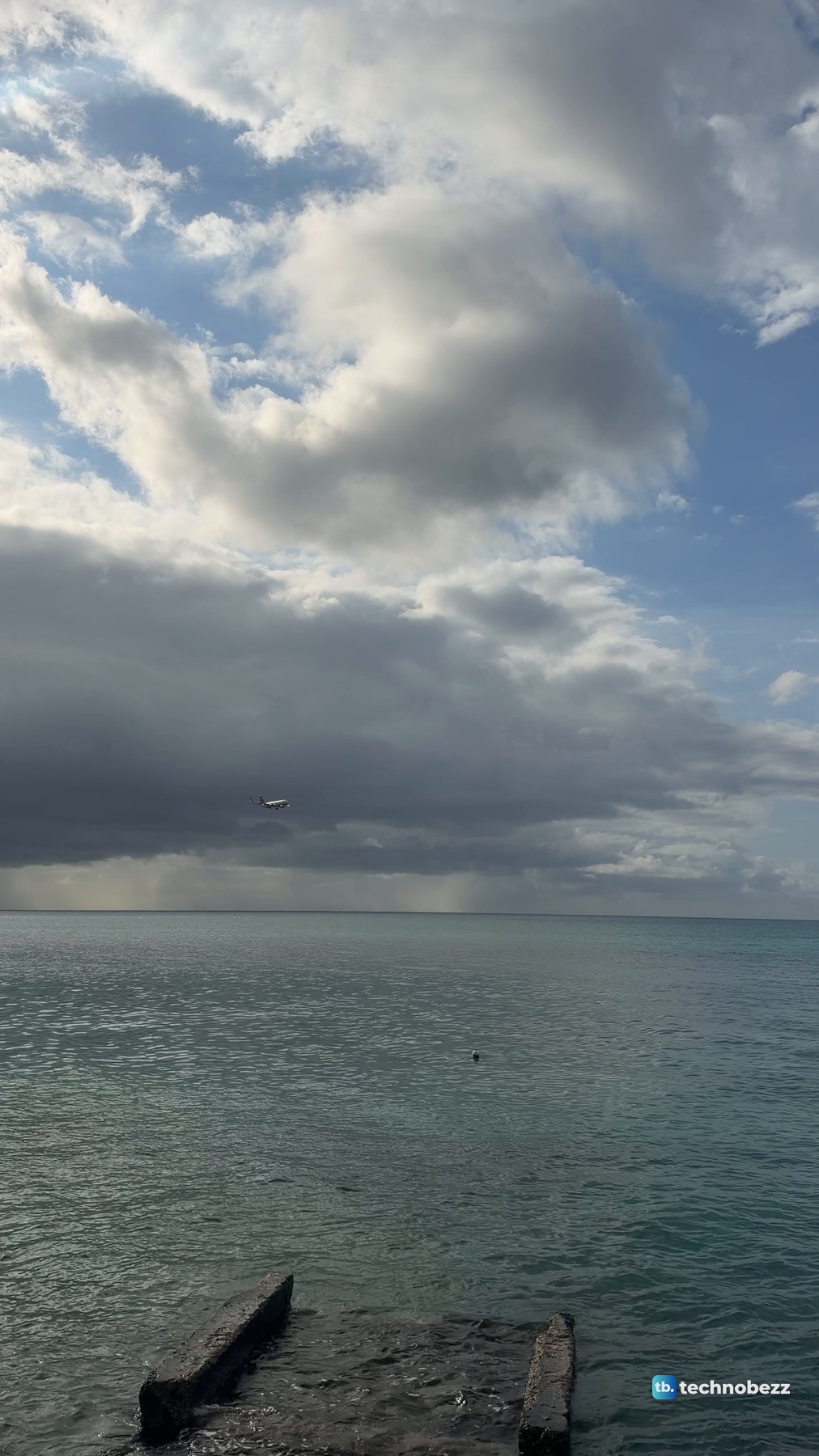
About four seconds in, zoomed. The plane is in front of the darkest part of the cloud, and the white fuselage is not blown out.
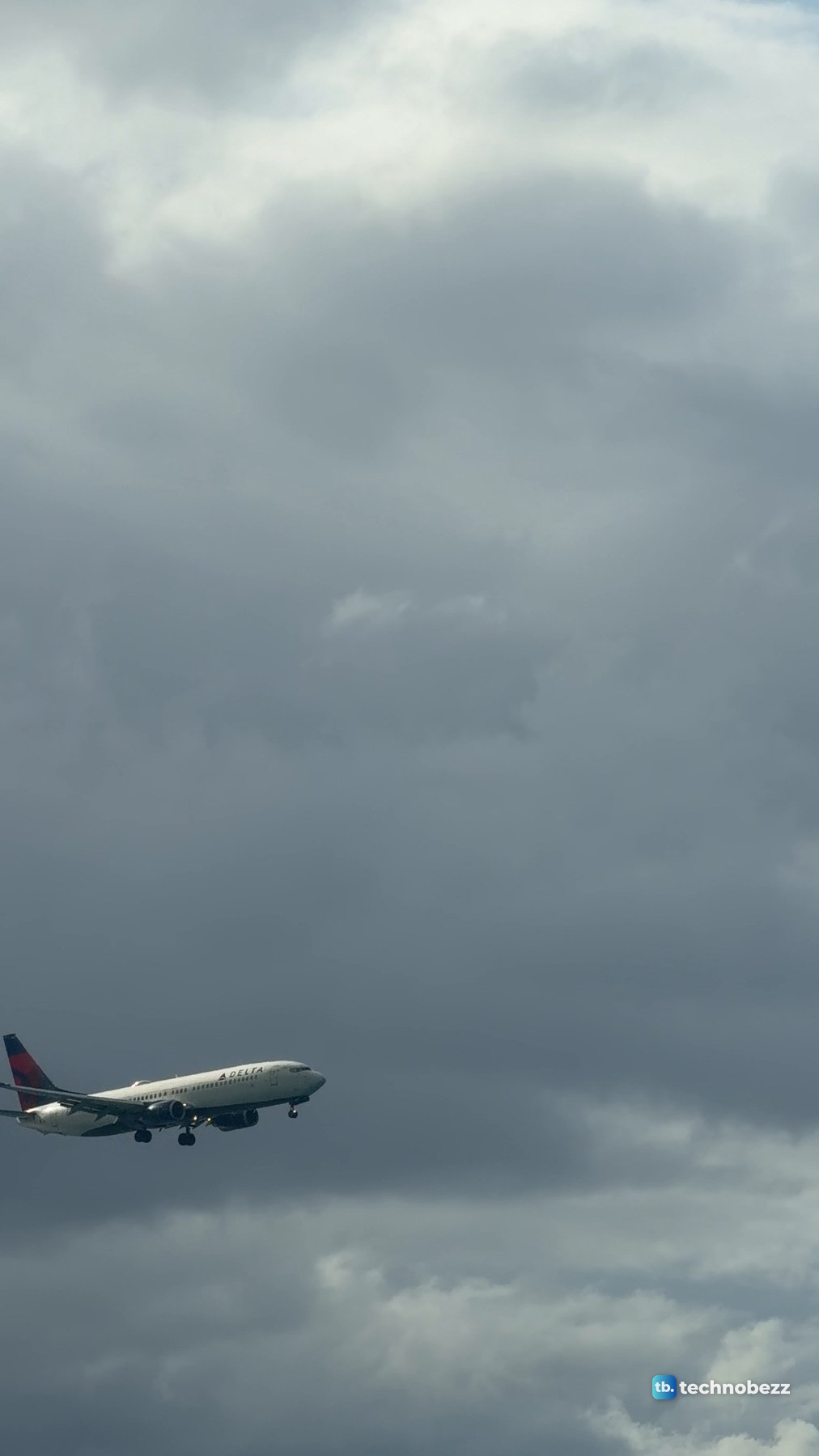
About six and a half seconds in, the tail has slipped out of the left edge of the frame. Handheld tracking at this zoom is not tidy. Zoom into the frame and the fuselage looks stippled, not smooth. It is a video frame, and it looks like one.
What these samples do not show
This was one afternoon of daylight. Across all 73 photos the ISO never went above 100, and the slowest shutter speed was 1/227 second. Nothing here tells you how the camera does at night or indoors. I took no portraits and no selfies, so there are no skin tones in the set. Every photo is a 24MP or 12MP file, and none use the 48MP option Apple also lists.
I have not compared video from this phone with anything, so treat the plane frames as samples and nothing more.
For battery, the phone read 83 percent at 12:52 PM and 45 percent at 5:14 PM, with the Camera app at 25 minutes of screen time and 10 percent of battery use. It was doing other things too, so that is one afternoon, not a battery test. The battery screenshots do not establish the phone's capacity. Technobezz covered an August report on the battery.
Low light and night are next.
More from my iPhone 18 Pro Max testing
- iPhone 18 Pro Max vs iPhone 17 Pro camera comparison
- iPhone 18 Pro Max variable aperture test
- iPhone 18 Pro Max in silver
- iPhone 18 Pro Max hands-on
This product was provided to Technobezz for review. We independently select what we review. The manufacturer had no input on this article and did not see it before publication. All opinions are our own.
Share this article
More in News
iPhone 18 Pro Max vs iPhone 17 Pro Camera Comparison in Daylight
The same scenes on the iPhone 18 Pro Max and iPhone 17 Pro in daylight: photo pairs, matched 4K video and skin tones, with the data.
4 min read
iPhone 18 Pro Max Variable Aperture Explained With Real Photos
Daylight and indoor photos show how the iPhone 18 Pro Max's four aperture settings change close-up detail, background sharpness and brightness.
4 min read
iPhone 18 Pro Max Hands-On After Two Days, What Stood Out and What I Still Need to Test
An early hands-on with the silver iPhone 18 Pro Max. A narrower Dynamic Island, an aperture change you can see up close, and what is still untested.
3 min read
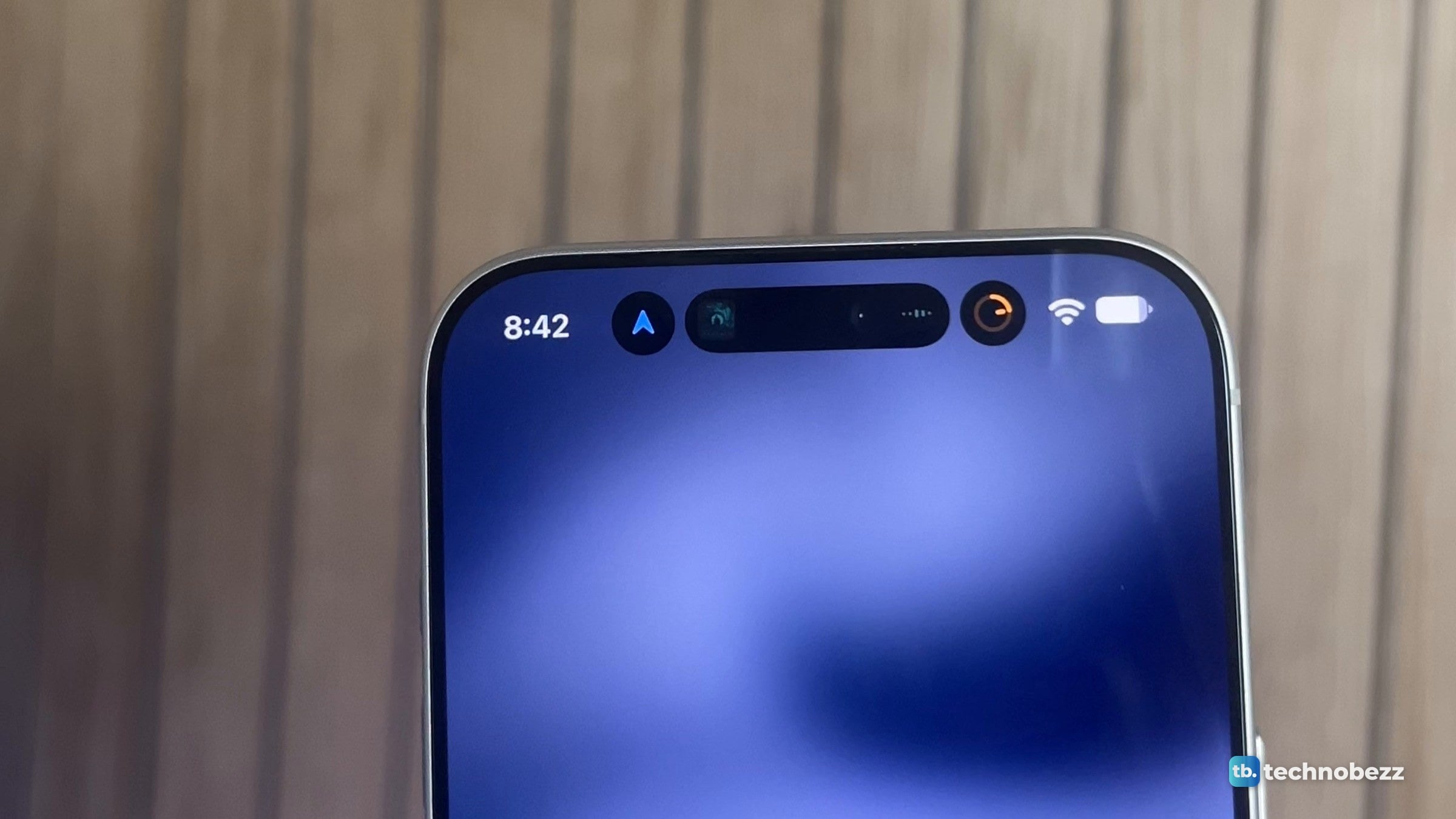
iPhone 18 Pro Max Dynamic Island Is Smaller and Shows Three Things at Once
I put the iPhone 18 Pro Max next to my iPhone 17 Pro. Its Dynamic Island is about 24 percent narrower in my photo and shows three things at once.
4 min read
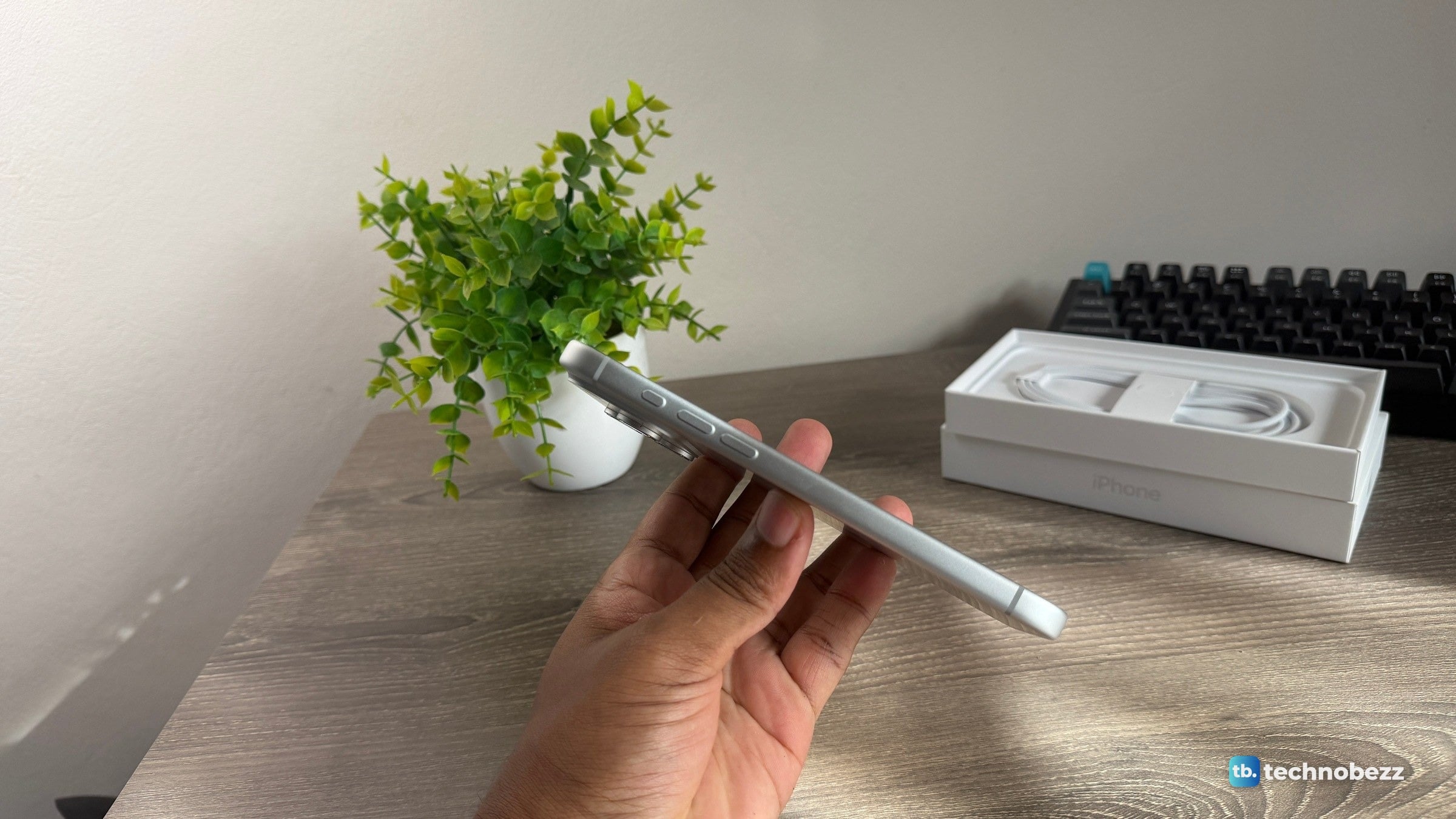
iPhone 18 Pro Max Size, Thickness and Weight in Real Life
4 min read
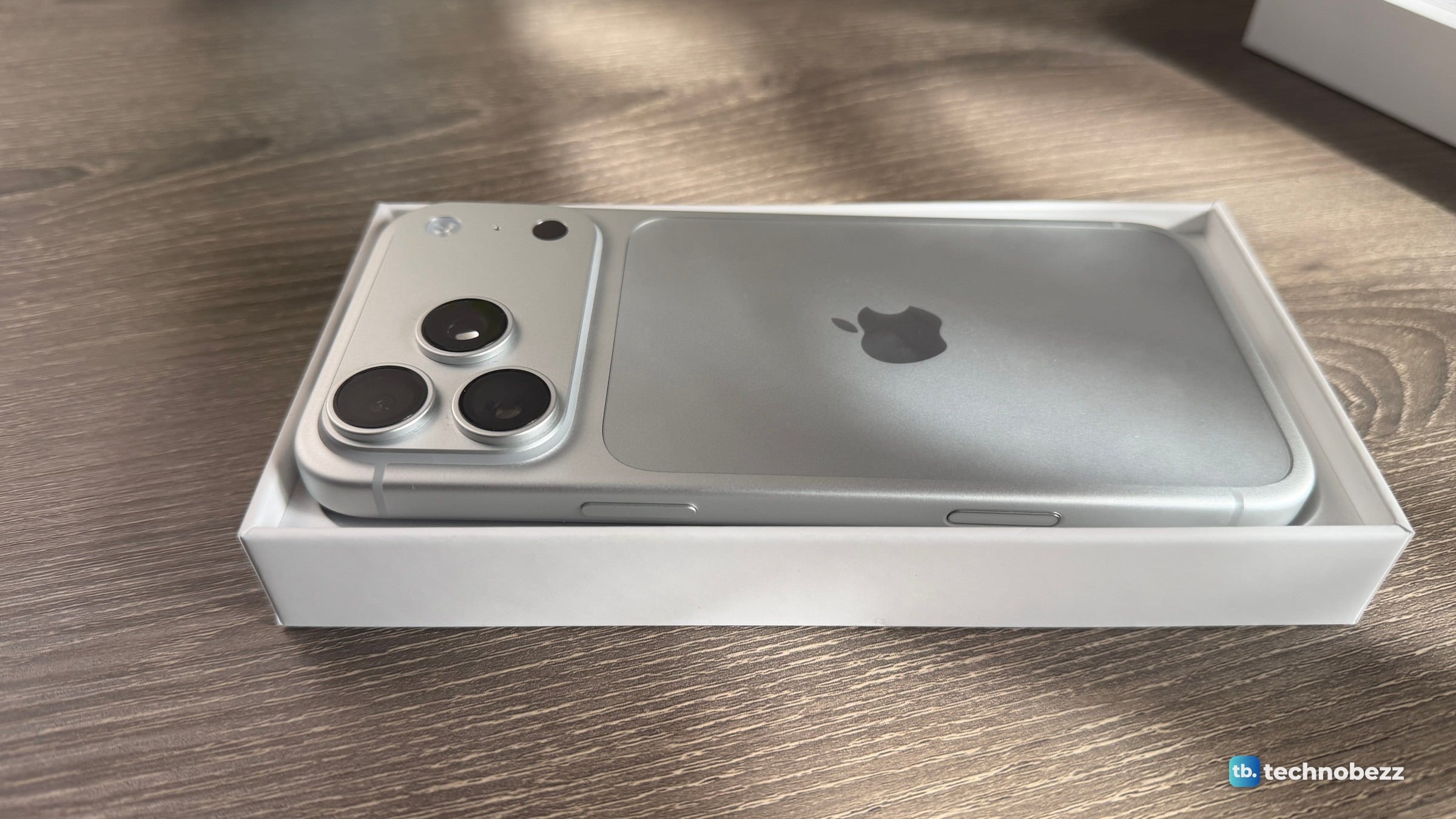
iPhone 18 Pro Max Unboxing and What Comes in the Box
5 min read
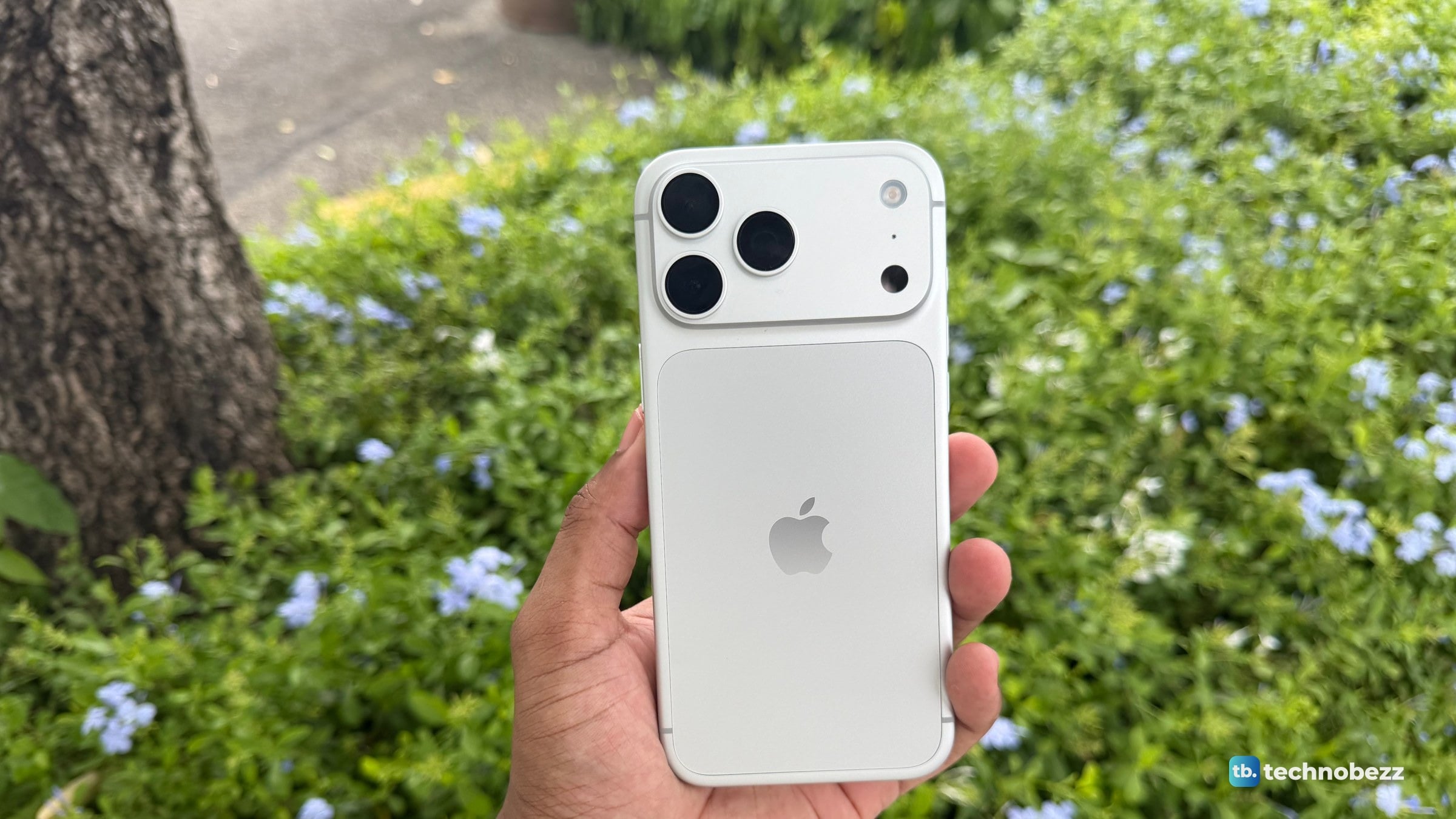
iPhone 18 Pro Max Silver in Real Life, From White to Blue
5 min read
Sennheiser HD 490 PRO Leads 3 Headphone Deals All Under $346.40
3 min read
TP-Link Archer BE12000 Tri-Band Wi-Fi 7 Router on sale for $229.99
5 min read
OSCOO 2TB PCIe 4.0 NVMe SSD slips to $269.99
4 min read
Razer Moray in-Ear Monitor dips to $99.99
4 min read
TCL 75-inch F7D QLED 4K UHD HDR sees price cut to $599.99
3 min read