A good walkie talkie keeps a group in touch where phones are unreliable: on a trail, on the water, around a campsite or across a job site. The right set depends on how far you need to talk, how wet the radios will get, and whether you want rechargeable packs or batteries you can swap in the field.
Technobezz is supported by its audience. We may get a commission from retail offers.
5 Best Walkie Talkies in 2026
The Motorola Talkabout T803 leads our walkie talkie picks for its app features and 16-hour battery, with waterproof, work crew, hiking and family options.
T
Technobezz
Editorial Team
Updated November 11, 2026Nov 11, 2026
•9 min read

Get Deals Like These in Your Inbox
The best prices, straight to your inbox.
Add Technobezz on Google:Preferred SourceGoogle Discover
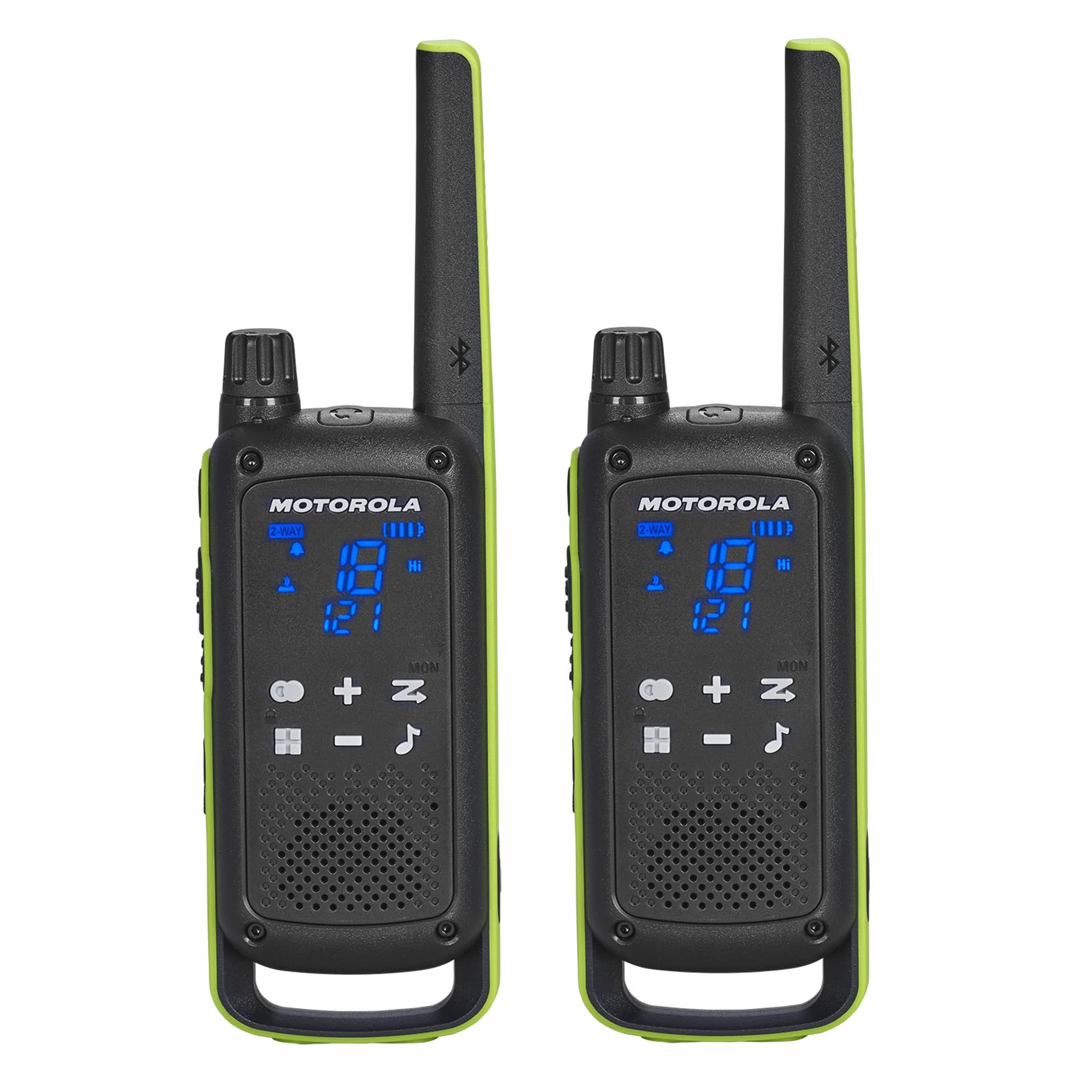
The Motorola Talkabout T803 is the best overall pick. It pairs with a phone over Bluetooth for app-based push-to-talk, off-grid group messaging and location sharing, Motorola quotes up to 16 hours of battery life, and the set includes a dual-unit charging tray.
This guide is for US families, hikers, boaters and small work crews who want radios that are simple to set up and use. The other picks cover full waterproofing, multi-day trips, glove-friendly work radios and a basic set for casual family use.
At a Glance
| Category | Product | Why We Picked It |
|---|---|---|
| Best overall | Motorola Talkabout T803 (2-pack) | Bluetooth app features, 16-hour battery and a charging tray |
| Best waterproof | Motorola Talkabout T605 H2O (2-pack) | IP67 rating, floats with its NiMH battery, NOAA alerts |
| Best for multi-day trips | Rocky Talkie Mountain Radio (2-pack) | 3 to 5 days of quoted battery life in a compact, tough shell |
| Best for work crews | Retevis RB48 (4-pack) | Large glove-friendly PTT, IP67 and a removable 2000mAh battery |
| Best for casual family use | Motorola Talkabout T110 (2-pack) | Simple 22-channel radios with easy pairing and AAA power |
How we chose
We compared each maker's published specifications, including quoted range, water and dust ratings, battery type and life, channels and extra features such as weather alerts or app support. We also checked that every pick is sold new on Amazon.
The best Walkie Talkies right now
Motorola Talkabout T803 (2-pack) - Best overall
The Motorola Talkabout T803 has the broadest feature set in this group. It connects to a phone over Bluetooth 5.2 and works with the TALKABOUT app on Android and iOS, which adds push-to-talk from the phone, off-grid group messaging and broadcast, and what3words location sharing. A do not disturb mode is also listed.
Motorola quotes up to 16 hours of battery life from the included 1300 mAh NiMH packs, which charge over USB-C, and the radios also accept AA batteries. The T803 box adds a dual-unit charging tray to the two radios, two belt clips and two batteries. Motorola rates range at up to 35 miles mountain to valley, 6 miles over open water and 2 miles in a neighborhood, so the lower figures are the ones to plan around in built-up areas.
Key highlights
- Bluetooth 5.2 with the TALKABOUT app (Android and iOS)
- Off-grid group messaging and what3words location tracking
- Up to 16 hours of battery life from 1300 mAh NiMH packs
- USB-C charging, also runs on AA batteries
- IP54 weatherproof rating
- Dual-unit charging tray included with the T803
Pros
- App adds messaging and location sharing without cell service
- Longest quoted battery life of the two rechargeable Motorola picks
- Charging tray keeps both radios ready
- Dual power means AA batteries can stand in on a long trip
Cons
- IP54 is a weatherproof rating, not the submersion-rated IP67 of the T605
- App features need a paired phone nearby
- Motorola's T803 page does not list channel or privacy code counts
Who it is for: Families and small groups who want voice plus texting and location sharing in one easy, rechargeable set.
Skip if
The radios are likely to be dropped in water; the T605 H2O is built for that.
Motorola Talkabout T605 H2O (2-pack) - Best waterproof
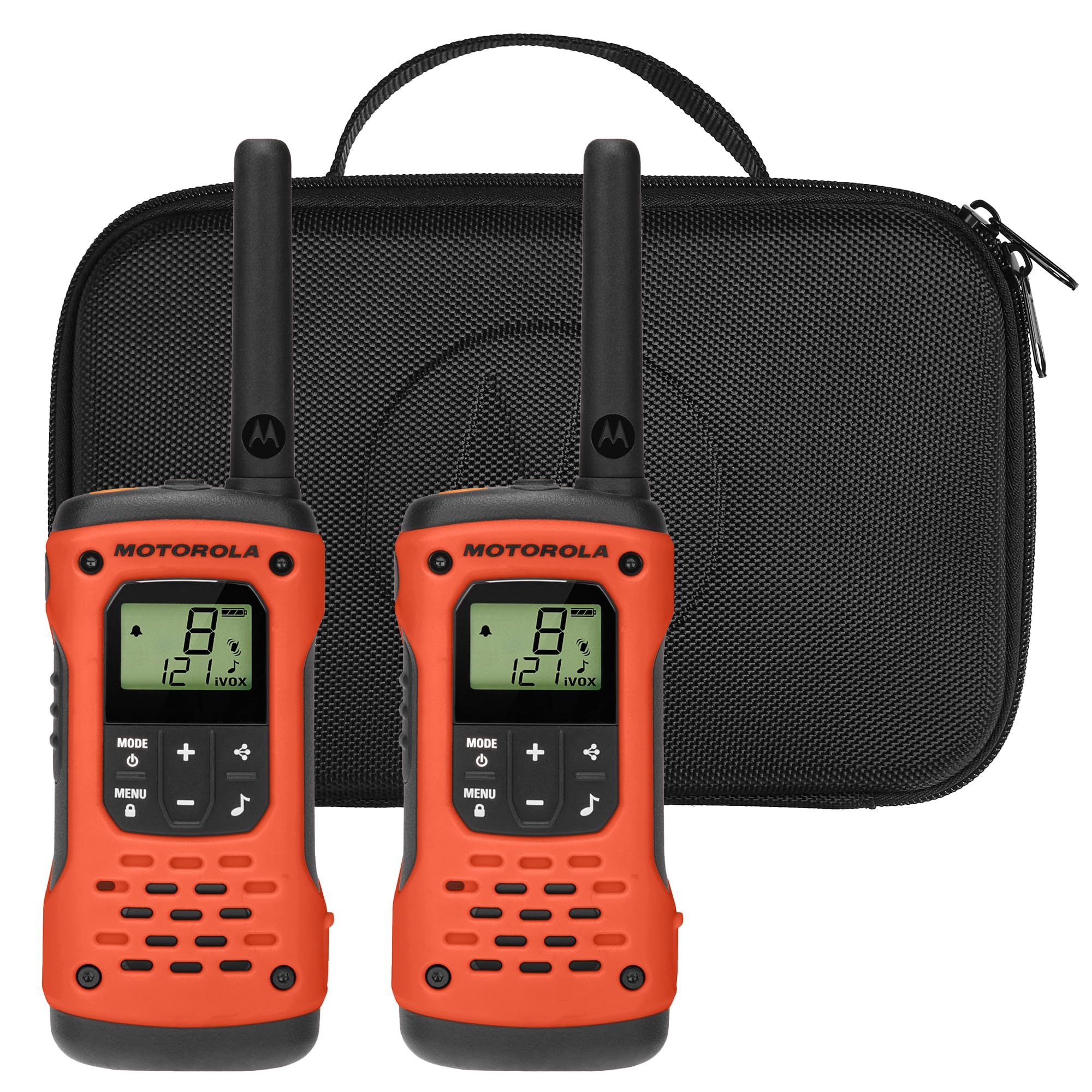
The Talkabout T605 H2O is built for boats, paddling and wet weather. Motorola gives the T600 series an IP67 rating, which it describes as withstanding submersion up to 1 meter for 30 minutes, and says the radio floats with the included NiMH battery. A water-activated LED flashlight helps find it after a drop.
It offers 22 channels with 121 sub-codes per channel, NOAA weather alerts, easy pairing to set every radio to the same channel and code, and a Push-To-Talk Power Boost to raise transmit power when needed. The T605 dual pack adds a carry case, four batteries instead of two, and two earpieces. Battery life is quoted at up to 9 hours from 800mAh NiMH packs, with USB-C charging and AA compatibility.
Key highlights
- IP67 rating, submersion up to 1 meter for 30 minutes
- Floats with the included NiMH battery
- Water-activated LED flashlight
- 22 channels and 121 sub-codes per channel
- NOAA weather alerts
- T605 pack includes carry case, 4 batteries and 2 earpieces
Pros
- Strongest water protection among the Motorola picks
- Weather alerts suit boating and camping
- Spare batteries and earpieces come in the box
- FRS unlicensed operation, per Motorola
Cons
- Up to 9 hours of battery life is well short of the T803's 16 hours
- Motorola notes it may not float with some AA batteries
- Quoted range falls to 2 miles in a neighborhood
Who it is for: Boaters, kayakers and anyone whose radios will get soaked or dunked.
Skip if
You mostly stay dry and would rather have longer battery life and app features.
Rocky Talkie Mountain Radio (2-pack) - Best for multi-day trips
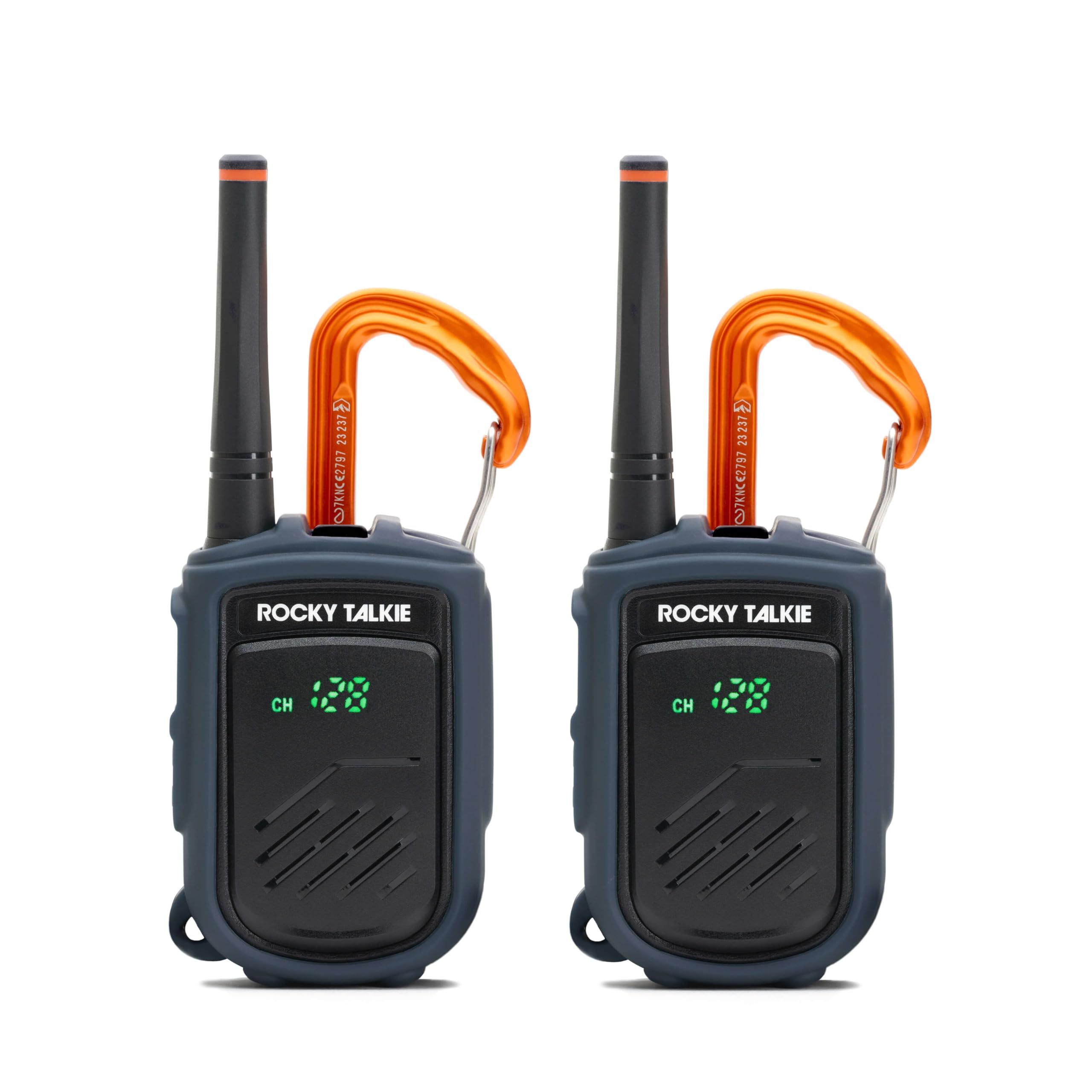
Rocky Talkie pitches the Mountain Radio as a balance of range, battery life and compact size. The headline figure is 3 to 5 days of battery life, which suits backpacking, climbing and ski trips where charging is not an option every night.
The radio uses a tough thermoplastic shell and a shatterproof LED screen. Rocky Talkie quotes range at 1 to 5 miles, a more modest figure than the mountain-to-valley numbers Motorola publishes. The maker's main page lists few other specifications, so details such as a water rating or channel count are not covered here.
Key highlights
- 3 to 5 days of quoted battery life
- 1 to 5 mile quoted range
- Tough thermoplastic shell
- Shatterproof LED screen
- Compact design
Pros
- Multi-day battery life suits trips away from power
- Durable shell and screen for rough handling
- Compact design
Cons
- Lowest top-end quoted range of the picks that list mileage
- No water-resistance rating on the maker's main page
- Fewer published specifications than the Motorola and Retevis picks
Who it is for: Hikers, climbers and backcountry skiers who care most about battery life and toughness.
Skip if
You need a published IP rating or the longest quoted range.
Retevis RB48 (4-pack) - Best for work crews
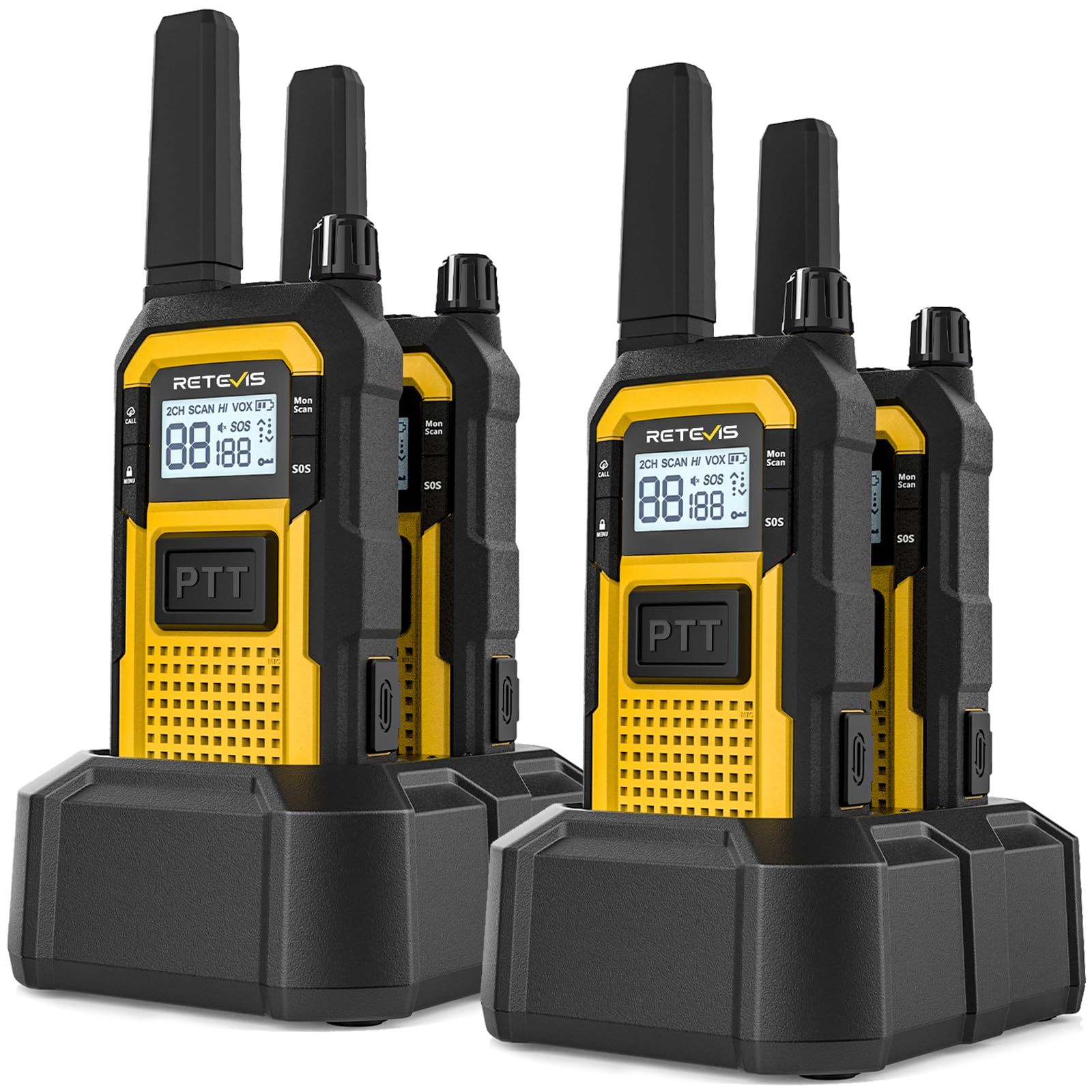
The Retevis RB48 is designed around job sites. It has a large front push-to-talk button plus a side PTT, and Retevis says the big button can be used easily while wearing gloves. Calls can be flagged with vibration and tones, which helps in loud places.
It is a license-free FRS radio with 2W output, 22 FRS channels plus NOAA weather channels, and CTCSS/DCS privacy codes that can be turned off. The IP67 rating covers dust and immersion for 30 minutes in 1 meter of water. A removable 2000mAh Li-ion battery is quoted at about 12 hours of continuous use and charges directly over USB-C, with dual-seat and multi-unit chargers offered as options. This listing is the 4-pack.
Key highlights
- Large front PTT plus side PTT
- IP67 waterproof and dustproof
- 2W FRS, license-free
- 22 FRS channels plus NOAA weather channels
- Removable 2000mAh Li-ion battery, about 12 hours of use
- USB-C direct charging
Pros
- Glove-friendly controls for construction and warehouse work
- Vibration alert helps in noisy environments
- Removable battery can be replaced
- Four radios cover a small crew
Cons
- Multi-unit charging bases are optional extras
- 2W FRS output caps its power
- Four radios is more than a couple needs
Who it is for: Small work crews, event staff and facilities teams who need rugged, easy-to-press radios.
Skip if
You only need a pair of radios for family outings.
Motorola Talkabout T110 (2-pack) - Best for casual family use
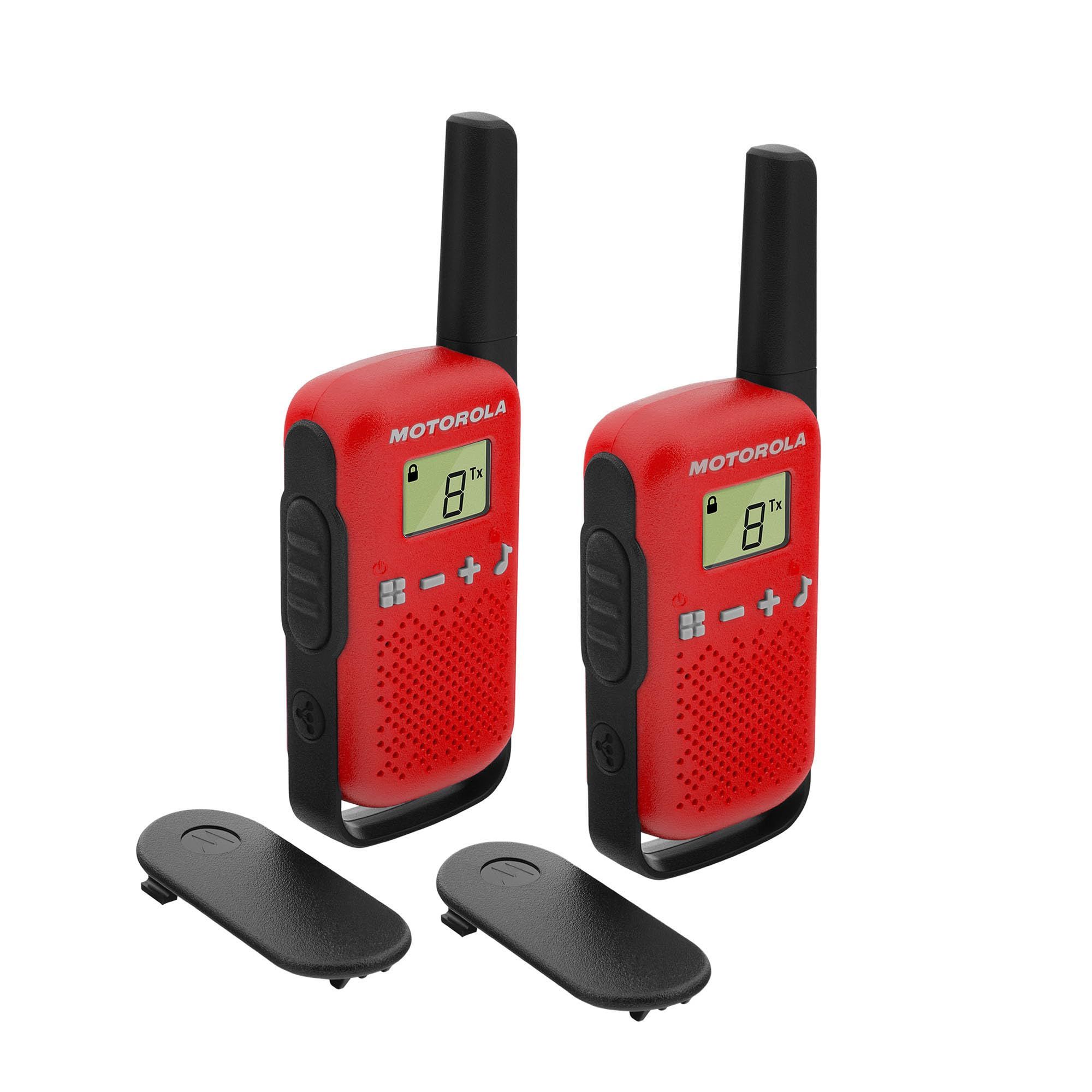
The Motorola Talkabout T110 is the simplest set in this guide. It uses FRS unlicensed frequencies, offers 22 channels with an LCD display, and has easy pairing to set every radio to the same channel and code at once. Belt clips and personalization stickers are included.
Power comes from 3 x AAA alkaline batteries per radio, which are not included but are easy to replace, and Motorola quotes up to 19 hours of battery life. Range is rated at up to 16 miles mountain to valley, 3 miles over open water and 0.5 miles in a neighborhood, which suits campsites, beaches and backyards more than long-distance use.
Key highlights
- 22 channels
- FRS unlicensed frequencies
- Easy pairing
- Runs on 3 x AAA alkaline batteries (not included)
- Up to 19 hours of battery life
- Up to 16 miles mountain to valley, 0.5 miles in a neighborhood
Pros
- Very simple to set up for kids and casual users
- AAA batteries are easy to find and swap
- Long quoted battery life for a basic radio
Cons
- Batteries are not included and there is no rechargeable pack
- Shortest quoted range of the Motorola picks
- Motorola lists no water-resistance rating for it
Who it is for: Families who want an easy set for camping, the beach or the backyard.
Skip if
You need waterproofing, weather alerts or longer range.
How to Choose
- Check the license type. FRS radios can be used without a license in the US. GMRS radios can transmit at higher power and use repeaters, but they require an FCC license.
- Read range claims carefully. Headline mileage assumes ideal line of sight, such as mountain to valley. Motorola's own figures drop to 2 miles or less in a neighborhood, so plan around the lowest number listed.
- Match the water rating to the use. IP67 covers dust and short submersion, which matters on boats and in heavy rain. IP54 handles splashes and weather but is not meant for dunking.
- Pick a power source. Rechargeable packs are convenient at home, while AA or AAA support lets you swap batteries on a long trip. Some radios accept both.
- Look at the extras. NOAA weather alerts, vibration alerts, earpieces, charging docks and phone apps can matter more than a few extra miles of claimed range.
- Buy the right pack size. Most sets come as pairs, but crews and larger families may be better served by a 4-pack so every radio matches.
FAQ
Do I need a license to use a walkie talkie?
Not for FRS radios, which are license-free in the US. GMRS radios require an FCC license before you transmit.
How far will a walkie talkie actually reach?
Much less than the box suggests in most places. Hills, trees and buildings block the signal, which is why Motorola quotes up to 35 miles mountain to valley for the T803 but only 2 miles in a neighborhood.
Can walkie talkies from different brands talk to each other?
Usually, if both are FRS radios set to the same channel. Privacy code numbering can differ between brands, so turn privacy codes off or match them carefully when mixing models.
Are rechargeable walkie talkies better than battery-powered ones?
Rechargeable sets save on disposable batteries and often include a dock or USB-C charging. Radios that also take AA or AAA batteries are easier to keep running on trips without power.
What does IP67 mean on a walkie talkie?
IP67 means the radio is dust-tight and can survive immersion, which Motorola and Retevis both describe as up to 1 meter for 30 minutes. It does not make a radio suitable for swimming or diving.
Published November 11, 2026 Last updated November 11, 2026
Add Technobezz on Google:Preferred SourceGoogle Discover
More buying guides
Buying guide
6 Best OLED Monitors in 2026
Buying guide
6 Best Open-Back Headphones in 2026
Buying guide
5 Best On-Ear Headphones in 2026
Buying guide
8 Best Wireless Gaming Keyboards in 2026
Buying guide6 Best Gaming Mouse Pads in 2026Buying guide5 Best Phones for Kids in 2026Buying guide5 Best Emergency Radios in 2026Buying guide6 Best Short Throw Projectors in 2026Buying guide5 Best Wireless Keyboard and Mouse Combos 2026Buying guide7 Best Laptops for Video Editing in 2026Buying guide5 Best Laptops for Engineering Students in 2026Buying guideTop 6 High-End Laptops for 2026