
If you want a complete home workout setup that tracks your progress and adjusts to your fitness level, a smart home gym can deliver that experience. The Speediance Monster Smart Home Gym stands out as the best overall for its AI-powered resistance system and guided strength coaching. This list is for anyone ready to invest in connected fitness equipment that brings gym-quality workouts home.
Technobezz is supported by its audience. We may get a commission from retail offers.
4 Best Smart Home Gyms in 2026
The best smart home gyms of 2026, tested for AI coaching, digital resistance, and value. Speediance Gym Monster wins overall, with picks from $2,499 to $5,848.
T
Technobezz
Editorial Team
Updated June 16, 2026Jun 16, 2026
•6 min read

Get Deals Like These in Your Inbox
The best prices, straight to your inbox.
At a Glance
| Category | Product | Why We Picked It |
|---|---|---|
| Best overall | Speediance Monster Smart Gym | AI adjusts weights automatically and provides real-time form coaching |
| Best value | Speediance Gym Monster 2 | Delivers similar digital weight technology at a lower price point |
| Best compact option | AEKE Smart Home Gym System | Fully portable and auto-foldable, making it easy to store or move |
| Best premium option | OxeFit XS1 Flow Smart Home Gym | All-in-one strength and cardio platform with advanced AI coaching and deep exercise library |
How we chose
Our selection focused on the core criteria that define a modern smart home gym. We prioritized workout diversity, intelligent technology like form feedback, and the total cost of ownership. This included evaluating both the initial equipment price and any required monthly subscriptions.
The best smart home gyms right now
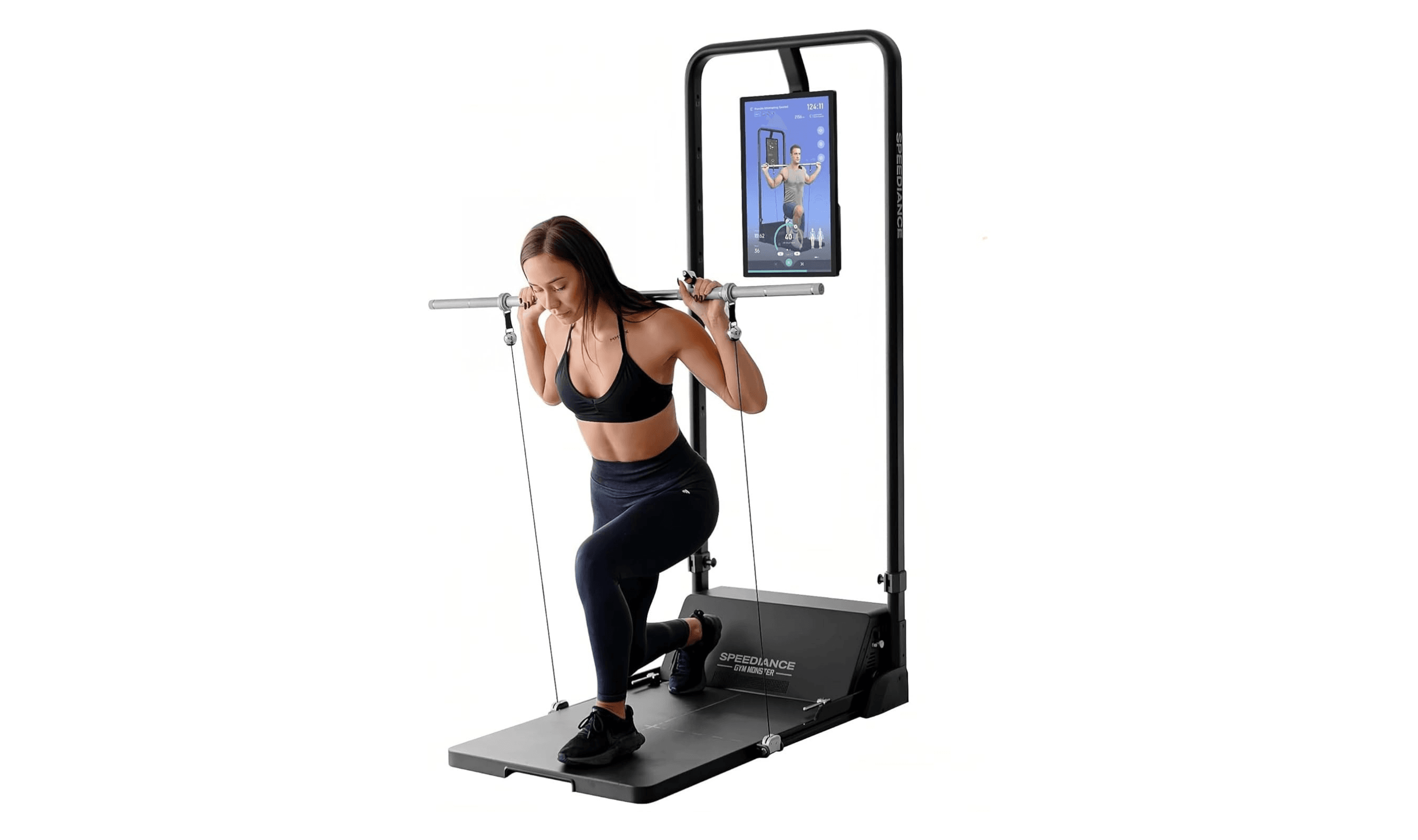
Speediance Monster Smart Home Gym - Best overall
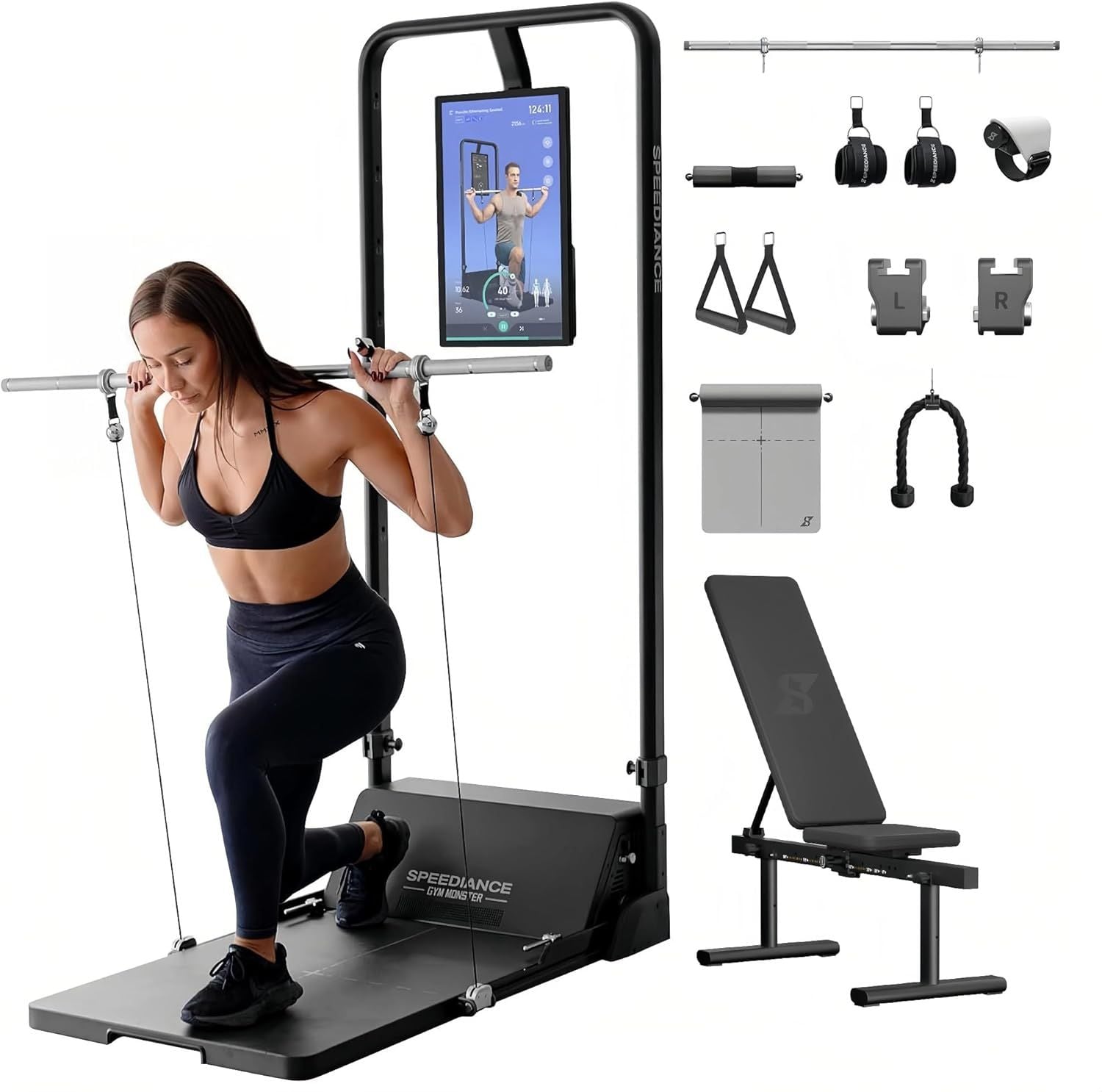
The Speediance Gym Monster Smart Home Gym delivers professional-grade strength training with a smart digital weight system that offers precise adjustments. Its integrated touchscreen provides visual training programs and feedback to help improve your results.
Key highlights
- Smart digital weight system with precise adjustments
- 21.5" touch screen with visual training programs
- Includes multifunctional design for full-body training
- Space-saving freestanding design
Pros
- Dual engines offer precise weight adjustments to target muscles
- Large touchscreen provides guided workouts and programs
- One system covers comprehensive full-body training
- Compact, freestanding design saves space compared to traditional equipment
Cons
- Requires significant upfront investment
- Large footprint may not suit very small spaces
- Higher initial cost than many basic competitors
- Digital system relies on power and connectivity
Who it is for: Serious strength trainers who want a versatile, all-in-one smart home gym system with digital weight adjustment and guided workouts.
Skip if
You prefer simple free weights, have extremely limited space, or want a minimal upfront cost.
Speediance Gym Monster 2 - Best value
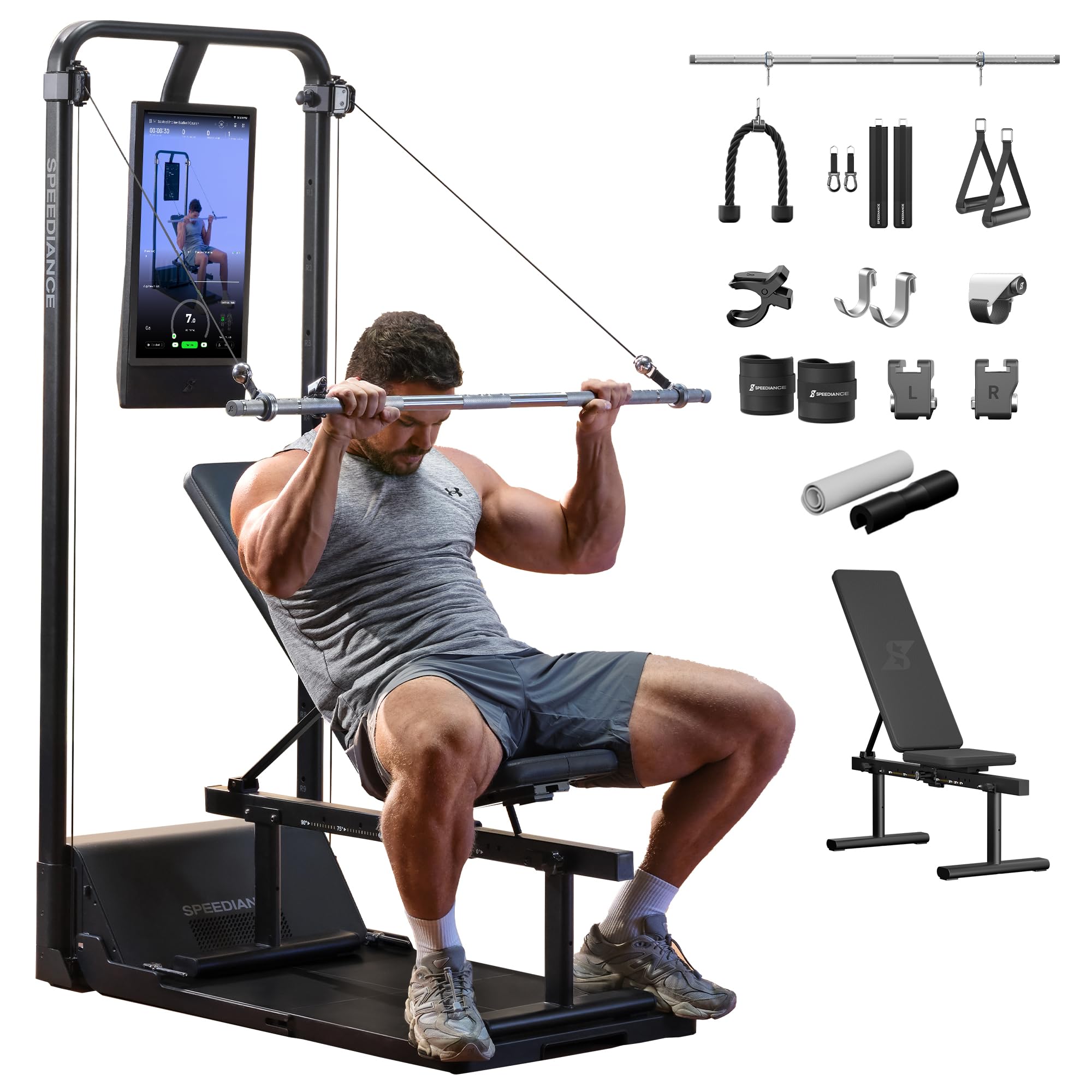
The Speediance Gym Monster 2 offers similar digital weight technology to premium systems but at a more accessible price point. Its 220-pound adaptive resistance system and AI coaching make it a strong alternative for budget-conscious buyers who still want smart features.
Key highlights
- 220-pound digital weight system adjusts automatically
- AI selects appropriate weights based on fitness assessment
- Compact footprint works in smaller spaces
- Includes smart handles with built-in controls
Pros
- More affordable than comparable smart gym systems
- Adaptive resistance responds to your performance in real time
- No wall mounting required, uses floor space efficiently
- Lower monthly subscription cost than some competitors
Cons
- Maximum weight limit may not challenge advanced lifters
- Fewer sensor points than premium systems
- App interface can feel less polished than established brands
- Limited track record compared to market leaders
Who it is for: Home gym beginners and intermediate users who want smart features without the premium price tag.
Skip if
You need maximum weight capacity above 220 pounds or prefer wall-mounted systems.
AEKE Smart Home Gym System - Best compact option
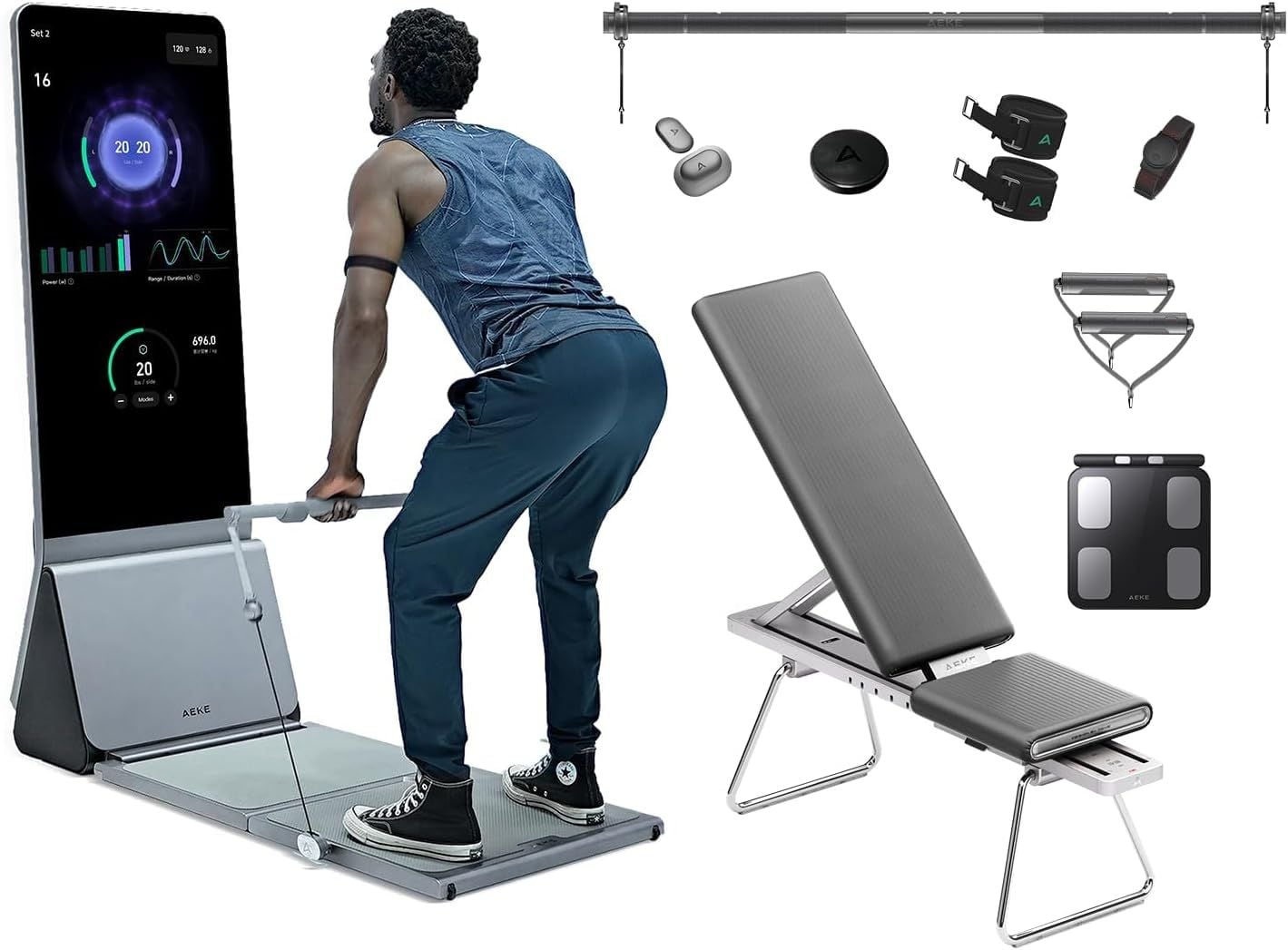
The AEKE Smart Home Gym System is built for people who want guided strength training in tight spaces. Its mirror-style design, foldable form factor, and AI-assisted resistance make it one of the easiest premium systems to live with in apartments or smaller home offices.
Key highlights
- Compact, foldable mirror-style body for small spaces
- AI-powered coaching and form guidance
- Digital resistance system with fine-grain adjustments
- Multiple training modes for strength, endurance, and recovery
Pros
- Excellent footprint for apartments and shared rooms
- Guided workouts make it beginner-friendly
- Smooth resistance transitions during workouts
- Clean design that blends better than bulky gym machines
Cons
- Lower top-end training load than heavy-duty rack-style systems
- Relies on its built-in content library (280+ movements, 140+ courses) rather than a large streaming class catalog
- Smaller platform can feel restrictive for some advanced movements
Who it is for: Users who want a smart, guided strength system that fits smaller homes and still feels premium.
Skip if
You are an advanced lifter who needs very high resistance ceilings or a full power-rack style setup.
OxeFit XS1 Flow Smart Home Gym - Best premium option
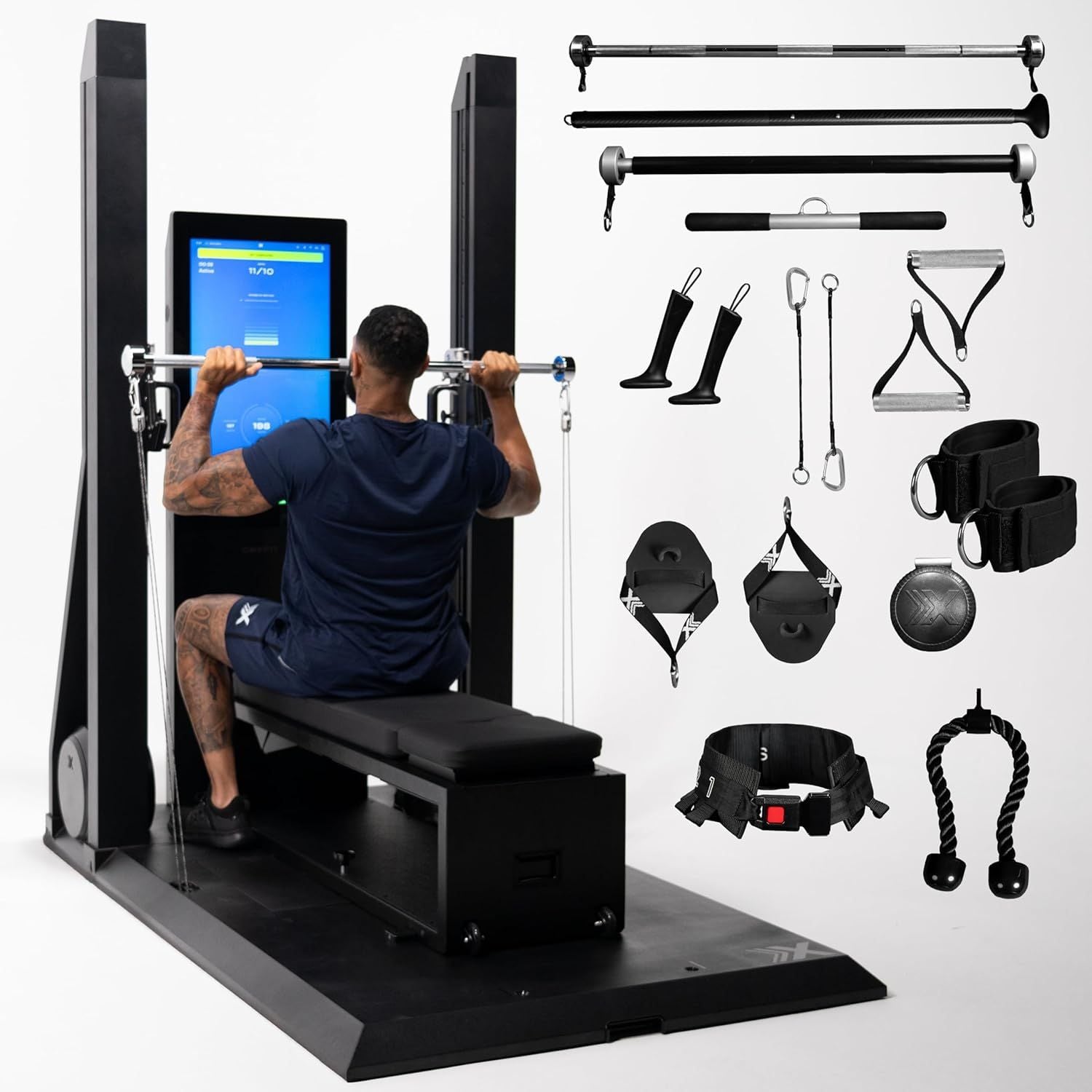
The OxeFit XS1 Flow is a high-end all-in-one platform that blends smart strength training with cardio modes and AI-driven coaching. It is one of the most feature-rich connected gyms in this category, especially for users who want one machine to cover a broad training mix.
Key highlights
- All-in-one strength and cardio platform with adaptive digital resistance
- AI training feedback with real-time performance tracking
- Large class and movement library, including guided programs
- Premium hardware designed for intensive daily use
Pros
- Very broad exercise coverage from one system
- Strong software ecosystem with guided coaching
- Excellent option for households sharing one machine
- High-end build quality and smooth resistance response
Cons
- Expensive upfront cost compared with mid-tier alternatives
- Needs dedicated space due to its size and training clearance
- Ongoing membership costs can add up
Who it is for: Serious home trainees and families who want a premium, all-in-one smart gym with both strength and cardio depth.
Skip if
You are on a tight budget, have limited floor space, or only need basic strength workouts.
How to Choose
Consider these factors when selecting a smart home gym:
Budget beyond equipment cost: Look at both the initial purchase price and monthly subscription fees. Some systems require $40-60 monthly memberships for full functionality, which adds significantly to long-term costs.
Available space: Measure your workout area carefully. Wall-mounted systems like Tonal need sturdy walls and clearance, while floor units like Speediance require dedicated floor space. Consider storage needs for equipment you're not using.
Workout preferences: Match the system to your favorite exercises. If you love strength training, prioritize digital weight systems. For cardio fans, smart treadmills or rowers make more sense. Multi-exercise systems offer the most versatility.
Technology integration: Decide how much smart guidance you want. Basic systems track workouts, while advanced ones provide real-time form feedback and automatic weight adjustments. More technology usually means higher costs.
Household usage: Check how many users each system supports. Some allow unlimited household accounts on one subscription, while others charge per user or limit simultaneous access.
FAQ
What's the average cost of a smart home gym?
Most quality systems start around $1,500-$2,000, with premium options reaching $4,000 or more. Remember to factor in monthly subscription fees, which typically range from $15-$60 per month.
Do I need professional installation?
Some wall-mounted systems like Tonal require professional installation for safety and proper function. Floor-standing units usually offer self-assembly, though professional setup may be available for an additional fee.
Can multiple people use one smart home gym?
Most systems support multiple user profiles on a single subscription. Family plans typically allow 4-5 users, with each person getting personalized workout recommendations and progress tracking.
What happens if I cancel the monthly subscription?
You'll usually lose access to live classes, on-demand workouts, and performance tracking. Basic equipment functions typically remain available, but the smart features that justify the higher price become limited.
How much space do I need?
Wall-mounted systems need about 4x7 feet of clear wall space and room to move. Floor units require 6x8 feet or more, plus additional space for exercises that extend beyond the machine itself.
Published February 20, 2026 Last updated June 16, 2026
Share this article
More buying guides
Buying guide
Best Smart Fridges for 2026
Buying guide
5 Best Portable Wi-Fi Hotspots for 2026
Buying guide
Best Lavalier Microphones for iPhones in 2026
Buying guide
6 Best SSDs for PS5 in 2026
Buying guideBest Multi-Port Wall Chargers for 2026Buying guide5 Best Detachable Laptops and 2-in-1s for 2026Buying guide4 Best Smartphones With the Longest Battery Life for 2026Buying guideBest Laptops with CD Drives in 2026Buying guide4 Best Smartphones for Gaming in 2026Buying guide8 Best Anti-Glare TVs for 2026Buying guide9 Best Gaming Steering Wheels for 2026Buying guideThe 8 Best Smart TVs of 2026