A robotic pool cleaner should fit the pool you actually have. Pool size, how much debris lands on the water surface, and how much time you want to spend rinsing filters decide which model makes sense. Cordless designs now cover the floor, the walls, the waterline and, on some models, the surface too.
Technobezz is supported by its audience. We may get a commission from retail offers.
5 Best Robotic Pool Cleaners in 2026
The Aiper Scuba X1 Pro Max leads our robotic pool cleaner picks for 2026, with Beatbot, Aiper and WYBOT options for self-cleaning, surface skimming and value.
T
Technobezz
Editorial Team
Updated November 13, 2026Nov 13, 2026
•11 min read

Get Deals Like These in Your Inbox
The best prices, straight to your inbox.
Add Technobezz on Google:Preferred SourceGoogle Discover
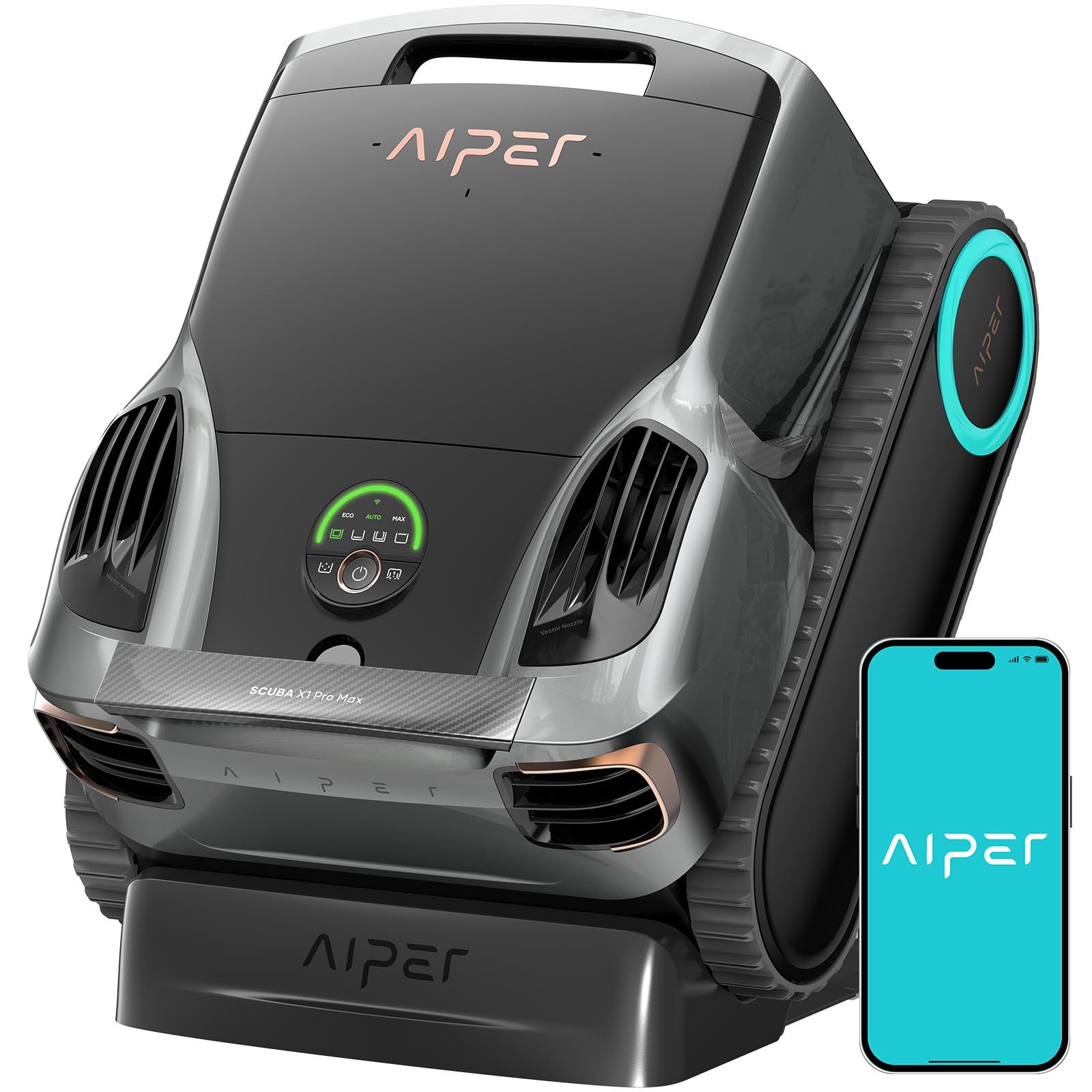
The Aiper Scuba X1 Pro Max is the best overall pick. It has the highest suction rating in this group at 8,500 GPH, cleans the surface, floor, walls and waterline, filters down to 3 microns and charges on a wireless dock.
This page is for US pool owners shopping for a cordless robot. The other picks cover a self-cleaning station, surface debris, a value choice for smaller pools and an AI Vision alternative.
At a Glance
| Category | Product | Why We Picked It |
|---|---|---|
| Best overall | Aiper Scuba X1 Pro Max | 8,500 GPH suction, surface-to-floor cleaning and 3-micron filtration |
| Best self-cleaning | Beatbot AquaSense X with AstroRinse | Station rinses the filter automatically and holds debris for up to 2 months |
| Best for surface debris | Beatbot Sora 70 | JetPulse surface jets, auto surface parking and up to 7 hours of skimming |
| Best value | Aiper Scuba S1 | Floor, wall, waterline and shallow-area cleaning for pools up to 1,600 sq. ft. |
| Best AI Vision alternative | WYBOT C2 Vision | AI Vision path planning and 8 app cleaning modes |
How we chose
We compared the specifications each maker publishes on its US product page, including suction, filtration, runtime, coverage and the parts of the pool each robot cleans. We then checked that every pick is sold new on Amazon. Each model earns its slot by matching a specific kind of pool owner.
The best Robotic Pool Cleaners right now
Aiper Scuba X1 Pro Max - Best overall
The Aiper Scuba X1 Pro Max leads on rated suction. Aiper rates it at 8,500 GPH, the highest figure among these picks, and lists water surface, floor, wall and waterline cleaning from nine motors. Navigation uses Aiper's OmniSense+ 2.0 ultrasonic sensor with adaptive path planning and several route patterns.
Runtime depends on the mode. Aiper quotes up to 10 hours for surface-only cleaning and 5 hours for floor-only cleaning, with shorter runs in other modes. The MicroMesh ultra-fine filter captures particles as small as 3 microns, floor coverage is listed at 3,200 sq. ft., and the robot charges on a wireless dock that can sit on its caddy.
Key highlights
- 8,500 GPH suction
- 9 motors
- MicroMesh filter captures particles down to 3 microns
- Up to 10 hours surface only or 5 hours floor only (runtime varies by mode)
- 3,200 sq. ft. floor coverage
- Wireless charging dock
- 5+3 cleaning modes with app control
Pros
- Highest suction rating on this list
- Cleans the water surface as well as the floor, walls and waterline
- Very fine 3-micron filtration
- Wireless dock means no charging cable to plug into the robot
Cons
- Floor-only runtime is half the surface-only figure
- Aiper's product page does not list warranty length or basket capacity
- No self-emptying station, so the filter is still cleaned by hand
Who it is for: Pool owners with medium to large in-ground pools who want one robot to handle the surface and everything below it.
Skip if
You want automatic filter cleaning, or your pool is small enough that a simpler floor and wall model will do.
Beatbot AquaSense X with AstroRinse - Best self-cleaning
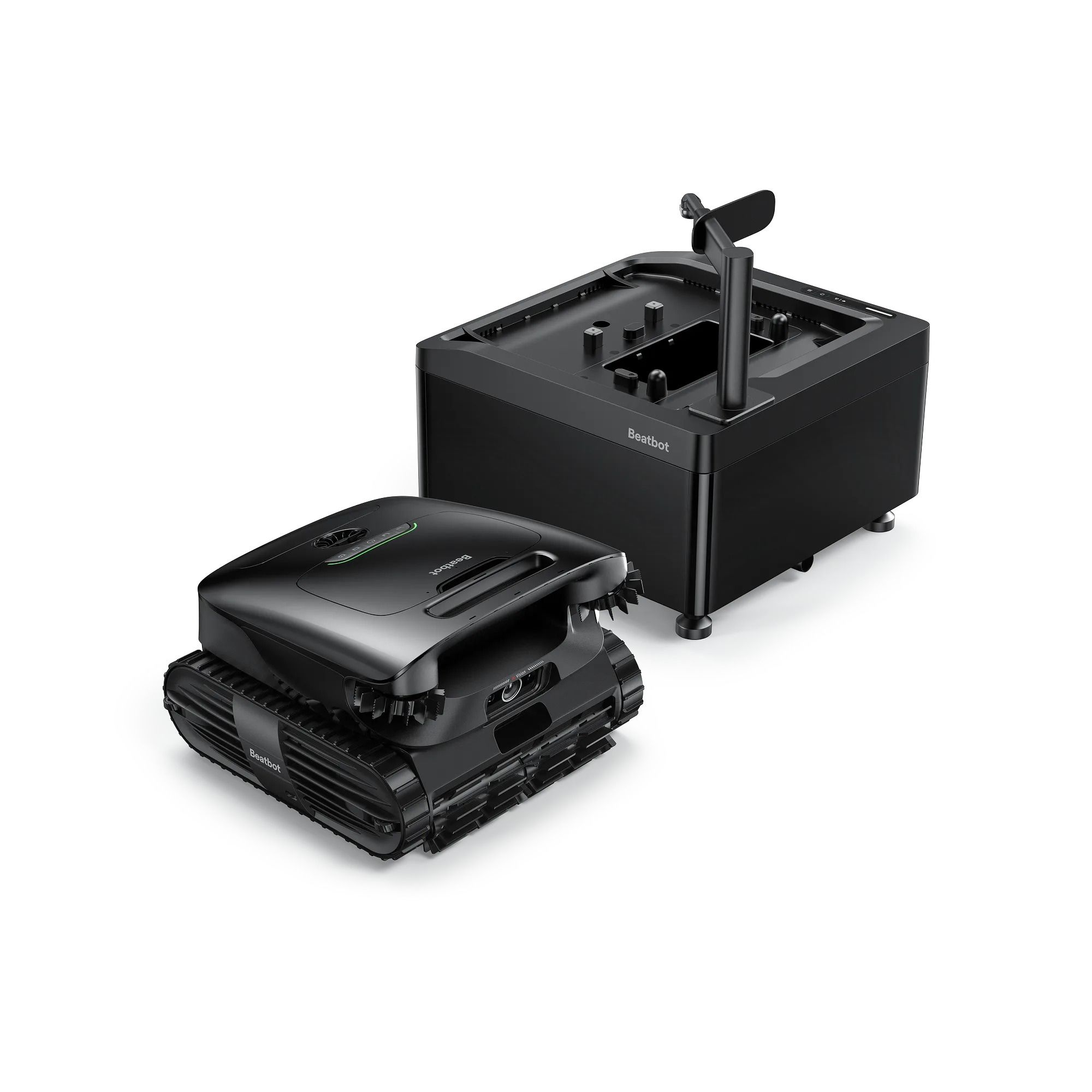
The Beatbot AquaSense X is built around its AstroRinse station. Beatbot says the station automatically rinses the filter in about three minutes and collects debris in a disposable bag that supports up to 2 months between emptying. It also charges the robot wirelessly, so the station doubles as the dock.
The robot itself is rated at 6,800 GPH and uses HybridSense AI Vision with 29 sensors, which Beatbot says identifies more than 40 debris types. It is listed for up to 10 hours of surface cleaning, 5 hours of floor cleaning or 5 hours of walls plus waterline, and up to 3,875 sq. ft. on a single charge. Beatbot also lists 7 cleaning modes, voice assistant support, ClearWater clarification and a 3-year full-replacement warranty.
Key highlights
- AstroRinse station with automatic filter rinsing
- Up to 2 months between emptying the debris bag
- 6,800 GPH suction
- 29 sensors including an AI camera
- Up to 10 hours surface, 5 hours floor, 5 hours walls plus waterline (runtime varies by mode)
- Up to 3,875 sq. ft. per charge
- 3-year full-replacement warranty
Pros
- Takes the filter rinsing chore off your hands
- Largest per-charge coverage figure on this list
- Cleans the surface, floor, walls, waterline and elevated platforms
- 3-year full-replacement warranty, the strongest terms published here
Cons
- Lower suction rating than the Aiper Scuba X1 Pro Max (6,800 vs 8,500 GPH)
- Disposable debris bags are an ongoing consumable
- The station needs space and power near the pool
- Premium model, more than many smaller pools need
Who it is for: Owners who want the least filter maintenance and are happy to pay for a premium, station-based system.
Skip if
You don't mind rinsing a filter basket by hand, or you have no good spot for a poolside station.
Beatbot Sora 70 - Best for surface debris
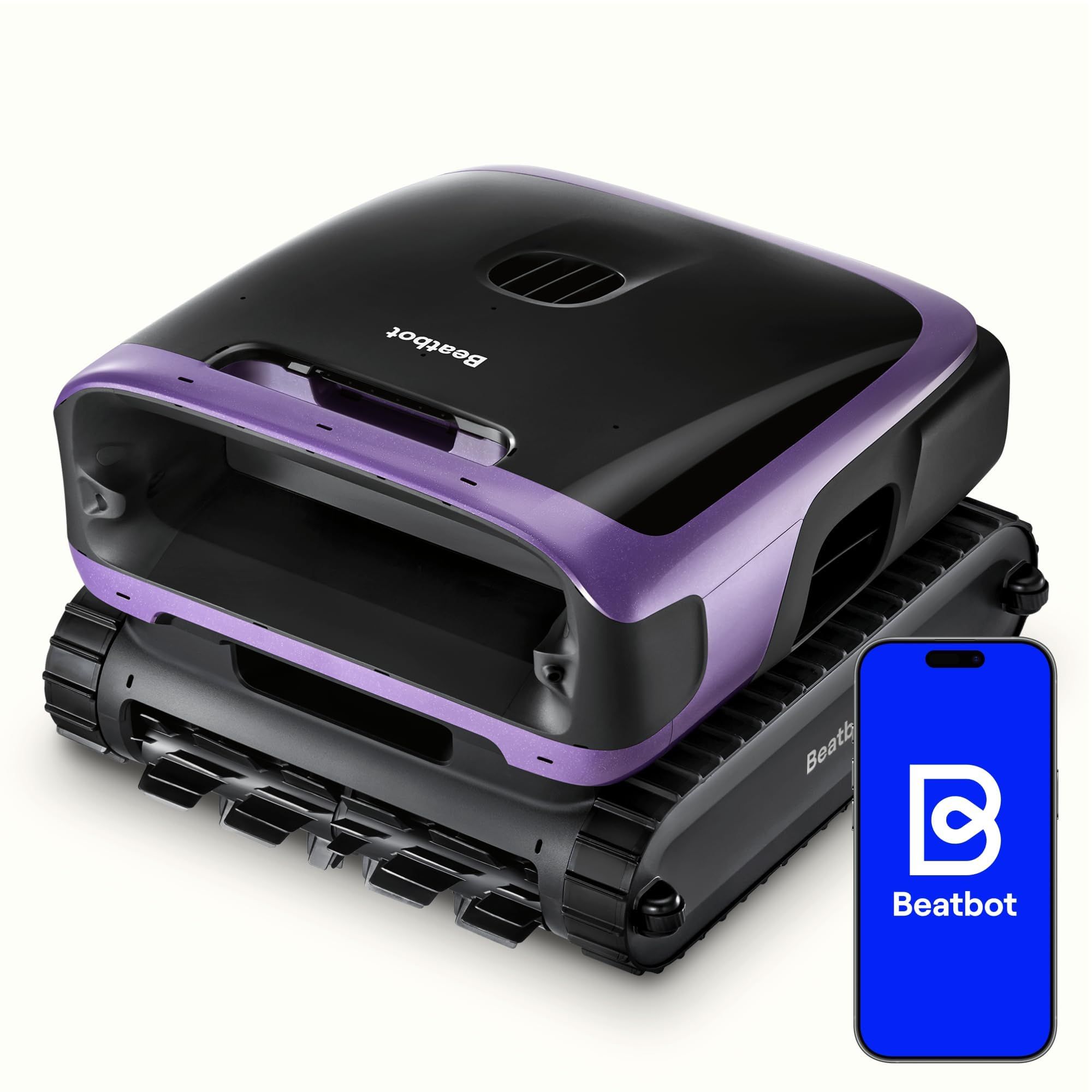
The Beatbot Sora 70 targets pools that collect a lot of floating leaves and pollen. Beatbot's JetPulse system uses dual converging jets to pull debris inward at the surface, and the robot is rated for up to 7 hours of continuous water-surface cleaning. When a cycle ends, it rises to the surface and heads to the pool edge, and a tap in the app brings it back.
Below the surface it cleans floors, walls and the waterline with 6,800 GPH suction. It also handles platforms and steps of at least 3.3 by 3.3 feet in water more than 8 inches deep. Beatbot lists a 10,000 mAh battery, up to 5 hours of floor cleaning, up to 3,229 sq. ft. per charge, a 6L basket, 6 cleaning modes and a 3-year warranty. Filtration depends on configuration: a 150-micron filter is standard, and Beatbot says a 3-micron filter will be sold separately in the coming months.
Key highlights
- JetPulse surface cleaning with dual converging jets
- Up to 7 hours surface or 5 hours floor cleaning (runtime varies by mode)
- 6,800 GPH suction
- 10,000 mAh battery
- Automatic surface parking with tap-to-retrieve
- Cleans platforms and shallow water above 8 inches
- 3-year warranty
Pros
- Dedicated surface-cleaning system for floating debris
- Parks itself at the pool edge for easy pickup
- Covers floor, walls, waterline, surface and platforms
- Up to 3,229 sq. ft. per charge
Cons
- Standard filter is 150 microns; the 3-micron filter is a separate accessory not yet available
- 6L basket, and no self-cleaning station
- Surface runtime is shorter than the AquaSense X and Scuba X1 Pro Max ratings
Who it is for: In-ground pool owners near trees or landscaping who mostly fight floating debris.
Skip if
You need ultra-fine filtration out of the box or want the filter cleaned for you.
Aiper Scuba S1 - Best value
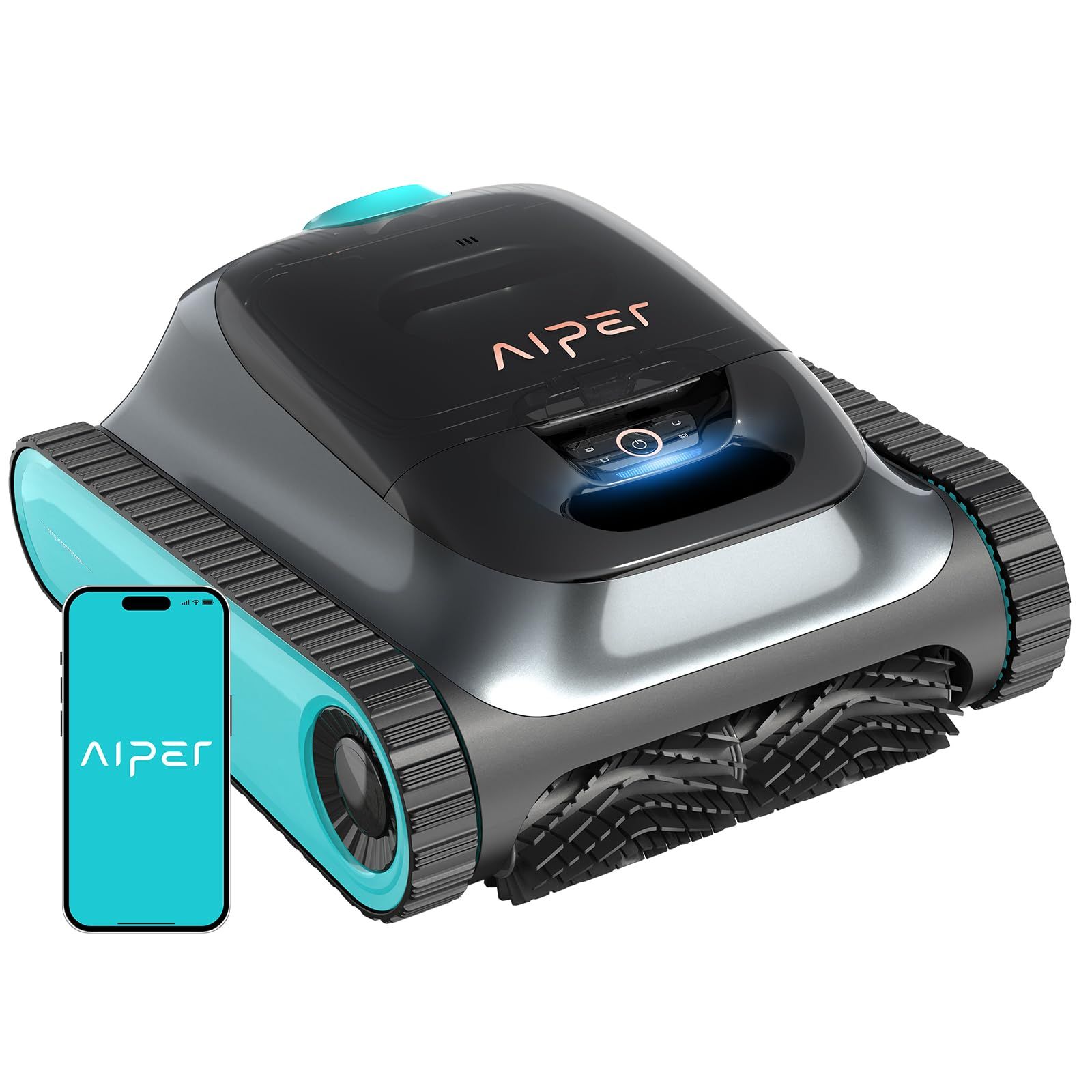
The Aiper Scuba S1 covers the main surfaces of a smaller in-ground pool. It cleans the floor, walls, waterline and shallow areas, and Aiper says it handles sun shelves and hard-to-reach edges more effectively. Suction is rated at 4,200 GPH, and filtration pairs a 180-micron fine filter basket with a 3-micron MicroMesh ultra-fine filter.
Aiper lists coverage of up to 1,600 sq. ft. and pools up to 50 feet long, with support for concrete, fiberglass, vinyl and tile. Battery life is up to 180 minutes, charging takes 3 to 4 hours, and WavePath Navigation 2.0 guides the cleaning route. The page labels it an in-ground cleaner but also says it is designed for both above-ground and in-ground pools, so check the fit if you have an above-ground pool.
Key highlights
- 4,200 GPH suction
- 180-micron filter basket plus 3-micron MicroMesh filter
- Up to 180 minutes of battery life
- 3 to 4 hour charging time
- Up to 1,600 sq. ft. and 50 feet in length
- Floor, wall, waterline and shallow-area cleaning
- Floor, Wall, Automatic and Periodic/Eco modes in the Aiper app
Pros
- Fine two-stage filtration at a lower tier
- Shallow-area cleaning for sun shelves
- Works with concrete, fiberglass, vinyl and tile pools
- App control with cleaning history and OTA updates
Cons
- No water-surface skimming in its listed cleaning areas
- Lowest suction rating and shortest runtime among the picks that publish these figures
- Smaller 3.5L basket fills sooner
- Not sized for pools over 1,600 sq. ft.
Who it is for: Owners of small to medium pools who want floor, wall and waterline cleaning without surface skimming or a self-cleaning station.
Skip if
Your pool is large or gets heavy floating debris that needs surface cleaning.
WYBOT C2 Vision - Best AI Vision alternative
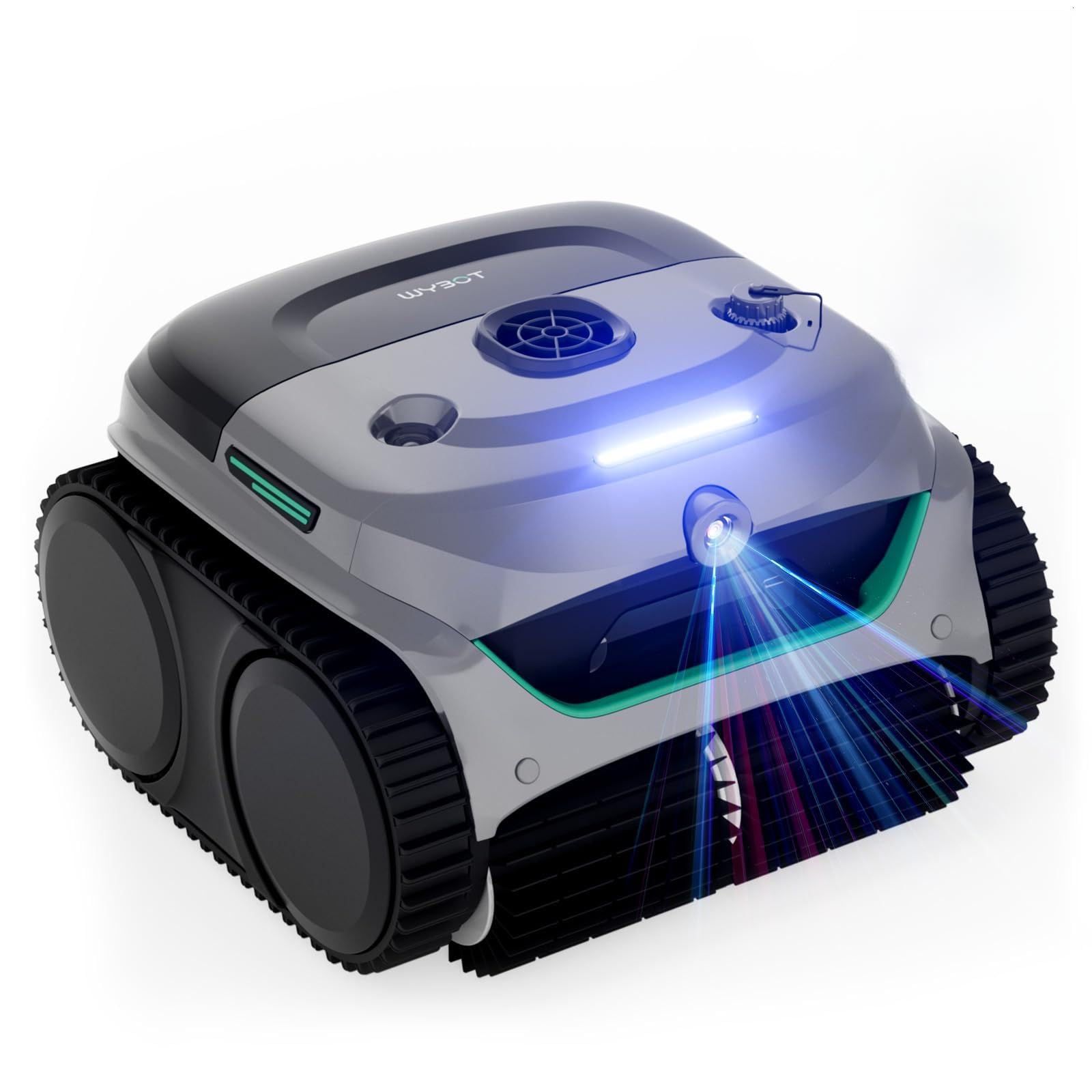
The WYBOT C2 Vision is a cordless cleaner built around WYBOT's AI Vision algorithm and path optimization. WYBOT says it cleans floors, walls, the waterline, steps and slopes, and it supports rectangle, kidney, round and custom pool shapes.
The WYBOT app offers 8 cleaning modes: Floor, Wall, Waterline, Wall then Floor, Standard Full Pool, ECO Floor, Turbo Floor and AI Vision, plus a customizable cycle timer. Hardware details include dual-layer filtration, brushless motors and a front LED strip that shows status. WYBOT's product page does not publish suction, runtime, battery, coverage or warranty figures.
Key highlights
- AI Vision algorithm with path optimization
- Cordless design
- Cleans floors, walls, waterline, steps and slopes
- 8 cleaning modes in the WYBOT app
- Dual-layer filtration
- Brushless motors
Pros
- AI Vision navigation mode
- Covers steps and slopes as well as floor and walls
- Wide choice of app modes, including Turbo Floor and ECO Floor
- Listed for all common pool shapes
Cons
- Maker page lists no suction, runtime, coverage or warranty figures
- No water-surface cleaning in its listed coverage
- No self-cleaning station
Who it is for: Owners who want AI Vision navigation and lots of mode choices for a pool with steps or slopes.
Skip if
You want published runtime and coverage numbers to compare before buying, or you need surface skimming.
How to Choose
- Match coverage to your pool. Makers list coverage in square feet per charge. A 1,600 sq. ft. rating suits a typical backyard pool, while larger pools benefit from the 3,000-plus figures on premium models.
- Decide if you need surface cleaning. Floating leaves and pollen call for a robot that skims the water surface. Floor, wall and waterline models leave that job to the skimmer basket or a net.
- Read runtime by mode. Runtime claims vary a lot by mode. Surface-only cleaning usually gets the longest figure, and floor or full-pool cycles run shorter.
- Check filter fineness. A 3-micron filter catches fine dust and pollen that a coarser basket lets through. Some models include one and others sell it separately.
- Think about maintenance. A self-cleaning station rinses the filter for you but takes up space and power by the pool. Without one, plan to rinse the basket after cleaning cycles.
- Consider retrieval. Surface parking and tap-to-return features make it easier to lift a heavy wet robot out without a hook.
FAQ
Do cordless robotic pool cleaners need to connect to my pool pump?
No. They run on an internal battery and their own motors, so they work separately from the pool's pump and filter system. You charge them between cycles.
What does GPH mean on a pool robot?
GPH stands for gallons per hour and describes how much water the robot can pull through its filter. A higher rating suggests stronger suction, but navigation and brushes also affect how well a pool gets cleaned.
Why are runtime claims so different between modes?
Climbing walls and scrubbing the floor take more power than drifting along the surface. That is why makers often quote a long surface-only figure and a shorter floor or full-pool figure.
Do I still need to clean the filter?
Yes, unless the robot has a self-cleaning station. Most robots collect debris in a basket that you rinse after use. Station-based models such as the Beatbot AquaSense X rinse the filter automatically and store debris in a bag you empty less often.
Can these robots clean steps and sun shelves?
Several can. The Beatbot models list platform cleaning, the Aiper Scuba S1 lists shallow-area cleaning, and the WYBOT C2 Vision lists steps and slopes. Check the minimum platform size and water depth the maker gives.
Published November 13, 2026 Last updated November 13, 2026
Add Technobezz on Google:Preferred SourceGoogle Discover
More buying guides
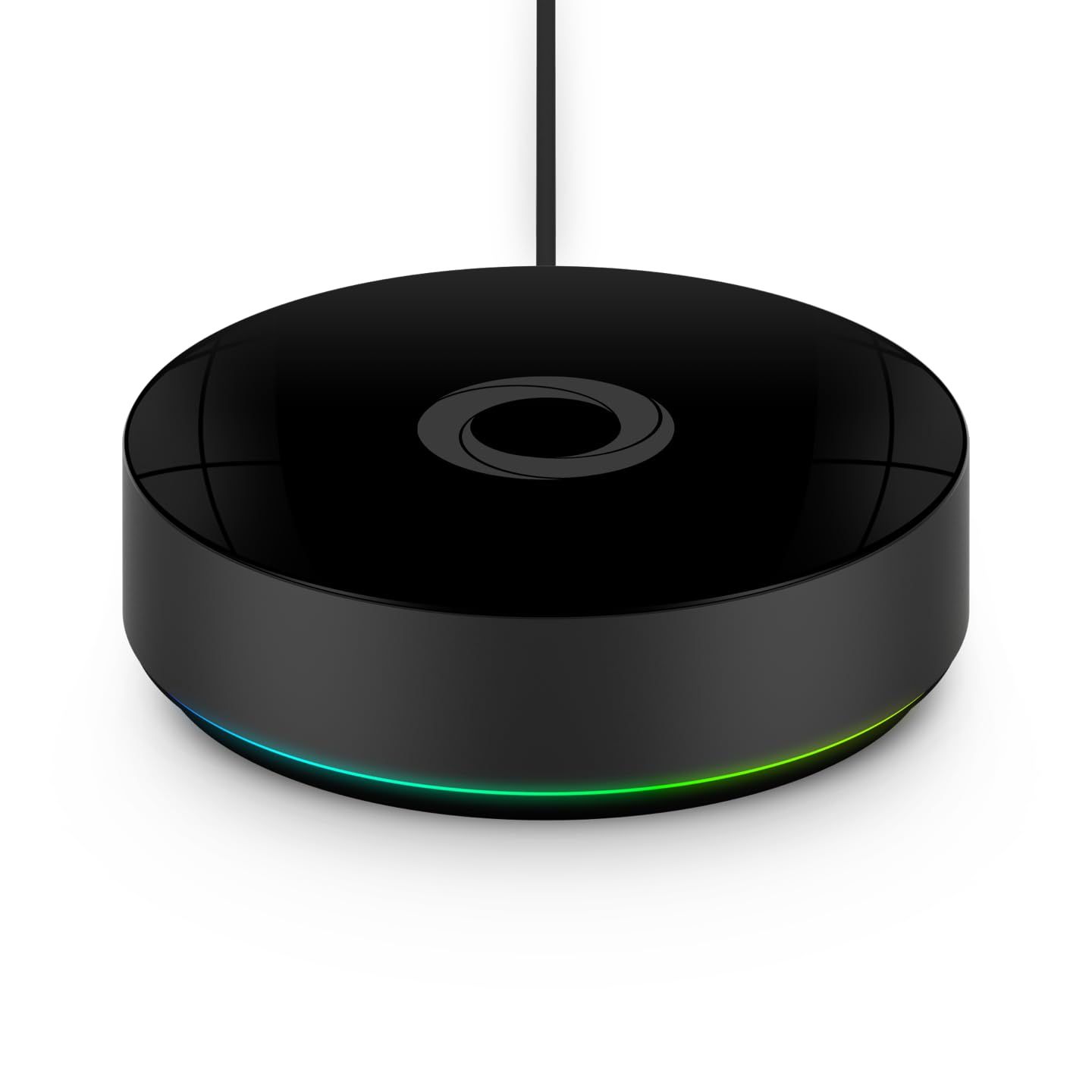
Buying guide
7 Best Smart Home Hubs in 2026
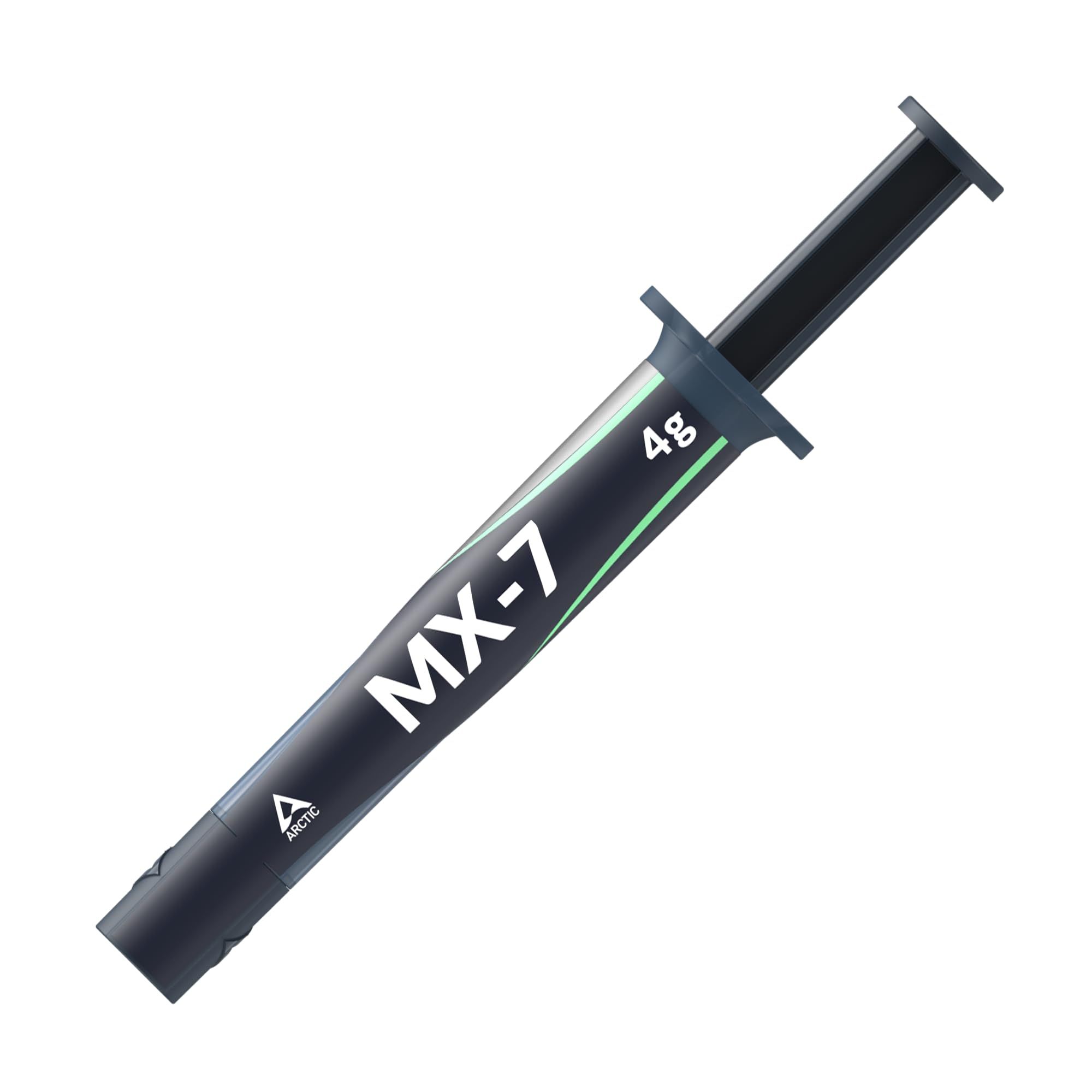
Buying guide
6 Best Thermal Pastes in 2026
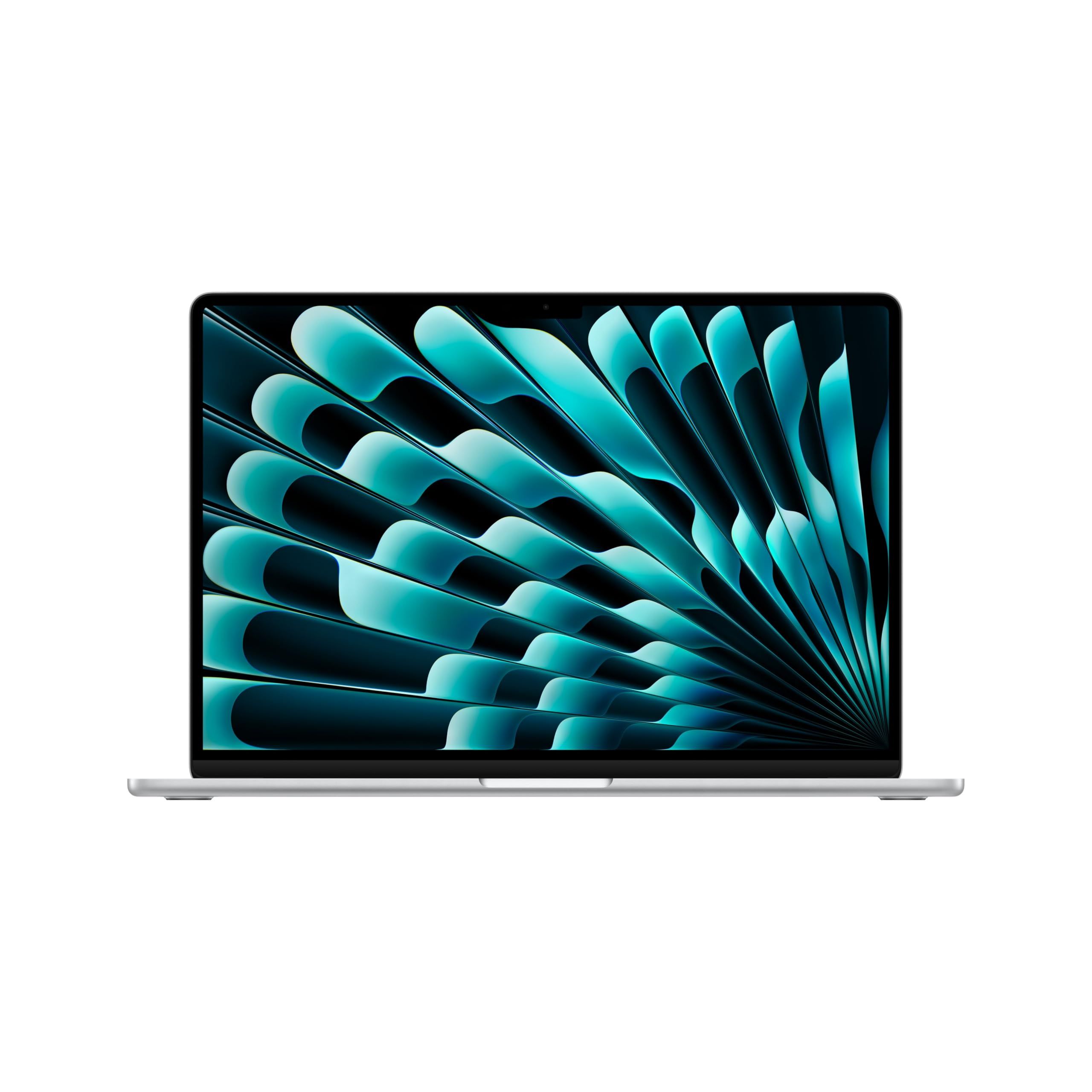
Buying guide
5 Best Laptops for Seniors in 2026
Buying guide
5 Best Earbuds for Calls in 2026
Buying guide8 Best MIDI Keyboards in 2026Buying guide6 Best CD Players in 2026Buying guide8 Best Capture Cards in 2026Buying guide5 Best Studio Monitors in 2026Buying guide6 Best Cameras for Landscape Photography in 2026Buying guide6 Best DJ Controllers in 2026Buying guide6 Best PC Cases in 2026Buying guide5 Best Audio Interfaces in 2026