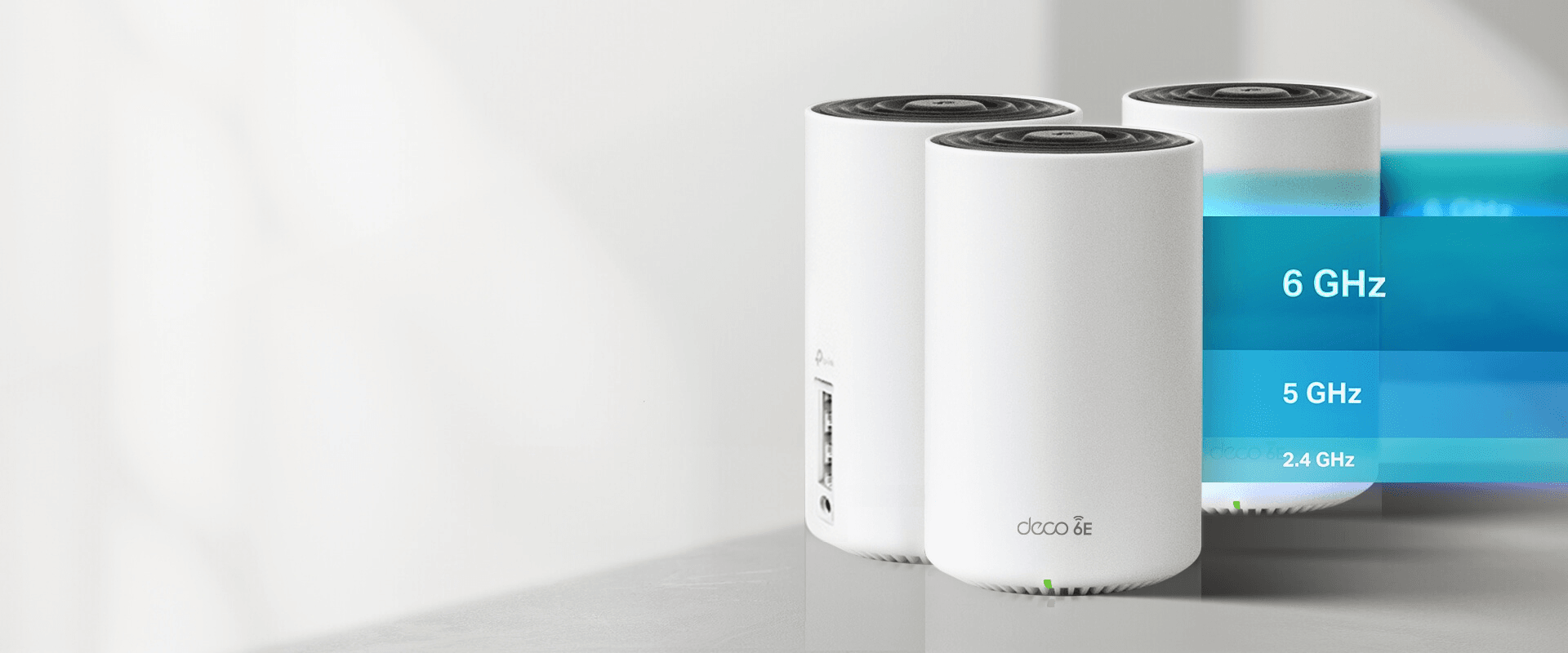
The main thing Wi-Fi 6E adds to Wi-Fi 6 is access to the 6 GHz band. Intel identifies Wi-Fi 6 as 802.11ax and lists its operating frequencies as 2.4 GHz and 5 GHz. Wi-Fi 6E devices can also use the 6 GHz band, and Intel describes 6E as including the advantages of Wi-Fi 6.
What is Wi-Fi 6E?
Wi-Fi 6E is Wi-Fi 6 with access to a third band. Apple's MacBook Neo spec page lists it as "Wi-Fi 6E (802.11ax)", and Google's Pixel 11 spec page uses the same 802.11ax label. That is the standard name Intel gives Wi-Fi 6.
In the United States, the FCC adopted rules on April 23, 2020 making 1,200 megahertz of spectrum in the 6 GHz band, from 5.925 to 7.125 GHz, available for unlicensed use. A later FCC order states that the rules became effective on July 27, 2020.
Wi-Fi 6 vs Wi-Fi 6E at a glance
- Bands: Wi-Fi 6 operates on 2.4 GHz and 5 GHz, per Intel. Google lists the Wi-Fi 6E Pixel 11 with 2.4 GHz, 5 GHz and 6 GHz.
- Channels on 6 GHz: NETGEAR states the 6 GHz band supports up to fourteen 80 MHz channels or seven 160 MHz channels.
- Range: NETGEAR states the 6 GHz band has a shorter range than the 5 GHz band.
- Security: NETGEAR lists WPA3 enabled on the 6 GHz network as a requirement for using Wi-Fi 6E.
- Hardware: To use either one's features, both the router and the device need support.
What you need on both ends
Intel states that using Wi-Fi 6's capabilities requires a Wi-Fi 6 capable router and a Wi-Fi 6 capable client device.
For Wi-Fi 6E, NETGEAR lists three requirements: a Wi-Fi 6E router, mesh system or access point, a client device that supports Wi-Fi 6E, and WPA3 enabled on the 6 GHz network. Samsung's Galaxy S26 FE announcement carries the same point in a footnote, which says the phone's Wi-Fi 6E "will require a Wi-Fi 6E router."
As of November 2026, Intel's requirements for PCs with its Wi-Fi 6E products are Windows 11 with updates, Wi-Fi driver version 22.70.0 or later, and a compatible Wi-Fi 6E or Wi-Fi 7 router to reach 6 GHz. Intel adds that availability also depends on regulatory enablement and on the system manufacturer.
Range, walls and band switching
NETGEAR states that 6 GHz does not travel as far, or through as many walls or barriers, as 5 GHz. It also says complete 6 GHz coverage can require a higher density of mesh satellites.
According to NETGEAR, devices outside 6 GHz coverage might switch to 2.4 GHz or 5 GHz, and whether they return to 6 GHz automatically depends on the device. See 2.4 GHz vs 5 GHz Wi-Fi, and Where 6 GHz Fits.
Phones and laptops that list Wi-Fi 6E
As of November 2026, maker spec pages list Wi-Fi 6E on several current models and Wi-Fi 7 on others.
- Google: The Pixel 11 and Pixel 10a both list Wi-Fi 6E with 2.4 GHz, 5 GHz and 6 GHz and 2x2 MIMO.
- Samsung: The Galaxy S26 FE lists Wi-Fi 6E. So do the Galaxy Book6, Galaxy Book6 (Intel Core) and Galaxy Book6 Touch, while the Book6 Ultra, Book6 Pro and Book6 Edge list Wi-Fi 7.
- Apple laptops: The MacBook Neo lists Wi-Fi 6E. The current MacBook Air with M5 and the current MacBook Pro list Wi-Fi 7.
- Apple phones: The iPhone 17 lists Wi-Fi 7 with 2x2 MIMO.
Apple's Wi-Fi 6E support page, dated November 13, 2026, covers older hardware too. Its list includes MacBook Pro models introduced in 2023 or later, MacBook Air with M3 or later, and iPhone 15 Pro and iPhone 15 Pro Max or later. It excludes the iPhone 15, iPhone 15 Plus, iPhone 16e and iPhone 17e.
Which one fits
If you want to use the 6 GHz band, check that both your router and your device list Wi-Fi 6E, or Wi-Fi 7 where the maker says that works, and that WPA3 is on for the 6 GHz network. NETGEAR lists a 6E router, a 6E client and WPA3 on the 6 GHz network as its three requirements. Intel accepts a Wi-Fi 6E or Wi-Fi 7 router for PCs with its 6E products, and Apple says any of its devices that supports Wi-Fi 6E or later can join a Wi-Fi 6E or Wi-Fi 7 network.
If your router sits several rooms away from where you use your devices, weigh NETGEAR's note that 6 GHz passes through fewer walls than 5 GHz. NETGEAR also says complete 6 GHz coverage can require a higher density of mesh satellites.
If your next phone or laptop already lists Wi-Fi 7, a 6E network is still usable on Apple hardware. See Is Wi-Fi 7 Worth It?