LTE stands for Long Term Evolution, and it is the technology behind 4G, the fourth generation of mobile service. 5G is the fifth generation. How far apart they feel depends on which kind of 5G a phone is using: T-Mobile lists typical 5G downloads of 144 to 561 Mbps against 13 to 69 Mbps for 4G as of November 2026, while Verizon puts its standard 5G and 4G LTE in a single speed category.
What is LTE, and what is 5G?
The GSMA describes LTE as a mobile network technology. The FCC classifies 4G LTE as fourth-generation mobile wireless service, and its reporting definition points to 3GPP Releases 8 to 14.
The GSMA defines 5G as fifth-generation cellular technology. The FCC's name for it is 5G-NR, which it classifies as fifth-generation mobile wireless service under 3GPP Releases 15 to 17. On an iPhone status bar, Apple says the 4G icon means a 4G UMTS (GSM) or LTE network, depending on the carrier. Apple says the 5G icon means the carrier's 5G network is available.
The three kinds of 5G
5G runs on three groups of radio spectrum, and they behave differently. T-Mobile's 5G page describes them this way:
- Low-band: spectrum such as 600 MHz, which travels farther and passes through more obstacles.
- Mid-band: a balance of speed and range, with broader coverage than high-band. The FCC's 2021 licensing announcement placed the C-band, 3.7 to 3.98 GHz, in this group.
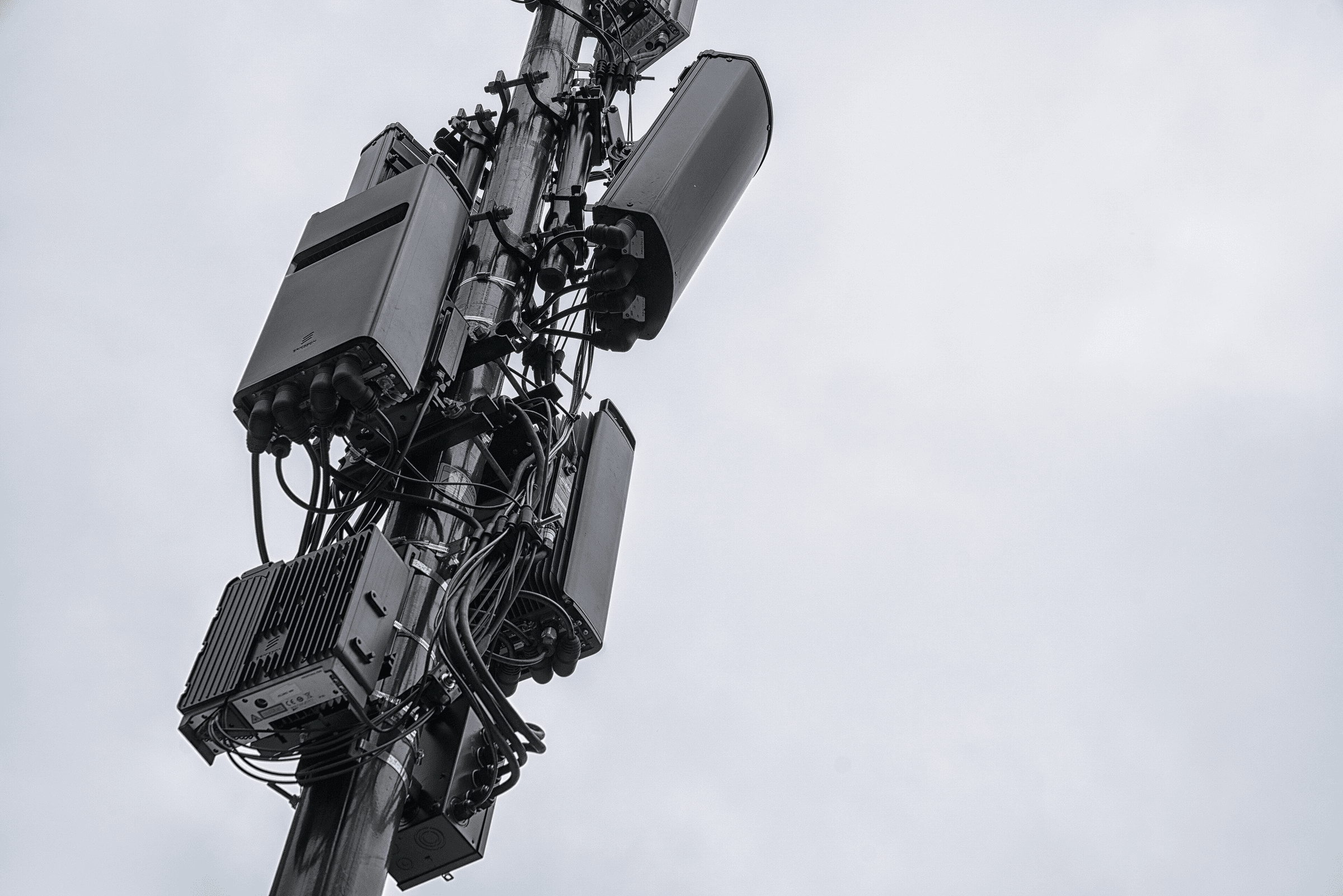
- High-band (mmWave): greater bandwidth, but limited penetration in buildings and a need for nearby cell sites.
Each carrier has its own label for its mid-band and high-band 5G service:
- Verizon 5G UW: 5G Ultra Wideband uses high-band mmWave and mid-band C-band spectrum. Verizon's low-band service is branded plain 5G. A Verizon retail document says the 5G UW icon displays only during an active 5G Ultra Wideband data session.
- AT&T 5G+: AT&T uses 5G+ for both its mid-band and high-band service. Its low-band service is branded AT&T 5G.
- T-Mobile 5G UC: the letters stand for 5G Ultra Capacity and indicate mid-band and/or mmWave 5G.
5G vs LTE speeds, as the carriers state them
On its network performance page, Verizon lists 5G Ultra Wideband mobile downloads of 163 to 622 Mbps and uploads of 9 to 48 Mbps. Standard 5G and 4G LTE share one category for most mobile plans, at 35 to 148 Mbps down and 5 to 33 Mbps up. Verizon says these are approximate 25th to 75th percentile ranges from the six months ending August 31, 2026.
T-Mobile splits its figures by generation. As of November 2026, for on-device use on most plans, its speed metrics page lists typical 5G downloads of 144 to 561 Mbps and uploads of 6 to 34 Mbps. The typical 4G figures are 13 to 69 Mbps down and 2 to 15 Mbps up.
3G is gone, and LTE is still on
The carriers have retired their 3G networks. AT&T's annual report records its 3G shutdown in February 2022. Verizon says its CDMA network was decommissioned as of January 3, 2023. An FCC document dates the retirement of T-Mobile's 3G UMTS network as of July 1, 2022 and of Sprint's 3G CDMA network as of March 31, 2022.
Verizon and T-Mobile pages still describe LTE as a working network. Verizon says a device automatically shifts to its 4G LTE network outside 5G coverage. T-Mobile advertises a 4G LTE network that covers 99% of Americans. An AT&T FAQ for business IoT customers that carries a 2022 copyright notice said, "We have not currently announced a turn down date for our 4G LTE network."
Which one fits
Apple says all iPhone models connect to 5G and LTE networks, and as of November 2026 its US store marks the iPhone 16, iPhone 17e, iPhone 17, iPhone Air, iPhone 18 Pro and iPhone Duo models as 5G capable.
If mmWave coverage matters where you live, check the exact model. AT&T's spec pages for the Galaxy S26+ and Galaxy S26 Ultra list the mmWave bands n257 and n260.
If you are on Verizon and want its higher published speed range, a 5G Ultra Wideband connection fits, because Verizon lists 163 to 622 Mbps down for that category against 35 to 148 Mbps for standard 5G and 4G LTE. Those are Verizon's approximate ranges for its own network. If you would rather keep an iPhone on LTE, Apple provides an LTE setting that uses only LTE even when 5G is available, and its 5G Auto setting can switch to LTE on its own. See How to Switch Your iPhone from 5G to LTE.