AV-TEST gave Avast Free Antivirus its Certified seal in August 2026, and AV-Comparatives gave Avast One Free its ADVANCED+ award in November 2026. Separately, the Federal Trade Commission finalized an order against Avast in June 2024 over the sale of browsing information, in a settlement where, per the June 26, 2024 final decision, Avast neither admitted nor denied the allegations, except as the order specifies.
What the FTC alleged and what the order requires
The FTC's February 2024 complaint alleged that Avast collected, kept indefinitely and sold consumers' browsing information "without adequate notice and without consumer consent." It alleged the data was sold through Jumpshot to more than 100 customers, beginning in 2014. The complaint records that Jumpshot's shutdown was announced on January 30, 2020.
According to the complaint, the Jumpshot feeds included visited webpages, precise timestamps, device and browser details, location and a persistent device identifier. The FTC alleged that Avast's anonymization process was insufficient, and that the searches and pages could reveal health concerns, religious beliefs, political leanings and financial status. These are allegations in a complaint.
The final order prohibits Avast from disclosing browsing information from Avast products to third parties for advertising. It requires affirmative express consent before browsing information is used for advertising as the order defines it. That definition excludes communications a consumer requests, marketing of Avast's own and specified partner products, restricted advertising analytics and contextual advertising that meets set limits.
The order also required Avast to delete the Jumpshot data and the models and algorithms derived from it, and to send deletion instructions to recipients of that data, with an exception where retention is required by law. Avast had to pay $16.5 million, set up a privacy program and submit to independent assessments, with biennial reporting periods that run for 20 years.
The FTC said the payment would be used to compensate consumers. Its February 2025 claims announcement said it was emailing notices to 3,690,813 consumers who bought Avast antivirus between August 2014 and January 2020. Its Avast refunds page reports more than $13.5 million in refunds from the December 2025 distribution, and 91,093 second payments totaling more than $1.5 million announced in October 2026.
What the privacy documents say today
Avast is part of Gen Digital, which also lists Norton and LifeLock among its consumer brands. Avast's privacy page points to Gen's General Privacy Notice, supplemented by Avast's own Product Privacy Notice and Consent Policy.
Gen's notice, dated March 6, 2026, says the company does not sell personal data as defined by the CCPA and similar state laws. It also says Gen shares personal data for cross-contextual behavioral advertising through cookies and tracking technologies. The notice describes service providers handling payments, analytics, support and advertising.
The product notice, dated July 23, 2026, is more specific. For Avast One on desktop, it lists the URLs of websites visited, both malicious and non-malicious, as data used to detect malicious sites, and it gives a 36-month retention period for service provision. For desktop antivirus products, it names Google Analytics as a third-party analytics tool. Avast's Consent Policy, dated September 2023, says free mobile products can show personalized third-party ads, with personal data processed by advertising partners, and that consent is requested during installation.
What the independent labs report
Two labs published 2026 results for Avast's free Windows products. These results cover the specific versions and months tested.
- AV-TEST: In its July and August 2026 Windows 11 report, Avast Free Antivirus 26.6 scored 6 out of 6 for protection, performance and usability. Zero-day protection and detection of widespread malware were reported at 100% in both months.
- AV-Comparatives: In its July to October 2026 Real-World Protection Test, released November 16, 2026, Avast One Free blocked all 400 test cases, with five false positives.
What Avast sells and what it lists at
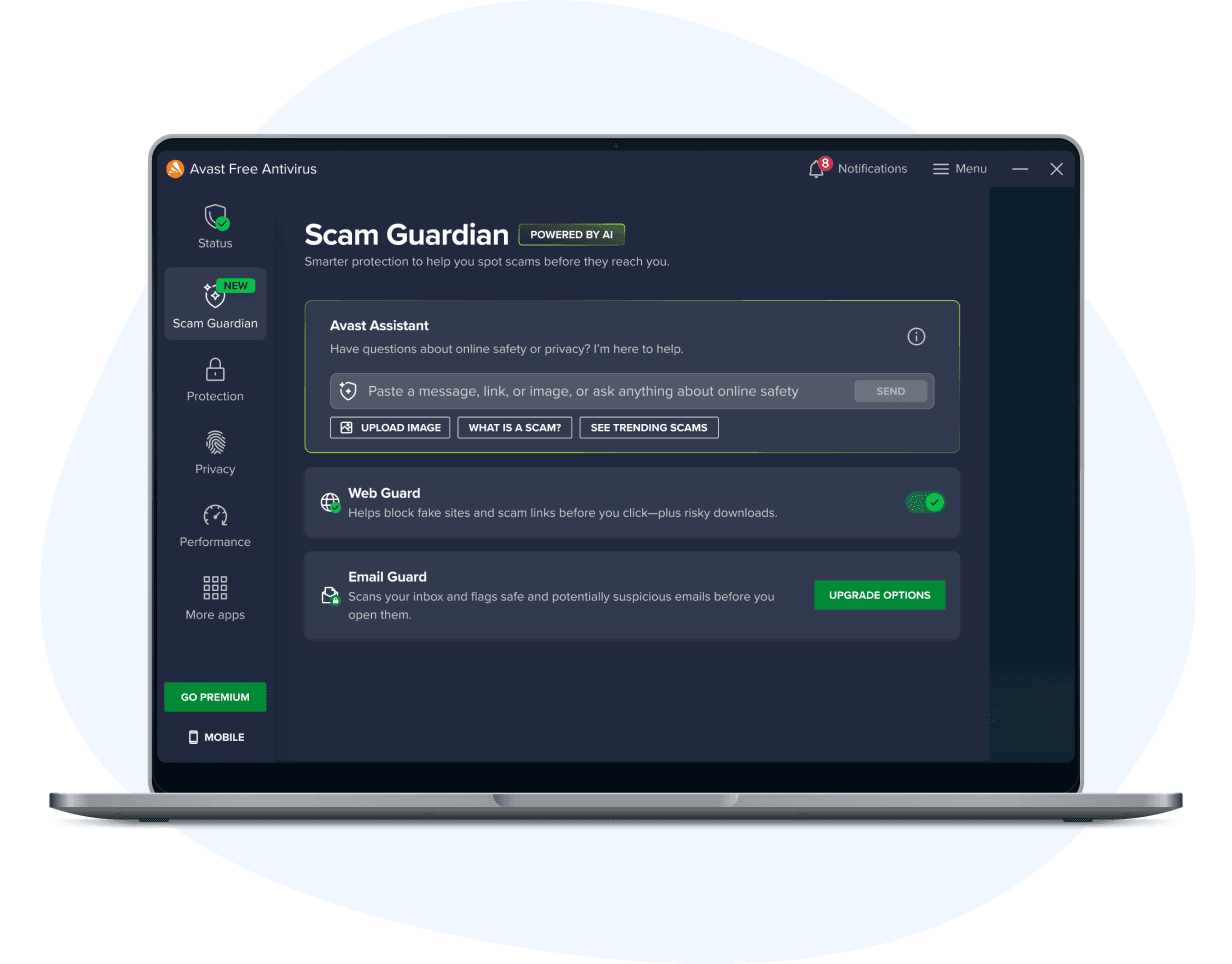
Avast Free Antivirus has no subscription charge, and Avast describes it as offering real-time malware detection and automatic malware removal. Avast One starts with free essential protection on Windows, Mac, Android and iOS, with paid upgrades on top.
As of November 2026, Avast's US store lists Premium Security at a renewal price of $77.99 a year for one Windows PC plus one mobile device, or $99.99 a year for 10 devices. Avast Ultimate, which bundles Premium Security with Premium VPN, Cleanup Premium and AntiTrack, lists renewal prices of $109.99 and $139.99 a year for the same device counts. The store also advertises lower first-year sale prices.
What you can do
If advertising sharing is your concern, Gen's privacy notice describes cookie controls for opting out, and says Global Privacy Control may work as an opt-out depending on your state. Avast's Consent Policy says you can withdraw consent through privacy settings, after which that processing stops.
If you bought Avast between August 2014 and January 2020 and are wondering about a refund, the FTC says it is no longer accepting claims. The deadline was June 5, 2025, and all available funds have been distributed.
If you want to uninstall the product, see How to Remove Avast Antivirus From Windows. See also Is Malwarebytes Safe? and Norton vs McAfee.