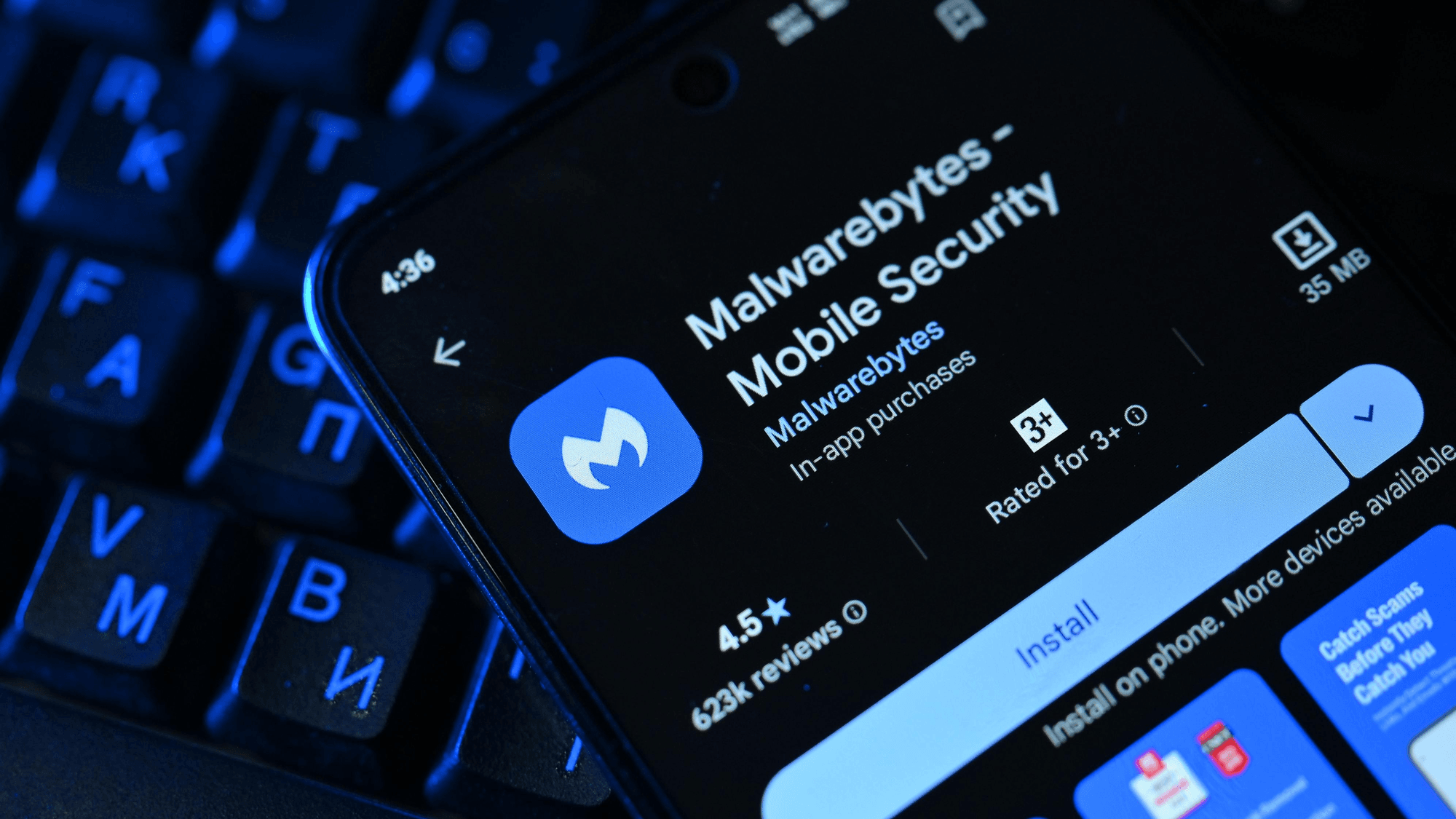
Malwarebytes is security software sold by Malwarebytes Inc., a Delaware corporation, for buyers in the United States and Canada. Two independent labs tested its Premium product on Windows in 2026 and published the results, the company's privacy policy lists what the software collects, and Malwarebytes has published its own accounts of past security incidents.
What the test labs found
AV-TEST evaluated Malwarebytes Premium 5.5 and 5.6 on Windows 11 in July and August 2026. The lab gave it 6 out of 6 for protection, performance and usability, a total of 18 out of 18, and lists the product in its certification directory for August 2026. Its report shows zero-day protection of 100% and 99.3% in its two recent test rounds, with no false detections of legitimate software during system scans in either round.
AV-Comparatives published more mixed figures.
- Real-world protection, February to May 2026: Malwarebytes blocked 395 of 400 test cases, a 98.8% protection rate, with five compromised cases. It produced 39 false positives, and the lab says its award was reduced because of false alarms.
- Malware protection, September 2026: Premium 5.6 recorded 84.2% offline detection, 94.6% online detection and 99.65% online protection across 10,000 samples, with 32 false alarms.
- Performance, September 2026: Premium 5.7 recorded an impact score of 19.1 and ranked 14th among the 20 products in that table.
What the privacy policy says
The policy dated October 30, 2026, lists contact details, login credentials, machine identifiers and IP addresses, along with billing details collected by payment providers. The security software itself collects versions, licenses, configuration, processes and behaviors, threat artifacts and a location derived from the IP address. Artifacts detected as malware or suspicious files are among the items it names.
Some features collect more. Mobile text protection receives sender details and message bodies for texts from people who are not contacts; the policy says malicious messages are retained and others are discarded. Browser Guard collects blocked URLs, excluded domains, approximate location and anonymized, aggregated browsing statistics.
Malwarebytes says it does not sell personal data for money. The policy also acknowledges that website tracking and advertising sharing may count as a sale or sharing under the law, and that advertising disclosures can include hashed emails and IP addresses. Certain products let users opt out of usage and threat statistics, and diagnostic logs stay on the device unless the user submits them.
Incidents Malwarebytes has disclosed
The company has published its own posts about problems with its systems or software, including these three.
- January 2021: Malwarebytes disclosed an intrusion involving privileged access to its Microsoft Office 365 environment. It said the attacker accessed a limited subset of internal company emails, and it reported no evidence of unauthorized access or compromise in its internal on-premises or production environments.
- January 2018: a malformed web protection update caused connection issues, a spike in memory use and possible crashes. Malwarebytes said it released a corrective update and that the Mac product was unaffected.
- February 2016: the company disclosed vulnerabilities in its consumer Anti-Malware product reported by researcher Tavis Ormandy. It said several issues had been fixed on its servers and that client fixes were being tested.
Free vs Premium, and what it costs
Malwarebytes Free costs $0 and provides on-demand scanning and removal of infections already on the device. The company's feature matrix lists Quick Scan and Custom Scan as free on Windows and Mac. Real-time protection, web protection and malware protection require a paid plan on both, and ransomware and exploit protection are paid Windows features.
As of November 2026, the Standard plan lists at $59.99 per year for three devices and Plus, which adds an unlimited VPN, at $79.99 per year for three devices. Ultimate adds identity protection and personal data removal and has a regular list price of $279.99 per year for one adult and three devices.
How it works with Microsoft Defender
Malwarebytes describes its Free scanner as pairing with Defender for on-demand second-opinion scans, and says Premium Security is built to run alongside Defender without disabling Windows protection. Those are the company's statements.
One setting changes that picture. Malwarebytes' Windows documentation says that enabling its Windows Security Center setting makes Windows recognize Malwarebytes as the security solution. Microsoft says Defender Antivirus normally disables itself automatically on Windows 10 and 11 when another antivirus is the primary one and the device is not onboarded to Defender for Endpoint.
What you can do
If you only want a second check on a PC that already runs Defender, the Free scanner fits, since Malwarebytes describes it for that use and it costs nothing. If you want real-time protection from Malwarebytes, that requires a paid plan, and the Windows Security Center setting decides whether Windows treats it as the primary antivirus.
If false alarms would bother you, weigh the AV-Comparatives counts above against the AV-TEST result. If data collection is the concern, look for the opt-out for usage and threat statistics in the product settings. For alternatives that cost nothing, see Technobezz's list of the best free antivirus software.