
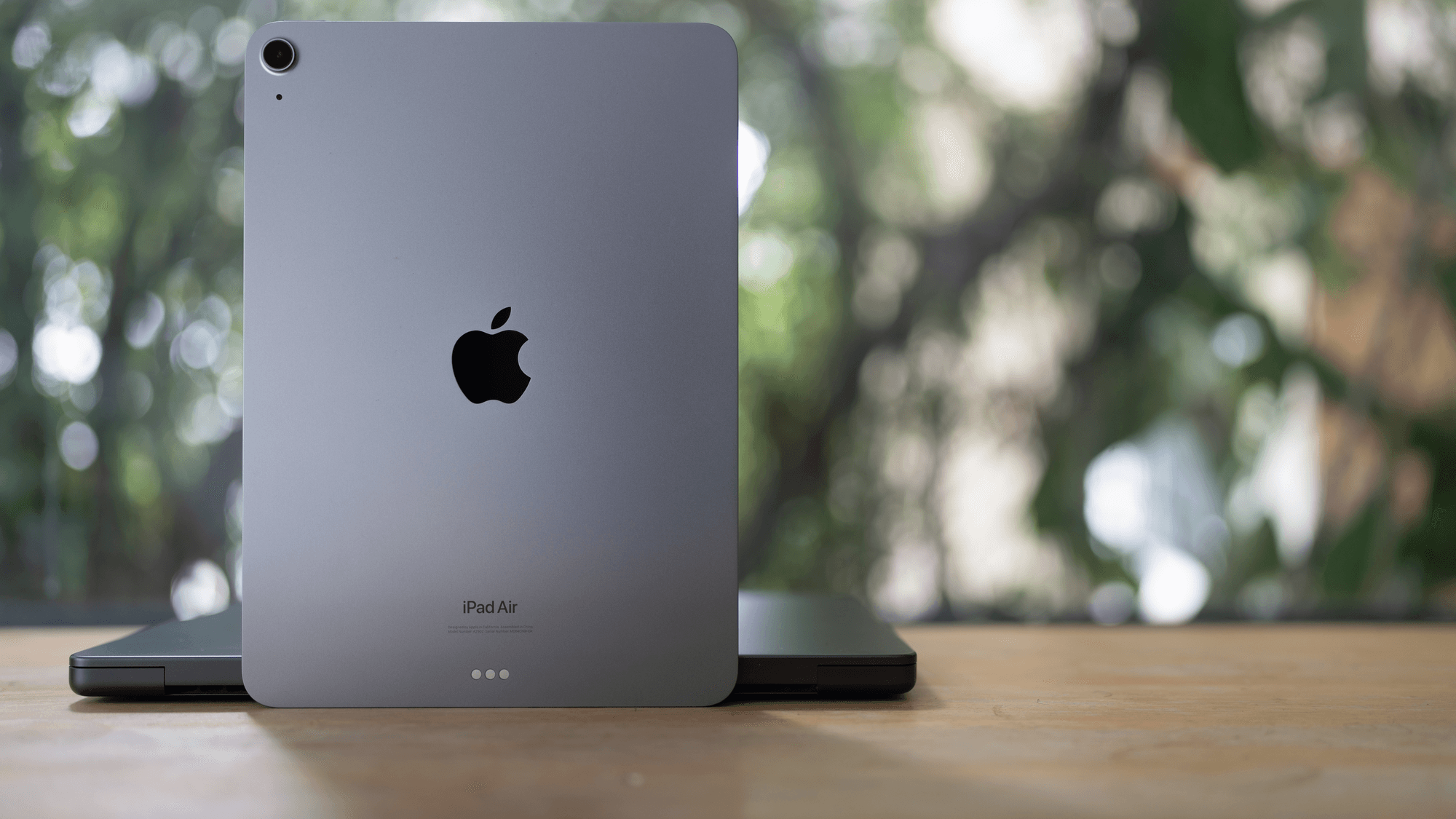
The iPad Air with M4 starts at $749 and the iPad Pro with M5 starts at $1,199, and both come in 11-inch and 13-inch sizes. The extra money buys the Pro's tandem OLED screen with ProMotion, Face ID and a Thunderbolt port, among other differences. If those do not matter to you, the Air takes the same Apple Pencil Pro and has the same 12MP camera resolution for hundreds less.
Prices and storage
These are Apple's regular US list prices before tax, as of November 2026. The Air's starting prices are for 128GB, while the Pro starts at 256GB with standard glass.
- 11-inch iPad Air: $749 with Wi-Fi, $899 with Wi-Fi + Cellular.
- 13-inch iPad Air: $949 with Wi-Fi, $1,099 with Wi-Fi + Cellular.
- 11-inch iPad Pro: $1,199 with Wi-Fi, $1,399 with Wi-Fi + Cellular.
- 13-inch iPad Pro: $1,499 with Wi-Fi, $1,699 with Wi-Fi + Cellular.
The Air is sold with 128GB, 256GB, 512GB or 1TB of storage. The Pro is sold with 256GB, 512GB, 1TB or 2TB. If space runs short later, this guide covers freeing up storage on the iPad Air (2026).
The screens
Both Air sizes use a Liquid Retina display, which is an LED-backlit IPS panel with P3 color, True Tone and an antireflective coating. Apple lists 500 nits of brightness for the 11-inch Air and 600 nits for the 13-inch. Apple's store comparison shows a dash in the Air's ProMotion row.
Both Pro sizes use an Ultra Retina XDR display built on tandem OLED. It supports ProMotion, with an adaptive refresh rate from 10Hz to 120Hz. Brightness reaches 1,000 nits for SDR and full-screen XDR content and 1,600 nits at peak for HDR content. Nano-texture display glass is an option, but only on the 1TB and 2TB configurations.
Chips, memory and ports
The Air's M4 has an 8-core CPU, a 9-core GPU and 12GB of unified memory in both sizes. The Pro's M5 has a 10-core GPU, and the rest depends on storage. The 256GB and 512GB models have a 9-core CPU and 12GB of memory, while the 1TB and 2TB models have a 10-core CPU and 16GB.
The ports look alike but are not equal. The Air's USB-C port supports charging, DisplayPort and USB 3 at up to 10Gb/s. The Pro's port adds Thunderbolt 3 and USB 4 at up to 40Gb/s.
Cameras, unlocking and accessories
On paper, the rear cameras share their main specs. Each tablet has a 12MP Wide camera with an f/1.8 aperture and 4K recording at up to 60fps. The Pro adds an adaptive True Tone flash, a LiDAR Scanner and ProRes recording at up to 4K/30fps, which is limited to 1080p/30fps on 256GB models. Both have a landscape 12MP Center Stage front camera.
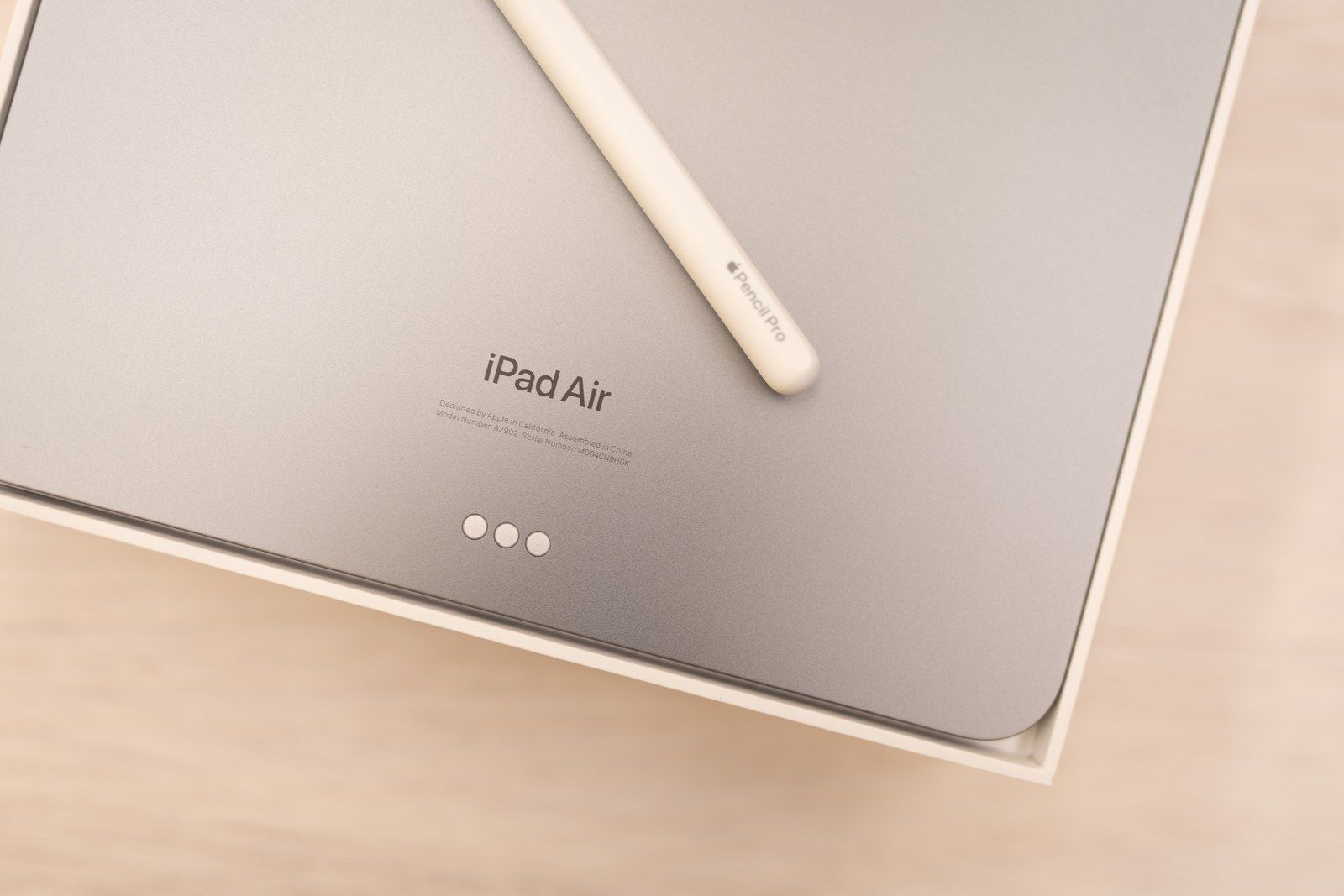
The Air unlocks with Touch ID in the top button. The Pro uses Face ID through its TrueDepth camera system.
Apple Pencil Pro and Apple Pencil (USB-C) work with both sizes of both tablets. Each line has its own Magic Keyboard with a 14-key function row and USB-C pass-through charging. The Air's version has a glass trackpad, and the Pro's has a haptic glass trackpad and an aluminum palm rest.
Size and weight
- 11-inch iPad Air: 6.1mm thick, 464g with Wi-Fi.
- 11-inch iPad Pro: 5.3mm thick, 444g with Wi-Fi.
- 13-inch iPad Air: 6.1mm thick, 616g with Wi-Fi.
- 13-inch iPad Pro: 5.1mm thick, 579g with Wi-Fi.
The Pro is the thinner and lighter tablet at each size. Apple's iPad comparison page puts all four models side by side.
Which one fits
If you mostly read, browse, take notes and stream, the iPad Air is the cheaper option to look at first: it shares the Pencil Pro support and 12GB of memory with the entry Pro and starts $450 lower at 11 inches. If you want the big screen for the least money, the 13-inch Air at $949 lists below even the 11-inch Pro.
If you edit HDR video or photos, the Pro's display specs are higher: its display reaches 1,600 nits at HDR peak and refreshes at up to 120Hz. If you move large files to fast external drives, only the Pro's spec sheet lists Thunderbolt at up to 40Gb/s. If you need 2TB of storage or Face ID, the Pro is the one that offers them.