
Bluetooth is a wireless technology that sends data over the unlicensed 2.4 GHz band, hopping between many narrow channels as it goes. It comes with two radio options, Bluetooth Classic and Bluetooth Low Energy, and two devices pair by creating shared secret keys that they can store for later connections.
Two radios, one band
The Bluetooth SIG, which publishes the Bluetooth Core Specification, lists the frequencies in use as 2.402 to 2.480 GHz. Both radios work inside that slice of the industrial, scientific and medical band, but they divide it differently.
- Bluetooth Classic: also called Basic Rate/Enhanced Data Rate, or BR/EDR. It uses 79 channels with 1 MHz spacing, supports point-to-point links and is widely used for wireless audio.
- Bluetooth Low Energy (LE): designed for very low power operation. It uses 40 channels with 2 MHz spacing and supports point-to-point, broadcast and mesh communication.
Both radios use a technique called frequency-hopping spread spectrum. On an LE connection, the radio channel used for packets changes at regular intervals, and a device can mark poorly performing channels as unused so the channel selection avoids them.
The hopping matters because the band is shared. Bluetooth sits alongside Wi-Fi and IEEE 802.15.4 technologies at 2.4 GHz, and the SIG notes that transmissions sent on the same frequency at the same time can collide, leaving packets corrupted or lost.
What pairing does
In the Bluetooth specification, pairing creates one or more shared secret keys between two devices. Bonding then stores those keys for later connections, which forms a trusted device pair. That is why, as Google puts it for Android, devices can connect automatically after the first pairing and stay paired until you unpair them.
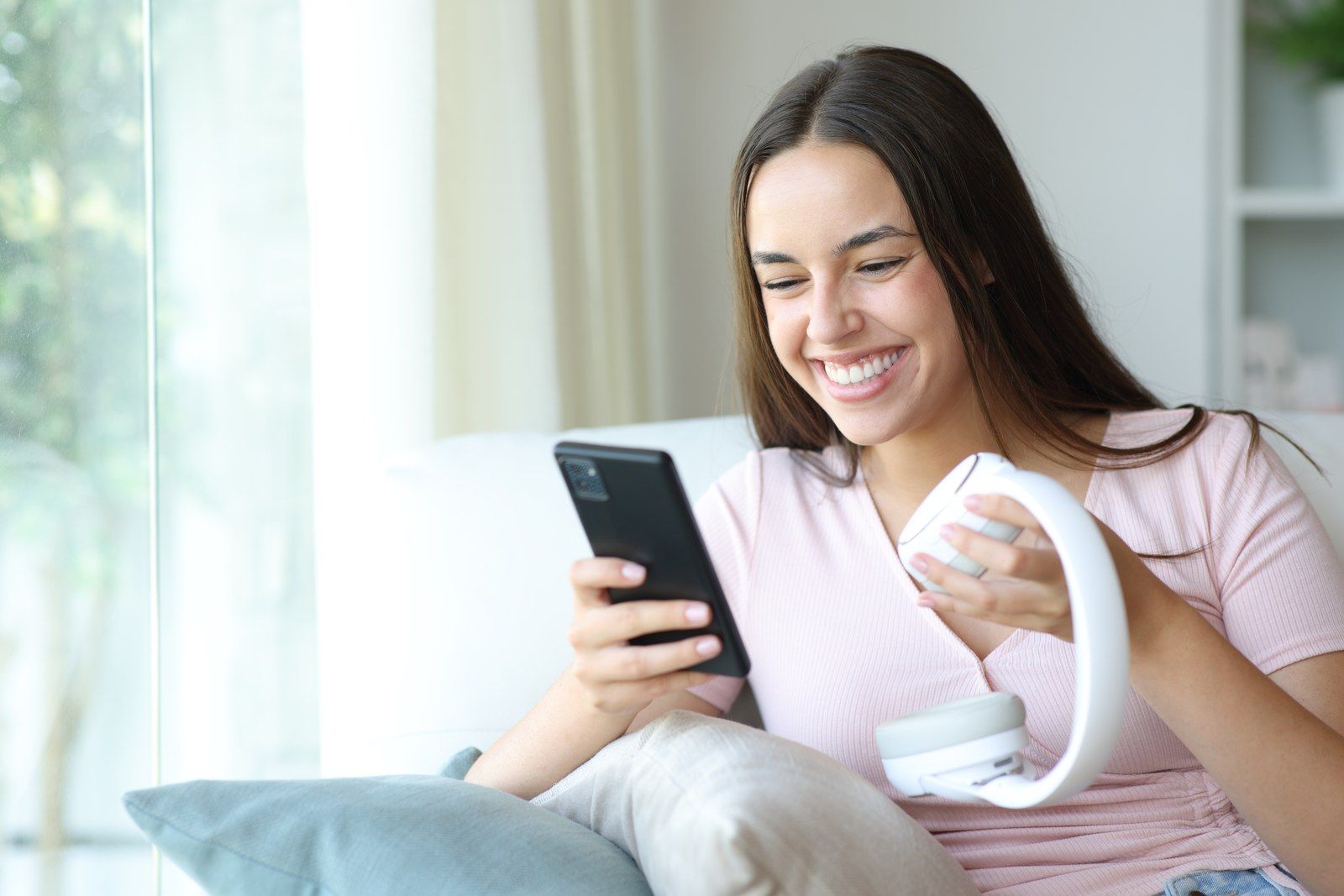
The SIG's security model builds on those keys. Authentication verifies that both sides hold the shared keys, encryption protects the confidentiality of messages, and message integrity protects against forged messages. Bluetooth LE encryption uses AES-CCM cryptography.
Not every pairing method offers the same protection. For Classic Secure Simple Pairing, the specification says the Just Works model protects against passive eavesdropping but offers no protection against a man-in-the-middle attack. The SIG also describes LE security as a collection of capabilities, most of them optional, and leaves product teams responsible for choosing the features that meet their product's needs.
How far Bluetooth reaches
There is no single Bluetooth range. The SIG says effective, reliable range can run from less than a meter to more than a kilometer, depending on the implementation and conditions. The factors it names are radio spectrum, physical-layer design, receiver sensitivity, transmit power, antenna gain and path loss.
Obstacles are part of path loss. Walls, windows and other obstructions weaken the signal, and their material and density change how much.
Bluetooth Classic devices fall into three power classes, defined by maximum transmit power. Class 1 is above 2.5 mW and up to 100 mW, Class 2 is above 1 mW and up to 2.5 mW, and Class 3 is 1 mW at most.
What the version numbers add
- Bluetooth 5.0: introduced LE 2M PHY, LE Coded PHY and advertising extensions.
- Bluetooth 5.1: added Direction Finding, which lets devices determine the direction of a Bluetooth signal.
- Bluetooth 5.2: introduced LE Isochronous Channels, the feature LE Audio relies on, plus LE Power Control.
- Bluetooth 5.3: added Connection Subrating and Channel Classification.
- Bluetooth 5.4: added Periodic Advertising with Responses and Encrypted Advertising Data.
- Bluetooth 6.0: added Channel Sounding, a set of LE distance-measurement methods called Phase-Based Ranging and Round-Trip Timing.
- Bluetooth 7.0: announced by the SIG in November 2026, after versions 6.1 to 6.3, it added High Data Throughput, an optional feature that raises the top supported bit rate to 7.5 Mbps.
A version number is not a feature list. The SIG's LE primer says a device that supports a given Core Specification version does not necessarily support every feature in it, because many LE features are optional.
How Bluetooth carries audio
Classic Audio runs on the Classic radio. Its A2DP profile requires audio devices and hosts to support a codec called SBC, short for Sub Band Coding. Apple lists AirPods 3 or earlier, AirPods Max and most Beats wireless headphones as using its AAC Bluetooth codec.
LE Audio runs on the Low Energy radio and brings its own low-power codec, LC3, which every LE Audio product must support. Sources and receivers must use the same approach, although a product can implement both Classic Audio and LE Audio.
LE Audio also enables Auracast, where a transmitter sends one broadcast that an unlimited number of compatible receivers in range can join. Auracast support is optional for LE Audio devices.
What to check before you buy or troubleshoot
If you want a specific feature such as LE Audio or Auracast, look for that feature by name on the spec sheet instead of relying on the Bluetooth version, since the SIG says version support does not guarantee every feature. If a connection drops across the house, check for walls and other obstructions, because the SIG ties them to signal loss and Apple advises avoiding them.
For setup steps, see how to set up Bluetooth and pair devices on Android. If a device refuses to link, there is a guide to Bluetooth not connecting fixes, and Bluetooth multipoint has its own guide.