


Disclosure: Toshiba provided the OptiChef Pro Max for this review and is sponsoring its coverage. Every observation and opinion below comes from our own hands-on testing.
Technobezz is supported by its audience. We may get a commission from retail offers. Reviews ethics statement.
A Weekend of Real Meals in the Toshiba OptiChef Pro Max
We cooked two days of real meals in the Toshiba OptiChef Pro Max, a 1.3 cu.
Updated November 19, 2026Nov 19, 2026
•16 min read

Credit: Technobezz
Get Deals Like These in Your Inbox
The best prices, straight to your inbox.
Add Technobezz on Google:Preferred SourceGoogle Discover
9.2/ 10

Best for Households that want one countertop appliance to replace a microwave and an air fryer, with Combi, convection baking and broiling on top.
TOSHIBA OptiChef Pro Max Air Fryer Microwave Oven
BrandToshiba
ModelOptiChef Pro Max (ML2-STC13SAIT(SS))
Capacity1.3 cu. ft.
Turntable13.58 in glass
Microwave output1,100 W (Origin Inverter)
Input power1,250 W
Saturday started with a bag of popcorn and finished with a tray of glazed wings and a basket of fries, and none of it went near our full-size oven. Sunday brought two salmon fillets that were still partly frozen and bone-in chicken cooked two different ways. Every dish went through the same countertop box: the Toshiba OptiChef Pro Max, a 1.3 cubic foot microwave that also air fries, convection bakes, broils and runs a Combi mode pairing microwave power with convection heat.
We tested it the way a busy household would, cooking real meals over a weekend, leaning on the built-in programs where they fit and setting time and temperature by hand where they did not. We weighed the food on a kitchen scale, timed every cycle and checked doneness with a probe thermometer. What follows is what came out of the oven, including the few results we would handle differently next time.
TOSHIBA OptiChef Pro Max Air Fryer Microwave Oven (ML2-STC13SAIT(SS)) - Best All-in-One Countertop Oven
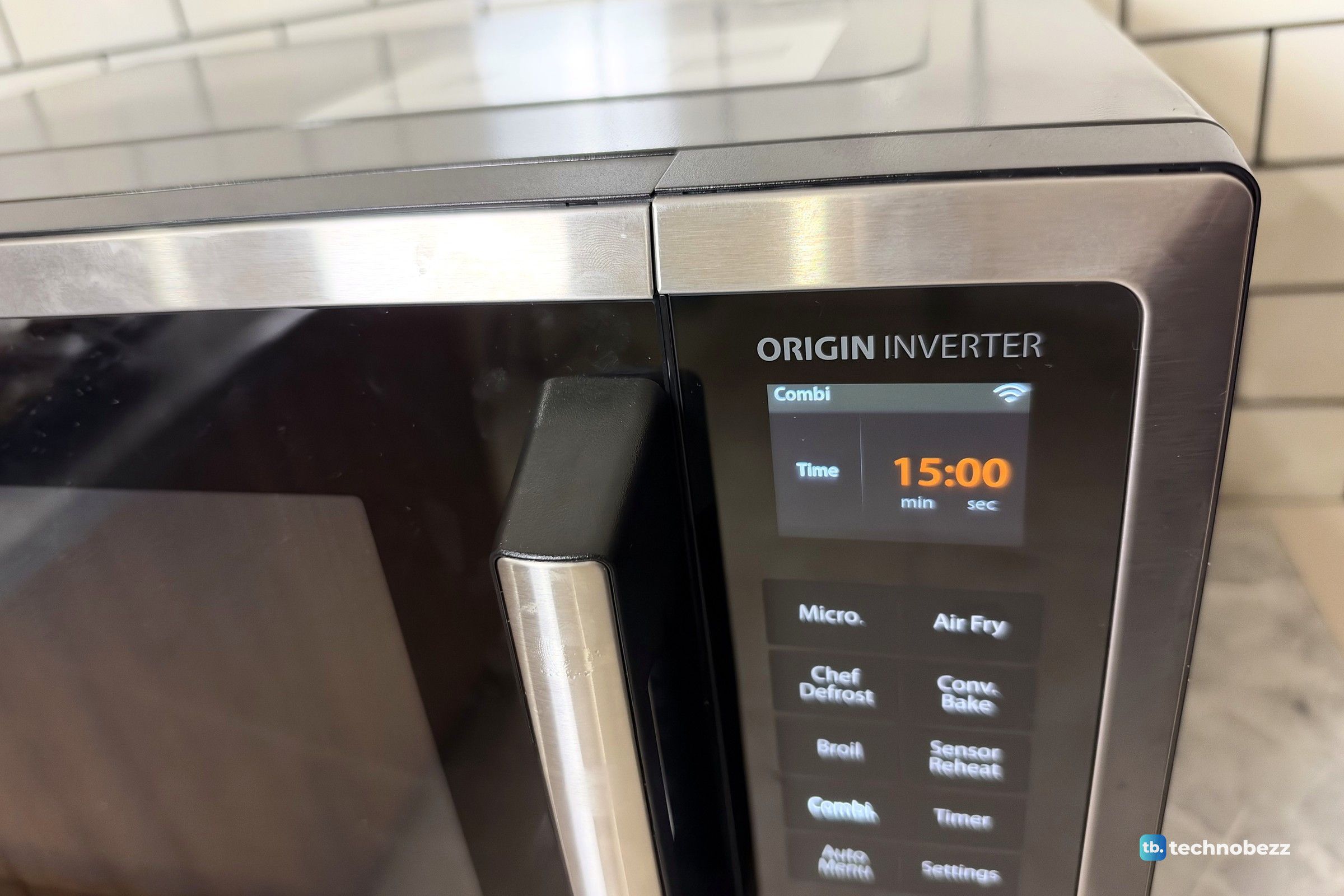
The OptiChef Pro Max is Toshiba's 5-in-1 countertop oven, launched in April 2025. It combines a 1,100 W Origin Inverter microwave with ChefFry Plus air frying, convection baking from 100 to 425°F, broiling and a Combi mode, all run from a 2.4-inch color screen, a dial and two columns of one-touch mode keys. A humidity sensor drives the Sensor Reheat program, and the TSmartLife app adds remote start, cooking alerts and two extra modes.
Key Highlights
- 1.3 cu. ft. cavity with a 13.58-inch glass turntable
- 1,100 W Origin Inverter microwave (1,250 W input)
- ChefFry Plus air frying with a top heating element and fan
- Convection baking from 100 to 425°F in 25-degree steps, plus Broil
- Combi mode that runs microwave and convection together
- Sensor Reheat for 8 to 24 oz portions, guided by a built-in humidity sensor
- Chef Defrost by weight or by time, plus food-specific defrost programs
- 25 Auto Menu programs on our unit, with weight choices, rack level and accessory shown on screen
- 2.4-inch color screen with a dial, Ok/Start button and one-touch mode keys
- TSmartLife app control on 2.4 GHz Wi-Fi, plus Alexa support
- Wire rack, enamel tray and air fry basket in the box
- 21.8 x 17.8 x 12.8 inches, about 45.2 lb
Toshiba is America's No. 1 Countertop Microwave Oven Brand.* Guided by the Japanese Takumi spirit of craftsmanship and the philosophy "Details Matter," Toshiba combines precision engineering, thoughtful design and reliable technology for everyday life.
*Source: Circana, LLC, Retail Tracking Service, US Small Appliances, Dollars, 12 ME Aug 2026.
Pros
- Five cooking methods in one footprint, and every one we tried produced food we were happy to serve
- Combi cooked a bone-in chicken thigh through in 15 minutes, with crisp, browned skin and no air fry finish needed
- ChefFry Plus gave wings properly crisp skin and fries a real crunch
- The screen spells out each step, including the weight options, rack level and accessory for Auto Menu programs
- Chef Defrost by weight thawed a frozen thigh in minutes, with only a thin edge starting to cook
- The app mirrors the countdown in real time and sends finish and door alerts
- A full bag of popcorn popped in about two minutes on High, with no scorching
- Sensor Reheat brought cold pasta to about 192°F with no time or power to choose
- Convection Bake preheated to 350°F and baked a tray of nine chocolate cookies evenly, with crackled tops and set edges
Cons
- Frozen pizza on Air Fry browned well on top but stayed pale underneath; the lower rack or Conv. Bake suits a crisper base
- Auto Menu weights come in fixed steps (wings offer 9, 18 or 26 oz), so in-between amounts need a manual setting
- At 21.8 by 17.8 inches and about 45.2 lb, it needs a generous, permanent spot on the counter
Who It Is For
The OptiChef Pro Max suits a household that wants one appliance doing the jobs of a microwave and an air fryer, and that would like a second oven for the busy weeks. It makes the most sense where counter space matters: apartments, smaller kitchens and homes where the full-size oven is either too big for a weeknight dinner or already full on a holiday. It also suits cooks who like a guided program but still want to set time and temperature by hand.
Skip if
If you only reheat leftovers and make popcorn, a standard microwave covers that for less. If your counter cannot spare roughly 22 by 18 inches, Toshiba's smaller 1.0 cu. ft. OptiChef Pro is the model to look at. And if you regularly bake on full-size sheet pans or roast large cuts, you still need a full oven.
What Is in the Box, and Which Accessory Goes Where
The oven arrives with a glass turntable and roller ring, a round wire rack, a black enamel tray and a stainless mesh air fry basket that sits on top of the tray.
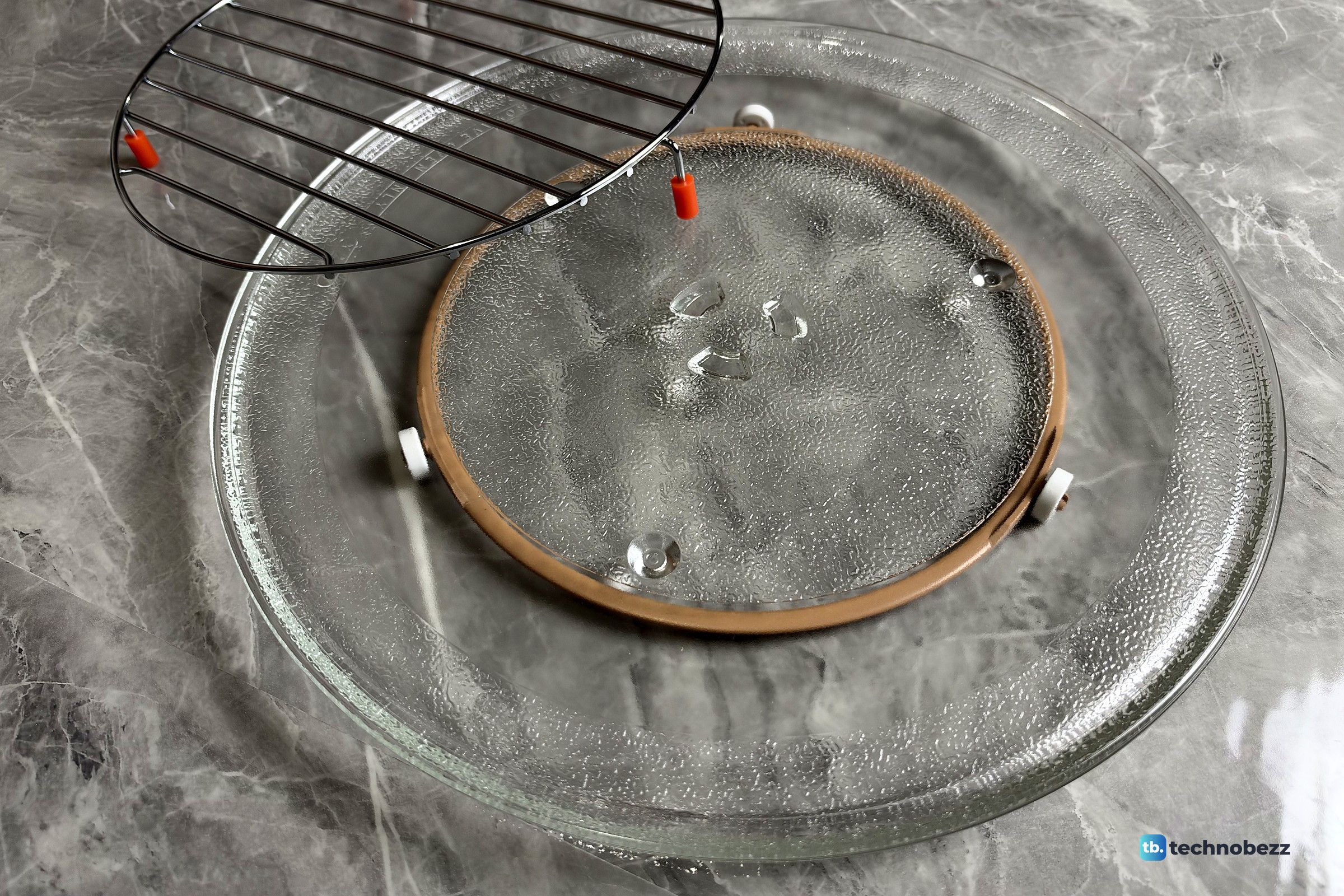
Setup takes a few minutes: unpack the cavity, peel the protective film off the control panel (it takes a fingernail to get the first corner started), fit the roller ring and turntable, plug in and set the clock.
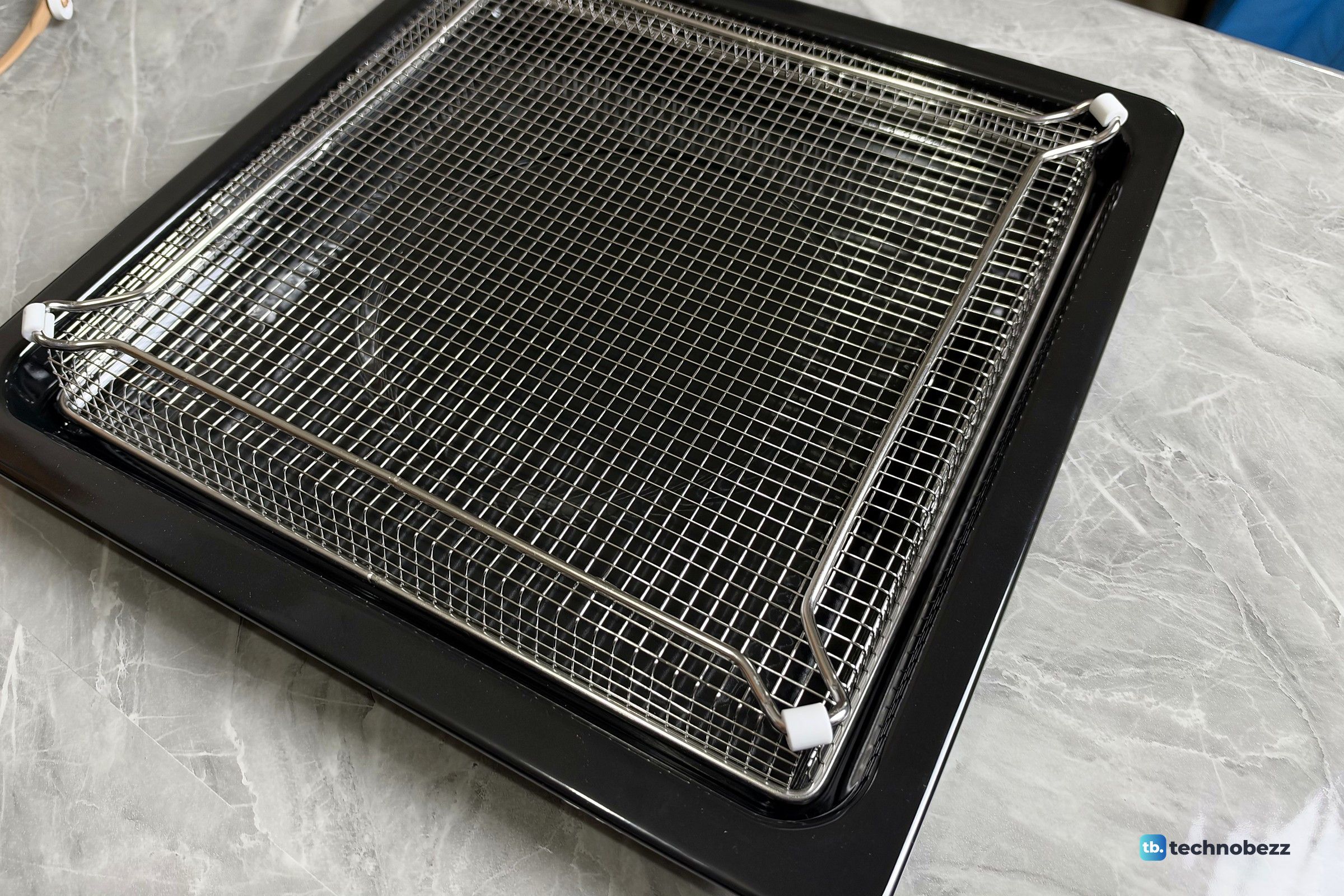
At about 45.2 lb it is a two-handed lift, and it sat level and steady on our counter.
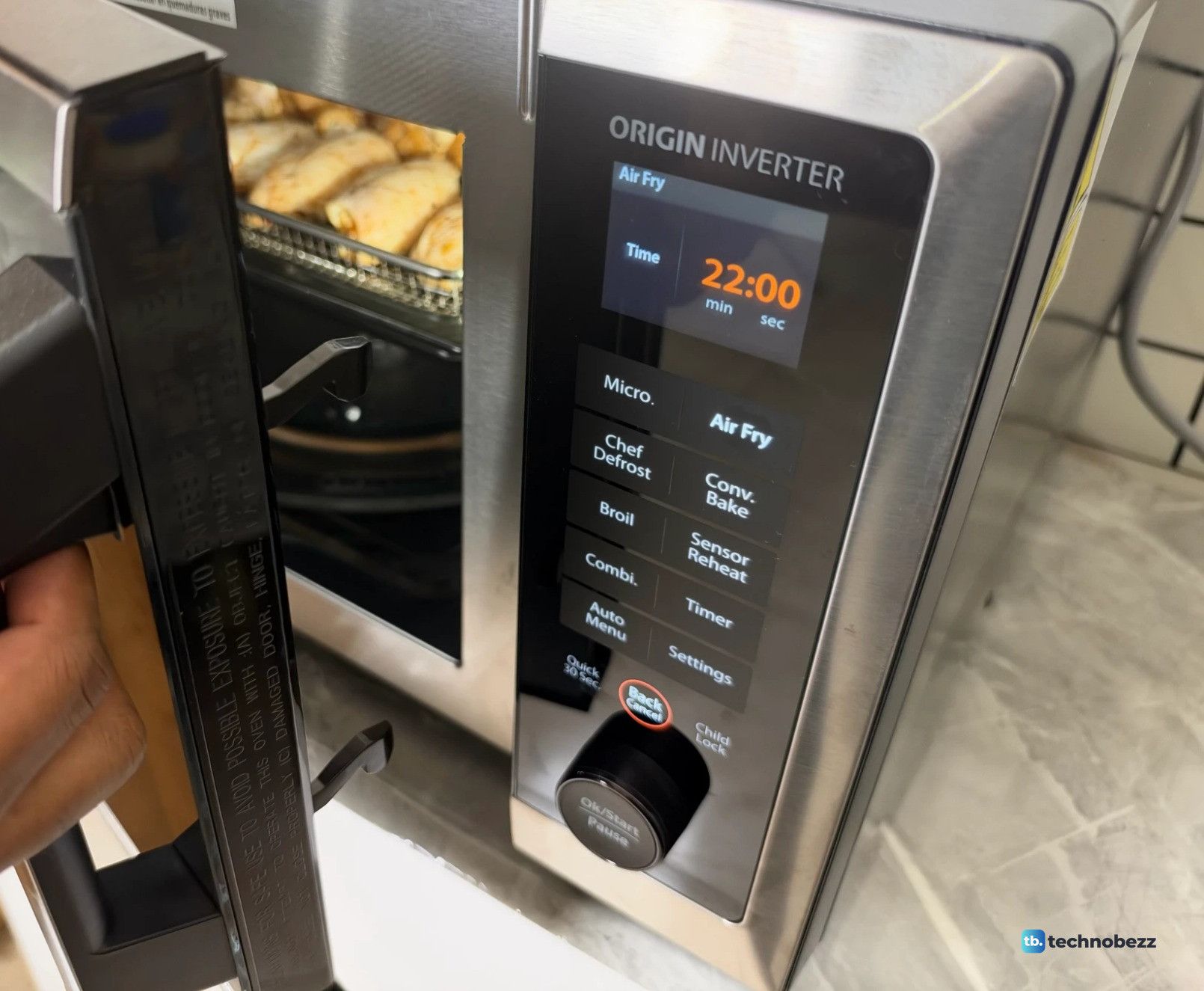
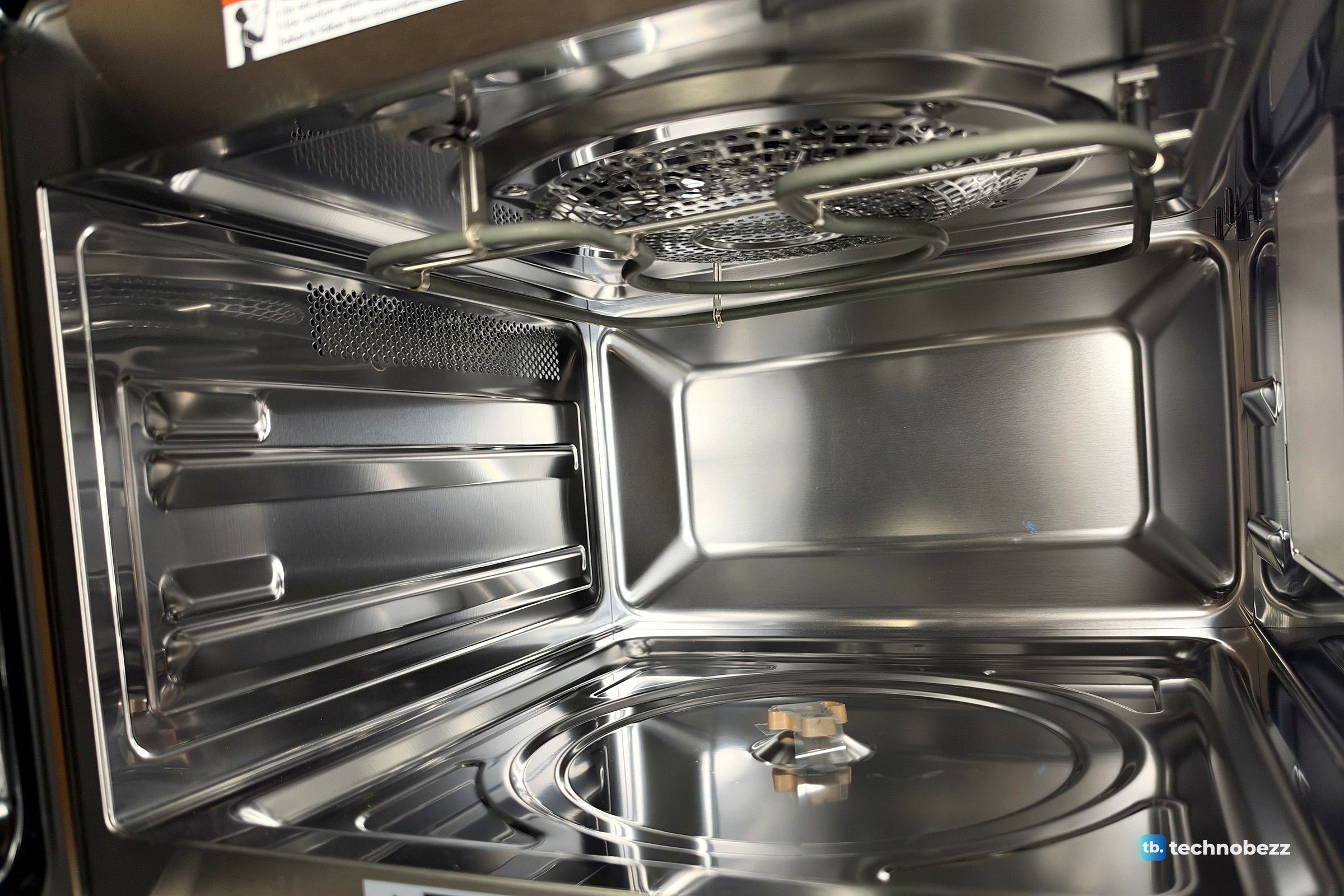
The question every new owner asks is which accessory goes with which mode, and the manual answers it in a single chart. Here it is in plain terms:
- Microwave, Chef Defrost and Sensor Reheat: glass turntable only. No metal accessories.
- Air Fry, Convection Bake and Broil: the wire rack, enamel tray and air fry basket can all be used.
- Combi: the wire rack only, with no metal pans on it. Use glass or ceramic cookware.
The Auto Menu programs make this easier still, because the screen tells you the rack level and accessories before you start. For chicken wings it showed "Upper Level, Tray + Basket" next to the cook time.
A 2.4-Inch Color Screen That Walks You Through Each Mode
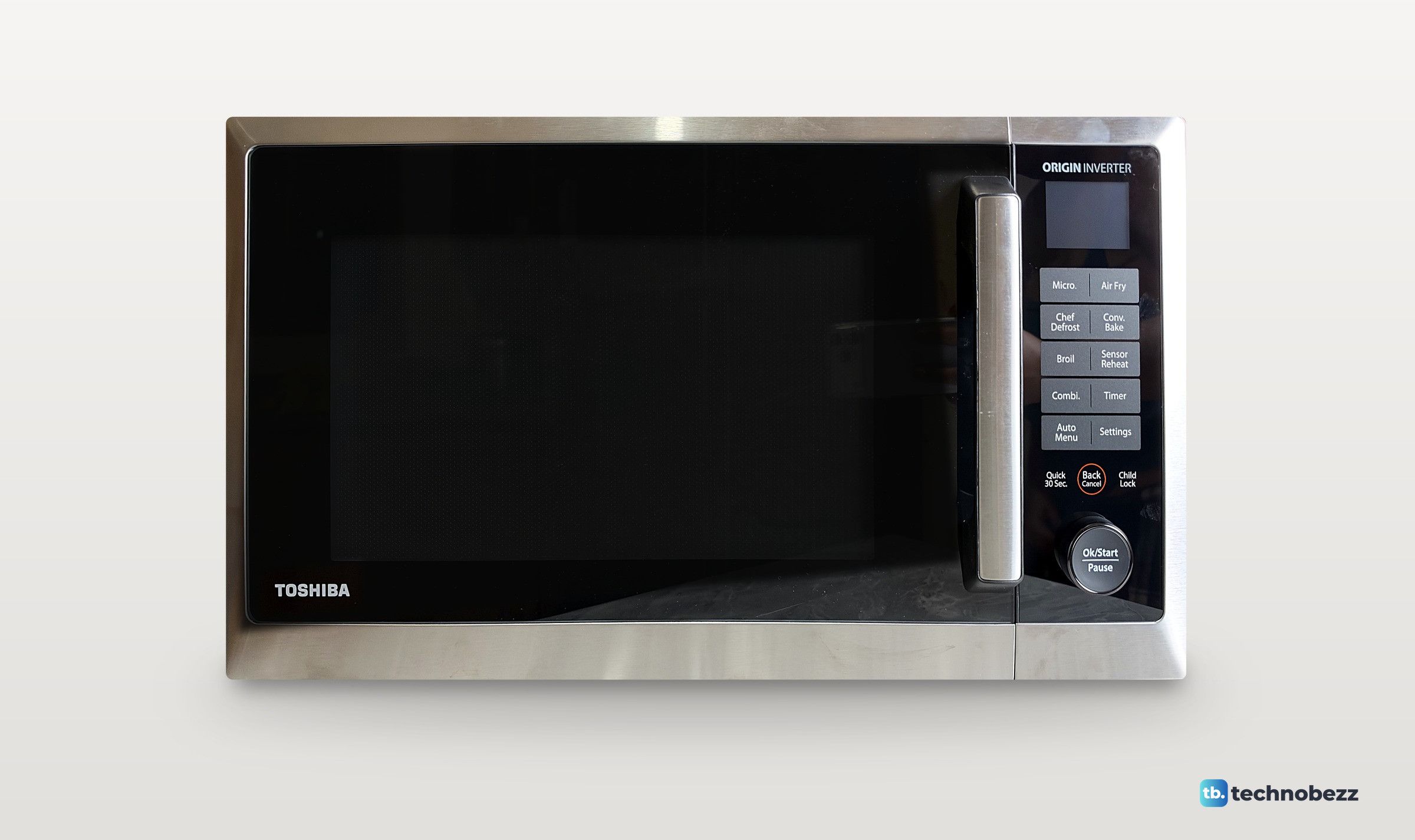
The control column is laid out in a way that makes sense after one evening. The color screen sits at the top, with two columns of keys below it: Micro., Air Fry, Chef Defrost, Conv. Bake, Broil, Sensor Reheat, Combi., Timer, Auto Menu and Settings. Under those are Quick 30 Sec., Back/Cancel and Child Lock, and a dial with the Ok/Start/Pause button in its center.
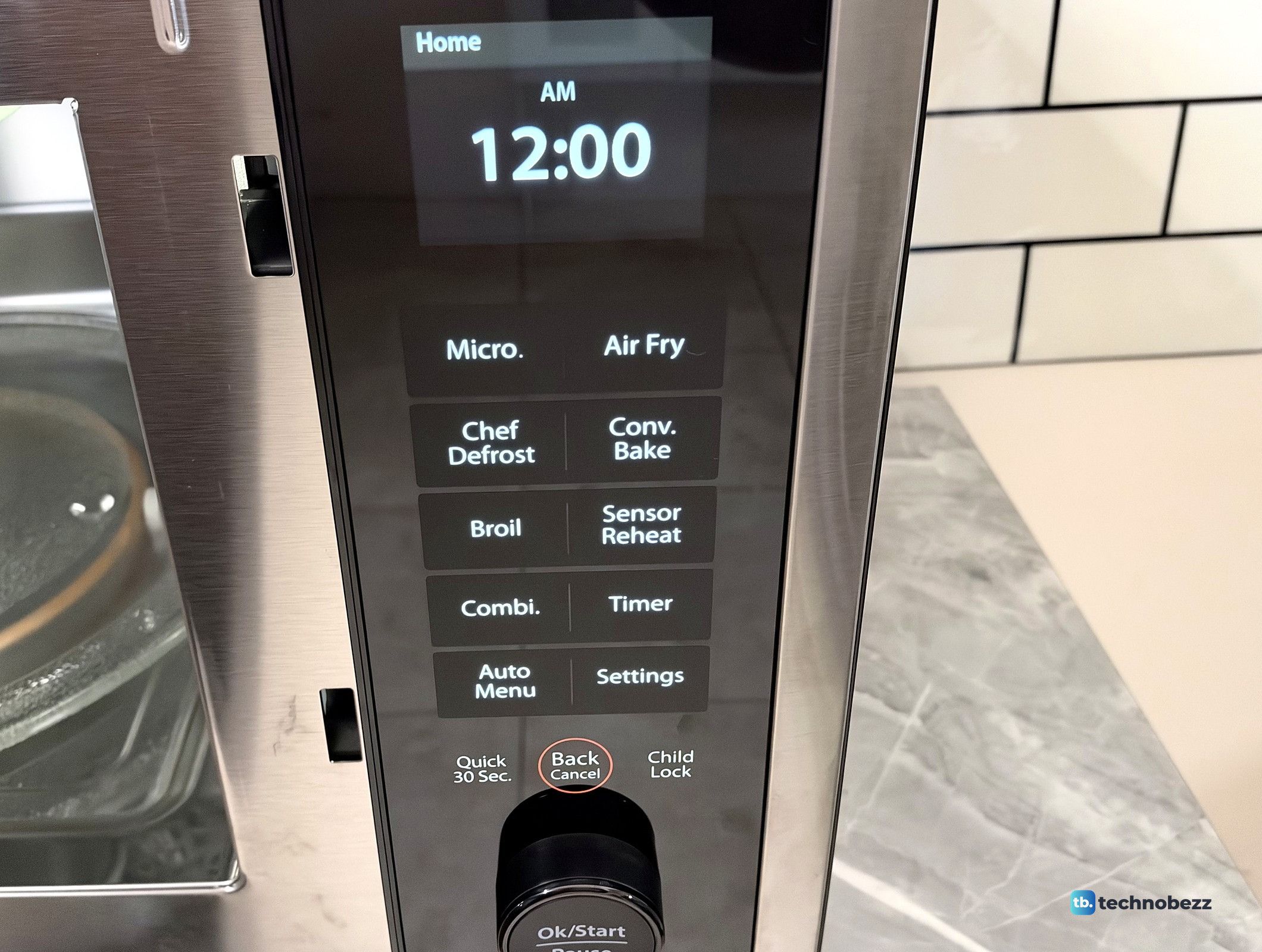
Starting a manual Air Fry cycle takes five actions: press Air Fry, turn the dial to the temperature, press the dial, turn it to the time and press Start. The value you are changing shows in large orange digits, with the neighboring options above and below it, so you always know which way the dial is heading. The idle screen is a large, readable clock, and the screen stayed easy to read in our daytime kitchen.
Auto Menu is where the screen earns its place. You scroll a numbered list of 25 programs, pick one, choose the weight, and the screen shows the cook time, the rack level and the accessory before you press Start. The weights come in fixed steps, though. Our first batch of wings weighed 14.4 oz and the choices were 9, 18 or 26 oz, so for an in-between amount a manual setting is the better route.
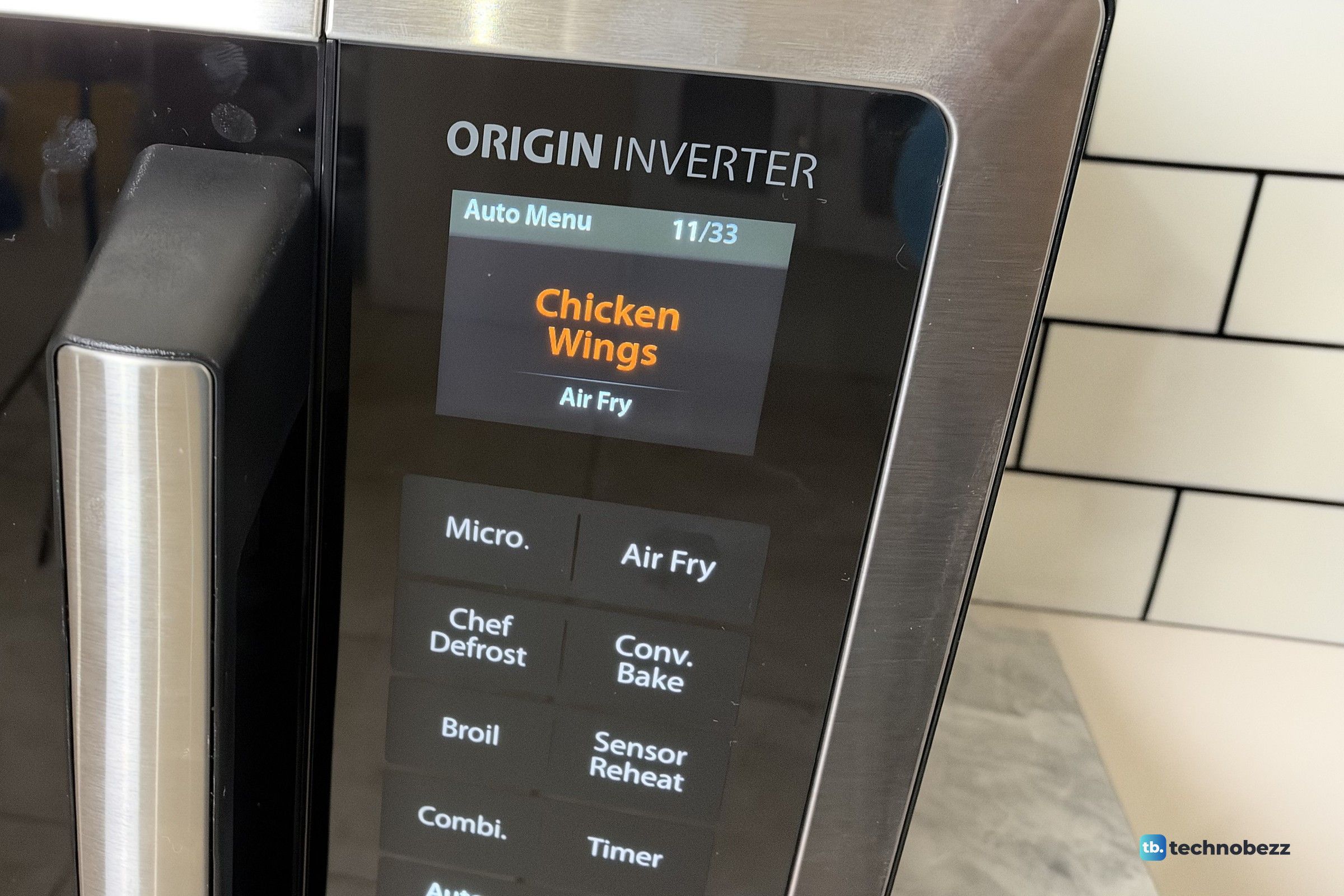
The one control habit to learn is the dial. There is no number pad, so every time and weight is set by turning it. It quickly becomes second nature, and Quick 30 Sec. covers the most common microwave job with a single press.
Starting Dinner From the Phone With TSmartLife
The OptiChef Pro Max connects to Toshiba's TSmartLife app over 2.4 GHz Wi-Fi. Pairing took about four minutes from signing in to the app showing the oven online. From there we started a batch of fries from the phone at Air Fry, 400°F for 15 minutes, and the app's countdown tracked the oven's own display to within a second.
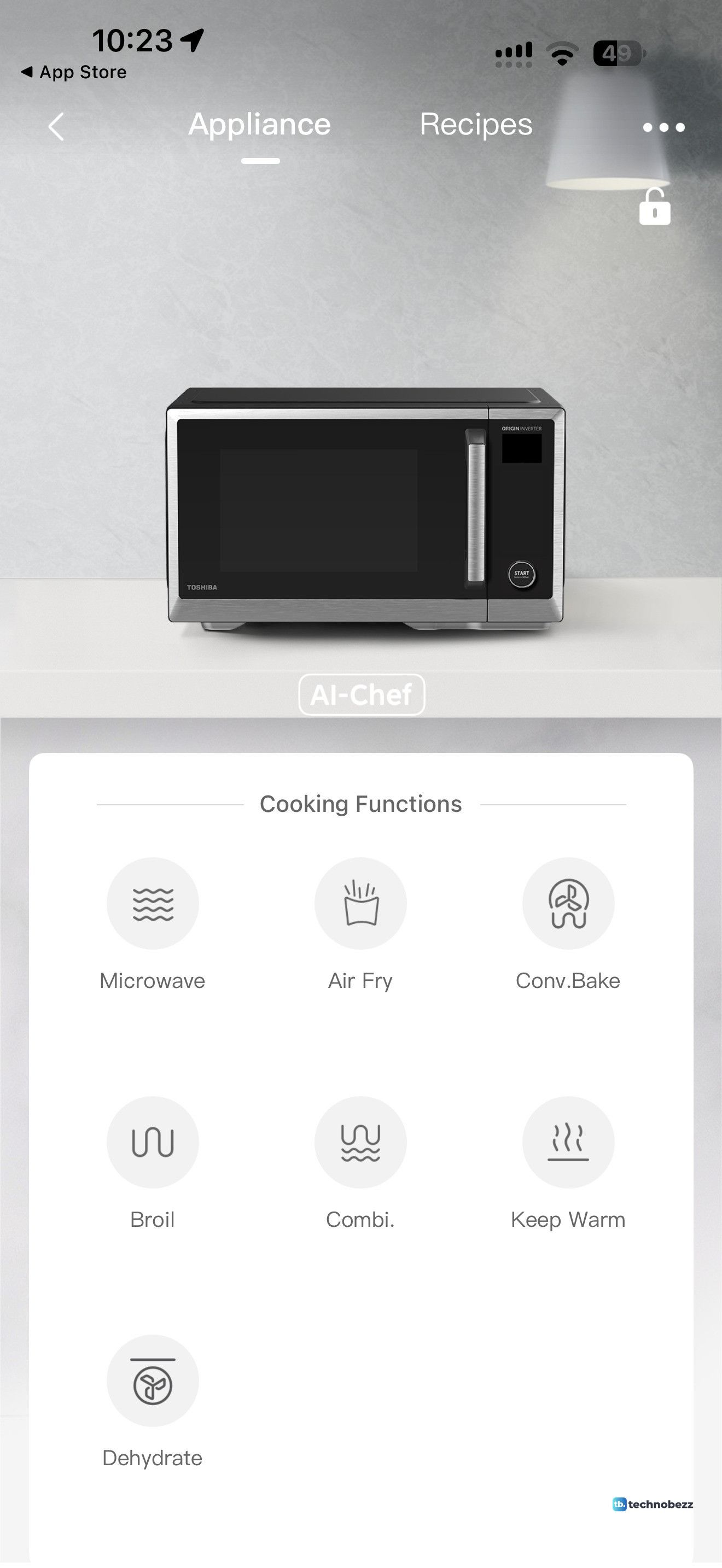
The app is more than a remote. It adds two modes that are not on the control panel, Keep Warm and Dehydrate, has its own Air Fry, Microwave, Combi and Defrost program lists, and includes a recipes tab. Its notifications were genuinely useful: a three-minute warning before a cycle finished, a "cooking finished" alert and a note when the door was left open. Toshiba also lists Alexa support, which we did not set up for this review.
Two Days of Real Food, Test by Test
For every test we noted the food and quantity, the mode and settings, the time and the result. Times below are the settings we used, and none of the cycles needed extra time unless we say so.
Popcorn on Microwave High
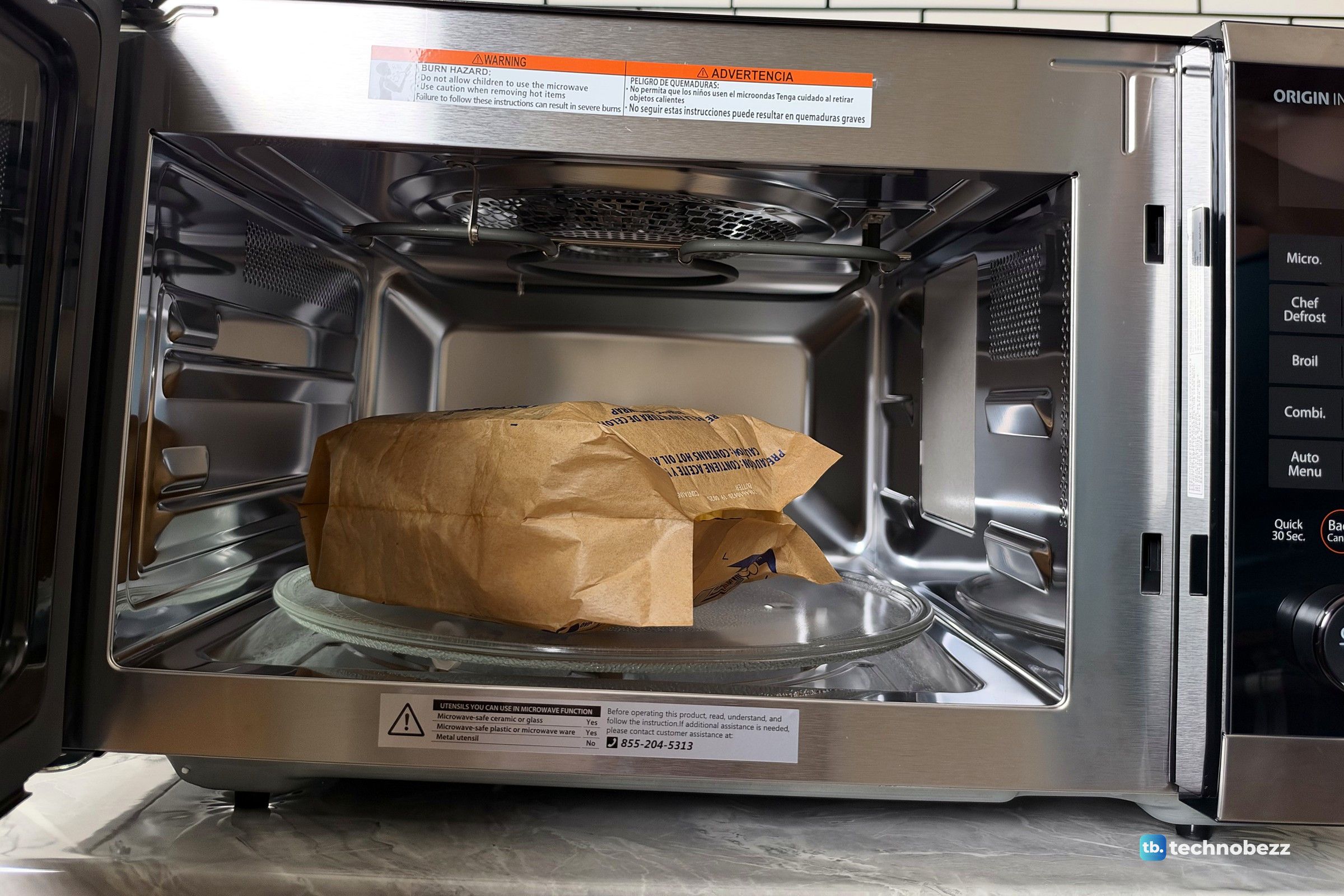
A standard microwave popcorn bag went on the glass turntable at High, set by time, for about two minutes. It came out fully popped, with only a handful of unpopped kernels at the bottom and no scorched smell or browned patches on the bag.
Reheating Leftovers
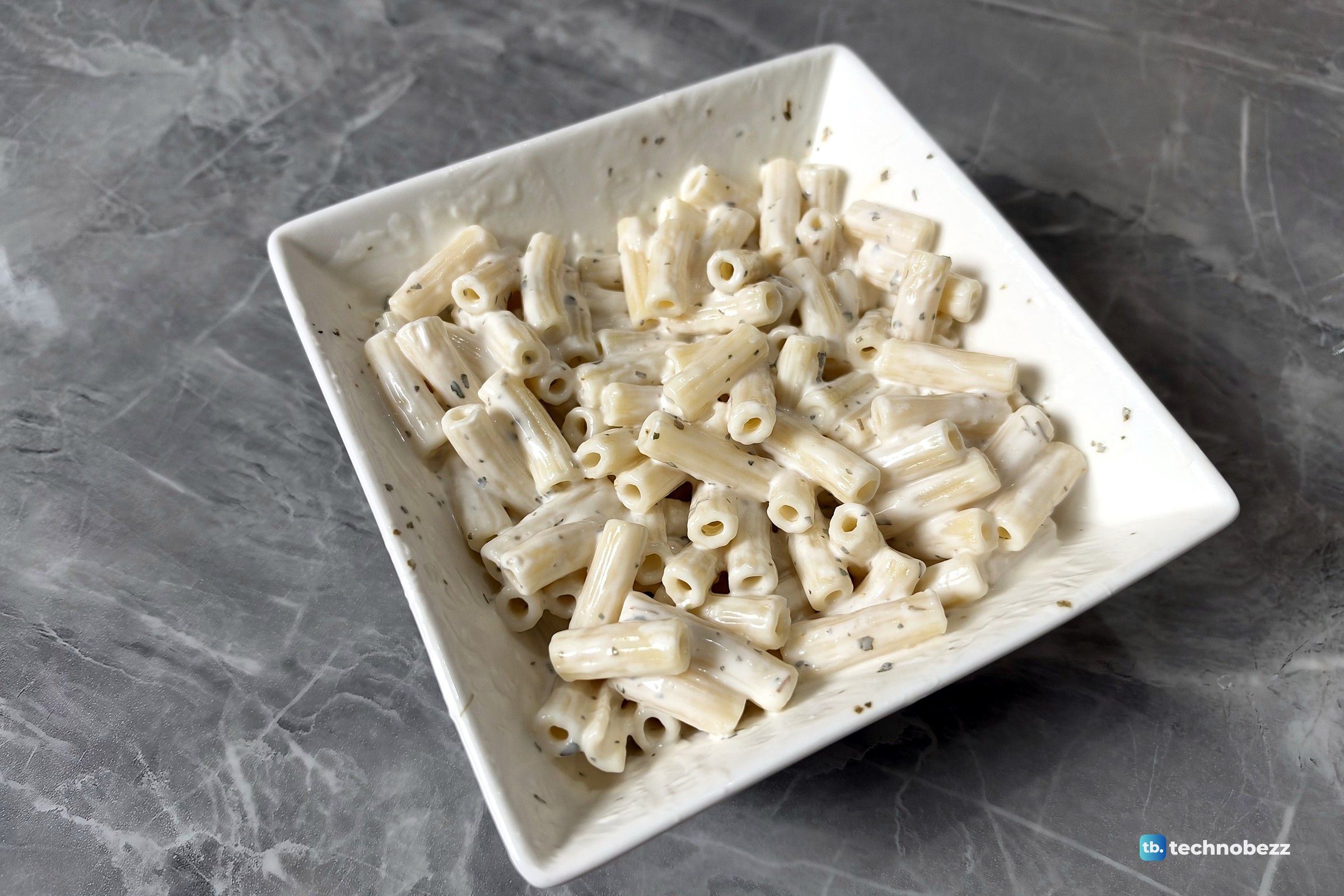
Leftover penne in a creamy herb sauce, straight from the fridge, went into a ceramic bowl on the glass turntable at Microwave High for a few minutes, with no stirring.
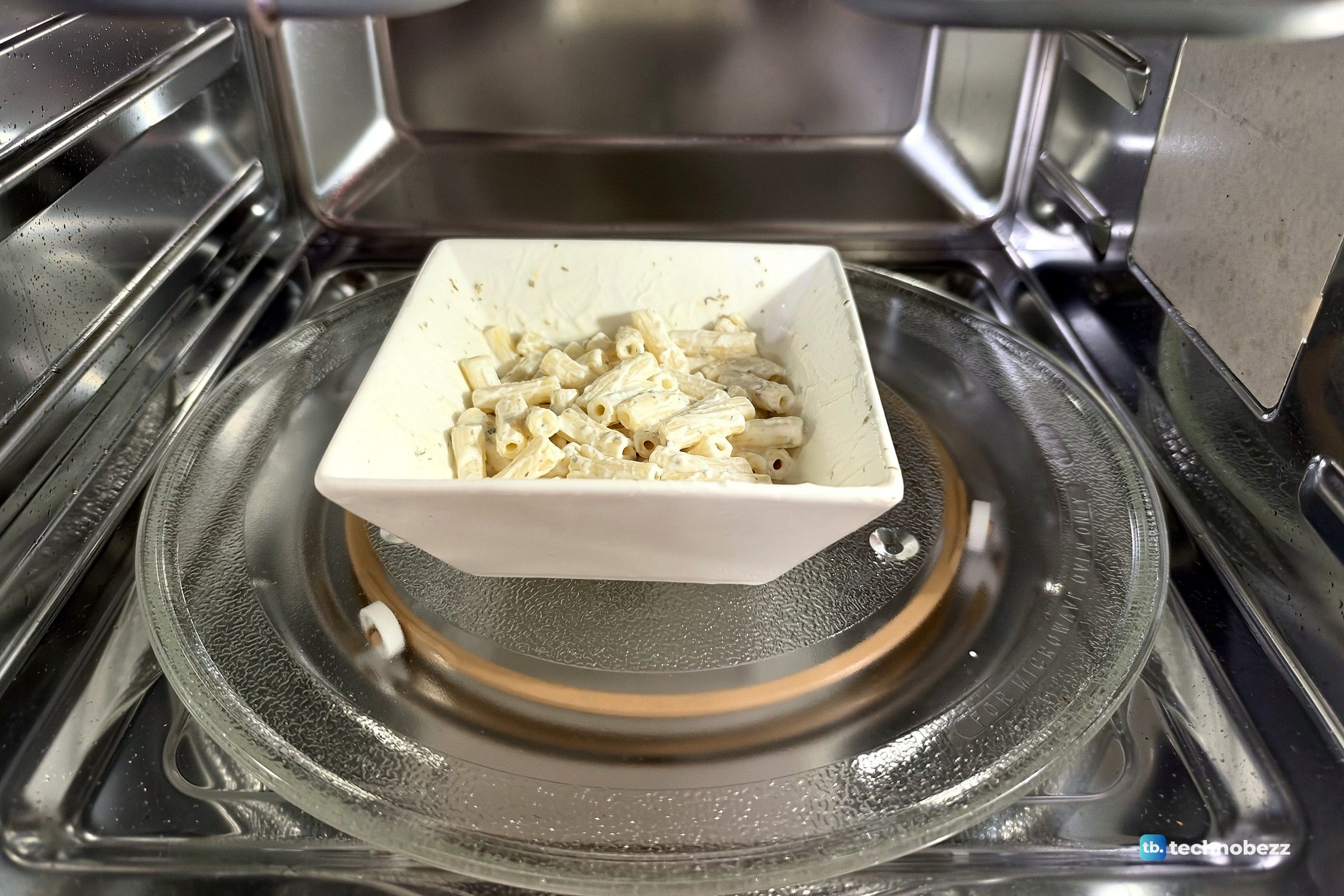
The probe read 172.5°F in the middle of the bowl, comfortably past the 165°F guideline for reheated leftovers.
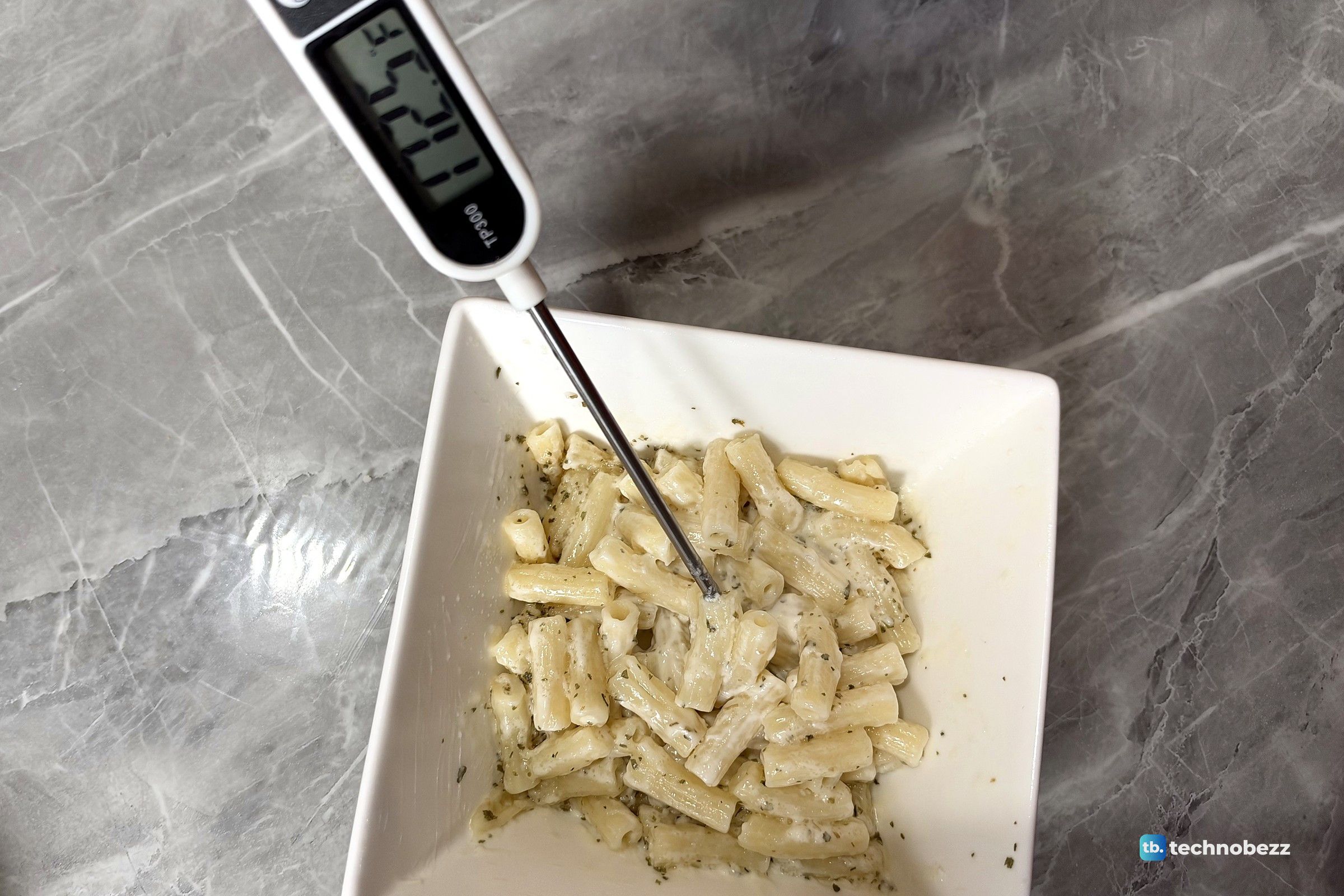
The sauce still looked creamy, and the pasta was hot through to the middle of the bowl.
Sensor Reheat and the Humidity Sensor
Sensor Reheat is the program the manual ties to the humidity sensor. It covers portions of 8 to 24 oz: you press Sensor Reheat, then Start, keep the door closed while the oven senses, and it then shows the cooking time it has worked out.
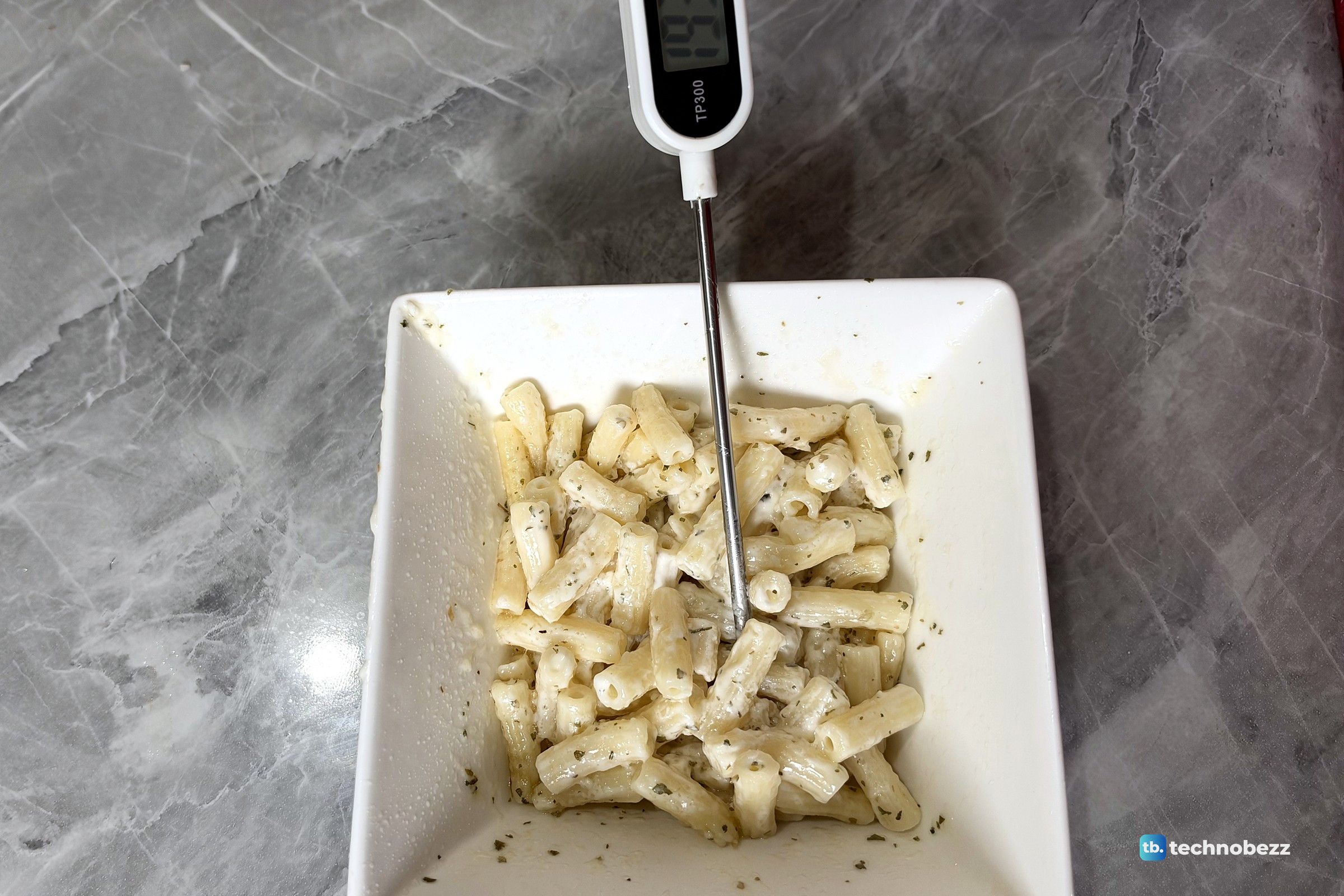
We ran it on a second bowl of the same cold penne, so the two reheat methods could be compared directly. After pressing Sensor Reheat, the screen reads "Add Food, then Press Start to Cook". Once started, the oven worked out the time on its own; we did not set a time or a power level. It settled on 3 minutes for the bowl.
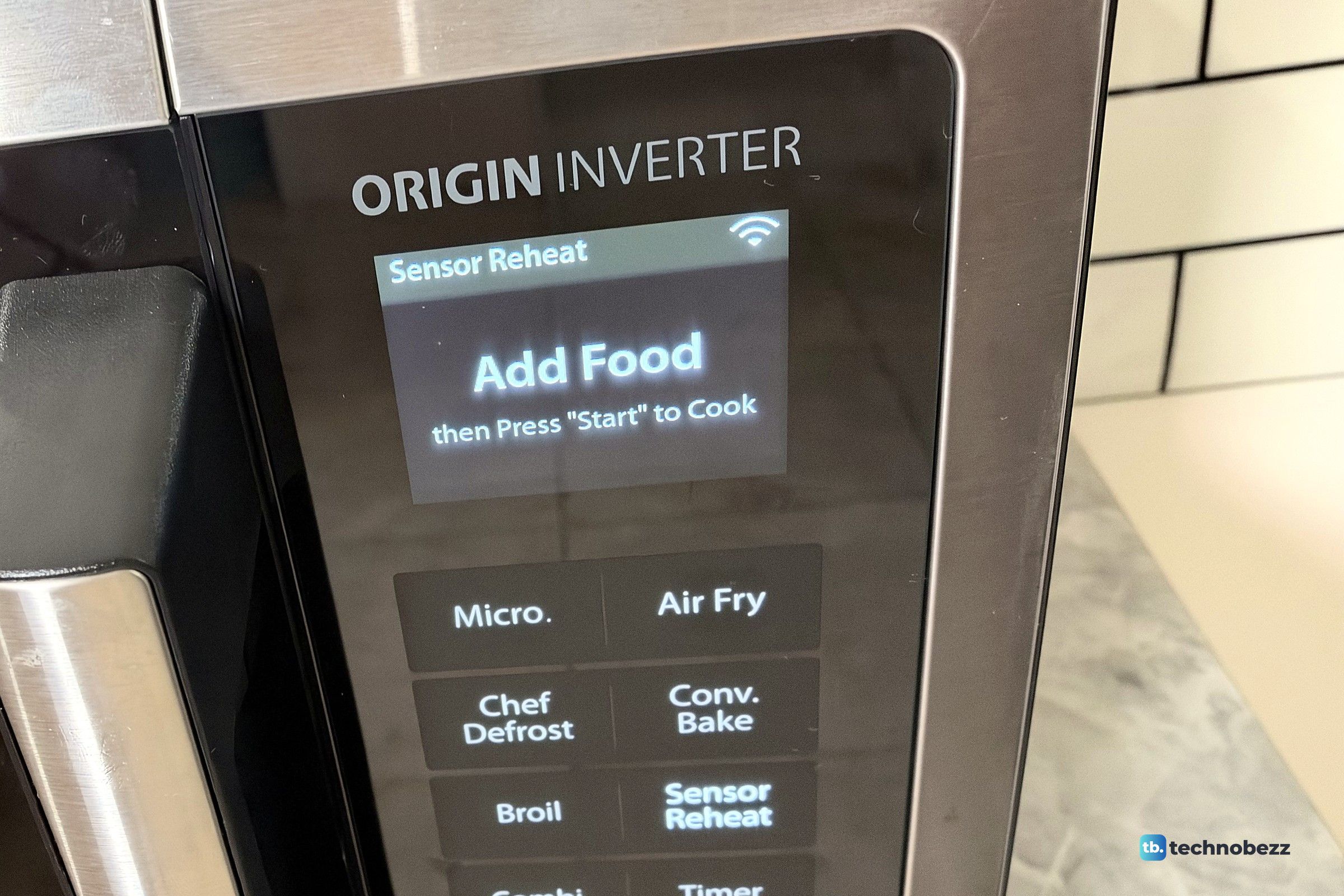
The pasta came out at 191 to 194°F across several probe readings, hotter than our manual High run and well past 165°F. If anything, Sensor Reheat errs on the side of hot, which is the right direction for leftovers, and it needed no guesswork at all.
Chef Defrost on a Frozen Chicken Thigh
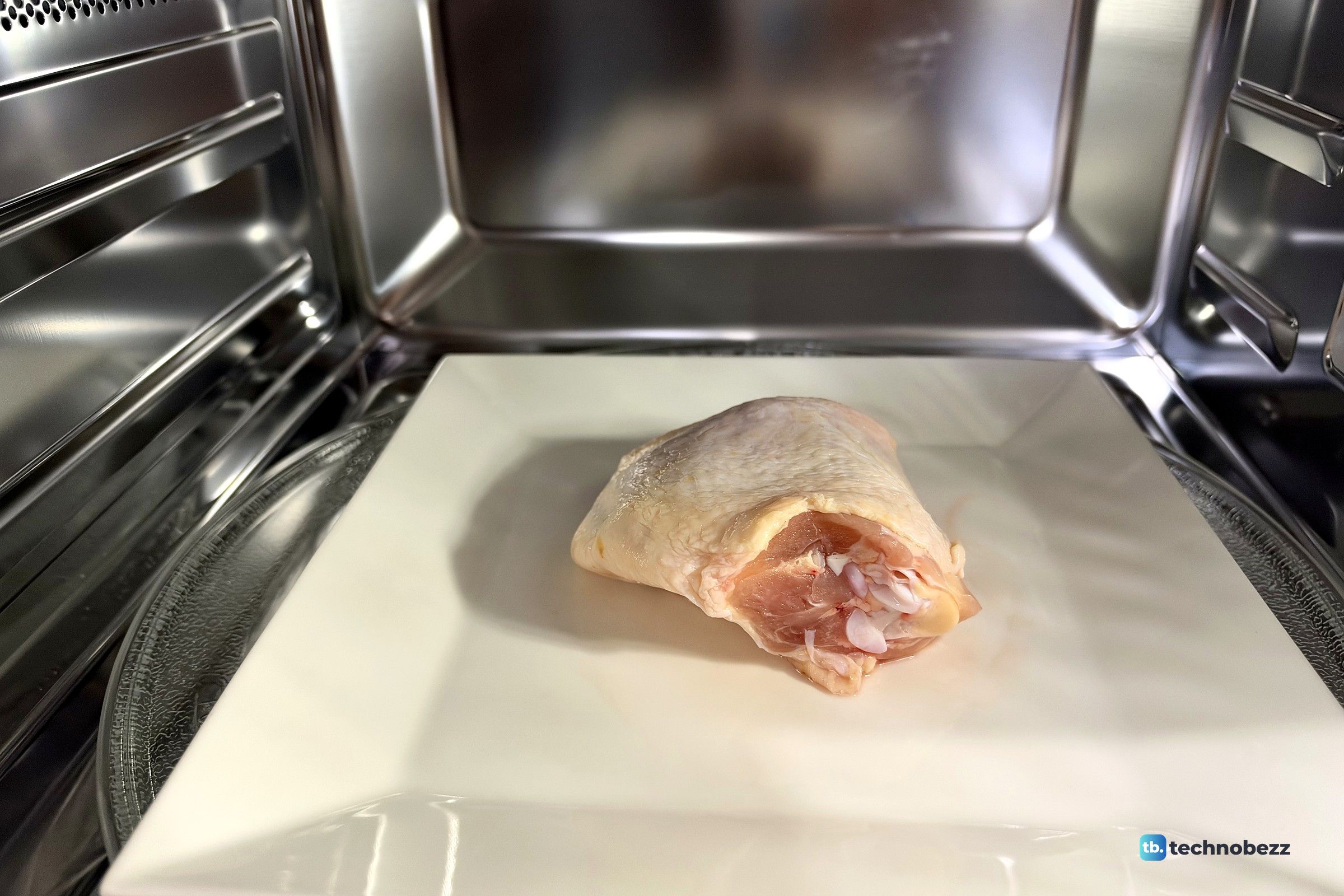
We weighed a frozen bone-in chicken thigh at 8.0 oz (229 g), set it on a plate on the turntable and chose Chef Defrost, then Weight, then 8 oz.
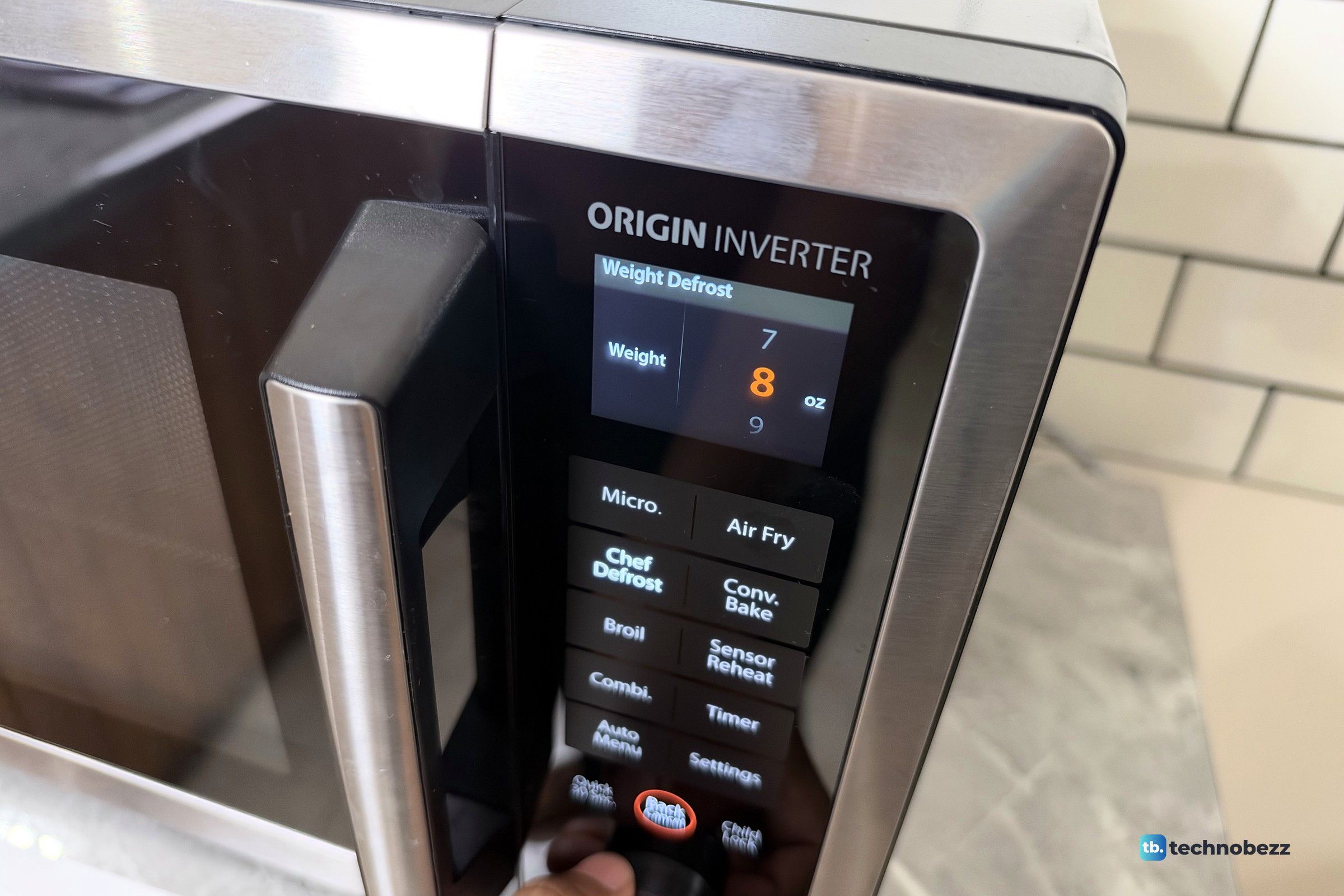
The program ran for just a few minutes. The thigh came out thawed through, with one thin edge that had started to cook slightly, which is normal for microwave defrosting and did not affect the meat. Following food-safety guidance, we cooked it straight away.
ChefFry Plus: Chicken Wings
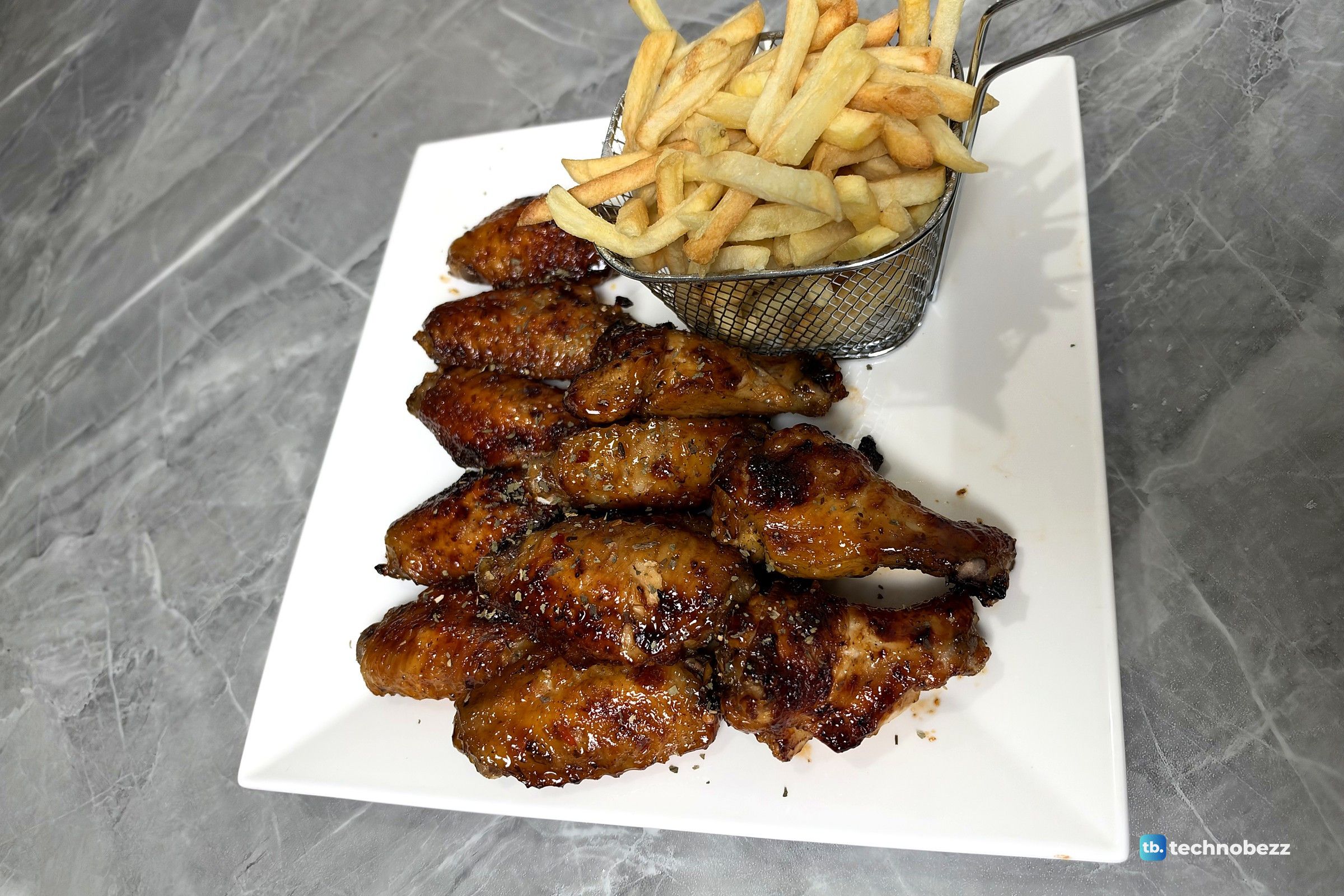
Our wings started as a 14.4 oz batch, and the Chicken Wings Auto Menu suggested the upper rack level with the basket on the enamel tray. Once the batch grew to about 22 pieces, we switched to a manual Air Fry setting at 400°F for 22 minutes on the same upper level and turned the wings halfway through.
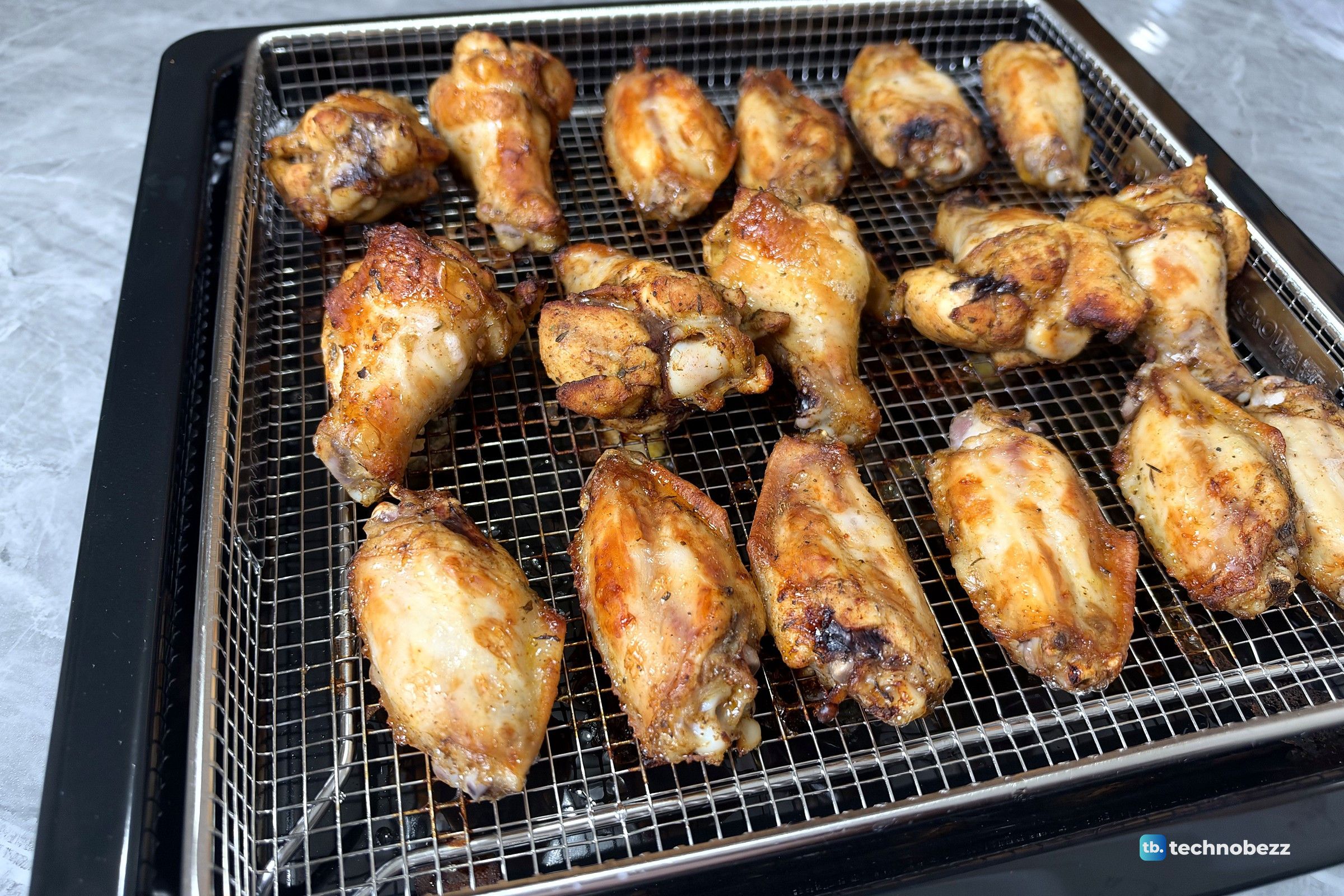
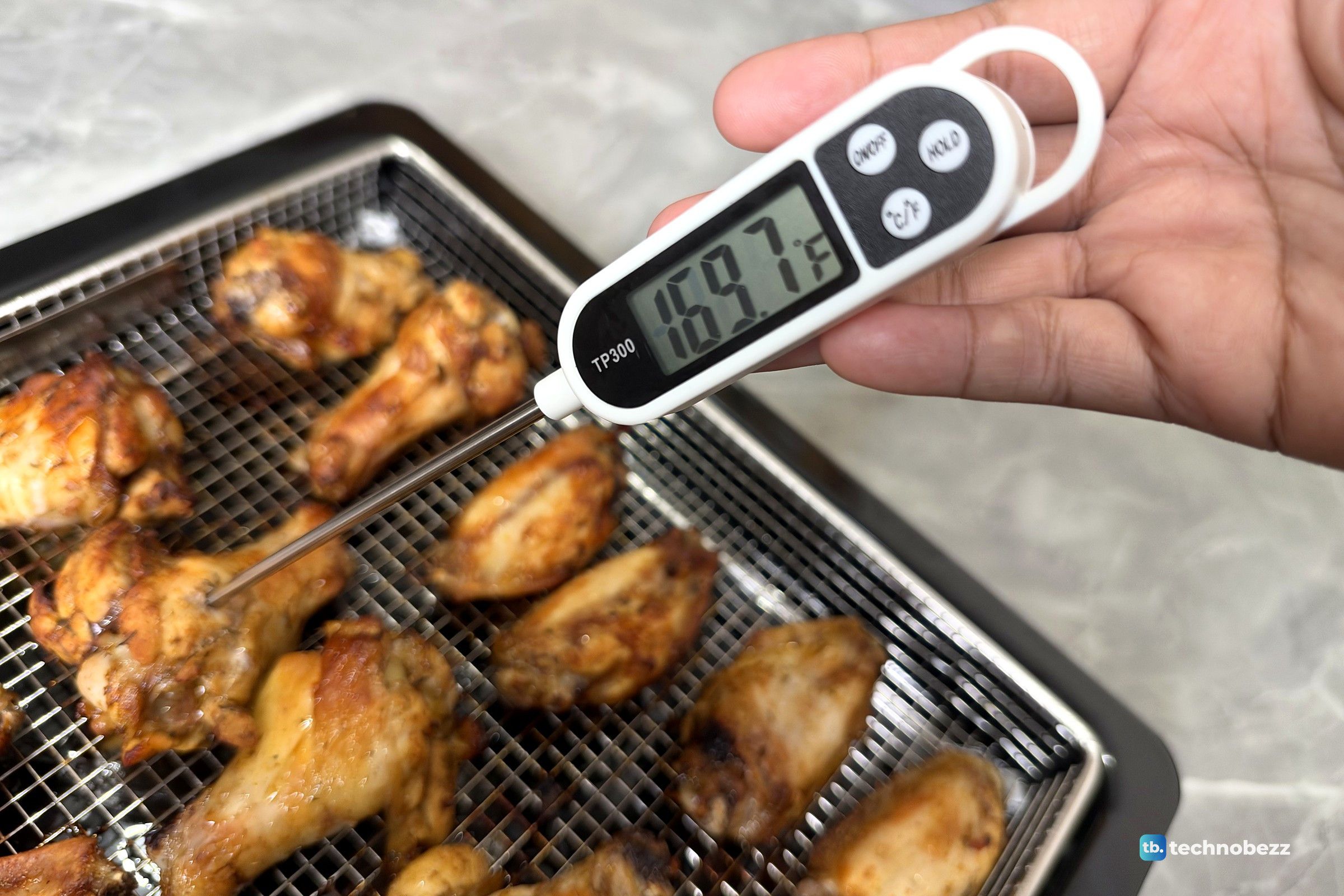
They came out with browned, crisp skin and juicy meat, and the probe read 169.7°F in the thickest piece, above the 165°F safe minimum.
After tossing them in a glaze, a short second round set the sauce without softening the skin.
ChefFry Plus: Frozen Fries
Frozen fries went straight from the bag onto the basket in an even layer, at Air Fry, 400°F for 15 minutes, started from the app. They came out golden and crisp.
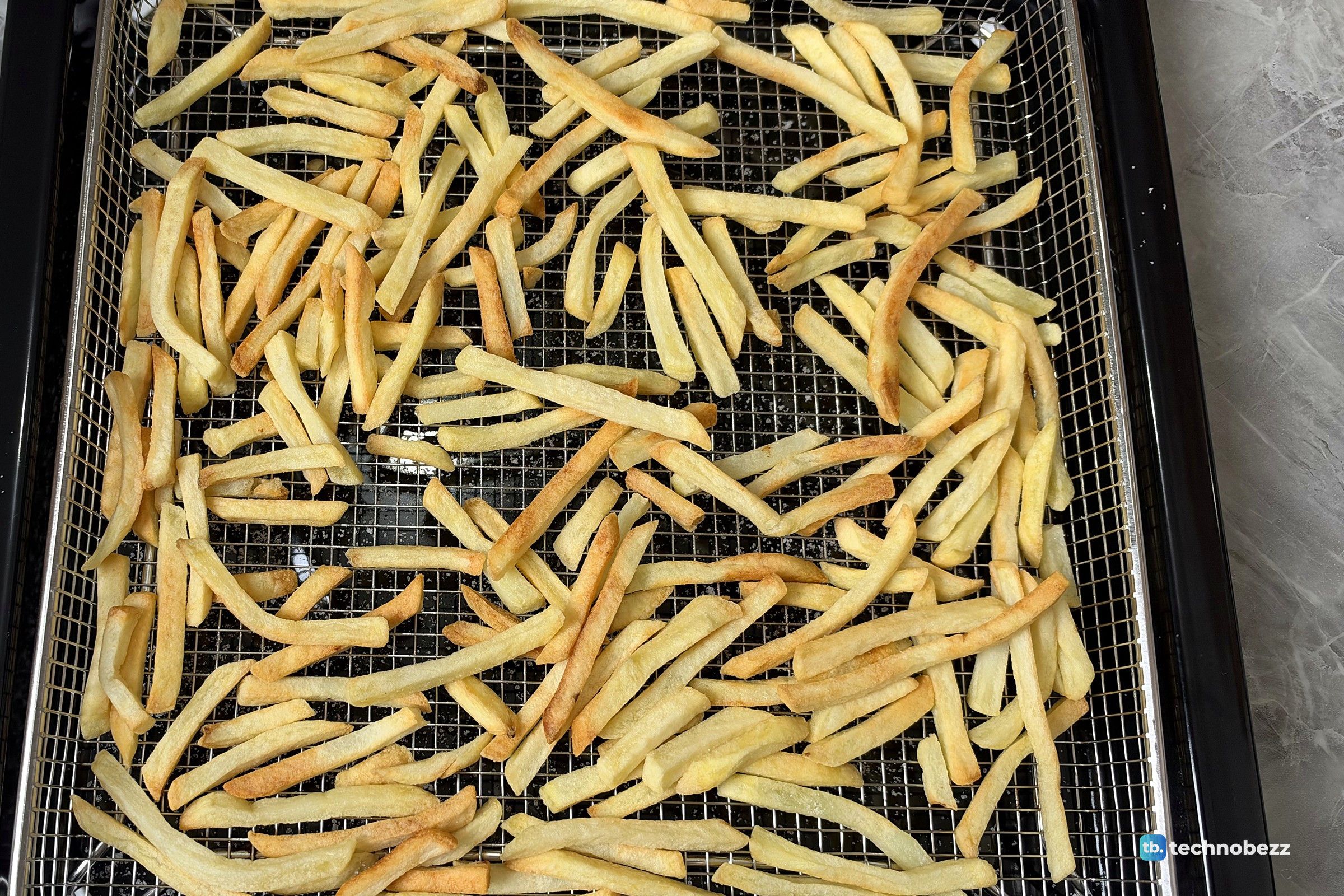
Fries in the middle of the basket were a shade lighter than those around the edges, so a quick shake halfway through is worth doing.
Frozen Pizza on Air Fry
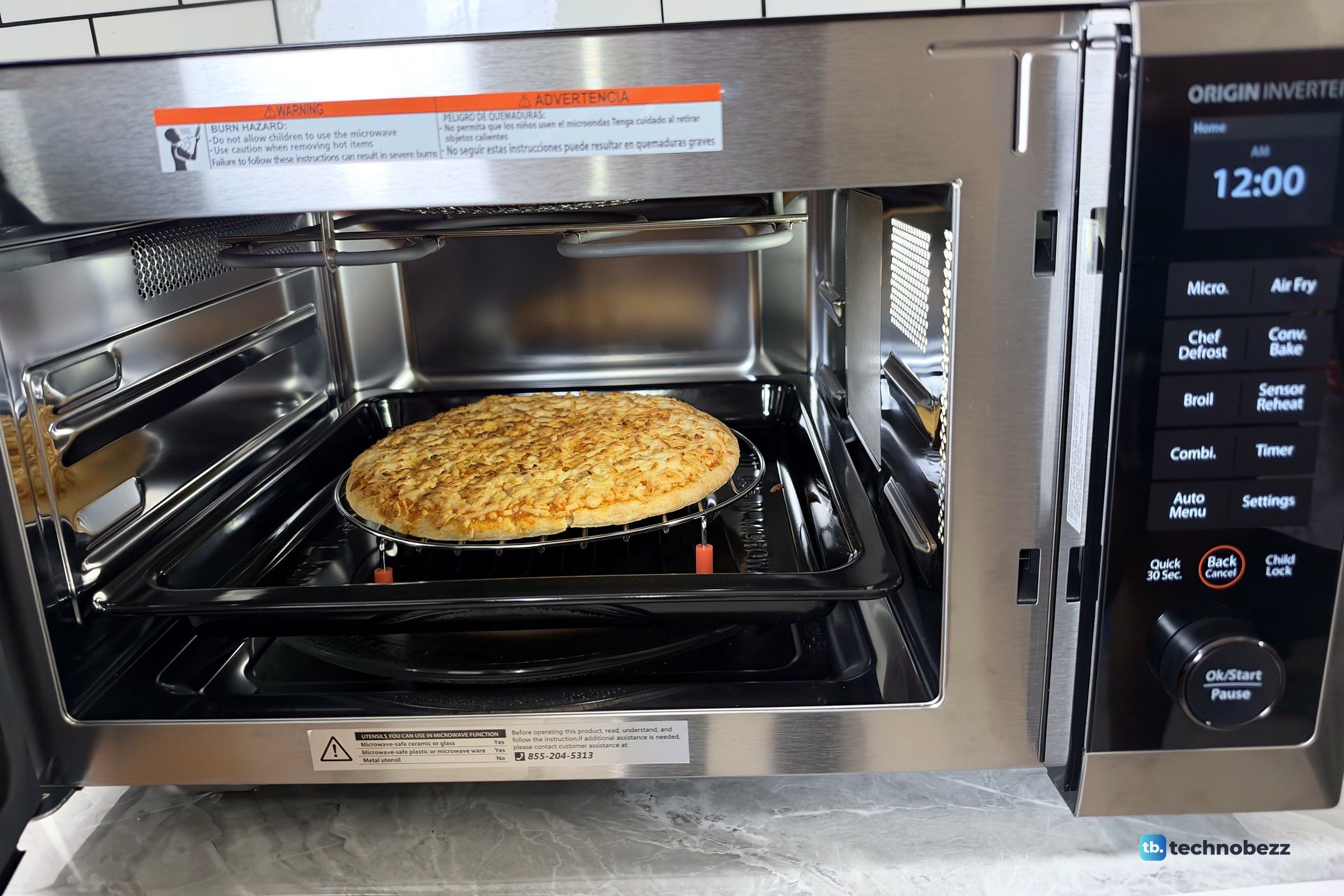
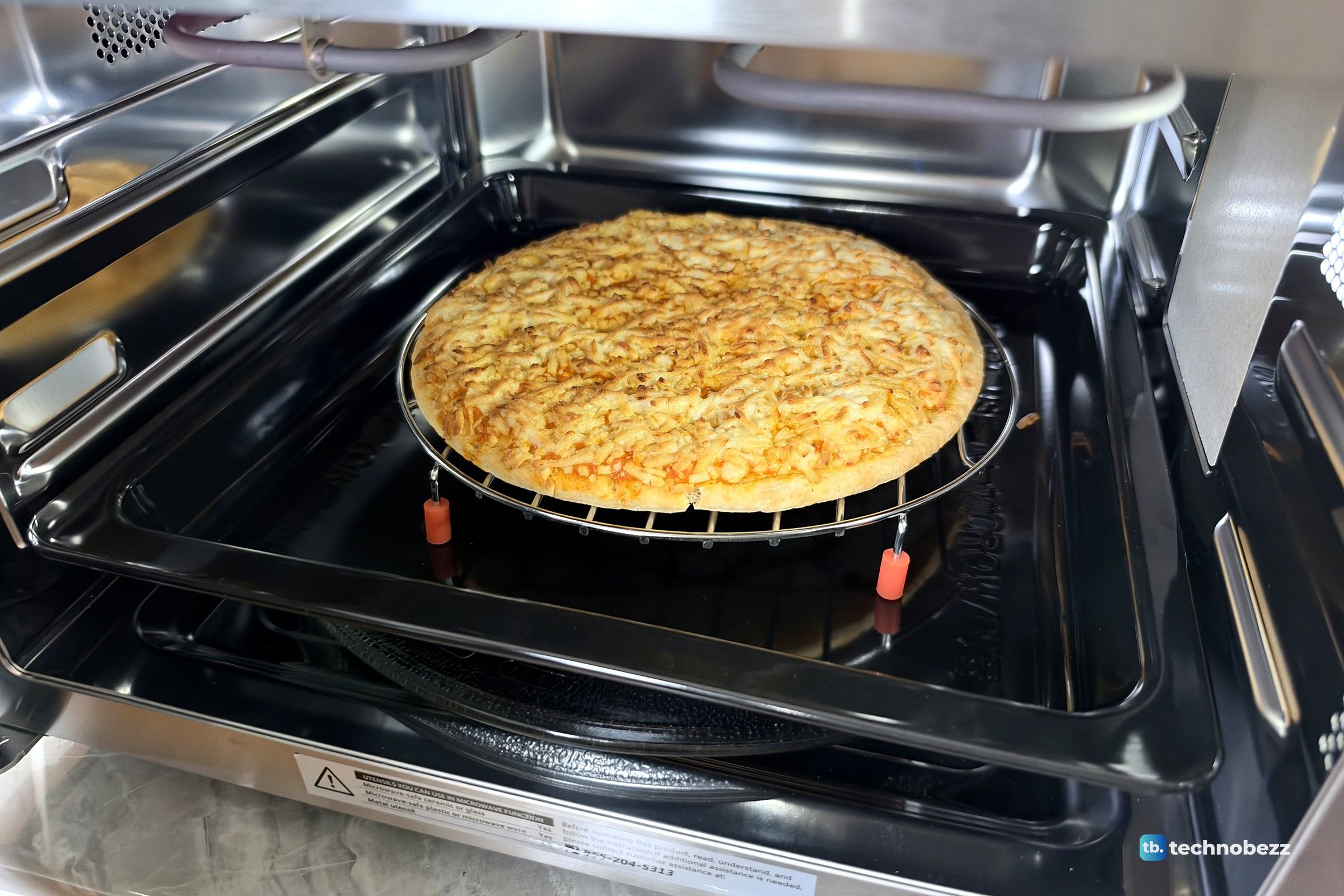
A frozen cheese pizza went on the round wire rack over the enamel tray at Air Fry, 400°F for 12 minutes. The top came out evenly golden with fully melted cheese.
The underside was the weak spot: the crust stayed pale and soft rather than crisp.
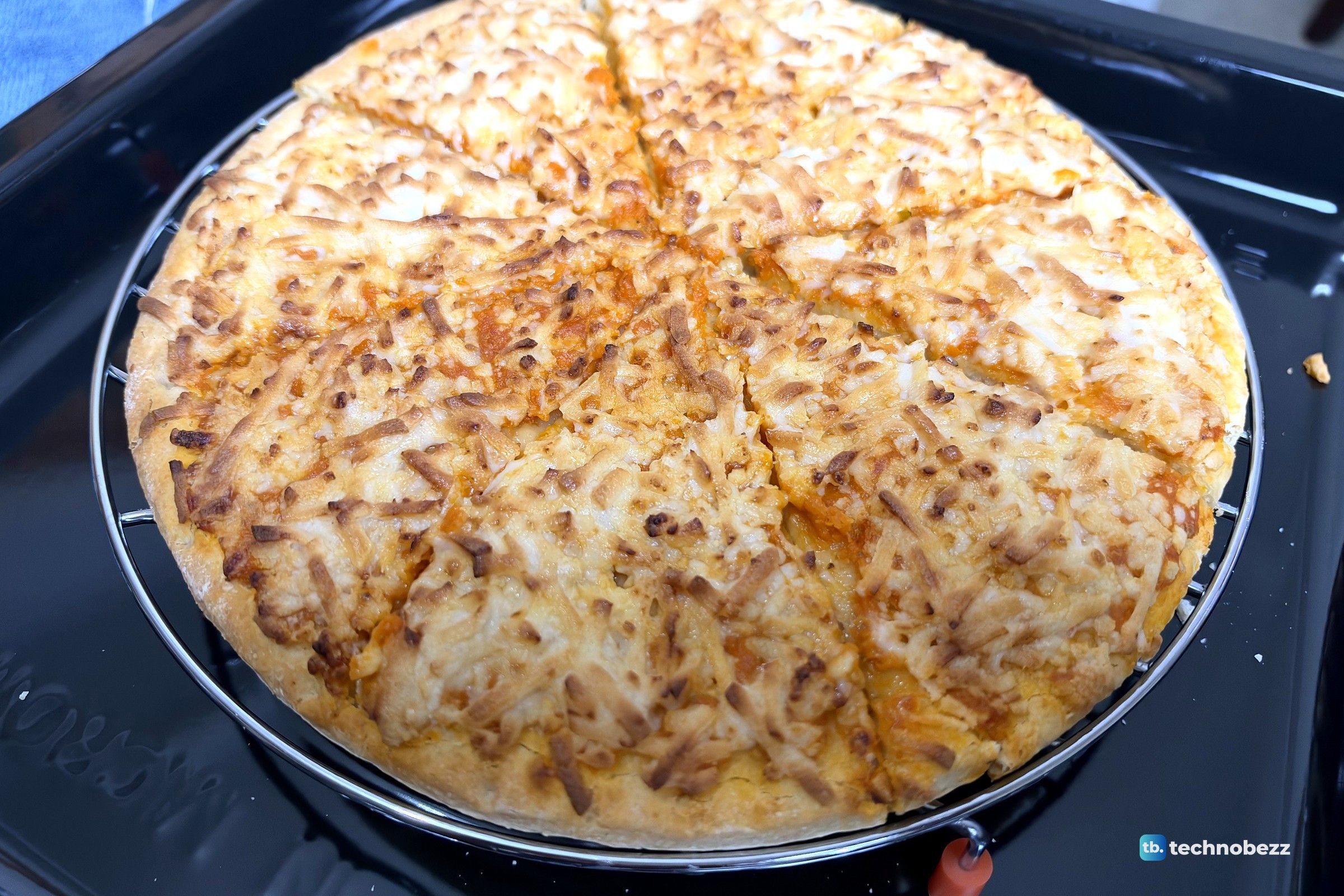
For a crisper base we would try the lower position or a few more minutes, or switch to Convection Bake with preheating.
Salmon From Partly Frozen
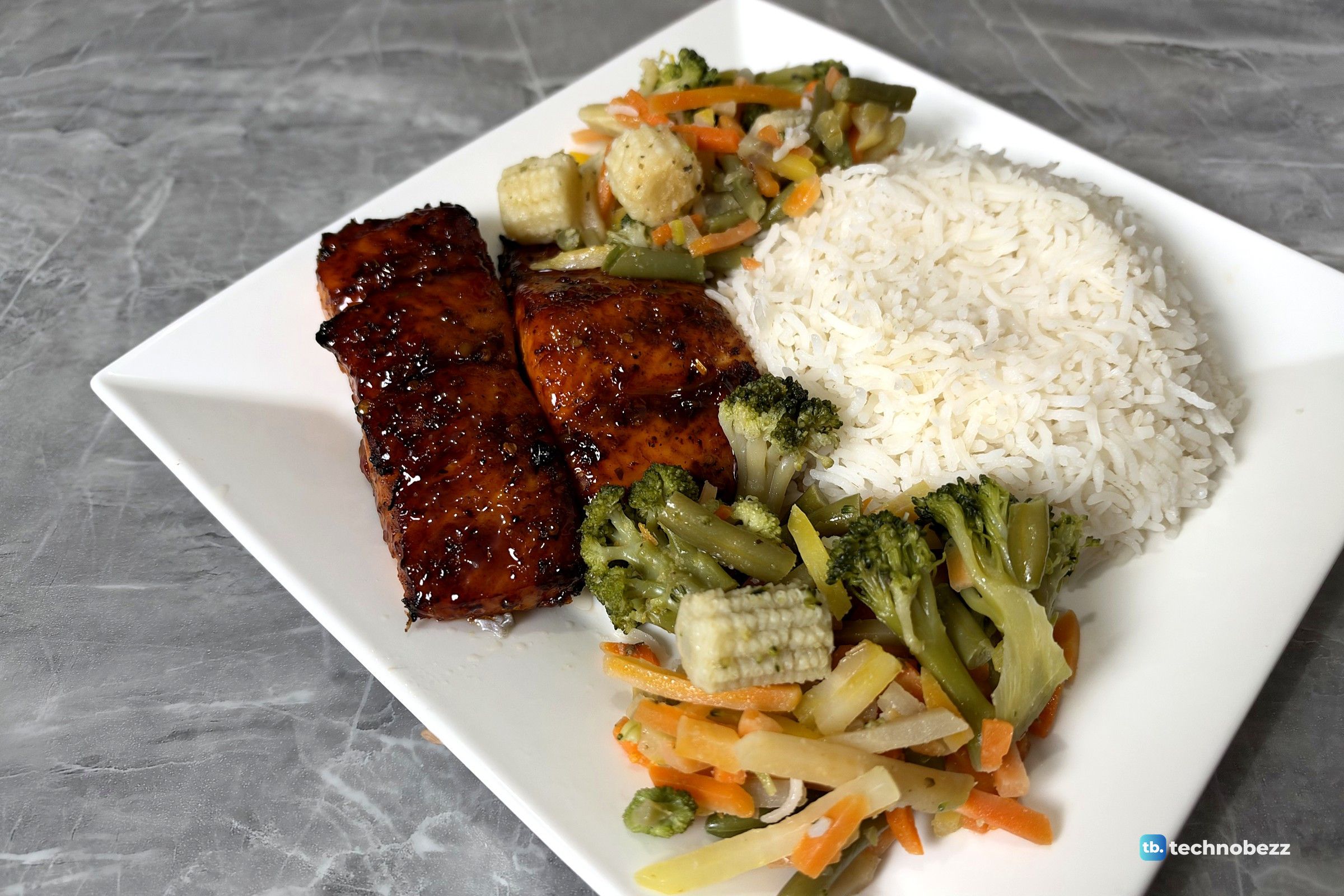
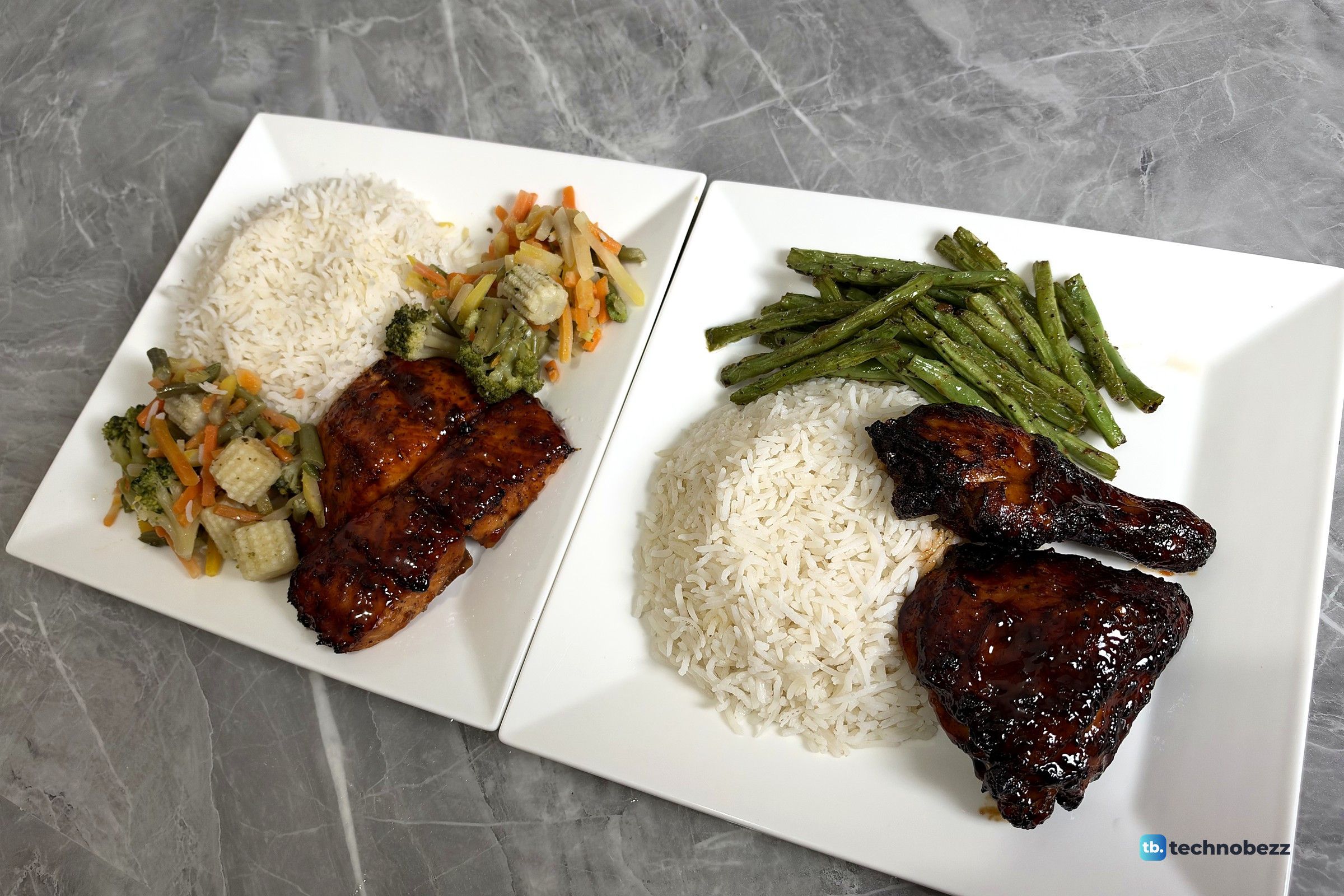
Two seasoned and glazed salmon fillets, still partly frozen, went in at Air Fry, 400°F for about 20 minutes. The glaze caramelized nicely at the edges. The probe read 165 to 168°F, well past the 145°F guideline, so the fillets were firm and fully cooked rather than silky. That is on our timing, not the oven: for fillets this size we would check at 12 to 14 minutes next time.
Combi vs Air Fry on the Same Chicken
This was the test that told us the most. We split a pack of bone-in chicken between two modes.
Air Fry: two thighs and three drumsticks went on the basket at around 375°F, lowered to 350°F partway through, for 22 to 25 minutes in total. They reached about 170°F, with crisp, well-browned skin.
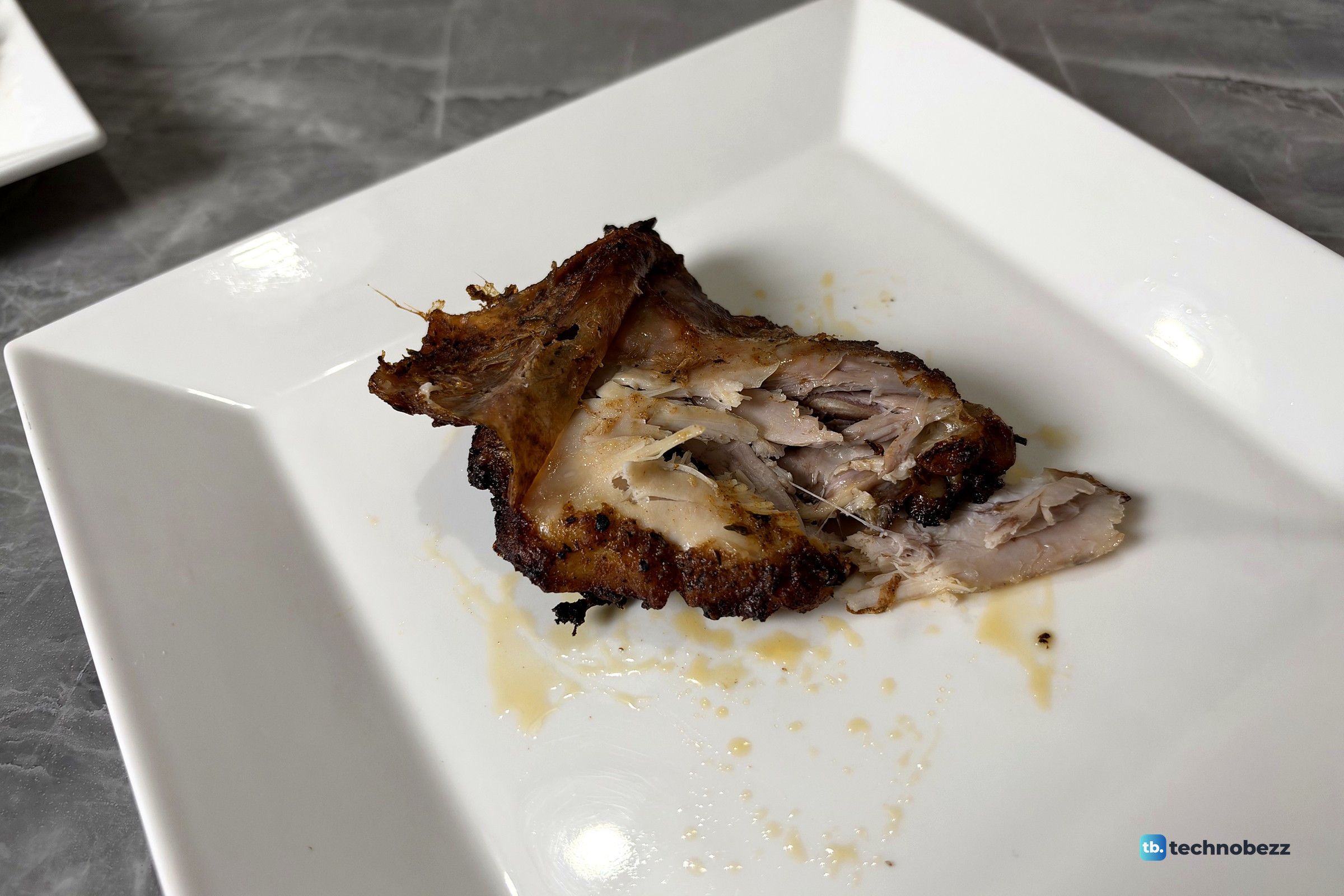
Combi: a single 4.9 oz thigh went on a ceramic plate on the turntable (Combi allows no metal pans), and on the control panel Combi asks only for a time. We set 15 minutes and let it run through. It came out at 185 to 194°F, cooked through to the bone, with skin that was already crisp and deeply browned, so it did not need the air fry finish we had planned.
The pieces were not identical in size, so this is not a stopwatch comparison. The pattern was clear, though. Combi brought a bone-in thigh to the plate in 15 minutes, while the air-fried batch took 22 to 25.
Air Fry gives you the most control over browning across a full basket. Combi is the faster route for one or two portions, because the microwave heats the meat from inside while the convection heat browns the outside.
Convection Baking: Chocolate Cookies
Nine balls of chocolate cookie dough went onto foil on the air fry basket, sitting on the enamel tray.
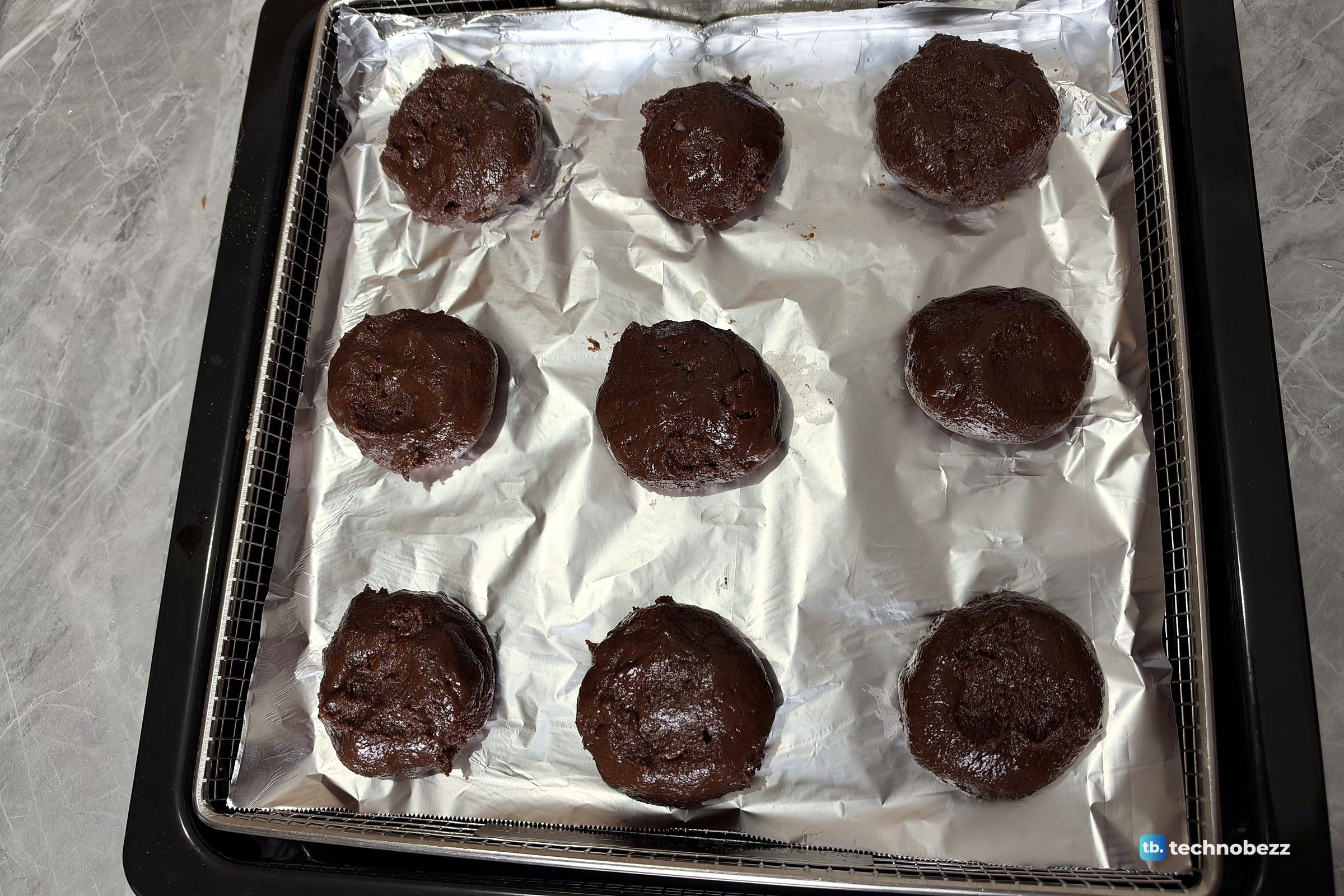
We set Convection Bake to 350°F with preheat, and the screen shows "Preheating" with an orange progress bar until the cavity is up to temperature.
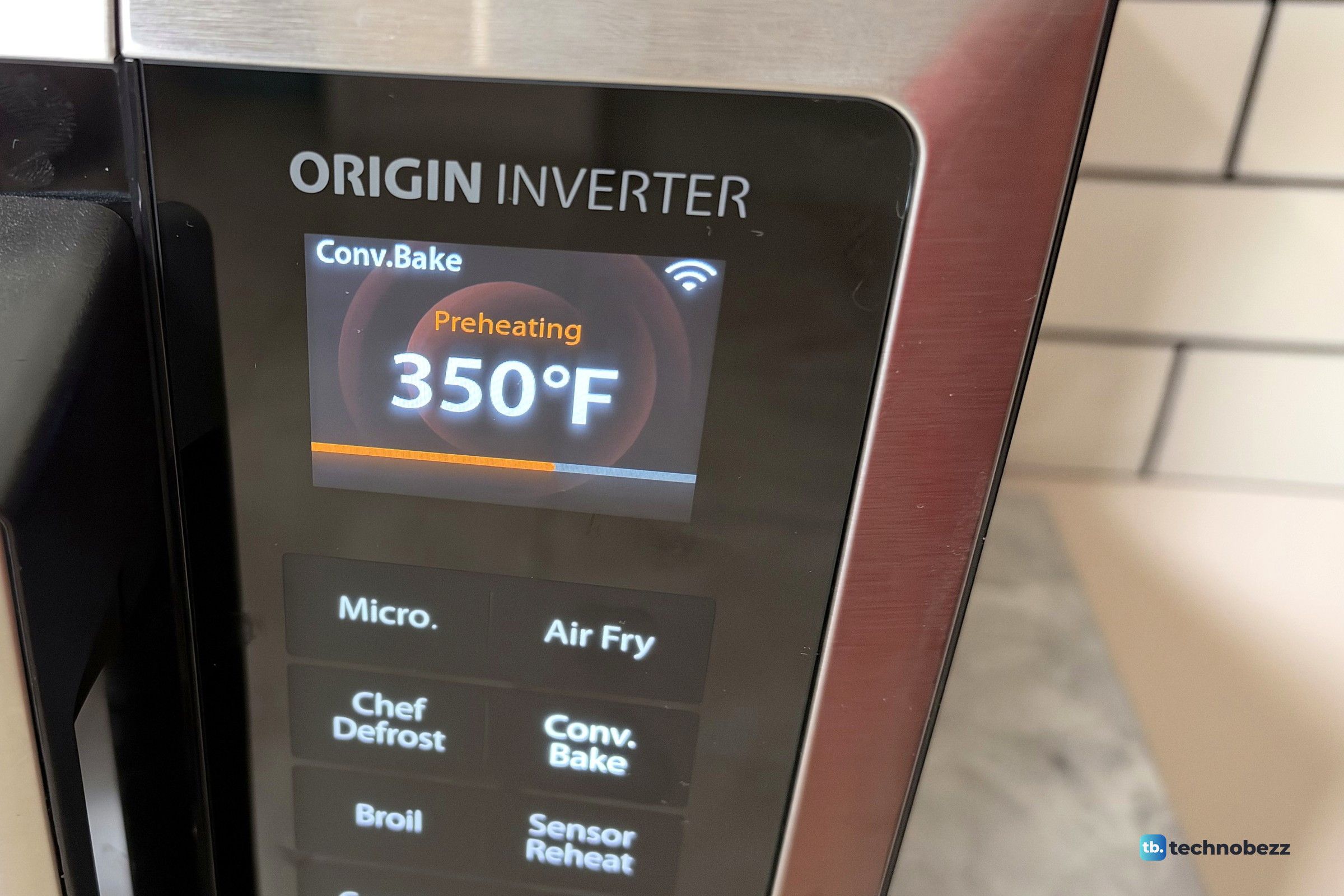
The cookies were done in about 8 minutes at 350°F, with preheat on.
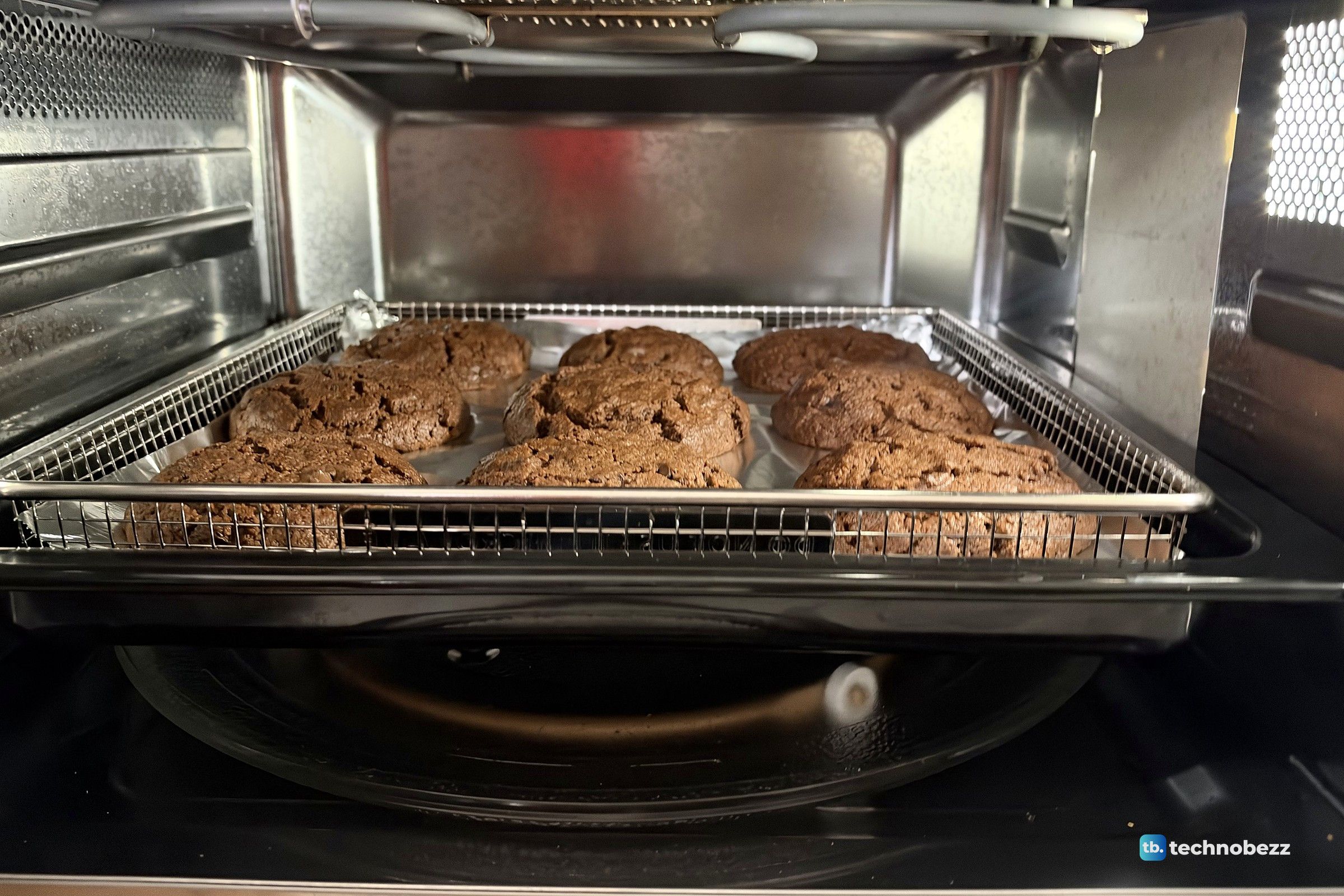
The cookies spread evenly and came out with crackled tops and set edges, and the ones at the corners of the tray looked as done as the ones in the center, which is what you want from the convection fan.
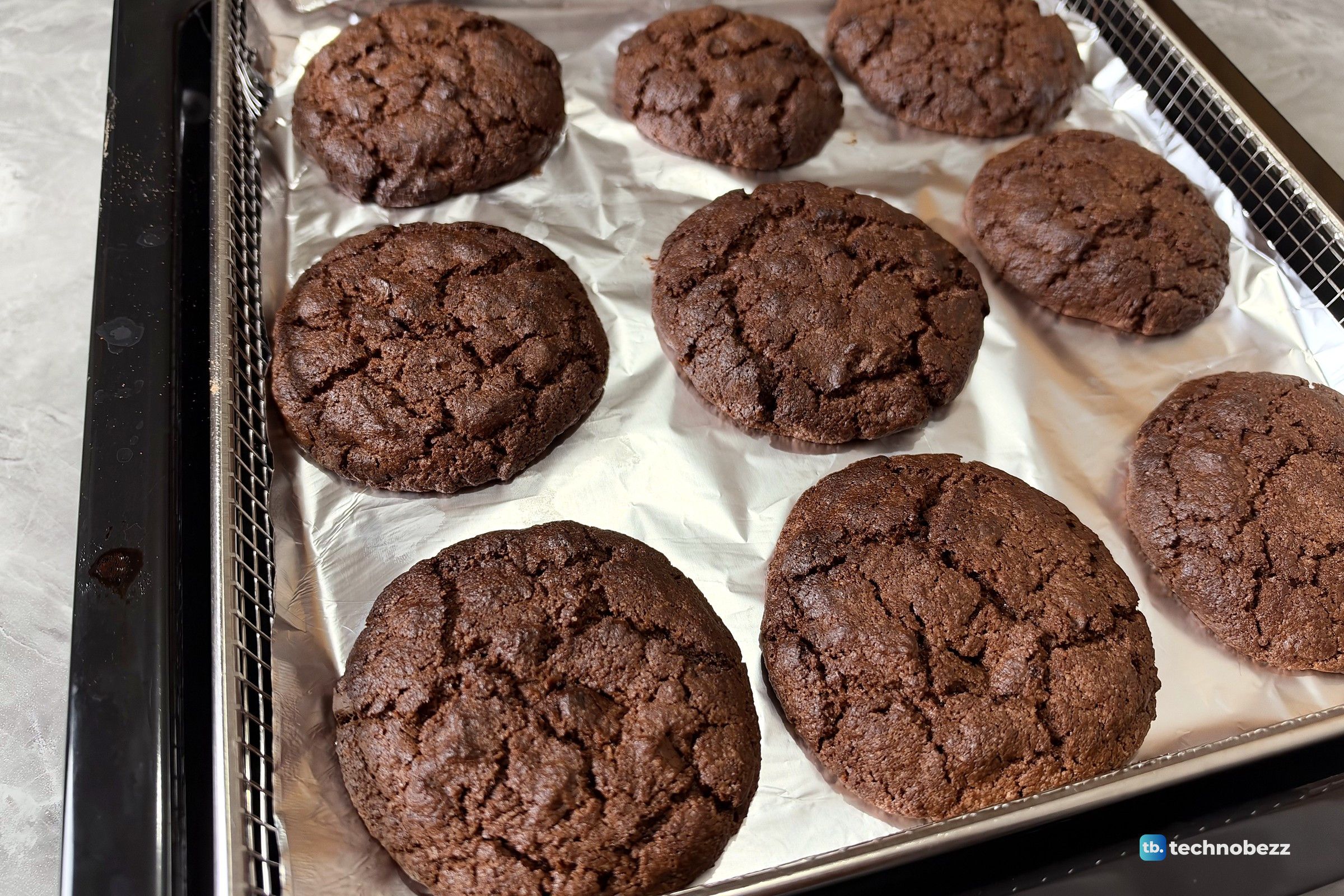
Nine cookies is a full tray for this cavity, so a big holiday batch means a few rounds.
Broil: Cheese Toast
A thick slice of bread topped with cheddar went on the air fry basket and enamel tray at the upper level, close to the top element, on Broil for 3 minutes.
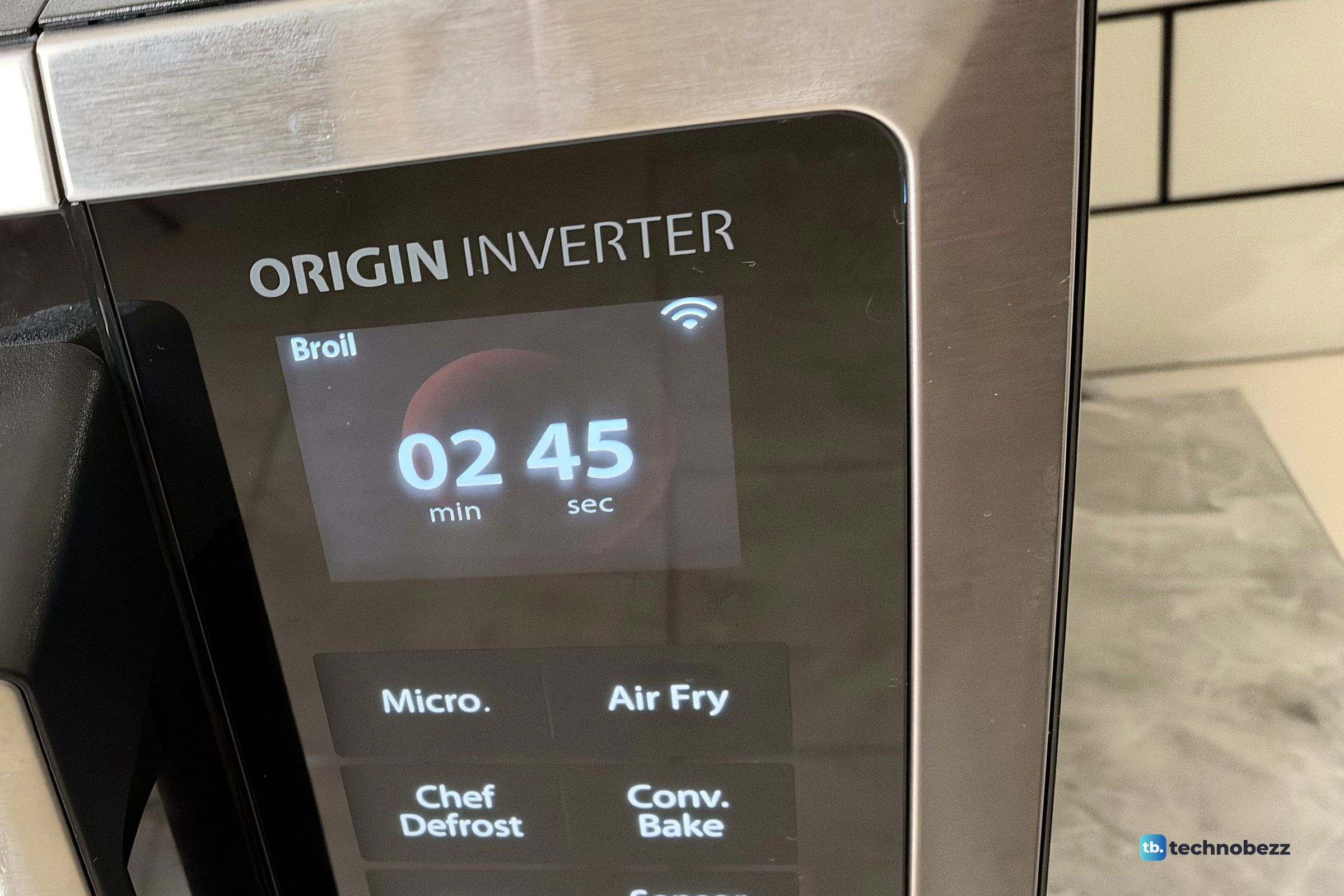
The cheese melted and blistered and the bread toasted underneath, and it tasted good.
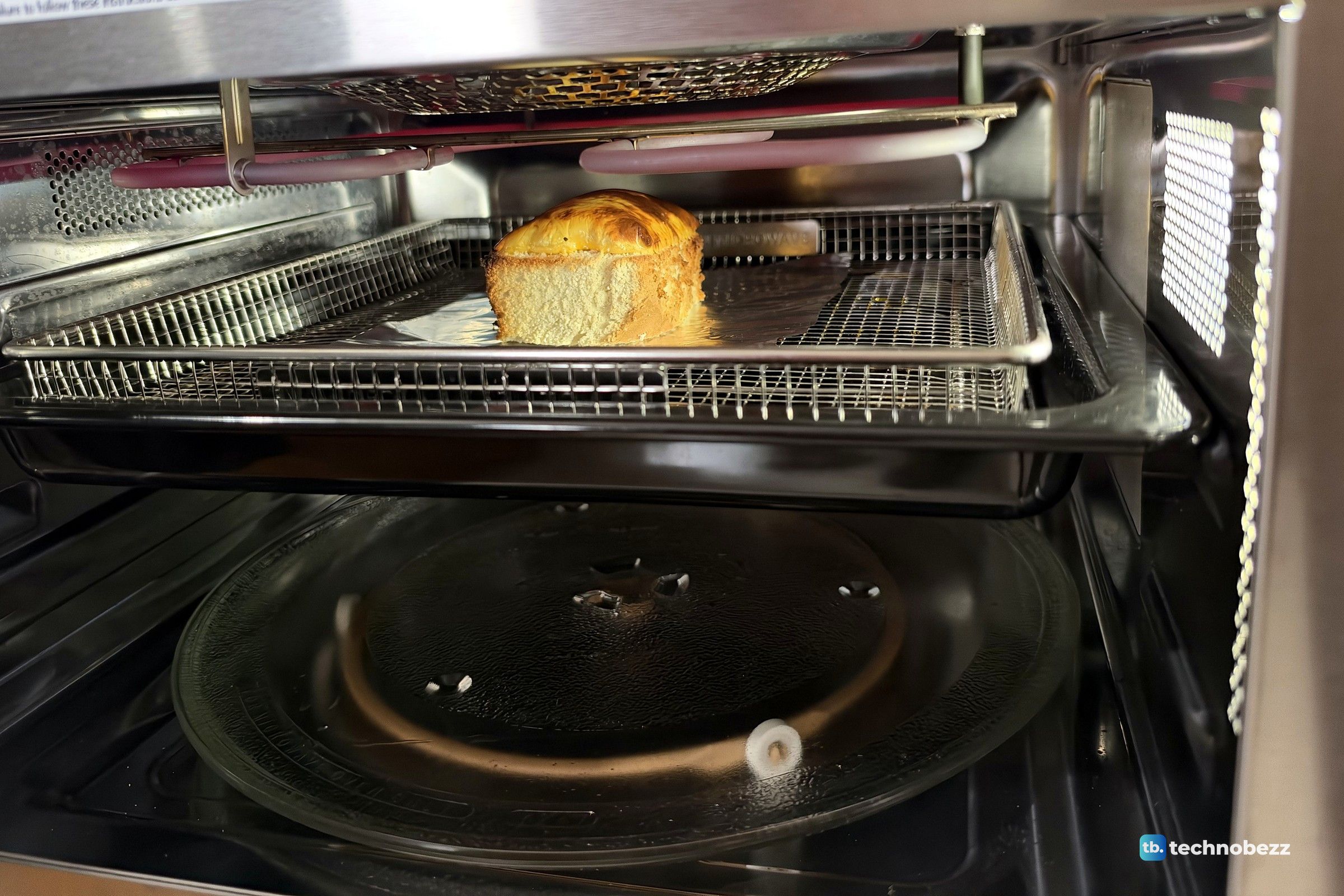
We left it in a little long, which is why the corners took on extra color; Broil works quickly, so for a lighter golden finish, check it a minute sooner.
A Second Oven When the Holidays Fill the Main One
Everything we cooked over the weekend maps onto a holiday kitchen. Wings, fries and a pizza covered the appetizer table while a full-size oven would be busy with the main event, and the air fry basket held about 22 wings in a single batch. Combi cooked bone-in chicken in 15 minutes, which is the kind of speed that rescues a side dish or a late guest's plate. Convection Bake turned out a full tray of cookies at 350°F, and Sensor Reheat took cold pasta to piping hot without a single setting, which is exactly what the days after a holiday meal call for.
As a gift, the OptiChef Pro Max makes the most sense for someone in an apartment or a smaller kitchen, someone replacing an old microwave, or anyone who keeps an air fryer and a microwave side by side and would like that space back. Just check the counter first: it needs a permanent spot of roughly 22 by 18 inches.
Living With It Day to Day
The habit to build is accessory swapping. Microwave modes want every piece of metal out, while the heating modes use the rack, tray and basket, so we kept the accessories stacked on the counter beside the oven between cycles. After air frying or baking, the cavity and the top heating element stay hot for a while, so use oven mitts and let it cool before microwaving anything in a plastic container, as the manual advises.
The rest is easy to live with. Quick 30 Sec. handles small jobs, Child Lock is one press, and there is an Eco setting that switches the screen off when the oven is idle. The app's three-minute warning meant we were back in the kitchen before the timer finished.
Cleaning Up After Wings and Chicken
Two days of wings, salmon and chicken left the expected grease spots on the enamel tray, which is what we wanted for a fair cleaning test.
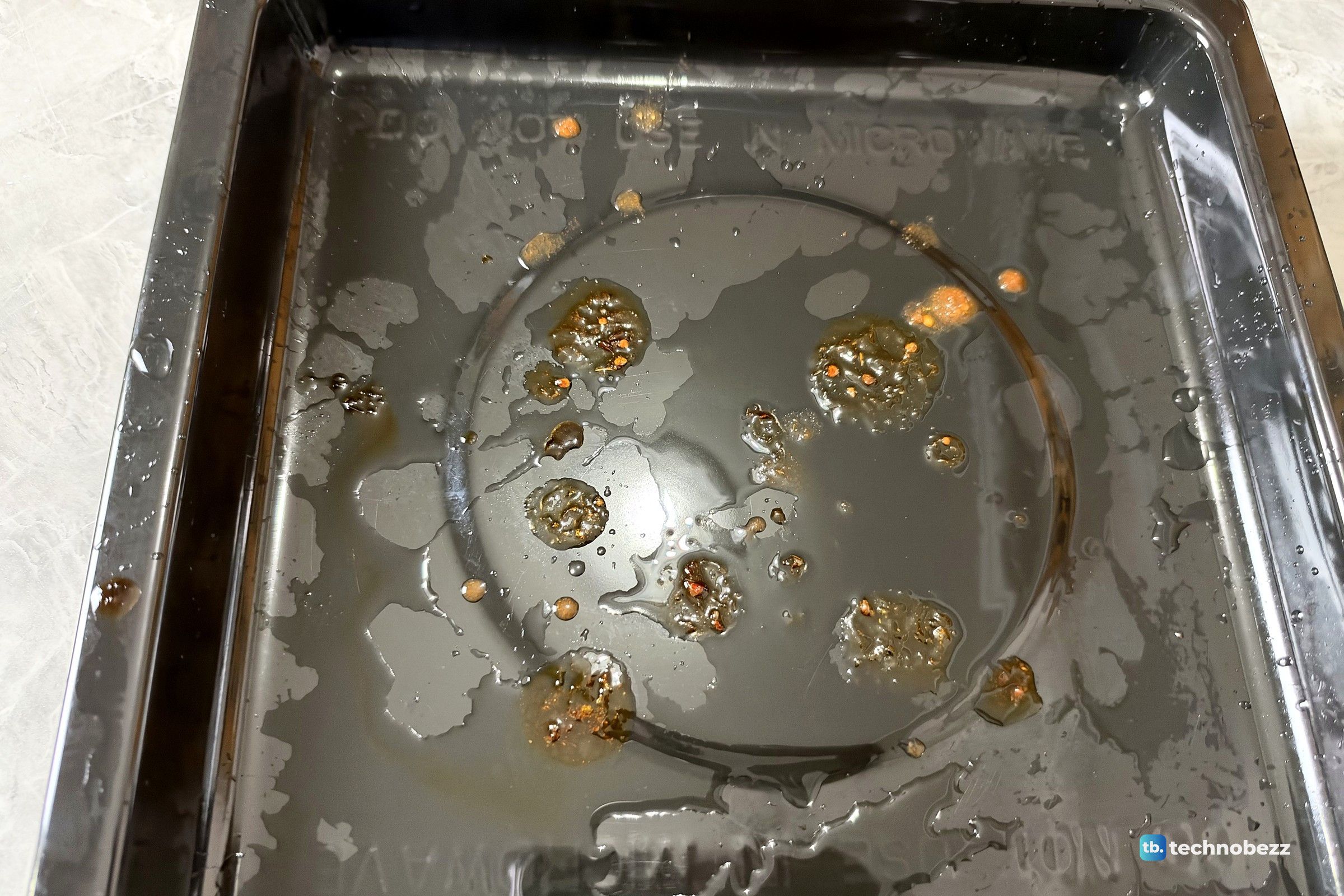
Cleanup was easy overall. The air fry basket and the enamel tray that held the wings and chicken took the most work, with baked-on glaze and grease that needed a bit more scrubbing, which is what we expected after glazed wings. The cavity stayed in good shape after two days of air frying, baking, broiling and microwaving: mostly clean, with only a few light marks left from all that cooking.
Frequently Asked Questions
Can the OptiChef Pro Max replace a standalone air fryer?
For the foods we tested, yes. Wings came out crisp with browned skin, fries were golden and crunchy, and the basket held about 22 wings in one batch, a big batch for a single cycle.
Does a 13-inch pizza fit?
Toshiba says the cavity accommodates a 13-inch pizza. We tested a smaller frozen pizza on the wire rack, and it fit with room to spare.
Which accessories can go in during microwave cooking?
None of the metal ones. Microwave, Chef Defrost and Sensor Reheat use the glass turntable only. The wire rack, enamel tray and air fry basket are for Air Fry, Convection Bake and Broil, and Combi allows the wire rack only, with glass or ceramic cookware.
What does Combi mode actually do?
It runs the microwave and convection heat together, so food cooks from the inside while the outside browns. In our test it cooked a bone-in chicken thigh through in 15 minutes, with crisp skin.
Does it need Wi-Fi?
No. Everything works from the control panel. The TSmartLife app is optional and adds remote start, alerts, recipes, and the Keep Warm and Dehydrate modes. It connects over 2.4 GHz Wi-Fi only.
How is it different from the OptiChef Pro?
The OptiChef Pro is the smaller sibling, with a 1.0 cu. ft. cavity against the Pro Max's 1.3 cu. ft., so it suits tighter counters.
Is it a good holiday gift?
For someone short on counter space, or anyone running a microwave and an air fryer side by side, yes. Check that their counter has room for a 21.8 by 17.8 inch footprint.
Does the OptiChef Pro Max Earn Its Counter Space?
After a weekend of cooking, yes. The Toshiba OptiChef Pro Max does five jobs and does them well enough that we stopped thinking of it as a microwave. Wings and fries came out crisp, Combi turned a bone-in thigh into dinner in 15 minutes, the defrost was quick and even, cookies baked evenly on Convection Bake, Sensor Reheat got leftovers piping hot on its own, and the color screen with its guided Auto Menu programs made each mode easy to pick up.
The limits are small and practical. Pizza crusts need a lower rack or a different mode to crisp underneath, Auto Menu weights come in fixed steps, and the oven needs a generous spot on the counter. For a household that wants one appliance in place of two, and a second oven when the holidays arrive, it is an easy one to recommend.
Rating: 9.2/10, Best All-in-One Countertop Oven
Add Technobezz on Google:Preferred SourceGoogle Discover
More reviews
Review
Otto One Gives Your AI Agent a Computer of Its Own, and the Software Is the Real Product
Review
VTOMAN Jump 600X With 110W Solar: Small, Smart Power for Road Trips and Blackouts
Review
GameSir's Fortnite G8 Plus Is the One Controller I Use on My iPhone, iPad and Switch
Review
INIU Outdoor Rugged 10000 Review, a Compact 45W Power Bank Built for the Trail
ReviewRokid AI Glasses Style Review, Light Camera Glasses That Let You Choose Your AIReviewTurtle Beach Stealth Pro II Review, a Gaming Headset With Swappable Batteries and Big BassReviewThe GameSir G7 Pro 8K Is the Controller I Forget I'm HoldingReviewRicoh SP-2240N Review, the Network Scanner My Whole Family Uses Without a PCReviewTribit PocketGo Review, a Small Speaker With Big SoundReviewThe Baseus Bowie MC2 Is the Open-Ear Pair I Keep Forgetting to Take OffReviewThe Dreame AirPursue PM20 Purifies, Heats, Cools and Follows You Around the RoomReviewI Spent Weeks Looking for a Flaw in the HHKB Professional HYBRID Type-S