A 360 camera records everything around it at once, so you choose the angle later in an app instead of aiming while you shoot. That makes these cameras popular for action sports, travel, vlogging and property tours, but the models below differ a lot on resolution, sensor size, weight and water protection.
Technobezz is supported by its audience. We may get a commission from retail offers.
6 Best 360 Cameras in 2026
The GoPro MAX2 leads our picks of the best 360 cameras in 2026, with options for large-sensor capture, light weight, high-res photos, budgets and real estate.
T
Technobezz
Editorial Team
Updated November 10, 2026Nov 10, 2026
•11 min read

Get Deals Like These in Your Inbox
The best prices, straight to your inbox.
Add Technobezz on Google:Preferred SourceGoogle Discover
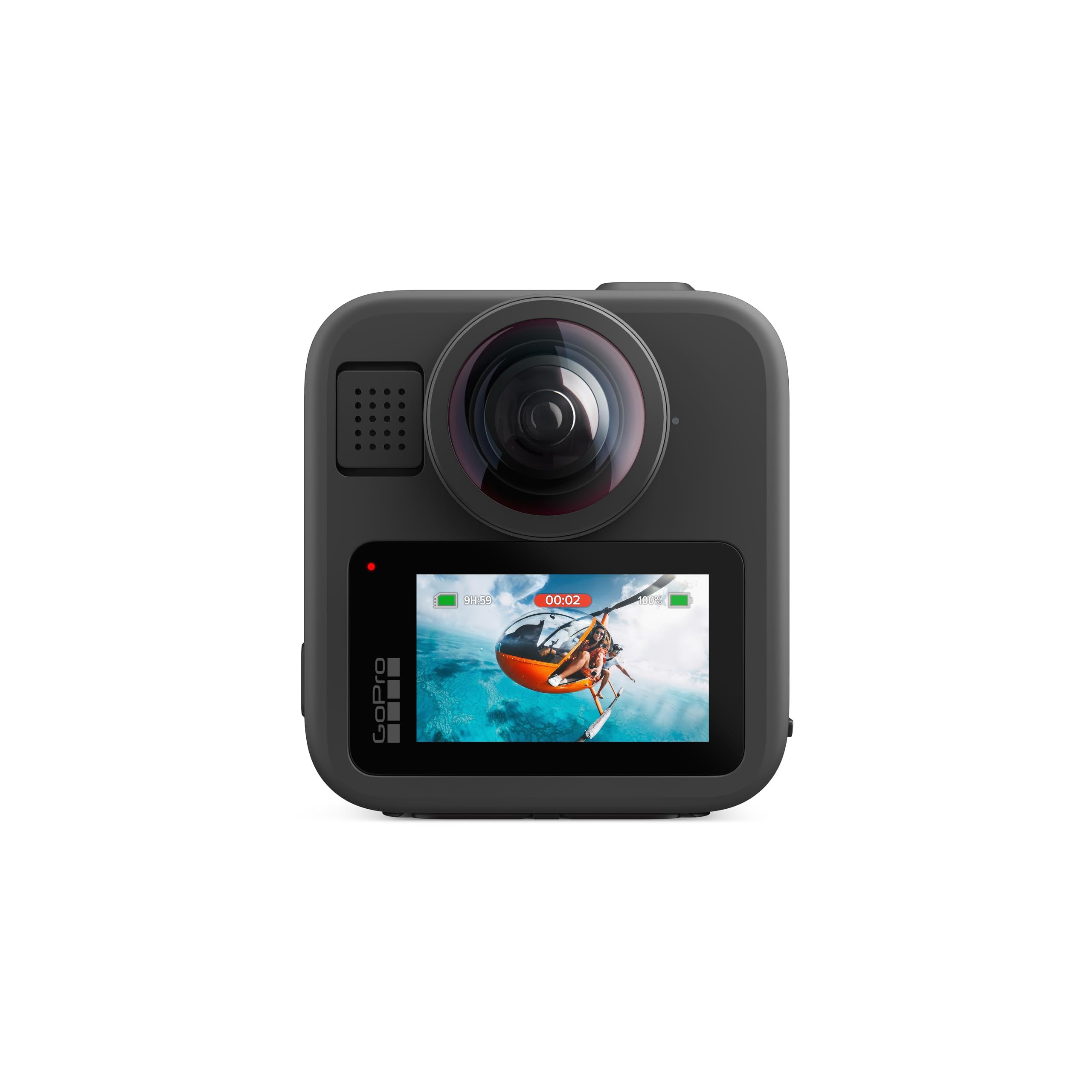
The GoPro MAX2 is the best overall pick. GoPro lists True 8K 360 video with 10-bit color, 29MP 360 photos, twist-on replaceable lenses, a 6-microphone array and waterproofing to 16ft (5m), which is the broadest published feature set in this group.
This page is for US buyers choosing a first 360 camera or replacing an older one. The rest of the list covers a large-sensor option, a lightweight 8K model, a high-resolution photo camera, a budget combo with two batteries and a touch-screen model aimed at real estate.
At a Glance
| Category | Product | Why We Picked It |
|---|---|---|
| Best overall | GoPro MAX2 | True 8K 360 video, replaceable lenses and waterproofing to 16ft |
| Best large-sensor pick | Insta360 X6 | 8K 360 capture with what Insta360 calls 1-inch imaging |
| Best lightweight | Insta360 X4 Air | 8K30 360 video in a 165g body |
| Best for 360 photos | KanDao QooCam 3 Ultra | 96MP panoramic photos, built-in GPS and in-camera stitching |
| Best budget pick | AKASO 360 Action Camera | 5.7K 360 video and two batteries in the Standard Combo |
| Best for real estate | Ricoh THETA X | Large touch panel and fast HDR processing for property work |
How we chose
We compared each maker's published specifications for 360 video resolution, frame rates, photo resolution, sensors, water protection, battery and weight, then matched each camera to a specific kind of buyer. We also checked that every pick is sold new on Amazon.
The best 360 Cameras right now
GoPro MAX2 - Best overall
The GoPro MAX2 has the most complete spec sheet in this group. GoPro rates it for True 8K 360 video with 10-bit color, up to 300Mbps bitrate and GP-Log encoding with LUT, plus 29MP 360 photos from two image sensors. Spherical slow motion is available at 4K100 and 5.6K60.
It also works as a traditional action camera, with 4K60 single-lens capture and a 180-degree mode in 4K60. Twist-on replaceable lenses, Max HyperSmooth stabilization with 360 Horizon Lock, a 6-microphone array with wind noise reduction, waterproofing to 16ft (5m) and an included Cold-Weather Enduro Battery make it the most outdoor-ready pick here on paper.
Key highlights
- True 8K 360 video
- 4K100 and 5.6K60 spherical slow-motion modes
- 10-bit color, up to 300Mbps bitrate and GP-Log
- 29MP 360 photos
- 4K60 single-lens capture, including a 180-degree mode
- Waterproof to 16ft (5m)
- 6-microphone array
Pros
- Doubles as a single-lens 4K60 action camera
- Twist-on lenses can be replaced rather than repaired
- Waterproof to 16ft without a housing
- 10-bit color and GP-Log give more room for color grading
Cons
- A 16ft (5m) rating is shallow for diving
- Single-lens video tops out at 4K60
- GoPro's product page does not list weight or screen size
Who it is for: Buyers who want one camera for both 360 and traditional action footage, including in water and cold weather.
Skip if
You mainly shoot still panoramas for listings or Street View, where the Ricoh THETA X or KanDao QooCam 3 Ultra is more focused on that work.
Insta360 X6 - Best large-sensor pick
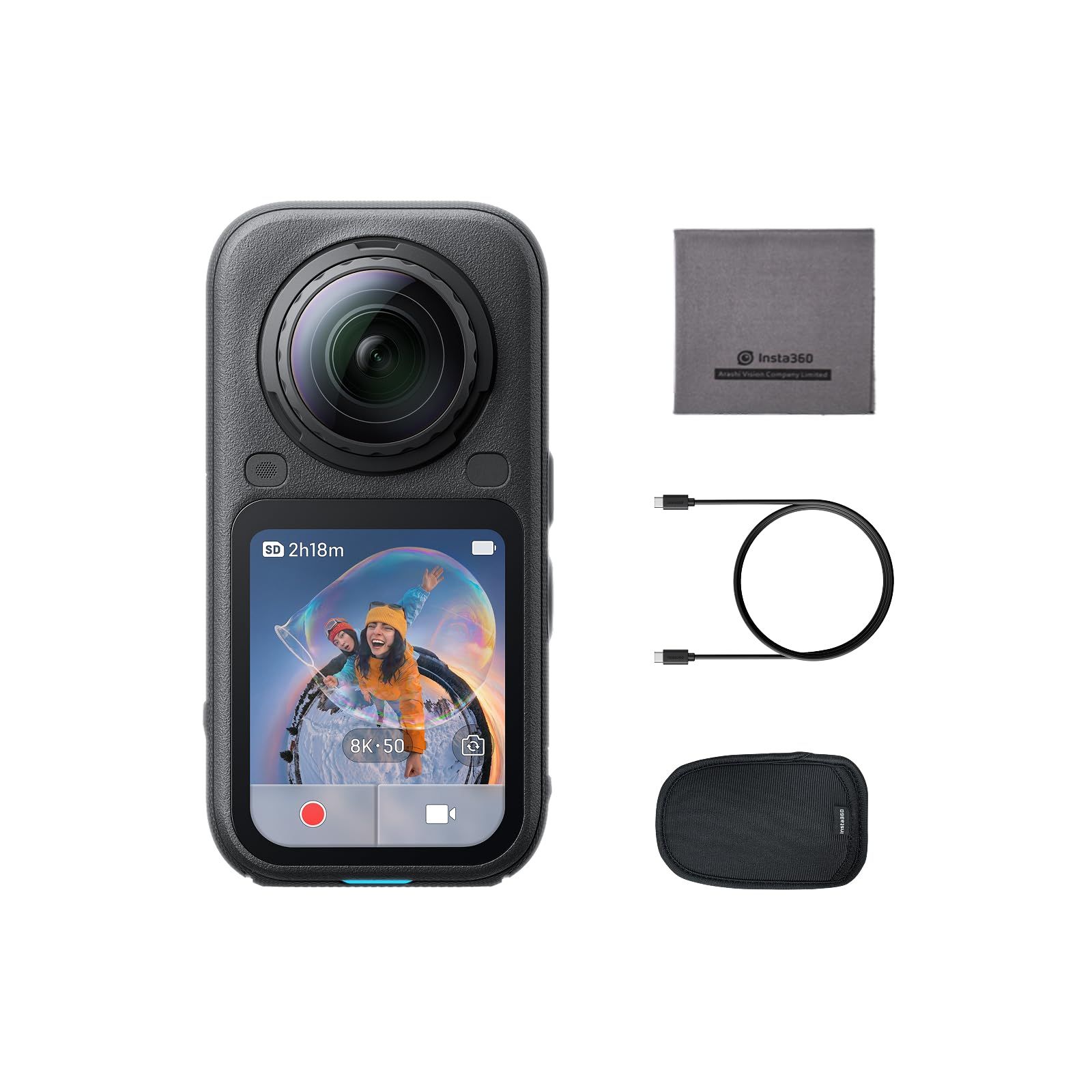
The Insta360 X6 is the pick for buyers who put sensor size first. Insta360 describes "8K 1-Inch Imaging" from Dual Sony Custom Sensors paired with a Triple AI Chip System, a larger sensor class on paper than the dual 1/2-inch sensors in the AKASO pick.
Beyond 8K 360 capture, the X6 offers a 5K60fps 170-degree ultra-wide video mode for shots that do not need the full sphere, plus InstaFrame 2.0 for ready-to-share clips. Insta360's store page is light on detail, though: it does not list battery life, weight, waterproof depth or photo resolution, so check those before buying.
Key highlights
- 8K 360 capture
- 8K 1-inch imaging, as Insta360 describes it
- Dual Sony Custom Sensors
- Triple AI Chip System
- 5K60fps 170-degree ultra-wide video
- InstaFrame 2.0 ready-to-share clips
Pros
- Larger sensor class than the AKASO's dual 1/2-inch sensors
- 8K 360 capture ready out of the box
- Ultra-wide 5K60 mode adds a non-360 option
- Ready-to-share clips cut down on editing
Cons
- The ultra-wide mode is 5K60, not 8K
- Insta360's store page lists no battery life, weight or waterproof depth
- No photo resolution is published on that page
Who it is for: Buyers who want the large-sensor 360 camera in this group and are happy to confirm the finer specs themselves.
Skip if
You need a published waterproof rating before you buy; the GoPro MAX2 lists 16ft (5m).
Insta360 X4 Air - Best lightweight
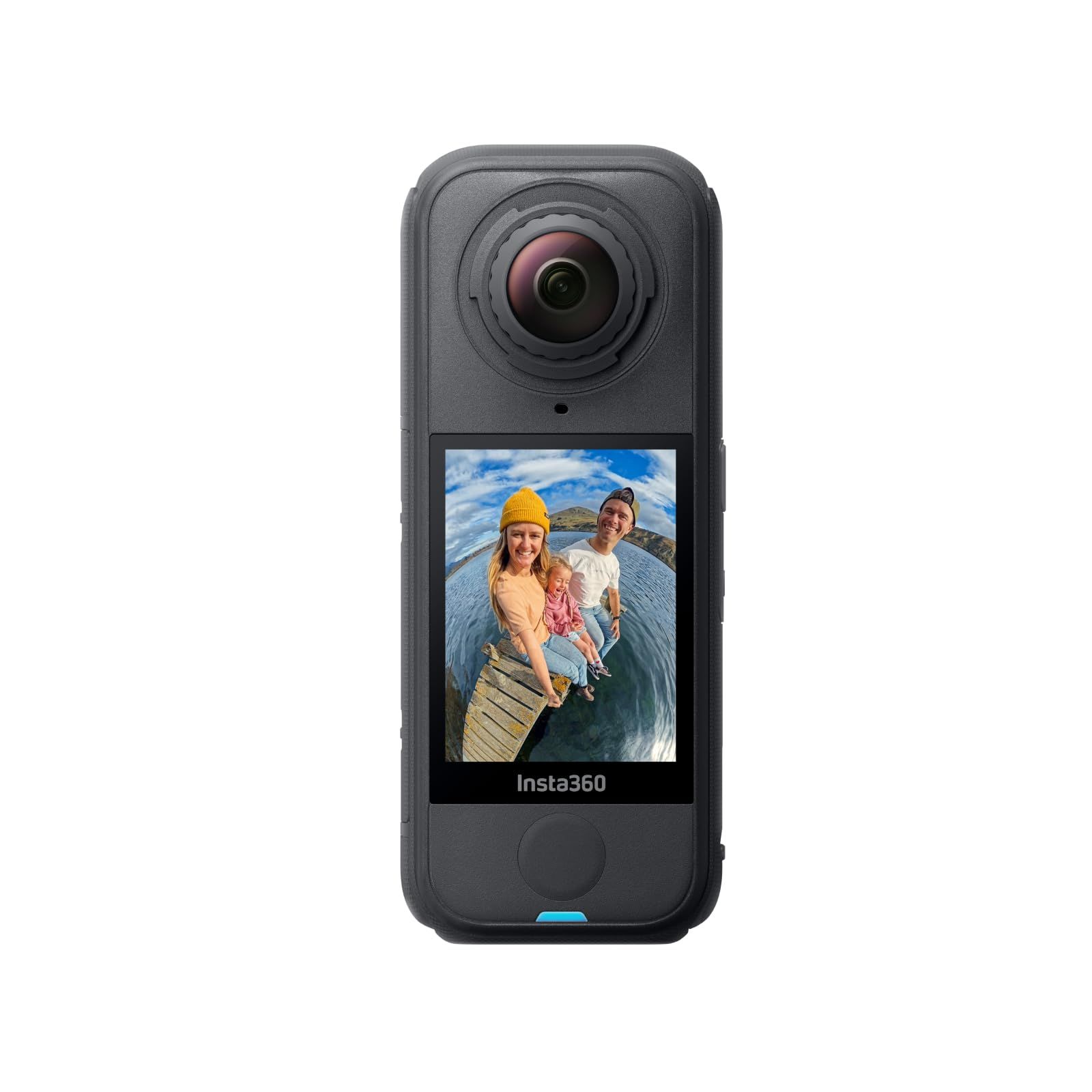
The Insta360 X4 Air is built around portability. Insta360 calls it an "Impossibly Light 8K 360 Camera" and lists it at 165g, with 8K30fps 360 video.
It supports the shoot first, frame later workflow that defines 360 cameras, along with the Invisible Selfie Stick Effect for third-person shots. Its store page lists little beyond that, so sensor size, battery life and waterproof rating are not confirmed here.
Key highlights
- 165g weight
- 8K30fps 360 video
- Shoot First, Frame Later
- Invisible Selfie Stick Effect
Pros
- Lighter than the 180g AKASO 360 Action Camera
- 8K 360 resolution in a light body
- Easy to carry for travel and long days
Cons
- 8K video is limited to 30fps
- The store page does not list sensor size, battery life or waterproof depth
Who it is for: Travelers and casual creators who want 8K 360 video without a heavy camera on a stick or helmet.
Skip if
You want a published water rating or the bigger sensor class of the Insta360 X6.
KanDao QooCam 3 Ultra - Best for 360 photos
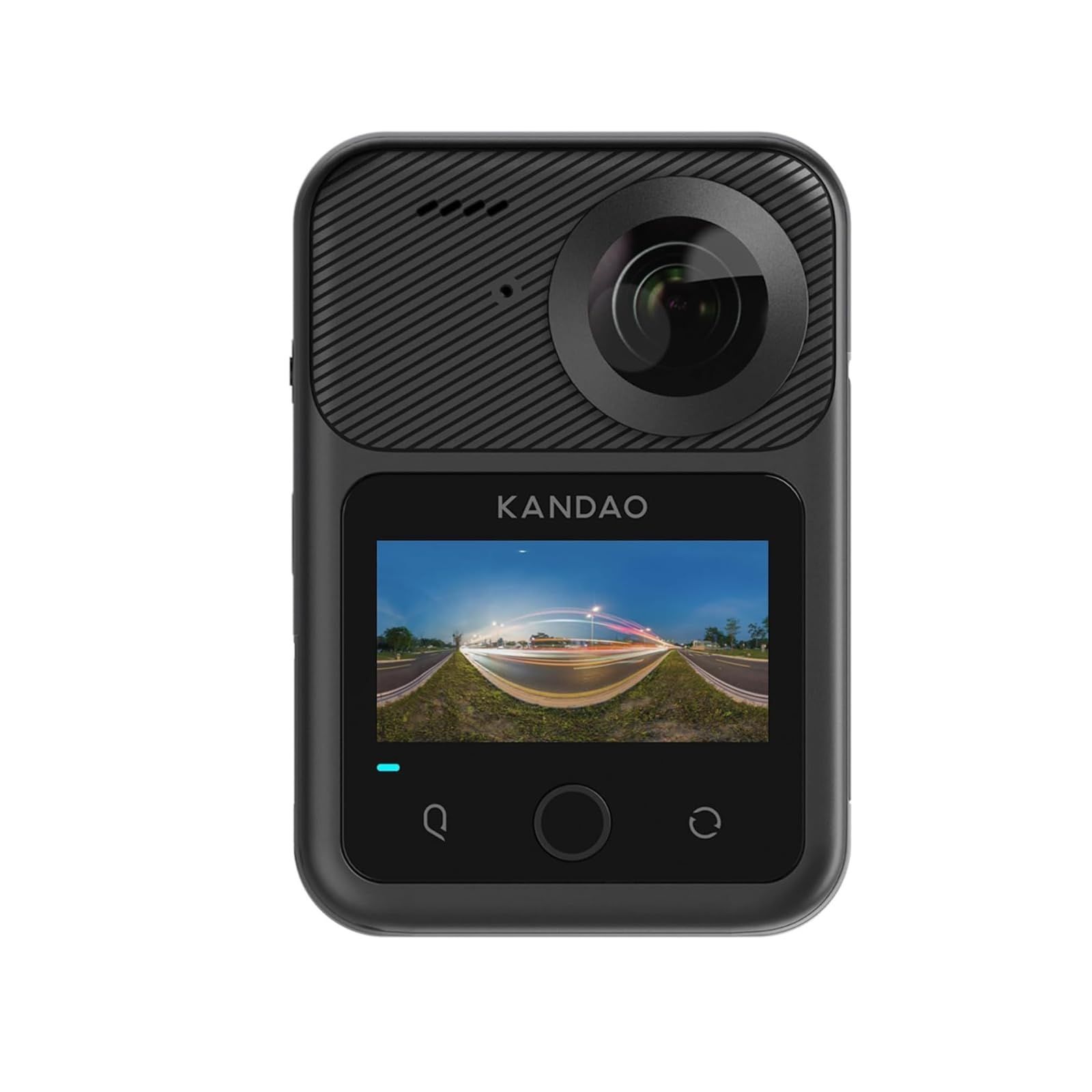
The KanDao QooCam 3 Ultra stands out for still images. KanDao lists 96MP panoramic photos and an F1.6 fast aperture, with 10-bit BT.2020 video at 8K 30FPS and 5.7K 60FPS in 360, plus 4K 60FPS and 4K 100FPS in single-lens mode.
The workflow features are just as useful: in-camera stitching that needs no computer or phone, 128G of built-in storage, a built-in GPS module for creating 360 Google Street View content, a 2.19-inch touchscreen, AI tracking and a replaceable 2280mAh battery. Its IP68 rating resists rain, water and sand, but KanDao says it is not suitable for underwater shooting without a housing.
Key highlights
- 96MP panoramic photos
- F1.6 aperture
- 8K 30FPS and 5.7K 60FPS 360 video in 10-bit BT.2020
- 4K 60FPS and 4K 100FPS in single-lens mode
- In-camera stitching
- 128G built-in storage and built-in GPS
- Replaceable 2280mAh battery
Pros
- Highest published 360 photo resolution in this group
- Stitching happens in the camera, with no phone or computer needed
- GPS suits Street View mapping
- Replaceable battery for longer days
Cons
- Not suitable for underwater shooting without a housing, despite IP68
- 8K video is limited to 30FPS
- KanDao's page does not state sensor size
Who it is for: Photographers and mappers who care most about high-resolution panoramas and a simple stitching workflow.
Skip if
You plan to swim or snorkel with it and do not want to buy a housing.
AKASO 360 Action Camera - Best budget pick
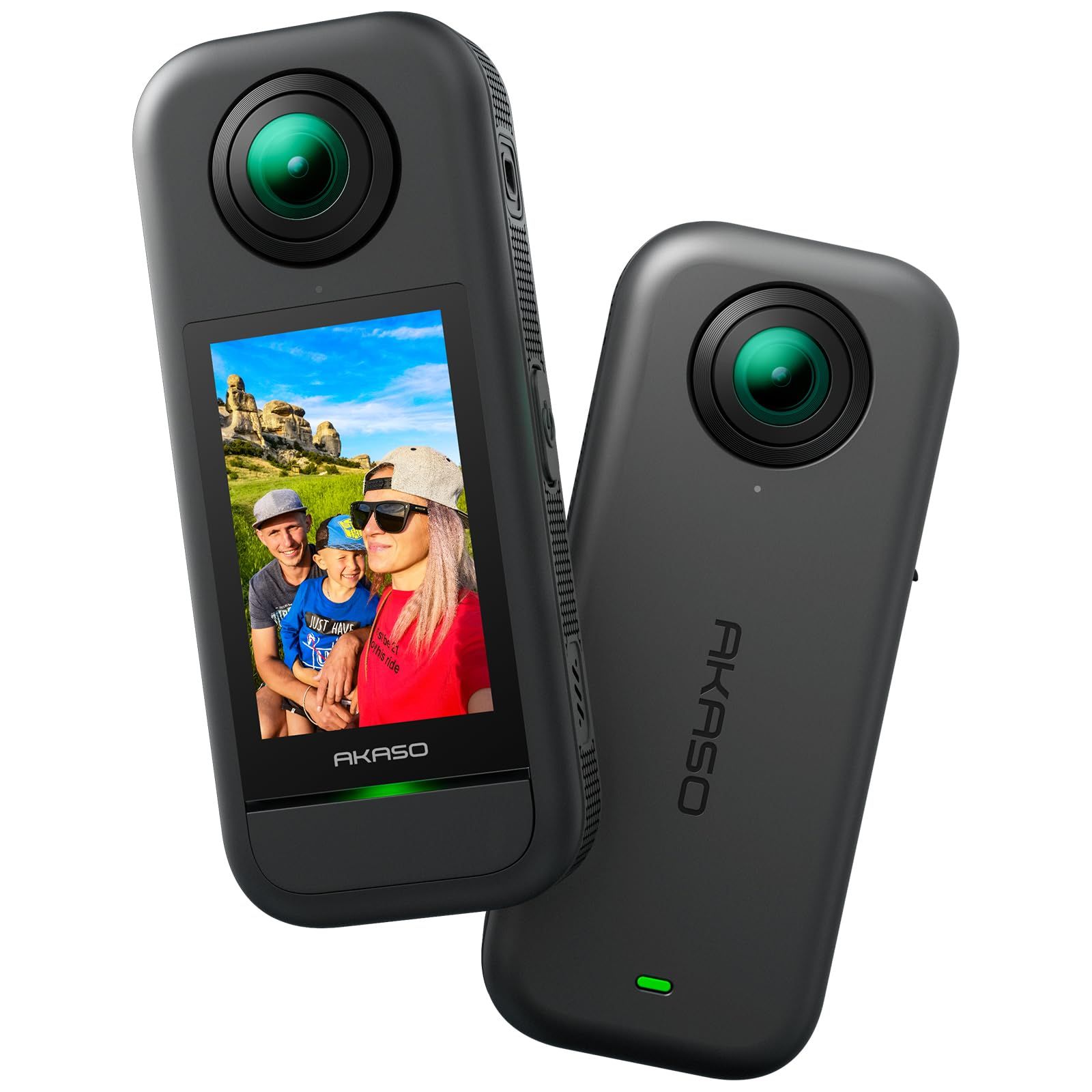
The AKASO 360 Action Camera keeps the core 360 features at a lower tier. It uses dual 1/2-inch 48MP CMOS sensors, takes 72MP 360 photos and records 360 video at 5.7K at 30, 25 or 24 fps, or 4K at up to 60 fps.
Stabilization comes from 360 SuperSmooth video and 360 Horizon lock, with the Invisible Selfie Stick and AI subject tracking for hands-off framing. It weighs 180g, has a 2.29-inch touchscreen and is listed as weatherproof. AKASO rates one battery at 60 minutes at 5.7K 30 fps in lab conditions, and the Standard Combo's two batteries bring that to 120 minutes.
Key highlights
- Dual 1/2-inch 48MP CMOS sensors
- 5.7K 360 video at up to 30 fps; 4K at up to 60 fps
- 72MP 360 photos
- 360 SuperSmooth stabilization and horizon lock
- 2.29-inch touchscreen
- 180g weight
- 120 minutes of runtime with the Standard Combo's two batteries (60 minutes per battery at 5.7K 30 fps)
Pros
- Standard Combo includes a second battery
- Horizon lock and invisible selfie stick cover the main 360 tricks
- Large touchscreen for framing and settings
- Sensible entry point for first-time 360 buyers
Cons
- Tops out at 5.7K, below the 8K picks here
- Weatherproof, but no water depth rating is listed
- 60 minutes per battery at 5.7K 30 fps
Who it is for: First-time 360 buyers who want the main features and a spare battery without stepping up to an 8K camera.
Skip if
You want 8K reframing headroom or a camera rated for swimming.
Ricoh THETA X - Best for real estate
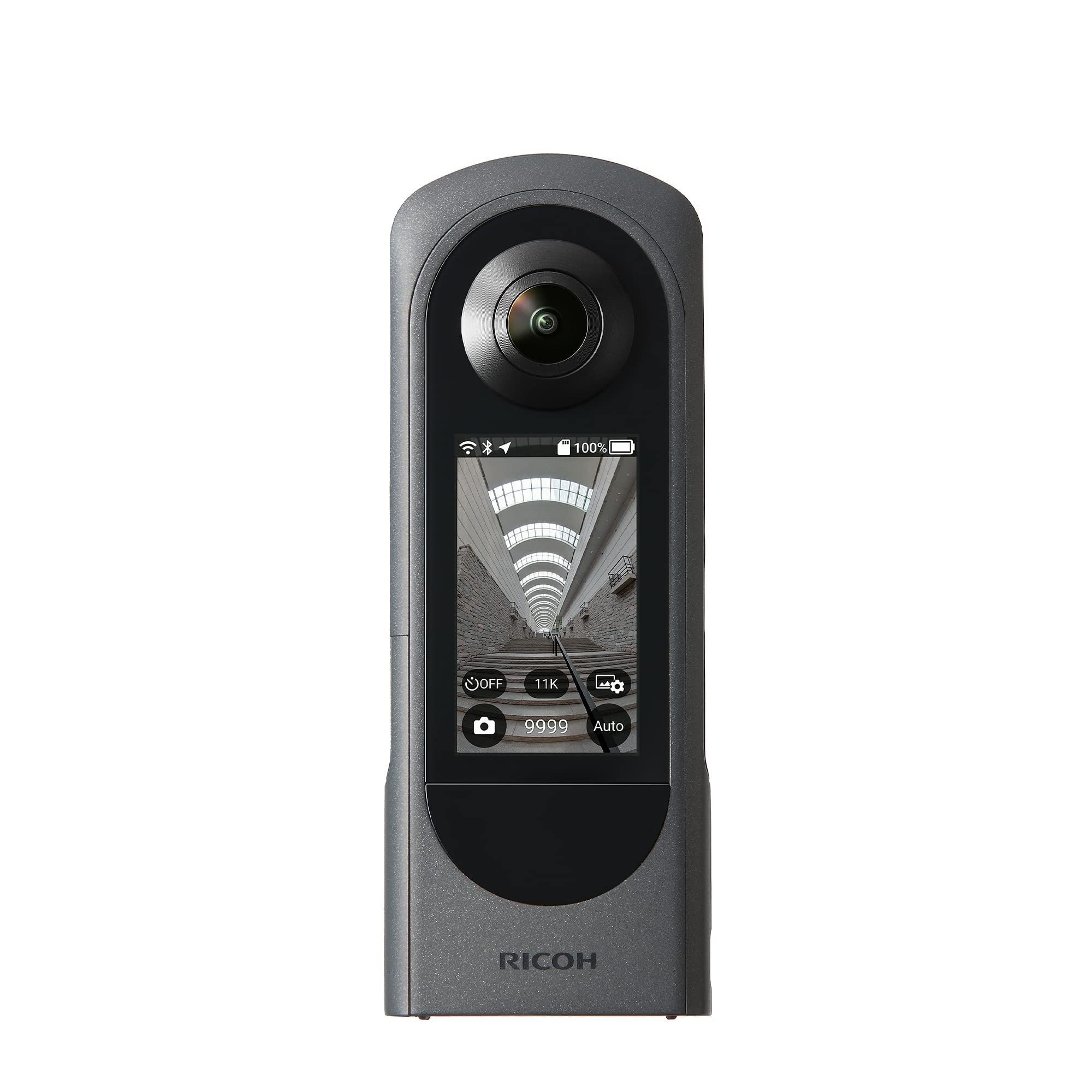
Ricoh positions the THETA X for real estate work. Its large touch panel on the camera body lets you configure settings and display captured images without needing a smartphone, which keeps a property shoot simple.
Ricoh also highlights fast HDR rendering and processing speed, and HDR-DNG is available for more editing flexibility. Ricoh's THETA page lists few hard specs for the X, and it names the THETA Z1 as the series model with the best image quality.
Key highlights
- Large touch panel on the camera body
- Settings and image playback without a smartphone
- Fast HDR rendering and processing
- HDR-DNG available
- Designed for real estate
Pros
- Works on its own without a phone
- HDR focus fits interior property shots
- HDR-DNG files give more room in editing
Cons
- Ricoh calls the THETA Z1, not the X, its best image quality model
- No dust or water rating is listed, unlike the IP64-rated THETA A1
- Ricoh's THETA page does not list resolution or battery specs
Who it is for: Real estate agents and property photographers who want a self-contained 360 camera for interiors.
Skip if
You shoot action sports or anything near water; the GoPro MAX2 is the better fit.
How to Choose
- Match resolution to how you reframe. 360 video spreads its pixels across the whole sphere, so a flat view cut from it uses only part of the frame. The GoPro MAX2, Insta360 X6, Insta360 X4 Air and QooCam 3 Ultra record 8K 360, while the AKASO tops out at 5.7K.
- Read the water wording carefully. The GoPro MAX2 is waterproof to 16ft (5m), the QooCam 3 Ultra is IP68 but not for underwater use without a housing, and the AKASO is listed only as weatherproof.
- Check frame rates as well as resolution. 8K runs at 30fps on the X4 Air and QooCam 3 Ultra. For slow motion, look for modes such as 4K100 on the MAX2 or 4K 100FPS single-lens on the QooCam.
- Plan for battery and storage. The QooCam 3 Ultra has a replaceable battery and 128G built in, the AKASO Standard Combo includes two batteries, and the MAX2 uses a microSD card.
- Consider weight for mounts and travel. The Insta360 X4 Air is 165g and the AKASO is 180g, which matters on a helmet or a long selfie stick.
- Think about your editing workflow. In-camera stitching on the QooCam and on-camera controls on the THETA X reduce reliance on a phone, while the Insta360 and GoPro models lean on reframing clips later.
FAQ
What does a 360 camera do differently from a regular action camera?
It uses two lenses to record the full sphere around it and stitches the views together. You then choose the angle afterward, which is why makers describe it as shooting first and framing later.
Can I take a 360 camera underwater?
It depends on the model. The GoPro MAX2 is waterproof to 16ft (5m), the QooCam 3 Ultra needs a housing for underwater shooting despite its IP68 rating, and the AKASO is listed only as weatherproof.
Do I need 8K for 360 video?
Not strictly, but it helps. Because a reframed flat shot uses only part of the 360 image, more total resolution leaves more detail in the final view. 5.7K is still a workable starting point for casual use.
What is the invisible selfie stick effect?
The stick sits in the blind spot between the two lenses, so it drops out of the stitched image and the footage looks as if it was shot by a drone or a second person. The Insta360 X4 Air and AKASO 360 Action Camera both list it.
Can a 360 camera shoot normal video too?
Several can. The GoPro MAX2 records 4K60 single-lens video, the QooCam 3 Ultra offers 4K 60FPS and 4K 100FPS in single-lens mode, and the Insta360 X6 has a 5K60fps 170-degree ultra-wide mode.
Published November 10, 2026 Last updated November 10, 2026
Add Technobezz on Google:Preferred SourceGoogle Discover
More on cameras
Buying guide
10 Best Digital Cameras for Beginners in 2026
Deal
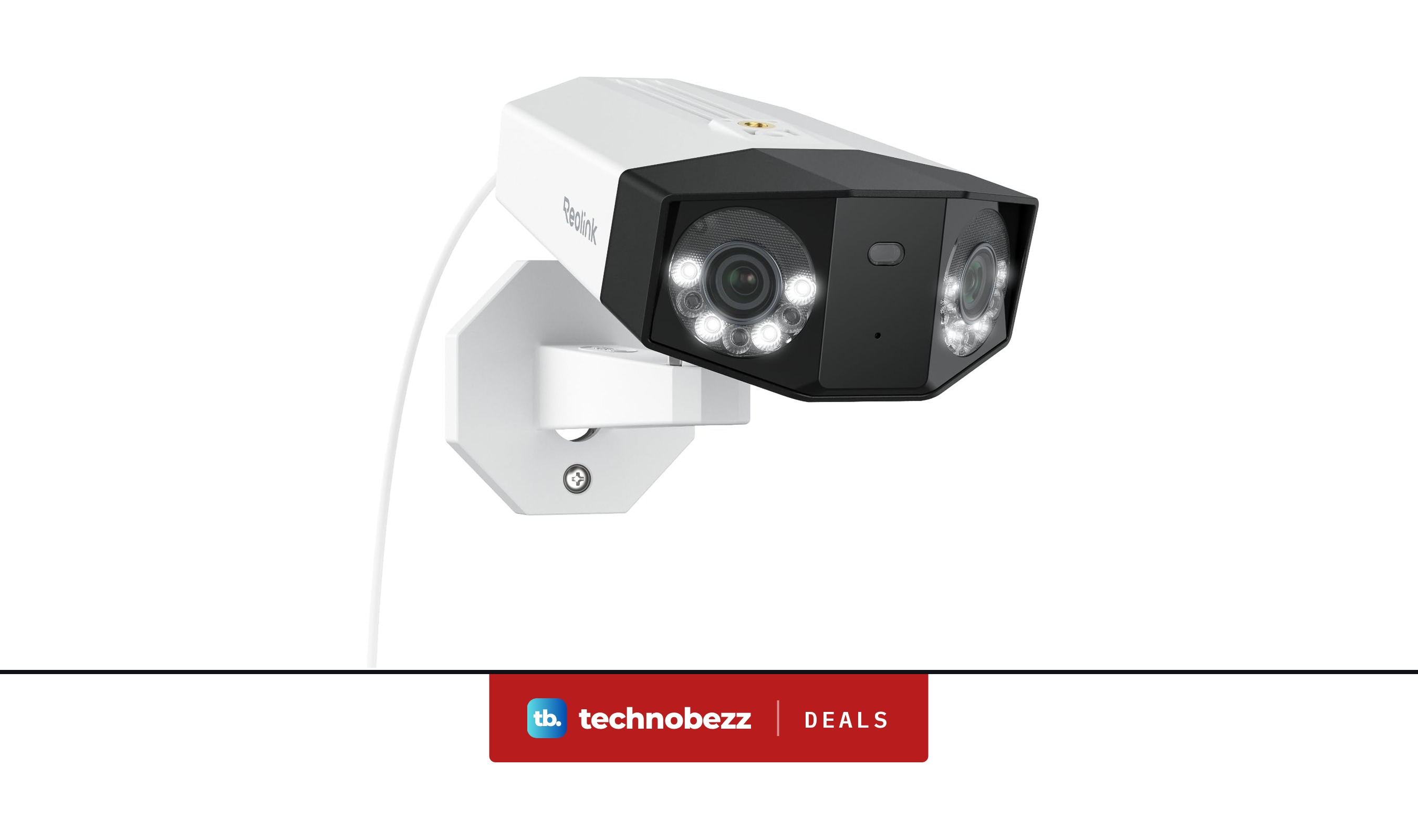
REOLINK Duo 3 PoE Dual-Lens PoE Security Camera drops to $178.49
Buying guide
5 Best Compact Cameras in 2026
Review
Rokid AI Glasses Style Review, Light Camera Glasses That Let You Choose Your AI
More buying guides
Buying guide6 Best AR Glasses in 2026Buying guide7 Best Digital Pianos in 2026Buying guide6 Best Gaming Headsets for Xbox in 2026Buying guide5 Best 50-Inch TVs in 2026Buying guide5 Best 4K Gaming Monitors in 2026Buying guide6 Best Headphones in 2026Buying guide7 Best Air Purifiers for Large Rooms in 2026Buying guide9 Best Desktops Under $1500 for 2026