The AR glasses in this guide are display glasses. They plug into a phone, laptop, handheld or console and show a large virtual screen in front of your eyes. The specs that set them apart are field of view, resolution, brightness, weight, head tracking and whether they can correct for nearsightedness.
Technobezz is supported by its audience. We may get a commission from retail offers.
6 Best AR Glasses in 2026
The VITURE Beast tops our list of the best AR glasses in 2026, with picks from XREAL, RayNeo and VITURE for movies, gaming, travel and nearsighted viewers.
T
Technobezz
Editorial Team
Updated November 10, 2026Nov 10, 2026
•11 min read

Get Deals Like These in Your Inbox
The best prices, straight to your inbox.
Add Technobezz on Google:Preferred SourceGoogle Discover
The VITURE Beast is the best overall pick. VITURE lists a 58-degree field of view, 1920 x 1200 resolution per eye, up to 120Hz, up to 1250 nits of perceived brightness, 9-level electrochromic dimming and built-in 3DoF head tracking. No other pick here covers all of those points.
This page is for US buyers who want a portable big screen for movies, gaming or work. The other picks cover the widest view, spatial screen features, built-in vision correction, low weight and HDR movie viewing.
At a Glance
| Category | Product | Why We Picked It |
|---|---|---|
| Best overall | VITURE Beast | 58-degree view, 1200p per eye, 9-level dimming and built-in 3DoF |
| Best for the widest view | RayNeo GT Max (M size) | 59-degree field of view with onboard 3DoF and screens up to 307 inches |
| Best for spatial features | XREAL 1S | X1 chip, native 3DoF and an adjustable screen from 31 to 500 inches |
| Best for nearsighted users | VITURE Pro 2 | Built-in myopia adjustment from 0.0D to -5.0D at just 63g |
| Best lightweight | XREAL xbx a01+ | 62g frame with 1600 nits at the eye and HDR10 |
| Best for HDR movies | RayNeo Air 4 Pro | HDR10, Vision 4000 chip and B&O quad speakers in a 76g frame |
How we chose
We compared the makers' published specifications for display glasses that show a virtual screen, looking at field of view, resolution, brightness, refresh rate, weight, head tracking, vision correction and connection options. We then checked that each pick is sold new on Amazon.
The best AR Glasses right now
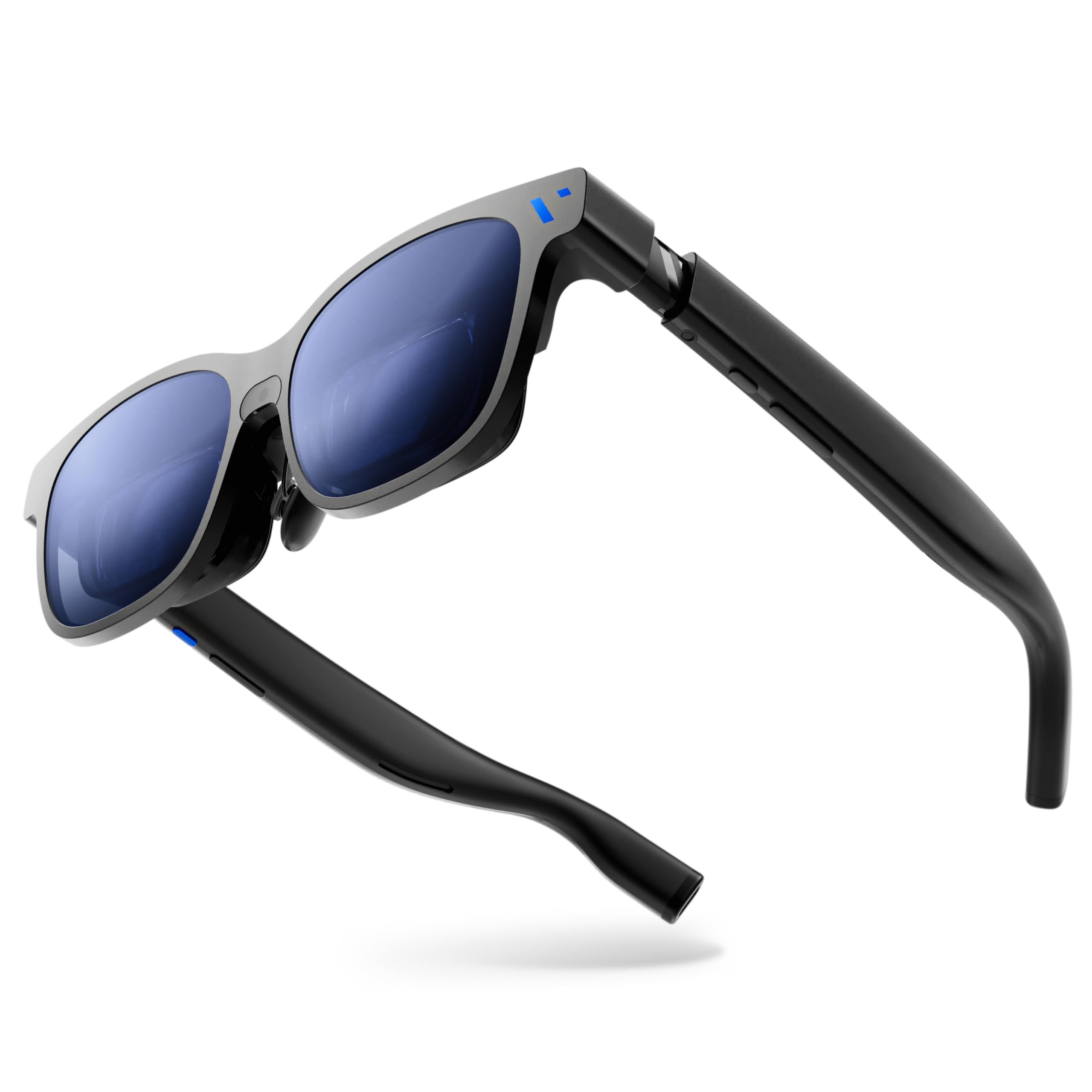
VITURE Beast - Best overall
The VITURE Beast uses Sony Micro-OLED panels with a 58-degree field of view, which VITURE describes as a 174-inch screen at 4 meters. Resolution is 1920 x 1200 per eye, the refresh rate goes up to 120Hz and perceived brightness reaches up to 1250 nits.
An electrochromic film has 9 levels of adjustment, with optical transmittance from 0.5 to 40 percent, so you can make the lenses nearly opaque or fairly see-through. Head tracking is built in through VisionPair 3DoF, and audio is HARMAN AudioEFX. The glasses come in Regular and Large sizes for different IPD ranges, and weight depends on size: 88g for Regular and 90g for Large.
Key highlights
- 58° field of view
- 1920 x 1200 per eye, up to 120Hz
- Up to 1250 nits perceived brightness
- Electrochromic film with 9 levels of adjustment
- Built-in VisionPair 3DoF
- HARMAN AudioEFX
- Regular (IPD 64.0 ± 6.0 mm) and Large (IPD 68.0 ± 6.0 mm) sizes
Pros
- Higher per-eye resolution than the 1080p picks in this guide
- Field of view within one degree of the widest pick here
- Head tracking is built into the glasses
- Wide dimming range from 0.5 to 40 percent transmittance
Cons
- No built-in myopia adjustment; VITURE says a prescription lens frame is needed for nearsightedness or astigmatism
- At 88g to 90g depending on size, it is the heaviest pick here
- You need to check your IPD against the Regular and Large ranges before buying
Who it is for: Buyers who want a wide view, 1200p detail, deep dimming and built-in head tracking in one pair.
Skip if
You want built-in nearsighted correction or the lightest frame; the VITURE Pro 2 and XREAL xbx a01+ are both lighter.
RayNeo GT Max (M size) - Best for the widest view
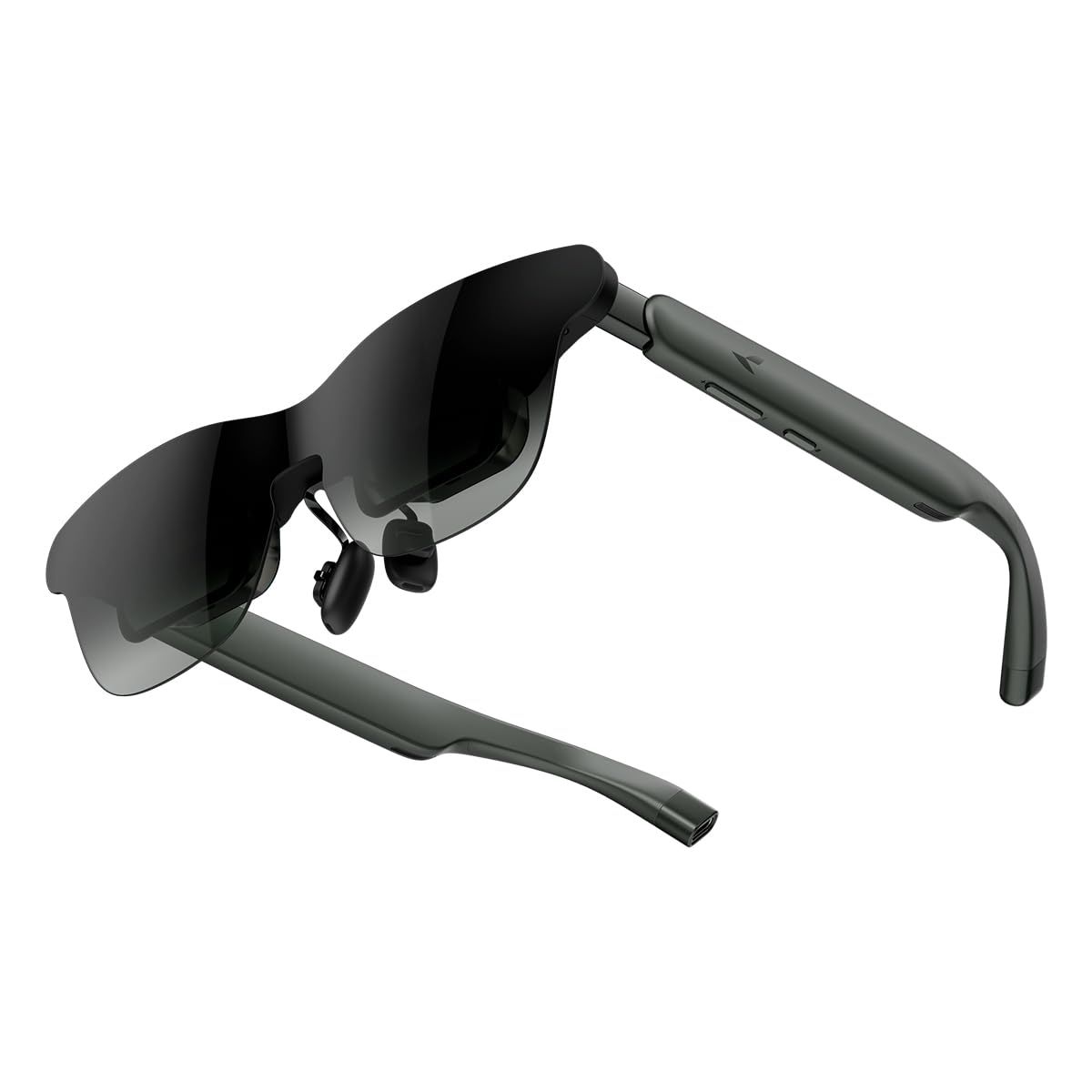
The RayNeo GT Max has the widest field of view in this guide at 59 degrees. RayNeo lists virtual screen sizes of 227, 267 and 307 inches, with 267 inches as the default. It uses a 0.6-inch SeeYa Micro-OLED panel at 1920 x 1080 and runs at 120Hz in 2D and 60Hz in 3D.
The glasses carry a Vision 4000 chip and an onboard Zone 360 3DoF chip, with Steady, Pinned and Follow spatial modes, plus B&O-tuned quad speakers. RayNeo sells three IPD sizes chosen at purchase: S (under 64mm), M (64 to 67mm) and L (over 67mm). This listing is the M size. Brightness depends on mode: RayNeo lists 1,200 nits outside Pinned mode and 336 nits in Pinned mode.
Key highlights
- 59° field of view
- 227, 267 or 307-inch virtual screen (267 inches by default)
- 0.6-inch SeeYa Micro-OLED, 1920 x 1080
- 120Hz in 2D, 60Hz in 3D
- Onboard Zone 360 3DoF chip with Steady, Pinned and Follow modes
- B&O-tuned quad speakers with Whisper Mode 2.0
- 78g
Pros
- Widest field of view among these picks
- Native 3DoF without an extra device
- Three IPD sizes help match the optics to your eyes
- RayNeo supports prescription lenses through Lensology
Cons
- RayNeo lists 38 pixels per degree, since a 1080p panel is spread across a 59-degree view
- Brightness drops to 336 nits in Pinned mode
- Dolby Vision requires the optional Pocket TV Pro
- This listing is the M size only (IPD 64 to 67mm)
Who it is for: Movie and game fans with an IPD of 64 to 67mm who want the largest possible view with head tracking built in.
Skip if
Your IPD falls outside 64 to 67mm, or you care more about sharpness than screen size; the VITURE Beast has 1200p per eye.
XREAL 1S - Best for spatial features
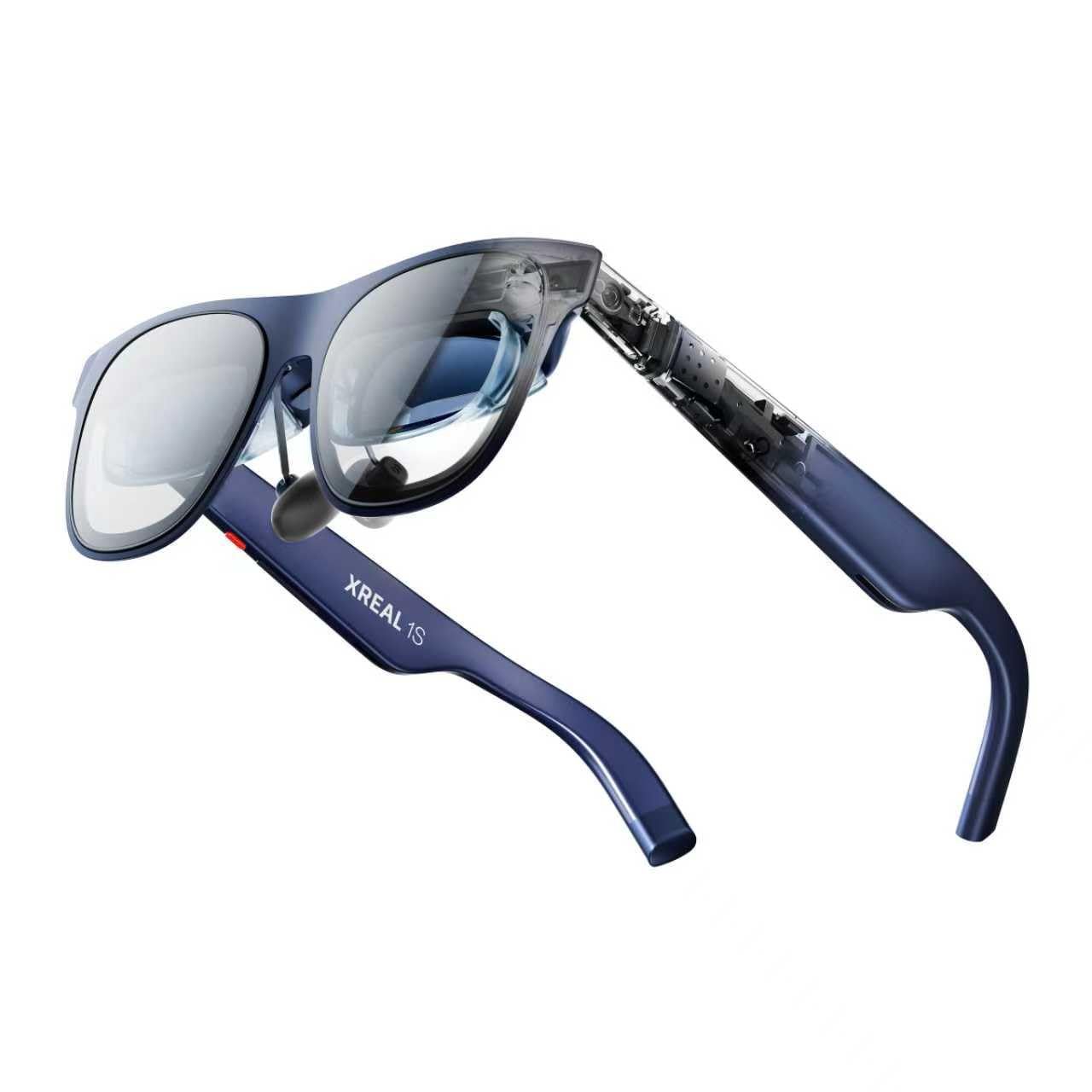
The XREAL 1S runs on XREAL's X1 chip, which handles 3DoF with real-time spatial anchoring. XREAL lists 3ms motion-to-photon latency, Anchor, Follow and Ultra-wide modes, a virtual screen you can set from 31 to 500 inches, and a display distance you can set from 1 to 10 meters.
It uses Sony 0.68-inch Micro-OLED panels at 3840 x 1200 combined, with a 52-degree field of view, a fixed 90Hz mode and up to 120Hz. Other features include 3-level and automatic electrochromic dimming, Sound by Bose, a 4-mic array, glasses-side 2D-to-3D conversion and an 82g frame.
Key highlights
- XREAL X1 chip with native 3DoF
- 3ms motion-to-photon latency
- Virtual screen adjustable from 31 to 500 inches
- Sony 0.68-inch Micro-OLED, 3840 x 1200 combined
- 52° field of view, up to 120Hz
- 3-level and auto electrochromic dimming
- Sound by Bose, 82g
Pros
- Most flexible screen size and distance settings in this group
- Anchor, Follow and Ultra-wide modes for work and play
- 1200p per eye matches the VITURE Beast
- Instant 2D-to-3D conversion happens on the glasses
Cons
- 700 nits peak brightness is the lowest listed among these picks
- Only 3 dimming levels plus auto, compared with 9 on the VITURE Beast
- 82g is heavier than the VITURE Pro 2 and XREAL xbx a01+
Who it is for: People who want a screen that stays pinned in space for multitasking, plus adjustable screen size and 3D conversion.
Skip if
You watch in bright rooms and want the most brightness, or you want the lightest frame.
VITURE Pro 2 - Best for nearsighted users
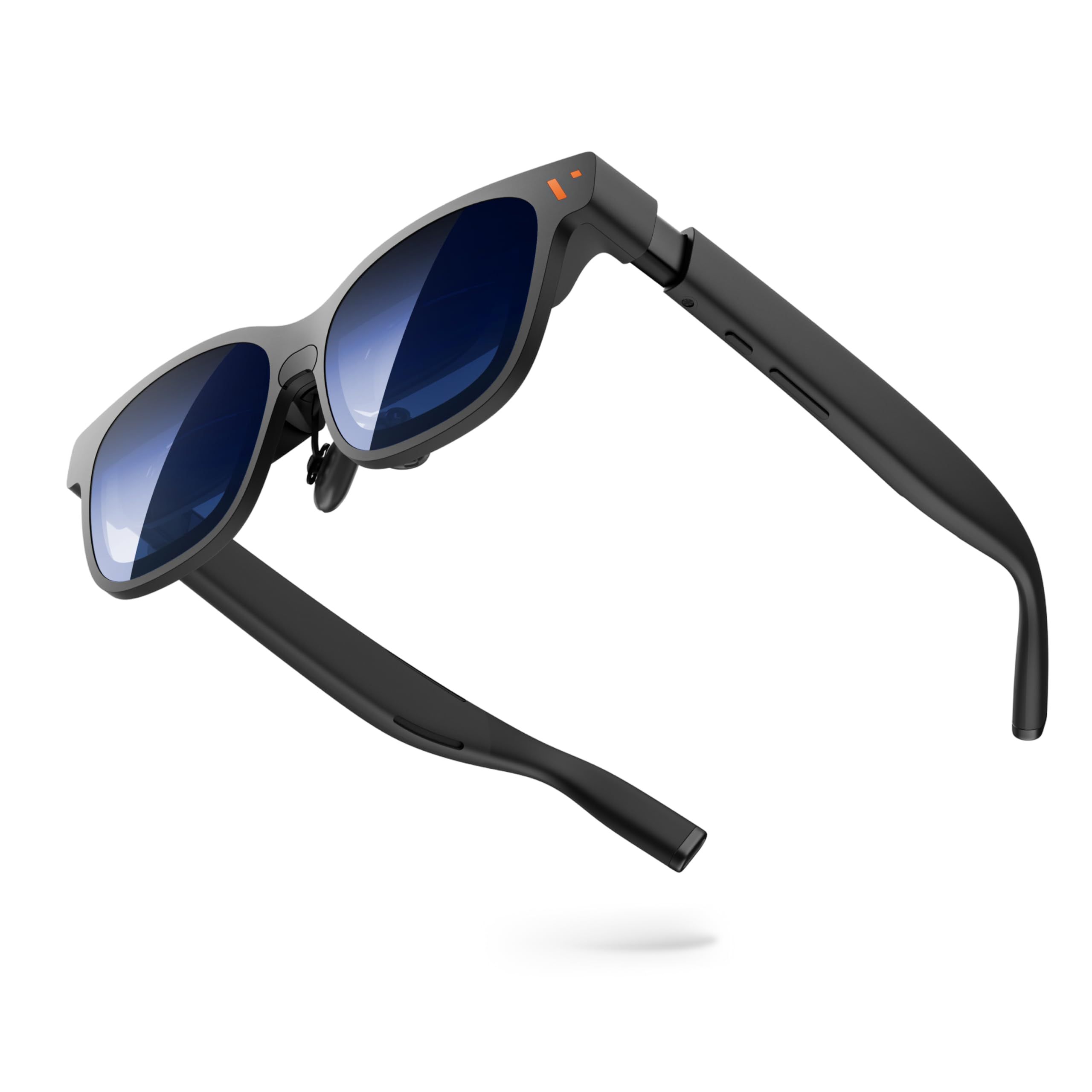
The VITURE Pro 2 has built-in myopia adjustment from 0.0D to -5.0D per eye, so many nearsighted users can watch without wearing glasses underneath. It weighs 63g, and VITURE lists a 50-degree field of view and a 146-inch screen at 4 meters.
The display is Sony Micro-OLED at 1920 x 1080 per eye, with refresh rates of 120Hz, 90Hz and 60Hz and 1,600 nits peak brightness. It connects over USB-C with DisplayPort Alt Mode, offers 3DoF through VITURE's SpaceWalker software, includes a lens shade in the box and carries SGS A+ eye care certification.
Key highlights
- Built-in myopia adjustment, 0.0D to -5.0D per eye
- 63g
- Sony Micro-OLED, 1920 x 1080 per eye
- Up to 120Hz (120Hz, 90Hz or 60Hz)
- 1,600 nits peak brightness
- 50° field of view, 146-inch screen at 4 meters
- Lens shade included
Pros
- Vision correction is built into the glasses
- One of the two lightest picks here
- 1,600 nits ties for the highest peak brightness in this guide
- VITURE lists it as made for Switch and Switch 2
Cons
- 1080p per eye, below the 1200p of the VITURE Beast and XREAL 1S
- Correction stops at -5.0D; stronger prescriptions or astigmatism need the separately sold Prescription Lens Frame
- 3DoF comes through SpaceWalker software rather than a dedicated onboard chip
Who it is for: Nearsighted buyers up to -5.0D who want a light pair for long viewing sessions.
Skip if
You have astigmatism or a prescription beyond -5.0D, or you want the widest view.
XREAL xbx a01+ - Best lightweight
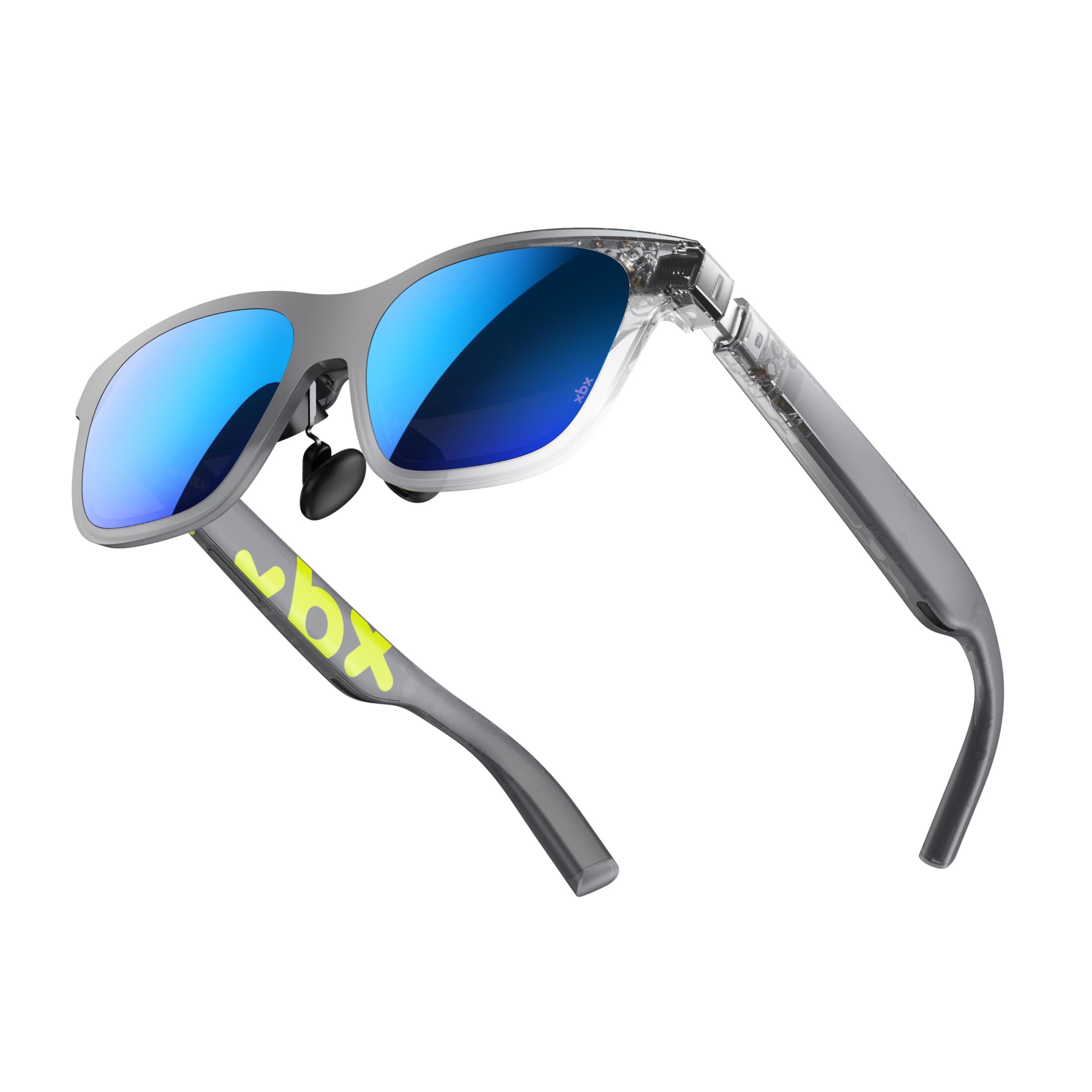
The XREAL xbx a01+ is the lightest pick here at 62g with its detachable front frame, or 56g without it. It uses a 0.6-inch SeeYa Micro OLED at 1920 x 1080 in 2D mode and 3840 x 1080 in 3D mode, with up to 120Hz and a 50-degree field of view.
XREAL lists 1600 nits at the eye, HDR10 and AI-HDR support, high-frequency PWM dimming up to 3840Hz and an IPD range of 54.5 to 74.5mm. Video comes in over USB-C with DisplayPort Alt Mode, and the glasses have no built-in battery. The a01+ adds a light shield that the base a01 does not include.
Key highlights
- 62g with front frame, 56g without
- 0.6-inch SeeYa Micro OLED
- 1920 x 1080 (2D), 3840 x 1080 (3D)
- Up to 120Hz, 50° field of view
- 1600 nits at the eye, HDR10 and AI-HDR
- IPD range of 54.5 to 74.5mm
- Light shield included
Pros
- Lightest frame in this guide
- 1600 nits ties for the highest peak brightness here
- Wide listed IPD range
- HDR10 support
Cons
- 1080p, below the 1200p of the VITURE Beast and XREAL 1S
- Needs a source that outputs video over USB-C DisplayPort Alt Mode
- No built-in battery, so it draws power from the connected device
Who it is for: Travelers and handheld gamers who want the least weight on their face with a bright HDR picture.
Skip if
You want built-in myopia adjustment or a wider field of view.
RayNeo Air 4 Pro - Best for HDR movies
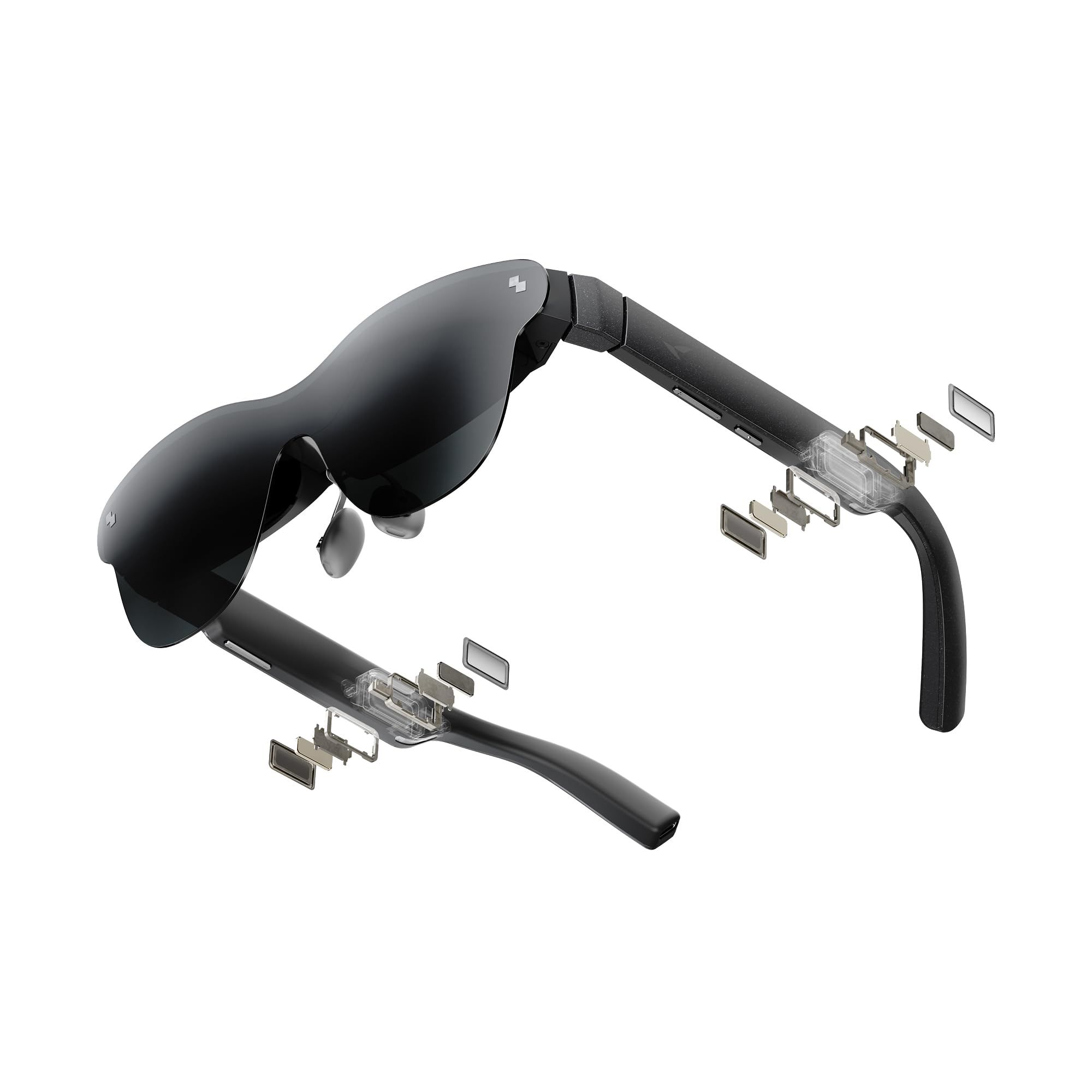
RayNeo built the Air 4 Pro around movie viewing, with an HDR10 display, 1200 nits peak brightness, 10.7 billion colors and a Pixelworks Vision 4000 chip. It uses a 5.5th-gen Tandem OLED, a 201-inch screen and a 120Hz refresh rate.
Audio comes from quad speakers by Bang & Olufsen with Whisper Mode. The frame weighs 76g and is prescription-ready. RayNeo lists full 3D movie support and AI conversion of 2D photos and videos into 3D. Its compatibility list covers iPhone 17, MacBook, PC, PS4/5, Steam Deck and Switch 2, plus HDMI and Lightning devices.
Key highlights
- HDR10 display, 1200 nits peak brightness
- Pixelworks Vision 4000 chip
- 5.5th-gen Tandem OLED
- 201-inch screen, 120Hz
- Quad-speaker audio by Bang & Olufsen
- 76g, prescription-ready frame
- 3D movie support and AI 2D-to-3D conversion
Pros
- HDR10 and a dedicated picture chip for movie content
- Quad-speaker audio with Whisper Mode
- Broad listed device compatibility, including consoles
- Lighter than the VITURE Beast, XREAL 1S and RayNeo GT Max
Cons
- RayNeo does not list head tracking for it; native 3DoF is in its GT line
- HDMI and Lightning sources need adapters, sold separately
- 1200 nits is below the 1600 nits of the VITURE Pro 2 and XREAL xbx a01+
Who it is for: Movie watchers who want HDR10, 3D playback and strong speakers in a comfortable frame.
Skip if
You want the screen to stay anchored in space as you turn your head.
How to Choose
- Start with field of view. A wider field of view makes the screen fill more of your vision. Among the picks with a listed field of view, the range is 50 to 59 degrees.
- Weigh resolution against view size. A 1080p panel spread across a wider view shows fewer pixels per degree. RayNeo lists 38 pixels per degree for the 59-degree GT Max, while the VITURE Beast and XREAL 1S use 1200p panels.
- Decide whether you need head tracking. 3DoF lets the screen stay pinned in place when you turn your head, which helps with multitasking. The VITURE Beast, RayNeo GT Max and XREAL 1S list it built in.
- Check vision correction. The VITURE Pro 2 corrects nearsightedness from 0.0D to -5.0D. Most other picks rely on prescription inserts or frames, and the VITURE Beast has no built-in myopia adjustment.
- Match the fit to your eyes. Some models come in IPD sizes, such as the RayNeo GT Max in S, M and L or the VITURE Beast in Regular and Large. Measure your IPD before you order.
- Confirm your connection. These glasses take video over USB-C with DisplayPort Alt Mode. Consoles and other HDMI sources need an adapter.
FAQ
What is the difference between AR display glasses and audio smart glasses?
AR display glasses show a virtual screen from a connected device, such as a phone, laptop or console. Audio smart glasses play sound and take calls but have no screen.
Do AR glasses work with an iPhone?
Many do. iPhones with USB-C can connect directly to glasses that accept DisplayPort Alt Mode video. RayNeo lists Lightning iPhones as working through Apple's Lightning Digital AV Adapter plus RayNeo's HDMI Adapter.
Can I use AR glasses if I wear prescription glasses?
Yes, with the right model. The VITURE Pro 2 has built-in myopia adjustment from 0.0D to -5.0D. RayNeo (through Lensology) and VITURE also offer prescription lens options, and VITURE's Prescription Lens Frame covers astigmatism.
Can I play Switch or PS5 games on AR glasses?
Yes, with the right setup. VITURE lists the Pro 2 as made for Switch and Switch 2, and RayNeo sells a JoyDock accessory for docking a Switch to its RayNeo Air glasses.
Do AR glasses need charging?
Glasses like these are usually powered by the connected device. XREAL says the xbx a01+ has no built-in battery, so keep an eye on your phone or handheld's battery during long sessions.
Published November 10, 2026 Last updated November 10, 2026
Add Technobezz on Google:Preferred SourceGoogle Discover
More buying guides
Buying guide
6 Best 360 Cameras in 2026
Buying guide
7 Best Digital Pianos in 2026
Buying guide
6 Best Gaming Headsets for Xbox in 2026
Buying guide
5 Best 50-Inch TVs in 2026
Buying guide5 Best 4K Gaming Monitors in 2026Buying guide6 Best Headphones in 2026Buying guide7 Best Air Purifiers for Large Rooms in 2026Buying guide9 Best Desktops Under $1500 for 2026Buying guide6 Best Budget Wireless Headphones in 2026Buying guideBest Low Profile Mechanical Keyboards in 2026Buying guide10 Best Digital Cameras for Beginners in 2026Buying guide7 Best Gaming Consoles for Every Budget in 2026