
NVIDIA expanded Cosmos today with five blueprints for preparing training data, new simulation models and updated deployment tools for developers building AI systems that interact with the physical world. Cosmos Data Factory is available through CoreWeave, GitHub, Nebius and Microsoft Azure, giving developers several routes to its data preparation tools.
Updated NVIDIA Cosmos 3 NIM microservices offer up to 2x faster inference without sacrificing quality in validated configurations, NVIDIA says. The company also says continuous video analysis can produce alerts in less than a second.
Read more: Emerald AI, Google and NVIDIA Form Alliance for Flexible Data Centers
The five Cosmos Data Factory blueprints cover tasks including generating synthetic driving scenarios, creating defect images for inspection systems and altering weather or lighting in footage without changing its scene structure. Another can turn a still image into video depicting an unusual or unsafe event. Cosmos Curator also now accepts multimodal, multisensory data and processing blocks, extending its video dataset preparation capabilities.
NVIDIA extended Cosmos Framework tools as agent skills to additional open models, allowing developers and agents to adapt compatible models through reinforcement learning or fine-tuning. Supported options include Pi0.5, GR00T and compatible models from Hugging Face. Developers can then use quantization and distillation to optimize models before deploying them.
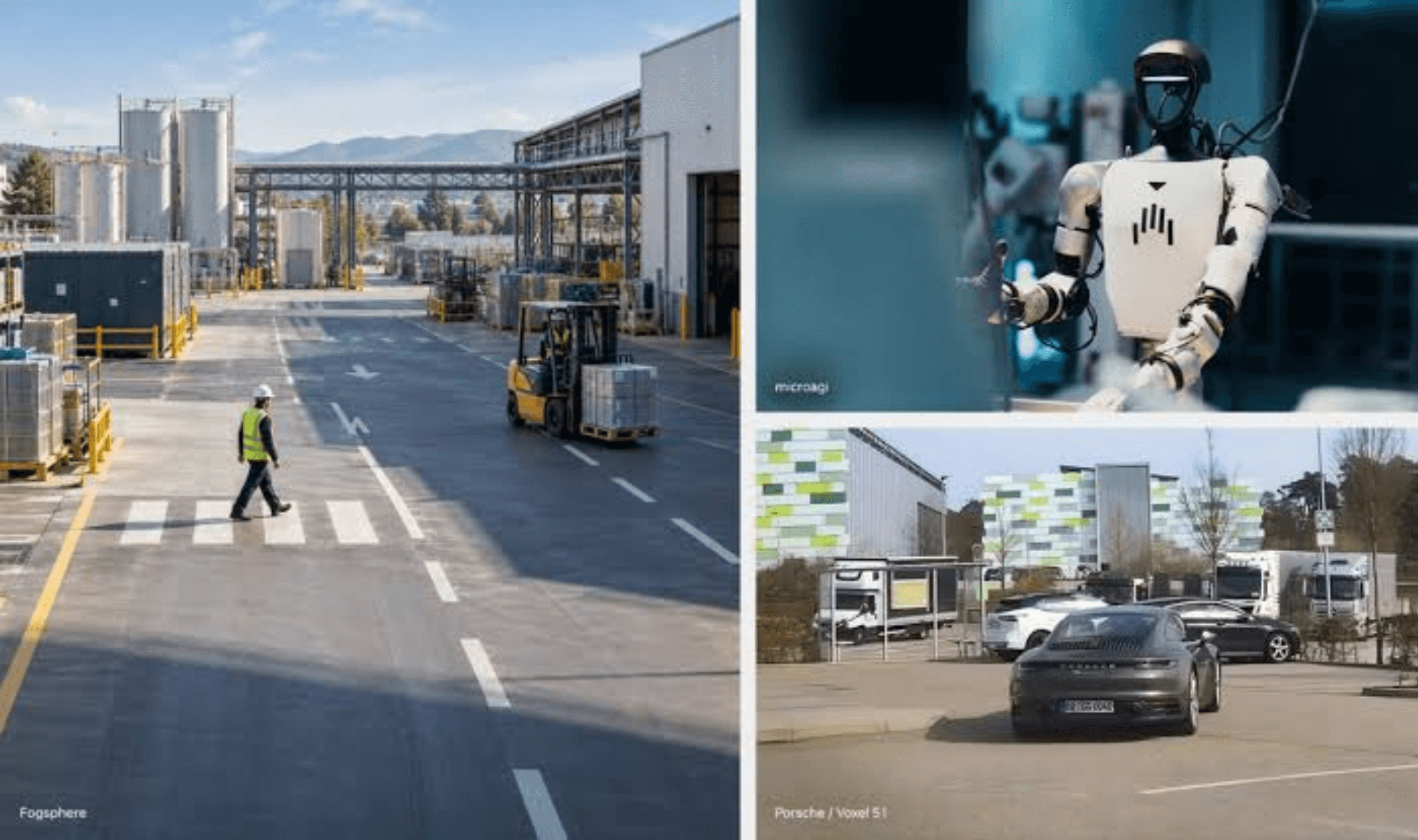
New Cosmos 3 Nano variants let developers simulate autonomous policies across repeatable scenarios with multiple views and sensors. Their accompanying code supports adapting the models for training and evaluating policies for autonomous vehicles and bimanual robots before physical testing. MicroAGI separately reduced a Cosmos 3 reasoner from 32 billion parameters to an 8-billion-parameter Nano model without losing accuracy, according to NVIDIA.
ANYbotics used Cosmos Data Factory blueprints to produce more than 1,500 synthetic clips for training industrial inspection robots to spot spills and changes between visits to facilities. Porsche is using the tools through Voxel51 on Microsoft Azure for a shared autonomous vehicle data workflow across Volkswagen Group brands. NVIDIA says that project is expected to cut repeated physical test drives by up to 90% and development cycle times by up to 85%.
The software expansion follows NVIDIA's local AI hardware push, with DGX Spark 64GB systems scheduled to reach customers through partners on Friday, October 23. Developers can already manually set up clusters of as many as eight DGX Spark machines, offering 1TB of unified memory for larger models and concurrent agent sessions.