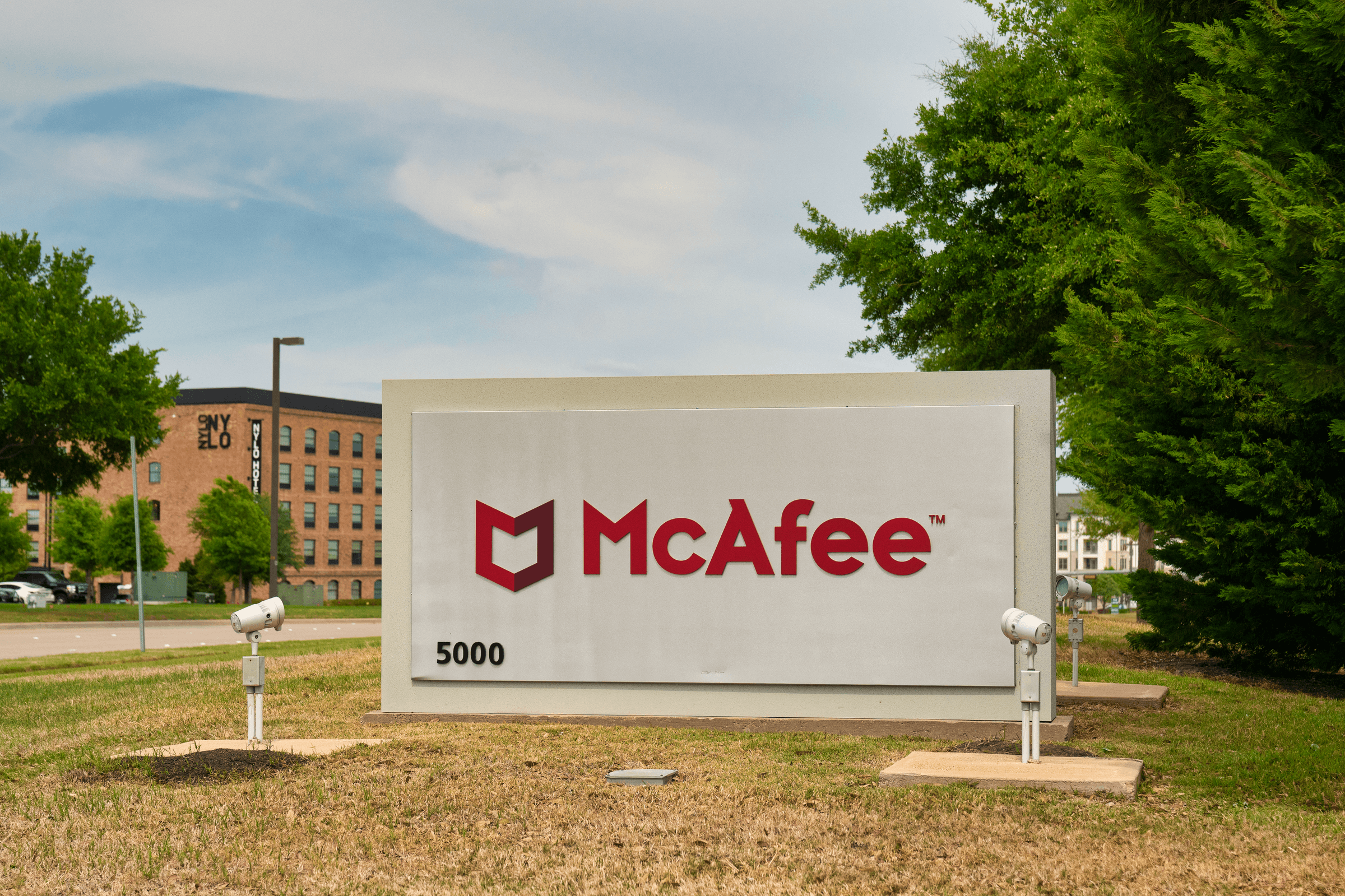
Independent labs AV-TEST and AV-Comparatives published 2026 test results for McAfee's antivirus, McAfee's privacy notice lists the data it may collect and who may receive it, and its offer terms set out how automatic renewal and refunds work. The Federal Trade Commission also warns that scammers send fake renewal messages using McAfee's name.
Who is behind McAfee
McAfee lists its corporate headquarters at 6220 America Center Drive in San Jose, California. On March 1, 2022, the company announced that an investor group led by Advent International and Permira had completed its acquisition of McAfee. The group also included Crosspoint Capital, CPP Investments, GIC and an ADIA subsidiary, and the deal took McAfee private.
What the independent labs published
AV-TEST's certification report for July and August 2026 covers McAfee Total Protection 1.39 on Windows 11. The product scored 6 out of 6 in protection, performance and usability, for 18 of 18 points. The lab sets its TOP PRODUCT threshold at 17.5 points.
On Android, AV-TEST's September 2026 report covers McAfee Mobile Security 10.6 on Android 15. It scored 6 out of 6 in the same three categories, with 99.9% real-time malware protection and 100% detection of widespread malware.
AV-Comparatives gave McAfee Total Protection 1.40 its ADVANCED+ award in the Real-World Protection Test for July to October 2026. The product blocked 396 of 400 test cases, a 99.0% protection rate, with four compromises and two wrongly blocked clean files or domains. In the lab's September 2026 Malware Protection Test, the same version recorded 81.3% offline detection, 98.3% online detection, 99.97% online protection and 36 false alarms.
What the privacy notice says
McAfee's privacy notice is dated January 2026.
- Data collected: McAfee may collect account and payment details, device identifiers, IP addresses, location, usage information, telemetry, visited domains and web traffic.
- Identity and financial services: these optional services can collect Social Security numbers, identification numbers, account numbers, financial logins and transaction information.
- Email scam protection: when enabled, it may collect message contents, links, attachments and metadata. The notice says stored training messages have personal information removed.
- VPN: the VPN may collect telemetry. McAfee says it does not collect originating IP addresses, DNS queries, or the applications, services and websites a user connects to.
- Who may receive data: service providers, affiliates, business partners, insurers, government authorities and parties to business transfers.
- Advertising: under applicable state laws, McAfee says it does not sell personal information but may share it for targeted advertising.
The notice says retention depends on subscription, service, business, legal and dispute-resolution needs.
Renewal, refunds and list prices
McAfee's US offer terms say subscriptions renew until cancelled. Annual subscriptions are charged 30 days before the term expires, and McAfee says it sends an email reminder 30 days before that charge. Vermont residents must opt in to automatic renewal. The terms also say renewal prices may change.
Full refunds are available when requested within 30 days of the initial purchase or within 60 days of a renewal charge. Monthly subscriptions are excluded.
As of November 2026, McAfee's regular annual prices for individual plans are $149.99 for McAfee+ Premium, $199.99 for McAfee+ Advanced and $279.99 for McAfee+ Ultimate. McAfee+ Advanced Family lists at $269.99 a year. McAfee's store shows these as the renewal prices and advertises a lower introductory price for the first year, so the renewal charge is higher than the first payment.
Unlimited-device plans cover household devices the subscriber owns for personal, noncommercial use, under a fair-use policy. McAfee's Virus Protection Pledge, in terms dated August 2024, requires an active qualifying subscription with automatic renewal turned on and a valid payment method. McAfee's pledge terms describe the remedy, if McAfee cannot remove a qualifying virus, as a refund for the current subscription term. The terms exclude virus-related damage or loss.
Fake McAfee messages are a documented scam
The FTC's guidance on tech support scams names McAfee among the well-known companies whose names scammers use in fake subscription renewal messages. That warning describes third parties posing as McAfee.
In a complaint against Paddle, dated June 16, 2025, the FTC alleged that merchants used fake domains and pop-ups impersonating McAfee to sell fake McAfee software. The complaint says McAfee also brought accounts to Paddle's attention.
What to do
If the renewal charge is the concern, McAfee says renewal settings are managed in My Account, and an annual plan should be cancelled at least 31 days before it expires to avoid the charge. If targeted advertising is the concern, the privacy notice offers an opt-out through McAfee's request form, and McAfee says it interprets detected Global Privacy Control signals according to applicable law.
See Norton vs McAfee, Is Malwarebytes Safe?, How to Block McAfee Pop-Ups and Notifications and How to Uninstall McAfee from Your Computer.