


I have sensitive ears. Most over-ear headphones give me about three hours before the pressure on the top of my head or the clamp on my jaw starts asking me to take them off. The Bose QuietComfort Headphones (2nd Gen) are the first pair I have worn from morning through the end of a workday and then forgotten I still had on. That is not a small thing, and it is the reason this review exists rather than a spec sheet.
Technobezz is supported by its audience. We may get a commission from retail offers. Reviews ethics statement.
Bose QuietComfort Headphones (2nd Gen) Review, Ultra Features Without the Ultra Price
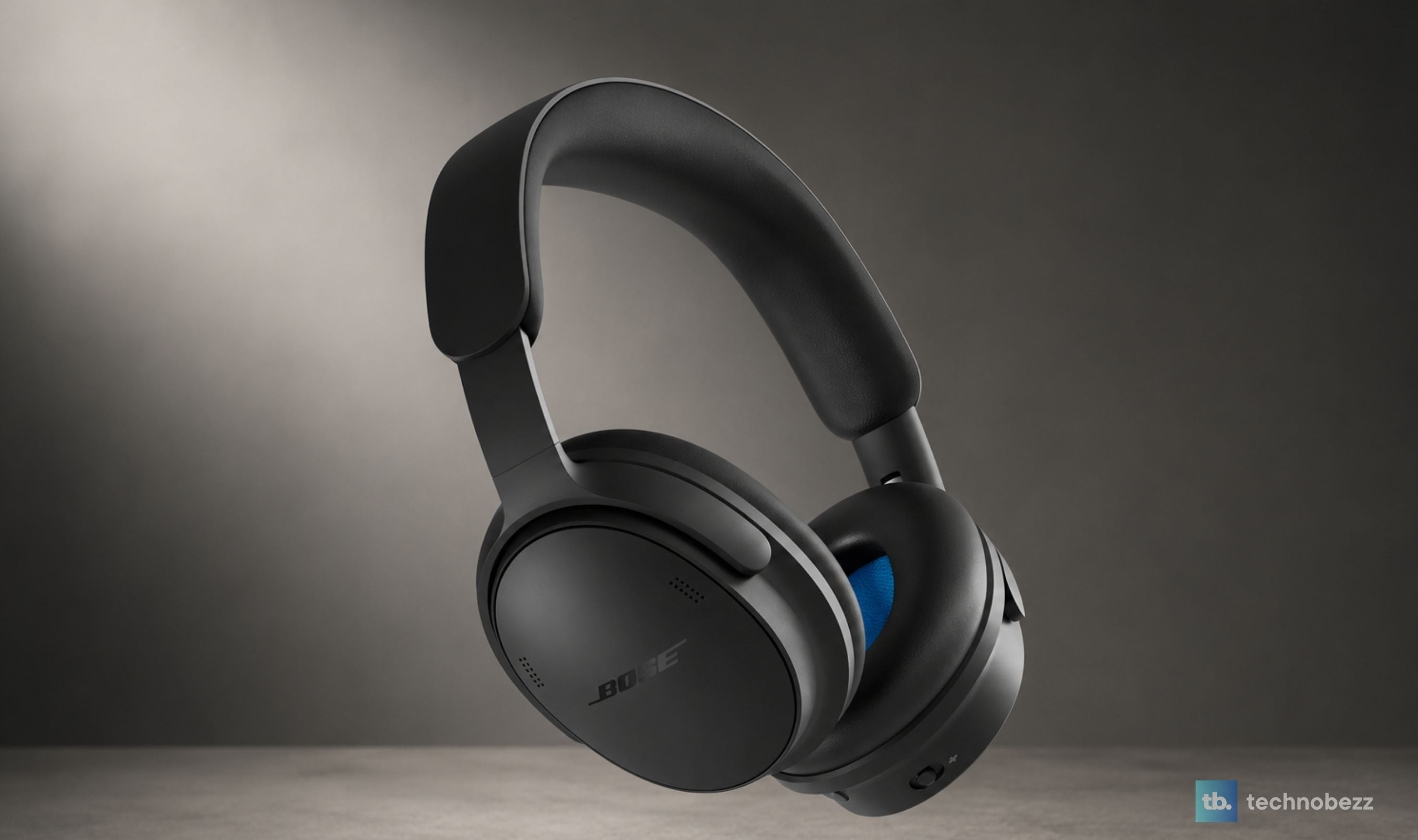
The Bose QuietComfort Headphones (2nd Gen) bring Immersive Audio and USB-C lossless down from the Ultra for $359.
Updated August 20, 2026Aug 20, 2026
•15 min read

Credit: Technobezz
Get Deals Like These in Your Inbox
The best prices, checked by our editors.
In This Review
9.4/ 10

Best for Anyone who wears headphones for hours at a time and needs all-day comfort without ear pressure, plus strong ANC in real-world noise, natural spatial audio, and wired USB-C lossless at a desk.
Bose QuietComfort Headphones (2nd Gen)
TypeOver-ear wireless noise cancelling headphones
Model Number895491-0100 (Black)
Noise CancellationBose QuietControl with 6-microphone array and seal-gap compensation
Listening ModesQuiet, Aware, Immersion, Cinema, and ANC off
Adaptive TechActiveSense, smooths sudden noise spikes in Aware Mode
Spatial AudioBose TrueSpatial with Still, Motion, and Cinema modes
I have been testing the black version for the past week, across commuting traffic, outdoor walking, a genuinely noisy environment or two, a lot of desk work, and enough calls to sort out a first impression that turned out to be wrong. Bose gave the QuietComfort line a real update this generation rather than a paint job, adding Immersive Audio and wired lossless over USB-C, both of which used to be reserved for the pricier Ultra model. We covered the launch announcement and the full spec list when Bose made it official. This is what a week of wearing them actually feels like.
Bose QuietComfort Headphones (2nd Gen) - Best Noise Cancelling Headphones for All-Day Comfort
The QuietComfort Headphones (2nd Gen) are Bose's mid-tier over-ear pair, sitting below the QuietComfort Ultra. This generation brings a redesigned headband with smooth sliders, pill-shaped earcups with plusher protein leather cushioning, a six-microphone QuietControl noise cancelling system, Bose TrueSpatial immersive audio with a dedicated Cinema Mode, and two-way USB-C audio that carries lossless input up to 24-bit/48kHz. Battery is rated at 24 hours, or 18 with Immersive Audio running.
They launched at $359 in five finishes, the standard Black and White Smoke plus three limited-edition colorways in Eucalyptus Green, Dewdrop Mint, and Rosewood Mauve. The Ultra model sits $90 above them.
Key Highlights
- QuietControl active noise cancellation with a six-microphone array and updated seal-gap compensation
- Bose TrueSpatial immersive audio with Still, Motion, and Cinema modes
- Two-way USB-C audio, lossless input up to 24-bit/48kHz and voice output up to 24-bit/16kHz
- Listen while charging over the same USB-C connection
- 24 hours of battery with ANC on, 18 hours with Immersive Audio engaged
- 15-minute quick charge for 2.5 hours of playback, 3 hours for a full charge
- Five listening modes: Quiet, Aware, Immersion, Cinema, and ANC fully off
- ActiveSense smooths sudden noise spikes while you are in Aware Mode
- Bluetooth 5.4 with multipoint for two devices at once, plus Google Fast Pair
- Customizable shortcut button for Spotify, a voice assistant, or Immersive Audio
- Redesigned headband and oval earcups with removable protein leather cushions
- 230 grams with a hardshell carry case included
Pros
- The most comfortable over-ear pair I have worn, with no hot spots or uneven ear pressure after a full day
- Noise cancellation holds up in real traffic and genuinely noisy spaces, not just quiet offices
- The earcup seal is excellent, which does as much for the isolation as the electronics do
- Seal-gap compensation means glasses no longer cost you a chunk of your ANC
- TrueSpatial sounds natural rather than processed, and Cinema Mode is legitimately good for video
- USB-C lossless is a real upgrade in precision and depth, and it works while charging
- Physical buttons are simple, well placed, and findable without taking the headphones off
- Multipoint switching between two devices is fast and reliable in practice
- Setup and pairing are quick, and the Bose app is well organized rather than bloated
- ANC can now be switched fully off, which the previous generation would not do
- Battery genuinely lasts a full working day as advertised
- Five finishes including three limited-edition colorways
Cons
- The black finish shows fingerprints, hand oils, and smudges readily
- $359 is a real investment, and the Ultra sits only $90 higher
Who It's For
Anyone who wears headphones for hours rather than minutes. Commuters, office and remote workers, students, frequent flyers, and anyone who has given up on a previous pair because of ear pressure or a hot, clamped feeling by the afternoon. If you wear glasses, these deserve particular attention, because the seal-gap compensation is the rare marketing claim that holds up in daily use.
Skip if
You need hi-res wireless audio from a compatible phone or player, because these top out at AAC over Bluetooth and there is no aptX or LDAC. Skip them if you want the absolute best noise cancellation Bose makes, since the Ultra still edges ahead for $90 more, and skip them for workouts, since there is no water resistance rating here. If none of that describes you, it is worth comparing them against the other noise cancelling headphones we rate before committing.
A Full Day of Wear Without Thinking About Them
Comfort is the thing I test hardest because it is the thing that decides whether an expensive pair of headphones gets used or gets shelved. This generation changes the headband and the earcups, and both changes matter.
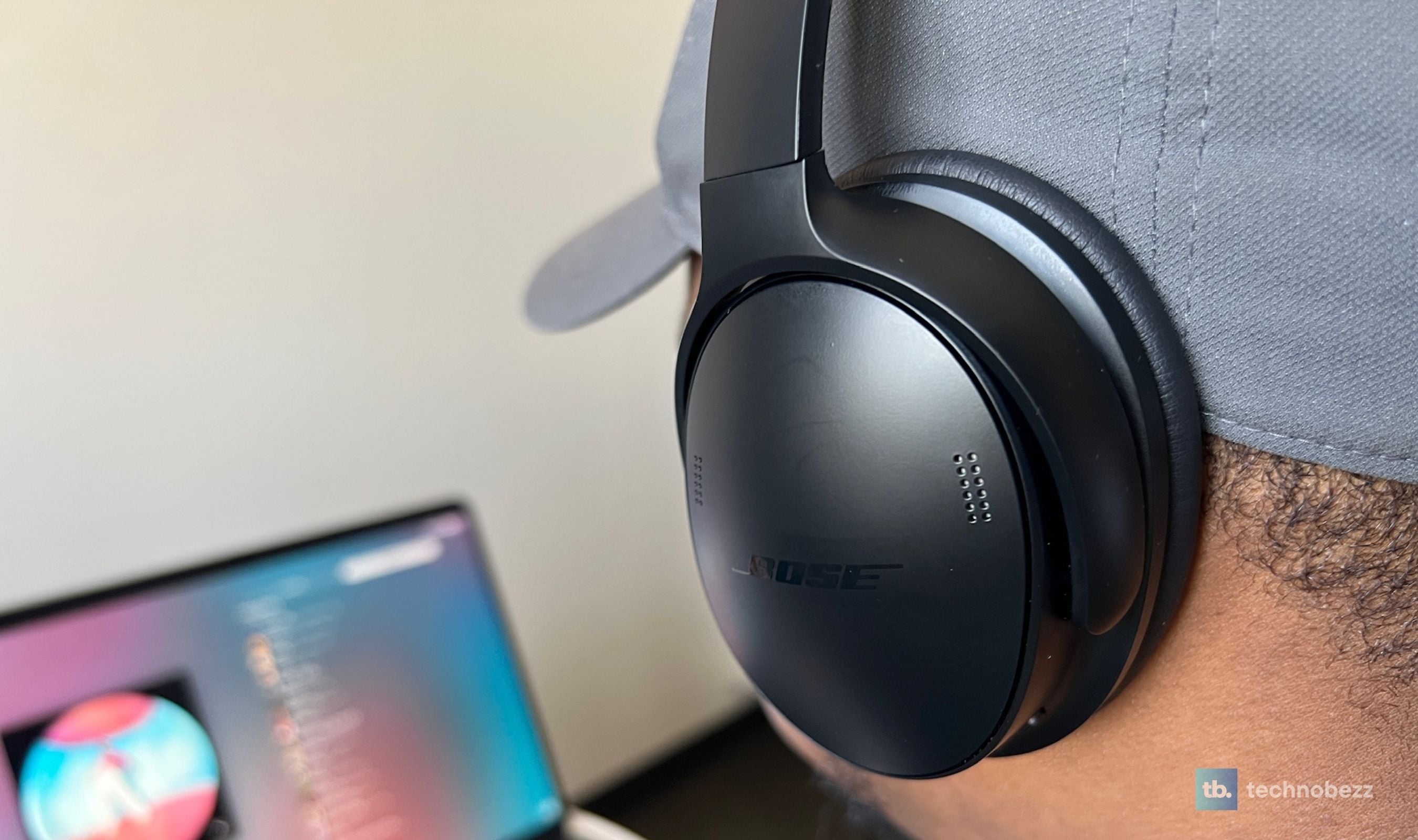
The headband is wider than before and carries more of the soft protein leather along the crown, so the weight spreads instead of concentrating on one strip of your scalp. The sliders are smooth rather than notched, which means you set your fit exactly where you want it instead of choosing between two clicks that are both slightly wrong. There is enough friction in the adjustment that it stays put once set.
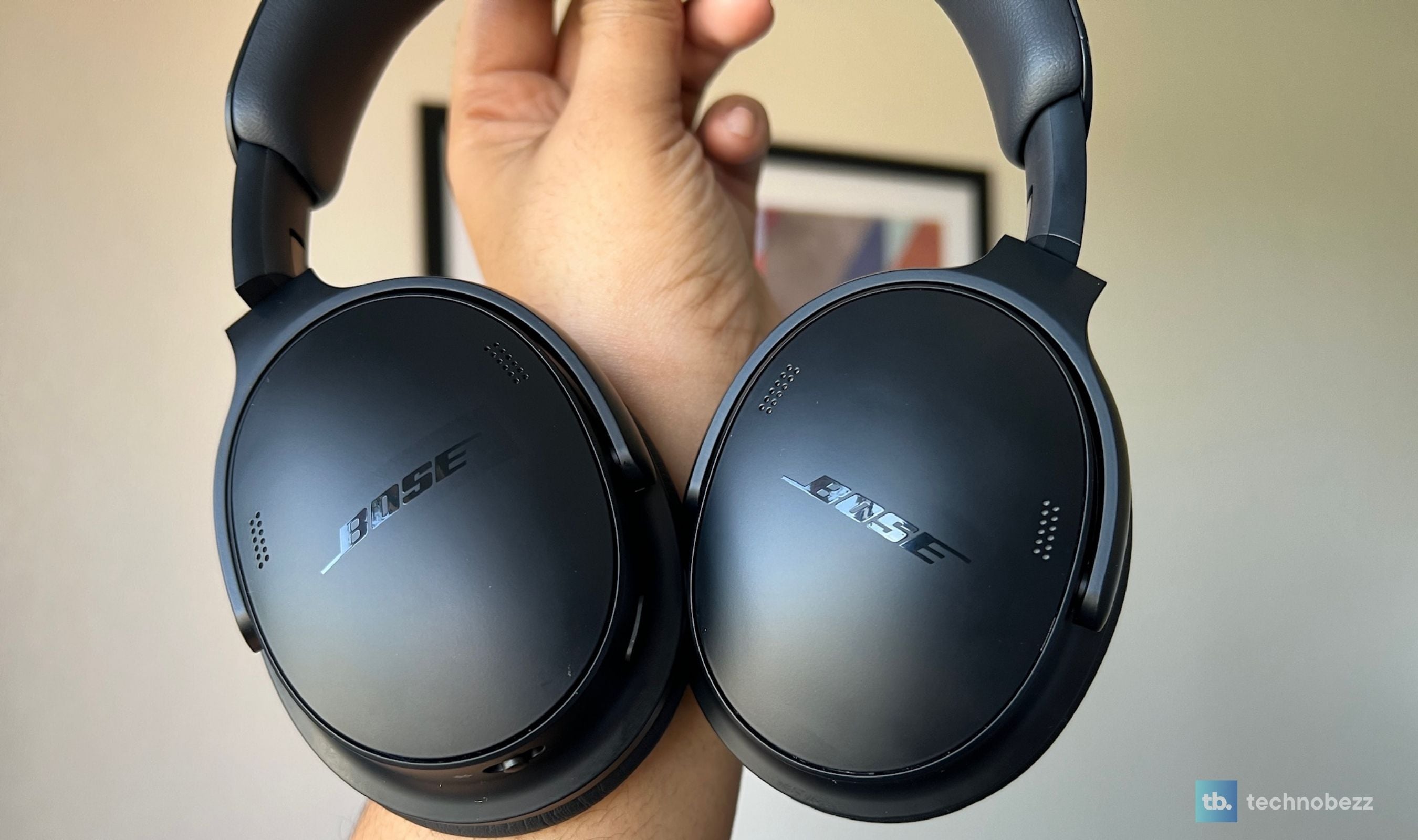
The earcups are the bigger change. They are oval now rather than round, which follows the actual shape of an ear, and the cushioning is deeper and softer. What that produces is even pressure all the way around rather than a pinch at the jaw and a gap up top. At 230 grams, they are light enough that there is nothing pulling on your neck.
The clamping force deserves its own mention because it is the detail most brands get wrong. Too loose and the seal breaks, taking the ANC with it. Too tight and you are counting the minutes. Bose landed this one in the middle, firm enough that the seal holds when you turn your head or walk, gentle enough that I genuinely forgot I was wearing them more than once. For someone with sensitive ears, that combination is not common.
How the Noise Cancelling Holds Up Outside a Quiet Room
Any pair of headphones can cancel noise in a still room. The test is busy traffic, an outdoor street, and an environment with unpredictable sound, and this is where QuietControl earns the reputation Bose has been trading on for decades.
In traffic, engine noise and road rumble simply go. Not muffled, gone. Outdoors, the low-frequency wash of a street drops away and what is left is the occasional sharp sound at a much lower level. In an actively noisy environment, the ANC held its composure rather than pumping or hissing the way weaker systems do when the noise floor keeps shifting.
Part of that is electronics and part of it is the seal. The oval cups and deeper cushions do real passive isolation before the microphones do anything, and the two working together is why this feels more complete than the raw ANC spec suggests.
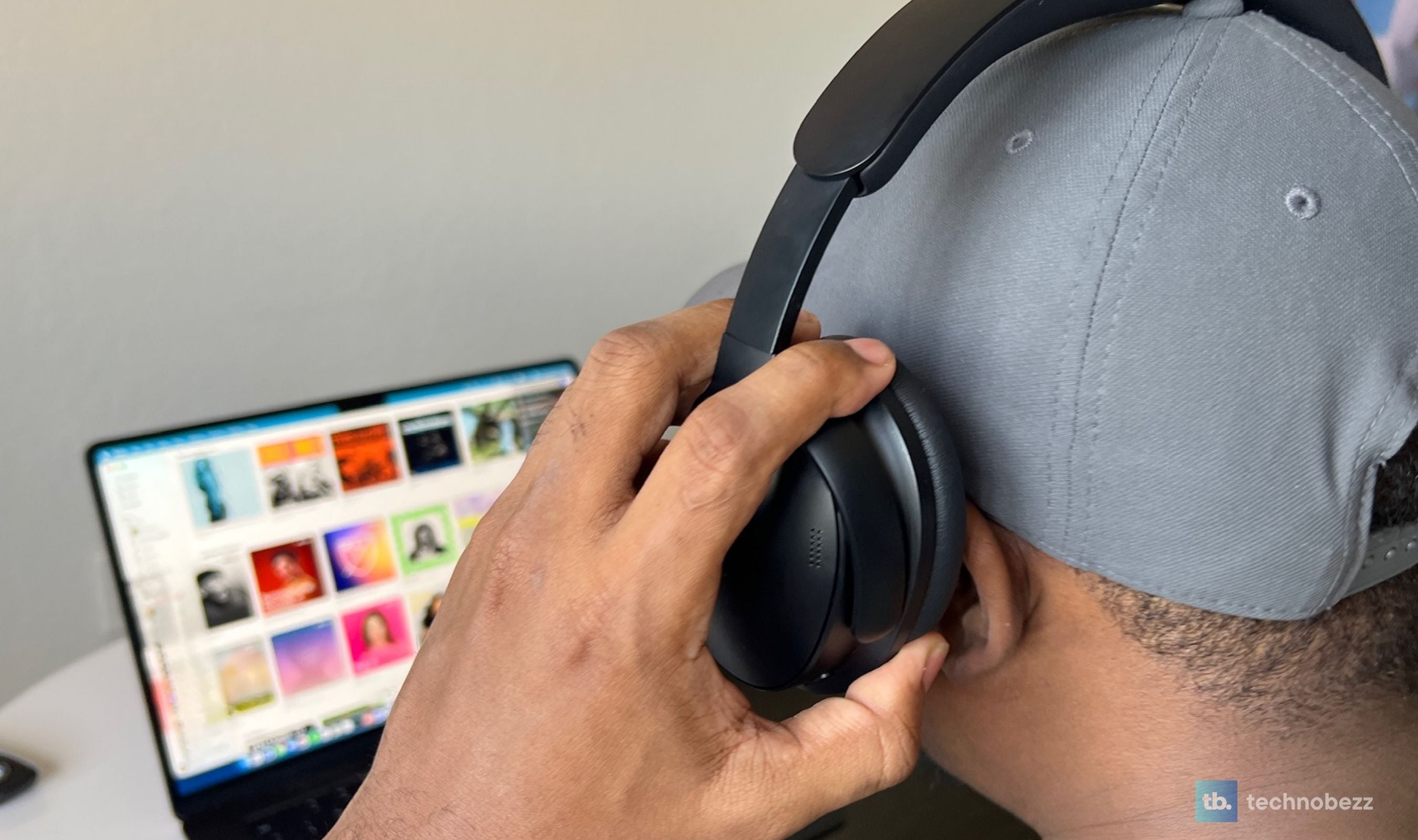
The seal-gap compensation is worth taking seriously if you wear glasses. Temple arms break the cushion seal and normally cost you a noticeable amount of cancellation. The six-microphone array here compensates for that gap, and in practice the drop-off with glasses on is small enough that I stopped thinking about it. There is presumably a limit, and thick frames or a hat will still cost you something, but as implemented this is a genuine improvement rather than a bullet point.
Aware Mode is the transparency setting, and it is good without being the best I have used. Voices come through clearly and it does not give you that plugged-ear feeling, but it sounds slightly processed next to the most natural transparency modes out there. ActiveSense is the addition here, ducking sudden loud spikes while you are in Aware Mode so a passing siren or a screech does not go straight into your ears at full volume. It works, quietly, in the background.
New this generation, and overdue, is the ability to turn ANC fully off in the app. That extends battery life. Worth knowing before you do it: with cancellation off, the microphones are disabled, so you lose sidetone and will not hear your own voice during calls.
TrueSpatial and What Immersive Audio Actually Does to Music
Immersive Audio used to be an Ultra-only feature. Bose brought it down to this model, branded as TrueSpatial, with three modes: Still, Motion, and Cinema.
I want to be careful here, because spatial audio is the most polarizing feature in headphones and plenty of people switch it on, feel nothing, and switch it off forever. My experience was the opposite. It does not sound like a processing effect draped over the track. It sounds like the music stopped living inside my head and moved out into the room, wide and externalized, with the sense of space you get from actual speakers. On the right material it is genuinely absorbing.
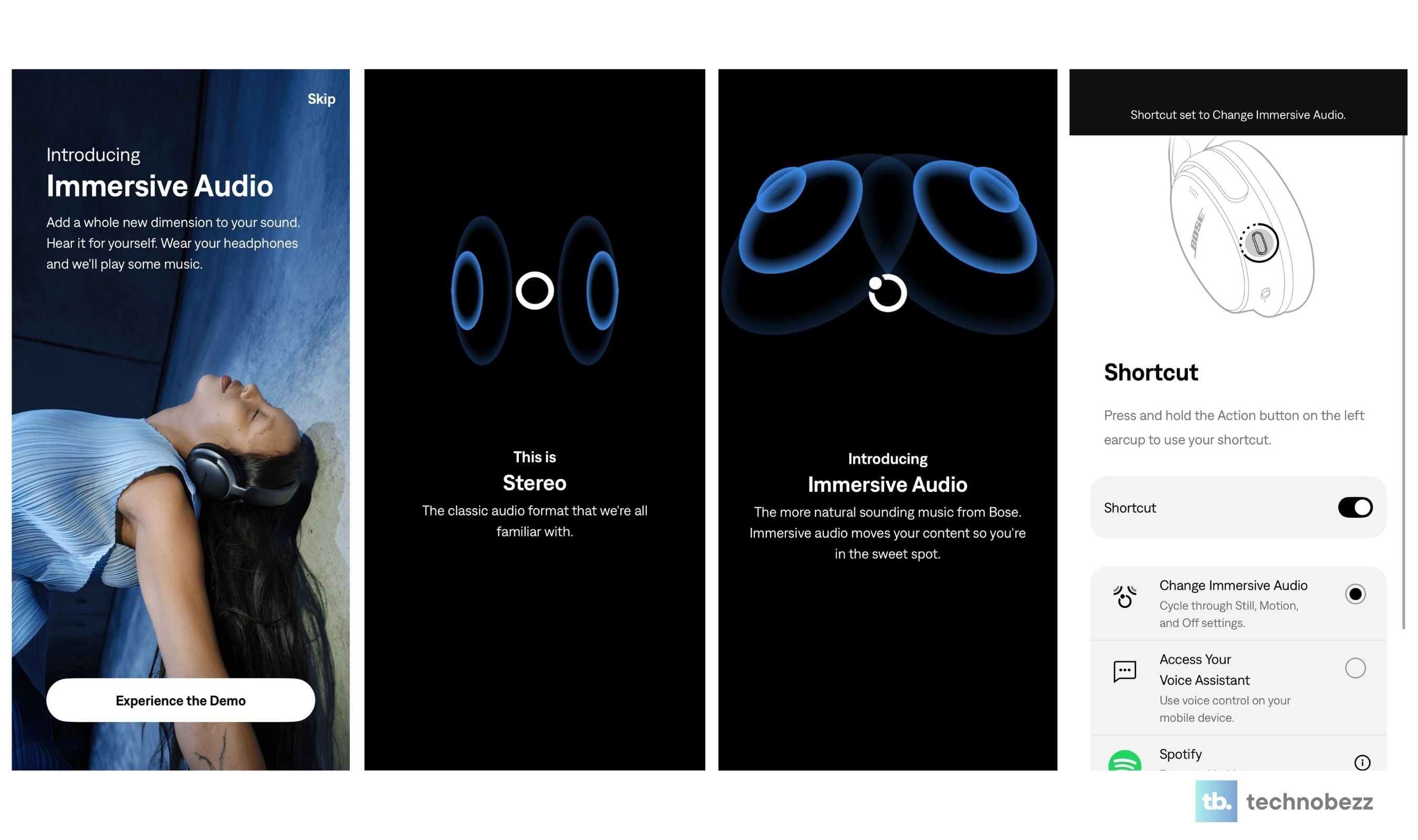
Still mode fixes that soundstage in place. Motion mode anchors it to your head, so the sound stays put as you turn. Motion is the one people either love or find distracting, and if you are going to bounce off any of these, it will be that one. Try it, but do not judge the feature by it.
Cinema Mode is the one I would point a skeptic to. It spatializes video content while pulling dialogue to the center in front of you, which is exactly what you want on a laptop or phone screen. Dialogue sits clearly forward, effects spread wide, and the difference on a movie or a show is immediate.
The cost is battery. Running Immersive Audio takes you from 24 hours down to 18. That is still a full day, but it is a real trade, and it is why the mode toggle lives right on the earcup instead of buried in a menu.
USB-C Lossless Is the Feature I Did Not Expect to Care About
Two-way USB-C audio is the other Ultra feature that made it down to this model, and it is the one that surprised me most. Plug the included USB-C cable into a laptop or phone and the headphones take a wired digital signal, lossless, up to 24-bit/48kHz.
The first time I switched from Bluetooth to the cable on the same track, the question that came to mind was why every pair of headphones does not do this. Depth holds. Detail that Bluetooth compression smooths over stays intact. Instrument separation tightens up. It is not a subtle difference on material that rewards it, and going back to wireless afterward is a small letdown.
The connection works in both directions, so voice output runs up to 24-bit/16kHz over the same cable, which is a meaningful upgrade for calls and conferencing on a laptop. And critically, you can listen over USB-C while the headphones charge, so plugging in at a desk means you are topping up and listening at the same time rather than choosing.
This matters more because of what the Bluetooth side lacks. Wirelessly, these support SBC and AAC only, with no aptX or LDAC, so there is no hi-res path over the air the way there is on some rivals. USB-C lossless is Bose's answer to that, and at a desk it is a better answer than a codec would be. On a walk, it is not an answer at all.
Buttons You Can Find Without Looking
Bose kept physical buttons this generation rather than moving to a touch strip, and after living with both approaches I am glad they did.
The right earcup carries volume up and down flanking a multi-function button. One press plays or pauses, two skips forward, three goes back. The left earcup has the power and pairing slider along with the mode button that cycles your listening modes. The layout is intuitive enough that within a day I was operating everything by feel, mid-task, without breaking what I was doing.
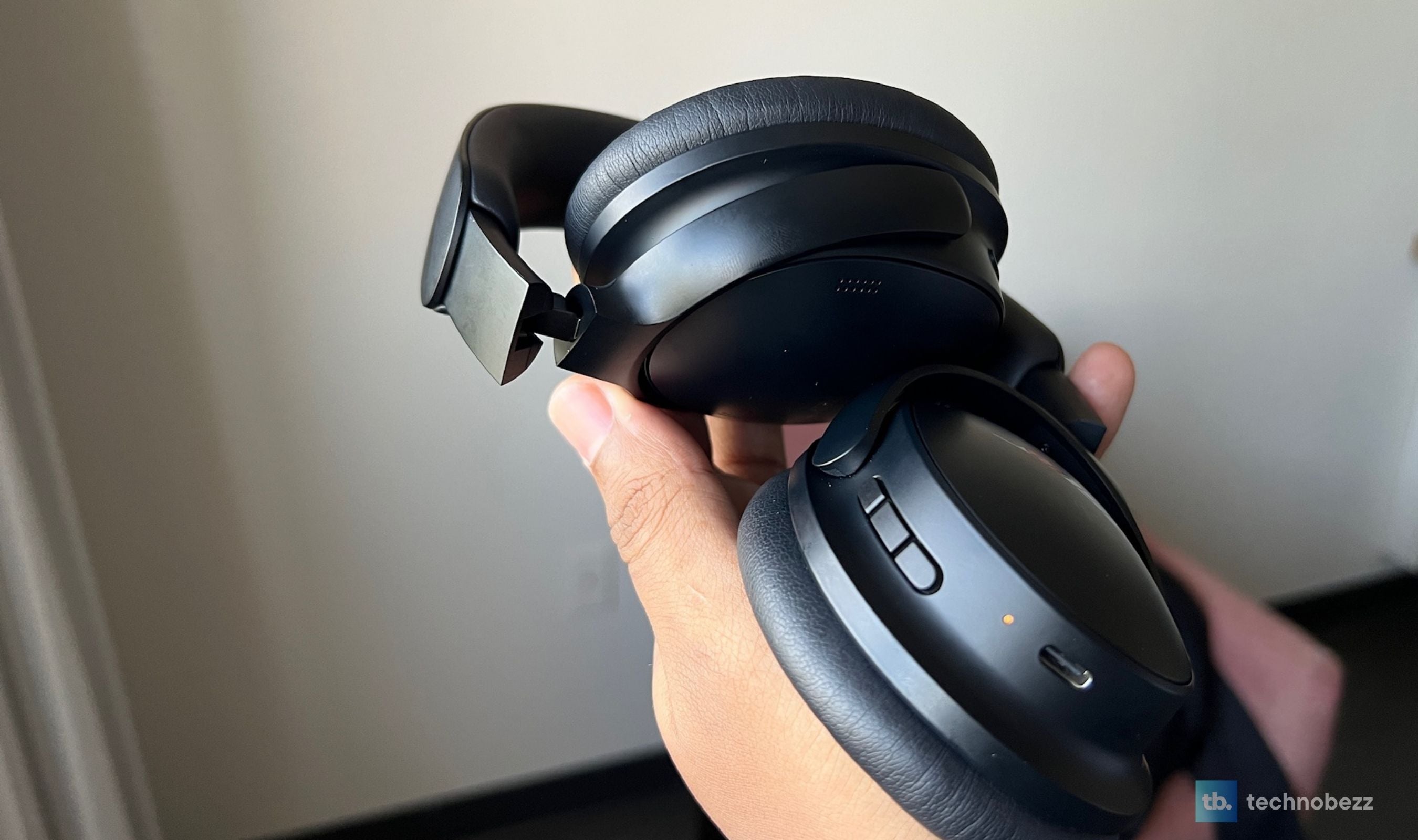
There is nothing to learn, no swipe gestures to mis-trigger, no accidental input from brushing the earcup while adjusting the fit. It is a simpler system than the capacitive controls on the Ultra, and for daily use I would take it.
The App, the Modes, and the Shortcut Button
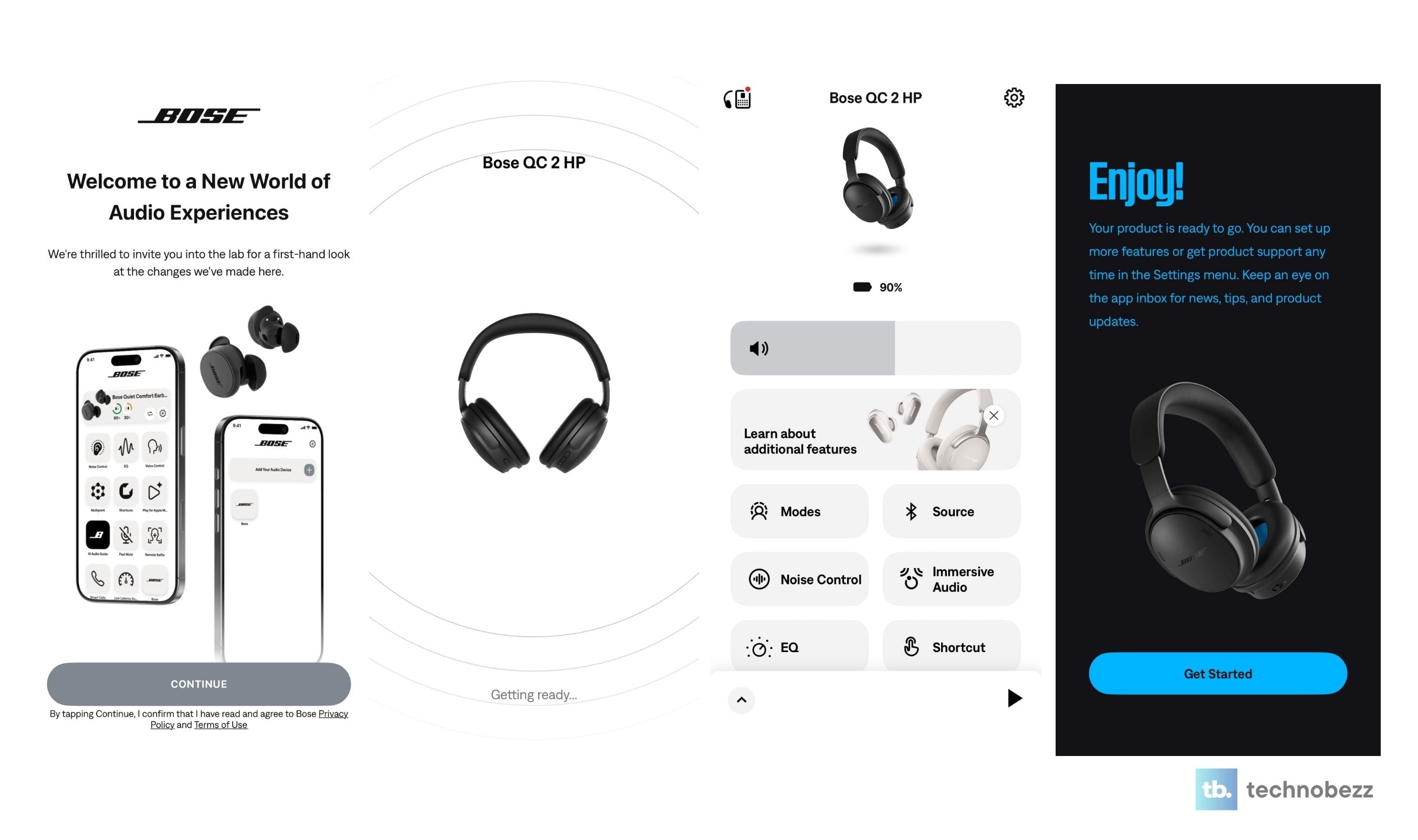
The Bose app is one of the better ones in this category, and its main virtue is that it does not try to do too much. Modes, an equalizer with bass, mid, and treble sliders plus presets, ANC level, shortcut assignment, firmware updates, all sitting where you would expect them.
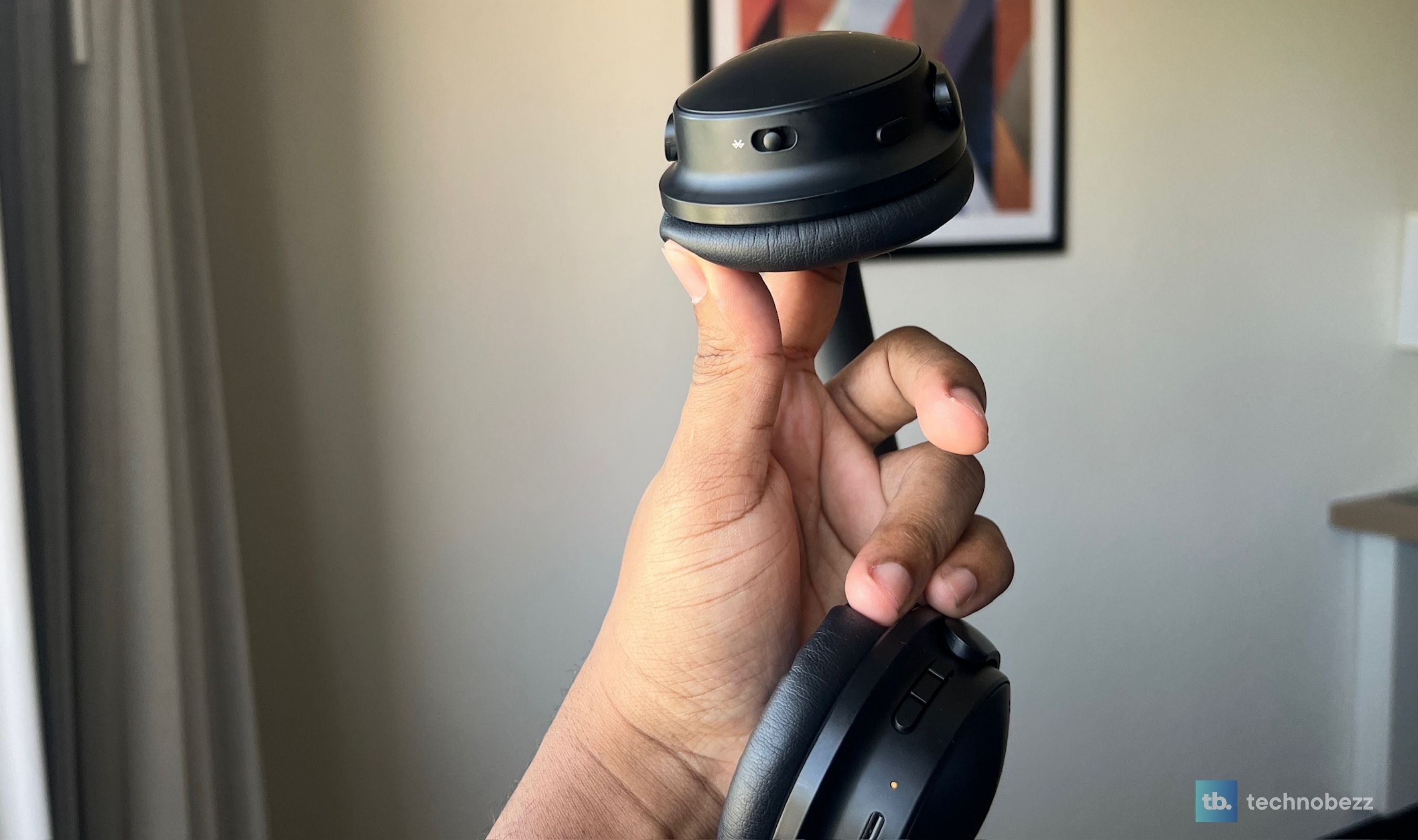
Modes are the core of it. Quiet for full cancellation, Aware for transparency, Immersion for spatial audio, Cinema for video, and ANC off. You can adjust how much cancellation you actually want rather than living with a single fixed level, which is genuinely useful if full ANC gives you that pressure sensation some people get.
The shortcut button is the customization I ended up using most. Assign it to Spotify, a voice assistant, or Immersive Audio, and it becomes a one-press control for whatever you actually reach for. Setting it to cycle Immersive Audio is the one I settled on.
Multipoint is the other feature that earns its keep. Two devices connected at once, and switching between them happens smoothly rather than with the dropouts and re-handshakes that make multipoint frustrating on cheaper pairs. Start a video on a laptop, take a call on a phone, and the transition just happens.
Battery, Charging, and What Is Not in the Box
Bose rates these at 24 hours with ANC on and 18 with Immersive Audio running, and both figures matched my experience closely enough that I stopped charging them daily. A full working day of wear does not get you near empty. Fifteen minutes of charging buys 2.5 hours, and a full charge takes about three.
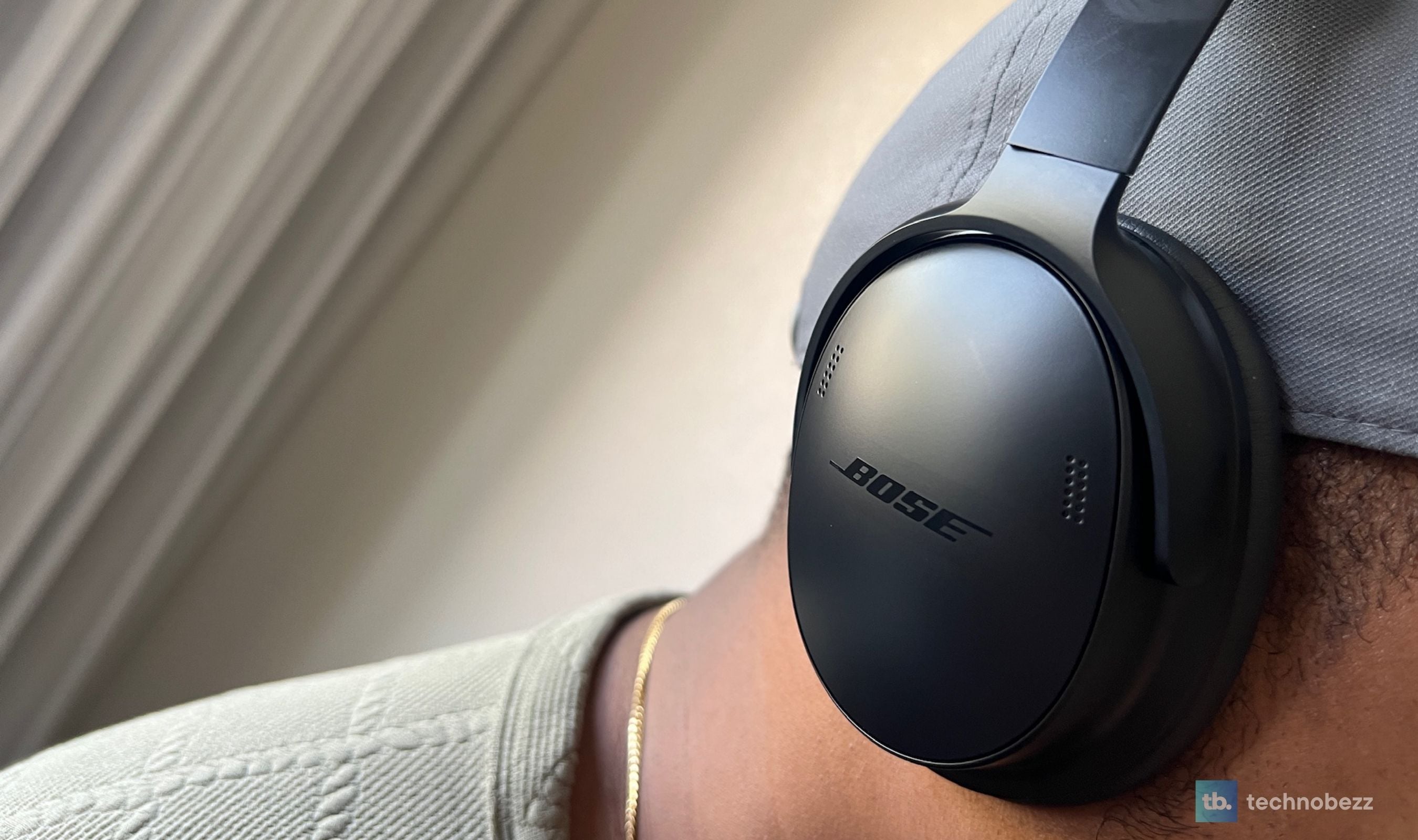
Now the part worth flagging before you order. There is no power adapter in the box. You get the headphones, a hardshell carry case, and two cables. If you do not already have a USB-C charger, that is an additional purchase on a $359 product, which is a slightly stingy omission at this price.
What you do get alongside the USB-C to USB-C cable is a 3.5 mm to USB-C cable for analog sources, so in-flight entertainment systems and older gear are covered without an adapter hunt. Between the two cables, the wired story here is unusually complete for a wireless pair.
Calls Started Rough and Then Settled
This is the one area where my opinion changed during testing, and it would be dishonest to leave that out.
My first call, the person on the other end said I sounded far away, like I was across the room from the microphone. That is a real failure mode on headphones with aggressive noise suppression, where the processing that strips out background noise takes some of your voice with it. Not the first impression I wanted from a six-microphone array.
So I tested it properly. Multiple calls, different rooms, different distances from the source device, indoors and out, across several days. And the results after that first session were consistently good. Voices came through clearly on both ends, background noise was handled without gutting my voice, and nobody raised the distance issue again. Across the whole run I would put call quality at around 8.5 out of 10, with the caveat that the first session was well below that.
What I take from it is that calls are the most conditional part of this product. In a controlled environment they are strong. Outdoors with wind, or moving around, the noise processing is working harder and results will vary more than the music performance does. If your job is back-to-back calls in unpredictable places, go in with that expectation.
Build, Finish, and the Fingerprint Problem
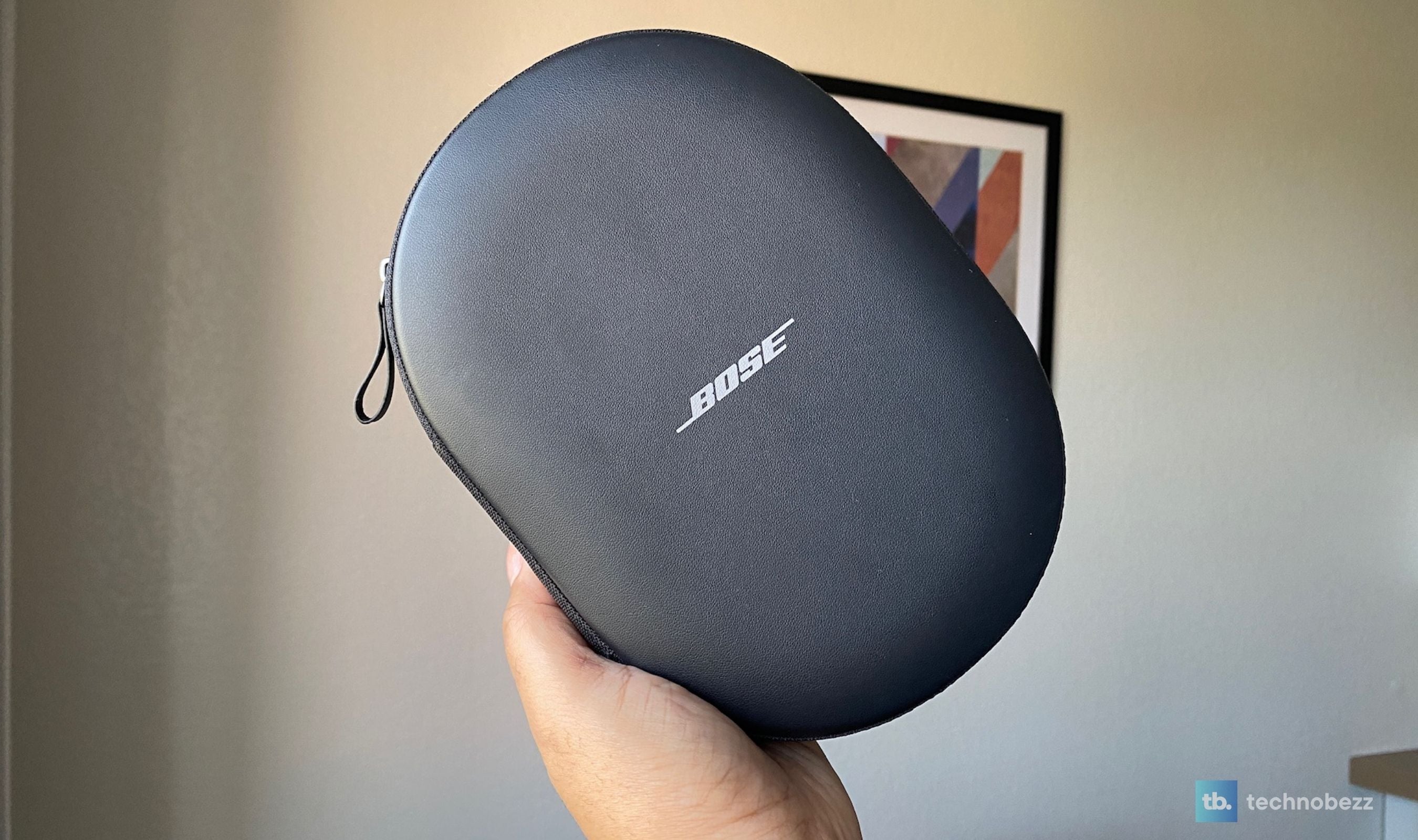
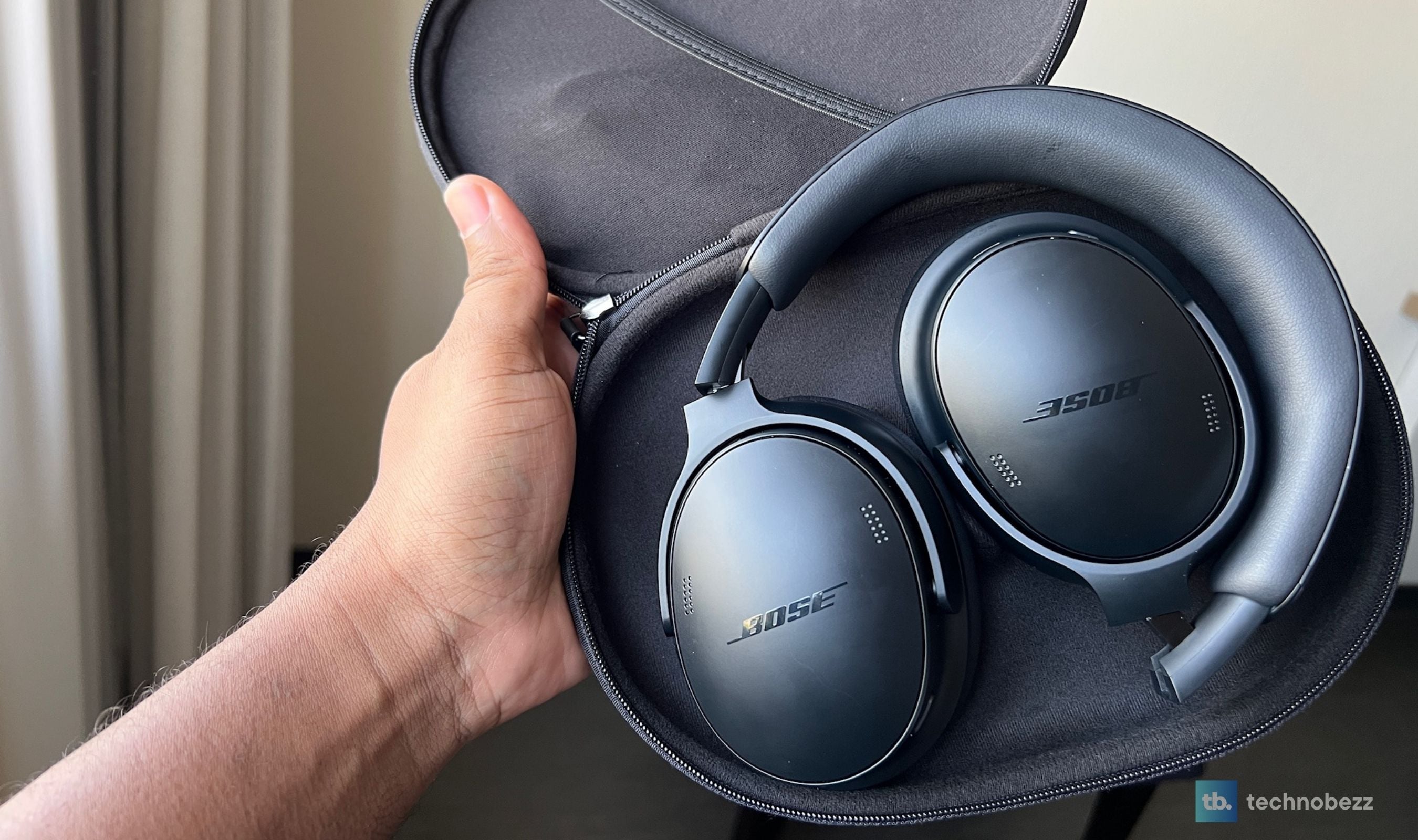
These feel like a well-made product in the hand without tipping into luxury territory. The shell is light plastic, which is exactly why you can wear them all day and forget they are on, and nothing creaked or flexed in my time with them. The earcups rotate and fold down into the included hardshell case, which is compact enough for a bag, and the headband sliders glide smoothly and hold their position once set. If you are expecting metal-and-glass opulence at this price, that is not where Bose spent the money. The budget went into the cushioning and the electronics, which is the right call for headphones you wear rather than display.
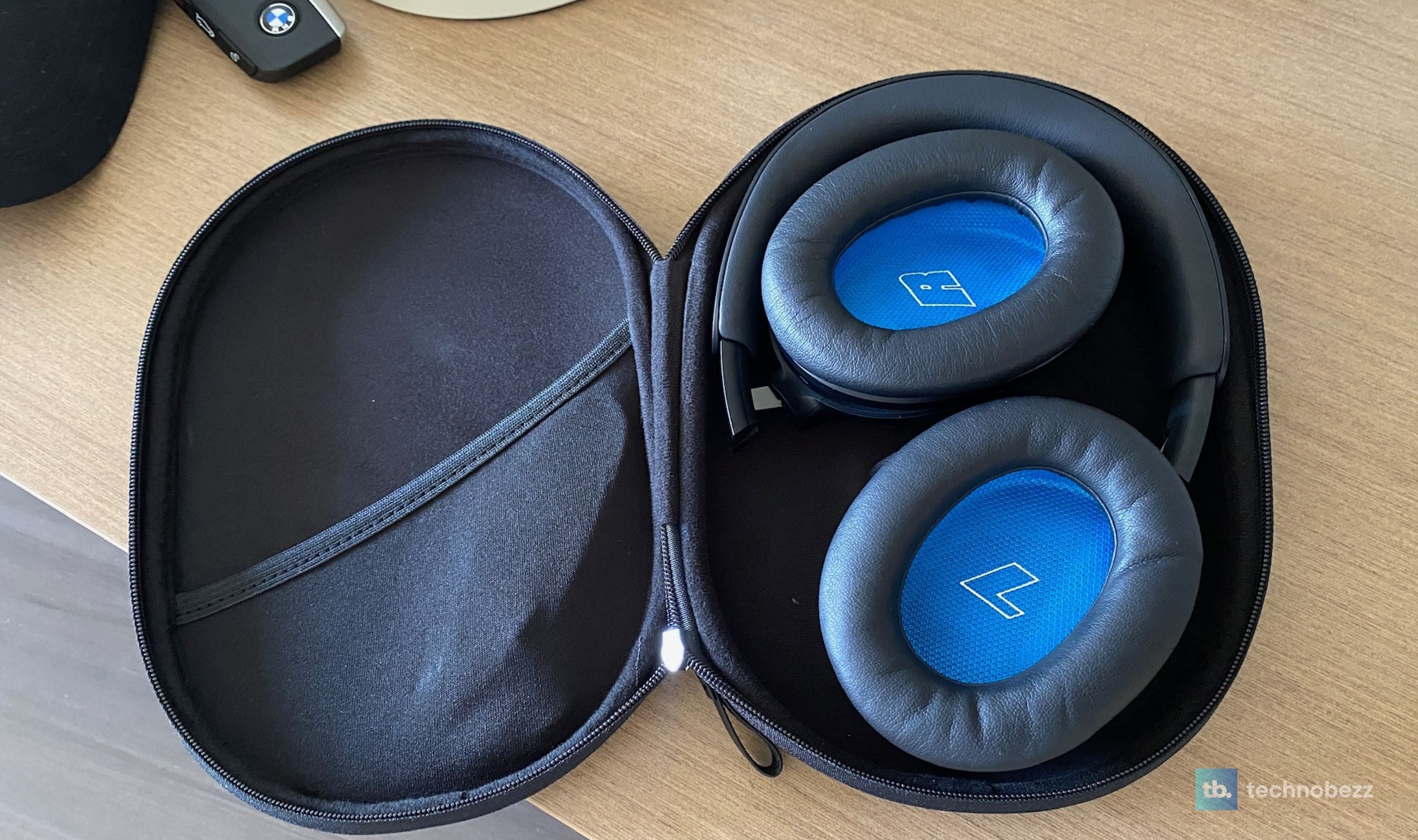
The design reads as clean and modern rather than gamer or flashy, and the two-tone treatment on some of the colorways is genuinely attractive. The limited-edition finishes in Eucalyptus Green, Dewdrop Mint, and Rosewood Mauve are the ones that will get noticed. I tested the black.
Which brings me to the one complaint I have about the hardware, and it is a cosmetic one. Black shows everything. Fingerprints, hand oils, smudges from putting them on and taking them off. They look pristine when clean and visibly handled after an afternoon of normal use, and you will find yourself wiping them down. If that would bother you, one of the lighter finishes is the easy fix.
Worth noting for completeness: there is no water or dust resistance rating here. These are indoor, commute, and travel headphones. They are not workout headphones, and treating them as such is asking for trouble.
This product was provided to Technobezz for review. We independently select what we review. The manufacturer had no input on this article and did not see it before publication. All opinions are our own.
FAQ
What is the difference between these and the QuietComfort Ultra?
The Ultra costs $90 more and gives you slightly stronger noise cancellation, a more premium build with a capacitive touch strip for volume, longer battery life, and aptX Adaptive for hi-res wireless audio. The standard model now has Immersive Audio, USB-C lossless, and the improved ANC that used to separate them. Most of the gap has closed, and for most people the $359 pair is the smarter buy.
Can I use them wired?
Yes, over USB-C. The included USB-C cable carries lossless digital audio up to 24-bit/48kHz in and voice up to 24-bit/16kHz out, and you can listen while charging. A 3.5 mm to USB-C cable is also included for analog sources, which covers in-flight entertainment systems and anything else with a headphone jack.
Do they work well with glasses?
Yes, better than most. Bose's six-microphone system compensates for the seal gap that glasses arms create, and the drop in cancellation with glasses on was small enough that I stopped noticing it. Thick frames or a hat will still cost you something.
What Bluetooth codecs do they support?
SBC and AAC. There is no aptX or LDAC, so hi-res wireless is not available on this model. If you want lossless, use the USB-C connection.
Is Immersive Audio worth the battery hit?
It takes you from 24 hours to 18, which is still a full day. Cinema Mode for video is worth it every time. For music, try Still mode first and treat Motion as optional, since that is the one people find distracting.
Can I turn noise cancelling off completely?
Yes, in the Bose app, which is new this generation and saves battery. Be aware that with ANC off the microphones are disabled, so you will not hear your own voice during calls.
Are they good for the gym?
No. There is no water or sweat resistance rating, so treat them as travel, commute, and desk headphones.
Where They Land Against the Ultra
Bose has a habit of delivering, and this is not the generation that breaks the streak. What is different here is that the update is substantive. Immersive Audio and USB-C lossless were the Ultra's reasons to exist, and both are now sitting in a pair that costs $90 less.
What sold me is not on the feature list. It is that I can put these on in the morning and take them off at the end of the day without my ears asking me to stop. Add cancellation that holds up in real traffic, a spatial mode that sounds natural rather than gimmicked, and wired lossless that makes you question why it is not standard, and you have a pair that is genuinely easy to live with rather than one that impresses on paper.
They are not perfect. The Bluetooth codec support is basic, there is no charging brick, calls take a bit of trust before they earn it, and black shows every fingerprint you leave on it. None of that changed how much I have used them. If you want the very best noise cancellation Bose builds and the hi-res wireless to go with it, spend the extra $90 on the Ultra. For everyone else, this is the pair I would buy, and I have not been this happy to have headphones on all day in a long time.
Share this article
More in News

Lenovo coupon codes and deals
Browse 5 current Lenovo offers, including 3 coupon codes and 2 online deals.
5 min read

Woot coupon codes and deals
Browse 2 current Woot offers, including 2 coupon codes and 0 online deals.
3 min read

Samsung coupon codes and deals
Browse 5 current Samsung offers, including 0 coupon codes and 5 online deals.
5 min read

Best tech coupon codes and online deals
Browse 8 current tech offers across 4 merchants, including 4 coupon codes and 4 online deals.
4 min read
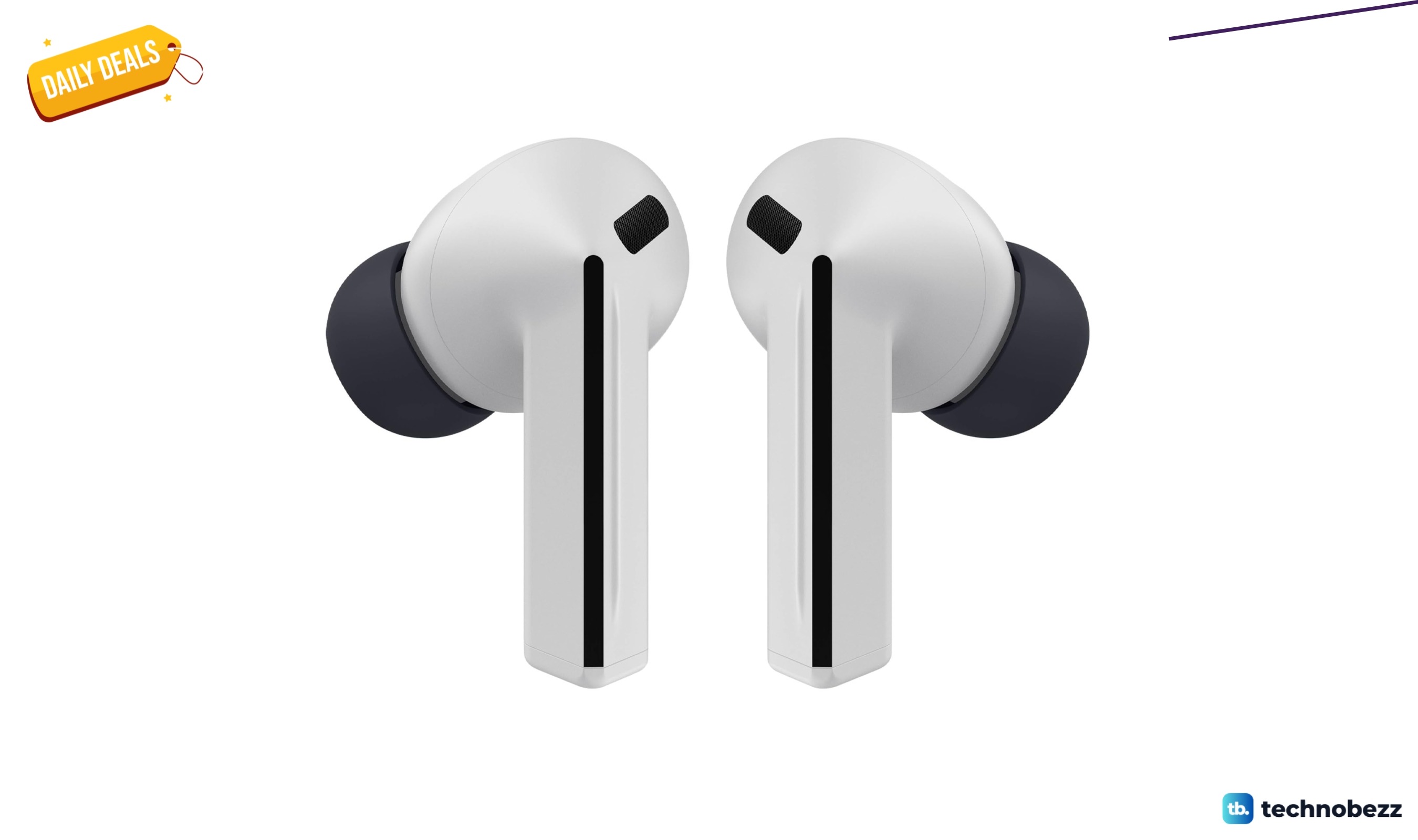
5 headphone deals we checked, starting at $60.04
3 min read
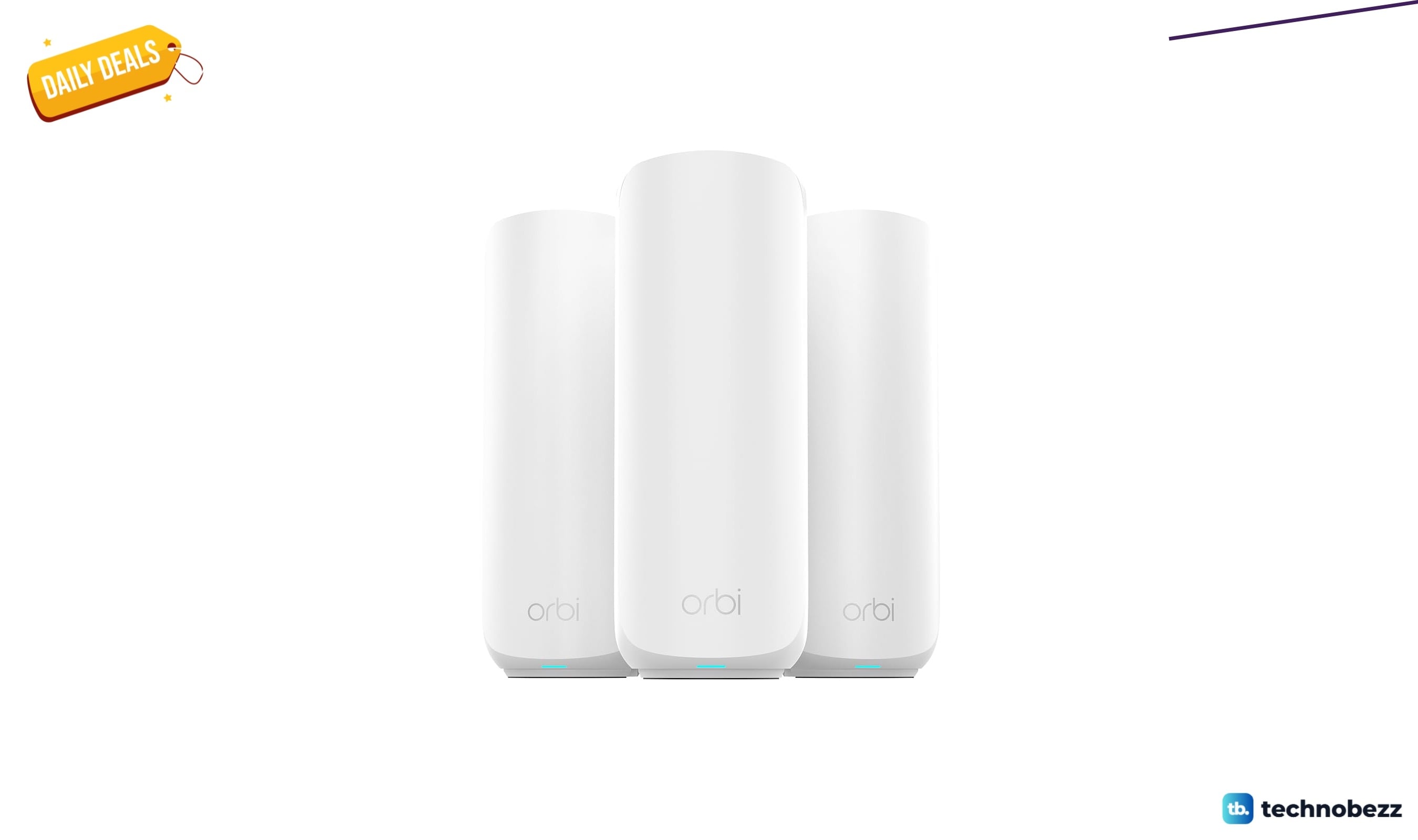
NETGEAR Orbi 370 WiFi 7 Mesh System dips to $265.99
3 min read
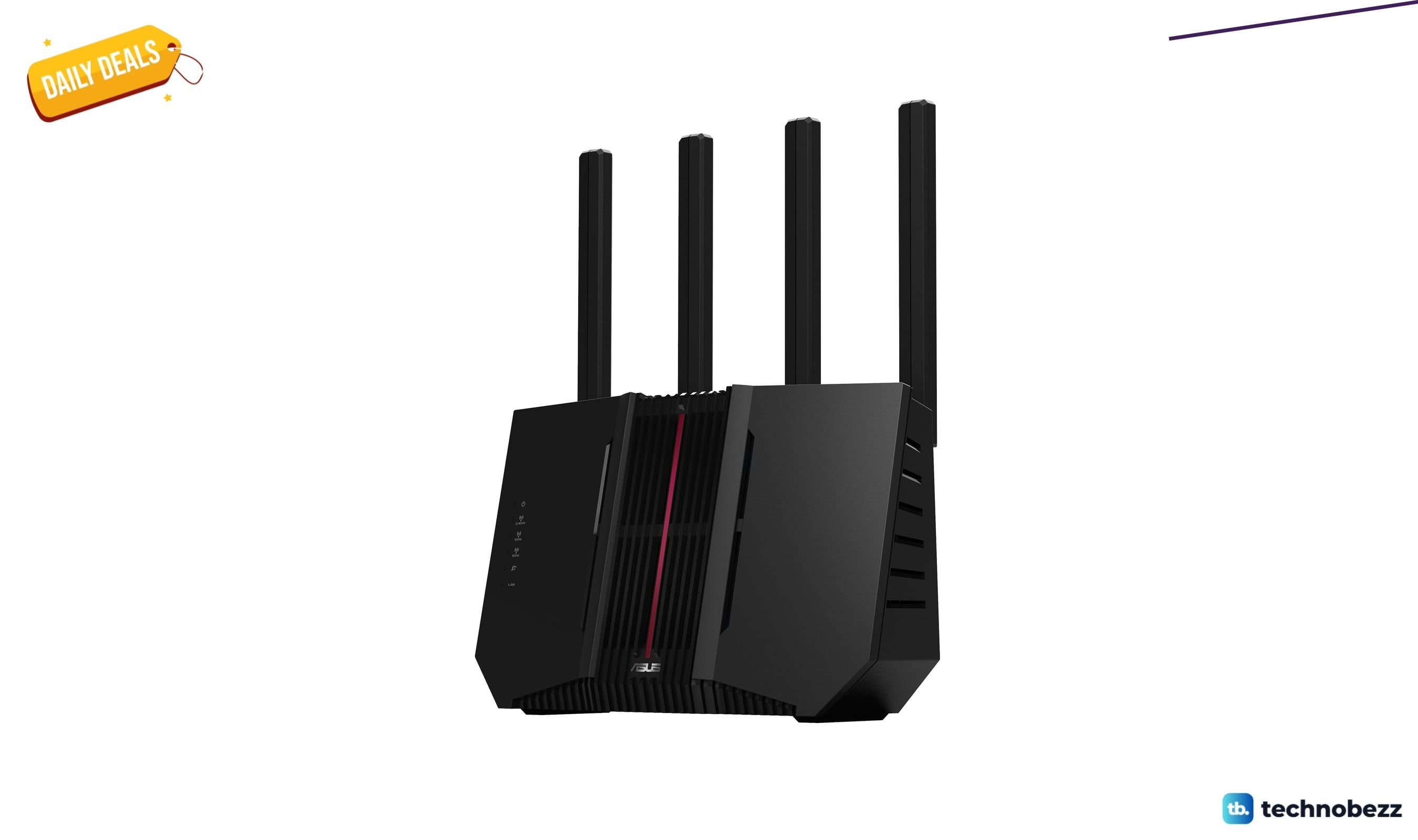
ASUS RT-BE9700 WiFi 7 Router Tri-Band now $198.55, down from $249.99
5 min read
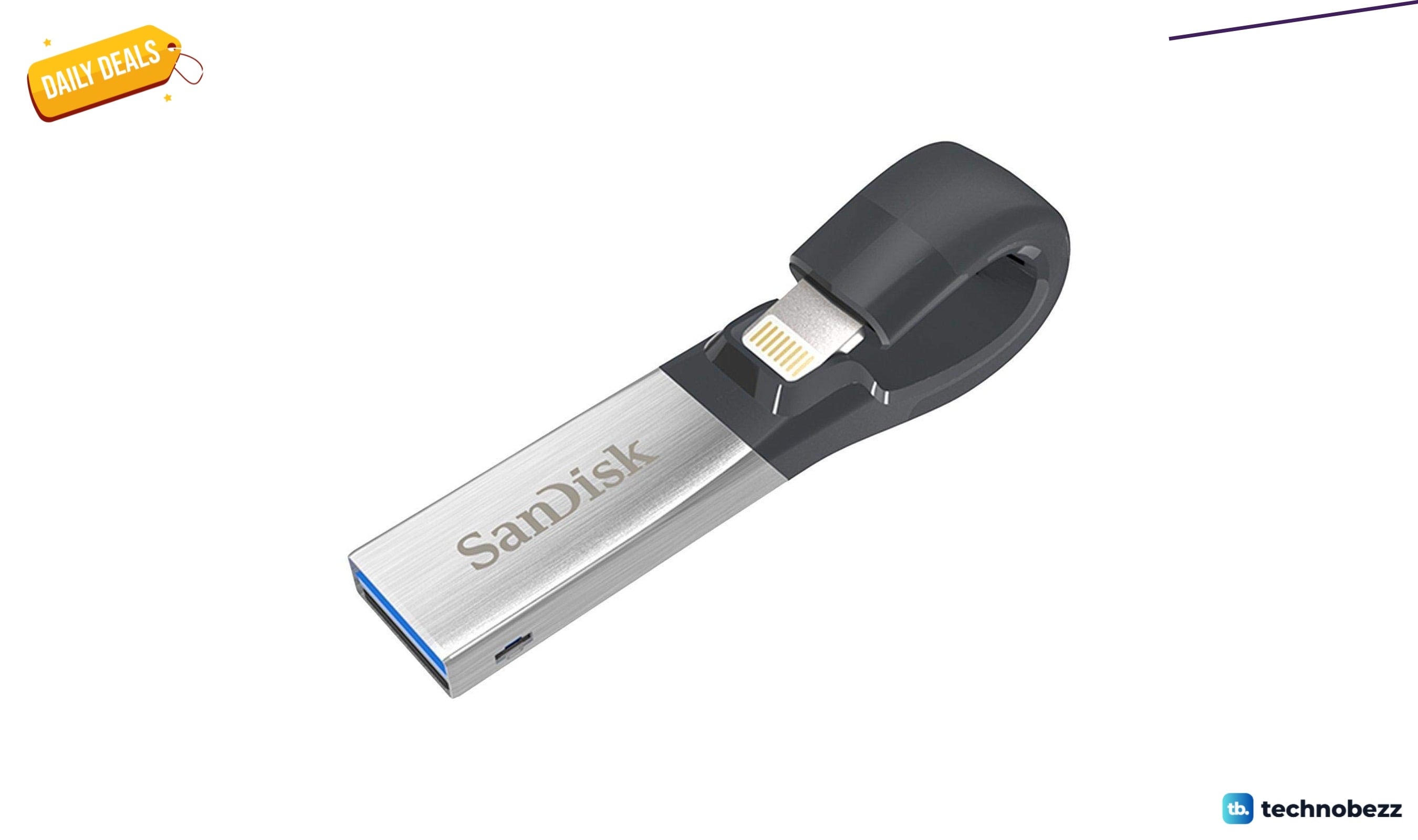
SanDisk 256GB IXpand Flash Drive sees price cut to $99.99
4 min read
Apple Watch Series 12 GPS + Cellular drops to $499.99, its lowest price yet
3 min read
ASUS VP327Q 4K UHD Computer Monitor gets a $78.95 price cut to $170.05
3 min read
Samsung Galaxy Tab S10 FE WiFi Android Tablet dips to $384.99
5 min read
Google Pixel 11 Unlocked Smartphone now selling for $734
4 min read