Budget GPUs in 2026 need more than decent frame rates. VRAM, driver consistency, upscaling support, software fit, power requirements, and case clearance all matter before you order.
Technobezz is supported by its audience. We may get a commission from retail offers.
6 Best Budget GPUs in 2026
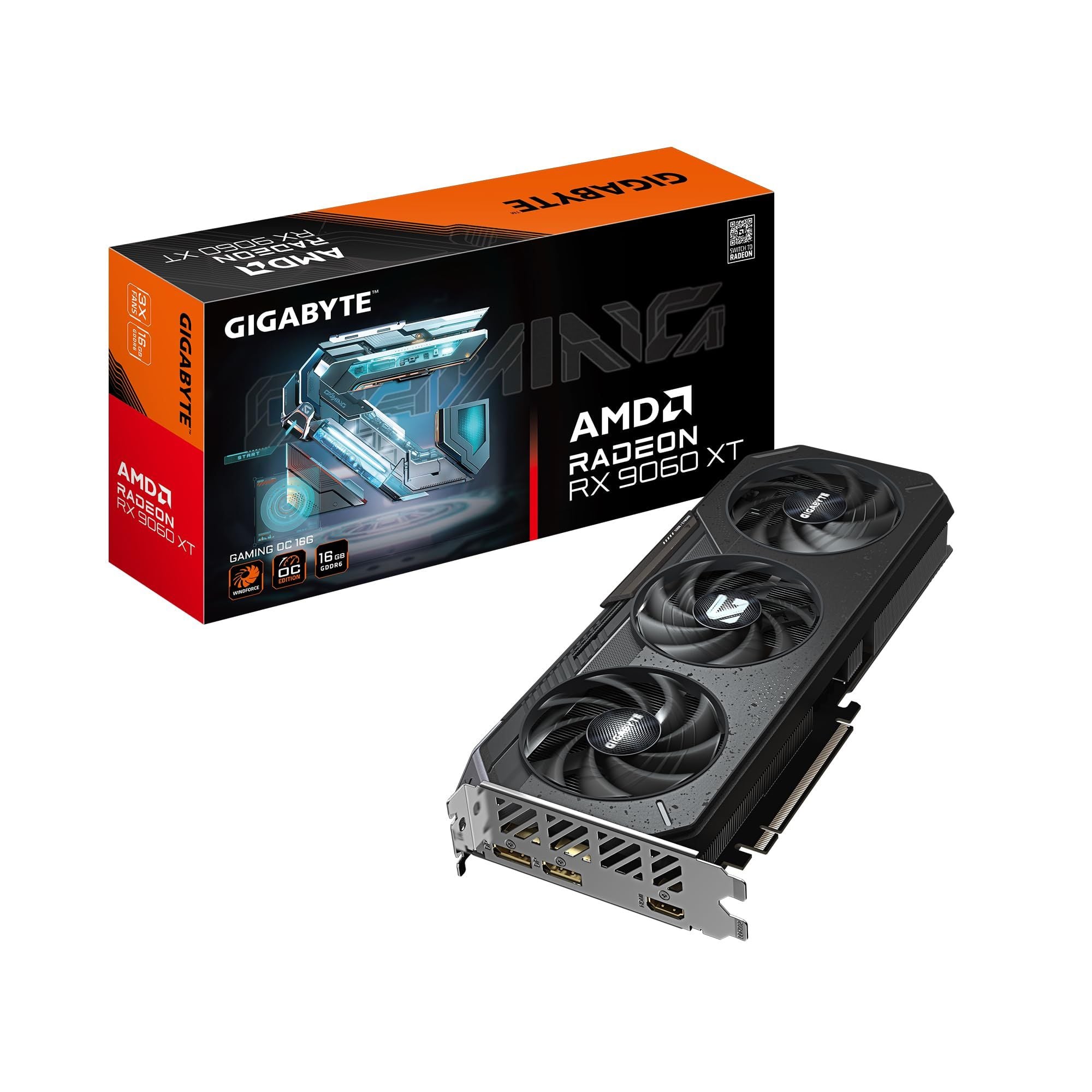
Gigabyte Radeon RX 9060 XT Gaming OC ICE 16G leads our budget GPU picks for strong 1080p play and 16GB VRAM.
T
Technobezz
Editorial Team
Updated September 28, 2026Sep 28, 2026
•11 min read

Get Deals Like These in Your Inbox
The best prices, reviewed weekly.
Gigabyte Radeon RX 9060 XT Gaming OC ICE 16G is the top pick because it pairs strong 1080p performance with sensible entry 1440p headroom and 16GB of VRAM. That combination makes it the safest gaming choice in this budget class.
This roundup covers AMD, Nvidia, and Intel options with clear strengths for gaming, creator software, compact builds, current display standards, and lower-cost upgrades.
At a Glance
| Category | Product | Why We Picked It |
|---|---|---|
| Best overall | Gigabyte Radeon RX 9060 XT Gaming OC ICE 16G | 16GB VRAM and strong 1080p to entry 1440p gaming balance |
| Best value | Sparkle Intel Arc B580 Titan OC 12GB | 12GB GDDR6, a 192-bit bus, and triple-fan cooling |
| Best Nvidia budget GPU | Gigabyte GeForce RTX 5060 Windforce OC 8GB | Current Nvidia features in a compact 8GB card for 1080p gaming |
| Best 16GB Nvidia option | ASUS Dual GeForce RTX 5060 Ti OC 16GB | Nvidia features with 16GB GDDR7 for games and creator software |
| Best lower-cost current AMD option | XFX Swift Radeon RX 9060 XT OC 8GB | Current RDNA 4 features and strong 1080p performance without 16GB pricing |
| Lowest-cost current GPU pick | ASRock Intel Arc B570 Challenger OC 10GB | 10GB VRAM and current Battlemage architecture at a low budget tier |
How we chose
A budget GPU earns a place here by matching its target resolution, memory configuration, software strengths, power needs, and case fit to a real upgrade path. The strongest picks combine enough VRAM for current games, credible 1080p performance, useful 1440p headroom where appropriate, and platform features that make sense for new budget builds.
The best budget GPUs right now
Gigabyte Radeon RX 9060 XT Gaming OC ICE 16G - Best overall
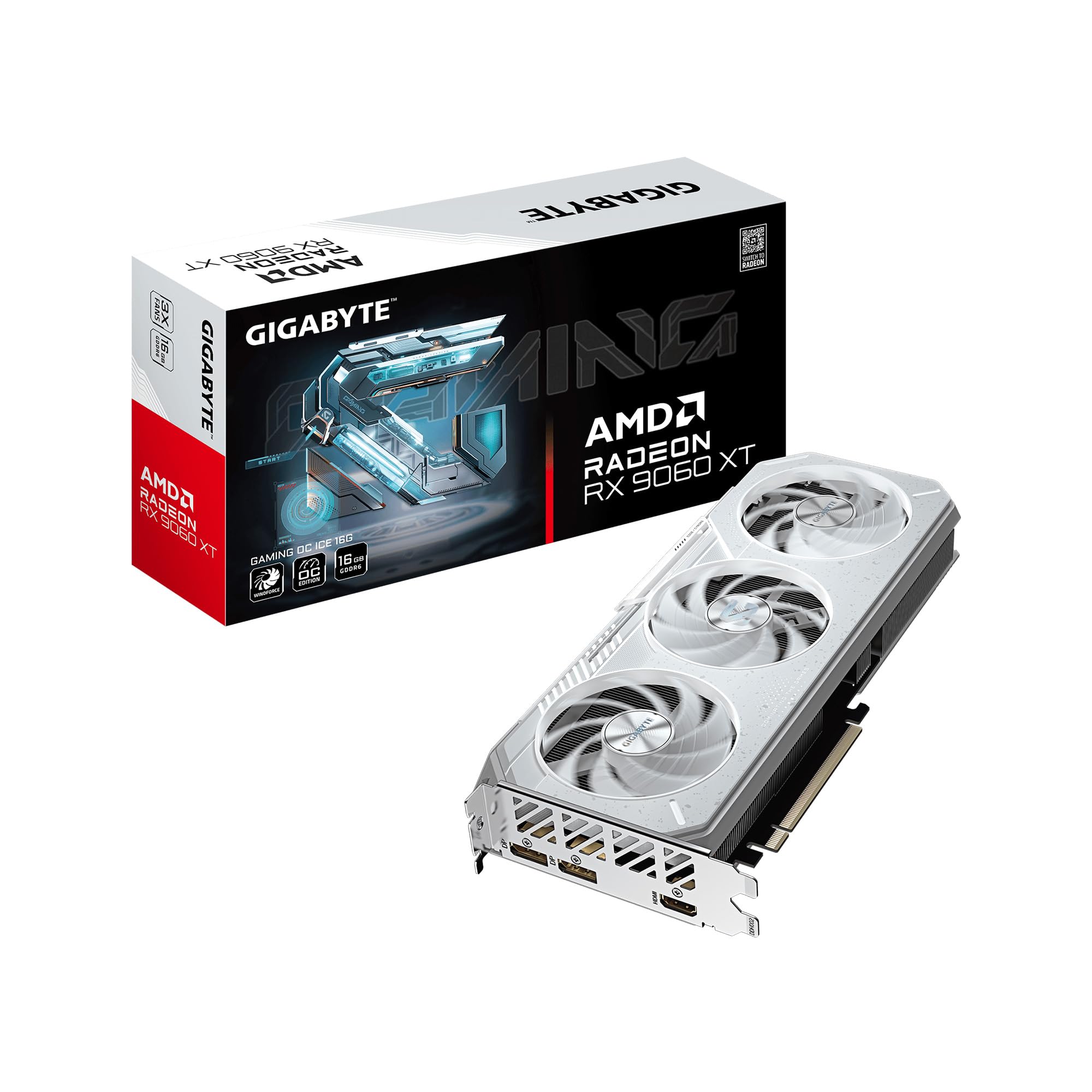
The Gigabyte Radeon RX 9060 XT Gaming OC ICE 16G has the best balance for most budget gaming builds here. Its AMD Radeon RX 9060 XT GPU, 16GB of GDDR6 memory, 128-bit interface, and 20 Gbps memory speed make it a strong fit for current 1080p play with sensible 1440p settings.
Gigabyte pairs the factory OC card with a triple-fan Windforce cooler and modern PCIe 5.0 support. Measure before buying, since the 281 mm length rules out some compact cases, but the VRAM and gaming balance make this the most complete pick.
Key highlights
- AMD Radeon RX 9060 XT GPU
- 16GB GDDR6 memory
- 128-bit memory interface
- 20 Gbps memory speed
- Boost up to 3320 MHz and game up to 2780 MHz
- 2048 stream processors
Pros
- Strong raster performance for 1080p and entry 1440p
- 16GB VRAM is the right long-term choice versus 8GB budget cards
- Factory OC model with triple-fan Windforce cooler
- Modern PCIe 5.0 platform support
Cons
- Ray tracing and creator acceleration still favor Nvidia in many apps
- Street prices can drift above the original budget positioning
- Longer 281 mm card will not fit every compact case
Who it's for
Choose this when you want the safest budget gaming pick with enough VRAM for current 1080p ultra and sensible 1440p settings.
Skip if
Look elsewhere if CUDA, Blender, local AI, or the widest ray tracing and upscaling support are your main priorities.
Sparkle Intel Arc B580 Titan OC 12GB - Best value
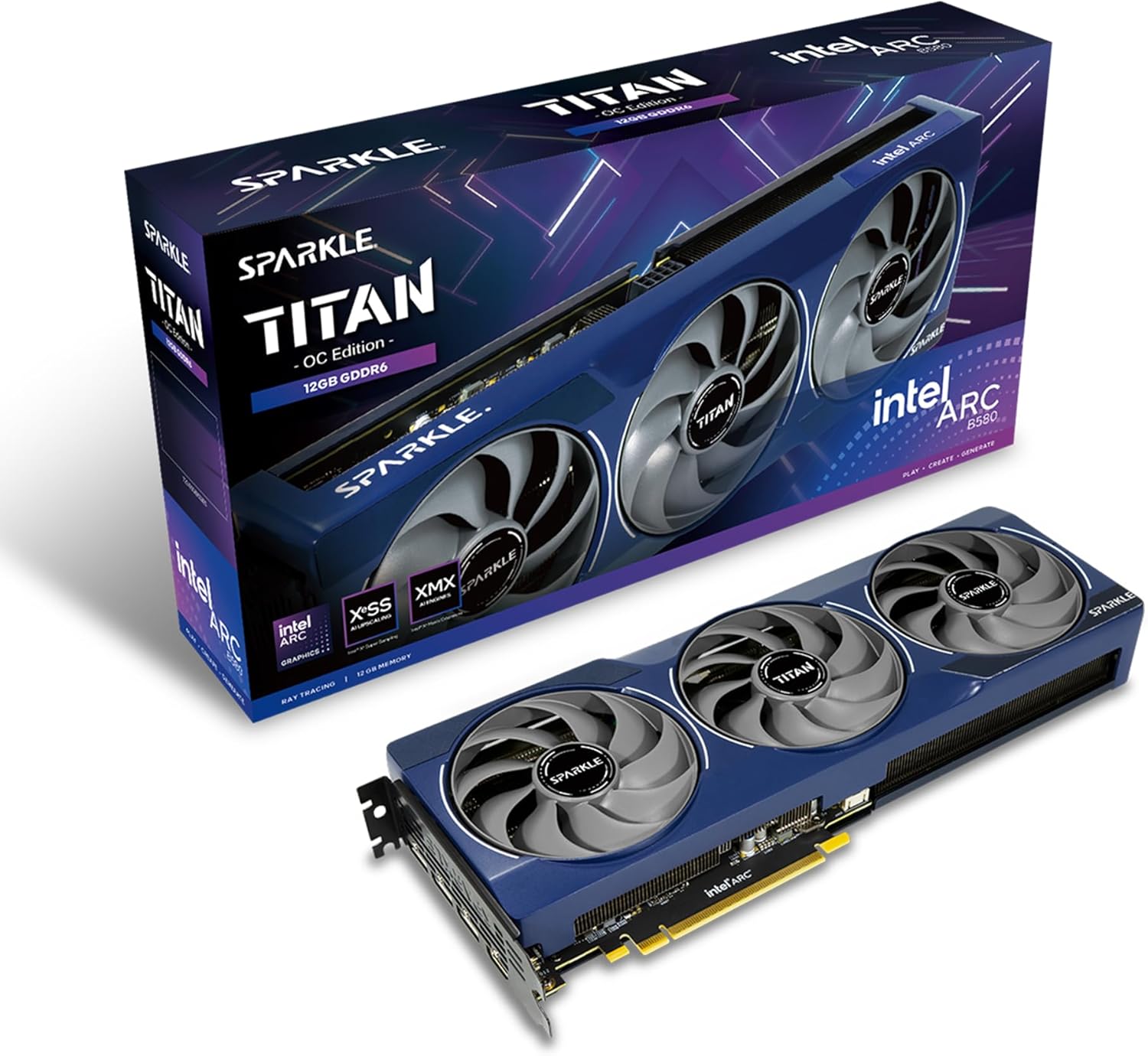
Sparkle Intel Arc B580 Titan OC 12GB pairs the Intel Arc B580 GPU with 12GB of GDDR6 memory and a 192-bit bus. Its value depends on the live price, so compare offers before buying.
Sparkle uses a triple-fan TORN Cooling 2.0 cooler and a metal backplate. The card measures 315 mm long and occupies 2.2 slots, so check case clearance. It provides three DisplayPort 2.1 outputs, one HDMI 2.1 output, and AV1 encoding and decoding.
Key highlights
- Intel Arc B580 GPU
- 12GB GDDR6 memory
- 192-bit memory bus
- Triple-fan TORN Cooling 2.0
- Metal backplate
- 3x DisplayPort 2.1 and 1x HDMI 2.1
Pros
- 12GB VRAM and a 192-bit memory bus
- Triple-fan cooler and metal backplate
- DisplayPort 2.1 and HDMI 2.1 outputs
- AV1 encoding and decoding
Cons
- 315 mm length requires a case-clearance check
- Needs a compatible platform with Resizable BAR support
- Sparkle specifies a 600W or greater PSU with an 8-pin PCIe power connector
Who it's for
It fits builders who want the most hardware for the money and mostly play modern DirectX 12 or Vulkan games.
Skip if
Avoid it for older esports libraries, emulation edge cases, or systems without Resizable BAR.
Gigabyte GeForce RTX 5060 Windforce OC 8GB - Best Nvidia budget GPU
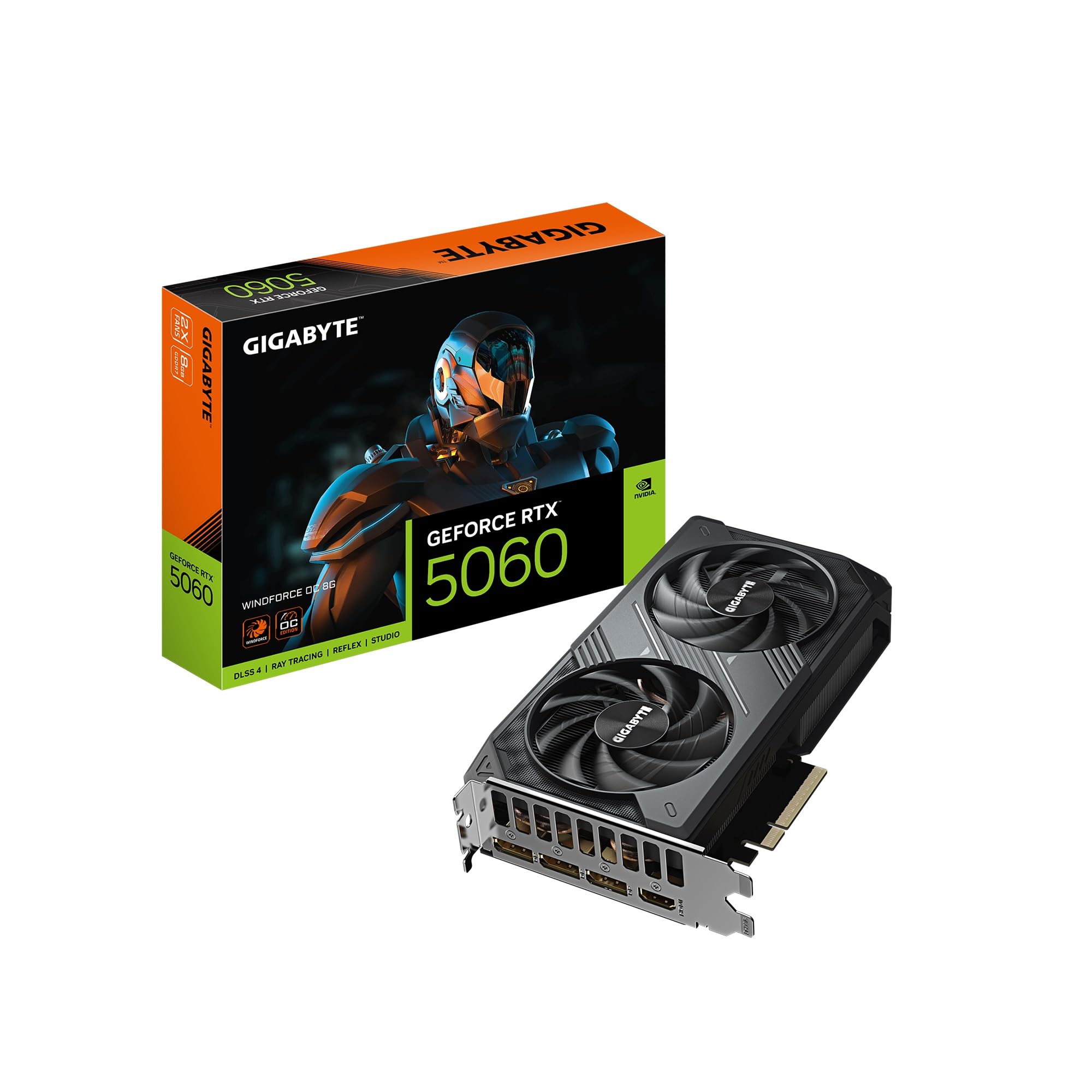
Gigabyte GeForce RTX 5060 Windforce OC 8GB is the practical Nvidia entry for budget 1080p builds. You get the GeForce RTX 5060 GPU, 3840 CUDA cores, DLSS support, 8GB of GDDR7 memory, and a 2512 MHz core clock.
Its 199 mm length is the key advantage for smaller cases. The tradeoff is clear: 8GB VRAM and a 128-bit bus limit high-texture 1440p longevity, so this card is strongest when Nvidia features matter more than raw value.
Key highlights
- Nvidia GeForce RTX 5060 GPU
- 8GB GDDR7 memory
- 128-bit memory interface
- 28 Gbps memory speed
- 3840 CUDA cores
- 2512 MHz core clock
Pros
- A stronger current Nvidia budget entry than RTX 5050, with 8GB GDDR7 and better 1080p headroom.
- DLSS support is still the best reason to buy Nvidia on a budget
- Compact 199 mm card fits many smaller cases
- GDDR7 memory is fast for an entry model
Cons
- 8GB VRAM is a real constraint in some 2026 games
- Usually weaker raw value than RX 9060 XT or Arc B580
- 128-bit bus limits high-resolution ambition
Who it's for
The right buyer wants Nvidia features, low power, and mostly 1080p gaming.
Skip if
Choose another card for high-texture 1440p longevity or when a 16GB RX 9060 XT is close enough in cost.
ASUS Dual GeForce RTX 5060 Ti OC 16GB - Best 16GB Nvidia option
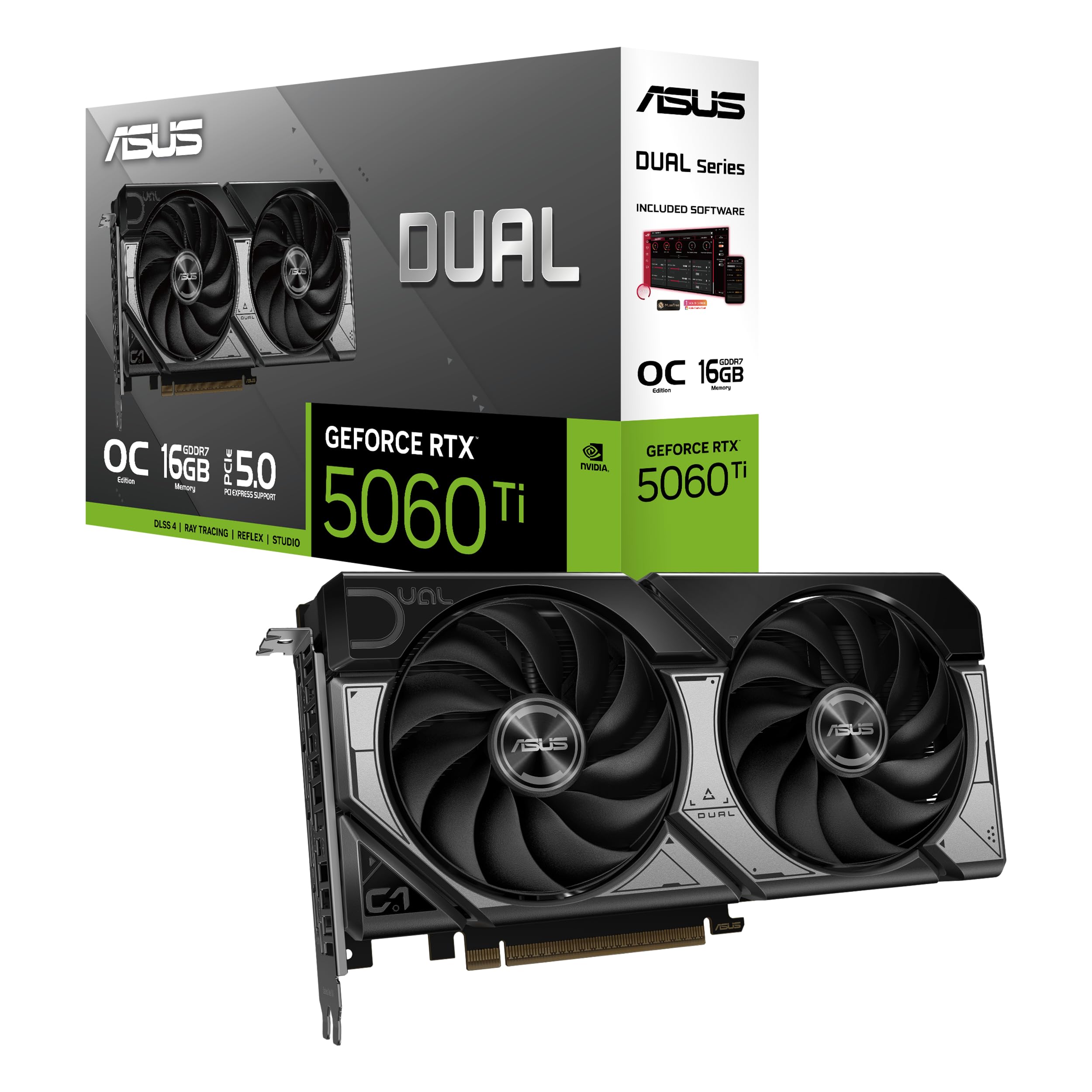
ASUS Dual GeForce RTX 5060 Ti OC 16GB is the Nvidia pick that fixes the biggest weakness of cheaper RTX cards. Its 16GB of GDDR7 memory, 4608 CUDA cores, and OC mode up to 2632 MHz make it the strongest choice here for DLSS-heavy games and creator software.
The short dual-fan design is easier to fit than many triple-fan cards, and efficiency is a strength versus older midrange cards. It still uses a 128-bit bus, so treat it as a capable 16GB Nvidia option rather than a true high-end 1440p card.
Key highlights
- Nvidia GeForce RTX 5060 Ti GPU
- 16GB GDDR7 memory
- 128-bit memory interface
- 28 Gbps memory speed
- 4608 CUDA cores
- OC mode up to 2632 MHz
Pros
- 16GB VRAM fixes the biggest weakness of cheaper RTX cards
- Best pick here for DLSS-heavy games and creator software
- Short dual-fan design is easier to fit than many triple-fan cards
- Strong efficiency versus older midrange cards
Cons
- Often stretches the definition of budget once prices climb
- 128-bit bus means it is still not a true high-end 1440p card
- Raw raster value is not its main advantage
Who it's for
A good match for buyers who want Nvidia features and 16GB VRAM in a current budget-class card.
Skip if
Look at AMD or Intel instead when raw raster value matters more than DLSS, CUDA, or Nvidia software support.
XFX Swift Radeon RX 9060 XT OC 8GB - Best lower-cost current AMD option
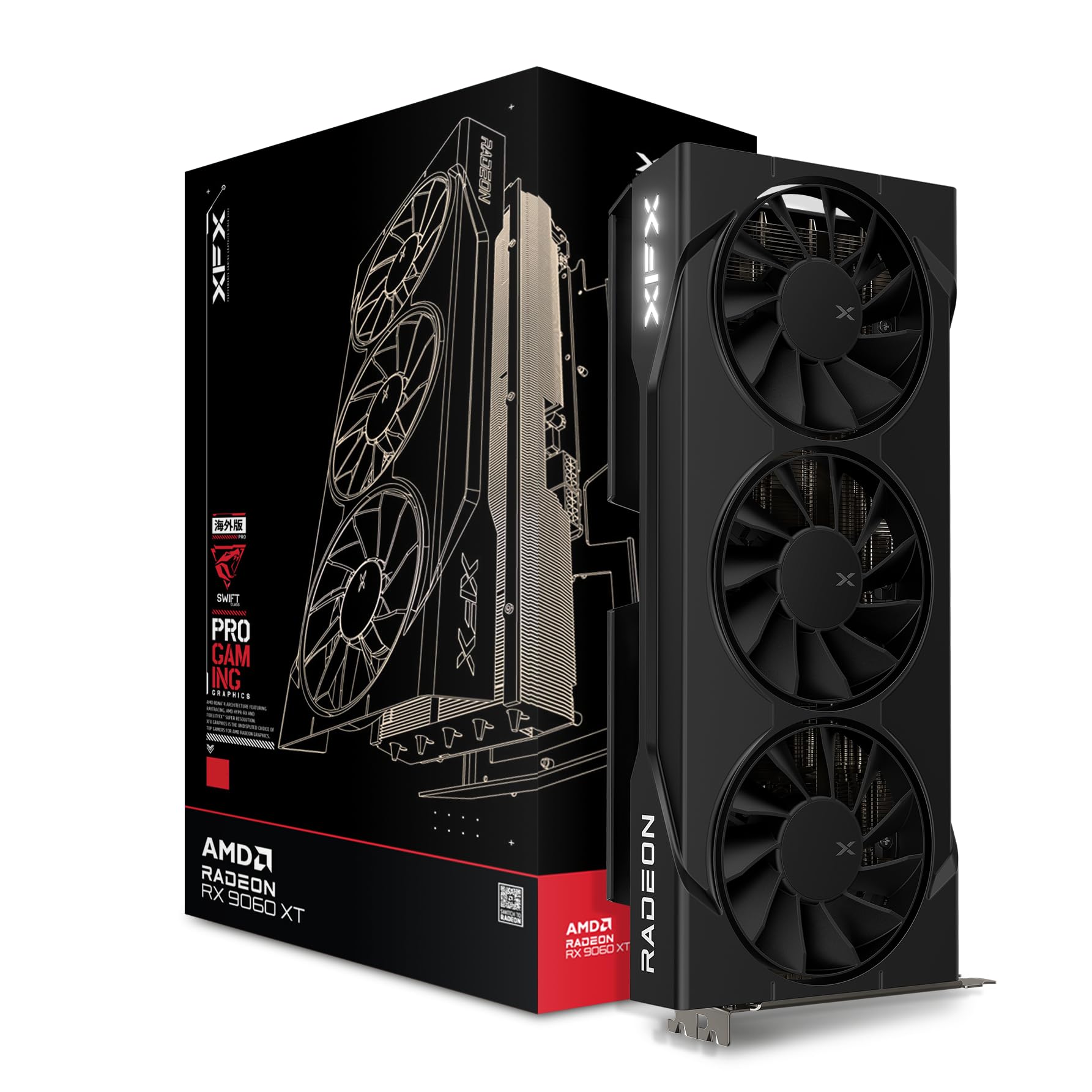
XFX Swift Radeon RX 9060 XT OC 8GB keeps the current AMD platform while cutting memory capacity to 8GB. It uses the AMD Radeon RX 9060 XT GPU on RDNA 4 and carries a boost clock up to 3320MHz.
The triple-fan XFX Swift cooler supports its high-setting 1080p focus. Buyers who keep GPUs for many years should choose carefully, because the 8GB memory limit is less future-proof than the 16GB RX 9060 XT option.
Key highlights
- AMD Radeon RX 9060 XT GPU
- 8GB GDDR6 memory
- Boost clock up to 3320MHz
- Triple-fan XFX Swift cooler
- AMD RDNA 4 architecture
Pros
- Current RDNA 4 feature set
- Lower price than most 16GB RX 9060 XT cards
- Triple-fan cooler
- Good fit for high-setting 1080p gaming
Cons
- 8GB VRAM is less future-proof than the 16GB version
- Ray tracing and some creator apps still favor Nvidia
- Large triple-fan card requires a case-fit check
Who it's for
For AMD buyers, this is the lower-cost route to current RDNA 4 features and strong 1080p performance.
Skip if
Move up to more VRAM if you keep GPUs for many years, use large texture packs, or want the best ray tracing.
ASRock Intel Arc B570 Challenger OC 10GB - Lowest-cost current GPU pick
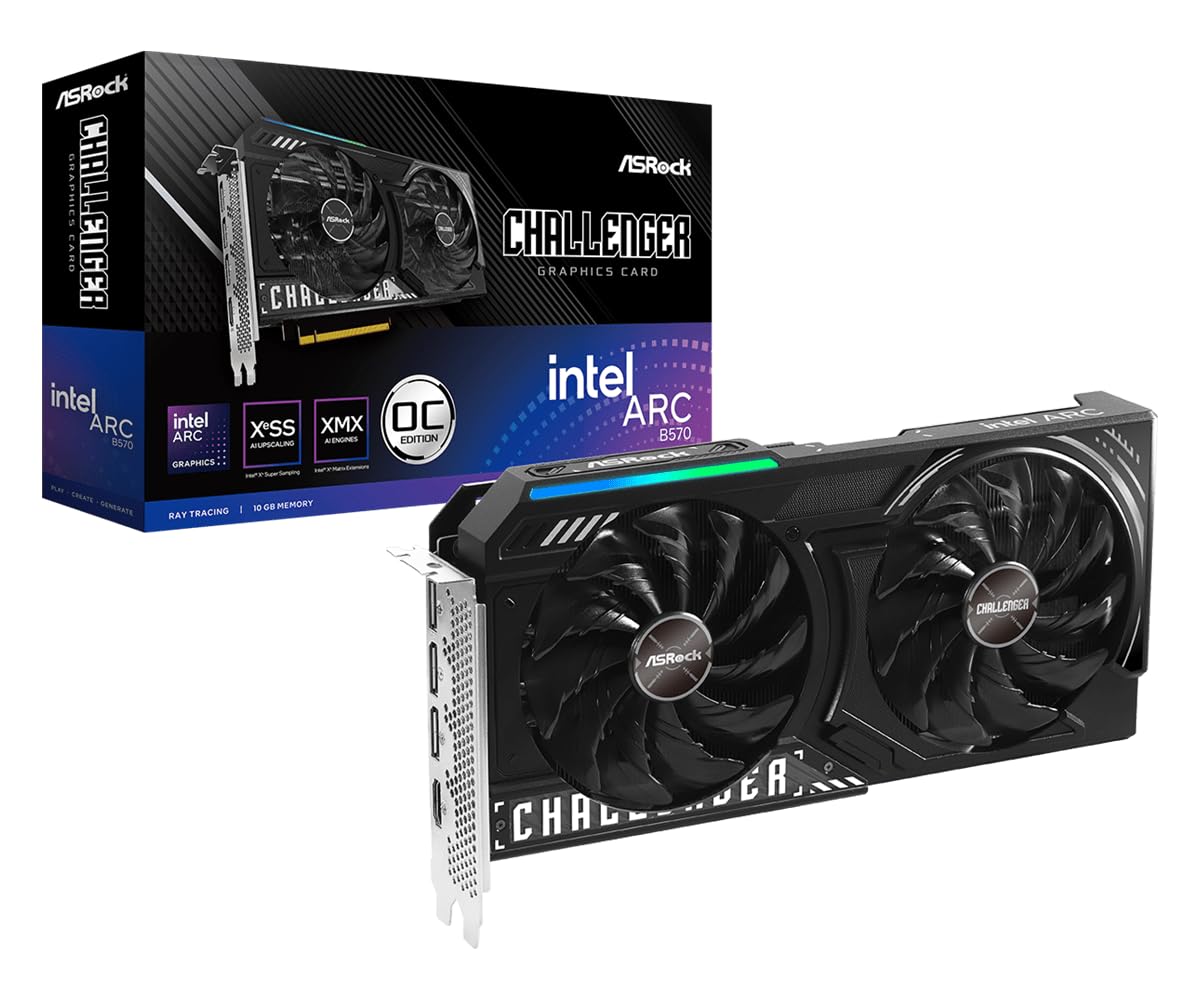
ASRock Intel Arc B570 Challenger OC 10GB is the lowest-tier Intel choice here, but its memory setup is still useful. The Arc B570 GPU uses Xe2-HPG architecture and pairs 10GB of GDDR6 with a 160-bit interface.
A compact two-slot dual-fan design, three DisplayPort 2.1 outputs, one HDMI 2.1a port, and a single 8-pin connector make it straightforward to place in many systems. It is slower than the Arc B580 and needs Resizable BAR for best performance.
Key highlights
- Intel Arc B570 on Xe2-HPG architecture
- 10GB GDDR6 memory
- 160-bit memory interface
- 2600MHz GPU clock
- 19Gbps memory speed
- One 8-pin connector and 600W recommended PSU
Pros
- Current Battlemage architecture at a genuinely low price
- 10GB VRAM is better than many entry Nvidia cards
- Compact two-slot dual-fan design
- Modern DisplayPort 2.1 outputs and XeSS 3 support with updated drivers
Cons
- Slower than the Arc B580
- Resizable BAR support is important for best performance
- Game and creator-app consistency still trails Nvidia in some workloads
Who it's for
Best for builders who need the lowest-cost card here and have a PC with Resizable BAR support.
Skip if
Choose AMD or Nvidia for platforms without Resizable BAR or workloads that require CUDA.
How to Choose
- Start with the monitor target. Use RX 9060 XT 8GB, RTX 5060, Arc B580, or Arc B570 for 1080p. For 1440p, prioritize RX 9060 XT 16GB, RTX 5060 Ti 16GB, or Arc B580 and tune settings.
- Do not ignore VRAM. 8GB still works for esports and many 1080p games, but 12GB to 16GB is the stronger 2026 choice for high textures, newer AAA games, and longer ownership.
- Match the GPU brand to your software. Nvidia is strongest for CUDA, many creator apps, DLSS, and ray tracing. AMD often wins raw gaming value. Intel Arc stands out on price and media features but brings more driver caveats.
- Check your power supply and case length. Budget cards differ in connector and power supply requirements, so verify both before ordering. Check card length and thickness as well, especially for small cases.
- Resizable BAR matters for Intel Arc. Arc B570 and B580 perform best on modern systems with Resizable BAR enabled. On older platforms, AMD or Nvidia cards are safer choices.
- Buy the deal, not just the chip name. GPU prices move often, so compare the live cost of each exact model before choosing a tier.
Is 8GB VRAM enough for a budget GPU in 2026?
It is enough for esports and many 1080p games, but it is no longer the safest buy for new AAA games with high textures. If prices are close, choose 12GB or 16GB.
Should I buy an RTX 5060 or RX 9060 XT?
Choose RTX 5060 for Nvidia features, DLSS, CUDA, and low power. Choose RX 9060 XT for stronger raw gaming value, especially the 16GB version if the price is reasonable.
Is Intel Arc safe to buy now?
Arc B580 and B570 are credible budget choices, but they are best on modern PCs with Resizable BAR enabled and mostly modern games. AMD or Nvidia is safer for older game libraries.
How much VRAM should a budget GPU have?
Eight gigabytes is workable for 1080p, while 10GB, 12GB, or 16GB gives more room for higher-resolution textures and longer ownership.
What is the minimum GPU I should buy for 1440p?
For budget 1440p, start with RX 9060 XT 16GB, RTX 5060 Ti 16GB, or Arc B580. Cheaper 8GB cards can handle 1440p in lighter games, but they need more settings compromises.
Published July 31, 2026 Last updated September 29, 2026
Share this article
More in News

7 Best GPS Trackers for Kids in 2026
The 7 best GPS trackers for kids in 2026, from the AngelSense Safety Monitor for total peace of mind to the budget Apple AirTag and the TickTalk 5 smartwatch.
5 min read
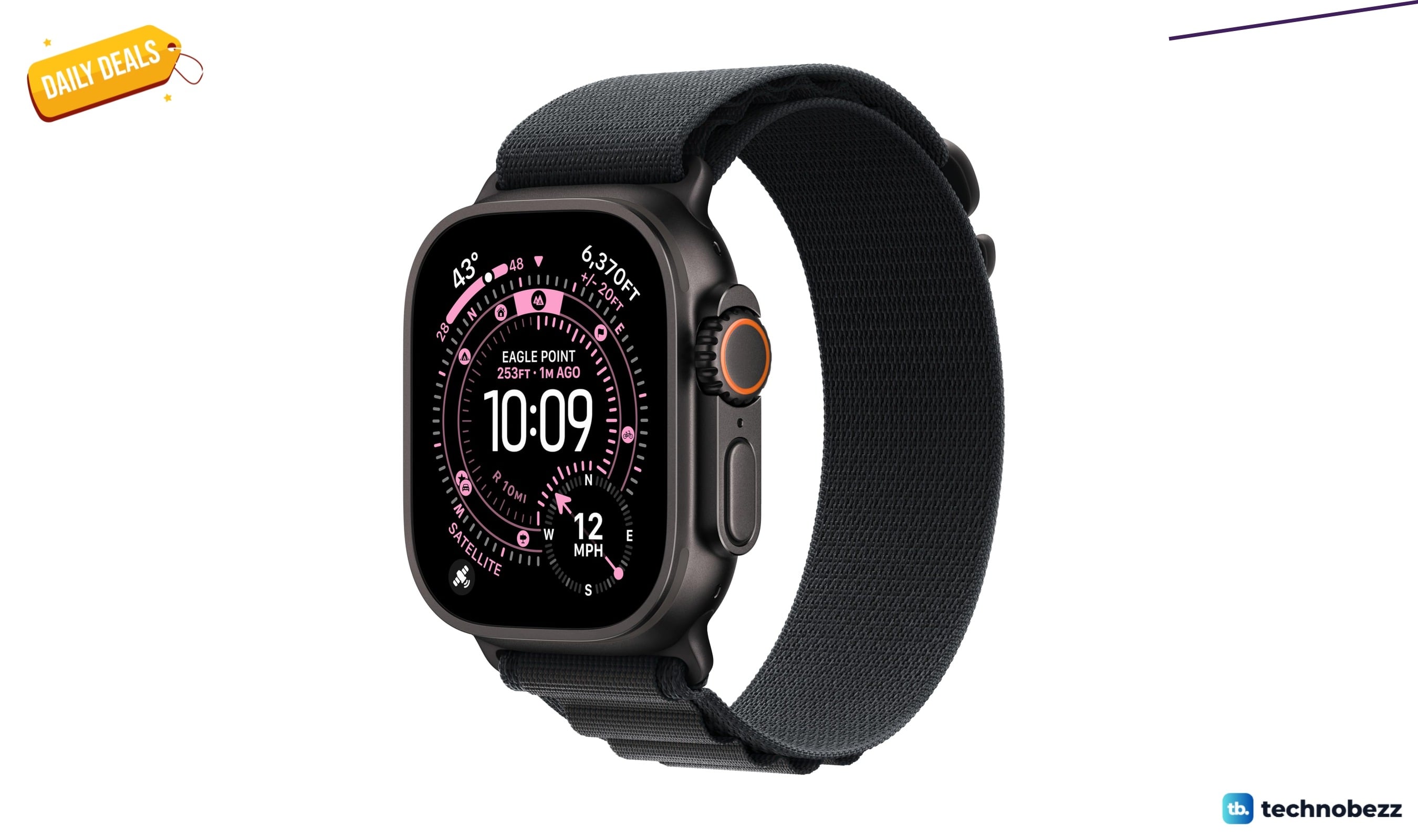
Apple Watch Ultra 3 [GPS + Cellular now $699, down from $799
Save $100 on the Apple Watch Ultra 3 at $699, a rare drop below $700 for the rugged titanium GPS and Cellular model.
5 min read
Anker soundcore Boom 2 Bluetooth Speaker is $139.99 at Woot
Anker soundcore Boom 2 Bluetooth Speaker is $139.99 at Woot in new condition, with a $249.99 Woot Reference Price.
3 min read
Best HP Laptops in 2026
The HP OmniBook Ultra 14-kd0964nr is our top HP laptop for 2026, with a 120Hz OLED touchscreen, 32GB of memory, and 2TB storage.
5 min read
7 Best Cameras for Videography in 2026
3 min read
Ophelia & Co. 52-inch flush mount ceiling fan with lights and remote for $162.99 at Wayfair
4 min read
9 Best Laptops for Developers in 2026
5 min read
The 9 Best Laptops for Architects of 2026
3 min read
8 Best Laptops for Home Use in 2026
4 min read
Braun BrewSense 12-cup drip coffee maker for $99.95 at Wayfair
3 min read
HADEN Heritage 1.7-liter stainless steel electric kettle for $69.99 at Wayfair
5 min read
Savoy House two-head LED security flood light with motion sensor for $43.99 at Wayfair
4 min read