A 75-inch TV has to match the room as much as the screen size. OLED models deliver the strongest black levels for movies, while Mini-LED sets bring the brightness needed for daytime sports, HDR streaming, and glare-prone living rooms.
Technobezz is supported by its audience. We may get a commission from retail offers.
8 Best 75-Inch TVs in 2026
The LG C6 OLED 77-inch leads this 2026 roundup with OLED contrast, 4K resolution, and four HDMI 2.1 ports.
T
Technobezz
Editorial Team
Updated September 30, 2026Sep 30, 2026
•13 min read

Get Deals Like These in Your Inbox
The best prices, reviewed weekly.
The LG C6 OLED 77-inch is the best overall pick because it combines OLED contrast, 4K resolution, webOS 26, and HDMI 2.1 on all four ports with support up to 4K/165Hz. It is the most balanced choice here for movies, streaming, and high-end gaming.
The rest of this list focuses on clear use cases: value, Mini-LED picture quality, sports, processing, anti-glare viewing, and entry-tier large-screen buying.
At a Glance
| Category | Product | Why We Picked It |
|---|---|---|
| Best overall | LG C6 OLED 77-inch | OLED contrast, 4K clarity, and four HDMI 2.1 ports |
| Best value | Hisense U7SG Mini-LED 75-inch | Big brightness, broad HDR support, and strong gaming specs |
| Best Mini-LED picture | TCL QM8L SQD-Mini LED 75-inch | High-brightness Mini-LED with strong local dimming |
| Best for bright sports | Hisense U8QG Mini-LED 75-inch | Extreme brightness and 165Hz support for sunny rooms |
| Best midrange Mini-LED | TCL QM7L SQD-Mini LED 75-inch | Current-generation Mini-LED features at a midrange position |
| Best anti-glare LCD | Samsung QN90F Neo QLED 75-inch | A premium bright-room LCD with strong motion handling |
| Best processing | Sony BRAVIA 5 Mini LED 75-inch | Strong upscaling and natural motion for everyday TV |
| Best affordable big screen | TCL QM6K Mini-LED 75-inch | Entry-tier 75-inch Mini-LED with useful gaming and audio features |
How we chose
We prioritized 75-to-77-inch TVs with clear strengths for real buying scenarios: dark-room movie quality, bright-room viewing, sports, streaming, gaming, processing, HDMI support, HDR format coverage, smart TV platform, and overall value. OLED models were judged for contrast, black levels, gaming readiness, and room suitability. Mini-LED models were judged for brightness, local dimming, motion, reflection handling, and large-screen practicality. Each pick earns its slot by matching a specific buyer need, not by screen size alone.
The best 75-inch TVs right now
LG C6 OLED 77-inch - Best overall
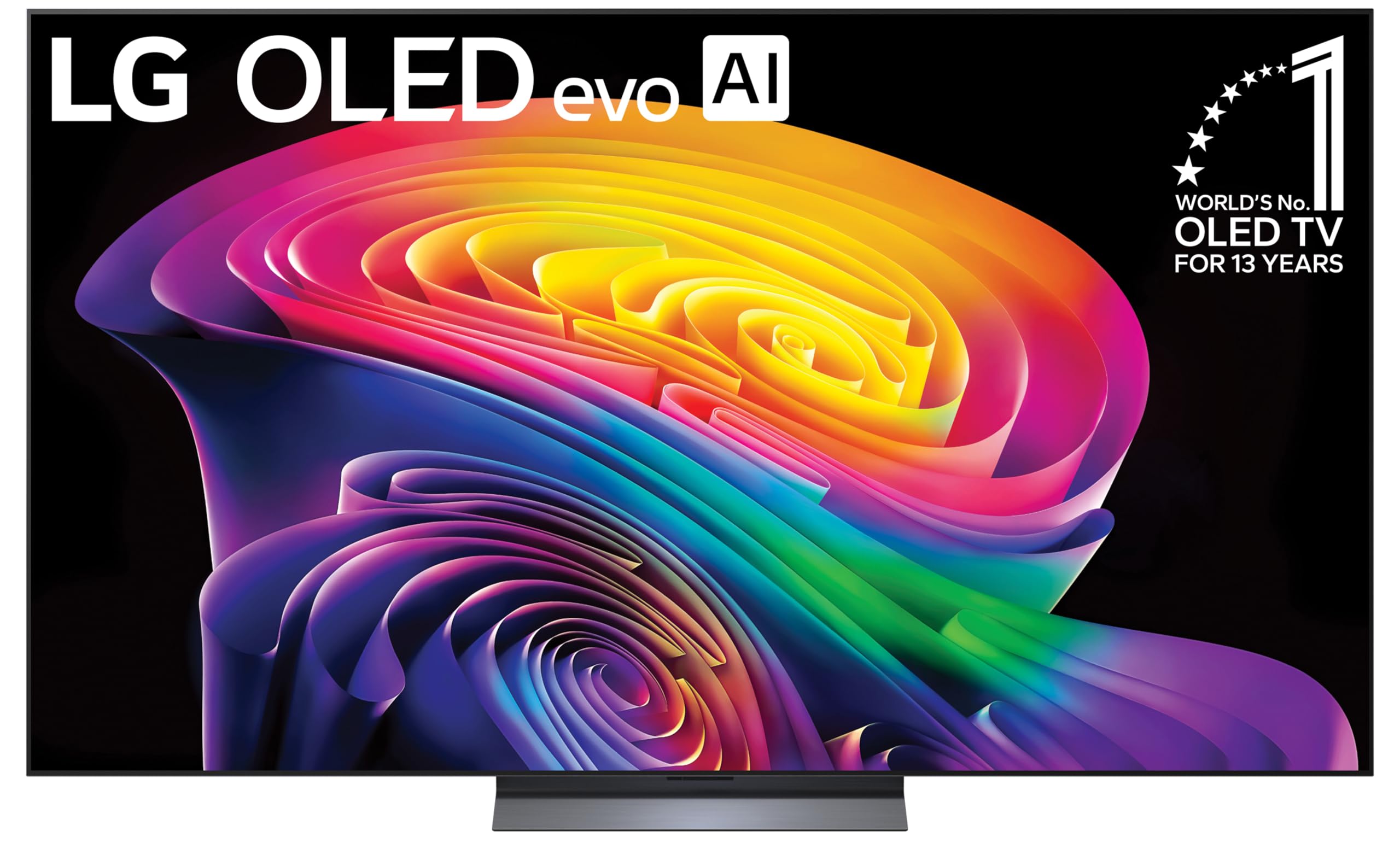
The LG C6 OLED 77-inch is the most balanced TV in this group for movies, streaming, and gaming. Its 77-inch OLED panel gives dark-room content the black levels and contrast that make a large screen feel cinematic.
All four HDMI ports support HDMI 2.1, and gaming support reaches up to 4K/165Hz. The Alpha 11 Gen 3 processor and webOS 26 make it a strong modern 4K OLED for households that want one premium TV to handle almost everything.
Key highlights
- 77-inch OLED screen
- 4K resolution
- Alpha 11 Gen 3 processor
- webOS 26
- HDMI 2.1 on all four ports
- Up to 4K/165Hz gaming support
Pros
- Excellent OLED contrast and black levels
- Very strong movie and gaming feature set
- Four HDMI 2.1 ports make it easy for multiple consoles or PC
- 77-inch size is a natural fit for this category
Cons
- Costs more than strong Mini-LED alternatives
- No HDR10+ support
- OLED is not ideal for every always-on news or static-logo use case
Who it's for
Ideal for buyers who want the strongest all-around 75-to-77-inch TV for movies, streaming, and gaming without stepping up to flagship pricing.
Skip if
Choose a different model for an extremely bright room used all day or for the lowest possible price per inch.
Hisense U7SG Mini-LED 75-inch - Best value
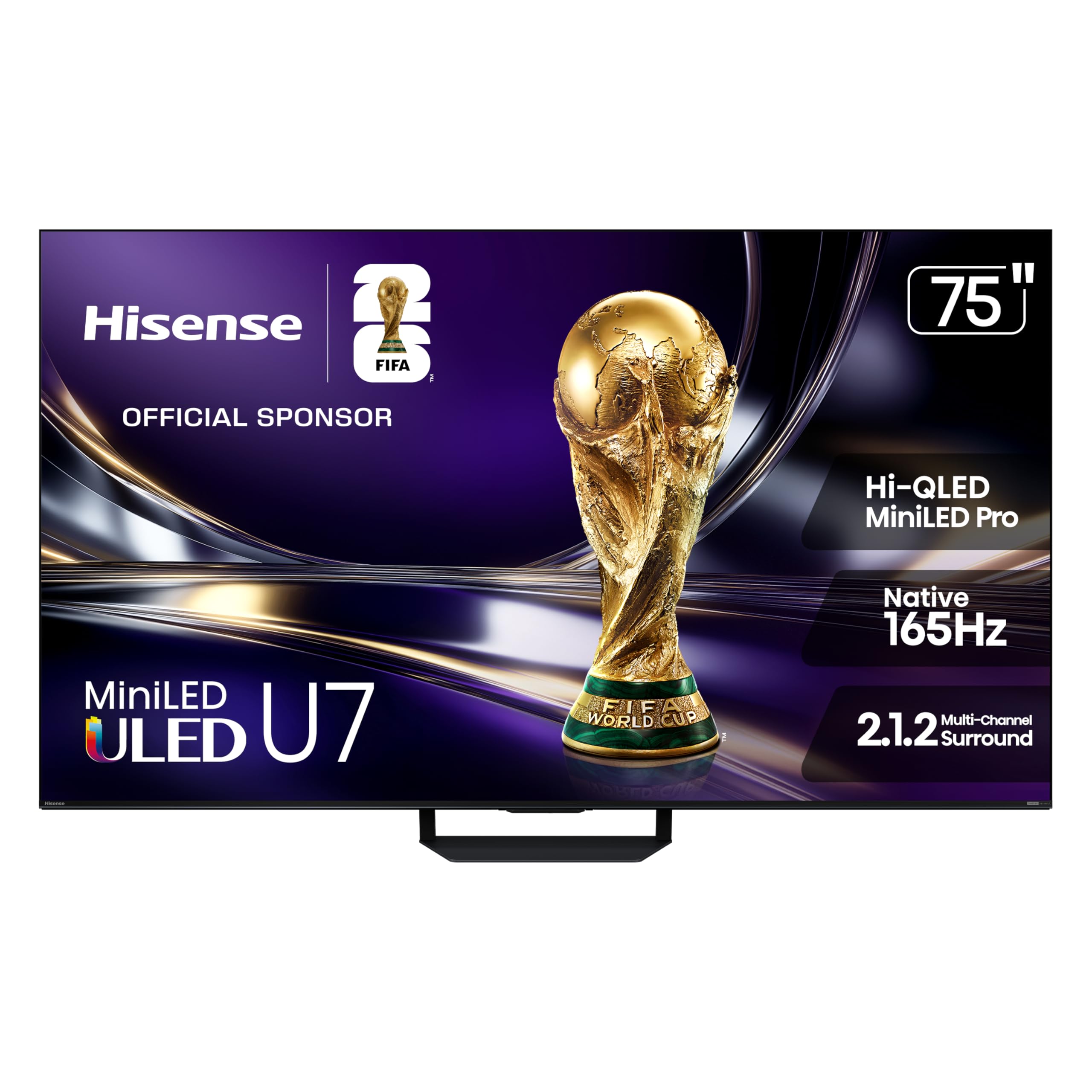
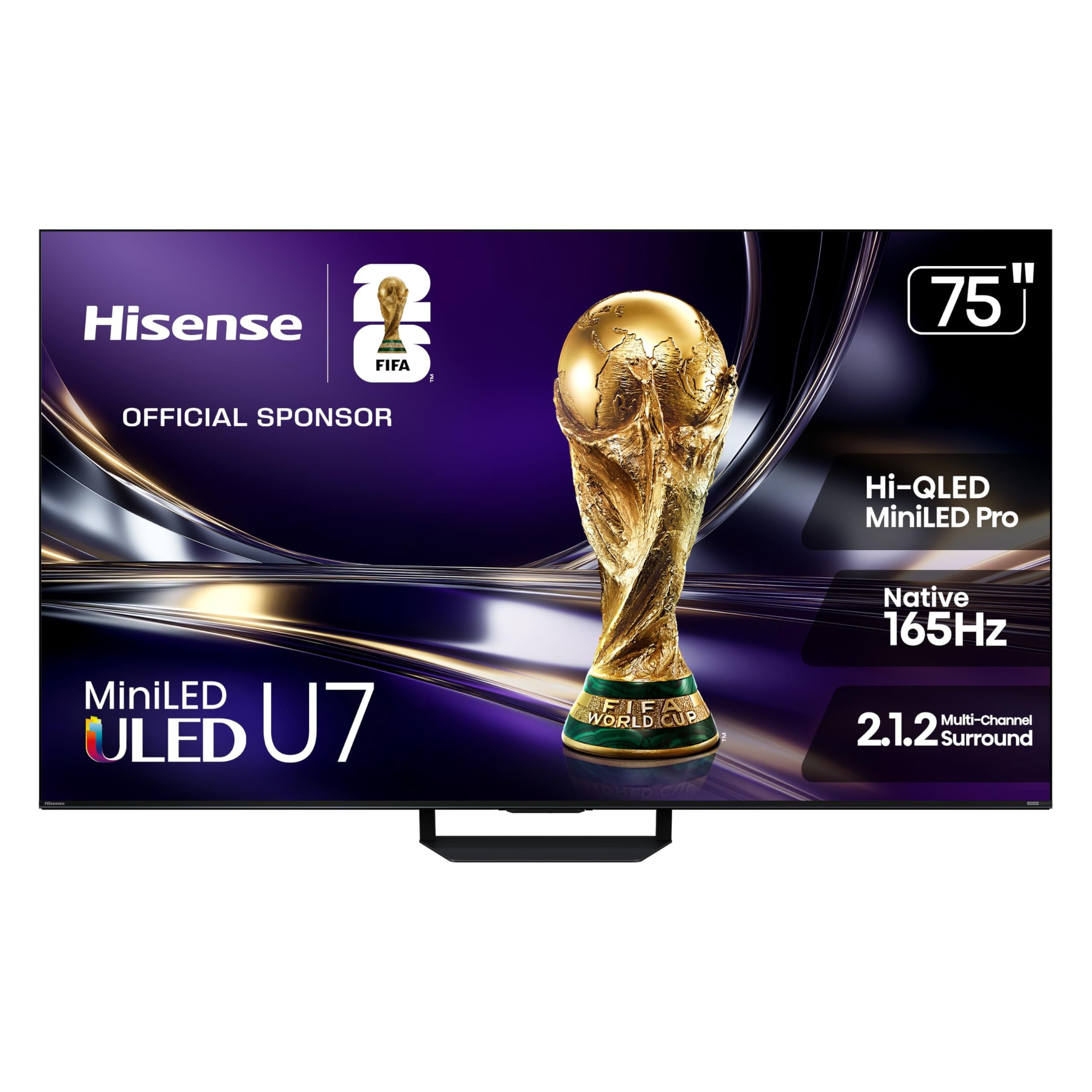
Hisense makes the U7SG compelling by packing a 75-inch ULED Mini-LED 4K Google TV panel with up to 3000 nits of peak brightness. It has the brightness and feature set to suit many living rooms without moving into premium-brand pricing.
The spec list is unusually deep for this slot: up to 4K/165Hz, up to 1080p/330Hz, Dolby Vision, HDR10+, and DTS support. Its weaker points are refinement, black uniformity, and off-angle viewing, which keeps it behind the more polished OLED and premium LCD picks.
Key highlights
- 75-inch screen
- ULED Mini-LED 4K Google TV
- Up to 3000 nits peak brightness
- Up to 4K/165Hz refresh rate
- Up to 1080p/330Hz support
- Dolby Vision, HDR10+, and DTS support
Pros
- Very strong specs for the money
- High refresh rate and broad gaming support
- Bright enough for many living rooms
- Google TV is familiar and app-rich
Cons
- Processing and quality control are not as polished as Sony or LG
- Not OLED-level black uniformity
- Viewing angles are more limited than OLED
Who it's for
Best for buyers who want a big, bright, feature-rich 75-inch TV at a sensible price.
Skip if
Look elsewhere if pristine motion processing, wide seating angles, or premium build matter more than value.
TCL QM8L SQD-Mini LED 75-inch - Best Mini-LED picture
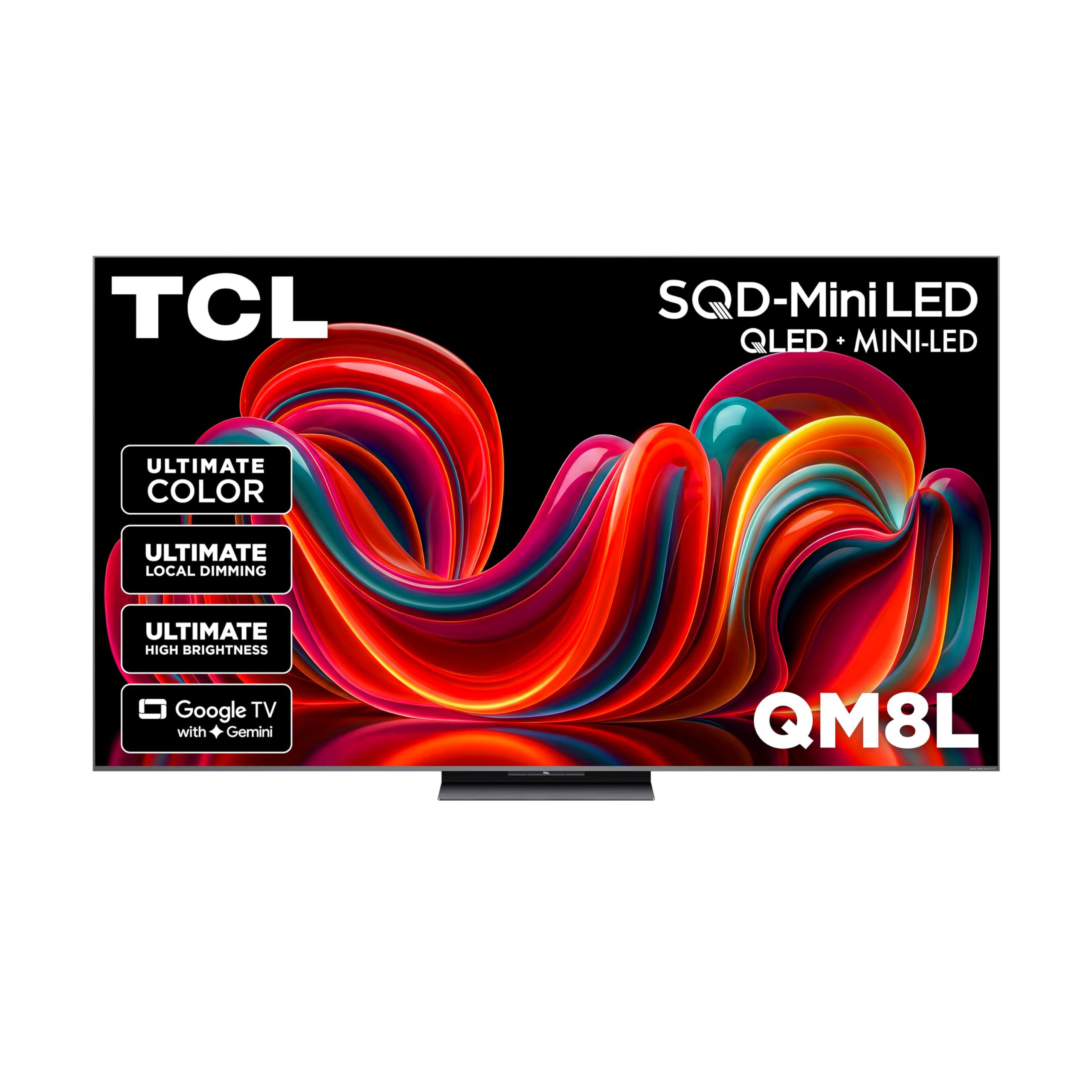
TCL's QM8L SQD-Mini LED 75-inch targets buyers who want a powerful LCD picture with serious brightness. The QLED, SQD Mini LED display pairs 4K resolution with a 144Hz refresh rate.
TCL advertises up to 6,000 nits of peak brightness and up to 4,000+ local dimming zones for the QM8L series; these are series maximums that vary by screen size. It still cannot match OLED pixel-level contrast, but it gives large-screen buyers a high-performance Mini-LED path below OLED flagship territory.
Key highlights
- 75-inch screen
- QLED, SQD Mini LED display
- 4K resolution
- 144Hz refresh rate
- Up to 6,000 nits peak brightness (series maximum)
- Up to 4,000+ local dimming zones (series maximum)
Pros
- Very bright Mini-LED image
- Strong local dimming for an LCD TV
- Good fit for daytime sports and HDR movies
- Google TV and gaming features are well rounded
Cons
- Still not OLED-level pixel contrast
- More expensive than TCL QM7L and Hisense U7SG
- Gloss/reflection behavior depends heavily on room lighting
Who it's for
Made for buyers who want a high-performance 75-inch Mini-LED without paying OLED flagship money.
Skip if
A dark-room movie setup that demands perfect blacks is better served by OLED.
Hisense U8QG Mini-LED 75-inch - Best for bright sports
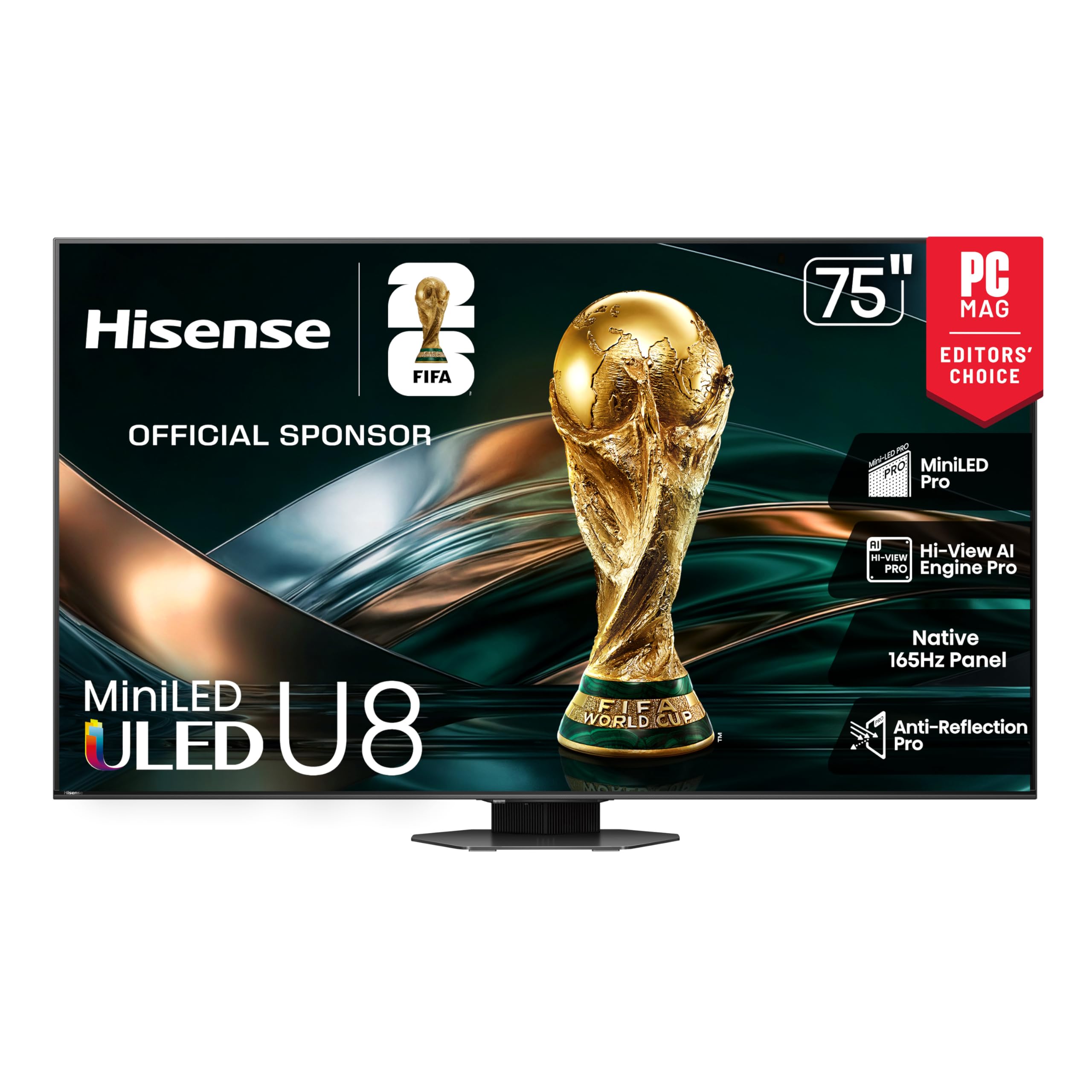
For bright rooms and sports-heavy viewing, the Hisense U8QG Mini-LED 75-inch brings high peak brightness. Its LCD/LED Mini-LED QLED panel reaches up to 5000 nits and includes local dimming with QLED Quantum Dot Color.
The 165Hz native refresh rate gives it a strong gaming foundation, and Dolby Vision IQ plus Dolby Atmos support add to its HDR and audio feature set. Sony still has the advantage for processing refinement, and off-angle viewing is not this TV's strength.
Key highlights
- 75-inch screen
- LCD/LED Mini-LED QLED display
- Up to 5000 nits peak brightness
- 165Hz native refresh rate
- Dolby Vision IQ and Dolby Atmos
- Local dimming and QLED Quantum Dot Color
Pros
- Extremely bright for sunny rooms
- Strong sports and HDR impact
- Good gaming spec sheet
- Usually priced below premium Sony, Samsung, and LG models
Cons
- Hisense processing is less refined than Sony's
- Off-angle viewing is not a strength
- Can require picture-setting tweaks for best results
Who it's for
Right for buyers whose 75-inch TV will sit in a bright living room with lots of sports or HDR streaming.
Skip if
Choose another TV for mostly low-quality cable feeds and the smoothest processing.
TCL QM7L SQD-Mini LED 75-inch - Best midrange Mini-LED
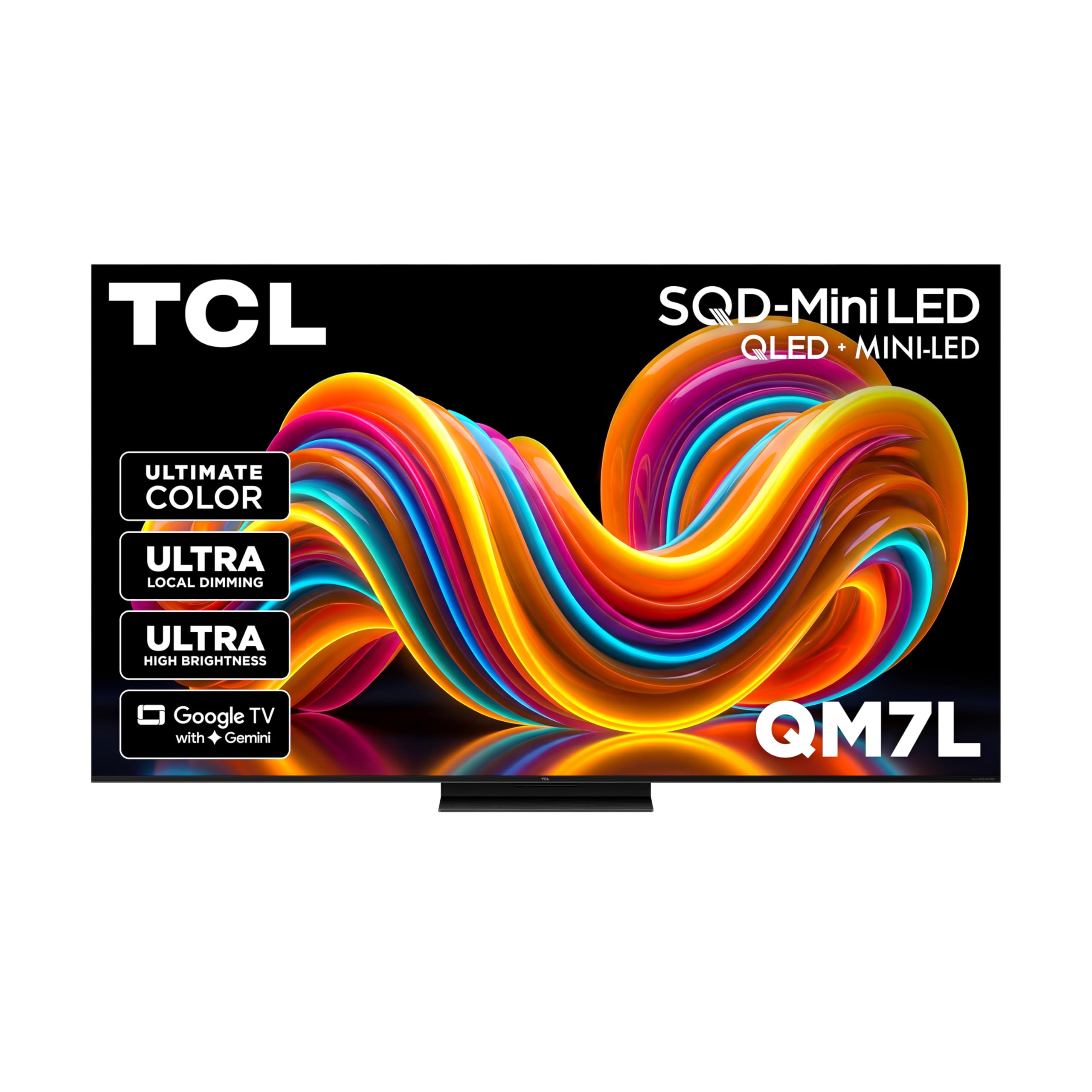
The TCL QM7L SQD-Mini LED 75-inch sits below the QM8L for shoppers who want current 2026 Mini-LED features at a more approachable tier. It uses a QLED, SQD Mini LED 4K display with a 144Hz native refresh rate.
Its LCD VA panel and glossy screen finish define the tradeoff: solid contrast potential and gaming support, but more sensitivity to reflections than some rooms can tolerate. Google TV keeps streaming straightforward for app-heavy households.
Key highlights
- 75-inch screen
- QLED, SQD Mini LED display
- 4K resolution
- 144Hz native refresh rate
- LCD VA panel
- Glossy screen finish
Pros
- Current 2026 TCL model with strong midrange specs
- 144Hz support is useful for gaming
- Google TV is easy for app-heavy households
- Usually costs less than QM8L/QM9K
Cons
- Not as bright or refined as the QM8L
- Glossy screen can show reflections
- TCL processing is improved but not Sony-class
Who it's for
Good match for buyers who want a current-generation 75-inch Mini-LED with gaming features at a midrange price.
Skip if
Avoid it in rooms with direct reflections or when the QM8L upgrade is within reach.
Samsung QN90F Neo QLED 75-inch - Best anti-glare LCD
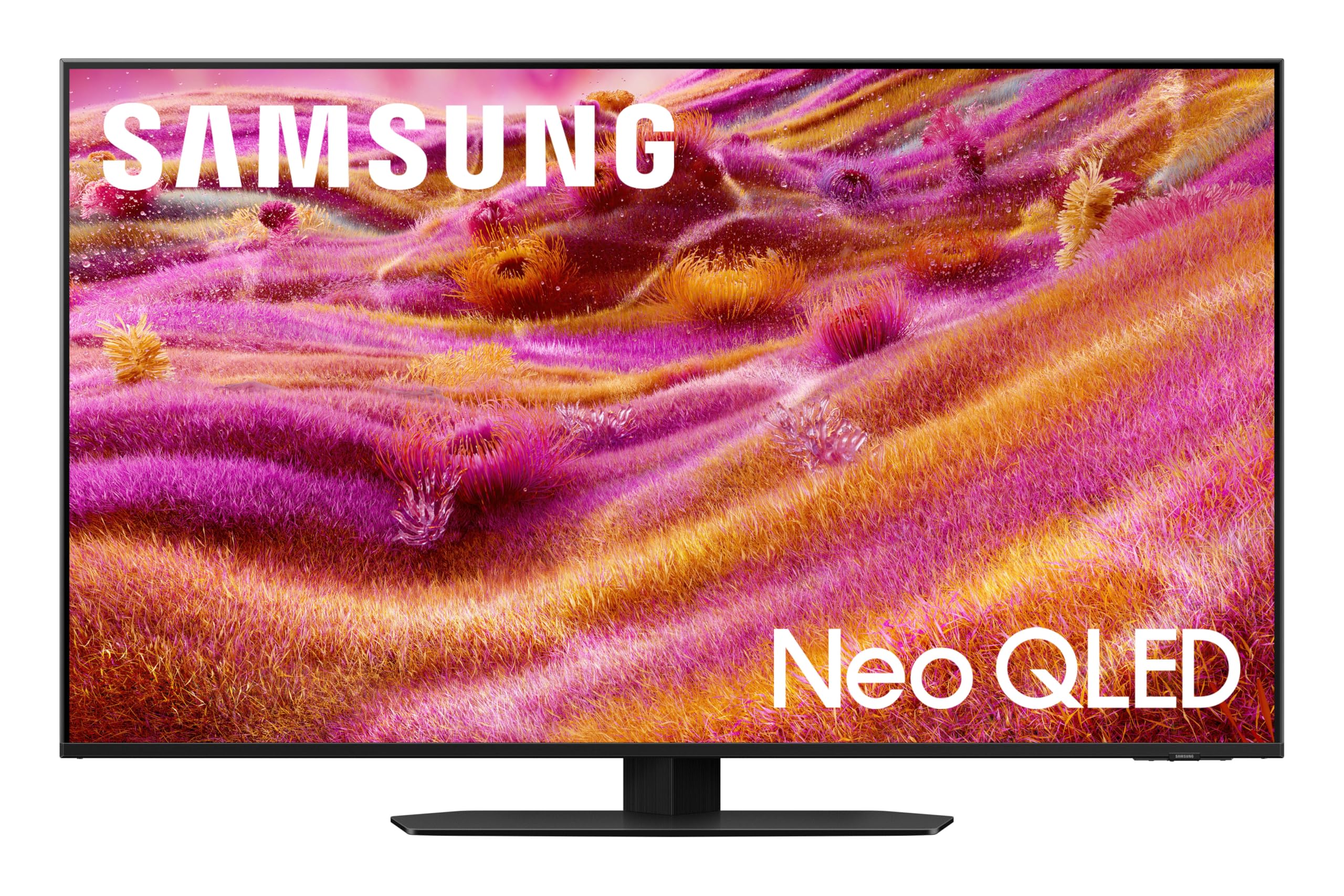
The Samsung QN90F Neo QLED 75-inch belongs in glare-prone rooms where an LCD makes more sense than OLED. Its Neo QLED 4K display uses Quantum Mini LEDs, and the NQ4 AI Gen3 Processor anchors the premium feature set.
Motion Xcelerator 165Hz, four HDMI 2.1 ports up to 4K/165Hz, and 60W 4.2.2-channel speakers make it well equipped for gaming and everyday TV. The major HDR tradeoff is simple: Samsung does not include Dolby Vision here.
Key highlights
- 75-inch screen
- Neo QLED 4K with Quantum Mini LEDs
- NQ4 AI Gen3 Processor
- Motion Xcelerator 165Hz
- 60W 4.2.2-channel speakers
- Four HDMI 2.1 ports up to 4K/165Hz
Pros
- Excellent choice for glare-prone rooms
- High brightness and strong motion handling
- Four HDMI 2.1 ports are gamer-friendly
- Less burn-in concern than OLED
Cons
- No Dolby Vision
- Black levels are not OLED-perfect
- Pricier than many TCL and Hisense Mini-LED models
Who it's for
Built for buyers who need a premium 75-inch LCD for a bright room with reflections.
Skip if
Not the right pick for Dolby Vision loyalists or viewers who mainly watch movies in a dark room.
Sony BRAVIA 5 Mini LED 75-inch - Best processing
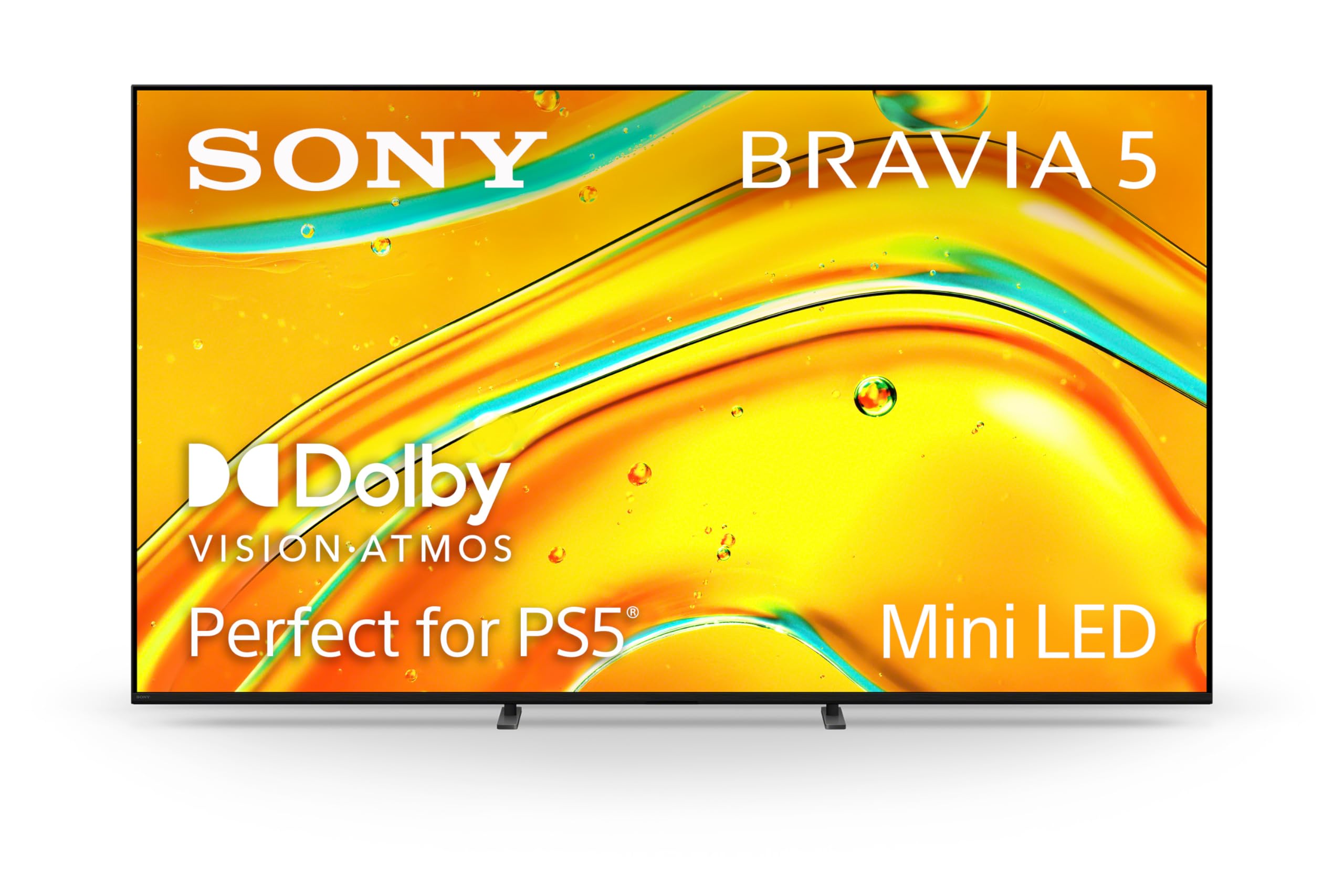
Sony's BRAVIA 5 Mini LED 75-inch is the pick for viewers who care about streaming, sports, and lower-quality sources. It combines a Mini LED 4K Ultra HD HDR Google TV platform with Sony's XR Processor.
The connection setup includes four total HDMI inputs, with HDMI 2.1 bandwidth on two ports plus 4K/120Hz and VRR support. That makes it stronger for everyday picture processing than for households that need every HDMI port ready for high-end gaming gear.
Key highlights
- 75 inches / 74.5 inches measured diagonally
- Mini LED, 4K Ultra HD, HDR, Google TV
- XR Processor
- 4 total HDMI inputs
- HDMI 2.1 bandwidth on two ports
- 4K/120Hz and VRR support
Pros
- Sony processing is strong for streaming, sports, and lower-quality sources
- Google TV app support is broad
- Mini-LED brightness without OLED burn-in anxiety
- Good match for PlayStation households
Cons
- Only two HDMI 2.1 ports
- Not as gaming-focused as LG, Samsung, Hisense, or TCL picks
- Usually costs more than similar-spec value brands
Who it's for
Best for buyers who care more about clean upscaling, natural motion, and everyday TV viewing than raw spec value.
Skip if
Pick another model if four full-bandwidth gaming ports or maximum brightness per dollar is the priority.
TCL QM6K Mini-LED 75-inch - Best affordable big screen
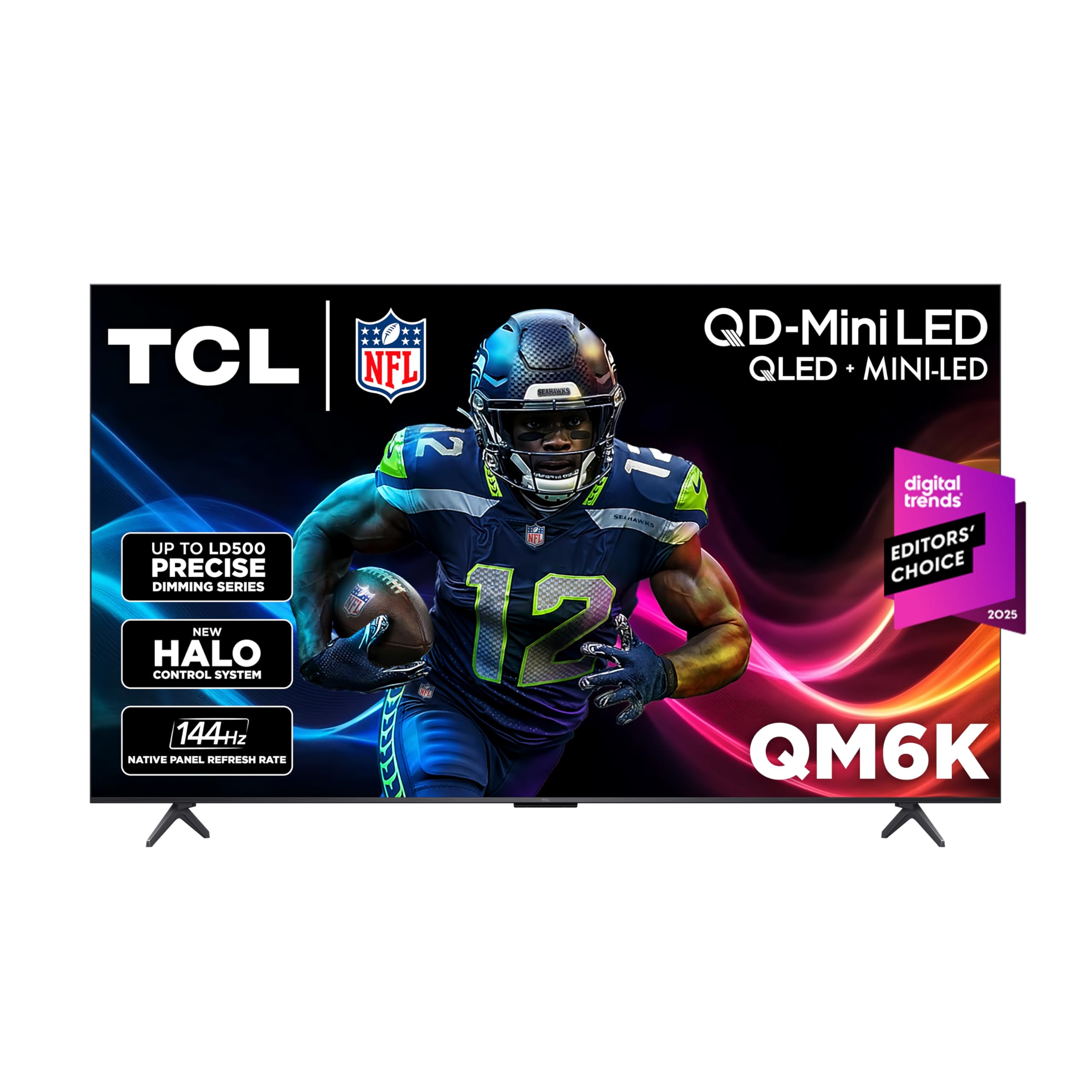
The TCL QM6K Mini-LED 75-inch is the entry-tier large-screen pick that still brings Mini LED QLED technology. It gives buyers a 75-inch 4K UHD panel without dropping to a basic LED feature set.
A 144Hz refresh rate, 288Hz Variable Gaming Refresh Rate feature, Onkyo 2.1-channel Hi-Fi audio, DTS Virtual:X, and DTS-HD give it everyday appeal beyond screen size. Higher TCL models bring more brightness, less blooming, and stronger picture processing, but this is the practical starting point in the lineup.
Key highlights
- 75-inch screen
- 4K UHD Mini LED QLED display
- 144Hz refresh rate
- 288Hz Variable Gaming Refresh Rate
- Onkyo 2.1-channel Hi-Fi audio
- DTS Virtual:X and DTS-HD
Pros
- Often one of the cheapest 75-inch Mini-LED options worth considering
- Better feature set than basic LED TVs
- Google TV and Onkyo audio add everyday convenience
- Good casual gaming value
Cons
- More blooming and less brightness than higher TCL models
- Picture processing is basic compared with Sony or premium Samsung
- Not the best pick for serious home theater use
Who it's for
Ideal for buyers who want the most capable large TV they can get around the entry 75-inch price tier.
Skip if
Step up to the Hisense U7SG or TCL QM7L for better picture quality.
How to Choose
- Choose OLED for dark-room movie quality. OLED is the right choice when deep black levels and movie contrast matter most in a dim room.
- Choose Mini-LED for bright rooms. Mini-LED LCD TVs such as the Hisense U8QG, TCL QM8L, and Samsung QN90F can get very bright and handle daytime sports better than many OLEDs.
- Check the real gaming ports. For PS5, Xbox Series X, or gaming PCs, look for HDMI 2.1, VRR, ALLM, and 4K/120Hz or better. Some TVs advertise high refresh rates but only offer full HDMI 2.1 bandwidth on two ports.
- Do not buy only by peak brightness. Brightness matters, but local dimming, tone mapping, viewing angle, reflection handling, and processing determine how good HDR and sports actually look.
- Put picture quality ahead of smart TV preference. Google TV, webOS, and Samsung Tizen all run major apps. A streaming device can change the interface, but it cannot fix weak contrast, blooming, or motion issues.
- Respect the size. At 75 inches, poor upscaling, motion blur, banding, and blooming are easier to notice, especially with cable, YouTube, and compressed streaming.
Is a 75-inch TV actually 75 inches?
Most 75-inch TVs measure about 74.5 inches diagonally. 77-inch OLEDs are commonly grouped with 75-inch TVs because OLED panel sizing differs slightly.
How far should I sit from a 75-inch 4K TV?
For 4K content, many viewers are comfortable around 7 to 10 feet away. Closer seating feels more cinematic, while farther seating hides compression artifacts.
Is OLED or Mini-LED better for a 75-inch TV?
OLED is usually better for dark-room contrast and movies. Mini-LED is usually better for very bright rooms, sports, and buyers worried about static-image wear.
Do I need 8K at 75 inches?
No. For most US streaming, cable, disc, and gaming use in 2026, a high-quality 4K TV is the better buy than paying extra for 8K content support.
Are 144Hz or 165Hz TVs useful if I only use consoles?
Current consoles mostly target up to 4K/120Hz, so 144Hz/165Hz matters most for PC gaming. The broader HDMI 2.1 and VRR support still helps console buyers.
Published July 8, 2026 Last updated October 1, 2026
Share this article
More in News
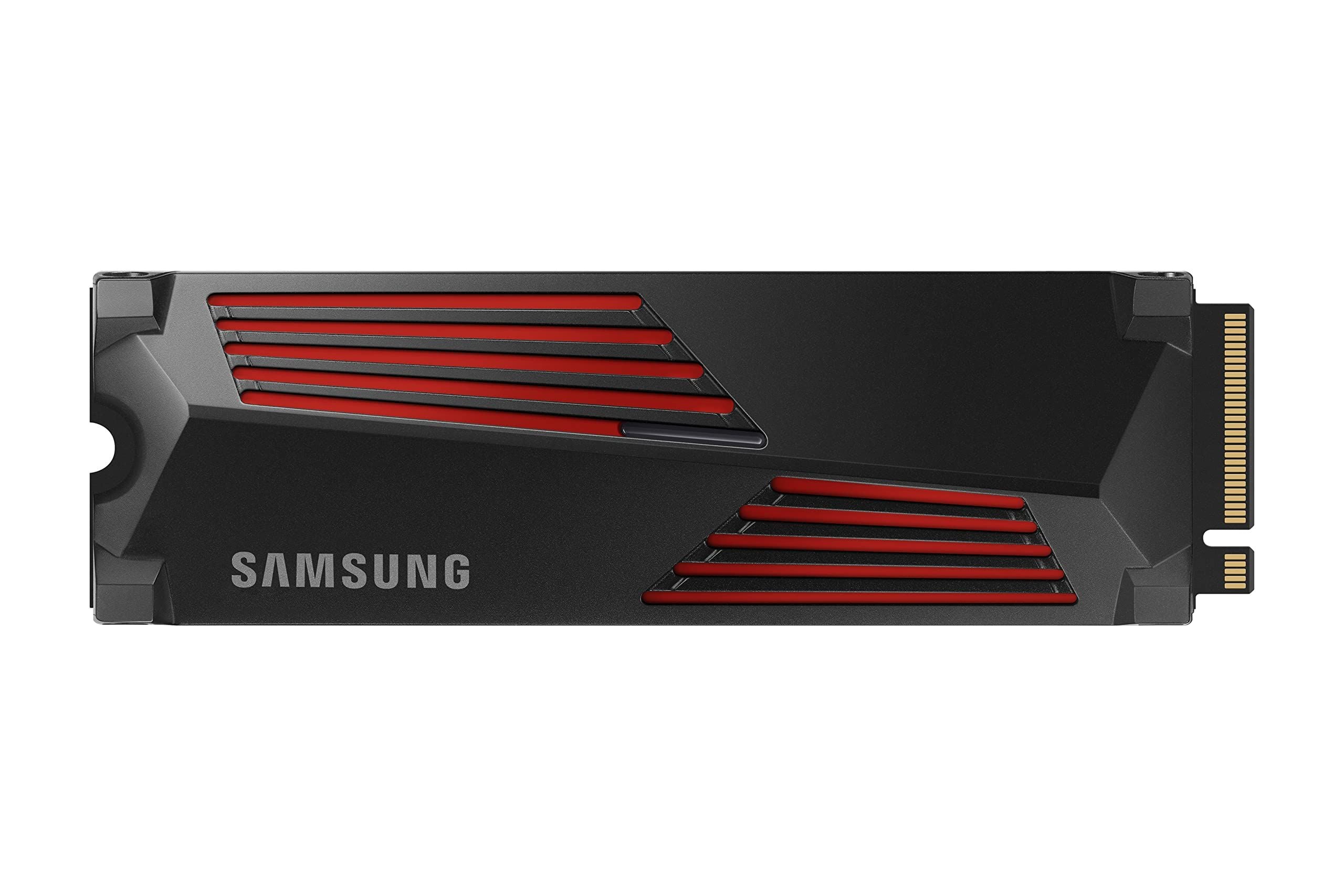
6 Best SSDs for PS5 in 2026
Samsung 990 PRO with Heatsink 2TB is the top pick for a fast PS5 storage upgrade with a compact built-in heatsink.
4 min read
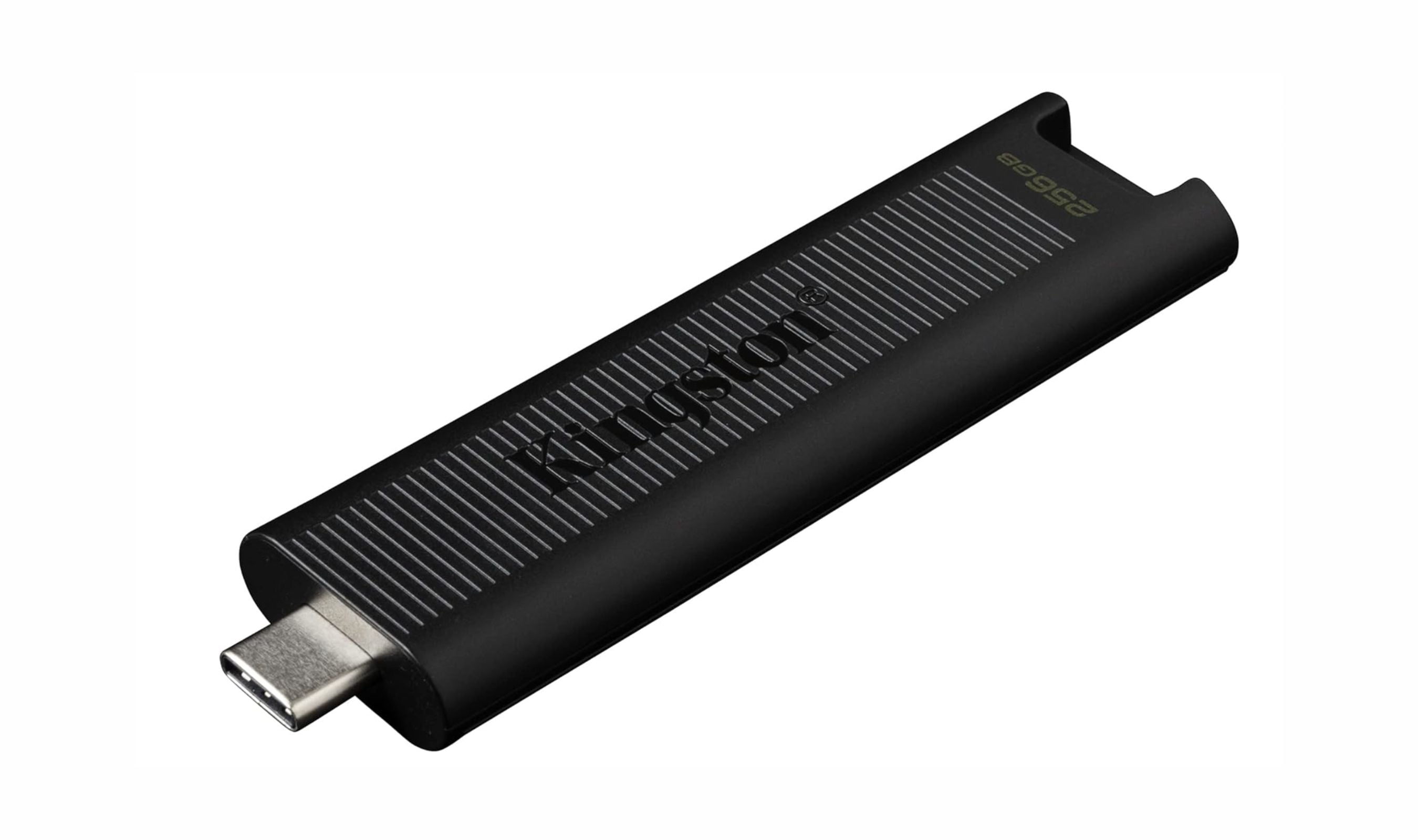
7 Best USB Flash Drives to Buy in 2026
The Kingston DataTraveler Max tops our list of the 3 best USB flash drives to buy in 2026, offering SSD-like speeds and reliable performance for fast, pocket-sized storage.
5 min read
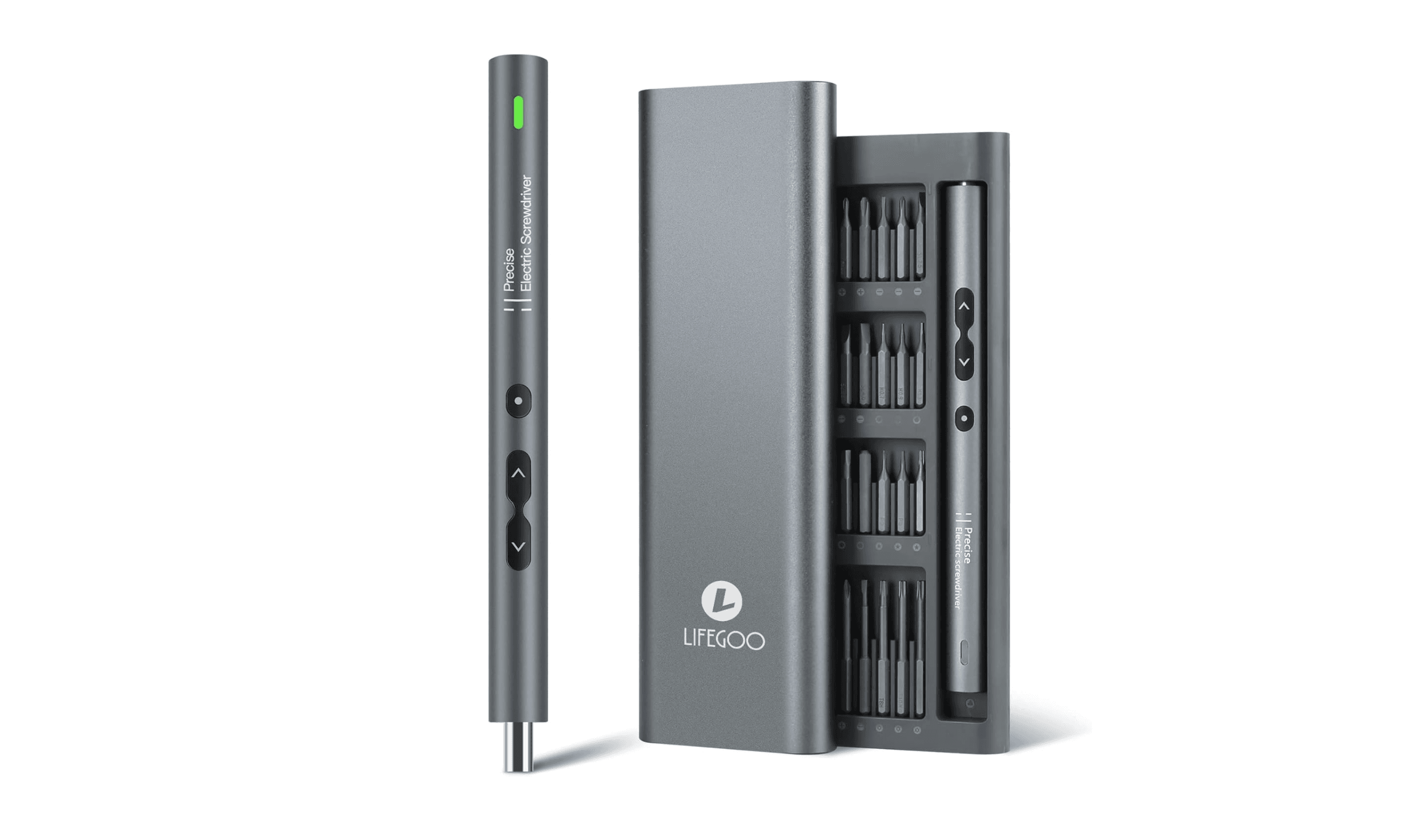
7 Best Electric Screwdrivers of 2026
We tested 7 top electric screwdrivers for 2026. The Bosch GO 3 wins overall, with budget, precision, and pro picks from Skil, Lifegoo, and Milwaukee.
4 min read
TP-Link Archer BE24000 Quad-Band WiFi 7 Router discounted to $599.99
Save $100 on the TP-Link Archer BE24000 WiFi 7 router at $599.99, with quad-band speed and dual 10G ports for demanding setups.
5 min read
Kingston XS2000 1TB High Performance Portable SSD now $173.09, down from $325.99
4 min read
Garmin Forerunner® 170 Music dips to $302.44
3 min read
5 Best Ergonomic Keyboards for 2026
5 min read
9 Best Earbuds for iPhone in 2026
4 min read
Apple AirPods Max Wireless Over-Ear Headphones dips to $439
3 min read
Panasonic W85 75-inch QD-Mini LED 4K UHD falls to $799.99
5 min read
Beats Studio Buds True Wireless Noise Cancelling Earbuds are $59.99 at Woot
4 min read
Razer Kaira Pro Headset for Xbox is $64.99 at Woot
3 min read