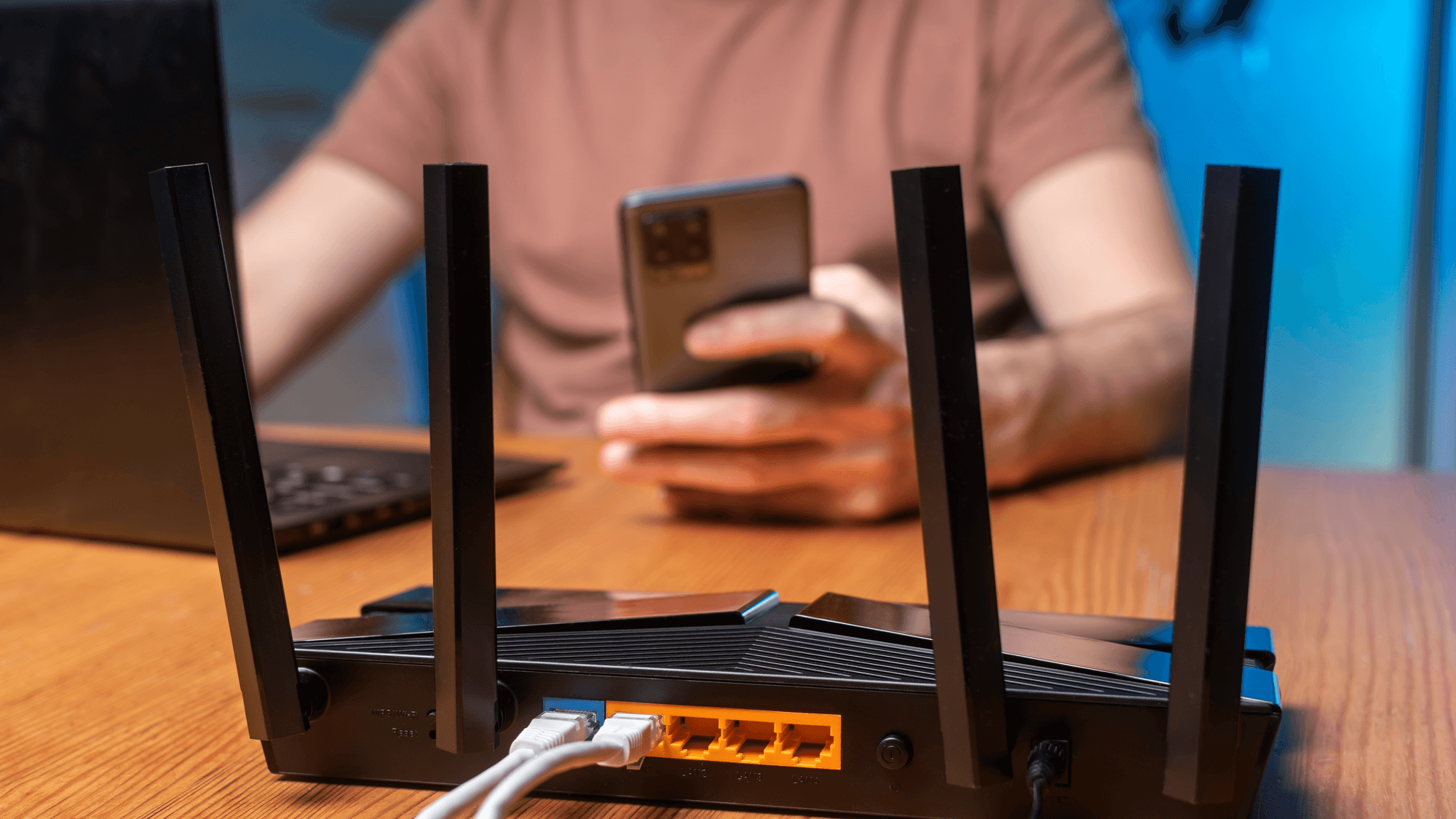

Bandwidth is the capacity of an internet connection to carry data. The FCC's telecommunications glossary defines it as "the capacity of a line or channel to carry signals." On a home plan it is counted in Mbps or Gbps, and every active device shares it.
What bandwidth means on an internet plan
Verizon's support glossary uses nearly the same definition as the FCC, calling bandwidth the capacity of a telecom or data line to carry signals. It adds that greater bandwidth lets more information pass through a channel in a given time.
Internet plans commonly describe that capacity as "speed." AT&T's Consumer Service Agreement says the term is commonly used as shorthand for a connection's capacity to transmit data, measured per second. Xfinity says a plan's speed represents the total bandwidth arriving at your gateway, and that an individual device may get a different speed.
Capacity is also not the same as delivery. Verizon separates bandwidth, the maximum data capacity, from throughput, which is how much information actually gets delivered in a given time.
Mbps, Gbps and the bits behind them
AT&T's internet speed FAQ spells out the two units used for internet speeds. Mbps means megabits per second and Gbps means gigabits per second.
- 1 Mbps: one million bits per second, since Verizon's glossary puts one megabit at 1 million bits.
- 1 Gbps: one billion bits per second, which Verizon's speed FAQ equates to 1,000 Mbps.
- Bits and bytes: a byte is 8 bits. Verizon keeps connection-rate units apart from file-size units such as MB and GB.
How bandwidth differs from latency and upload speed
Latency measures something else. Xfinity defines it as the time delay in transmitting or receiving packets on a network, and says it is typically measured in milliseconds. Bandwidth is a capacity counted in bits per second, while latency is a delay counted in time.
Bandwidth also runs in two directions. In AT&T's FAQ, download speed is how quickly data travels from the internet, through the gateway or hub, to your device. Upload speed is the rate at which data travels from your device, through the gateway or hub, to the internet.
How a household shares bandwidth
Active devices draw on the same plan. Xfinity's speed test FAQ says multiple devices online at once reduce the available bandwidth for each device. It lists streaming, gaming, video calls and smart home devices among the activities that share that capacity.
The FCC has published two guides on this, the Broadband Speed Guide and the Household Broadband Guide. The Broadband Speed Guide lists minimum broadband speeds for individual applications. FCC documents citing it put HD video streaming at 5 to 8 Mbps and video conferencing at a minimum speed of 6 Mbps.
The Household Broadband Guide compares one, two, three or four devices in use at the same time. It sorts use into light, moderate and high. Light use means basic activities such as email, browsing and basic video. Moderate use adds one high-demand application, and high use adds several at once.
In the FCC's household chart, one user or device with light or moderate use lands in the Basic service tier, and high use moves it to Medium. Four users or devices with high use land in Advanced.
What to check on your own plan
If one device shows a lower speed than the plan figure, keep in mind that Xfinity says the plan speed is the total bandwidth arriving at the gateway and an individual device may get a different speed.
If several people stream, game and take video calls at once, count the active devices, because Xfinity says multiple devices online at once reduce the available bandwidth for each device. If you mostly send data out, look at the upload figure separately, because AT&T describes upload and download as two different rates. If you are comparing a plan's rate with a file size, keep in mind that a byte is 8 bits.