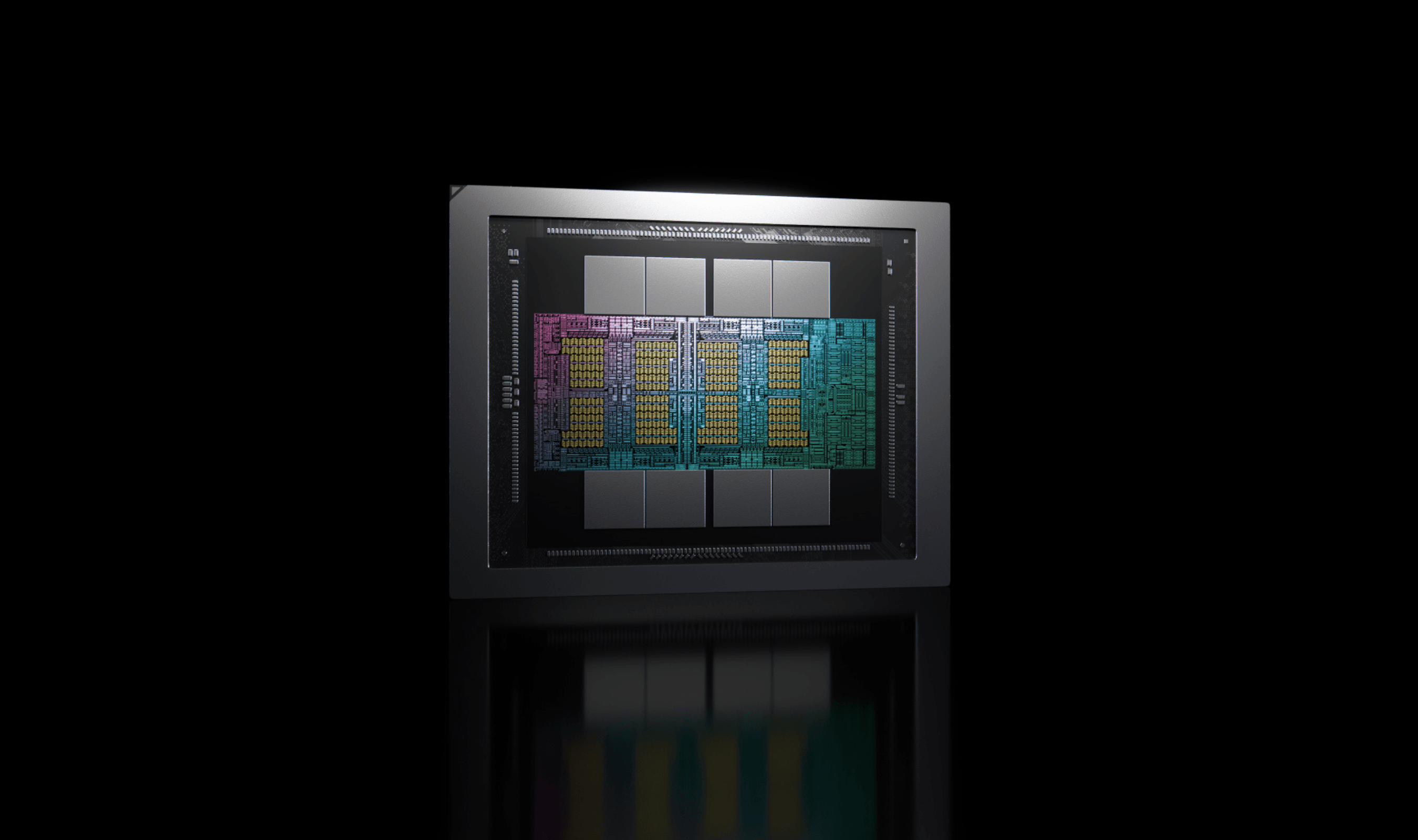
NVIDIA introduced Rubin HPC today at SC26, putting more than 50,000 CUDA cores into a GPU intended to speed scientific simulations and analytics. The chip joins the NVIDIA Vera Rubin platform, with NVIDIA expecting availability in 2028. Its intended role is to accelerate the calculations that agents use to assess potential molecules, materials and designs before researchers move toward experiments or prototypes.
Rubin HPC combines those cores with a capability for accelerating sparse data processing and seventh-generation NVIDIA NVLink technology for communication between GPUs. NVIDIA says the design increases computing capacity and data movement together, aiming to prevent its cores from sitting idle while they wait for information. NVIDIA has not disclosed a price.
Read more: NVIDIA projects one trillion dollars in orders for Blackwell and Vera Rubin systems through 2027
The workloads NVIDIA is targeting include financial risk calculations, genomic analysis, climate modeling and engineering simulation. In these applications, software repeatedly pulls small groups of values from much larger datasets, performs calculations and starts the process again at substantial scale. NVIDIA says Rubin HPC is designed to accelerate that repeated work, including operations involving sparse matrices, stencil calculations, reductions and sorting.
For researchers using agents, NVIDIA argues that quicker simulations can reduce the time between proposing an idea, evaluating it and deciding what to try next. The company says this could let teams examine a wider range of candidates and direct laboratory work toward those showing the most promise. NVIDIA CUDA-X libraries provide implementations of complex algorithms that agents can use for simulation and analytics alongside Rubin HPC.
In a separate announcement today, NVIDIA expanded NVIDIA CUDA-X libraries with additions including cuSpa and cuPhoton, targeting research spanning astrophysics, materials science and the biology of individual cells. NVIDIA also introduced NVIDIA Nemotron for Science, combining scientific uses of its NVIDIA Nemotron 3.5 Super VL open model with an open chemistry dataset and recipes for post-training specialized research agents.
The broader Rubin AI platform was introduced at CES 2026 as a six-chip system, with partner availability scheduled for the second half of 2026. That earlier platform targeted AI inference costs and training efficiency, with NVIDIA promising inference costs one-tenth those of its previous Blackwell generation.