
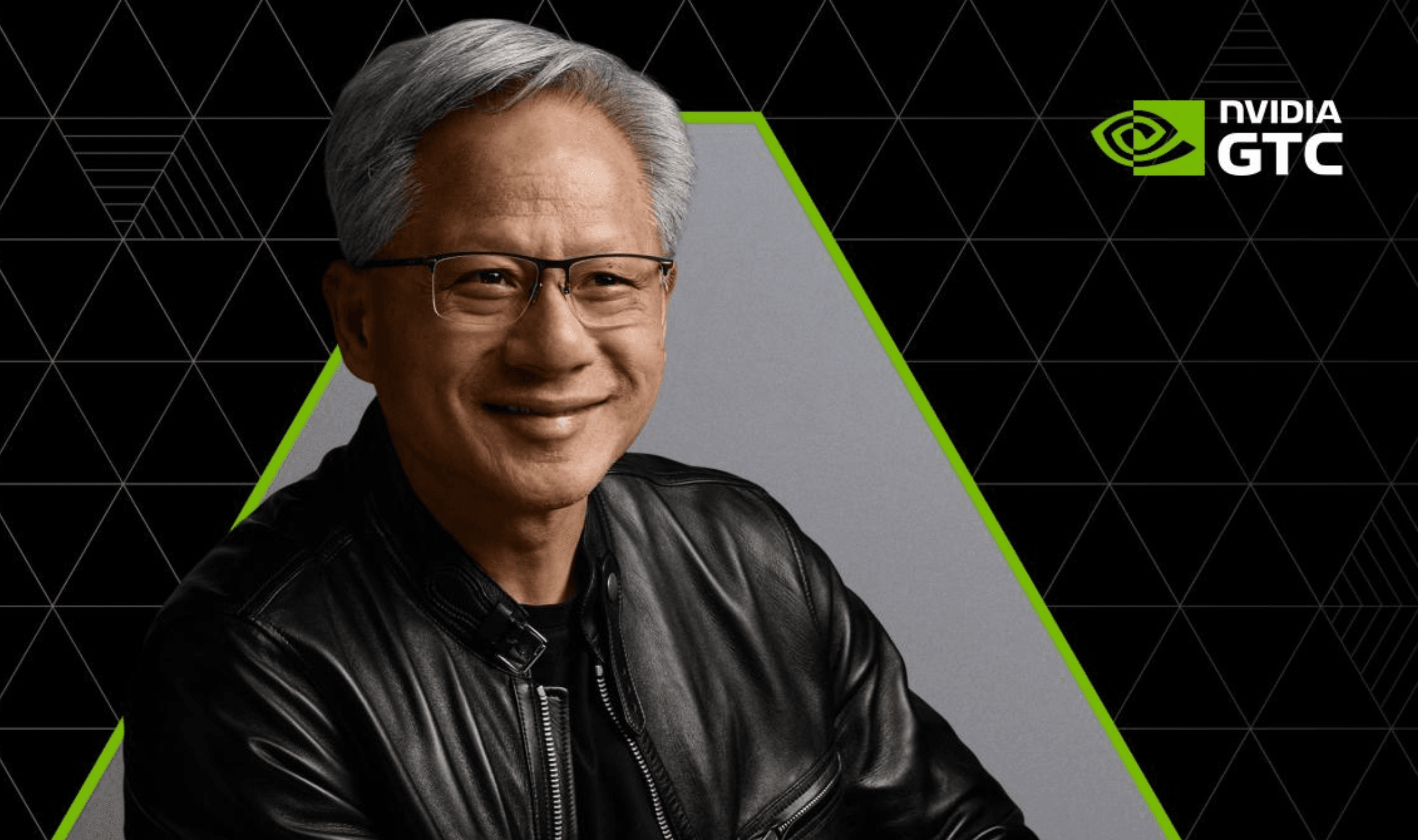
NVIDIA CEO Jensen Huang projected $1 trillion in orders for Blackwell and Vera Rubin systems through 2027 during Monday's GTC keynote, doubling last year's revenue estimates as the company expands from AI chips into gaming, robotics, and space infrastructure. The nearly three-hour presentation in San Jose revealed NVIDIA's push beyond hardware into software ecosystems.
Huang announced DLSS 5, the next iteration of AI upscaling software arriving this fall, which NVIDIA claims represents a "breakthrough in visual fidelity" that "infuses pixels with photorealistic lighting and materials." The demonstration used Resident Evil: Requiem, Hogwarts Legacy, and Starfield for comparisons.
Gamers reacted negatively on social media to the DLSS 5 reveal, arguing NVIDIA was attempting to fix graphics that weren't broken in recently released titles.
NVIDIA's partnership with OpenClaw positions the company at the center of the agentic AI movement. Huang called OpenClaw an operating system that "opensourced the operating system of agentic computers," with NVIDIA adding security layers through its NemoClaw platform.
"Every company in the world needs to have an OpenClaw strategy," Huang insisted during the keynote.
The demonstration showcased one of 110 robots from NVIDIA-partnered companies using physical AI models including Groot, Kamino and Isaac labs.
Disney Research and Google DeepMind collaborated on Newton, a new physics engine for robotic movements with an open-source model arriving later in 2025.
Space infrastructure emerged as NVIDIA's most ambitious vision. Huang presented Vera Rubin Space-1 as what he called "the first data center in space," though no development timeline exists beyond having engineers working on the concept.
The Vera Rubin architecture itself represents NVIDIA's next hardware generation beyond Blackwell, scheduled for release later this year. The system contains 1.3 million components and delivers ten times more performance per watt than its predecessor according to company claims.
NVIDIA also unveiled its Groq 3 Language Processing Unit, the first chip from its $20 billion December acquisition of startup Groq. The LPU ships in the third quarter targeting faster inference speeds for AI applications shifting from chatbots to agentic apps.
Huang framed 2026 as an "inflection point for inference" where NVIDIA's value shifts from training large language models to deploying them through expanding agent ecosystems. The company reported eleven straight quarters of revenue growth above 55%, with current quarter projections showing 77% year-over-year growth to roughly $78 billion.
NVIDIA shares rose about 2% following Monday's announcements as Huang positioned his $4.5 trillion company not just as a chip supplier but as the computing platform running all of AI.