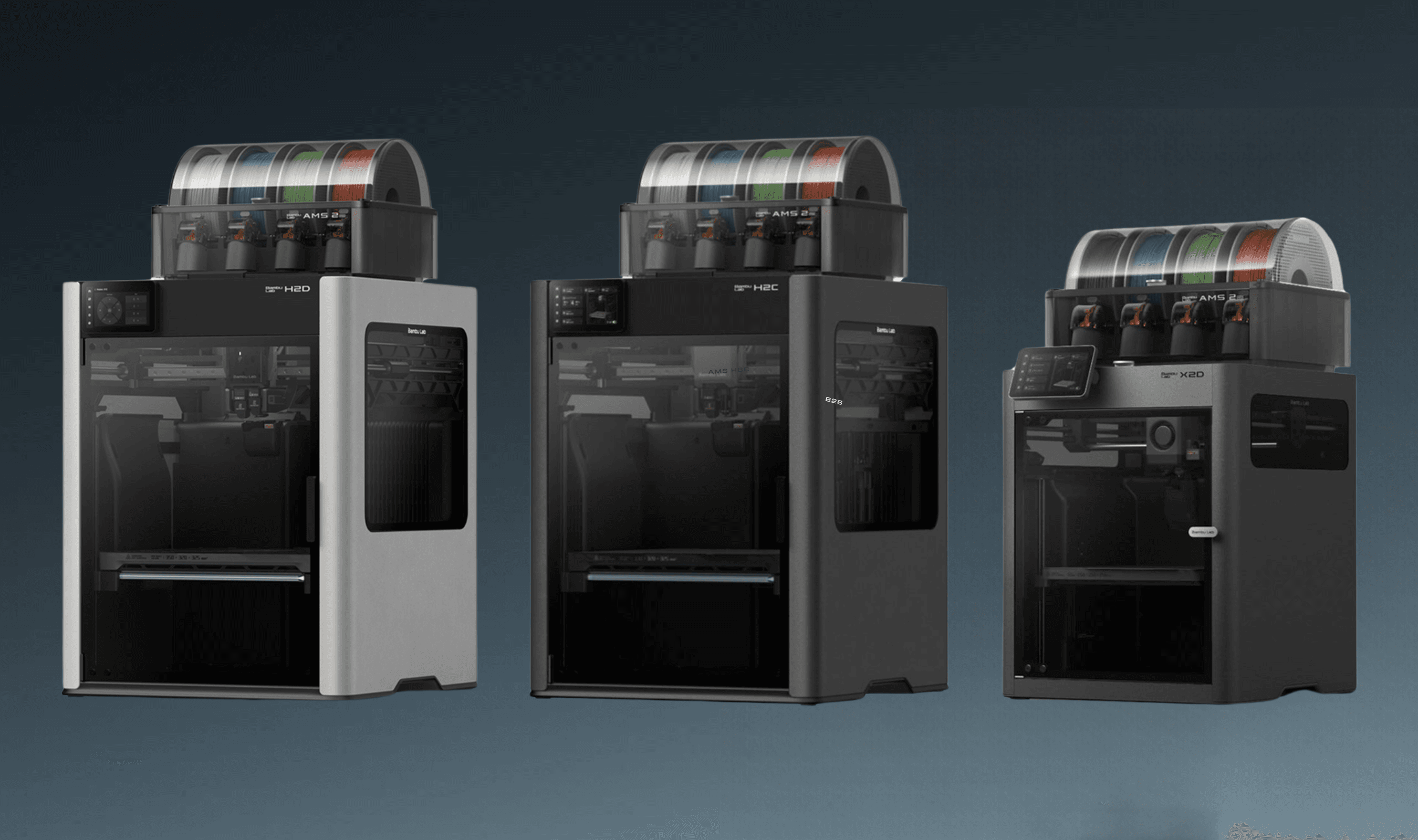

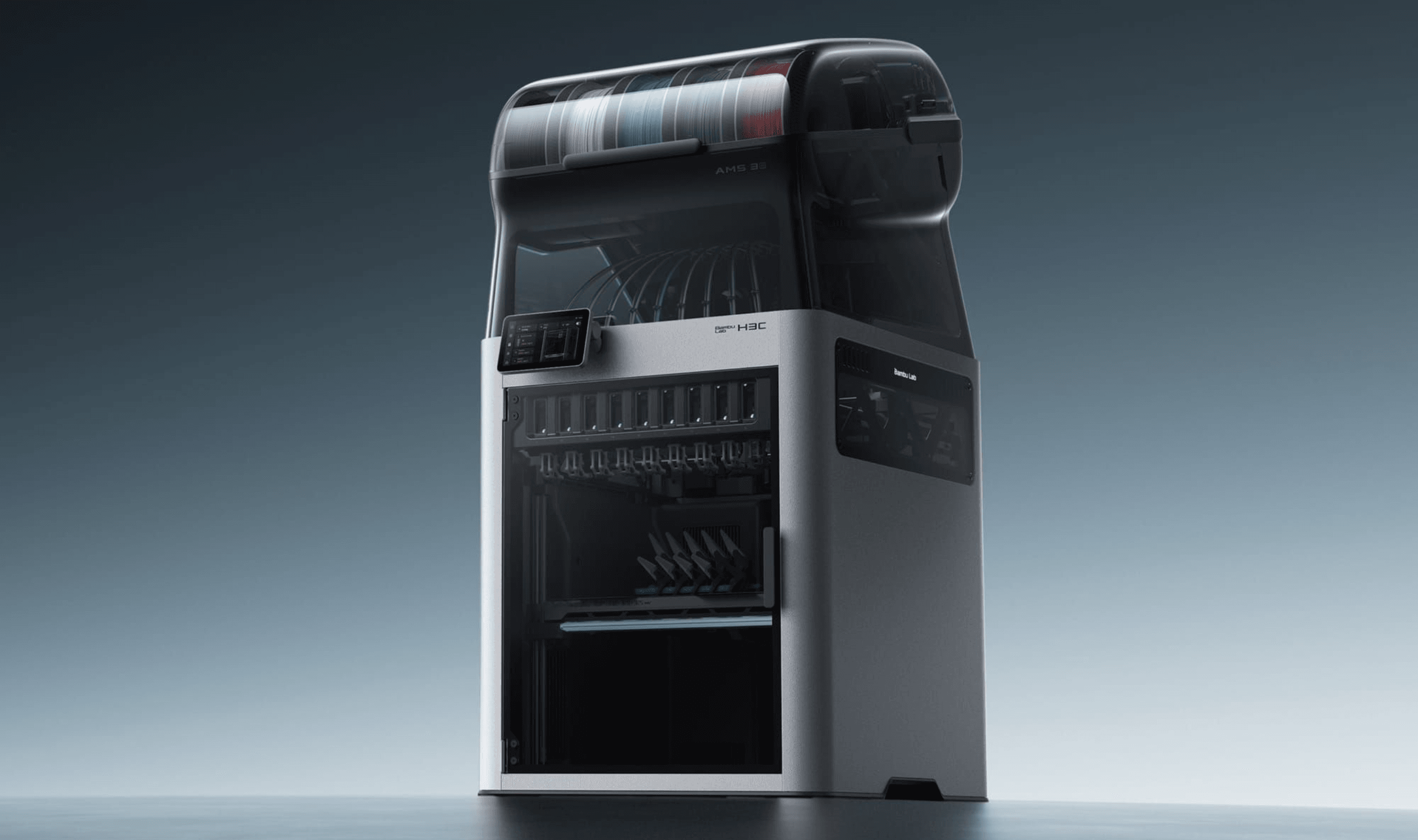
Bambu Lab has introduced the H3C, a 3D printer with nine print tools that the company says can change materials in under six seconds. Each tool has separate heating and a dedicated filament route, allowing material to remain loaded and warm up before a switch. The machine also incorporates filament storage and drying.
The nine-tool arrangement is not the printer's material ceiling: connecting an older-generation AMS through the first print tool increases capacity to 24 materials within one print. Bambu Lab says its Swaptek system also allows users to combine different nozzle sizes in one job and use crafting attachments such as DrawTool. Active Pre-Heat supports the rapid switches, which the company says require little priming.
For flexible prints, the FlexFeed Extruder accepts both 2.85 mm and 1.75 mm filament and can alternate between those diameters during operation. Bambu Lab says dedicated 2.85 mm TPU supports printing material as soft as 75A, with a flow rate up to three times that of a classic printer. Dedicated TPU entry points in AMS 3H let users feed that material without placing a spool outside the system.
AMS 3H houses spools in airtight compartments and uses RFID information to synchronize material details with the printer and slicer. Its inventory tracks remaining weight alongside filament color and type, while automatic routing handles loading through nine slots. Two drying positions can operate during printing and reach a maximum of 85°C; users needing additional drying can attach AMS HT or AMS 2 Pro.
Bambu Lab specifies movement speeds up to 1,400 mm/s and acceleration up to 25,000 mm/s², with optional high-flow nozzles intended to reduce limits imposed by material throughput. It claims average print completion more than 10% faster than its previous flagship. The build chamber uses active heating to reach up to 65°C, while each print tool can reach up to 350°C for higher-temperature polymers.
Before each print, the H3C automatically calibrates its tools, checks docking, compensates for offsets and levels the bed using sensors and vision checks. An optional BirdsEye camera supplies a top-down perspective for detecting failures and recording timelapses. The printer's HMS with MiniWiki also provides on-screen troubleshooting instructions, explaining possible causes and guiding users through repairs.