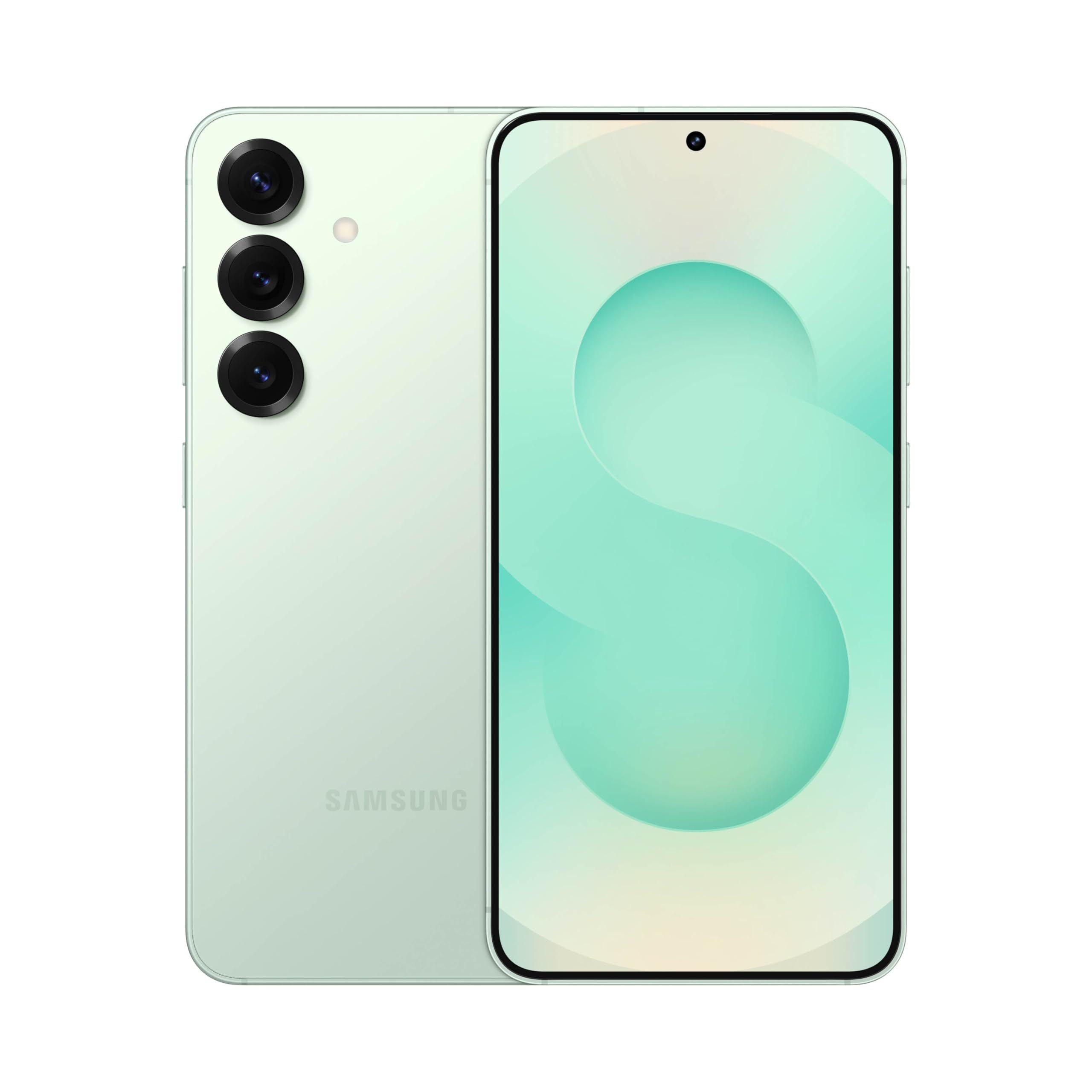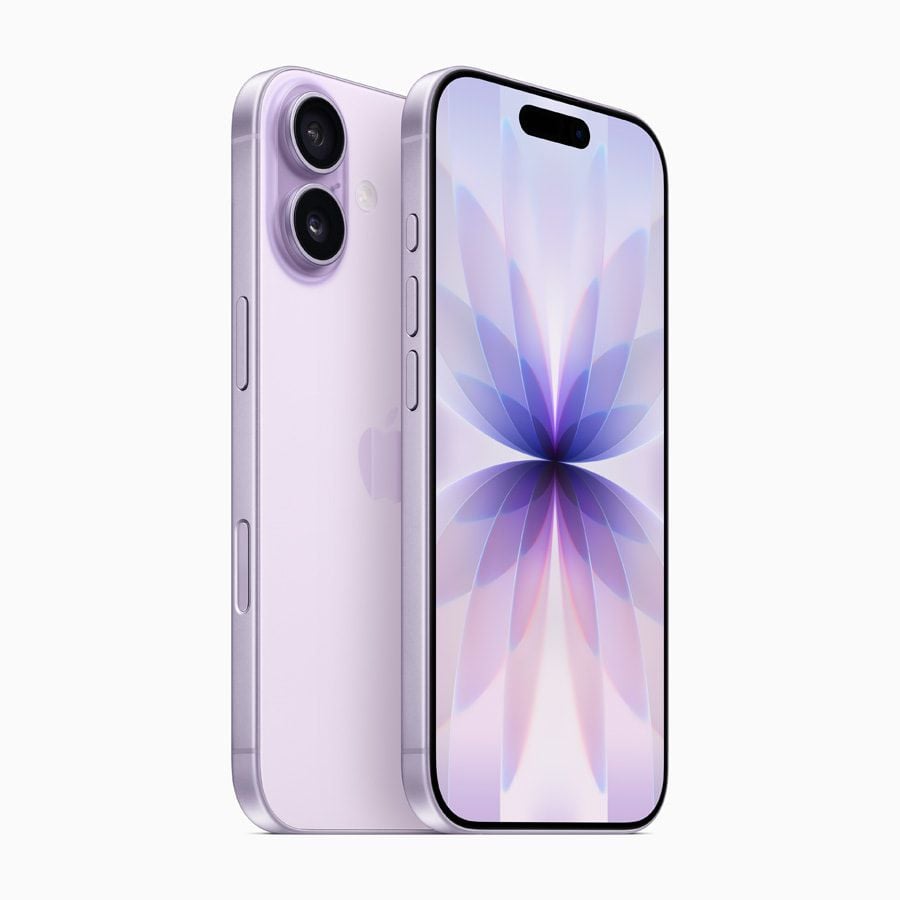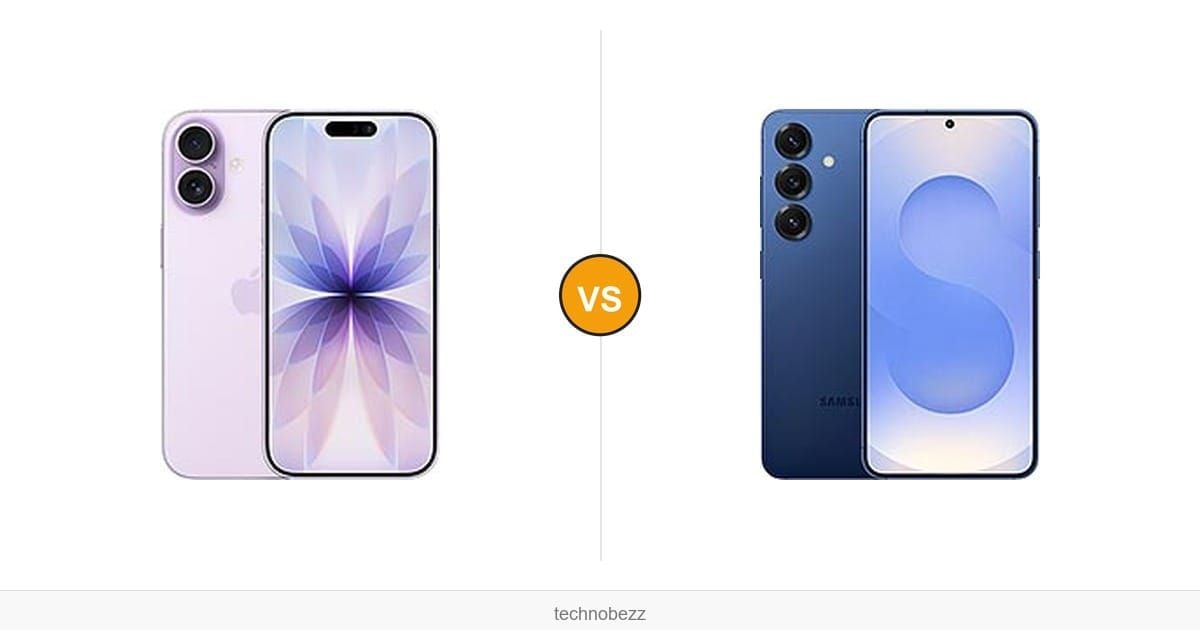
The iPhone 17 finally gets serious about competing with Android flagships, while the Galaxy S25 sticks to what works. Apple's base model now has 120Hz, always-on display, and better cameras, but Samsung keeps the telephoto lens and lighter build. Choose the iPhone 17 if you prioritize camera versatility and iOS. Pick the Galaxy S25 if you want a true telephoto camera and more compact design.
At a Glance
- iPhone 17 best for iOS users who want better selfies and video recording
- Samsung Galaxy S25 best for Android fans who need a telephoto lens and lighter phone
- The deciding factor comes down to camera priorities: iPhone's multi-aspect selfie camera vs Samsung's 3x optical zoom
Quick Comparison
| Category | iPhone 17 | Samsung Galaxy S25 | Winner |
|---|---|---|---|
| Display | 6.3" LTPO Super Retina XDR OLED, 1206x2622, 120Hz, Ceramic Shield 2 | 6.2" Dynamic LTPO AMOLED 2X, 1080x2340, 120Hz, Gorilla Glass Victus 2 | iPhone 17 (higher resolution, anti-reflective) |
| Processor | Apple A19 (3nm), Hexa-core | Snapdragon 8 Elite (3nm), Octa-core | Samsung Galaxy S25 (higher benchmark scores) |
| RAM | 8GB | 12GB | Samsung Galaxy S25 |
| Storage (base) | 256GB | 128GB | iPhone 17 |
| Rear Cameras | 48MP main + 48MP ultrawide | 50MP main + 10MP telephoto (3x) + 12MP ultrawide | Samsung Galaxy S25 (telephoto advantage) |
| Front Camera | 18MP multi-aspect, square sensor | 12MP wide | iPhone 17 (more versatile) |
| Battery | 3692 mAh | 4000 mAh | Samsung Galaxy S25 |
| Charging | 50% in 20 min wired, 25W wireless MagSafe/Qi2 | 50% in 30 min wired, 15W wireless Qi2 Ready | iPhone 17 (faster) |
| Dimensions | 149.6 x 71.5 x 8 mm | 146.9 x 70.5 x 7.2 mm | Samsung Galaxy S25 (smaller, thinner) |
| Weight | 177g | 162g | Samsung Galaxy S25 (15g lighter) |
| Software Updates | iOS 26, typical 5+ years | Android 15, 7 major Android upgrades | Samsung Galaxy S25 (longer guaranteed support) |
| AI Features | Apple Intelligence | Galaxy AI + Gemini | Samsung Galaxy S25 (more robust suite) |
Daily Performance
Both phones handle everyday tasks without breaking a sweat. The Galaxy S25's Snapdragon 8 Elite chipset scored higher in benchmarks (2,193,701 vs 2,109,773 in AnTuTu v10), but you won't notice the difference opening apps or scrolling social media. Where it matters is gaming and AI tasks. The Galaxy S25's 12GB RAM gives it an edge for multitasking. You can keep more apps in memory, which means fewer reloads when switching between them. The iPhone 17's 8GB RAM is fine for most people, but power users will appreciate Samsung's extra headroom.
Heat management is solid on both. The iPhone 17's aluminum unibody helps dissipate heat, while the Galaxy S25's thinner design doesn't seem to compromise cooling. Neither phone gets uncomfortably warm during normal use.
Camera Reality
This is where their philosophies diverge. The Galaxy S25 gives you three rear cameras, including a proper 10MP telephoto with 3x optical zoom. That telephoto lens is genuinely useful for portraits, distant subjects, and getting creative with composition. The iPhone 17 makes do with a 2x digital crop from its 48MP main sensor. But the iPhone 17 fights back with its 18MP front camera. The square sensor lets you shoot selfies in portrait or landscape without rotating your phone. It's a small thing that makes a real difference for content creators.
The Center Stage feature also automatically expands the field of view when it detects more people in the frame. For video, the iPhone 17 still leads. Its 4K Dolby Vision HDR recording and better stabilization make it the better choice for serious video work. The Galaxy S25 can shoot 8K video, but that's mostly a spec sheet win. Most people will stick to 4K.
Low-light performance is excellent on both. The iPhone 17's sensor-shift OIS gives it an edge for handheld night shots, but the Galaxy S25's AI processing does impressive work with challenging lighting.
Screen Experience
You get excellent displays on both phones, but with different strengths. The iPhone 17's 6.3-inch screen has higher resolution (460 ppi vs 416 ppi) and Apple's Ceramic Shield 2 with anti-reflective coating. That coating makes a noticeable difference outdoors, reducing glare better than the Galaxy S25's Gorilla Glass Victus 2.
Brightness is a toss-up. The iPhone 17 hits 3000 nits peak, while the Galaxy S25 reaches 2600 nits. Both are plenty bright for any situation.
Both have 120Hz LTPO panels that adjust refresh rate dynamically to save battery. The scrolling experience feels equally smooth on both. Color accuracy is excellent on both, with the iPhone leaning toward natural tones and Samsung offering more vibrant saturation.
Battery Truth
The Galaxy S25's 4000 mAh battery gives it a capacity advantage over the iPhone 17's 3692 mAh. In active use test, the Galaxy S25 scored 13:39 hours versus the iPhone 17's 15:29 hours. Real-world results will vary based on your usage patterns.
Charging speed favors the iPhone 17. It reaches 50% in 20 minutes with a compatible charger, while the Galaxy S25 takes 30 minutes for the same charge. Both support wireless charging, but the iPhone 17's MagSafe/Qi2 system is more versatile with accessories.
Battery longevity is worth considering. The Galaxy S25 is rated for 2000 charge cycles in EU testing, while the iPhone 17 is rated for 1000 cycles. That suggests the Samsung might maintain its capacity better over years of use.
Build and Feel
The Galaxy S25 wins the portability contest. At 162g and 7.2mm thick, it's noticeably lighter and thinner than the 177g, 8mm iPhone 17. The difference is enough that you'll feel it in your pocket or hand over time.
Both use aluminum frames with glass backs, but the iPhone 17's Ceramic Shield 2 on the front offers better scratch resistance. The Galaxy S25's Gorilla Glass Victus 2 is still durable, just not quite as scratch-resistant.
IP68 water resistance is standard on both. You can submerge them in 1.5 meters of water for 30 minutes without issues. The iPhone 17's flat edges make it easier to grip, while the Galaxy S25's curved edges feel more comfortable in hand.
Software and Updates
IOS 26 versus Android 15 with One UI 8 is the classic ecosystem decision. If you're invested in Apple's ecosystem (Mac, iPad, Apple Watch), the iPhone 17 makes more sense. If you prefer Android's customization or use Google services heavily, the Galaxy S25 is your pick.
Update support favors Samsung on paper. The Galaxy S25 gets 7 years of major Android updates, which is longer than Apple's typical support window.
AI features are more developed on the Galaxy S25. Between Galaxy AI and Google's Gemini integration, Samsung's phone offers more practical AI tools for everyday tasks. Apple Intelligence is catching up, but it's not there yet.
Ecosystem Lock-in
This might be the most important factor for many people. If you own an Apple Watch, use iMessage daily, or have a MacBook, switching to Android means losing smooth integration. The iPhone 17 just works better with other Apple products. The Galaxy S25 plays nicely with Windows PCs and offers better integration with Google services. Samsung's Quick Share now works with Apple devices too, making file transfer between platforms less painful than before.
Accessory support is better for the iPhone 17. MagSafe has spawned an entire ecosystem of cases, chargers, and mounts. The Galaxy S25 supports Qi2 wireless charging, but without built-in magnets, accessories don't snap into place as securely.
Gaming and Media
Both phones handle demanding games well, but the Galaxy S25 has a slight edge in sustained performance. Its Snapdragon 8 Elite chipset and 12GB RAM give it more headroom for graphics-intensive titles. The iPhone 17's A19 is no slouch, but it's not the Pro variant.
Media consumption is excellent on both. The iPhone 17's slightly larger, higher-resolution screen is better for movies, while the Galaxy S25's lighter weight is nicer for extended reading sessions. Both have excellent stereo speakers that get loud without distortion. The Galaxy S25's USB-C 3.2 port offers faster data transfer than the iPhone 17's USB 2.0 port. This matters if you frequently move large files to and from your computer.
Pros & Cons
iPhone 17 pros
- Better front camera with square sensor for flexible selfies
- Superior video recording with Dolby Vision HDR
- Faster charging (50% in 20 minutes)
- Anti-reflective display coating reduces glare
- 256GB base storage
- MagSafe ecosystem for accessories
iPhone 17 cons
- No telephoto camera
- Heavier and thicker than Galaxy S25
- 8GB RAM vs Samsung's 12GB
- USB 2.0 instead of USB 3.2
- Apple Intelligence lags behind Galaxy AI
Samsung Galaxy S25 pros
- 3x optical telephoto camera
- Lighter (162g) and thinner (7.2mm) design
- 12GB RAM for better multitasking
- 7 years of Android updates guaranteed
- More AI features
- USB 3.2 with faster data transfer
Samsung Galaxy S25 cons
- Slower charging (50% in 30 minutes)
- 128GB base storage (vs iPhone's 256GB)
- No anti-reflective display coating
- No built-in magnets for Qi2 accessories
- Front camera less versatile than iPhone's
Who Should Choose Which
- You're already in the Apple ecosystem
- You take lots of selfies or create video content
- You want faster charging
- Display glare bothers you outdoors
- You prefer iOS's simplicity and app quality
- You need a telephoto camera for zoom shots
- You want the lightest, most compact flagship
- You're a power user who multitasks heavily
- You value longer guaranteed software support
- You want more advanced AI features today
Where to Buy