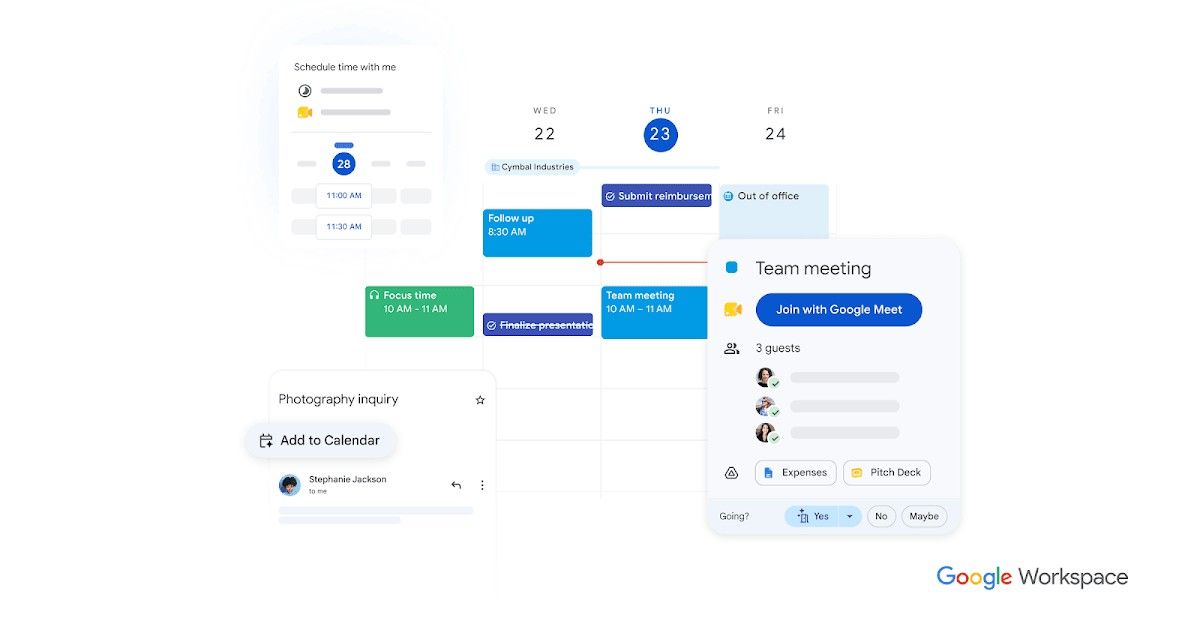
Google Calendar is rolling out localized time zone abbreviations on the web, replacing numeric GMT offsets in calendar columns and guest availability views. Users in the United States may see ET or PT, while users in Germany may see MEZ, with the choice determined by their Calendar language and country settings. The change follows Google's recent addition of support for viewing up to three time zones on the web.
The Rapid Release rollout began November 17, with visibility expected to take more than 15 days. Scheduled Release domains are due to start receiving the feature December 10, with visibility taking one to three days. Eligibility covers every Google Workspace customer, subscribers to Workspace Individual and people with personal Google accounts.
The abbreviations appear on primary, secondary and tertiary calendar columns that lack custom labels. Labels users have entered themselves retain priority, and a compact GMT offset remains the fallback when the user's language and region lack an unambiguous abbreviation. Previously, users needed to supply their own labels to replace numeric offsets on the calendar grid.
In Find a time, each guest's column header shows their local time together with an abbreviation or GMT offset. Hovering over that local time or a calendar column header reveals the complete time zone name and GMT offset. The feature is enabled by default, and administrators have no control for it.
Google Calendar is also rolling out separate controls that let individual calendars use different default meeting lengths and five-minute buffers. Those controls allow events to start five minutes later or end five minutes earlier, whereas the previous Speedy meetings setting applied across an account and only shortened meetings at the end.