
Google Drive’s Gemini-powered classification has reached general availability following open beta, letting administrators label files through instructions instead of manually labeling training examples. Enterprise Plus, Google AI Pro for Education and Frontline Plus are eligible; rollout began November 17, with Google expecting completion by December 15.
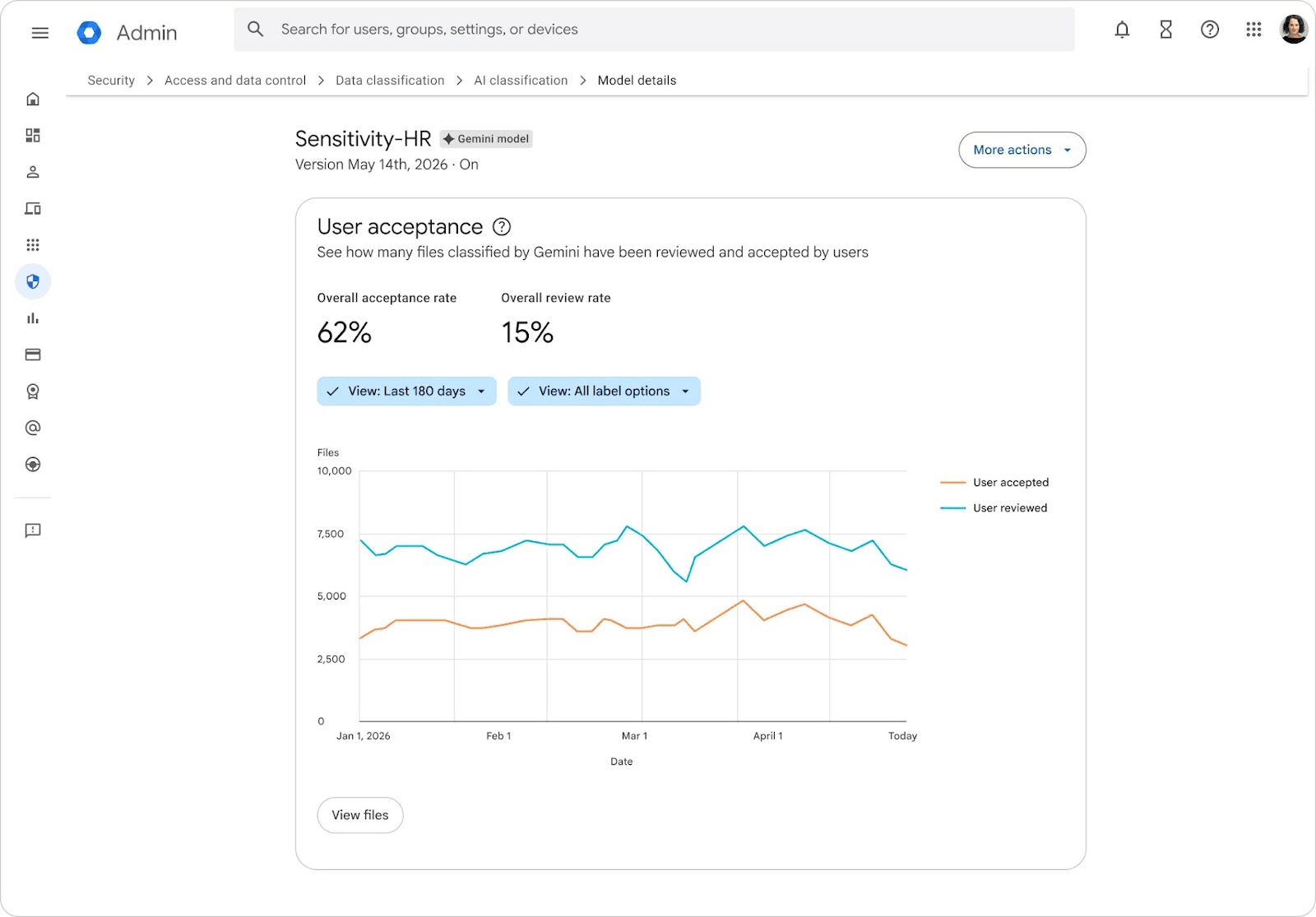
Administrators can preview predicted labels and refine instructions before deployment in the Admin console. Reporting provides near real-time counts of labeled files, label acceptance and Drive inventory information. Administrators choose labels, write instructions and define whose files are evaluated, with configuration under Security > Access and data control > Data classification.
Each organization can run only one Gemini instruction model, within a five-model total that also includes custom-trained ML models. Files qualify through storage in Shared Drives or ownership by users holding eligible licenses. Google says good results typically require at least 50 words and 200 characters of readable text, including text extracted through OCR; client-side encrypted files and media lacking readable text are skipped.
Labels require a published single-select options list or badge list field. Gemini preserves labels applied manually, accepted or changed by users, or assigned through DLP rules. File editors and owners with label permissions can accept or change Gemini’s selections, and audit logs record labeling and user decisions.
Administrators who turn on auto-apply trigger a one off backfill of files already stored, including inactive ones, which Google says usually begins in the first week or two and may run for weeks or months. Updated instructions govern future uploads and new content; previously evaluated files cannot be rescanned on demand.
Google says processing and storage follow Workspace Data Regions settings in the US or Europe, determined by ownership or Shared Drive policy. Files and prompts stay isolated within the organization and do not train Google’s global models, according to Google. Google says classification supports DLP enforcement, retention rules and audits; users have no setting for the feature.