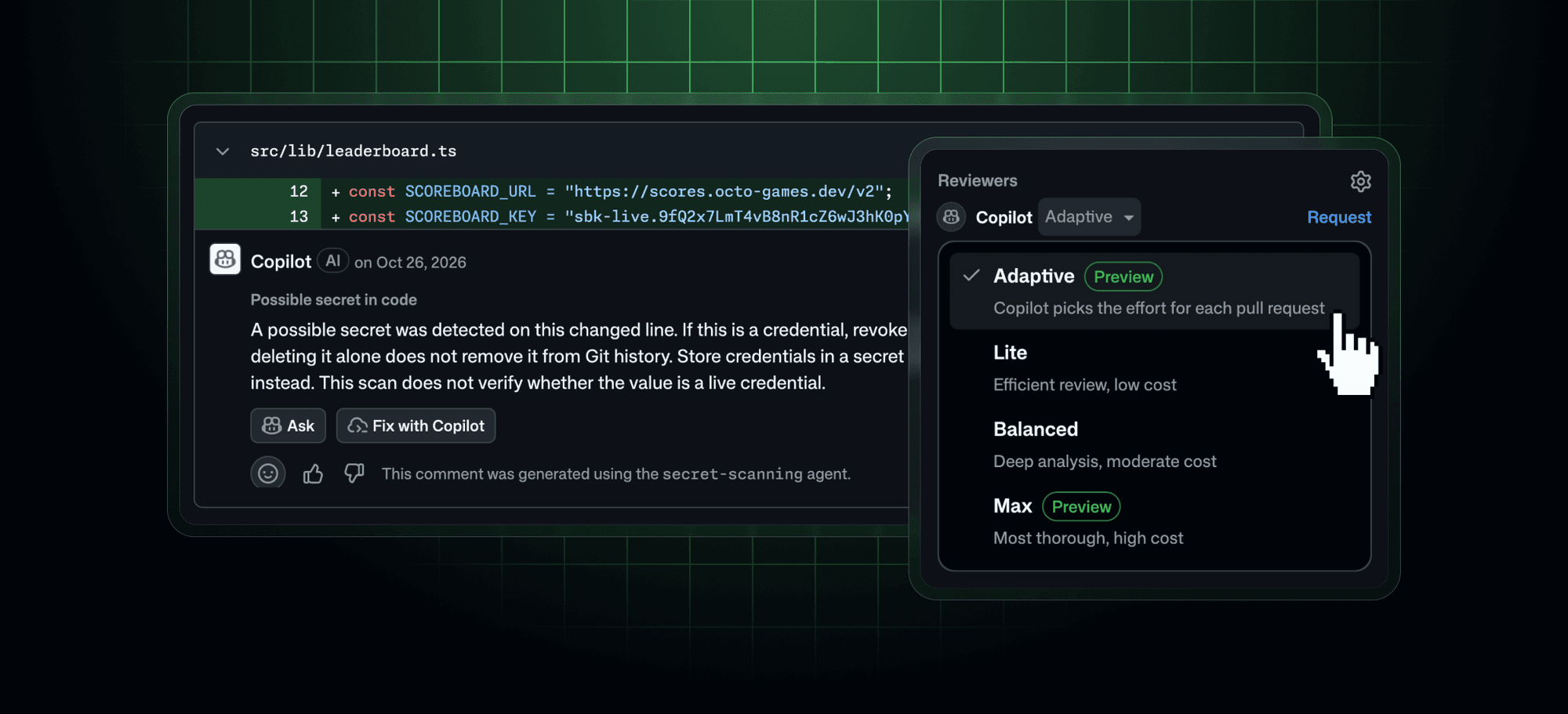
GitHub has added Adaptive to Copilot code review in public preview, letting the service choose how deeply to examine a pull request based on its complexity and risk. Public previews also add checks for exposed credentials and the ability to consult related public repositories during reviews. GitHub makes all three features available on Copilot Pro, Pro+, Max, Business and Enterprise plans.
Adaptive selects among Lite, Balanced and Max, and each review identifies the level it used. Developers can choose Adaptive for an individual pull request through the Reviewers bar or make it their default through settings for their account, repository, organization or enterprise. Balanced remains the default, so automatic effort selection requires a change in settings or a choice for an individual review.
GitHub says Adaptive gives simpler changes a lighter review while spending more effort on riskier work, such as changes to authentication logic. Its choices remain subject to the maximum effort permitted by the repository, organization or enterprise. A configured ceiling therefore limits how much review effort Adaptive can assign, even when it identifies a risky change.
Secret detection puts warnings about exposed credentials into review comments, giving developers a chance to remove them before merging. The feature combines pattern matching for more than 500 secret types, developed through work with more than 150 technical partners, with models that look for secrets lacking a recognizable format. Developers can enable it through the Copilot code review controls in repository or organization settings.
For public repositories, the cross-repository context preview lets reviews consult other public repositories to identify code that depends on a proposed change. It can also draw relevant information from documentation, custom instructions and skills held elsewhere. Separately, users with permission to read a repository can open Repository insights from its Insights tab to see how review feedback is being addressed and used.
Copilot code review support for Azure Repos has moved from public preview to general availability, bringing comments and proposed edits to pull requests hosted in Azure DevOps. Administrators can configure automatic reviews through branch policies, while users can request them manually through Reviewers. Usage is charged in GitHub AI credits against the Azure subscription connected to the Azure DevOps organization, with cost tracking and budget alerts through Azure Cost Management.