
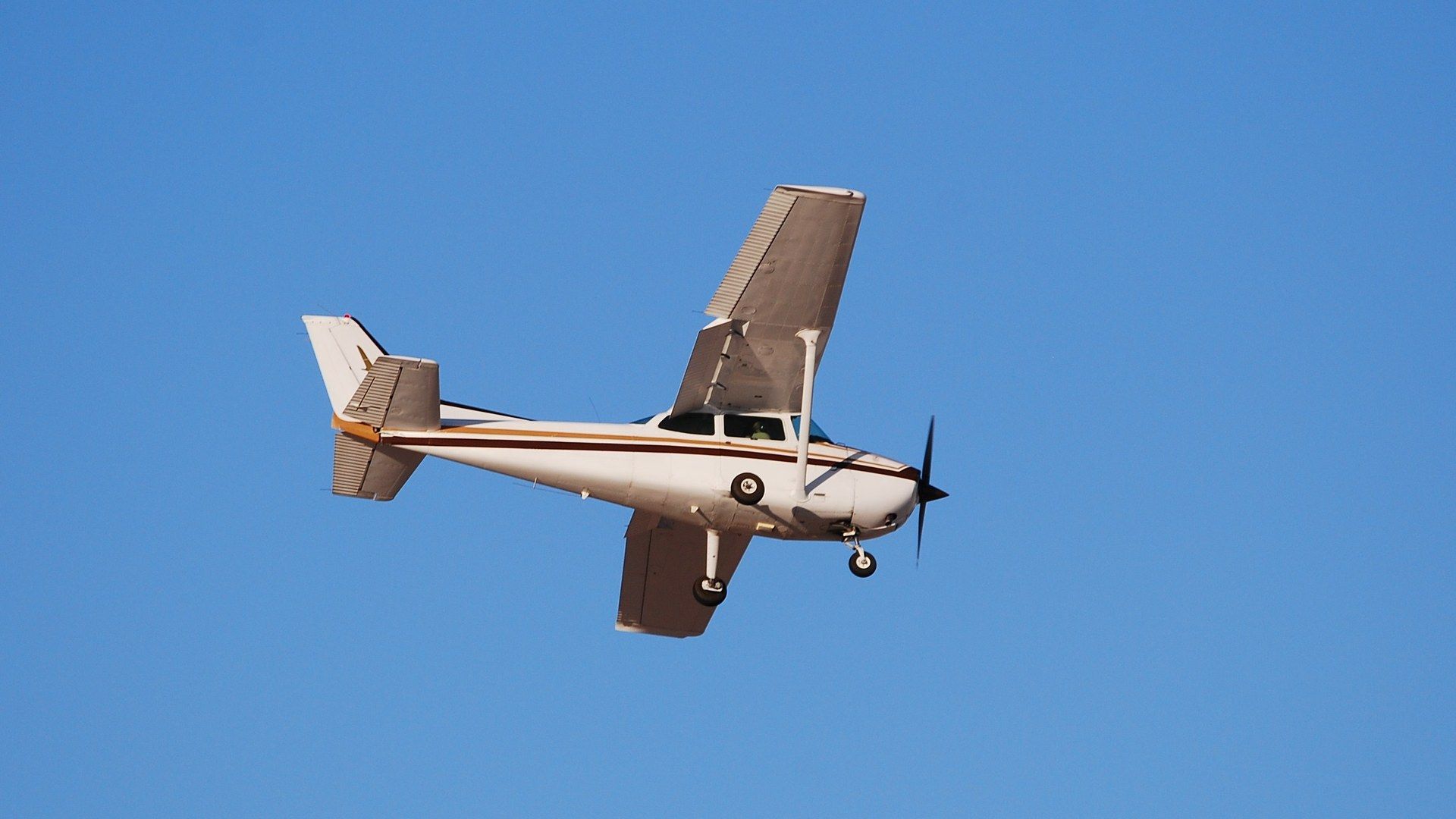
The faint sound of a distant plane can be enough to show where a video was filmed, even when nobody can hear it. YouTuber Colsto says the method located a security camera recording to within about 100m, starting only from the date and the fact that it was somewhere in the continental US.
How the Plane Noise Gives It Away
The footage offered almost nothing to go on visually. In a spectrogram of its audio, Colsto found two faint Doppler curves from propeller planes, 920 seconds apart, then compared them with ADS-B flight data, which records each aircraft's position, speed and altitude.
The shape of a Doppler curve shows how fast a plane was moving and how far it was from the microphone. Those measurements, plus the near-silence between the two planes, cut the search to about 15,000 candidate points. Colsto then modeled the exact curve each spot would have heard from the real flight paths, and one spot scored well above the rest. Street View showed a matching tree line and the security camera on a pole.
A second test used only one minute of audio and one plane, but it needed the exact time of recording. It ranked the same location first in a US-wide search. Colsto says that a smaller search area, such as a known city, means the time does not need to be known as precisely.
What Works and What Doesn't
Common fixes fell short in Colsto's tests. A high-pass filter also cuts into the range of the human voice, and a filtered curve came back when the frequencies were boosted. Talking over the sound did not hide it, and a curve played through a phone call survived the call's compression. Colsto suggests cutting the video, which breaks up the timing between flyovers, or applying additional noise cancellation.
Colsto does not present this as an everyday threat. The system took months and more than 5,000 lines of code to build, no code or tools are being released, and the video says "there's probably a hundred easier ways to find you than this." The use Colsto does see is footage with no visual clues, such as video from an investigation. The results are Colsto's own, from a test using US flight data.