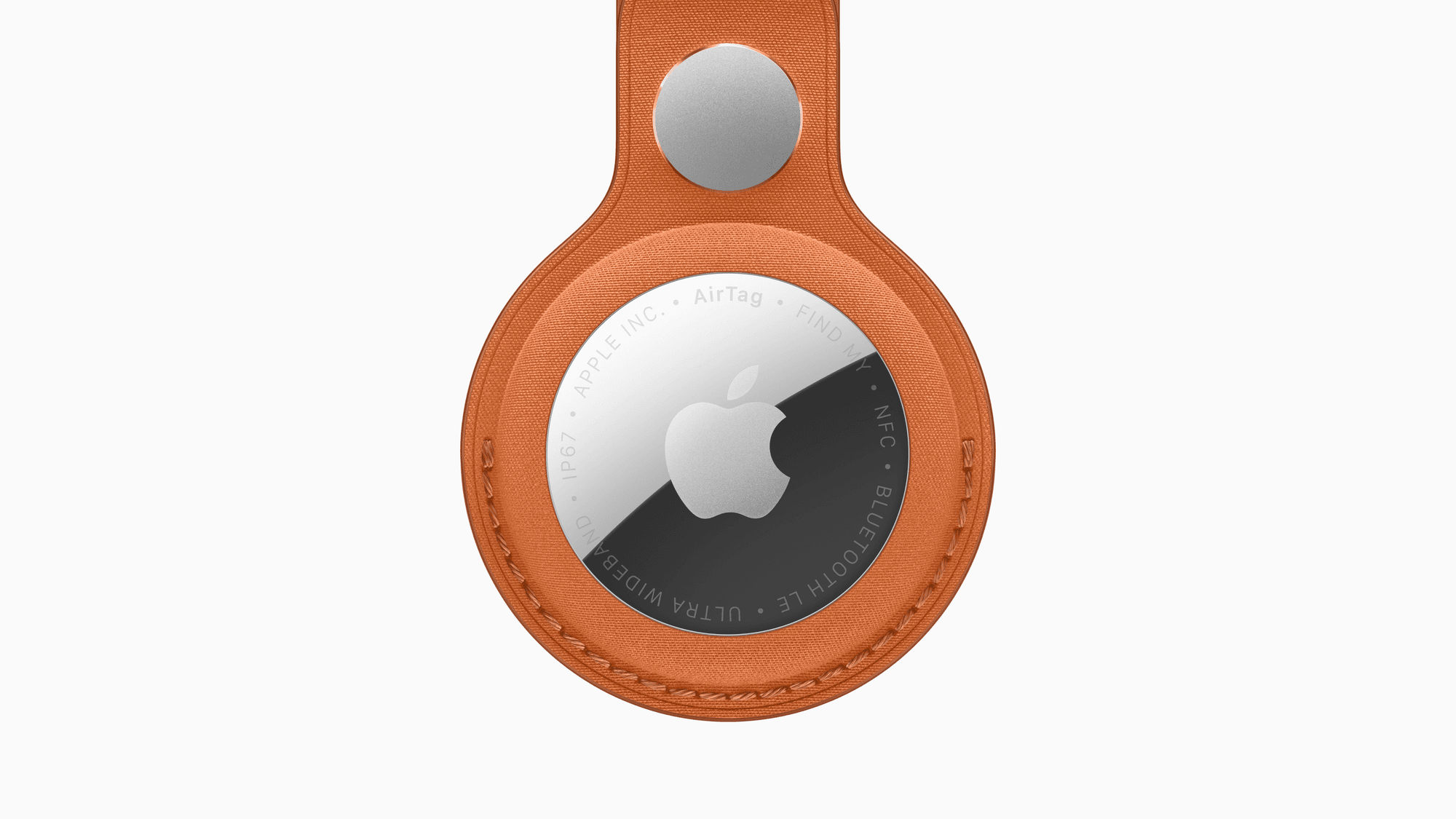
An AirTag broadcasts Bluetooth signals. Nearby devices in Apple's Find My network detect those signals and send the AirTag's location to iCloud, where the owner can view it in Find My. At close range, an iPhone with Ultra Wideband can show the distance and direction to the item.
How the Find My network locates an AirTag
Apple says an AirTag outside its paired iPhone's range can still be located through nearby Apple devices in the crowdsourced Find My network. Apple says that network includes more than a billion iPhone, iPad and Mac devices.
On privacy, Apple says the AirTag does not store location data or history. It also says Find My communications are end-to-end encrypted and that assisting devices remain unidentified.
Precision Finding and which iPhones support it
For a nearby AirTag, Precision Finding uses Ultra Wideband to show the distance and direction to the item. Apple requires an iPhone with Ultra Wideband for this. Walls and objects between the iPhone and the AirTag can affect performance, Apple says.
The original AirTag, introduced in 2021, uses Apple's U1 chip. It supports Precision Finding with the iPhone 11, 12, 13 and 14 families and later compatible models. Its specification excludes iPhone SE (2nd and 3rd generation) and iPhone 16e.
Apple introduced the current second-generation AirTag on January 26, 2026. Apple claims its Precision Finding works from up to 50 percent farther away than the previous generation, and says an upgraded Bluetooth chip extends its finding range. The specification lists expanded Precision Finding with iPhone Air or iPhone 15 and later, excluding iPhone 16e and iPhone 17e. Apple's AirTag support article specifies iOS 26.2.1 or later for the second-generation AirTag.
Ultra Wideband availability depends on country and region. Apple says Japan restricts some frequencies, including those used for the expanded Precision Finding range.
Price, battery and water resistance
- Price: Apple's US store lists AirTag at $29 for one or $99 for four, before tax, as of November 2026.
- Battery: a replaceable CR2032 lithium 3V coin battery, installed with its positive side facing up.
- Battery life: Apple claims the current AirTag works for more than a year on its battery. Its testing used average everyday sound playback and Precision Finding, and Apple says life varies with usage, environment, replacement battery manufacturer and other factors.
- Water and dust: both the second-generation and the original AirTag are rated IP67 under IEC 60529, tested at a maximum depth of 1 meter for up to 30 minutes. Apple says resistance on the second-generation model can decrease with normal wear.
To swap the battery, press down on the steel cover and rotate it counterclockwise until it stops. Apple says some bitterant-coated CR2032 batteries may not work, and it points to packaging marked compatible with Apple AirTag. The full steps are in How to Replace an AirTag Battery.
Lost Mode and sharing a location
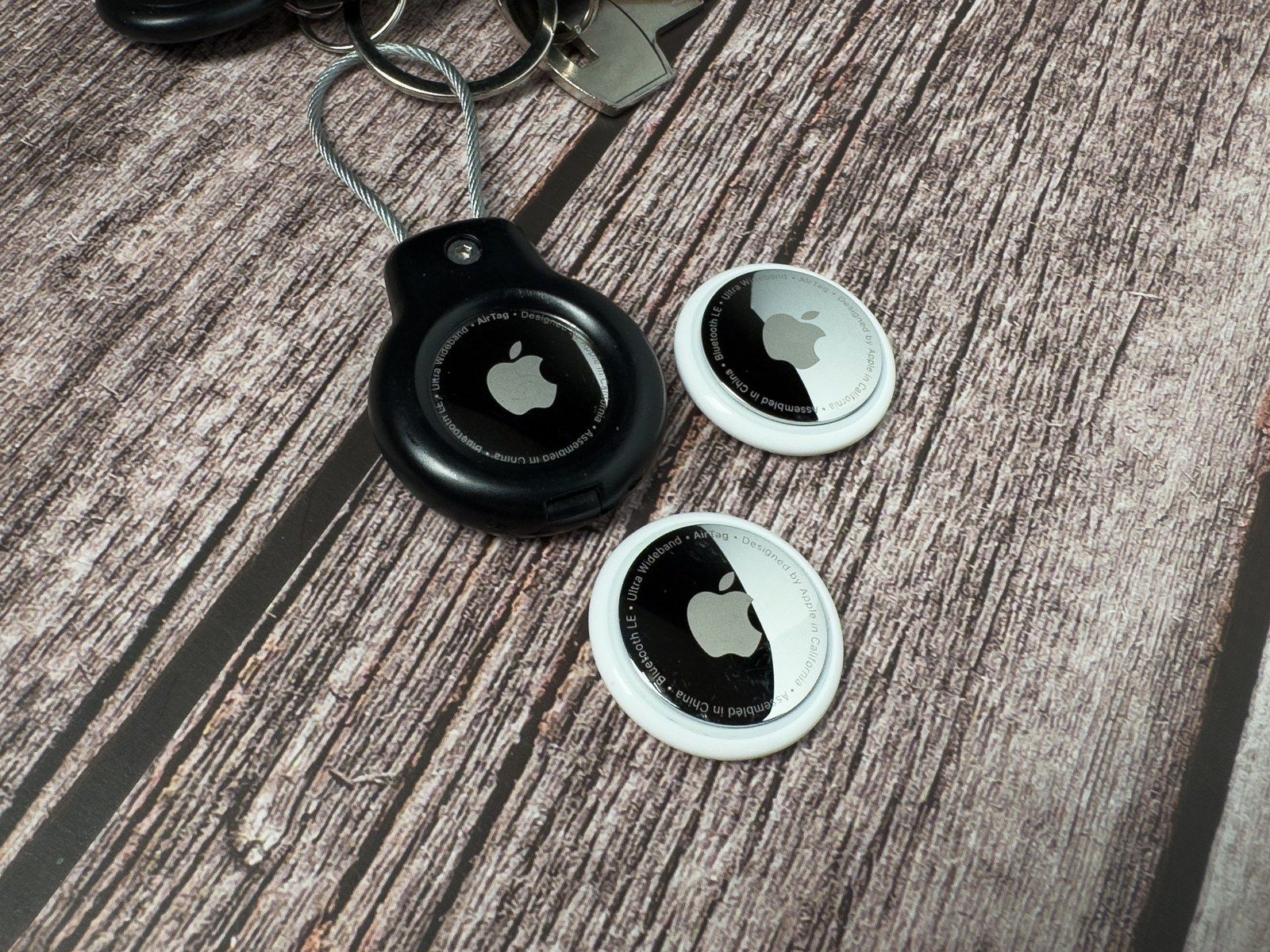
Lost Mode sends the owner a notification when a device in the network detects the AirTag. The owner can also make contact information available to anyone who taps the AirTag with an NFC-capable smartphone. An AirTag can also be shared with up to five other people.
Share Item Location temporarily shares a misplaced item's location with third parties, and Apple says more than 50 airlines accept these links. Owners create a link in Find My using iOS 18.2, iPadOS 18.2 or macOS Sequoia 15.2 or later. The link expires after seven days, when the owner recovers the item, or when the owner stops sharing. Using it does not mark the AirTag as lost.
Unwanted-tracking alerts on iPhone and Android
An AirTag that is separated from its owner and seen moving with someone else over time can trigger an "AirTag Found Moving With You" alert on that person's iPhone. Find My shows where it was detected and offers sound playback or, where supported, Precision Finding. These tracking notifications require iOS 14.5 or later. An AirTag separated from its owner for a period of time also emits a sound when it is moved.
Google's unknown tracker alerts support Android 6 and later and include Apple AirTags. With alerts turned on, Android notifies users automatically when it determines an unknown tracker is moving with them and provides a map and sound playback. A manual scan takes about 10 seconds, Google says.
Apple and Google jointly created the Detecting Unwanted Location Trackers industry specification, and cross-platform alert support launched in iOS 17.5 and Android 6.0 and later in May 2024. The IETF lists the related accessory protocol as an active Internet-Draft, updated October 27, 2026. It is a work in progress, not a published RFC.
What to check before you buy
If Precision Finding matters to you, check your iPhone first, because Apple's lists leave out iPhone 16e, iPhone 17e and iPhone SE (2nd and 3rd generation). If you fly with checked bags, Share Item Location may fit, since Apple says more than 50 airlines accept its links. If an AirTag stops showing up after setup, see How to Reconnect an AirTag to Your iPhone.