
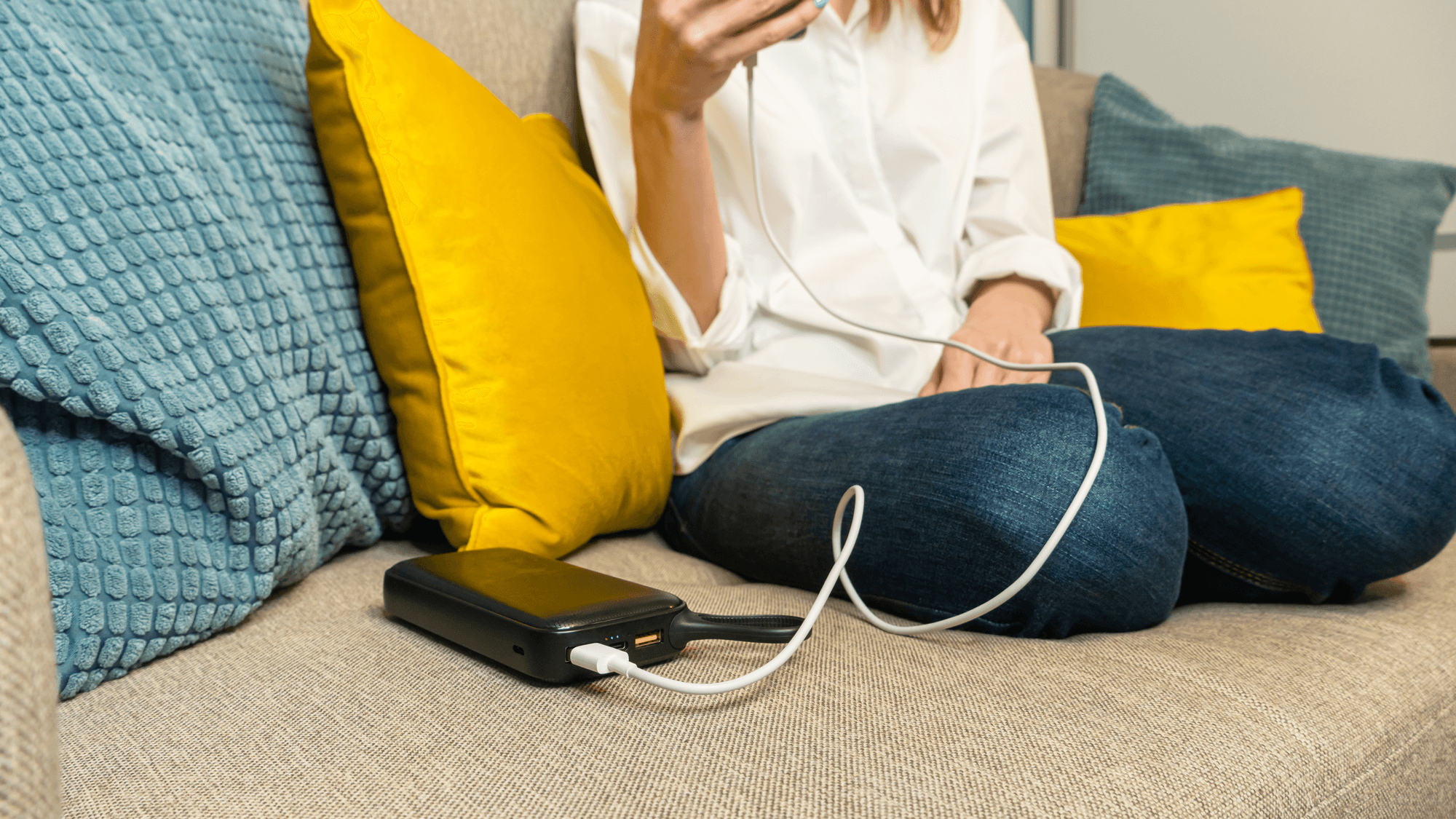
Yes, you can take a power bank on a plane in the United States, but only in your carry-on. The FAA prohibits spare lithium-ion batteries and portable rechargers in checked baggage. Packs rated up to 100 watt-hours (Wh) are allowed, packs rated 101 to 160 Wh need airline approval, and anything above 160 Wh is forbidden on passenger aircraft.
Carry-on only, never checked
The FAA's lithium battery guidance, dated September 24, 2025, says spare lithium-ion batteries and portable rechargers must travel in carry-on baggage with the passenger. They must also stay accessible. Checked baggage is prohibited.
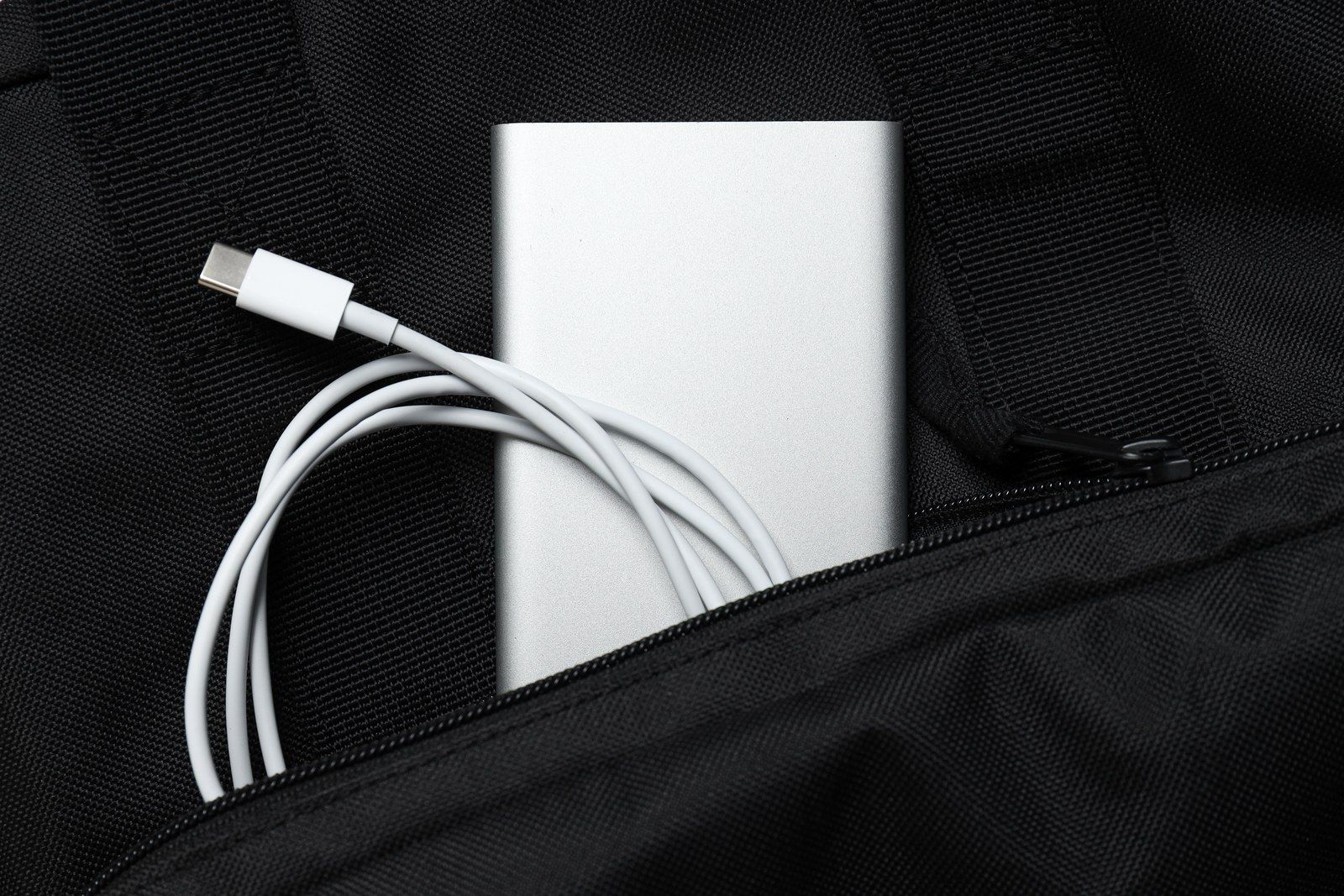
The rule follows the bag. If your carry-on gets checked at the gate or planeside, the FAA says power banks and spare lithium batteries must be removed from it and kept with you in the cabin.
The watt-hour limits
The FAA sorts rechargeable lithium-ion batteries by their watt-hour rating. The limits below come from its Airline Passengers and Batteries page, dated October 2, 2026, and its PackSafe lithium battery page, dated August 11, 2026.
- Up to 100 Wh: allowed, subject to the other restrictions that apply.
- 101 to 160 Wh: airline approval required. With that approval, each passenger may carry at most two spare batteries in this range, and power banks count toward the two.
- Above 160 Wh: forbidden on passenger aircraft.
For rechargeable batteries under 100 Wh, the FAA's FAQ sets no numerical limit when they are for your personal use. Batteries carried for resale or distribution are prohibited. The FAA also notes that airlines may set stricter limits, and some do.
How to work out watt-hours from mAh
If your power bank lists its capacity in milliamp-hours (mAh), you can convert it. The FAA gives the conversion: watt-hours equal volts multiplied by amp-hours. To get amp-hours from a mAh figure, divide the mAh by 1,000.
Here is an example with a label that reads 20,000 mAh and 3.7 volts. First, 20,000 divided by 1,000 is 20 amp-hours. Then 3.7 volts multiplied by 20 amp-hours is 74 Wh. That result is under the 100 Wh line, so a pack with that label would not need airline approval under the FAA limits. Use the voltage and capacity printed on your own pack, because the answer changes with both numbers.
Packing it safely
The FAA says battery terminals must be protected against short circuits and contact with metal. Its PackSafe lithium battery page lists several ways to do that: the original retail packaging, tape over the terminals, a battery case, a sleeve, or a snug plastic bag or protective pouch. Batteries must also be protected from damage.
Damaged or recalled batteries are a separate rule. The FAA prohibits damaged or recalled batteries, and battery-powered devices likely to spark or generate dangerous heat, in both carry-on and checked baggage. The exception is when the affected battery has been removed or otherwise made safe.
Airline rules can be stricter
Two US airlines publish policies that go further than the FAA limits, as of November 2026.
- Southwest: each passenger is limited to one power bank, effective April 20, 2026, and it must not exceed 100 Wh. Power banks must not be placed in the overhead bin, and Southwest says to store them in a personal item under the seat in front. A power bank in use must stay visible and cannot sit inside a bag. Recharging the power bank from in-seat power is prohibited.
- Delta: no more than two power banks per person, each limited to 100 Wh, with no exceptions. Power banks are prohibited in overhead bins, and Delta says they should be easily accessible, such as under the seat or in the seatback pocket. They must not be recharged on board. Using one to recharge a device is prohibited during taxi, takeoff and landing.
What to do before you fly
If your pack lists only mAh, run the FAA formula first, because the watt-hour figure decides which rule applies. If the result lands between 101 and 160 Wh, contact your airline before the trip, since the FAA requires its approval. If you are flying Southwest or Delta, plan around the 100 Wh cap on their pages and keep the pack out of the overhead bin.
If you are buying a pack for travel, check the watt-hour rating on any model before you order. Technobezz's buying guides cover best power banks, best Anker power banks and best power banks for laptops. If your current pack has stopped working, see how to fix a power bank that is not charging your phone, and keep the FAA rule on damaged batteries in mind before you pack it.