The right travel router depends on how you get online when you are away from home: hotel or cafe Wi-Fi, a wired port in the room, a tethered phone, or a SIM. This page is for US travelers, remote workers and RV owners who want to compare the specifications of five picks before they buy.
Technobezz is supported by its audience. We may get a commission from retail offers.
5 Best Travel Routers in 2026
The GL.iNet Beryl 7 leads our five travel router picks for 2026, with Wi-Fi 7, dual 2.5G ports and OpenWrt. Compare specs for hotel Wi-Fi, 5G and RV trips.
T
Technobezz
Editorial Team
Updated November 25, 2026Nov 25, 2026
•15 min read

Get Deals Like These in Your Inbox
The best prices, straight to your inbox.
Add Technobezz on Google:Preferred SourceGoogle Discover
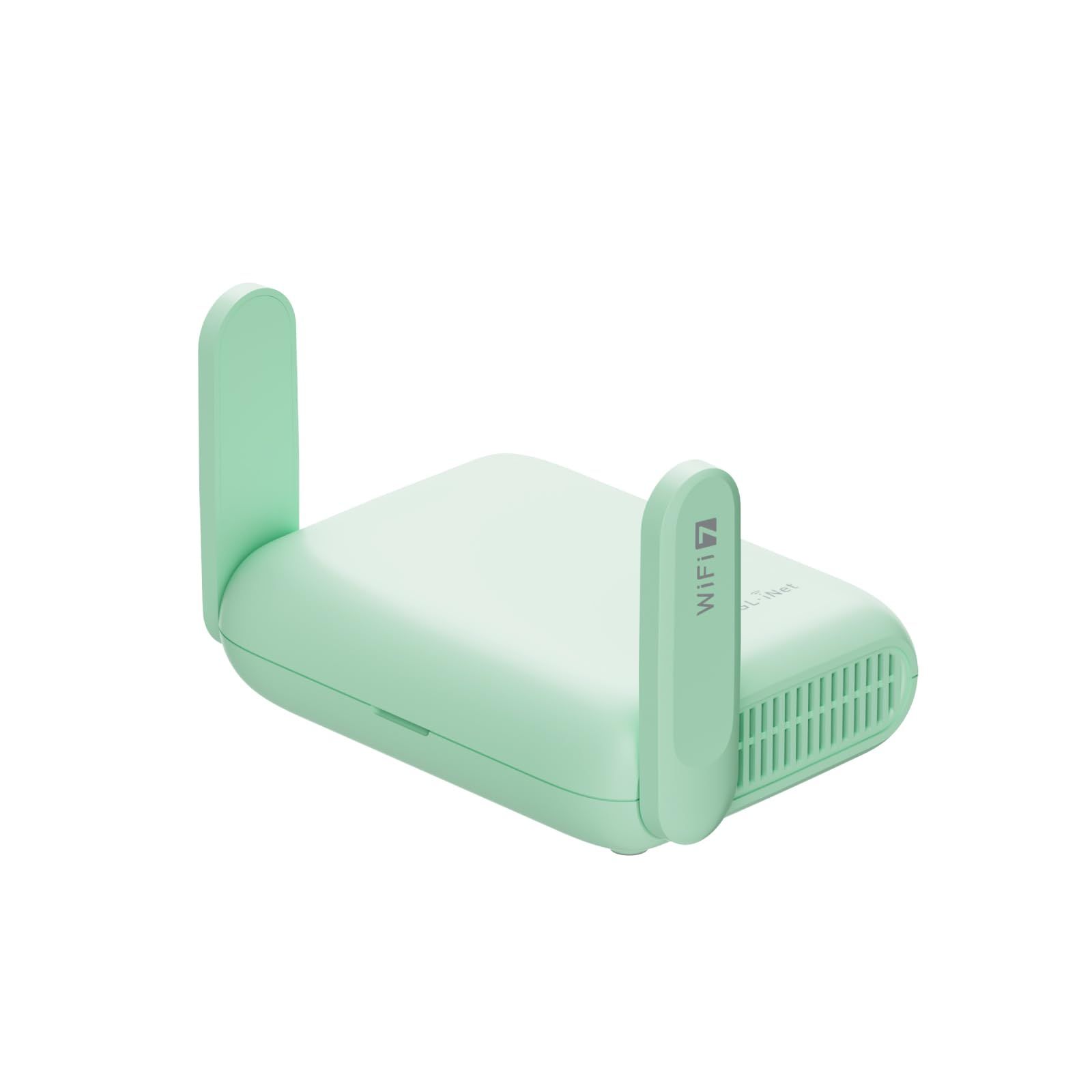
The GL.iNet Beryl 7 is the best overall pick. It is a dual-band Wi-Fi 7 router with two 2.5G Ethernet ports, a USB 3.0 port, OpenWrt 21.02 firmware, and OpenVPN and WireGuard pre-installed, and it weighs 205 g.
The other four picks each cover a narrower need: built-in 5G with a battery, one-step hotel Wi-Fi logins, ASUS AiMesh support, and a Wi-Fi 6 value option. If you are shopping for a router that stays at home, see our guide to the best Wi-Fi 7 routers.
At a Glance
| Category | Product | Why We Picked It |
|---|---|---|
| Best overall | GL.iNet Beryl 7 | Dual-band Wi-Fi 7, dual 2.5G ports, OpenWrt 21.02 and pre-installed WireGuard at 205 g |
| Best with built-in 5G and battery | GL.iNet Mudi 7 | 5G with eSIM and two nano-SIM slots, plus a 5150 mAh battery |
| Best for easy hotel Wi-Fi logins | TP-Link Roam 7 BE3600 | One Tether app login shares public Wi-Fi with up to 90 devices |
| Best for ASUS AiMesh users | ASUS RT-BE58 Go | AiMesh support, WISP mode and a 3-year manufacturer warranty |
| Best value | TP-Link Roam 6 AX1500 | Wi-Fi 6 with two 1 Gbps ports and one-step captive portal login |
How we chose
We compared the specifications on each product's Amazon page. We also checked that each pick is sold new by Amazon or the brand.
The best travel routers right now
GL.iNet Beryl 7 - Best overall
The GL.iNet Beryl 7 is a dual-band Wi-Fi 7 travel router rated at 688 Mbps on 2.4 GHz and 2882 Mbps on 5 GHz. It has two 2.5G Ethernet ports, one WAN and one LAN, plus a USB 3.0 port, and it supports up to 120 devices. It weighs 205 g.
OpenVPN and WireGuard are pre-installed, and the router is compatible with 30+ VPN service providers with an active subscription. The maximum VPN speed is 1100 Mbps with WireGuard and 1000 Mbps with OpenVPN-DCO, measured on a local network, and real-world speeds may differ. It can host a VPN server and a VPN client at the same time. The firmware is OpenWrt 21.02, with 512MB of storage for installing OpenWrt plugins. It supports WPA3, DNS over HTTPS, DNS over TLS and IPv6, and a physical toggle switch can turn AdGuard Home, the OpenVPN client or the WireGuard client on and off once you set it up in the admin panel.
Key highlights
- Dual-band Wi-Fi 7: 688 Mbps (2.4 GHz) plus 2882 Mbps (5 GHz)
- Dual 2.5G Ethernet ports (1 WAN, 1 LAN) and a USB 3.0 port
- Up to 120 devices
- OpenWrt 21.02 firmware with 512MB storage
- WireGuard up to 1100 Mbps and OpenVPN-DCO up to 1000 Mbps on a local network
- WPA3, DNS over HTTPS, DNS over TLS and AdGuard Home
- 205 g, with a 2-year manufacturer warranty
Pros
- Both Ethernet ports are 2.5G, against one 2.5G port on the ASUS RT-BE58 Go
- Supports up to 120 devices, against up to 90 on the TP-Link Roam 7 BE3600
- Hosts a VPN server and a VPN client at the same time
- OpenWrt 21.02 firmware with room to install OpenWrt plugins
Cons
- Dual-band Wi-Fi 7, against tri-band Wi-Fi 7 on the GL.iNet Mudi 7
- The toggle switch has no function by default and must be set in the admin panel first
- The 30+ compatible VPN services require an active subscription
- The VPN speed figures were measured on a local network, and real-world speeds may differ
Who it is for: Travelers and remote workers who want 2.5G wired ports, OpenWrt firmware, and VPN client and server features in one 205 g router.
Skip if
You want tri-band Wi-Fi 7. The GL.iNet Mudi 7 is tri-band, where the Beryl 7 is dual-band.
GL.iNet Mudi 7 - Best with built-in 5G and battery
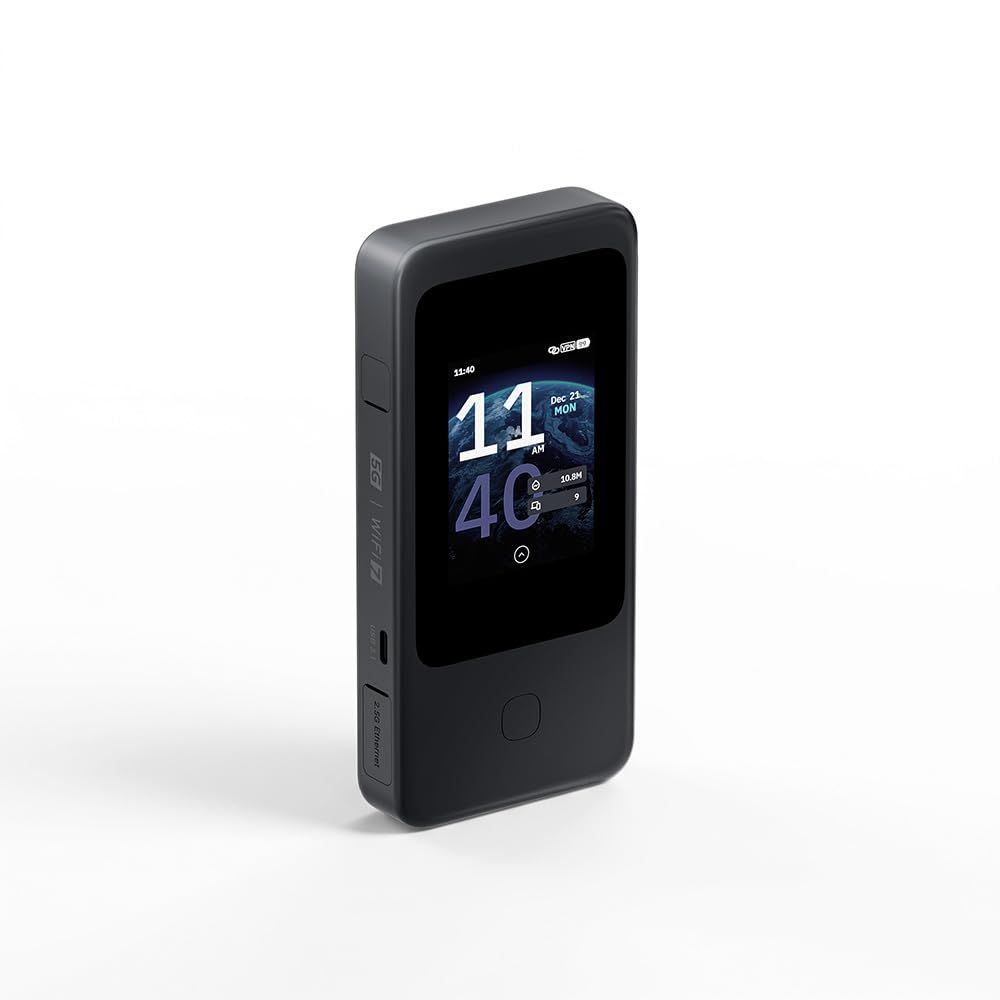
The GL.iNet Mudi 7 is a 5G travel router with tri-band Wi-Fi 7 and a built-in 5150 mAh battery that runs for up to 13.5 hours on a single charge. It uses the Qualcomm Dragonwing MBB Gen 3 (X72) for up to 4.67 Gbps 5G download, and its Wi-Fi bands are rated at 688 Mbps (2.4 GHz), 2882 Mbps (5 GHz) and 5765 Mbps (6 GHz) for up to 64 connected devices.
It has a built-in eSIM and two physical nano-SIM slots with no SIM lock, and you can switch between them on the 2.8 inch touchscreen. The eSIM uses one SIM position when it is activated. There is a 2.5 Gbps Ethernet WAN/LAN port and a 10 Gbps USB-C port, and the router can run Ethernet, Wi-Fi repeater, USB tethering and 5G cellular at the same time, moving traffic to the next link if one drops. 30W PD/PPS USB-C fast charging refills the battery in roughly 1.3 hours.
Key highlights
- 5G with up to 4.67 Gbps download (Qualcomm Dragonwing MBB Gen 3, X72)
- Tri-band Wi-Fi 7: 688 Mbps (2.4 GHz) plus 2882 Mbps (5 GHz) plus 5765 Mbps (6 GHz)
- Built-in eSIM plus two nano-SIM slots, with no SIM lock
- 5150 mAh battery for up to 13.5 hours, with 30W PD/PPS USB-C charging
- 2.5 Gbps Ethernet WAN/LAN port and 10 Gbps USB-C port
- 2.8 inch touchscreen
- OpenVPN-DCO up to 700 Mbps and WireGuard up to 600 Mbps on a local network
Pros
- Runs 2.5G Ethernet, Wi-Fi repeater, USB tethering and 5G cellular at the same time with automatic failover
- The touchscreen switches SIMs, toggles VPN clients, shares Wi-Fi by QR code and shows real-time data usage
- Tri-band Wi-Fi 7, against dual-band Wi-Fi 7 on the GL.iNet Beryl 7
- OpenVPN and WireGuard are pre-installed and compatible with 30+ VPN providers including NordVPN, ExpressVPN, Mullvad and Surfshark
Cons
- Supports up to 64 connected devices, against up to 120 on the GL.iNet Beryl 7
- WireGuard is rated up to 600 Mbps, against 1100 Mbps on the GL.iNet Beryl 7
- The eSIM takes one SIM position when activated
Who it is for: People who want one device with its own 5G connection, SIM options and a built-in battery.
Skip if
You connect more than 64 devices or want two 2.5G Ethernet ports. The GL.iNet Beryl 7 supports up to 120 devices and has dual 2.5G ports.
TP-Link Roam 7 BE3600 - Best for easy hotel Wi-Fi logins
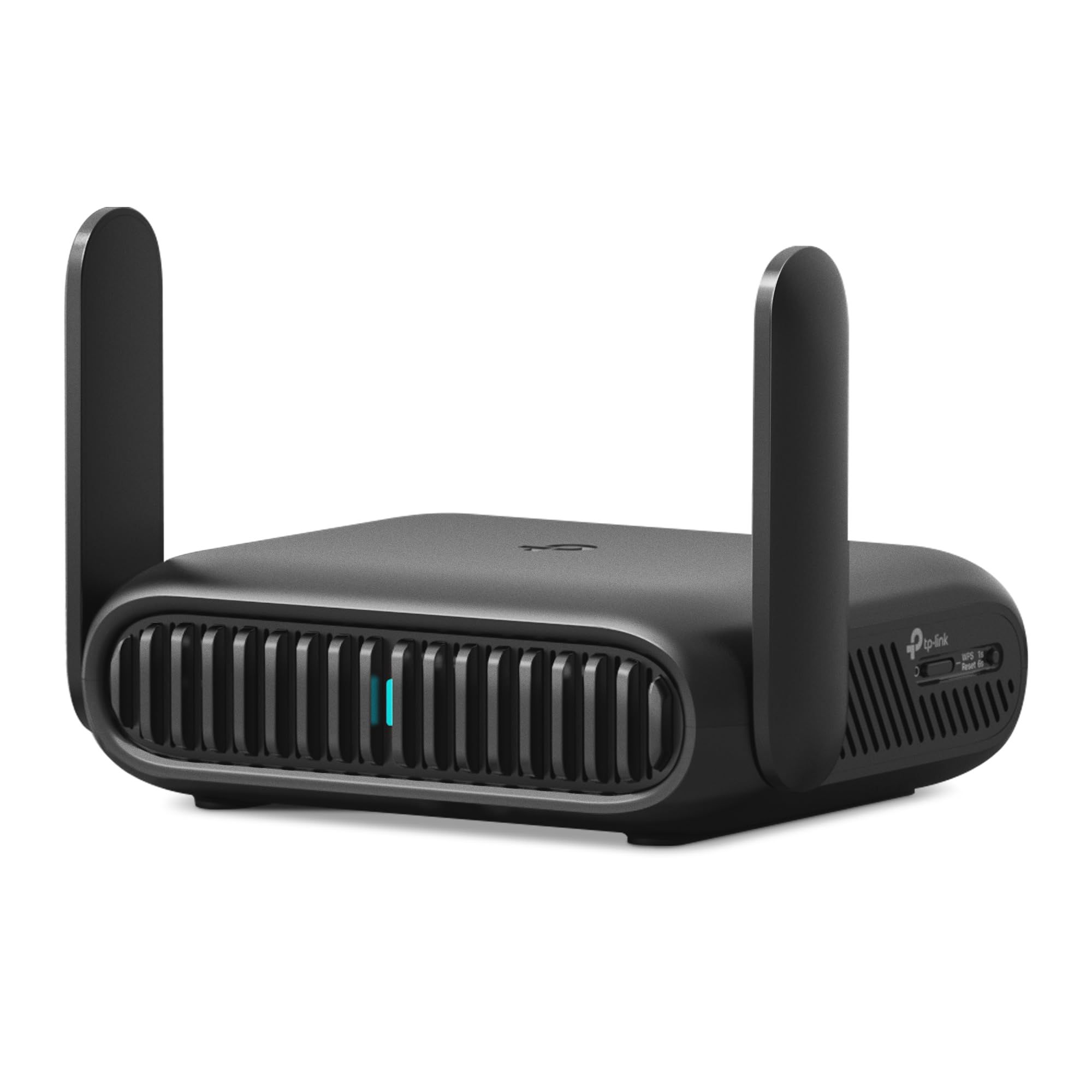
The TP-Link Roam 7 BE3600 connects to public Wi-Fi and creates a private network for up to 90 devices at once. With one-step captive portal authentication, you log in once in the Tether app and your other devices do not need repeated logins.
It is a dual-band Wi-Fi 7 router rated at up to 2882 Mbps on the 5 GHz band and 688 Mbps on the 2.4 GHz band, with Multi-Link Operation, and it does not support the 6 GHz band. Wired connections are a 2.5 Gbps WAN port and a 1 Gbps LAN port. It supports OpenVPN and WireGuard as both VPN client and server, plus PPTP and L2TP, and it is powered through USB-C from the included adapter or any 5V PD power source such as a power bank.
Key highlights
- Dual-band Wi-Fi 7: up to 2882 Mbps (5 GHz) and 688 Mbps (2.4 GHz)
- 1x 2.5 Gbps WAN port and 1x 1 Gbps LAN port
- USB 3.0
- Up to 90 devices
- Router Mode, Hotspot Mode and AP/RE/Client Mode
- OpenVPN and WireGuard client and server, plus PPTP and L2TP
- 0.55 pounds, with a 2-year manufacturer warranty
Pros
- One login in the Tether app covers all your devices on public Wi-Fi
- Router Mode takes Ethernet or USB phone tethering as the internet source
- Runs over USB-C from the included adapter or a 5V PD power bank
- 2.5 Gbps WAN port, against a 1 Gbps WAN/LAN port on the TP-Link Roam 6 AX1500
Cons
- Does not support the 6 GHz band
- Does not support SIM cards or eSIM and requires an external internet source
- Weighs 0.55 pounds, against 0.42 pounds on the TP-Link Roam 6 AX1500
Who it is for: Travelers who mostly join hotel, cafe and airport Wi-Fi and want one app login to cover every device they carry.
Skip if
You want a SIM slot. This model does not support SIM cards or eSIM, while the GL.iNet Mudi 7 has an eSIM plus two nano-SIM slots.
ASUS RT-BE58 Go - Best for ASUS AiMesh users
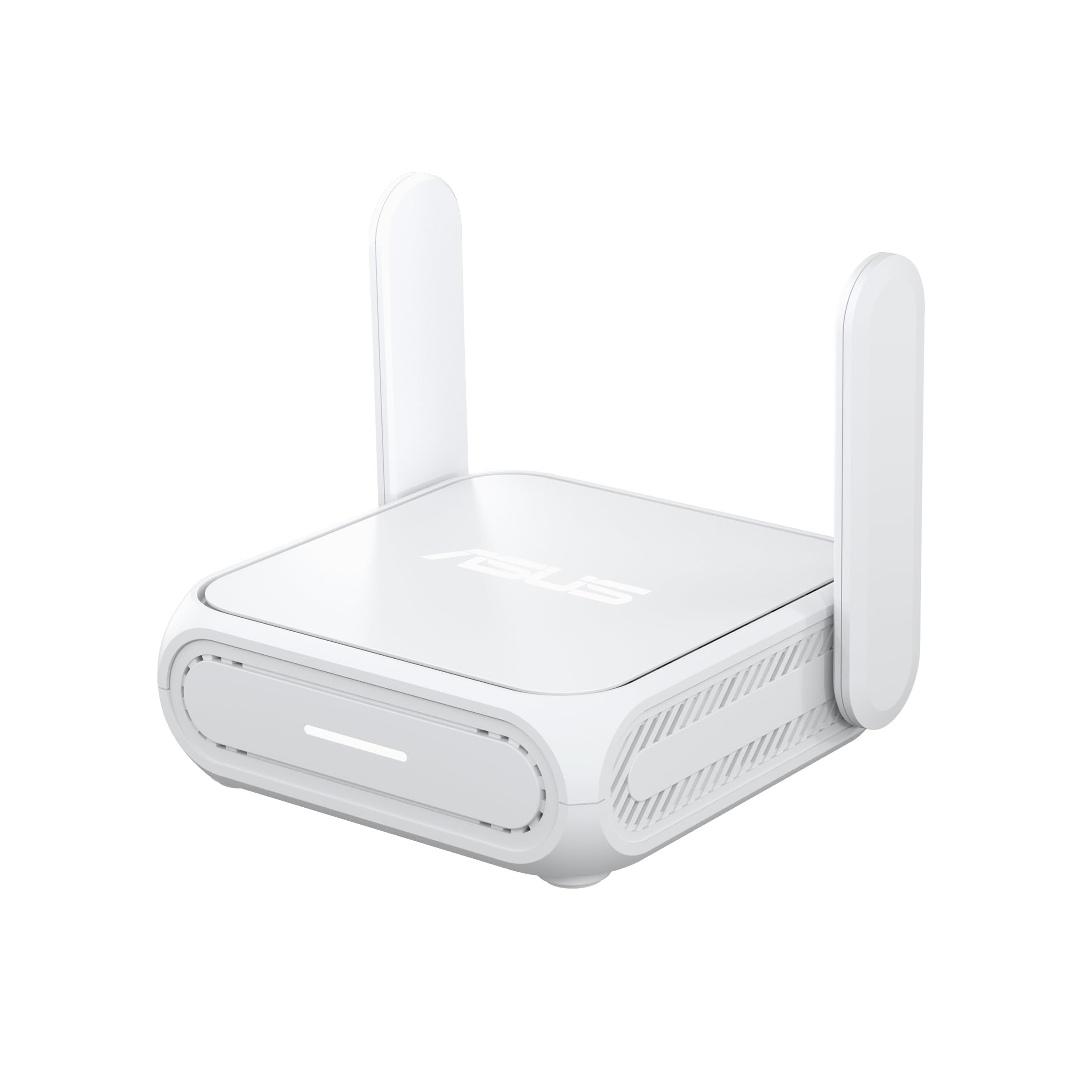
The ASUS RT-BE58 Go is a dual-band Wi-Fi 7 travel router rated at up to 3600 Mbps with Multi-Link Operation (MLO) and 4K-QAM. It supports AiMesh, so you can use it to create an extendable AiMesh network, which is why it takes this slot.
For travel, WISP mode creates a private hotspot over public Wi-Fi with a toggle switch. It can also share a smartphone or mobile dongle connection through 4G LTE and 5G mobile tethering. It has one 2.5G port, runs on USB-C Power Delivery at 18W, and is managed through the ASUS Router mobile app after a 3-step setup. It comes with a 3-year manufacturer warranty.
Key highlights
- Dual-band Wi-Fi 7 at up to 3600 Mbps with MLO and 4K-QAM
- AiMesh support
- WISP mode for a private hotspot over public Wi-Fi
- 4G LTE and 5G mobile tethering from a smartphone or mobile dongle
- One 2.5G port
- USB-C Power Delivery 18W
- 0.5 pounds, with a 3-year manufacturer warranty
Pros
- 3-year manufacturer warranty, against 2 years on the other four picks
- Guest Network Pro sets up subnetworks for IoT devices or a guest portal for visitors
- Includes VPN features for use on public networks
- 3-step setup and management in the ASUS Router mobile app
Cons
- One 2.5G port, against dual 2.5G ports on the GL.iNet Beryl 7
- Dual-band Wi-Fi 7, against tri-band Wi-Fi 7 on the GL.iNet Mudi 7
- Weighs 0.5 pounds, against 0.42 pounds on the TP-Link Roam 6 AX1500
Who it is for: People who use ASUS AiMesh gear at home and want a travel router with AiMesh support and ASUS Router app management.
Skip if
You want two 2.5G Ethernet ports or a lighter router. The GL.iNet Beryl 7 has dual 2.5G ports, and the TP-Link Roam 6 AX1500 weighs 0.42 pounds against 0.5 pounds here.
TP-Link Roam 6 AX1500 - Best value
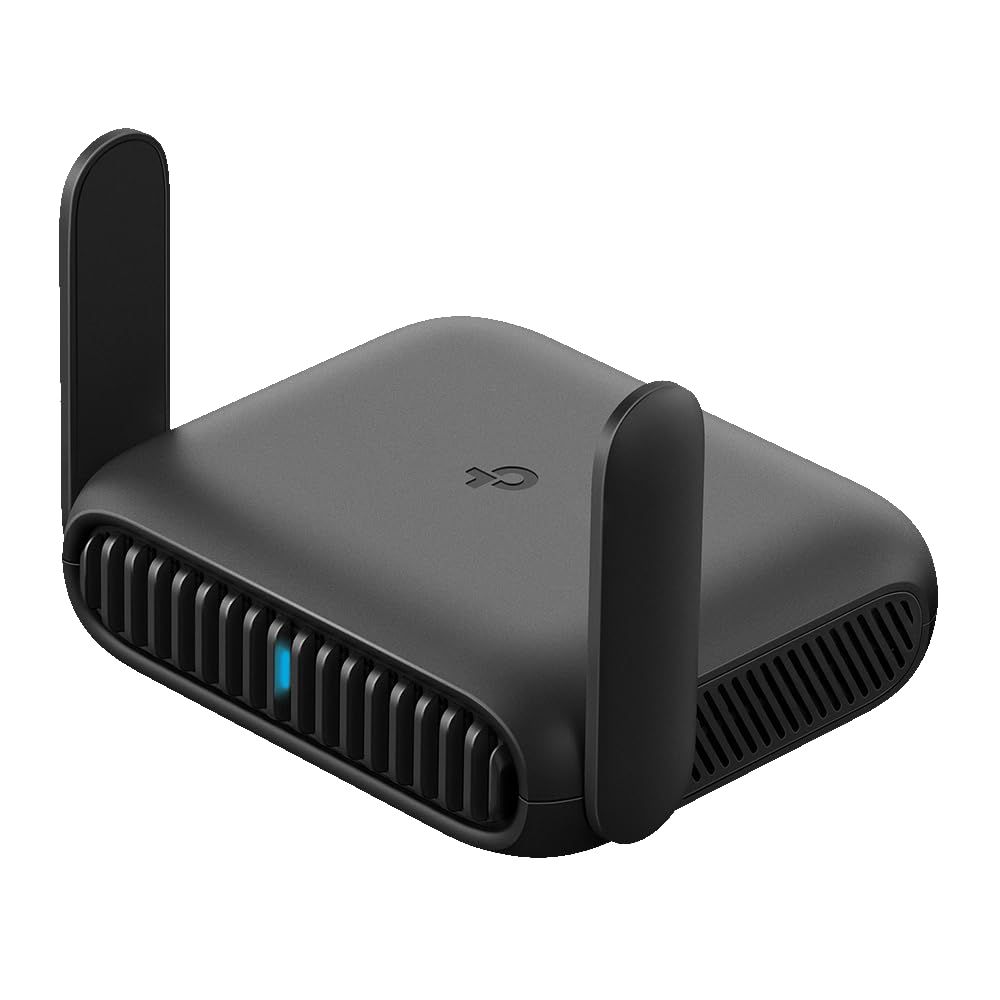
The TP-Link Roam 6 AX1500 is the value pick. It is a dual-band Wi-Fi 6 travel router rated at up to 1,201 Mbps on 5 GHz and 300 Mbps on 2.4 GHz for up to 60 devices simultaneously. It connects to public Wi-Fi and creates a private network for multiple devices at once.
It has a 1 Gbps WAN/LAN port and a 1 Gbps LAN port. In Router Mode it connects to public Wi-Fi, an ISP or a phone over USB tethering, and AP/RE/Client Mode adds Wi-Fi to wired setups, extends Wi-Fi, or connects wired devices wirelessly. One-step captive portal authentication means you log in once in the Tether app, and it supports OpenVPN and WireGuard. Power comes through USB-C from the included adapter or any 5V/3A PD power source such as a power bank.
Key highlights
- Dual-band Wi-Fi 6: up to 1,201 Mbps (5 GHz) and 300 Mbps (2.4 GHz)
- Up to 60 devices simultaneously
- 1 Gbps WAN/LAN port and 1 Gbps LAN port
- One-step captive portal authentication in the Tether app
- OpenVPN and WireGuard support
- USB-C power from the included adapter or a 5V/3A PD power source
- 0.42 pounds, with a 2-year manufacturer warranty
Pros
- Weighs 0.42 pounds, against 0.55 pounds on the TP-Link Roam 7 BE3600
- One login in the Tether app covers all your devices on public Wi-Fi
- Setup through the free Tether app or the router's web-based management page
- Runs over USB-C from a 5V/3A PD power bank
Cons
- Wi-Fi 6, against Wi-Fi 7 on the other four picks
- Up to 1,201 Mbps on 5 GHz, against up to 2882 Mbps on the TP-Link Roam 7 BE3600
- Both Ethernet ports are 1 Gbps, against a 2.5 Gbps WAN port on the TP-Link Roam 7 BE3600
- Not compatible with eSIM or SIM cards, and it requires an external internet source
Who it is for: Travelers who want a private network over hotel or cafe Wi-Fi with one app login and do not need Wi-Fi 7 or a 2.5 Gbps port.
Skip if
You want Wi-Fi 7 or a 2.5 Gbps port. The TP-Link Roam 7 BE3600 has both.
How to Choose
- Start with your internet source. Decide whether you will mostly join hotel Wi-Fi, plug into a wired port, tether a phone or use a SIM. The GL.iNet Mudi 7 has 5G with a built-in eSIM and two nano-SIM slots, while the TP-Link Roam 7 BE3600 and TP-Link Roam 6 AX1500 both require an external internet source and do not support SIM cards or eSIM.
- Check the Wi-Fi generation and bands. Four of the picks are Wi-Fi 7 and the TP-Link Roam 6 AX1500 is Wi-Fi 6. The GL.iNet Mudi 7 is tri-band with a 6 GHz band rated at 5765 Mbps, and the TP-Link Roam 7 BE3600 does not support 6 GHz. Check which standards your own laptop and phone support before you choose.
- Count the wired ports. The GL.iNet Beryl 7 has dual 2.5G Ethernet ports, the TP-Link Roam 7 BE3600 has a 2.5 Gbps WAN port and a 1 Gbps LAN port, and the TP-Link Roam 6 AX1500 has two 1 Gbps ports.
- Decide how much VPN and firmware control you want. The GL.iNet Beryl 7 runs OpenWrt 21.02 and can host a VPN server and a VPN client at the same time. The TP-Link Roam 7 BE3600 and TP-Link Roam 6 AX1500 support OpenVPN and WireGuard.
- Plan how you will power it. The GL.iNet Mudi 7 has a built-in 5150 mAh battery for up to 13.5 hours. The TP-Link Roam 7 BE3600 and TP-Link Roam 6 AX1500 can run from a PD power bank over USB-C, and the ASUS RT-BE58 Go uses USB-C Power Delivery at 18W.
- Match the device limit to your group. The limits are up to 120 devices on the GL.iNet Beryl 7, up to 90 on the TP-Link Roam 7 BE3600, up to 64 on the GL.iNet Mudi 7 and up to 60 on the TP-Link Roam 6 AX1500.
FAQ
Which of these travel routers take a SIM card or eSIM?
The GL.iNet Mudi 7 has a built-in eSIM plus two physical nano-SIM slots, with no SIM lock. The TP-Link Roam 7 BE3600 and TP-Link Roam 6 AX1500 do not support SIM cards or eSIM and require an external internet source. If you want a dedicated cellular device instead, see our roundup of the best portable Wi-Fi hotspots.
Which picks make hotel Wi-Fi logins easier?
The TP-Link Roam 7 BE3600 and TP-Link Roam 6 AX1500 both have one-step captive portal authentication: you log in once in the Tether app and the router creates a private network for all your devices. The ASUS RT-BE58 Go has a WISP mode that creates a private hotspot over public Wi-Fi.
Can a travel router run from a battery?
The GL.iNet Mudi 7 has a built-in 5150 mAh battery that runs for up to 13.5 hours on a single charge, and 30W PD/PPS USB-C charging refills it in roughly 1.3 hours. The TP-Link Roam 7 BE3600 can be powered from any 5V PD power source such as a power bank, and the TP-Link Roam 6 AX1500 from any 5V/3A PD power source.
Which picks support OpenVPN and WireGuard?
The GL.iNet Beryl 7 and GL.iNet Mudi 7 have OpenVPN and WireGuard pre-installed. The TP-Link Roam 7 BE3600 supports OpenVPN and WireGuard as both client and server, and the TP-Link Roam 6 AX1500 supports OpenVPN and WireGuard. On the GL.iNet Beryl 7, the 30+ compatible VPN services require an active subscription.
Can I install OpenWrt plugins on these routers?
The GL.iNet Beryl 7 is built with OpenWrt 21.02 and has 512MB of storage for installing OpenWrt plugins.
Published November 25, 2026 Last updated November 25, 2026
Add Technobezz on Google:Preferred SourceGoogle Discover
More on routers
Deal
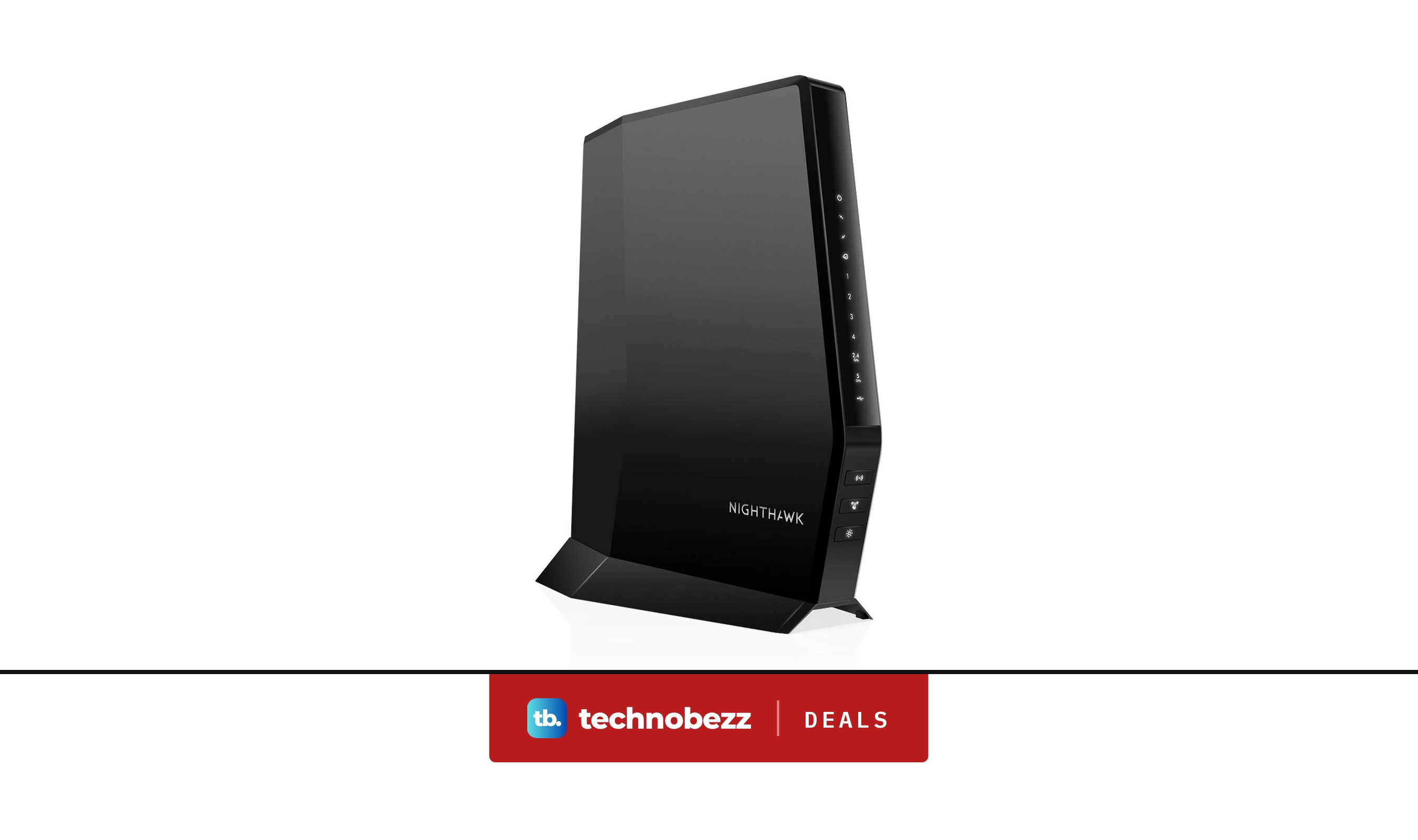
NETGEAR Nighthawk DOCSIS 3.1 Modem Router Combo sees price cut to $239.99
Deal
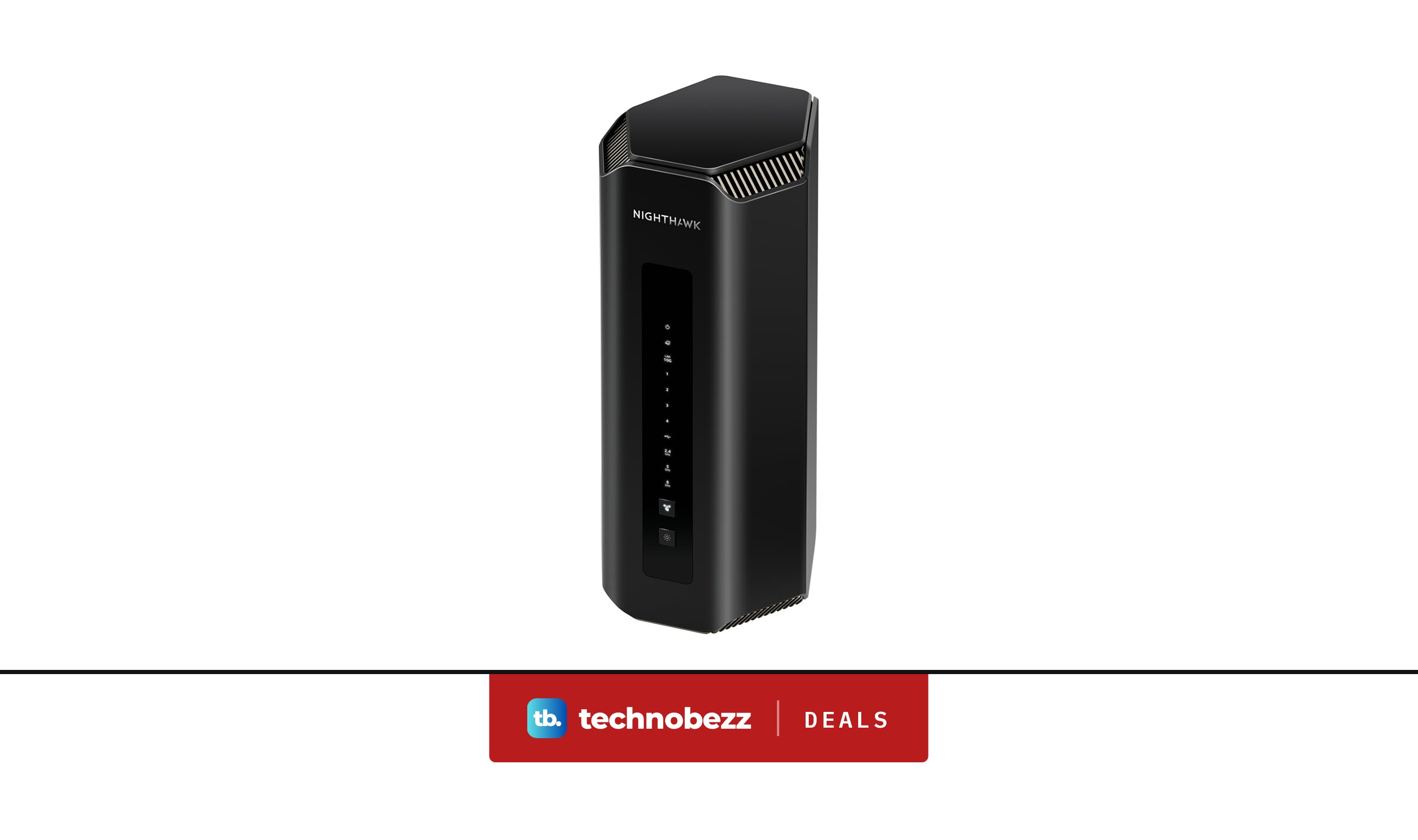
NETGEAR Nighthawk WiFi 7 Router RS700S down to $469.19 in latest price cut
Deal
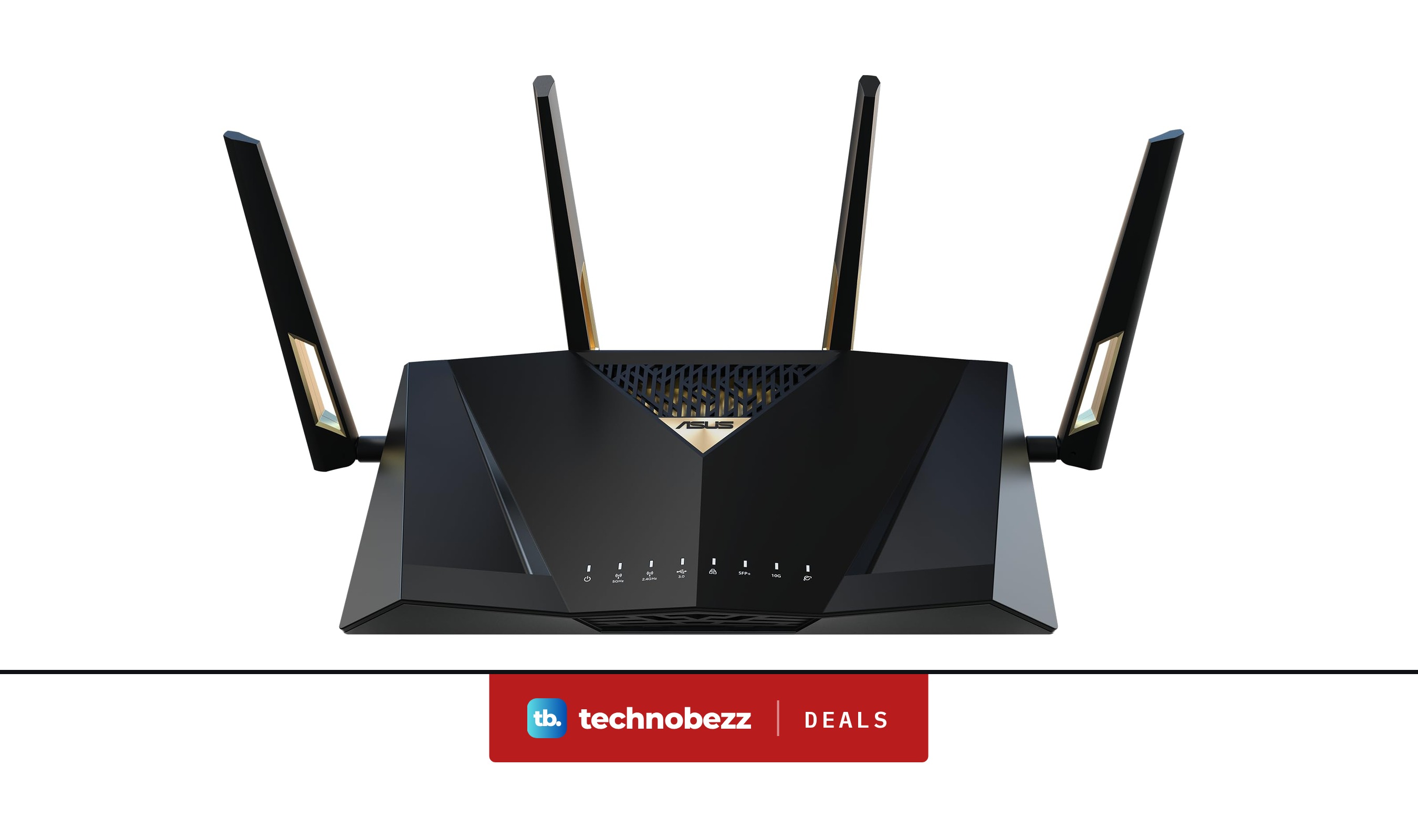
ASUS RT-BE88U WiFi 7 Router x2 10G falls to $289.99
Deal
ASUS ROG Strix GS-BE12000 WiFi 7 Gaming Router on sale for $269.97
More buying guides
Buying guide6 Best Fish Finders in 2026Buying guide5 Best Hoverboards in 2026Buying guide6 Best Ergonomic Mice in 2026Buying guide5 Best AV Receivers in 2026Buying guide6 Best Security Cameras Without a Subscription in 2026Buying guide5 Best Graphing Calculators in 2026Buying guide6 Best Multimeters in 2026Buying guide4 Best 4K Blu-ray Players in 2026