Choosing an AV receiver comes down to three questions: how many speakers you plan to run, how many HDMI devices you need to connect, and how you like to stream music. This page is for US shoppers who are building or upgrading a home theater and want to compare those points across five picks.
Technobezz is supported by its audience. We may get a commission from retail offers.
5 Best AV Receivers in 2026
The Denon AVR-X1800H leads our five AV receiver picks for 2026, with 7.2 channels, three 8K HDMI inputs and built-in HEOS. See how the other four compare.
T
Technobezz
Editorial Team
Updated November 25, 2026Nov 25, 2026
•13 min read

Get Deals Like These in Your Inbox
The best prices, straight to your inbox.
Add Technobezz on Google:Preferred SourceGoogle Discover
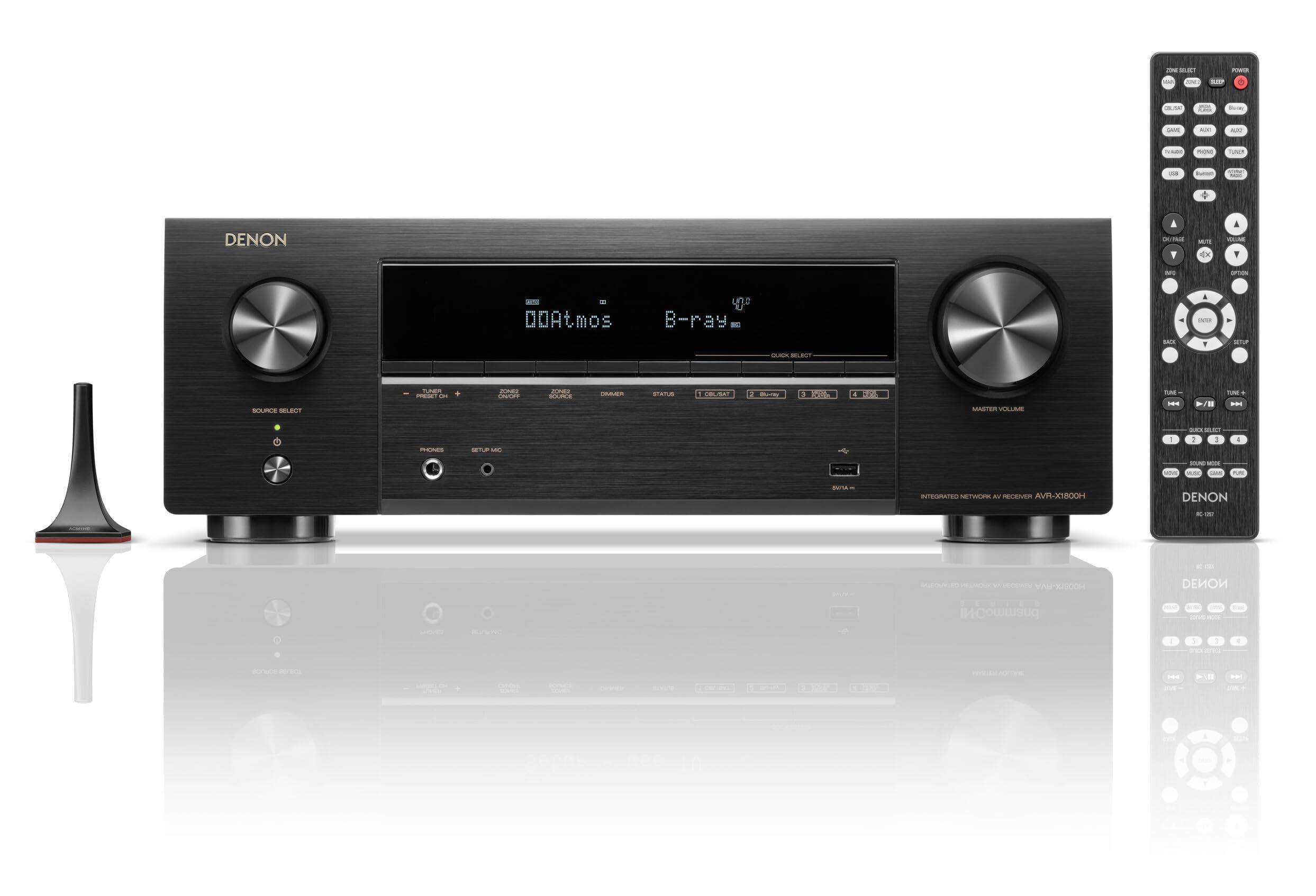
The Denon AVR-X1800H is our best overall pick. It is a 7.2-channel receiver rated at 80W x 7, with 3 dedicated 8K HDMI inputs, Dolby Atmos and DTS:X support, and built-in HEOS multi-room streaming.
The other four picks each suit a narrower need. The Denon AVR-X6800H is the premium choice with 11.4 channels. The Sony STR-AN1000 carries Works With Sonos. The Yamaha RX-V6A has 7 HDMI inputs and MusicCast multi-room. The Yamaha RX300A is the budget pick, a 5.2-channel receiver with Dolby Atmos. If you would rather buy the speakers and electronics as one package, see our guide to the best home theater systems.
At a Glance
| Category | Product | Why We Picked It |
|---|---|---|
| Best overall | Denon AVR-X1800H | 7.2 channels at 80W x 7, with 3 dedicated 8K HDMI inputs and built-in HEOS |
| Best premium | Denon AVR-X6800H | 11.4 channels at 140W x 11, with 8K HDMI on all 7 inputs |
| Best for Sonos and streaming | Sony STR-AN1000 | Works With Sonos, Chromecast built-in, Spotify Connect and Apple AirPlay |
| Best for multi-room audio | Yamaha RX-V6A | 7 HDMI inputs with 4K120AB and 8K60B HDMI 2.1, plus MusicCast multi-room |
| Best budget | Yamaha RX300A | 5.2 channels with Dolby Atmos, 4K/120 and 8K/60 video, and Bluetooth Multipoint |
How we chose
We compared the specifications on each product's Amazon page. We also checked that each pick is sold new by Amazon or the brand.
The best AV receivers right now
Denon AVR-X1800H - Best overall
The Denon AVR-X1800H is a 7.2-channel receiver rated at 80W x 7. It supports Dolby Atmos and DTS:X in a 7.2 or 5.2.2 setup, plus DTS Virtual:X. Its Height Virtualization Technology creates virtual height effects without height channels.
The HDMI section has 3 dedicated 8K inputs and 1 output, with 8K/60Hz and 4K/120Hz pass-through. It passes through Dolby Vision, HLG, HDR10+ and Dynamic HDR at up to 40Gbps bandwidth. Built-in HEOS handles multi-room streaming, and you can play Spotify, Tidal and Amazon Music HD over Wi-Fi, AirPlay 2 or Bluetooth.
Key highlights
- 7.2 channels, 80W x 7
- 3 dedicated 8K HDMI inputs and 1 output
- 8K/60Hz and 4K/120Hz pass-through
- Dolby Vision, HLG, HDR10+ and Dynamic HDR pass-through up to 40Gbps
- Dolby Atmos, DTS:X and DTS Virtual:X
- Built-in HEOS, Wi-Fi, AirPlay 2 and Bluetooth
Pros
- Dolby Atmos and DTS:X in a 7.2 or 5.2.2 setup
- Height Virtualization Technology creates virtual height effects without height channels
- On-screen quick setup guide and color-coded back panel connections
- HEOS multi-room streaming allows a different song in each room
- 2-year warranty, against 1 year on the Sony STR-AN1000
Cons
- 7.2 channels, against 11.4 on the Denon AVR-X6800H
- 80W x 7, against 140W x 11 on the Denon AVR-X6800H
- 3 dedicated 8K HDMI inputs, against 8K HDMI on all 7 inputs of the Denon AVR-X6800H
- 1 HDMI output, against 2 on the Sony STR-AN1000
Who it is for: Buyers who want a 7.2-channel Dolby Atmos receiver with 8K HDMI inputs and HEOS multi-room streaming.
Skip if
You plan to run more than 7.2 channels. The Denon AVR-X6800H has 11.4 channels.
Denon AVR-X6800H - Best premium
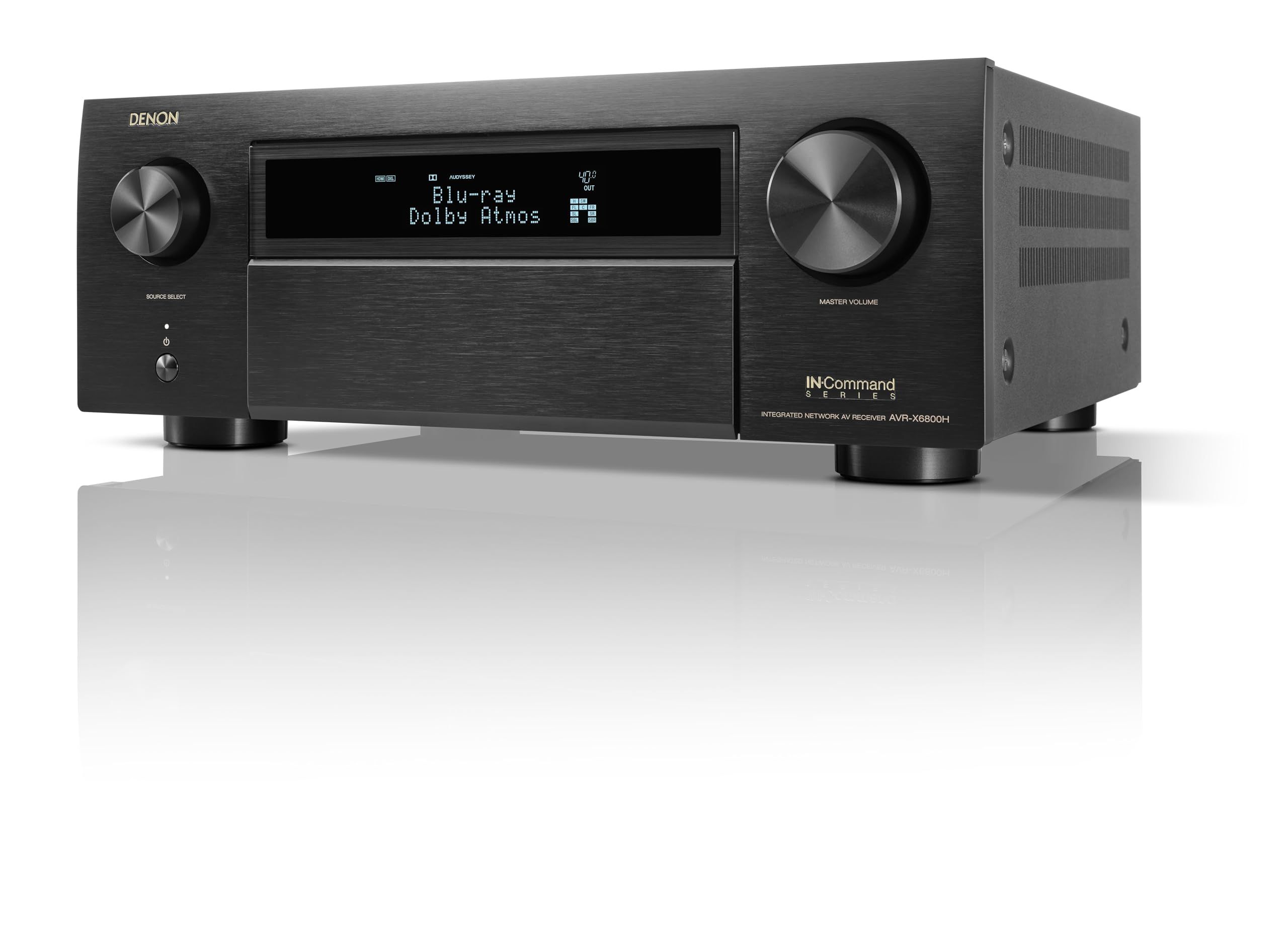
The Denon AVR-X6800H is an 11.4-channel receiver rated at 140W x 11, with up to 13.4 channel processing. It supports Dolby Atmos, DTS:X, IMAX Enhanced and Auro 3D, plus the Dolby Surround, DTS Neural:X and Auro-Matic upmixers. Dolby Atmos Height Virtualization Technology creates virtual effects without height channels.
It supports 8K HDMI, 8K upscaling and Dolby Vision, HDR, HLG, HDR10+ and Dynamic HDR pass-through on all 7 inputs. For gaming it has 8K/60Hz pass-through, Variable Refresh Rate (VRR), Quick Frame Transport (QFT) and Auto Low Latency Mode (ALLM). Audyssey MultEQ XT32 and SubEQ HT calibrate the speakers, and HEOS, Wi-Fi and Bluetooth are built in.
Key highlights
- 11.4 channels, 140W x 11
- Up to 13.4 channel processing
- 8K HDMI on all 7 inputs
- Dolby Atmos, DTS:X, IMAX Enhanced and Auro 3D
- VRR, QFT and ALLM
- Audyssey MultEQ XT32 and SubEQ HT calibration
Pros
- 11.4 channels, against 7.2 on the Denon AVR-X1800H, Sony STR-AN1000 and Yamaha RX-V6A
- 7 HDMI inputs, against 6 on the Sony STR-AN1000
- Dolby Surround, DTS Neural:X and Auro-Matic upmixers
- Built-in HEOS, Wi-Fi and Bluetooth
- 3-year warranty, against 2 years on the Denon AVR-X1800H
Cons
- At 34.4 pounds, it weighs more than the Denon AVR-X1800H at 23.05 pounds and the Yamaha RX300A at 16.8 pounds
- 14.9 inches long and 6.6 inches high, against 12.5 inches and 6.125 inches on the Yamaha RX300A
Who it is for: Buyers planning a system of up to 11.4 channels who want 8K HDMI on all 7 inputs, plus Auro 3D and IMAX Enhanced support.
Skip if
A 7.2-channel system is as far as you plan to go. The Denon AVR-X1800H covers 7.2 channels and weighs 23.05 pounds, against 34.4 pounds here.
Sony STR-AN1000 - Best for Sonos and streaming
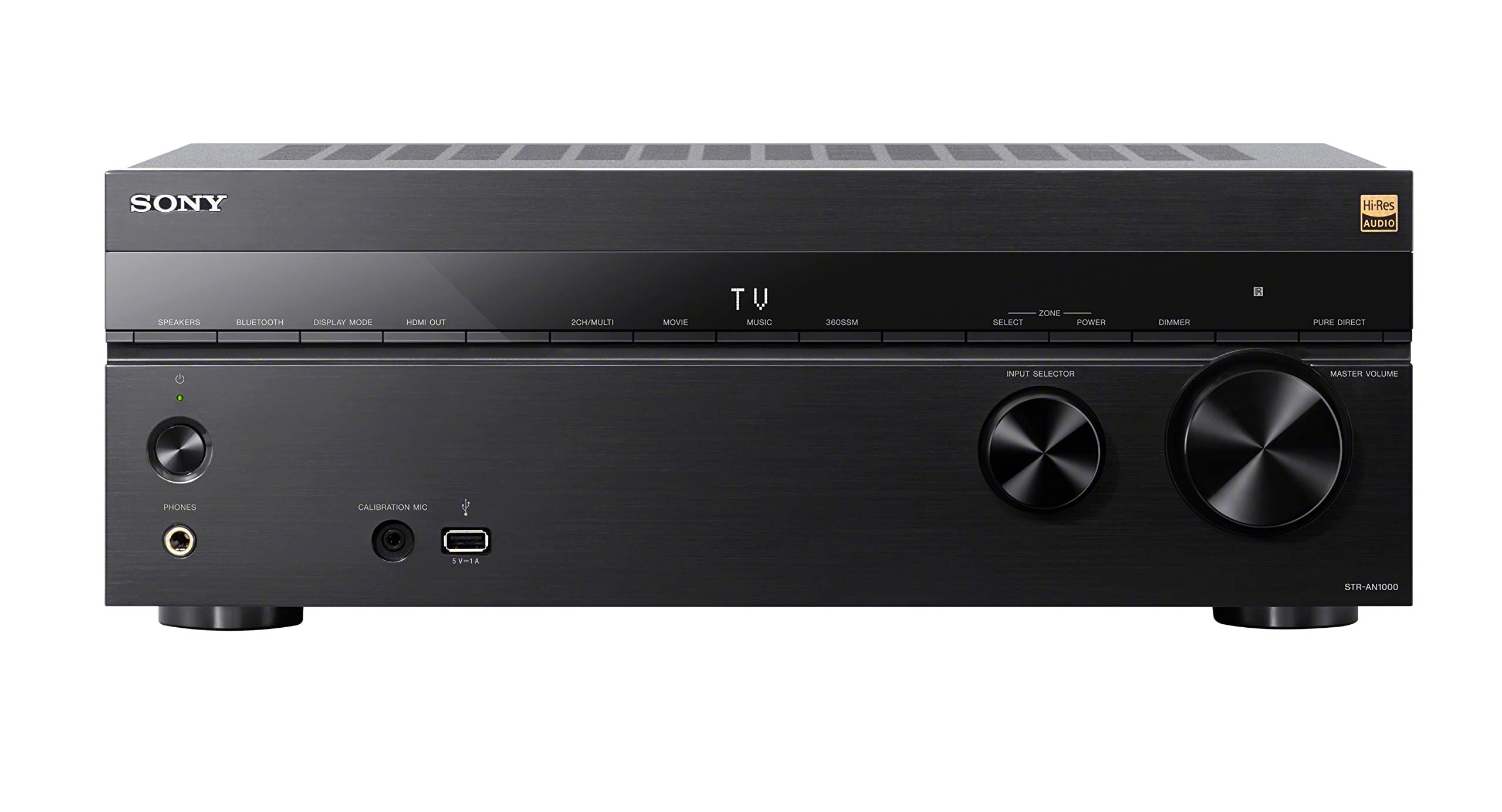
The Sony STR-AN1000 is a 7.2-channel receiver that carries Works With Sonos, which makes it possible to integrate it with a new or existing Sonos system. It streams over Bluetooth, Wi-Fi, Chromecast built-in, Spotify Connect and Apple AirPlay. It also connects to your home's other devices with Google Assistant.
It has 8K and 4K/120 HDMI connectivity with HDMI 2.1 support, across 6 inputs and 2 outputs. It decodes Dolby Atmos and DTS:X and supports Dolby Vision, HDR10, Hybrid Log Gamma and IMAX Enhanced. Power output is 165 W (6 ohms, 1 kHz, 1ch, THD 0.9%), and Zone 2 and Zone 3 provide multi-zone distribution.
Key highlights
- 7.2 channels, 165 W (6 ohms, 1 kHz, 1ch, THD 0.9%)
- 8K and 4K/120 HDMI with HDMI 2.1 support, 6 in and 2 out
- Dolby Atmos and DTS:X decoding
- Dolby Vision, HDR10, Hybrid Log Gamma and IMAX Enhanced
- Works With Sonos
- Bluetooth, Wi-Fi, Chromecast built-in, Spotify Connect and Apple AirPlay
Pros
- 2 HDMI outputs, against 1 on the Denon AVR-X1800H and Yamaha RX-V6A
- Zone 2 and Zone 3 for multi-zone distribution
- Digital Cinema Auto Calibration IX and 360 Spatial Sound Mapping
- Graphical setup interface that walks you through each step
- Connects to other devices in the home with Google Assistant
Cons
- 1-year warranty, against 3 years on the Denon AVR-X6800H and Yamaha RX-V6A
- 6 HDMI inputs, against 7 on the Denon AVR-X6800H and Yamaha RX-V6A
- 7.2 channels, against 11.4 on the Denon AVR-X6800H
Who it is for: Buyers who own or plan to buy a Sonos system, or who stream through Chromecast built-in, Spotify Connect or Apple AirPlay.
Skip if
You need 7 HDMI inputs. The Yamaha RX-V6A and Denon AVR-X6800H each have 7, against 6 here.
Yamaha RX-V6A - Best for multi-room audio
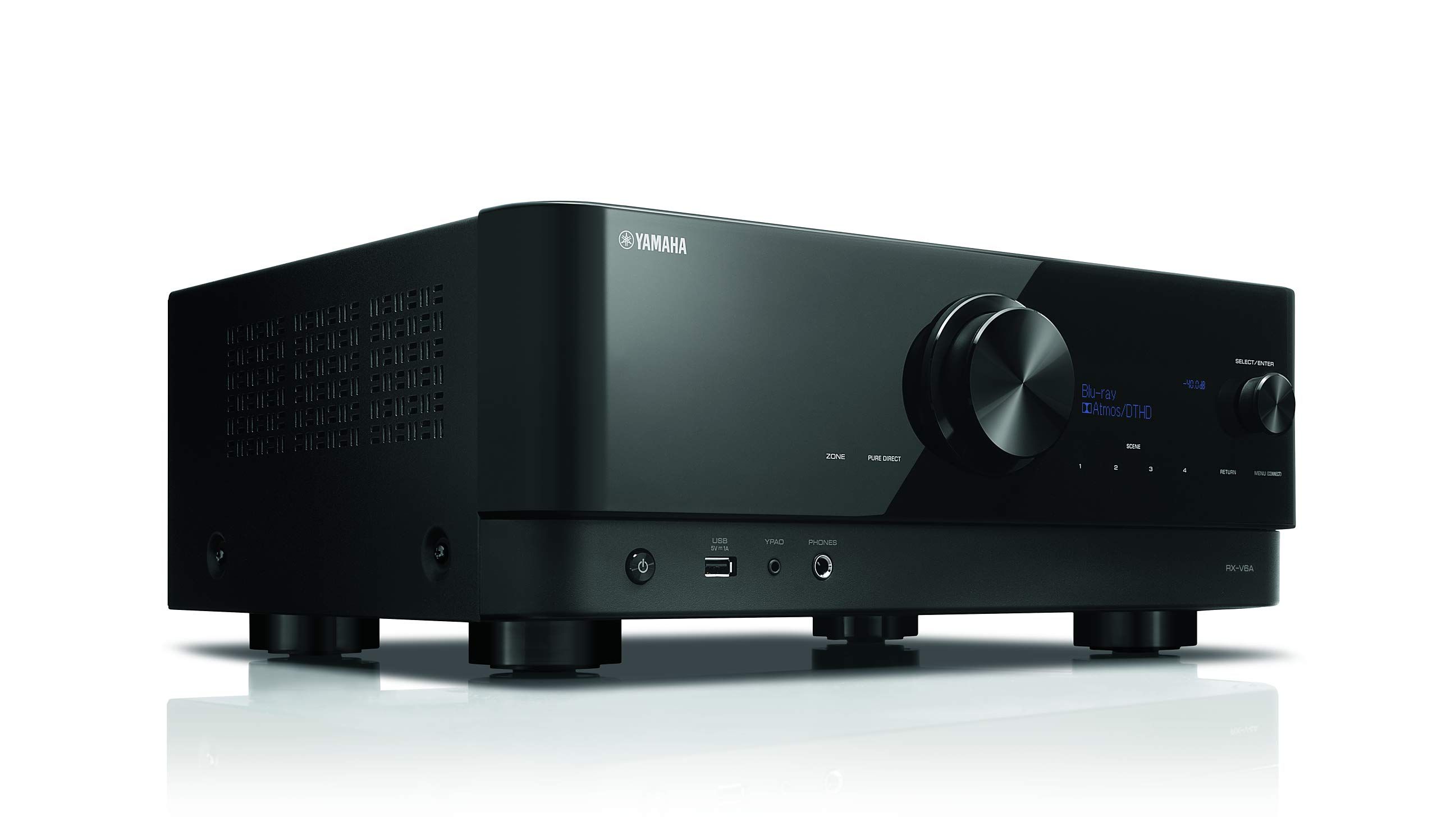
The Yamaha RX-V6A is a 7.2-channel receiver with 7 HDMI inputs and 1 output, with HDCP 2.3 and eARC. Its HDMI 2.1 support covers 4K60, 4K120AB and 8K60B, and three of the seven inputs are 8K inputs. It also supports Dolby Vision, Hybrid-Log Gamma and BT.2020.
For music it has Wi-Fi, Bluetooth, AirPlay 2, Spotify Connect and MusicCast multi-room. Supported services are Pandora, Spotify, Napster, SiriusXM, TIDAL, Deezer, Qobuz and Amazon Music HD. Voice control works with Alexa and Google Assistant devices, or with Siri via AirPlay 2. Audio formats include Dolby Atmos, Dolby Atmos with Height Virtualization and DTS:X.
Key highlights
- 7.2 channels
- 7 HDMI inputs and 1 output with HDCP 2.3 and eARC
- 4K60, 4K120AB and 8K60B HDMI 2.1
- Dolby Atmos, Dolby Atmos with Height Virtualization and DTS:X
- Wi-Fi, Bluetooth, AirPlay 2, Spotify Connect and MusicCast multi-room
- YPAO - R.S.C. and multipoint
Pros
- 7 HDMI inputs, against 6 on the Sony STR-AN1000
- Voice control with Alexa and Google Assistant devices, or Siri via AirPlay 2
- Pandora, Spotify, Napster, SiriusXM, TIDAL, Deezer, Qobuz and Amazon Music HD
- 3-year manufacturer warranty, against 1 year on the Sony STR-AN1000
- Dolby Vision, Hybrid-Log Gamma and BT.2020
Cons
- 1 HDMI output, against 2 on the Sony STR-AN1000
- Three of its 7 HDMI inputs are 8K inputs, against 8K HDMI on all 7 inputs of the Denon AVR-X6800H
- 7.2 channels, against 11.4 on the Denon AVR-X6800H
Who it is for: Buyers who want 7 HDMI inputs with 4K120AB support and MusicCast multi-room audio in a 7.2-channel receiver.
Skip if
You need a second HDMI output. The Sony STR-AN1000 has 2 outputs, against 1 here.
Yamaha RX300A - Best budget
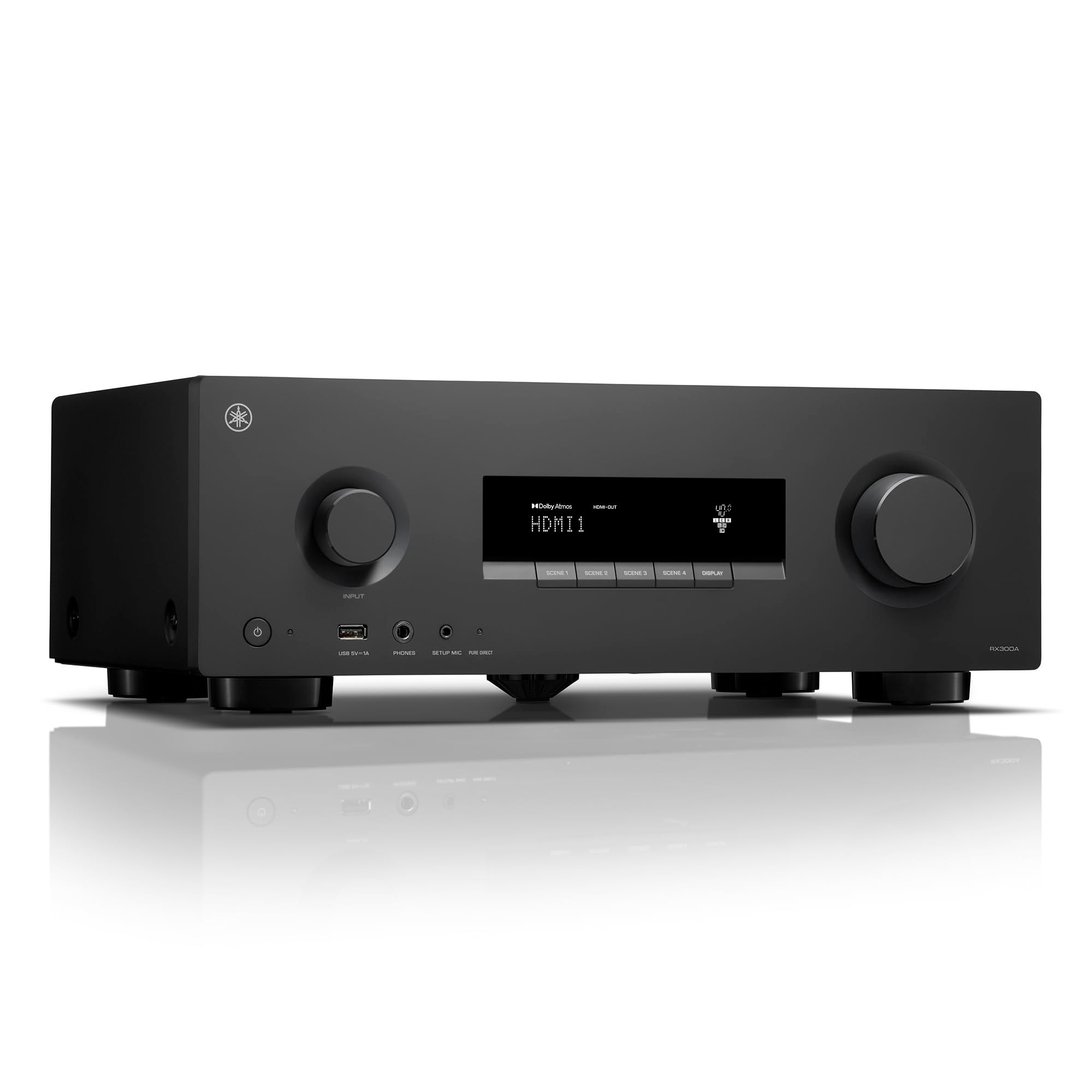
The Yamaha RX300A is a 5.2-channel receiver that delivers 70W of power. Its speaker layouts include 3.1.2 channels with up-firing or in-ceiling height speakers, and it supports Dolby Atmos and DTS Virtual:X. An included setup microphone measures the room's acoustics and speaker characteristics so the receiver can optimize its sound automatically.
It supports 4K/120 and 8K/60 video, Dolby Vision and HDR10+, HDMI eARC/ARC, and the ALLM and VRR gaming features. Bluetooth Multipoint lets you pair two source devices and switch between them. The Scene buttons store up to four custom presets, and a Quick Guide walks you through setup, from connecting speakers, your TV and external devices to selecting inputs.
Key highlights
- 5.2 channels, 70W
- Dolby Atmos and DTS Virtual:X
- 4K/120 and 8K/60 video
- Dolby Vision and HDR10+
- HDMI eARC/ARC, ALLM and VRR
- Bluetooth Multipoint for two source devices
Pros
- Setup microphone included for automatic room correction
- Up to four custom presets on the Scene buttons
- Quick Guide and on-screen Settings menu for setup
- Speaker layouts including 3.1.2 channels with up-firing or in-ceiling heights
- At 16.8 pounds, it weighs less than the Denon AVR-X1800H at 23.05 pounds and the Denon AVR-X6800H at 34.4 pounds
Cons
- 5.2 channels, against 7.2 on the Denon AVR-X1800H, Sony STR-AN1000 and Yamaha RX-V6A
- 2-year limited warranty, against 3 years on the Yamaha RX-V6A and Denon AVR-X6800H
Who it is for: Buyers on a budget who want a 5.2-channel Dolby Atmos receiver with 4K/120 video, ALLM and VRR.
Skip if
You want more than 5.2 channels. The Denon AVR-X1800H has 7.2 channels.
How to Choose
- Count your speakers first. Pick a channel count that covers the speakers you own or plan to buy. The Yamaha RX300A is a 5.2-channel receiver. The Denon AVR-X1800H, Sony STR-AN1000 and Yamaha RX-V6A are 7.2-channel receivers. The Denon AVR-X6800H has 11.4 channels.
- Count your HDMI sources. Add up the devices you want to plug in, and leave room for one more. The Denon AVR-X6800H and Yamaha RX-V6A each have 7 HDMI inputs. The Sony STR-AN1000 has 6 HDMI inputs and 2 outputs.
- Check the video modes your gear uses. If your sources output 4K at 120Hz, look for that figure in the receiver's specifications. The Denon AVR-X1800H has 4K/120Hz pass-through. The Sony STR-AN1000 has 4K/120 HDMI connectivity. The Yamaha RX-V6A handles 4K120AB. The Yamaha RX300A supports 4K/120 video.
- Match the receiver to your music system. If you already own wireless speakers, look for a receiver that names the same system. The Denon AVR-X1800H and Denon AVR-X6800H have built-in HEOS. The Yamaha RX-V6A has MusicCast multi-room. The Sony STR-AN1000 carries Works With Sonos.
- Compare the warranty. Warranty length differs across these picks, so check it before you buy. The Denon AVR-X6800H and Yamaha RX-V6A have a 3-year warranty. The Denon AVR-X1800H and Yamaha RX300A have a 2-year warranty. The Sony STR-AN1000 has a 1-year warranty.
- Decide whether you want separate speakers. If wiring a full speaker set is more than you want to take on, our guide to the best sound bars for TV is a better place to start.
FAQ
Which of these AV receivers support Dolby Atmos?
All five picks support Dolby Atmos. The Denon AVR-X1800H, Denon AVR-X6800H, Sony STR-AN1000 and Yamaha RX-V6A support DTS:X. The Denon AVR-X1800H and Yamaha RX300A support DTS Virtual:X.
What gaming features do the Denon AVR-X6800H and Yamaha RX300A support?
The Denon AVR-X6800H supports Variable Refresh Rate (VRR), Quick Frame Transport (QFT) and Auto Low Latency Mode (ALLM). The Yamaha RX300A supports ALLM and VRR.
Which multi-room systems do the Denon, Sony and Yamaha RX-V6A picks use?
The Denon AVR-X1800H has built-in HEOS multi-room streaming, which allows a different song in each room. The Denon AVR-X6800H has built-in HEOS. The Yamaha RX-V6A has MusicCast multi-room. The Sony STR-AN1000 has Zone 2 and Zone 3 for multi-zone distribution and carries Works With Sonos.
How many HDMI inputs do these receivers have?
The Denon AVR-X6800H supports 8K HDMI on all 7 inputs. The Yamaha RX-V6A has 7 HDMI inputs and 1 output, and three of the inputs are 8K inputs. The Sony STR-AN1000 has 6 HDMI inputs and 2 outputs. The Denon AVR-X1800H has 3 dedicated 8K inputs and 1 output.
Which HDR formats do these receivers support?
The Denon AVR-X1800H passes through Dolby Vision, HLG, HDR10+ and Dynamic HDR. The Denon AVR-X6800H passes through Dolby Vision, HDR, HLG, HDR10+ and Dynamic HDR. The Sony STR-AN1000 supports Dolby Vision, HDR10, Hybrid Log Gamma and IMAX Enhanced. The Yamaha RX-V6A supports Dolby Vision, Hybrid-Log Gamma and BT.2020. The Yamaha RX300A supports Dolby Vision and HDR10+.
Published November 25, 2026 Last updated November 25, 2026
Add Technobezz on Google:Preferred SourceGoogle Discover
More buying guides
Buying guide
6 Best Security Cameras Without a Subscription in 2026
Buying guide
5 Best Graphing Calculators in 2026
Buying guide
6 Best Multimeters in 2026
Buying guide
4 Best 4K Blu-ray Players in 2026
Buying guide4 Best iPads in 2026Buying guide7 Best KVM Switches in 2026Buying guide6 Best microSD Cards in 2026Buying guide7 Best PC Case Fans in 2026Buying guide6 Best MacBooks in 2026Buying guide7 Best USB-C Cables in 2026Buying guide6 Best CPUs for Gaming in 2026Buying guide7 Best 32-Inch Monitors in 2026