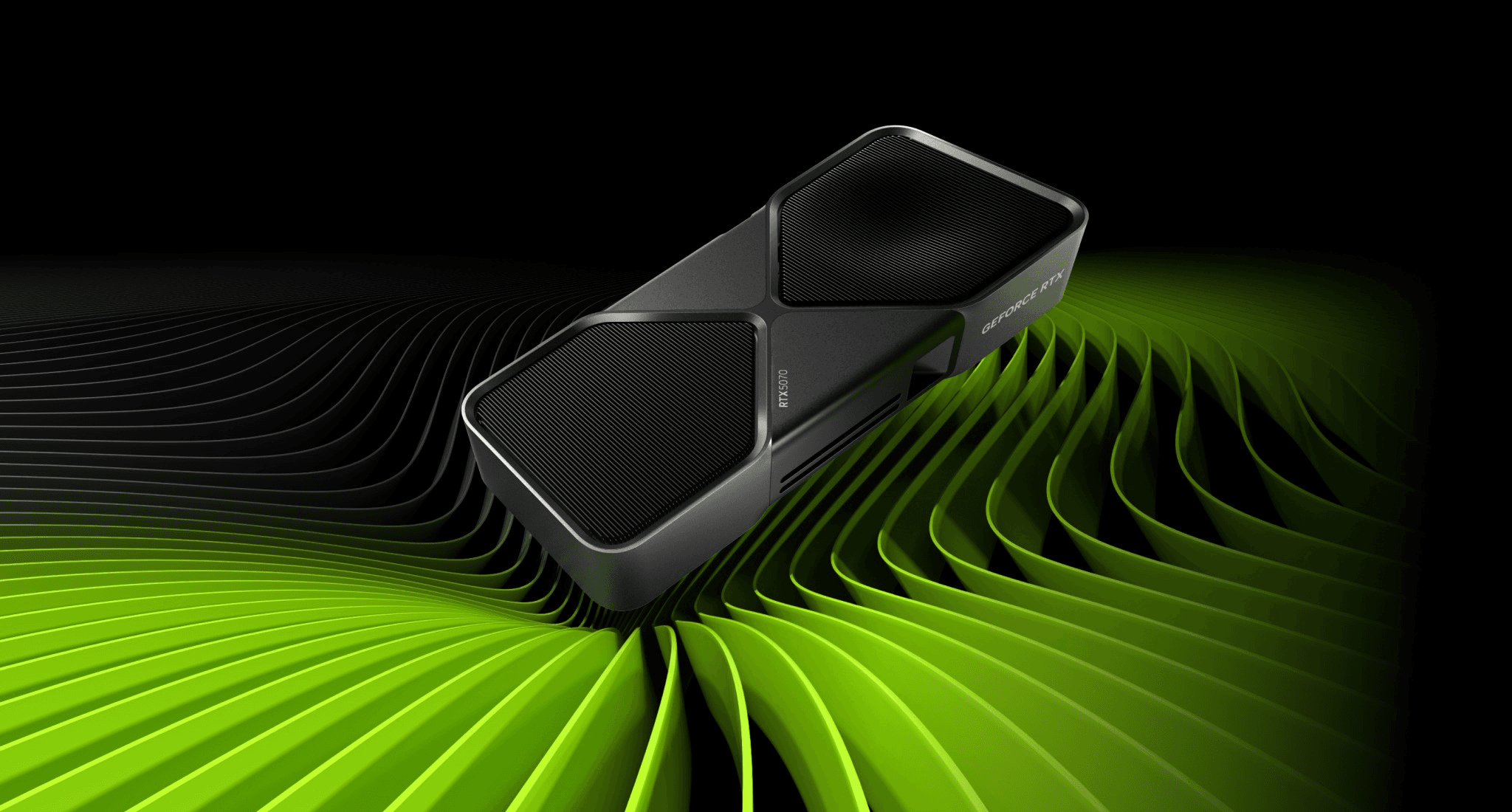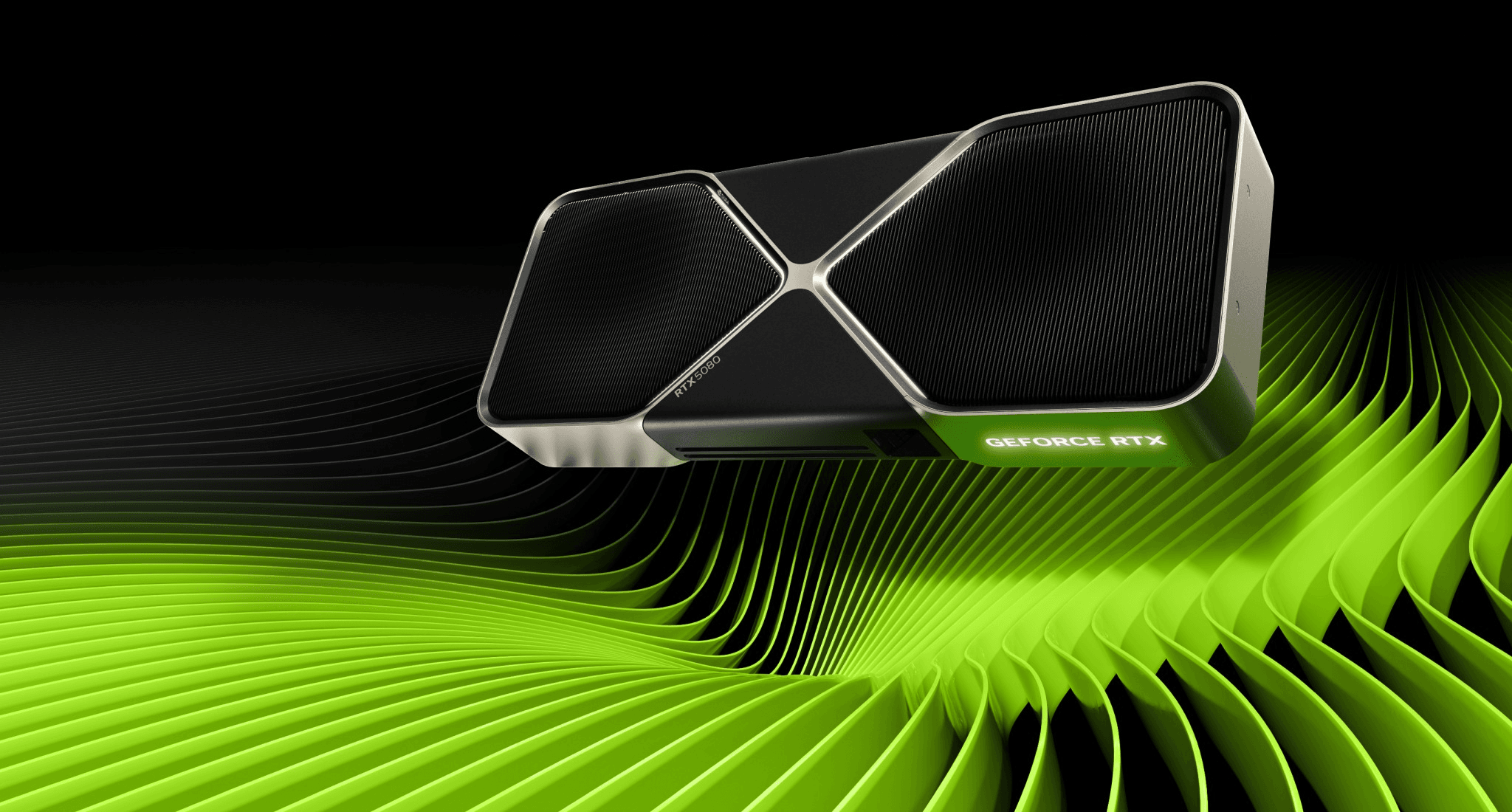
The GeForce RTX 5070 Ti and RTX 5080 share the same 16 GB of GDDR7 memory, the same display outputs and the same feature list on NVIDIA's pages. The RTX 5080 has more CUDA cores, a higher boost clock and a higher total graphics power figure on NVIDIA's pages, and NVIDIA's launch price for it was $250 higher. NVIDIA lists a required system power of 750 W for the RTX 5070 Ti and 850 W for the RTX 5080.
What each card costs
NVIDIA's launch price for the RTX 5070 Ti starts at $749. NVIDIA's launch price for the RTX 5080 starts at $999. Both figures come from NVIDIA's January 6, 2025 launch announcement and are in US dollars.
Those are launch prices, not current retail prices. Cards built by NVIDIA's partners can differ, and NVIDIA notes that partner specifications may vary from its own Founders Edition and reference designs.
RTX 5070 Ti vs RTX 5080 at a glance
NVIDIA lists both cards on its current RTX 50 Series product pages and on its graphics card comparison page. Both use the Blackwell architecture. These are the published numbers that differ.
- CUDA cores: 8,960 on the RTX 5070 Ti, 10,752 on the RTX 5080.
- Boost clock: 2.45 GHz on the RTX 5070 Ti, 2.62 GHz on the RTX 5080.
- Memory bandwidth: 896 GB/s on the RTX 5070 Ti, 960 GB/s on the RTX 5080.
- Tensor cores: fifth generation on both, rated by NVIDIA at 1,406 AI TOPS on the RTX 5070 Ti and 1,801 AI TOPS on the RTX 5080.
- Ray tracing cores: fourth generation on both, rated by NVIDIA at 133 TFLOPS on the RTX 5070 Ti and 171 TFLOPS on the RTX 5080.
- Video decoders: one sixth-generation NVDEC decoder on the RTX 5070 Ti, two on the RTX 5080.
- Total graphics power: 300 W on the RTX 5070 Ti, 360 W on the RTX 5080.
NVIDIA says the clock figures apply during gaming at medium to full GPU utilization. See How to Check Your GPU on Windows.
What the two cards share
Both cards carry 16 GB of GDDR7 memory on a 256-bit memory interface. Paying more for the RTX 5080 does not add memory.
The outputs match too. Each card has three DisplayPort 2.1b outputs with UHBR20 and one HDMI 2.1b output. Both support PCIe Gen 5, DirectX 12 Ultimate, OpenGL 4.6 and Vulkan 1.4. Neither supports NVLink or SLI.
Both cards have two ninth-generation NVENC encoders and support AV1 encoding and decoding. The video difference is on the decode side, where the RTX 5080 has the second NVDEC decoder.
The software list is the same on both. NVIDIA's comparison page lists DLSS 5 for each card, along with 3D-Guided Neural Rendering, Dynamic Multi Frame Generation, Frame Generation, Ray Reconstruction, Super Resolution and DLAA. The specification tables on the individual product pages still list DLSS 4. See How to Set Up and Use NVIDIA DLSS 5.
Both support Reflex Low Latency Mode, and NVIDIA marks Reflex Frame Warp as coming soon. Both also support the NVIDIA App, G-SYNC, RTX Remix, Broadcast, RTX HDR, VR, Game Ready Drivers and Studio Drivers.
Power supply and cables
NVIDIA lists a required system power of 750 W for the RTX 5070 Ti and 850 W for the RTX 5080. The cables differ as well. The RTX 5070 Ti takes two PCIe 8-pin cables through the adapter in the box, or a PCIe Gen 5 power cable rated at least 300 W. The RTX 5080 takes three PCIe 8-pin cables through its included adapter, or one PCIe Gen 5 power cable rated at least 450 W.
NVIDIA bases those power requirements on a system with a Ryzen 9 9950X processor and says they vary by configuration. It recommends a power supply that complies with PCIe CEM 5.1.
Which one fits
If you want to stay with a 750 W power supply, the RTX 5070 Ti matches that figure because NVIDIA lists 750 W of required system power for it, against 850 W for the RTX 5080. NVIDIA says those requirements vary by system configuration. For 8-pin cabling, NVIDIA lists two cables for the RTX 5070 Ti and three for the RTX 5080, each through the included adapter, and the RTX 5080 can instead use one PCIe Gen 5 cable rated at least 450 W.
If you want the higher published core count, boost clock and memory bandwidth, or the second video decoder, the RTX 5080 is the card that lists them, at a launch price $250 above the RTX 5070 Ti. If memory size is the deciding factor, the two are level at 16 GB, so the lower launch price of the RTX 5070 Ti may fit. See also NVIDIA vs AMD Graphics Cards, Which One Fits Your PC?