A good dashcam needs to capture useful evidence, save clips reliably and stay easy to manage after an incident. Clear video matters, but sensor quality, HDR behavior, parking support and storage options matter just as much.
Technobezz is supported by its audience. We may get a commission from retail offers.
6 Best Dashcams for 2026
VIOFO A329S 2CH is our top dashcam pick for sharp front and rear recording, Wi-Fi 6, GPS and SSD support.
T
Technobezz
Senior Editor
Updated September 14, 2026Sep 14, 2026
•12 min read

Get Deals Like These in Your Inbox
The best prices, reviewed weekly.
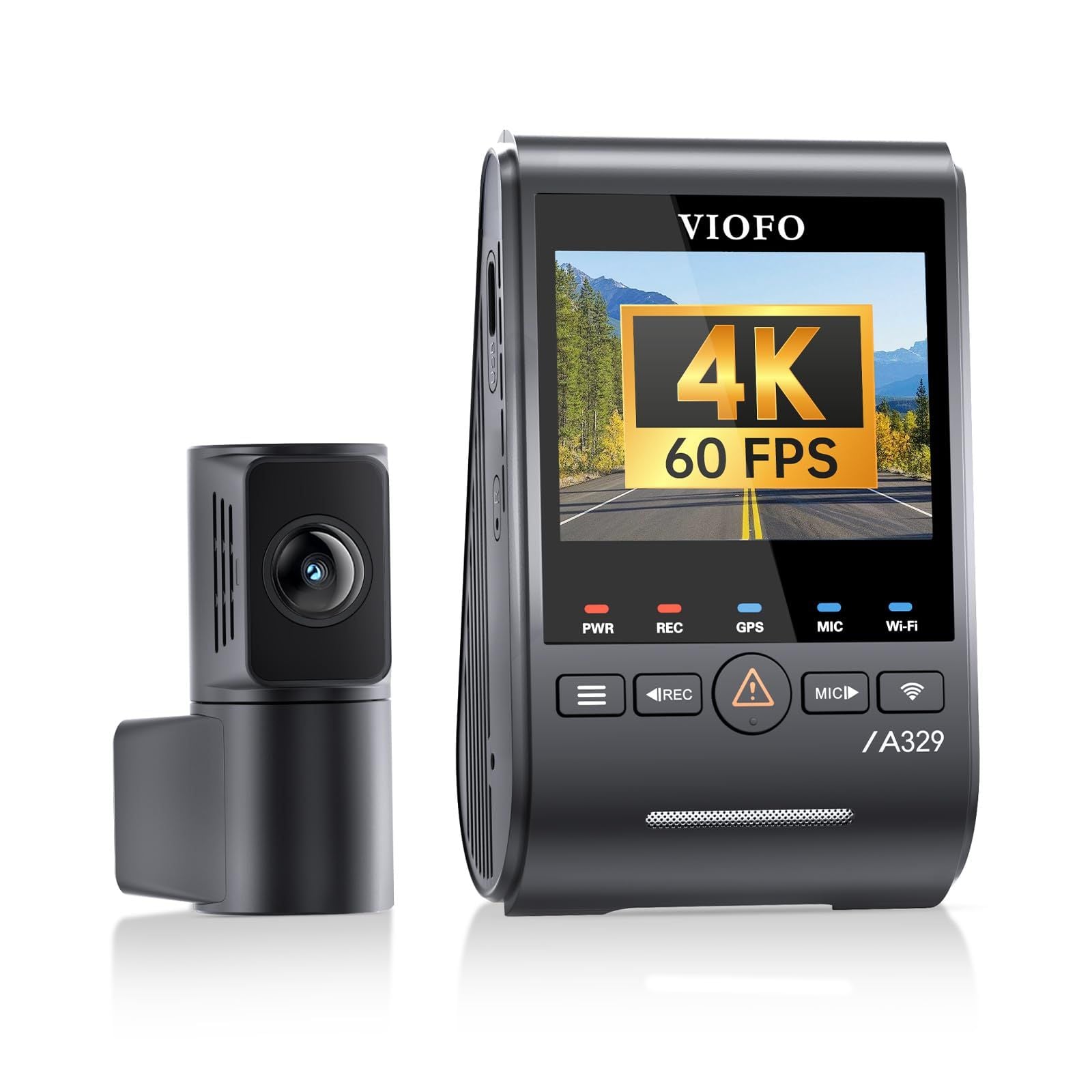
VIOFO A329S 2CH is the best overall pick because it combines 4K 60fps front recording, 2K rear capture, dual Sony STARVIS 2 sensors, Wi-Fi 6, GPS and external SSD support.
This list focuses on practical US buyer needs, including front and rear coverage, parking protection, storage capacity, app connectivity and everyday value. Each model has a defined strength, from compact 4K recording to radar parking protection and rotating coverage.
At a Glance
| Category | Product | Why We Picked It |
|---|---|---|
| Best overall | VIOFO A329S 2CH | Flagship front and rear capture with Wi-Fi 6 and SSD support |
| Best value | VIOFO A229 Plus 2CH | Balanced 2K front and rear recording with strong core features |
| Best compact 4K | VIOFO A119M Pro | Compact front-only 4K HDR camera with Wi-Fi 6, GPS and included CPL filter |
| Best parking protection | Thinkware U3000 Pro Front & Rear | Radar parking detection with 4K front and 2K rear recording |
| Best 360-degree coverage | 70mai Dash Cam 4K Omni X800 | Rotating 4K design for angles fixed dashcams can miss |
| Best low-cost dual 4K | Miofive S1 Ultra | Dual 4K coverage with screen, Wi-Fi and included storage |
How we chose and tested
We selected dashcams by prioritizing evidence quality, sensor hardware, HDR behavior, channel coverage, parking protection, storage flexibility, connectivity and power design. The strongest picks combine clear model identity with practical incident capture, useful parked-car features and simple clip access. We gave extra weight to modern Sony STARVIS 2 sensors, front and rear coverage where available, large storage support and parking modes that fit real ownership needs.
The best dashcams right now
VIOFO A329S 2CH - Best overall
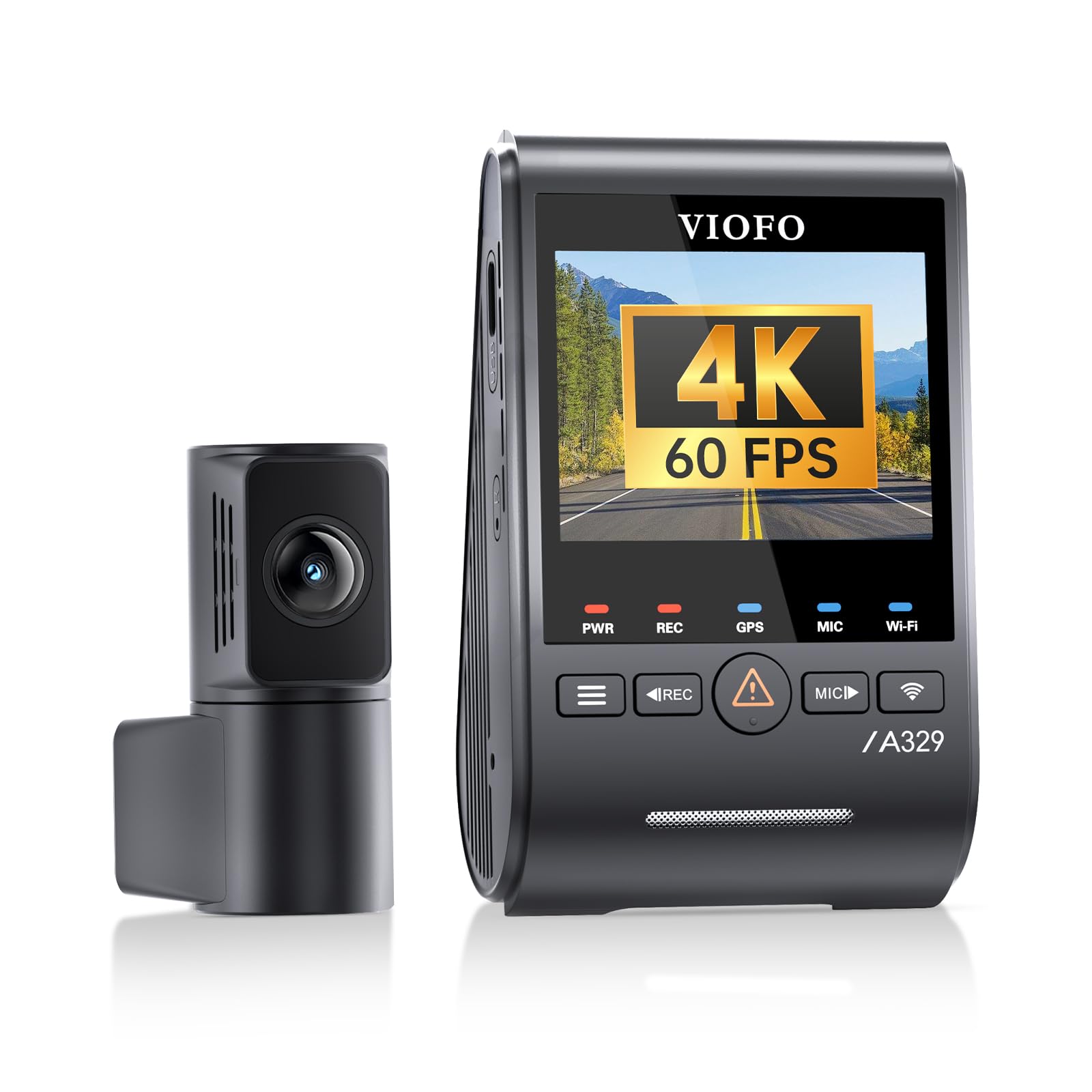
The VIOFO A329S 2CH earns the top spot by pairing high-end front recording with a strong rear camera. The front camera records 4K 60fps when HDR is off, while the rear camera records 2K 30fps.
Both cameras use Sony STARVIS 2 sensors, and the feature set is built for frequent clip management. You get Wi-Fi 6 across 5GHz and 2.4GHz, built-in GPS, Bluetooth, voice control, microSD support up to 512GB and external SSD support up to 4TB.
Parking support includes low-power impact detection and hybrid parking mode with a compatible hardwire kit. The main compromise is clear: front HDR drops recording to 4K 30fps, so HDR and 4K 60fps do not run together.
Key highlights
- 4K 60fps front plus 2K 30fps rear video
- Front HDR drops to 4K 30fps
- Sony STARVIS 2 sensors front and rear
- Wi-Fi 6, 5GHz plus 2.4GHz, GPS, Bluetooth and voice control
- External SSD support up to 4TB and microSD support up to 512GB
- Low-power impact detection and hybrid parking mode with compatible hardwire kit
Pros
- Excellent front detail with 4K 60 available when HDR is off
- Strong rear-camera spec for a 2-channel kit
- Wi-Fi 6 and SSD support are genuinely useful for heavy users
- Built-in GPS and voice controls reduce accessory clutter
Cons
- Expensive versus very capable 2K systems
- Parking features need hardwire accessories
- HDR and 4K 60 cannot run together on the front camera
Who it's for
Best for drivers who want the strongest all-around front and rear evidence capture without moving into fleet-style systems.
Skip if
Not ideal for drivers who only want a simple, cheap camera for occasional driving.
VIOFO A229 Plus 2CH - Best value
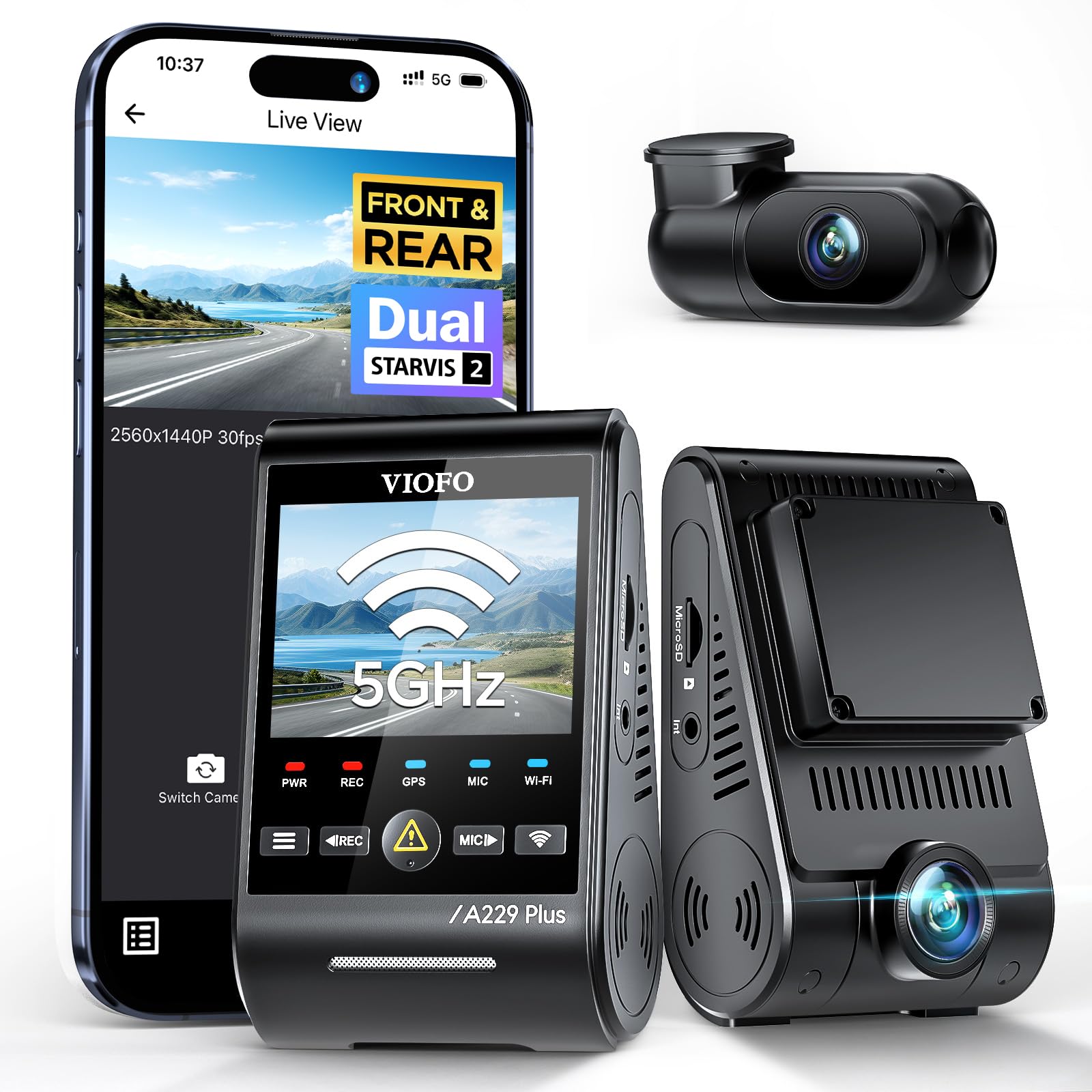
The VIOFO A229 Plus 2CH focuses on the features most drivers should care about first: matching front and rear coverage, modern sensors and convenient clip access. It records 2K 2560 x 1440 from both cameras.
Dual Sony STARVIS 2 IMX675 sensors and front and rear HDR help it handle night driving and mixed lighting. Built-in GPS, 5GHz Wi-Fi and voice control round out the everyday feature set, and microSD support goes up to 512GB.
Its limits are straightforward. This is not a true 4K front camera, front 1440p 60fps is unavailable while HDR is enabled, and the A329S adds faster Wi-Fi plus SSD support.
Key highlights
- 2K 2560 x 1440 front plus 2K 2560 x 1440 rear video
- Dual Sony STARVIS 2 IMX675 sensors
- Front and rear HDR recording
- Front 1440p 60fps is not available while HDR is enabled
- 5GHz Wi-Fi, voice control and GPS
- microSD support up to 512GB
Pros
- Balanced front and rear 2K quality for less money than flagship 4K kits
- STARVIS 2 sensors and HDR are strong for night and mixed lighting
- Built-in GPS and Wi-Fi are included
- Widely recommended and widely sold
Cons
- Not a true 4K front camera
- Front 1440p 60fps is not available while HDR is enabled
- A329S is newer and has faster Wi-Fi plus SSD support
Who it's for
Best for drivers who want a dependable dual-channel dashcam that covers the important features without flagship pricing.
Skip if
Not ideal for shoppers who prioritize front-camera 4K detail or SSD recording.
VIOFO A119M Pro - Best compact 4K
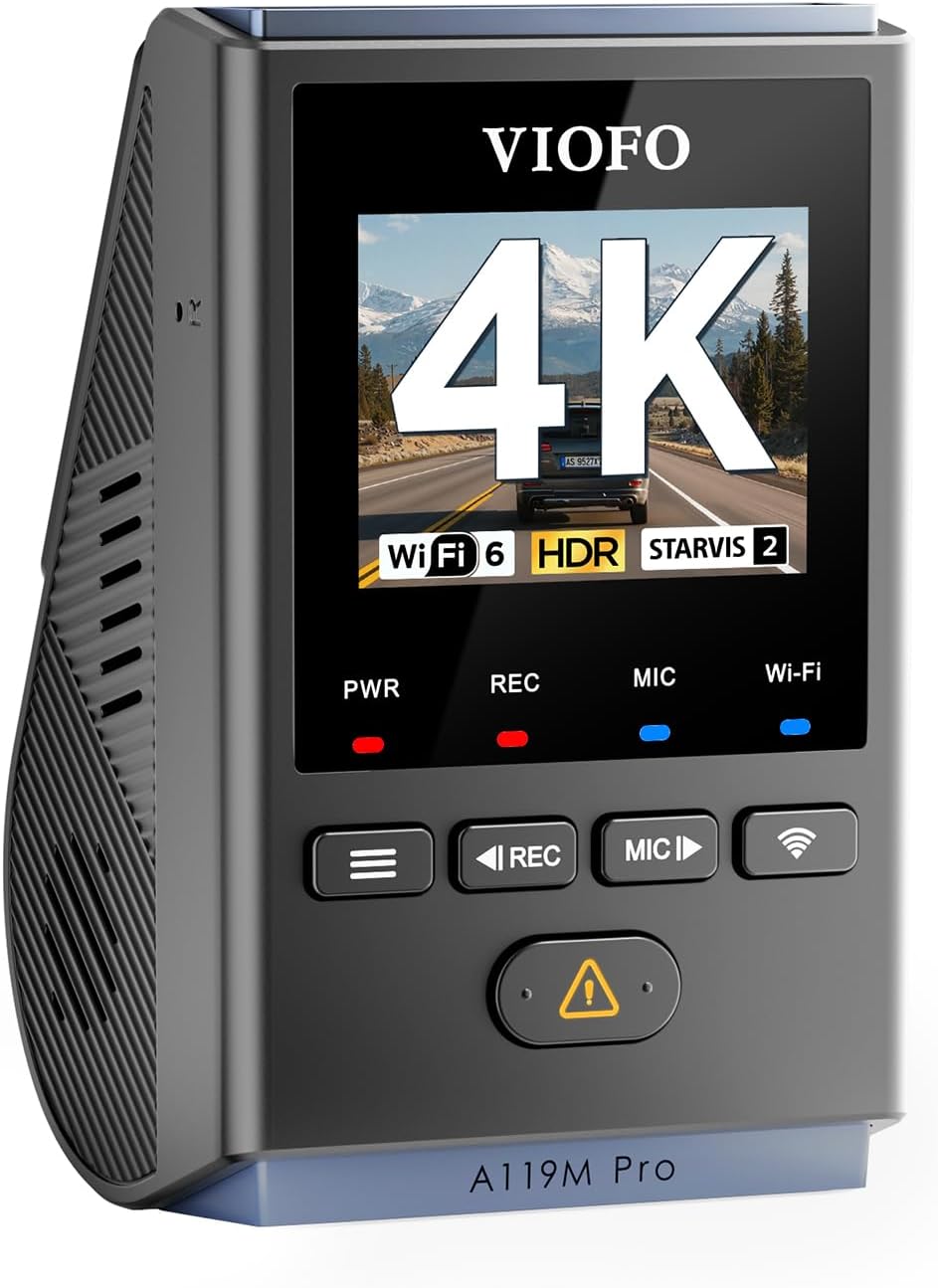
VIOFO A119M Pro fits the compact 4K slot with a low-profile design that mounts behind the rearview mirror. It records 3840 x 2160 video at 30fps with HDR through a Sony STARVIS 2 IMX678 sensor.
Wi-Fi 6, built-in GPS and voice control handle clip access, trip data and hands-free commands. It supports microSD cards up to 512GB, sold separately, and includes a CPL filter to reduce windshield reflections.
Parking options include buffered event detection, low-bitrate recording and time-lapse recording. Buffered capture saves 15 seconds before and 30 seconds after an event; the compatible HK6 hardwire kit is sold separately.
Key highlights
- 4K 3840 x 2160 at 30fps with HDR
- Sony STARVIS 2 IMX678 sensor
- Wi-Fi 6, built-in GPS and voice control
- microSD support up to 512GB; card sold separately
- Included CPL filter and built-in supercapacitor
- Buffered parking captures 15 seconds before and 30 seconds after an event with a compatible hardwire kit
Pros
- Compact design with 4K HDR front recording
- Wi-Fi 6 supports convenient clip transfers
- CPL filter is included
- Buffered parking preserves footage from before an event
Cons
- Single-channel recording provides no rear-camera view
- Parking mode requires a separate hardwire kit
- microSD card is not included
Who it's for
Best for drivers who want a discreet front-only 4K camera with HDR, GPS and convenient wireless clip access.
Skip if
Not the best choice for drivers who need rear impact coverage.
Thinkware U3000 Pro Front & Rear - Best parking protection
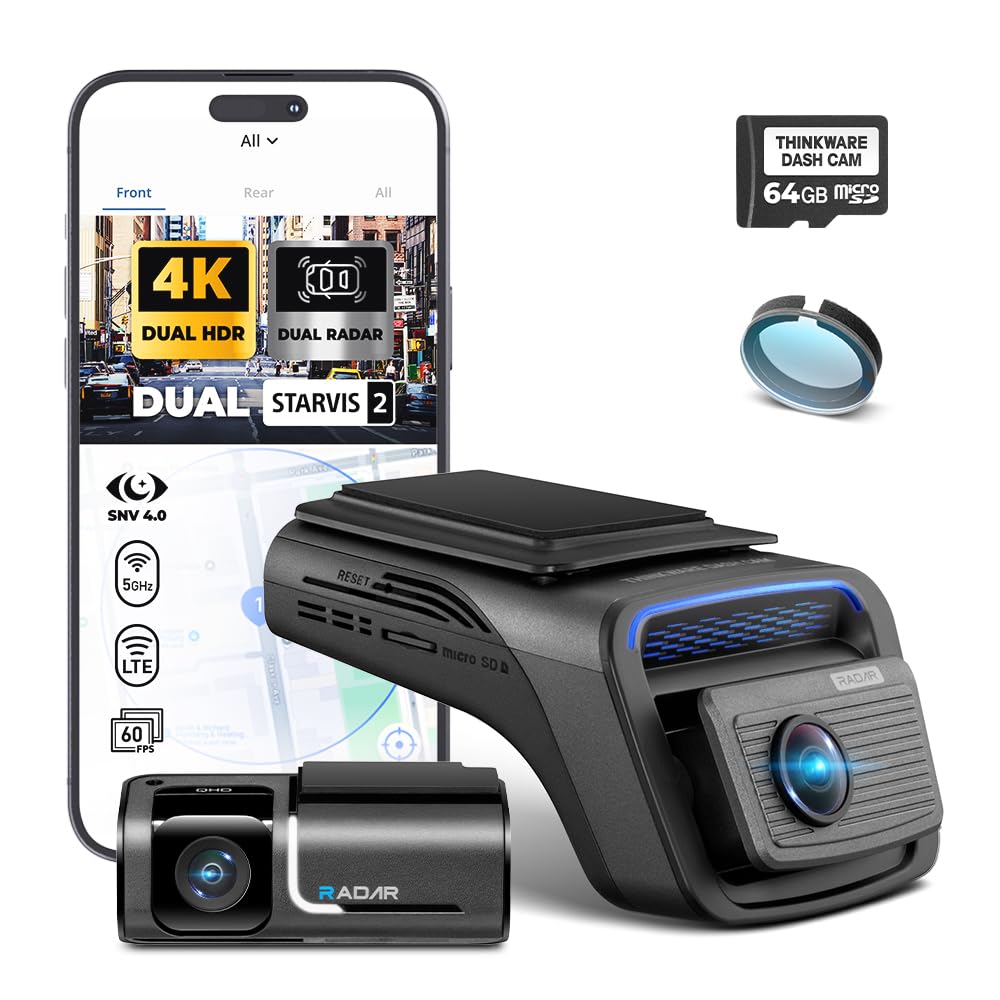
Thinkware U3000 Pro Front & Rear is the parking-focused pick because dual built-in radar sensors can record motion-triggered parking clips. That makes parked-car monitoring its defining advantage over simpler impact-only systems.
The video setup is also serious: 4K UHD front recording at 30fps or 2K QHD front recording at 60fps, plus a 2K rear camera. The front sensor is Sony STARVIS 2 IMX678, and the rear sensor is Sony STARVIS 2 IMX675.
Built-in Wi-Fi and GPS are included, with optional connected services through additional internet or LTE setup. Its screenless design stays discreet after installation, and the best parking features need proper power installation.
Key highlights
- 4K UHD front at 30fps or 2K QHD front at 60fps
- 2K rear recording
- Sony STARVIS 2 IMX678 front and IMX675 rear sensors
- Dual built-in radar sensors record motion-triggered parking clips
- Built-in Wi-Fi and GPS
- Optional connected services via additional internet or LTE setup
Pros
- Radar parking mode is more advanced than simple impact-only parking capture
- Modern dual STARVIS 2 sensor setup
- Screenless design is discreet once installed
- Optional connected-services path for users who want remote monitoring
Cons
- Premium price
- Best parking features require proper power installation
- Some reviews found image quality less dominant than its specs suggest
Who it's for
Best for drivers who make parked-car monitoring the top priority and are willing to hardwire or use OBD power.
Skip if
Not necessary for drivers who only need basic driving footage for the lowest cost.
70mai Dash Cam 4K Omni X800 - Best 360-degree coverage
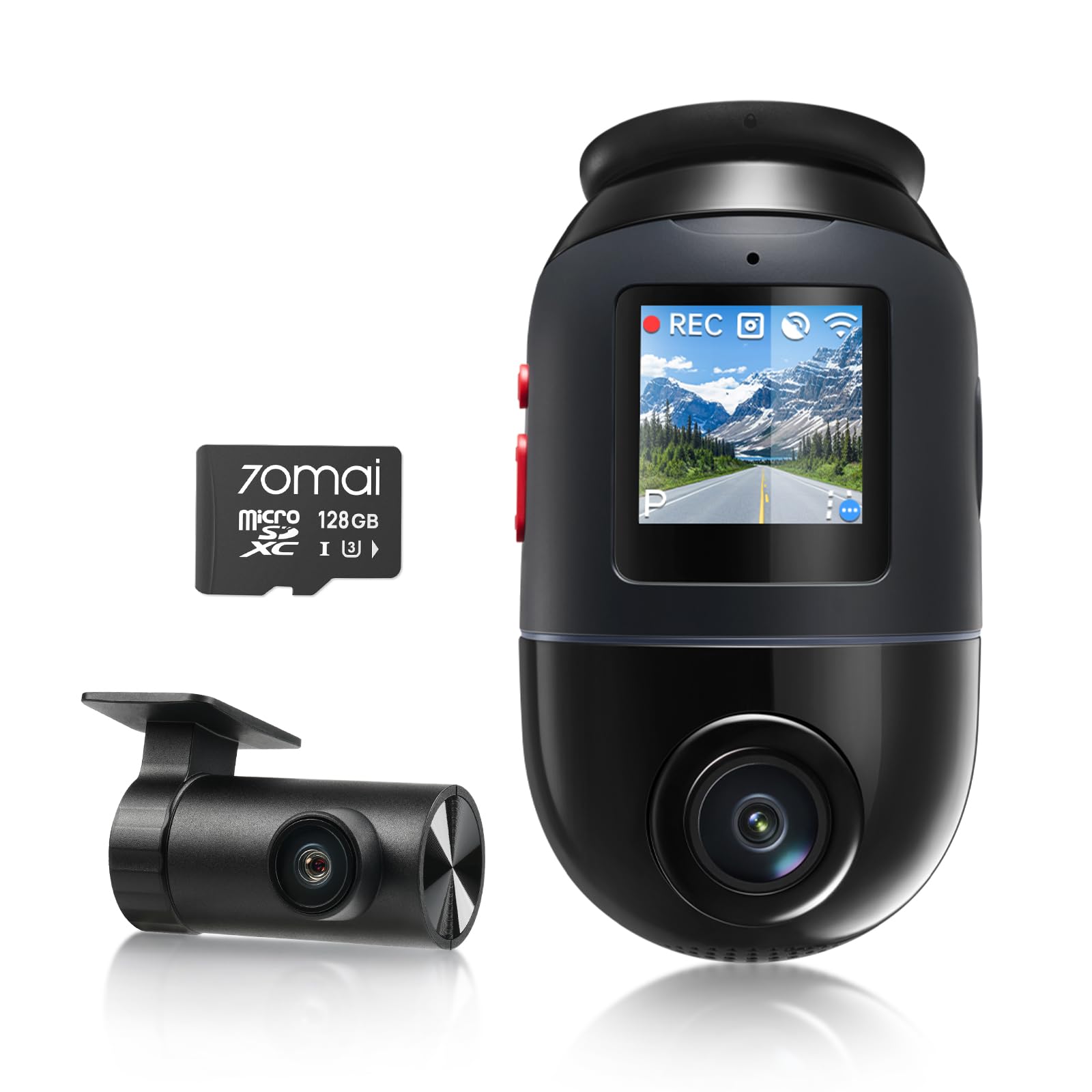
70mai Dash Cam 4K Omni X800 takes a different approach from a fixed-lens dashcam. Its lens rotates through 340 degrees and has a 146-degree field of view, providing 360-degree coverage as it turns.
The main camera records 4K, including 4K 60fps in single-channel mode and up to 4K 30fps in dual-channel mode. The Sony IMX678 sensor with STARVIS 2 night vision gives it a strong imaging base.
Connectivity includes 5GHz Wi-Fi 6 and optional 4G remote monitoring with a compatible hardwire kit. Parking features include AI motion detection, 24/7 parking guard and emergency video lock, making this the pick for drivers who want broader situational awareness.
Key highlights
- 4K main video recording
- 4K 60fps in single-channel mode and up to 4K 30fps in dual-channel mode
- Sony IMX678 sensor with STARVIS 2 night vision
- 340-degree motorized rotation
- 146-degree field of view provides 360-degree coverage as the camera turns
- 5GHz Wi-Fi 6 and optional 4G remote monitoring with compatible hardwire kit
Pros
- Motorized rotating camera can cover angles fixed dashcams miss
- Strong front 4K spec with STARVIS 2 sensor
- Modern Wi-Fi 6 and optional 4G features
- Good fit for people who also want travel-vlog style clips
Cons
- Moving camera is more mechanically complex than a fixed lens
- Remote monitoring requires extra hardware/service setup
- Dual-channel mode reduces the headline 4K 60 capability
Who it's for
Best for drivers who value side-angle and parked-car situational awareness more than a conventional fixed front and rear layout.
Skip if
Not the right choice for drivers who want a simple fixed camera with no moving parts.
Miofive S1 Ultra - Best low-cost dual 4K
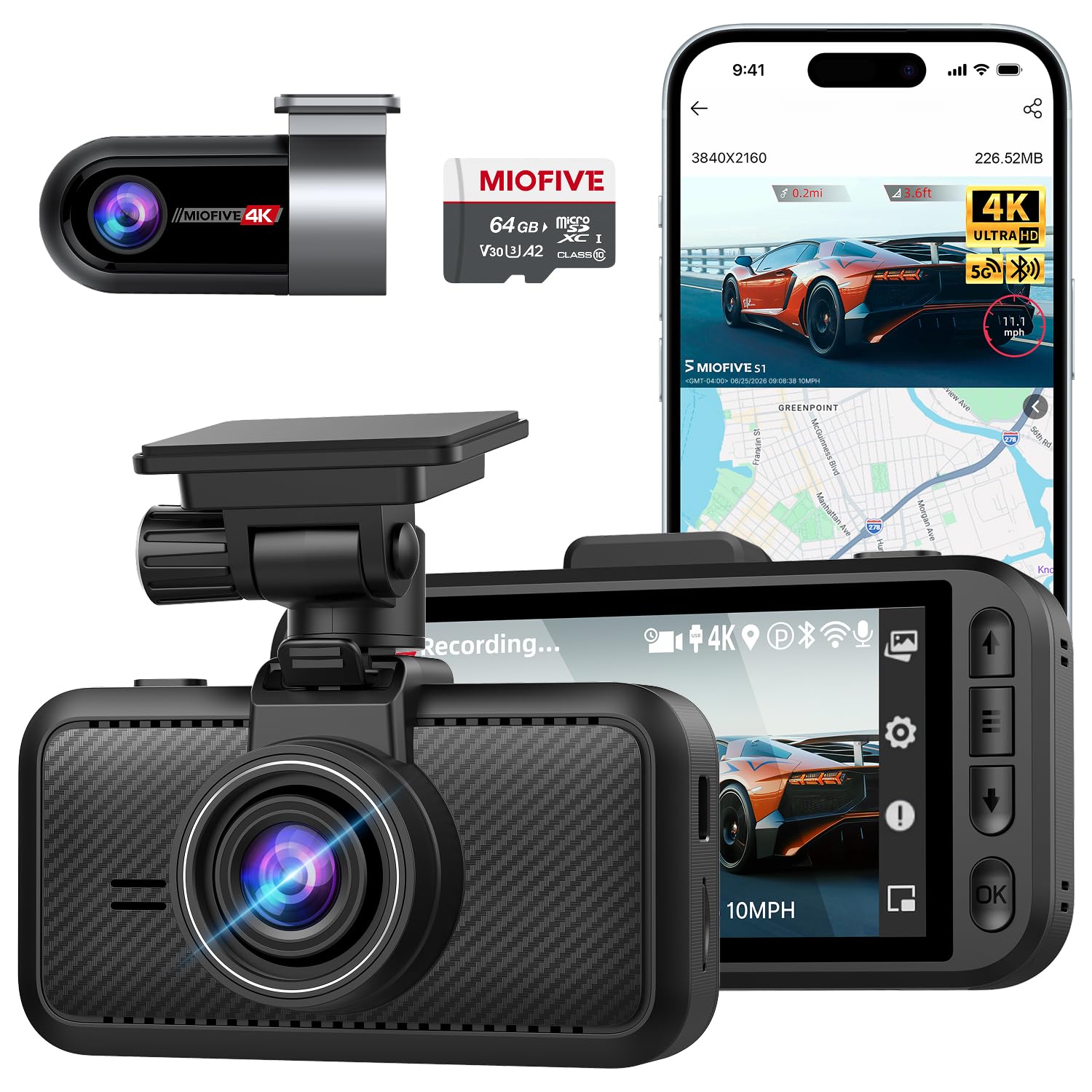
Miofive S1 Ultra is the low-cost dual 4K choice for shoppers who want high-resolution front and rear recording in one package. It records true dual 4K, with the front camera at 30fps and the rear camera at 24fps.
Daily use is helped by a 3-inch IPS smart screen, dual-band Wi-Fi across 5GHz and 2.4GHz, and Bluetooth 4.2. The optics include an F1.8 front lens and an F1.9 rear lens.
The supercapacitor design is well suited to hot-car use, and a 64GB card is included. The rear camera records at 24fps rather than 30fps, and the brand ecosystem is smaller than Garmin, VIOFO or Thinkware.
Key highlights
- True dual 4K recording with front 30fps and rear 24fps
- 3-inch IPS smart screen
- Dual-band Wi-Fi, 5GHz and 2.4GHz
- Bluetooth 4.2
- Front F1.8 lens and rear F1.9 lens
- Supercapacitor design and 64GB card included
Pros
- Very aggressive pricing for dual 4K coverage
- Includes a screen and memory card
- Dual-band Wi-Fi is convenient for clip transfer
- Supercapacitor design is preferable to a lithium battery in hot cars
Cons
- Rear 4K is 24fps rather than 30fps
- Brand ecosystem is smaller than Garmin, VIOFO or Thinkware
- App and support experience may matter more than specs at this tier
Who it's for
Best for drivers who want front and rear high-resolution recording for as little money as possible from a real brand.
Skip if
Not the best fit for shoppers who want the most proven long-term ecosystem or flagship parking features.
How to Choose
- Prioritize sensor and HDR, not just resolution. A true 4K label does not guarantee readable plates at night. STARVIS 2 sensors, HDR behavior and frame rate matter as much as pixel count.
- Choose the channel count around real risk. Front-only coverage is fine for minimal setups, front and rear coverage is the default for most drivers, and three or four channel systems make sense for rideshare, family monitoring or parked-car security.
- Plan parking mode before buying. Most useful parking modes require a hardwire kit, OBD power cable or battery pack. Without proper power, many dashcams only provide basic impact detection or no parked recording.
- Do not ignore storage. 4K and multi-channel recording fill cards quickly. Look for high-endurance microSD support, large capacity limits and easy clip downloads. Heavy users can benefit from SSD support.
- Check heat tolerance and power design. US cars can get very hot. Supercapacitor-based dashcams are generally preferable to battery-based models for long-term windshield use.
- Treat cloud features as a subscription decision. Remote live view, alerts, LTE and cloud backup can be valuable, but they often require extra hardware, data plans or monthly subscriptions.
Do I need 4K in a dashcam?
Not always. A good 2K dashcam with HDR and a modern sensor can outperform a poor 4K camera, but true 4K helps when you need to crop into plates or signs.
Is a front-and-rear dashcam worth it?
For most shoppers, yes. Rear coverage can document rear-end crashes, hit-and-runs and tailgating that a front-only camera misses.
Will parking mode drain my car battery?
It can if installed poorly. Use the maker's hardwire kit, OBD cable or dashcam battery pack with low-voltage cutoff to reduce that risk.
Should I use any microSD card?
No. Use a high-endurance card that meets the dashcam maker's capacity and speed requirements. Ordinary cards can fail under constant loop recording.
Are dashcams legal in the US?
Generally yes, but windshield mounting position and audio recording consent rules vary by state. Mount it where it does not obstruct your view and understand local audio-consent laws before recording cabin conversations.
Published July 27, 2026 Last updated September 15, 2026
Share this article
More in News
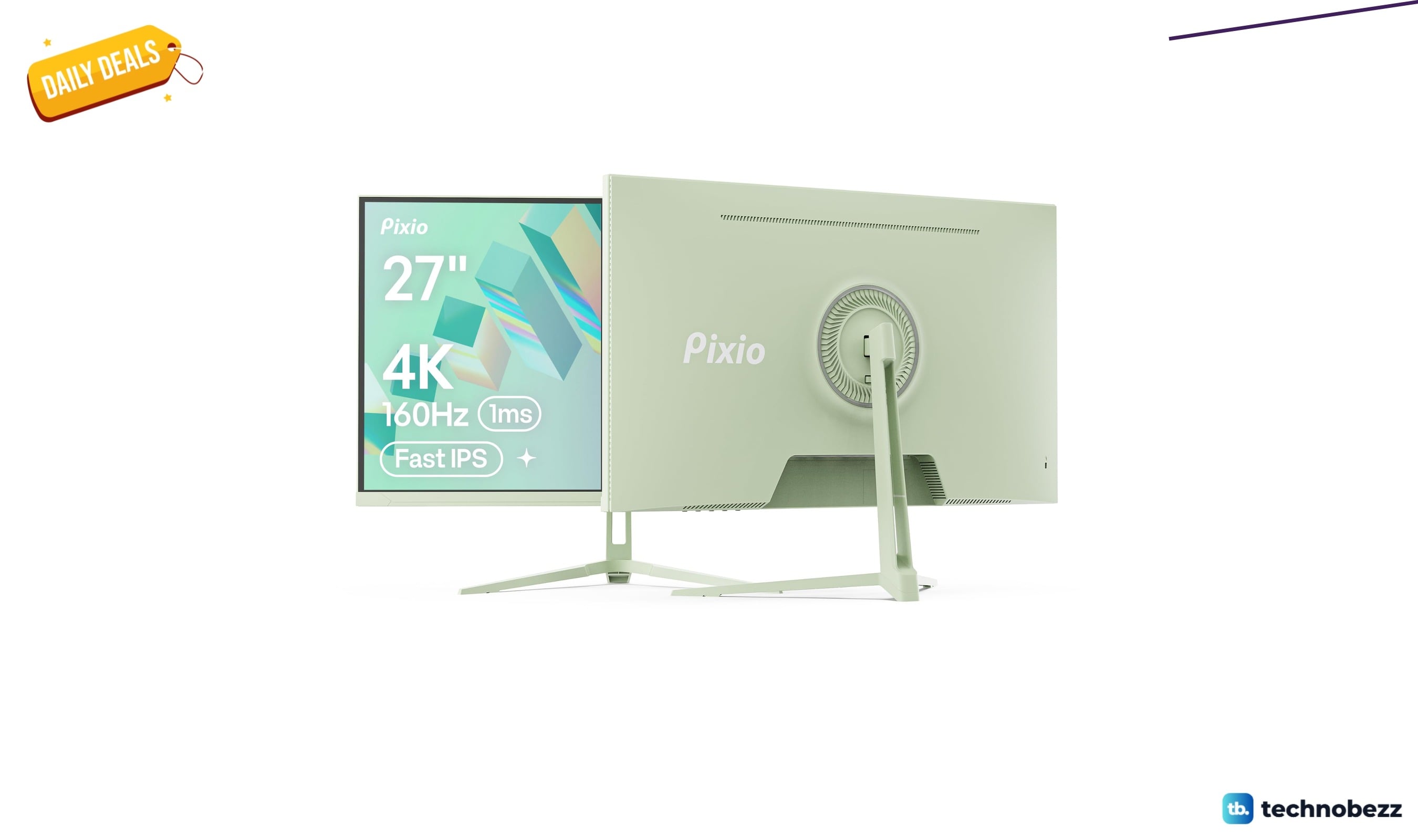
Pixio PX27U Wave Mint Green Refresh Rate now $299.99, down from $499.99
Save 40 percent on the Pixio PX27U Wave Mint Green, a 27-inch 4K 160Hz gaming monitor now $299.99 at Amazon.
5 min read
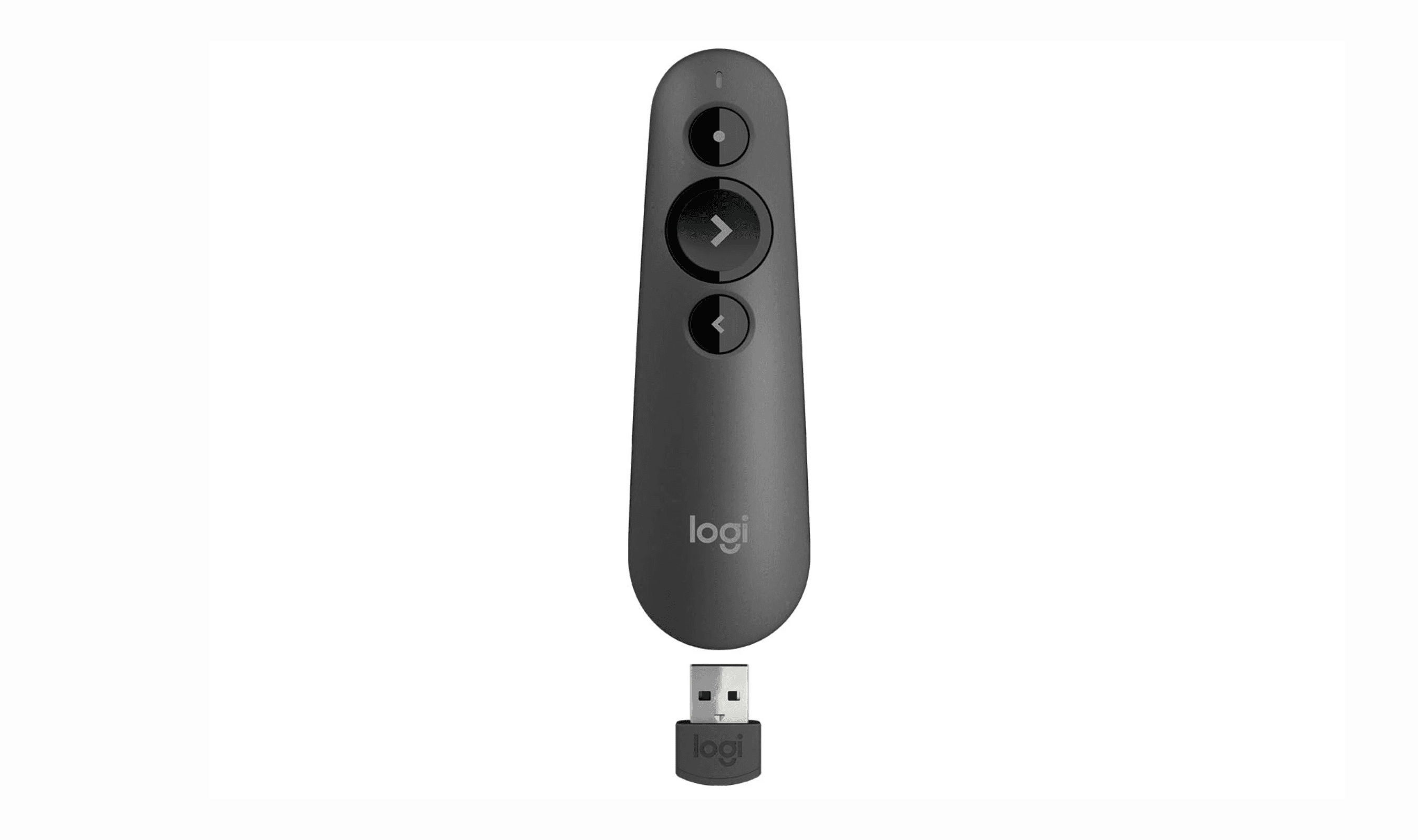
7 Best Wireless Presenters for 2026
The Logitech R500s leads our wireless presenter picks, with options from about $22 to $112 covering Bluetooth clickers, green-laser pointers, and Teams-ready remotes.
4 min read
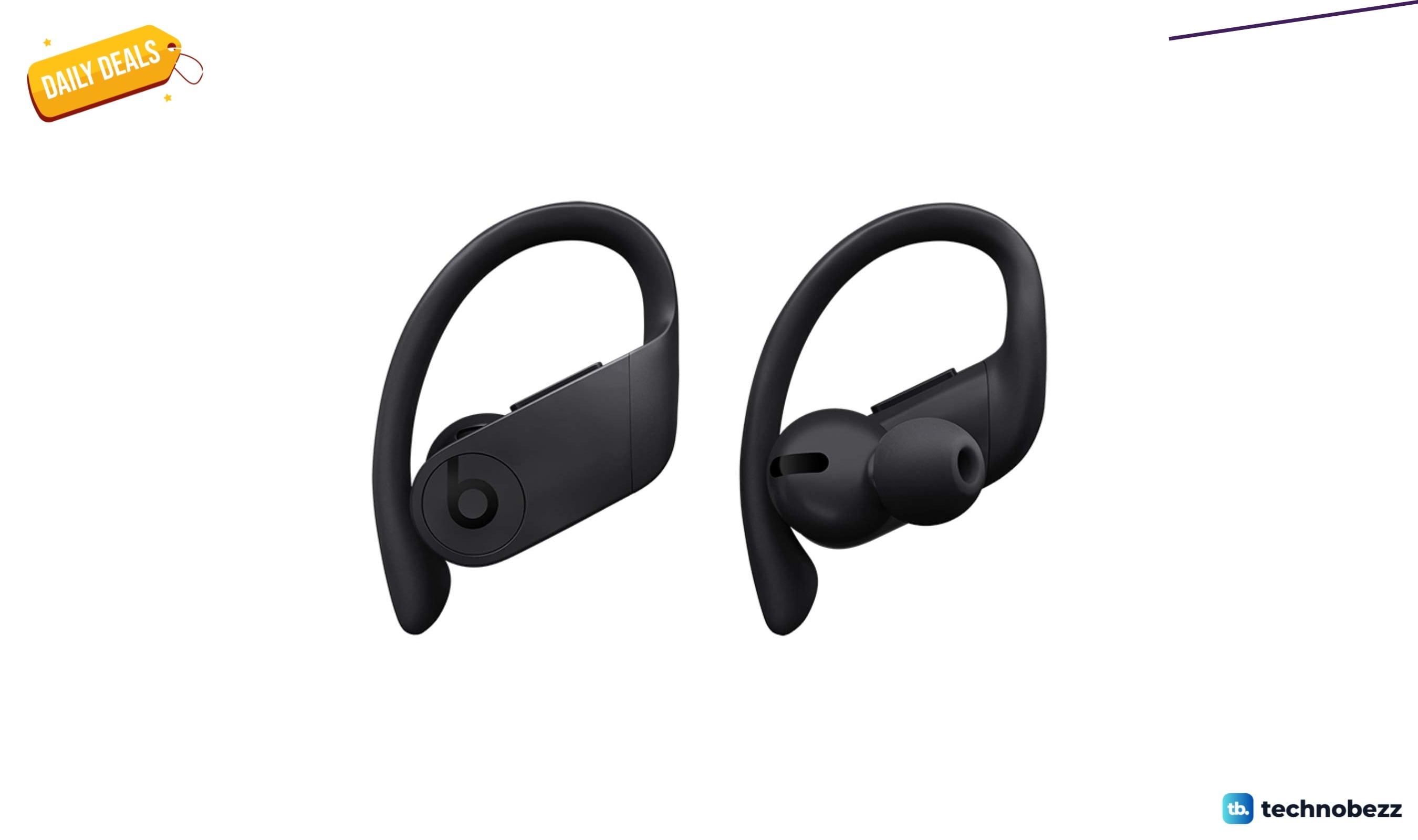
Powerbeats Pro Wireless Earphones Apple H1 Headphone down to $137.63 in latest price cut
Powerbeats Pro hit their lowest price ever at $137.63 on Amazon, a 38% drop from the usual $223.54 for these sweat-resistant earbuds.
4 min read
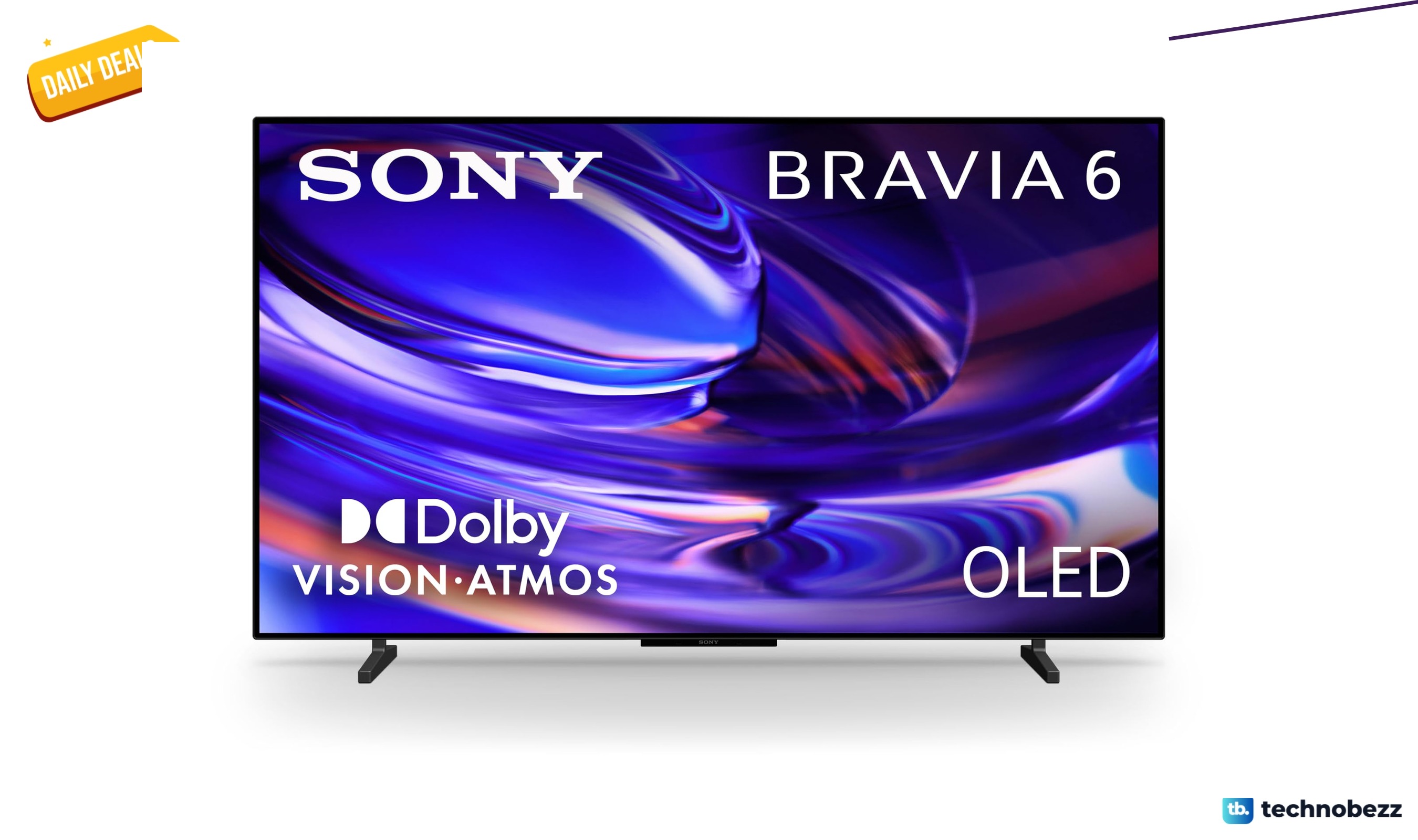
Sony 48-inch BRAVIA 6 OLED 4K HDR drops to $1098, its lowest price yet
Sony's 48-inch BRAVIA 6 OLED hits $1098, a new low that undercuts its $1299.99 list price by $201.99.
5 min read
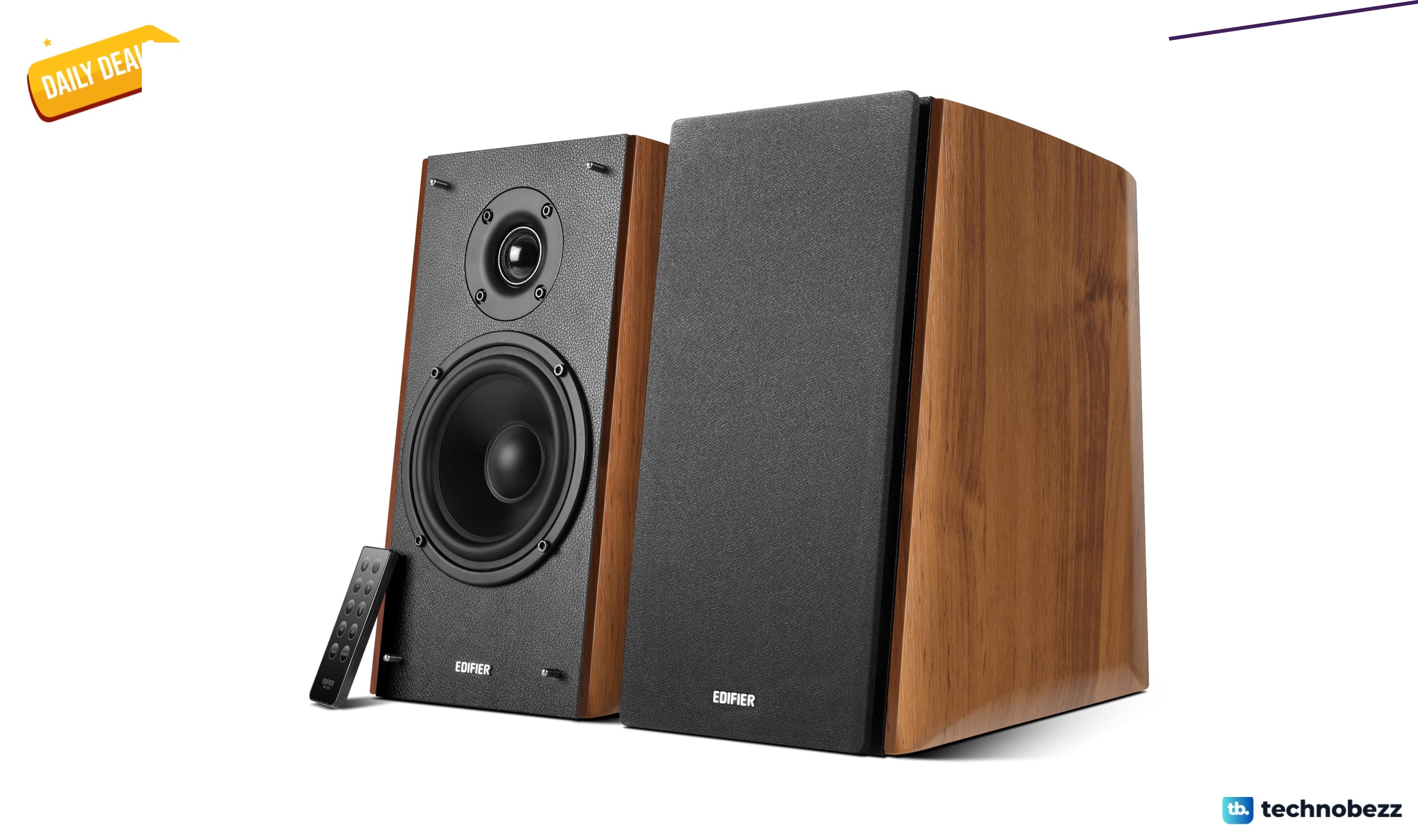
Edifier R2000DB Powered Bluetooth Bookshelf Speakers price drops to $299.98
4 min read
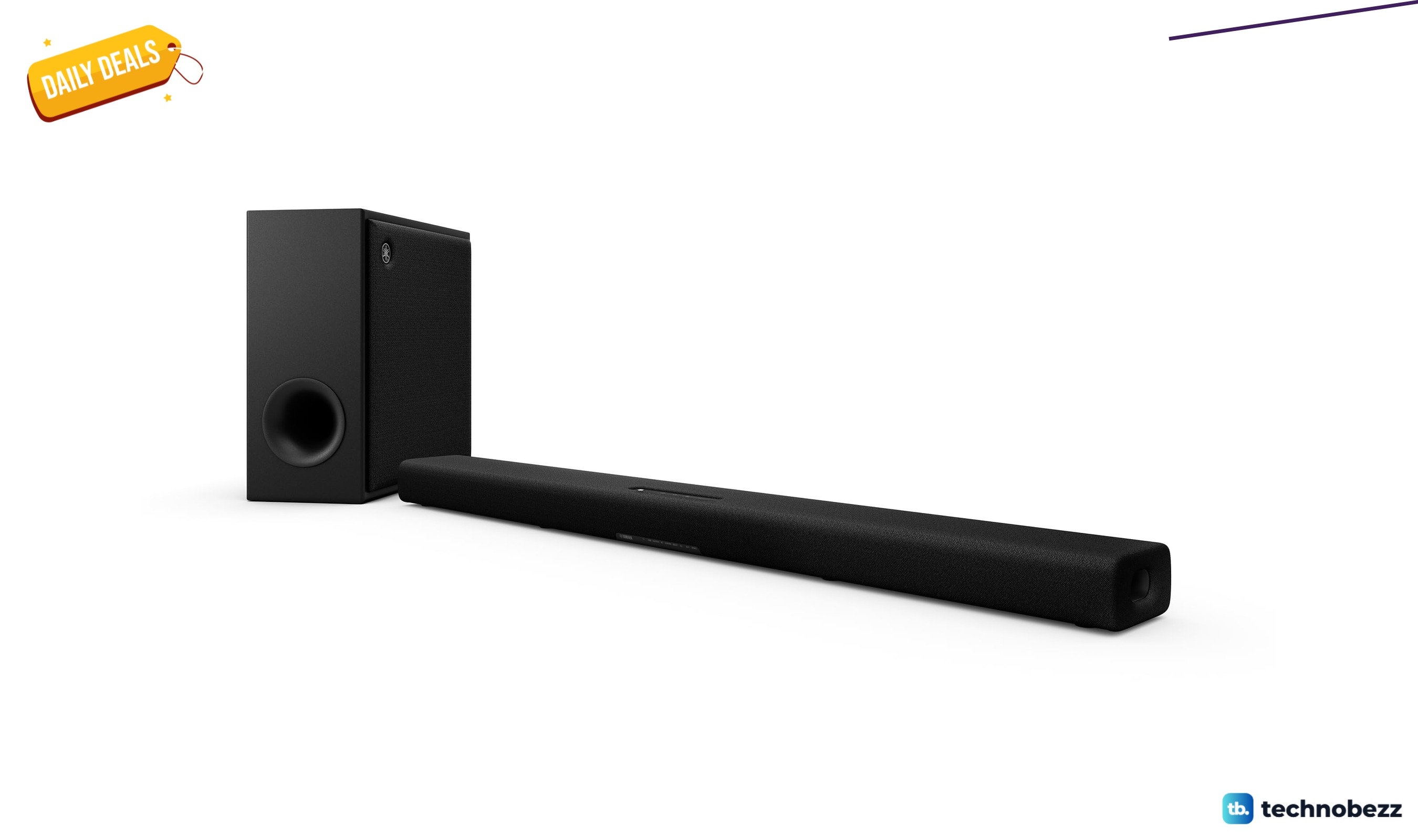
Yamaha True X Bar 50A Dolby Atmos hits new low at $199.99
3 min read
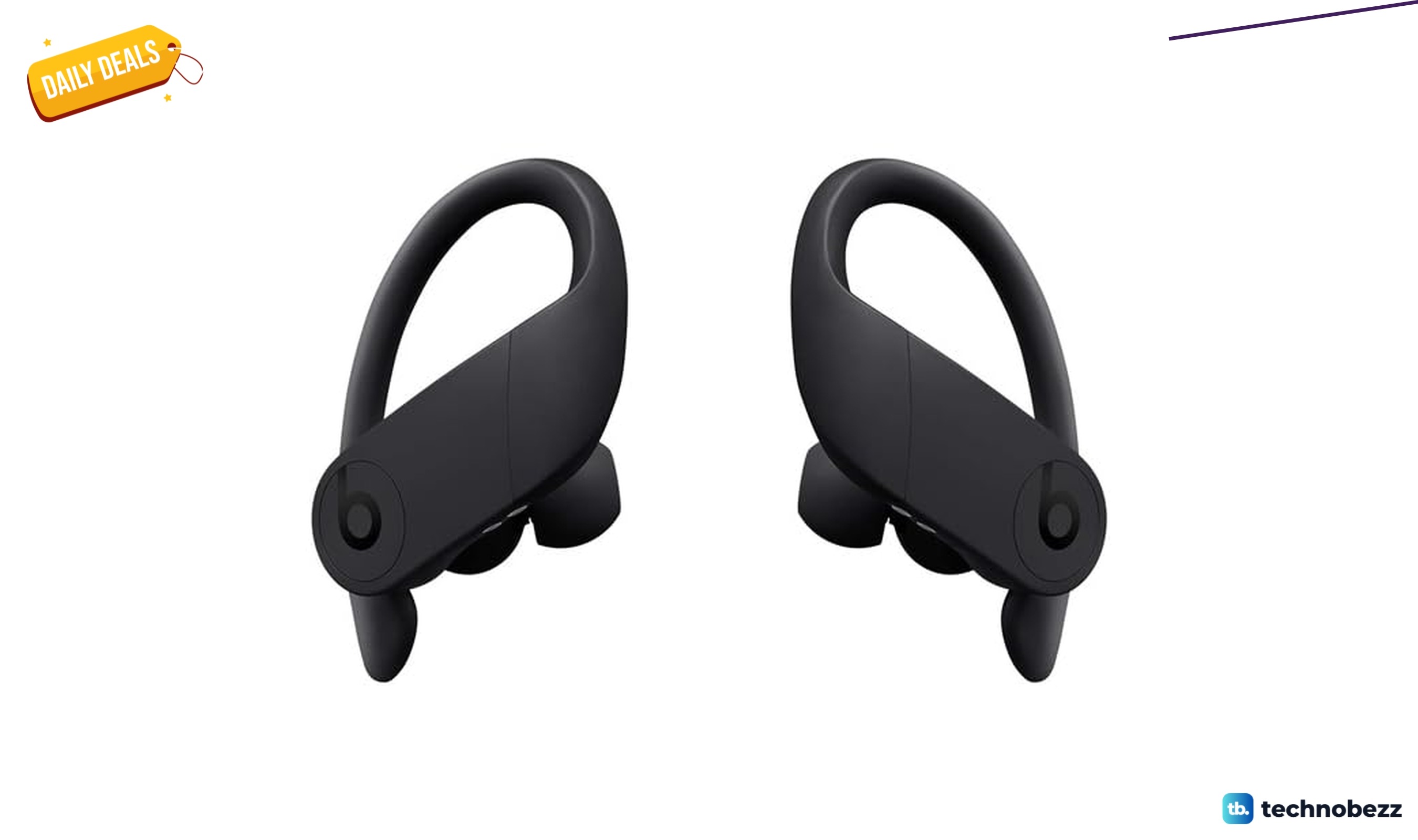
Beats Powerbeats Pro Wireless Earbuds are $99.99 at Woot
5 min read
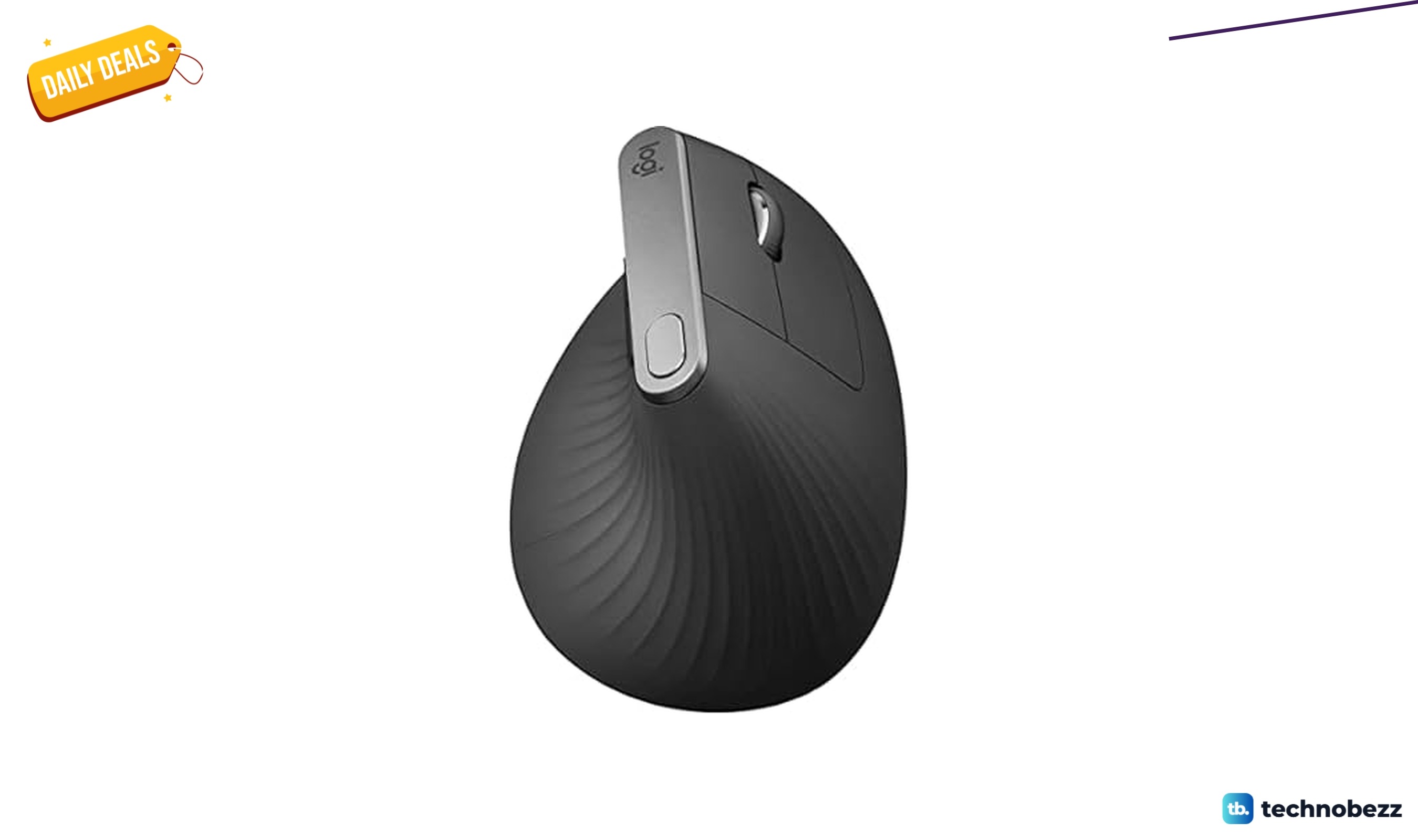
Logitech MX Vertical Wireless Mouse is $64.99 at Woot
4 min read
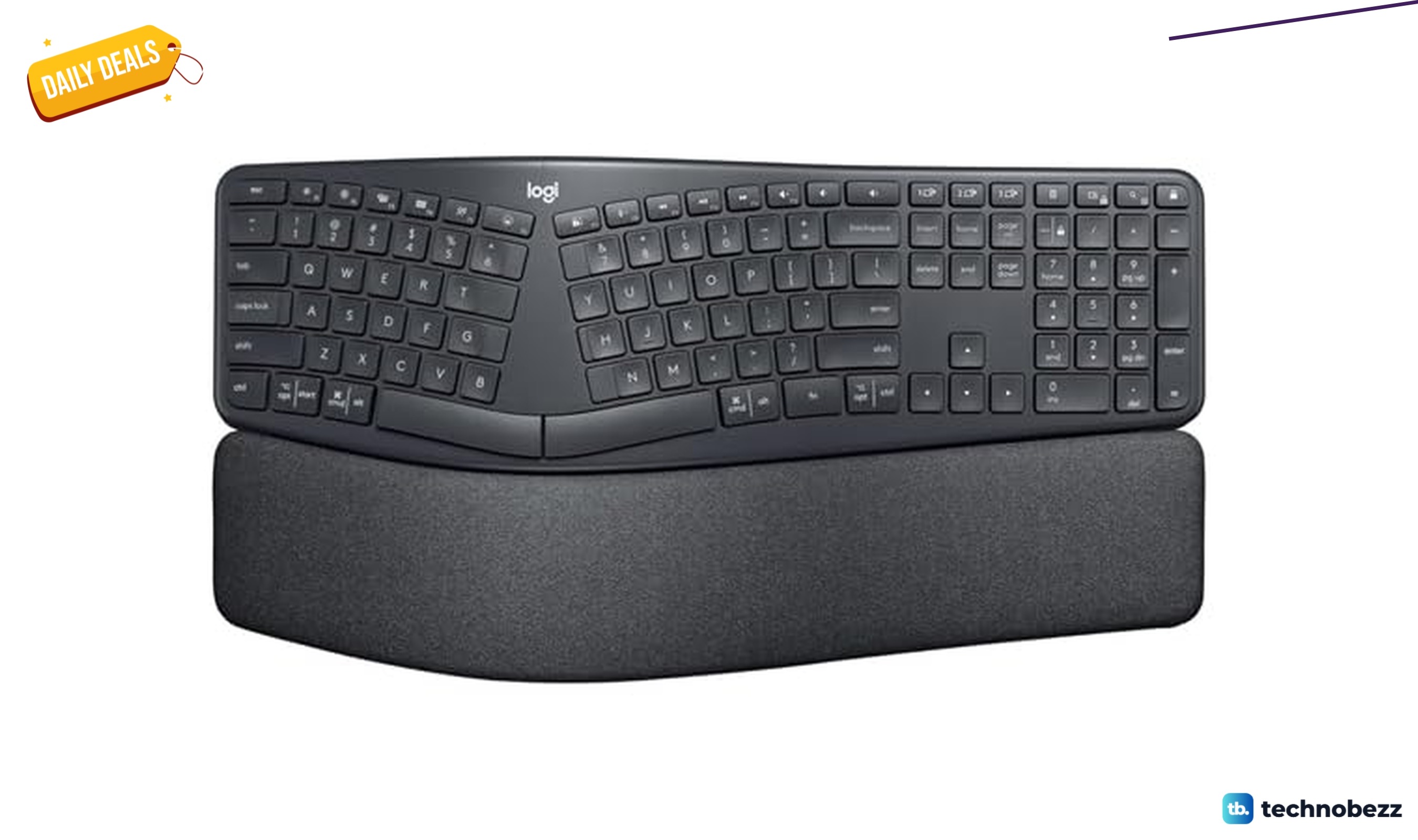
Logitech ERGO K860 Wireless Ergonomic Keyboard is $109.99 at Woot
3 min read
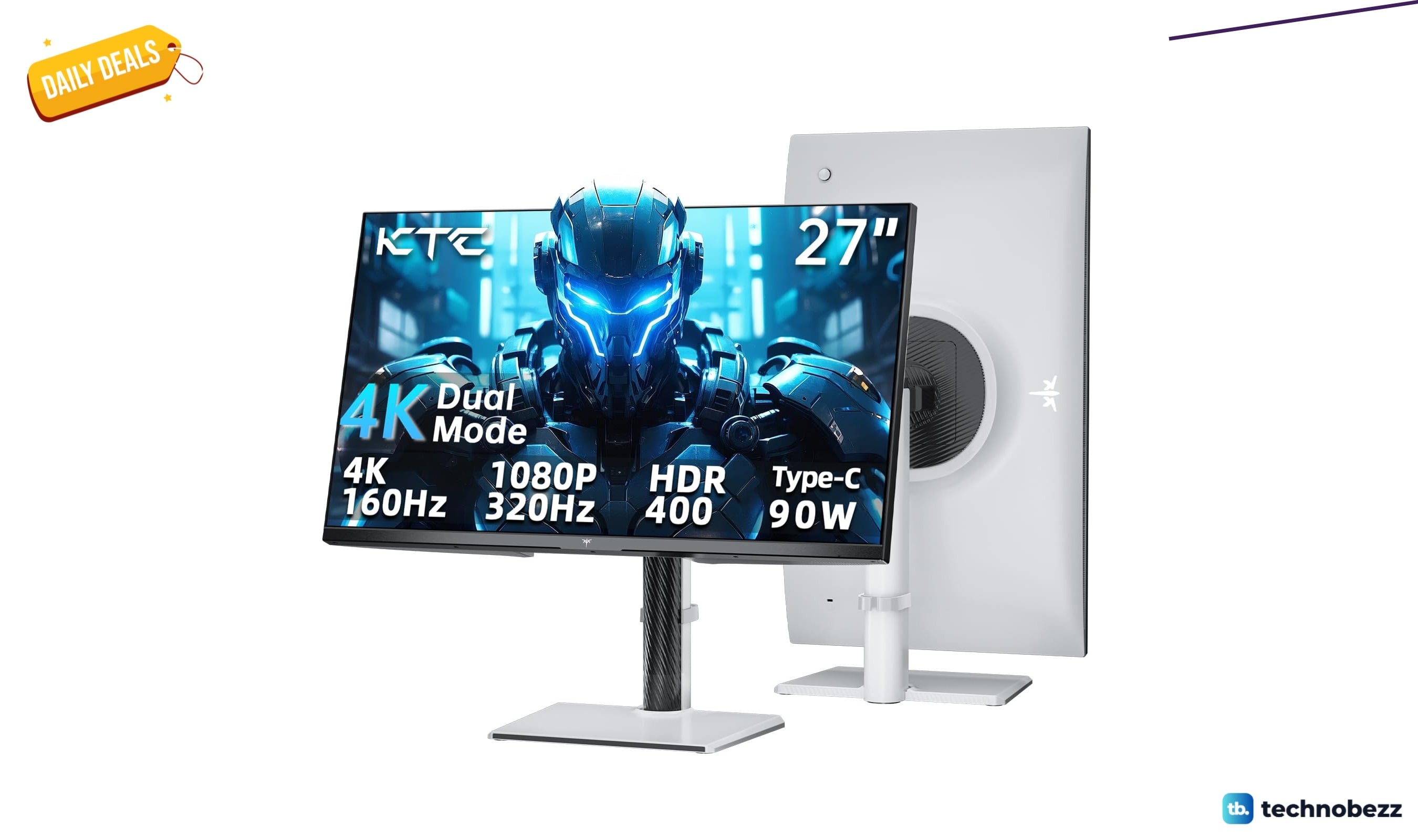
KTC Gaming Monitor 4K falls to $260.08
5 min read
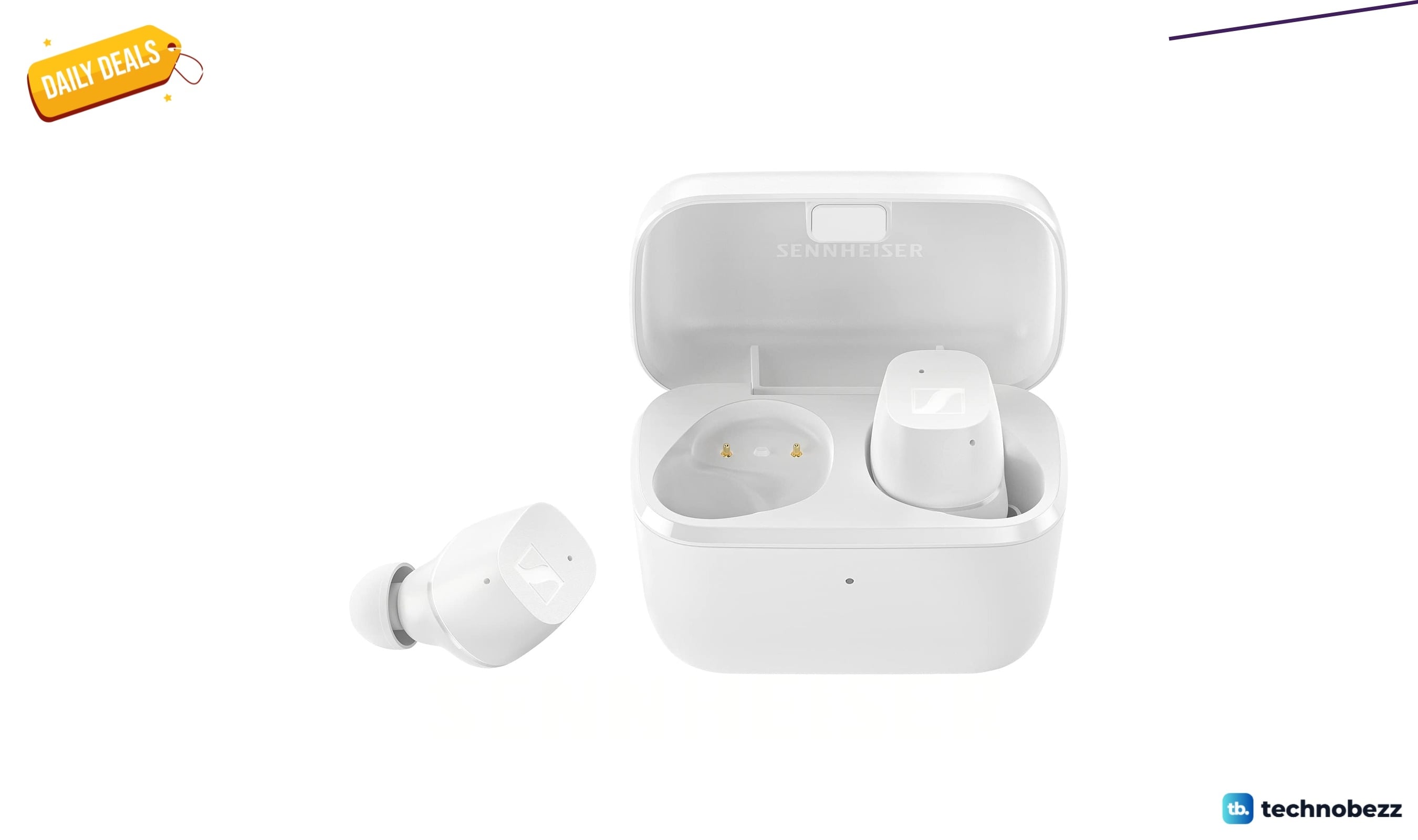
Sennheiser Consumer Audio CX True Wireless Earbuds drops to $74.95
3 min read
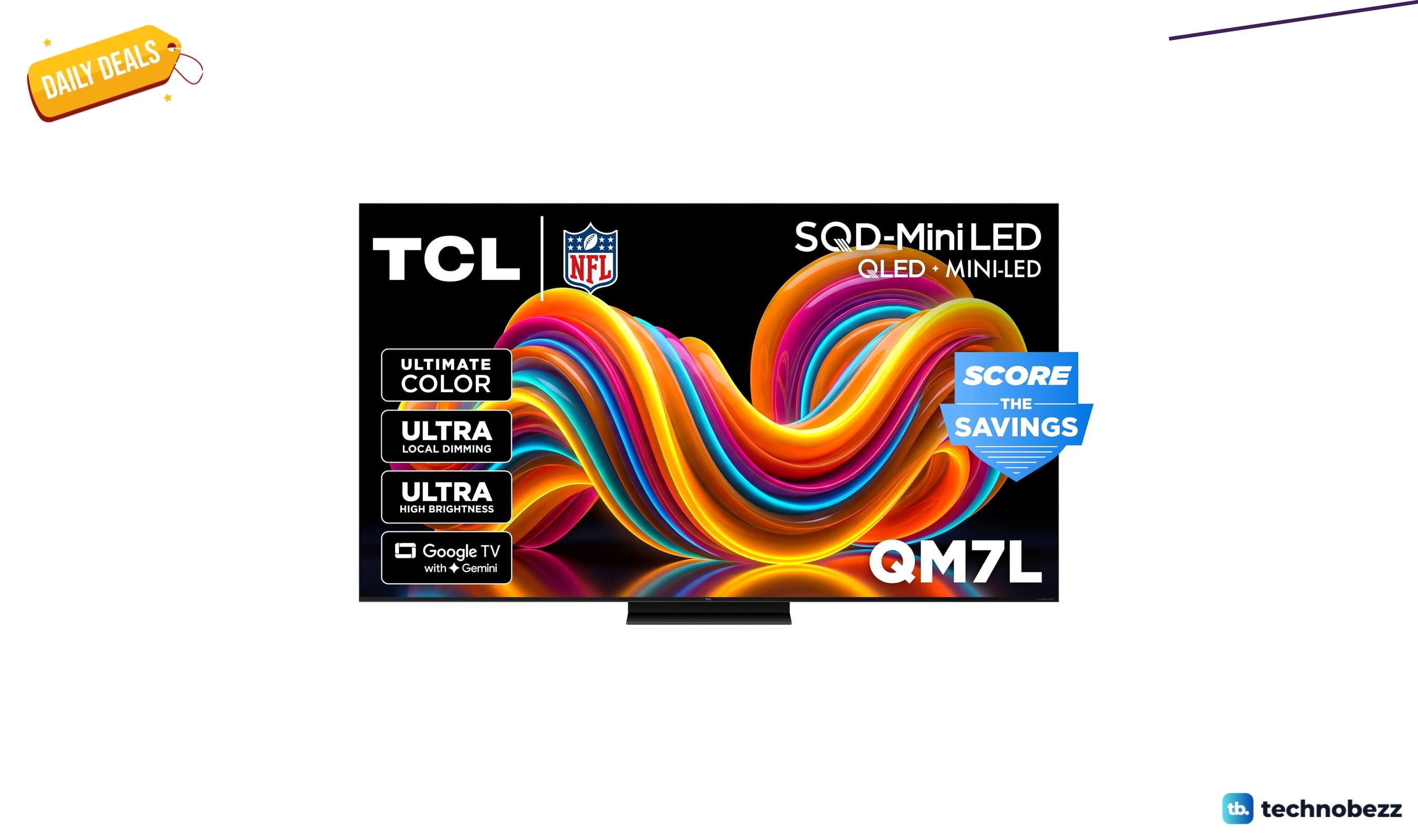
TCL 75-inch QM7L SQD-Mini-LED QLED TV 75QM7L gets a $754.14 price cut to $1245.85
3 min read