A front and rear dash cam gives you a clearer record of what happened around the vehicle, not just what happened through the windshield. The strongest systems combine sharp forward capture with rear footage that is detailed enough to support a claim.
Technobezz is supported by its audience. We may get a commission from retail offers.
7 Best Front and Rear Dash Cams in 2026
The VIOFO A329S 2CH is our top front and rear dash cam pick for sharp 4K front video, 2K rear coverage, and flexible storage.
T
Technobezz
Editorial Team
Updated July 18, 2026Jul 18, 2026
•12 min read

Get Deals Like These in Your Inbox
The best prices, checked by our editors.
The VIOFO A329S 2CH is the best overall pick because it pairs 4K front recording at up to 60 fps with true 2K rear video, Sony STARVIS 2 sensors, Wi-Fi 6, built-in GPS, and support for both microSD and external SSD storage.
This list covers two-channel and three-channel systems for daily driving, parking surveillance, cloud access, cabin coverage, and easier touchscreen control.
At a Glance
| Category | Product | Why We Picked It |
|---|---|---|
| Best overall | VIOFO A329S 2CH | Best mix of 4K front clarity, true 2K rear coverage, and flexible storage |
| Best value | VIOFO A229 Plus 2CH | Strong 2K front and 2K rear coverage with STARVIS 2 sensors on both channels |
| Best for rear-camera detail | VIOFO A229 Ultra 2CH | Dual 4K recording gives the rear camera serious evidence value |
| Best for parking surveillance | Thinkware U3000 Pro Front and Rear | Radar-assisted parking features make it a strong parked-car monitor |
| Best three-channel system | 70mai Dash Cam 4K T800 Premium Set | Front, rear, and cabin recording without giving up 4K rear footage |
| Best for built-in LTE cloud | BlackVue DR970X-2CH LTE Plus II | Built-in LTE keeps cloud access cleaner than hotspot-based setups |
| Best touchscreen front-and-rear cam | Cobra SC 400D | A large touchscreen and smart-driver features make daily operation easier |
How we chose
We chose front and rear dash cams by prioritizing evidence quality from both directions, not just headline front-camera resolution. Key criteria included front and rear recording specs, sensor quality, HDR support, storage capacity, parking-mode capability, connectivity, installation complexity, and the clearest fit for common buyer needs such as rear-end evidence, parked-car monitoring, cloud access, and cabin recording.
The best dash cam fronts and rear right now
VIOFO A329S 2CH - Best overall
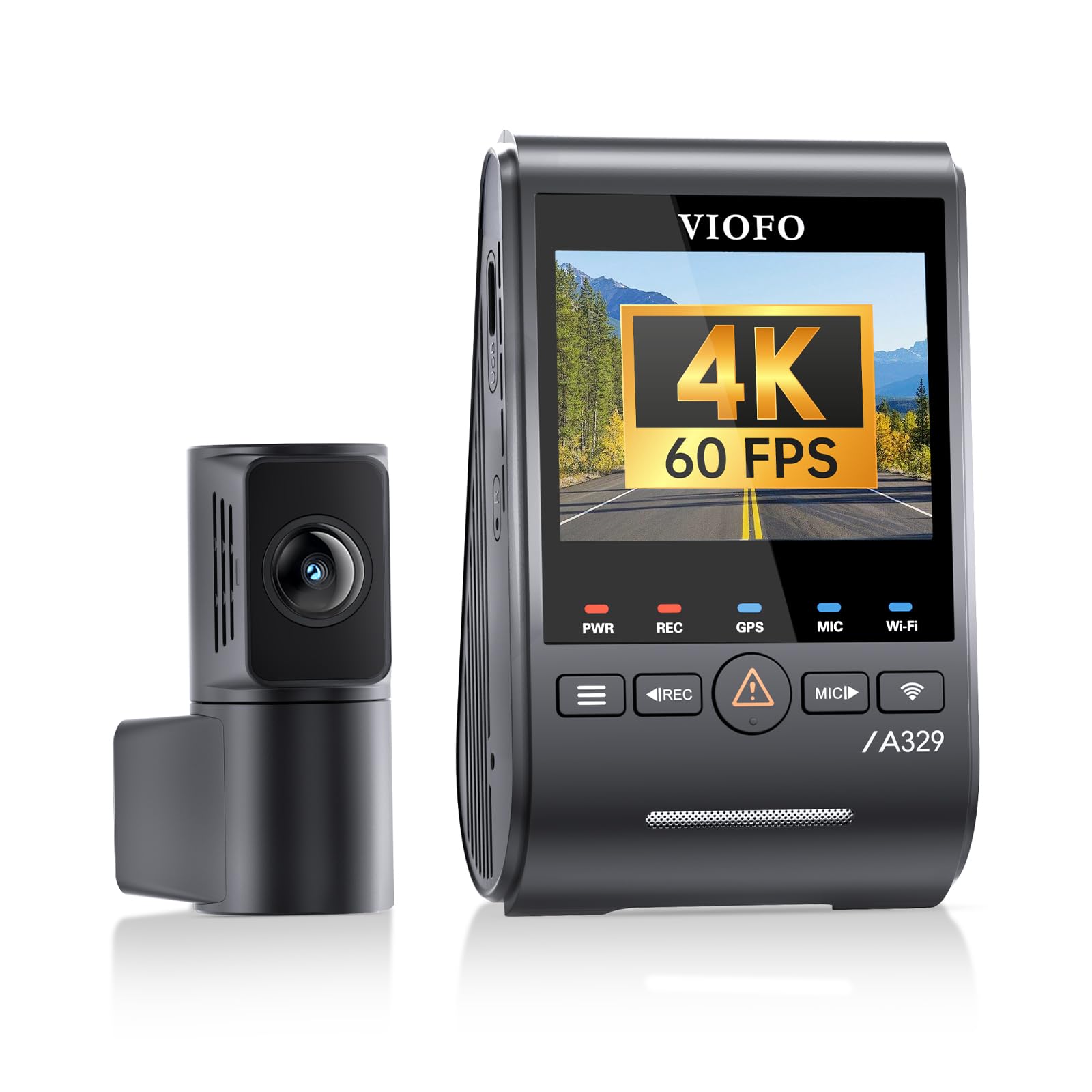
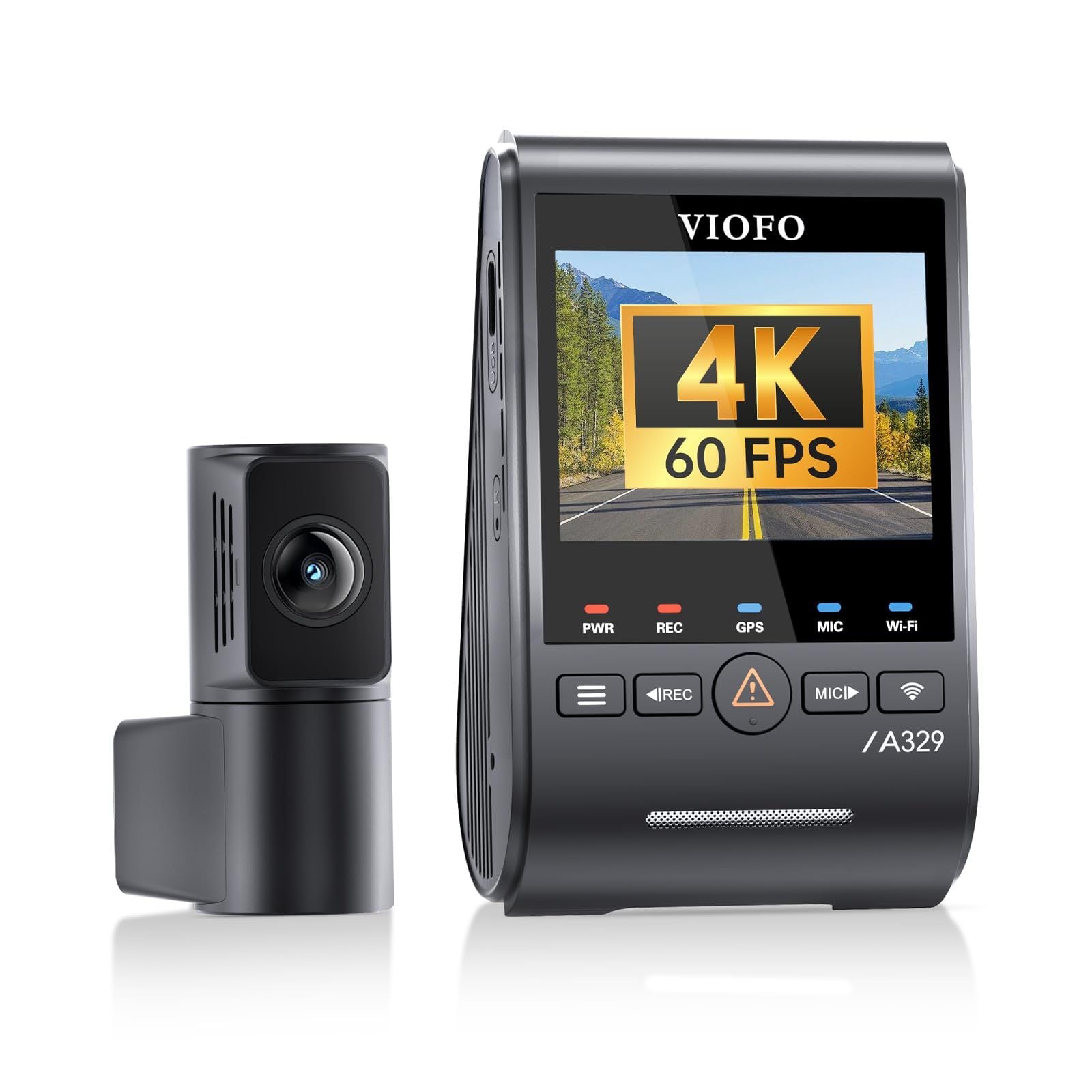
The VIOFO A329S 2CH gives drivers the strongest overall evidence setup in this group. The front camera records 4K 3840x2160 at up to 60 fps, while the rear camera captures 2K 2560x1440 at 30 fps.
Its sensor setup is just as important as the resolution. The front camera uses a Sony STARVIS 2 IMX678 1/1.8-inch 8MP sensor, and the rear camera uses a Sony STARVIS 2 IMX675 1/2.8-inch 5MP sensor.
Storage is another major advantage. The A329S supports up to 512GB microSD plus external SSD storage up to 4TB, along with Wi-Fi 6, built-in GPS, voice control, and Bluetooth remote support.
Key highlights
- 2-channel front plus rear system
- Front 4K 3840x2160 at 60 fps
- Rear 2K 2560x1440 at 30 fps
- Front Sony STARVIS 2 IMX678 sensor
- Rear Sony STARVIS 2 IMX675 sensor
- Up to 512GB microSD plus external SSD support up to 4TB
Pros
- Excellent front detail with 4K/60 for motion clarity
- Rear camera is a true 2K STARVIS 2 unit, not a token 1080p add-on
- Flexible storage, including SSD support for long recording windows
- Strong parking-mode feature set with the right hardwire kit
Cons
- Expensive for a two-channel dash cam
- SSD and hardwire accessories add cost
- 60 fps and HDR mode choices require configuration tradeoffs
Who it's for
Drivers who want the strongest front and rear evidence camera for daily driving and road trips.
Skip if
Choose something simpler if you want the lowest upfront price or a basic plug-and-go camera.
VIOFO A229 Plus 2CH - Best value
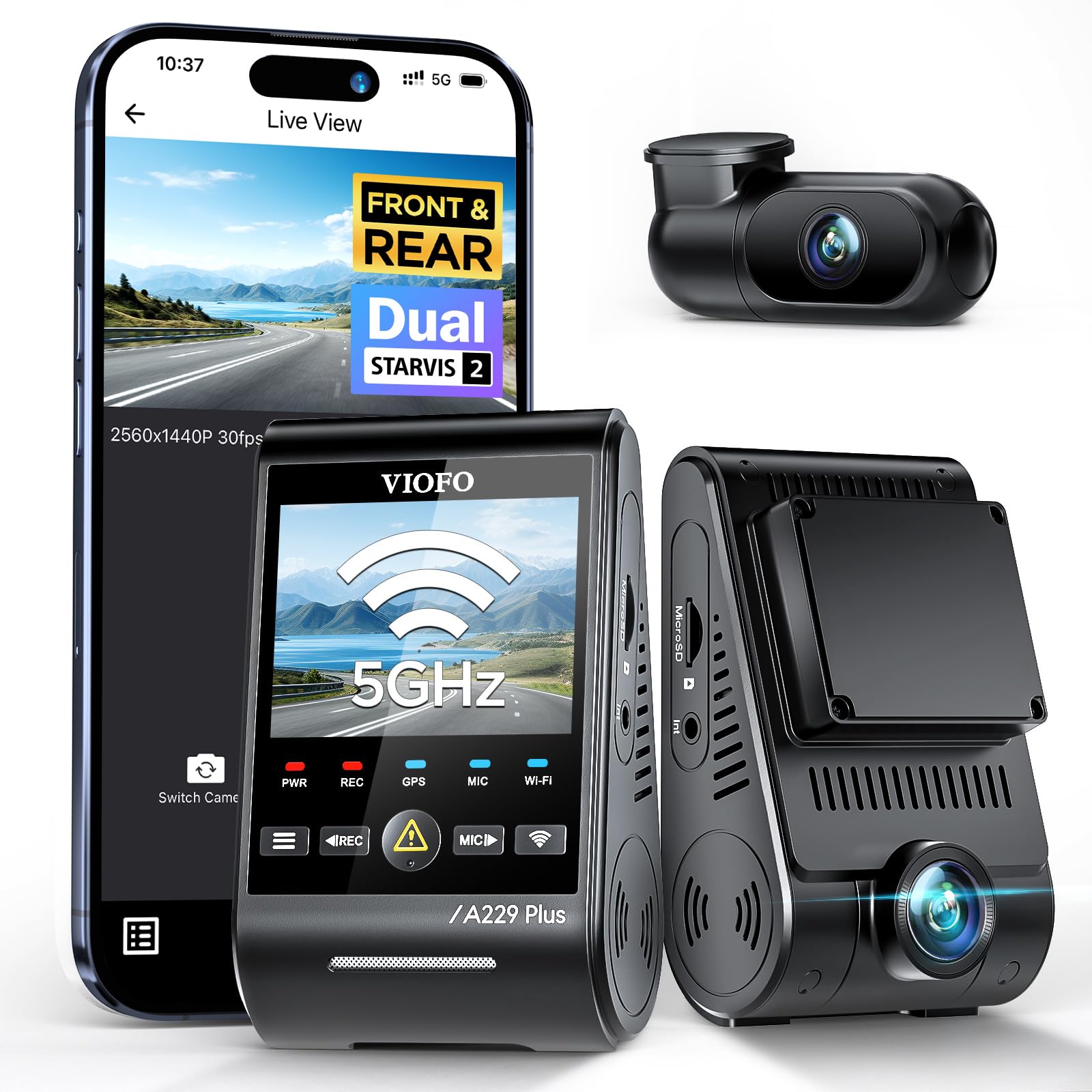
The VIOFO A229 Plus 2CH is the balanced pick for drivers who want serious front and rear coverage without moving to a flagship dual 4K setup. It records front 2K 2560x1440 video at up to 60 fps and rear 2K 2560x1440 video at 30 fps.
Both channels use Sony STARVIS 2 IMX675 1/2.8-inch 5MP sensors, and both support HDR. That gives the rear camera real evidence value instead of making it a basic backup view.
The A229 Plus also covers the daily-driver essentials with built-in GPS, 5GHz Wi-Fi, voice control, parking modes, and support for up to 512GB microSD storage.
Key highlights
- 2-channel front plus rear system
- Front 2K 2560x1440 up to 60 fps
- Rear 2K 2560x1440 at 30 fps
- Front and rear Sony STARVIS 2 IMX675 sensors
- Front and rear HDR supported
- Up to 512GB microSD storage
Pros
- Balanced 2K front and 2K rear video for the money
- STARVIS 2 sensors on both channels
- Built-in GPS, 5GHz Wi-Fi, voice control, and parking modes
- Lower cost than dual-4K and 4K/60 systems
Cons
- No native 4K front capture
- CPL filters are optional rather than fully bundled
- Less future-proof than the A329S or A229 Ultra
Who it's for
Drivers who want a dependable front and rear setup without paying premium flagship prices.
Skip if
Choose a 4K model if you specifically want 4K license-plate detail from the front camera.
VIOFO A229 Ultra 2CH - Best for rear-camera detail
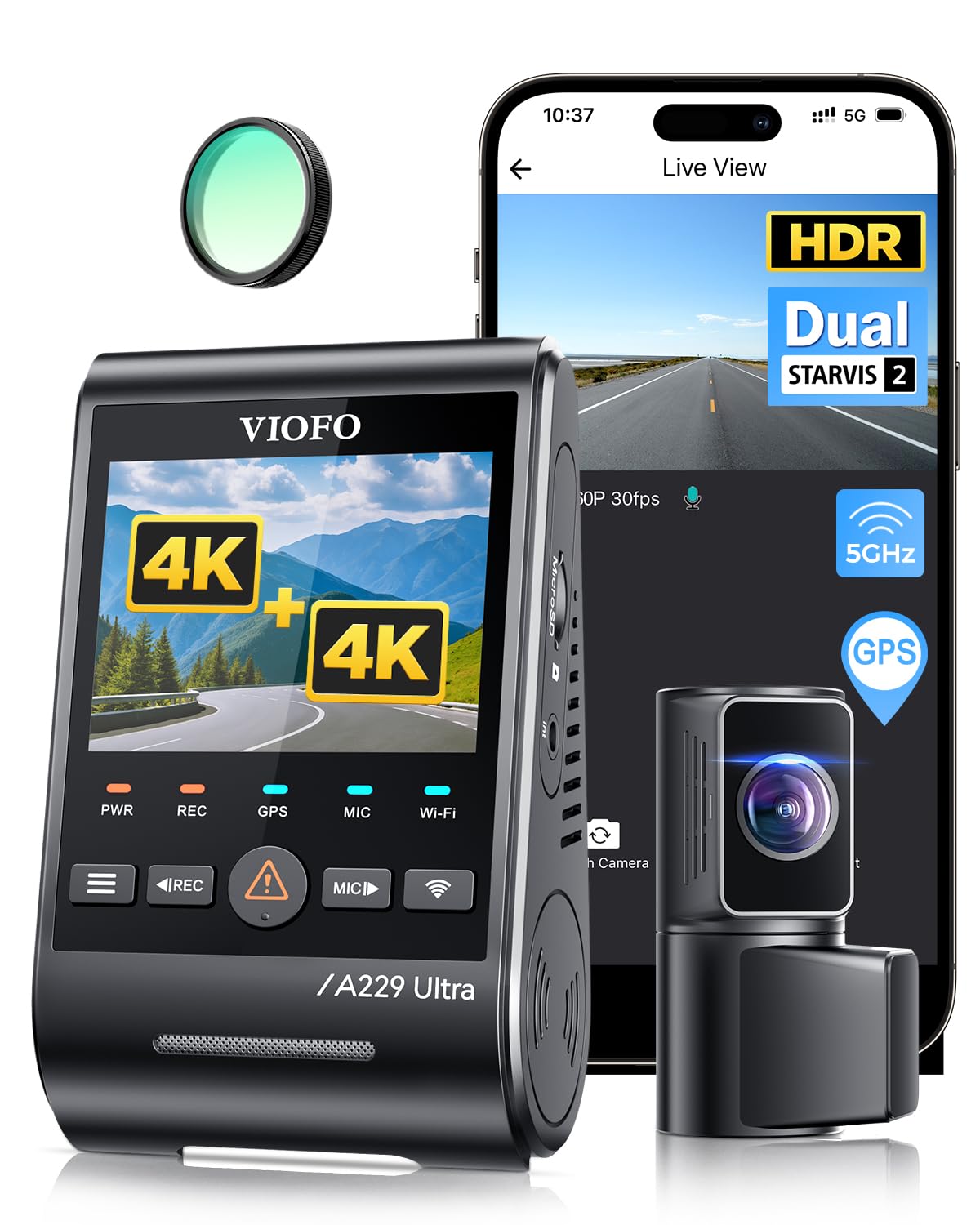
The VIOFO A229 Ultra 2CH puts the rear camera on the same resolution tier as the front. It records 4K at 30 fps from both channels, making it the VIOFO pick here for rear-end detail.
The hardware is matched front and back, with Sony STARVIS 2 IMX678 1/1.8-inch 8MP sensors on both cameras. Front and rear HDR support adds useful coverage for difficult lighting.
Dual 4K video demands more storage, and this model supports up to 512GB microSD. It is the sharper choice when rear-camera clarity matters more than keeping file sizes small.
Key highlights
- 2-channel front plus rear system
- Front 4K 30 fps recording
- Rear 4K 30 fps recording
- Front and rear Sony STARVIS 2 IMX678 sensors
- Front and rear HDR supported
- Up to 512GB microSD storage
Pros
- True 4K capture on both front and rear channels
- Same high-grade IMX678 sensor front and back
- Good fit for rear-end evidence and plate detail behind the car
- Keeps VIOFO's GPS, Wi-Fi, voice control, and buffered parking modes
Cons
- Large dual-4K files eat card space quickly
- Costs more than the A229 Plus
- No 4K/60 front mode like A329S
Who it's for
Drivers who want rear-camera clarity to sit almost level with front-camera clarity.
Skip if
Choose a lower-file-size system if storage cost and file management matter more than dual 4K detail.
Thinkware U3000 Pro Front and Rear - Best for parking surveillance
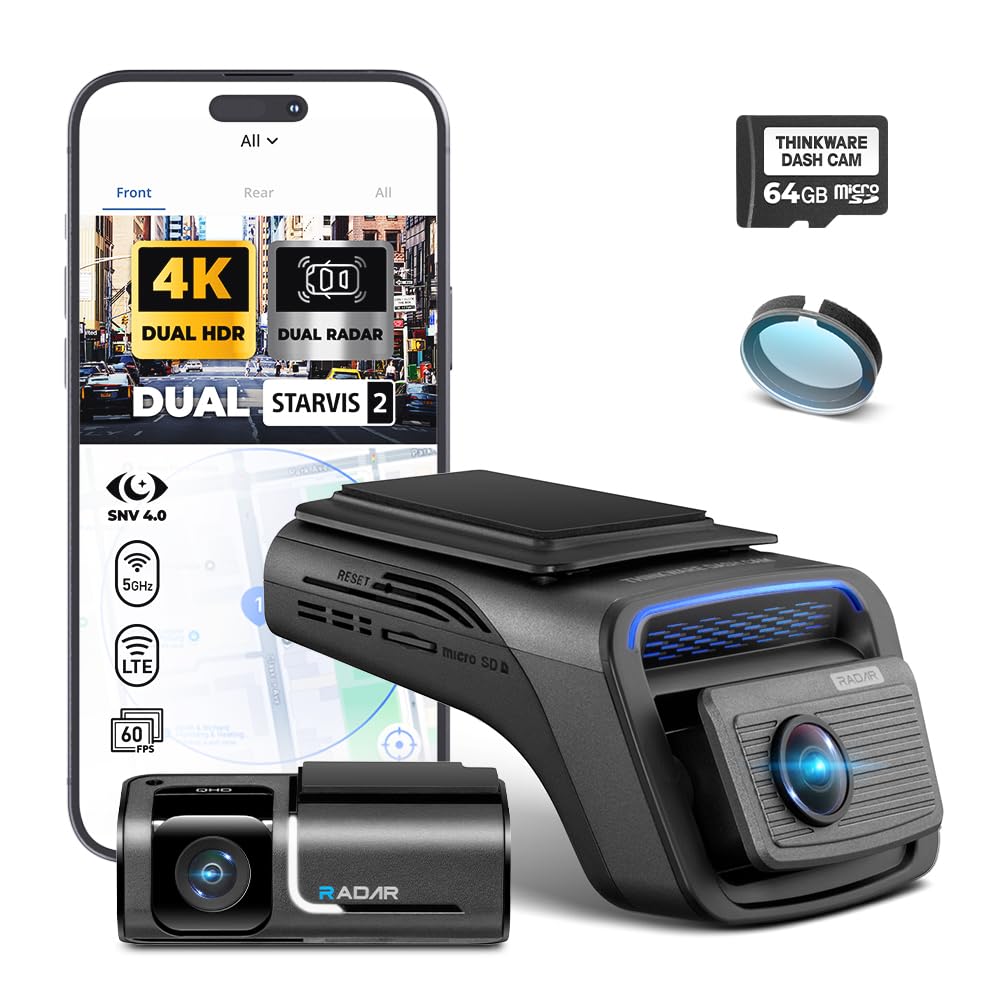
Parking surveillance is where the Thinkware U3000 Pro Front and Rear earns its slot. It includes built-in dual radar, Smart Parking Mode, motion and impact detection, time lapse, and energy-saving mode.
Driving footage remains strong. The front camera records 4K UHD 3840x2160 at 30 fps or 2K QHD 2560x1440 at 60 fps, while the rear camera records 2K QHD 2560x1440 at 30 fps.
Thinkware also includes front Sony STARVIS 2 IMX678 and rear Sony STARVIS 2 IMX675 sensors, dual HDR, built-in Bluetooth, Wi-Fi, and GPS. An optional LTE module adds connected services.
Key highlights
- Front 4K UHD 3840x2160 at 30 fps
- Front 2K QHD 2560x1440 at 60 fps option
- Rear 2K QHD 2560x1440 at 30 fps
- Front Sony STARVIS 2 IMX678 sensor
- Rear Sony STARVIS 2 IMX675 sensor
- Built-in dual radar and Smart Parking Mode
Pros
- Radar-assisted parking mode is a real differentiator
- Discreet screenless design suits permanent installs
- Strong specs with 4K front, 2K rear, STARVIS 2 sensors, GPS, and Wi-Fi
- Optional LTE path for remote alerts and tracking
Cons
- Premium price, especially after LTE or hardwire accessories
- No built-in screen for quick playback
- Some reviewers found value weaker than VIOFO rivals
Who it's for
Drivers who value parked-car monitoring as much as driving footage.
Skip if
Choose another model if you want the best raw video quality per dollar or a built-in display.
70mai Dash Cam 4K T800 Premium Set - Best three-channel system
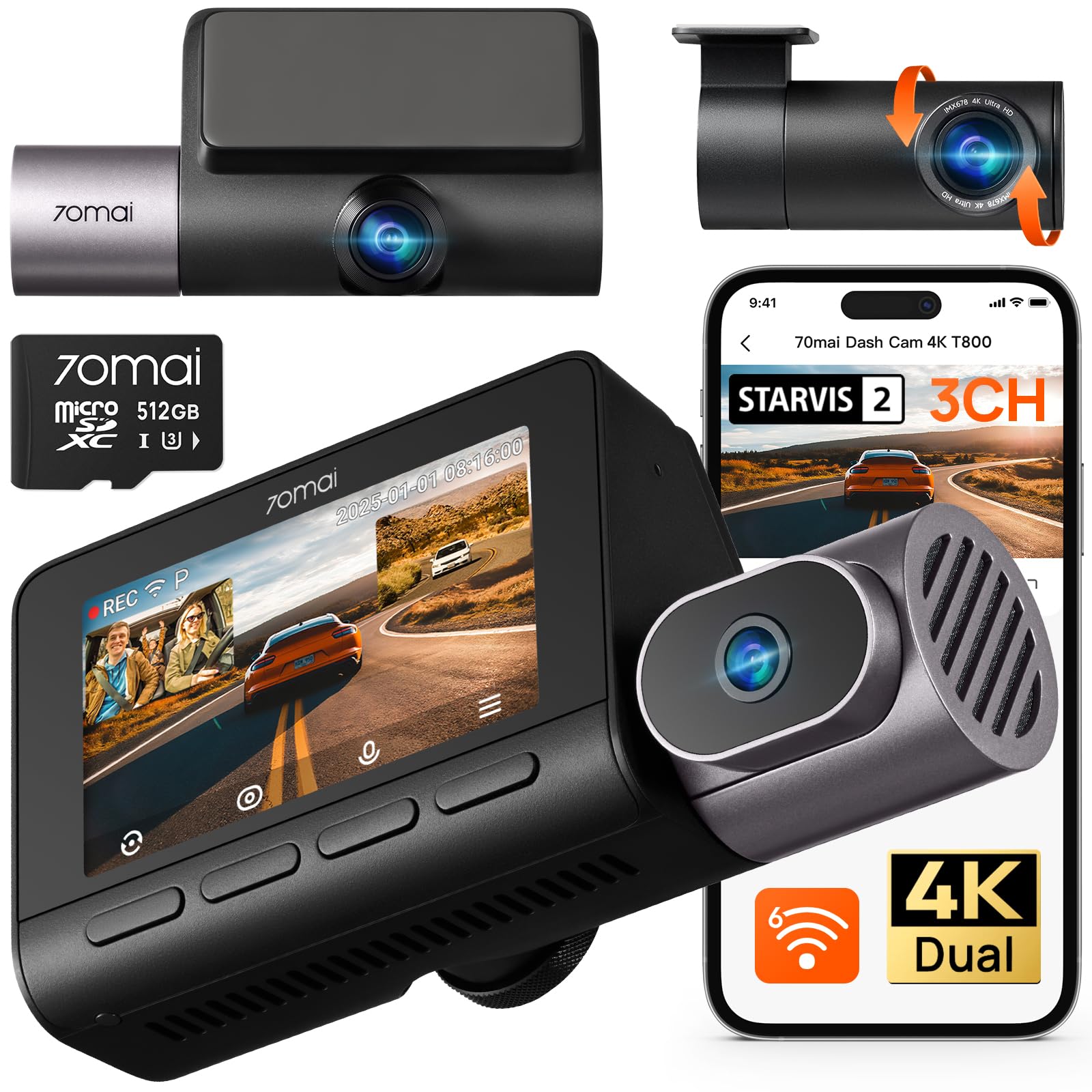
The 70mai Dash Cam 4K T800 Premium Set adds cabin coverage while keeping strong exterior resolution. It records 3840x2160 from the front, 3840x2160 from the rear, and 1920x1080 from the interior camera.
Its exterior cameras both use Sony STARVIS 2 IMX678 sensors and record 4K at 30 fps. The interior camera records 1080p at 30 fps, making the package a good fit for rideshare, family cars, and cabin context.
Coverage is broad across the vehicle. The front and rear cameras each have a 146-degree field of view, while the interior camera has a 147-degree field of view.
Key highlights
- 3-channel front plus rear plus interior system
- Front 3840x2160 recording
- Rear 3840x2160 recording
- Interior 1920x1080 recording
- Front and rear Sony STARVIS 2 IMX678 sensors
- Front 146-degree, rear 146-degree, interior 147-degree field of view
Pros
- Dual 4K front and rear plus cabin recording in one package
- Strong sensor spec for both exterior cameras
- Good for rideshare, family cars, and anyone wanting cabin context
- Wi-Fi 6 and modern 70mai app experience are practical for large files
Cons
- Three-camera installation is more involved
- Cabin camera is 1080p rather than 2K or 4K
- Requires hardwiring for the best parking features
Who it's for
Drivers who want front, rear, and cabin evidence without sacrificing rear resolution.
Skip if
Choose a two-camera kit if you want the cleanest, most discreet install.
BlackVue DR970X-2CH LTE Plus II - Best for built-in LTE cloud
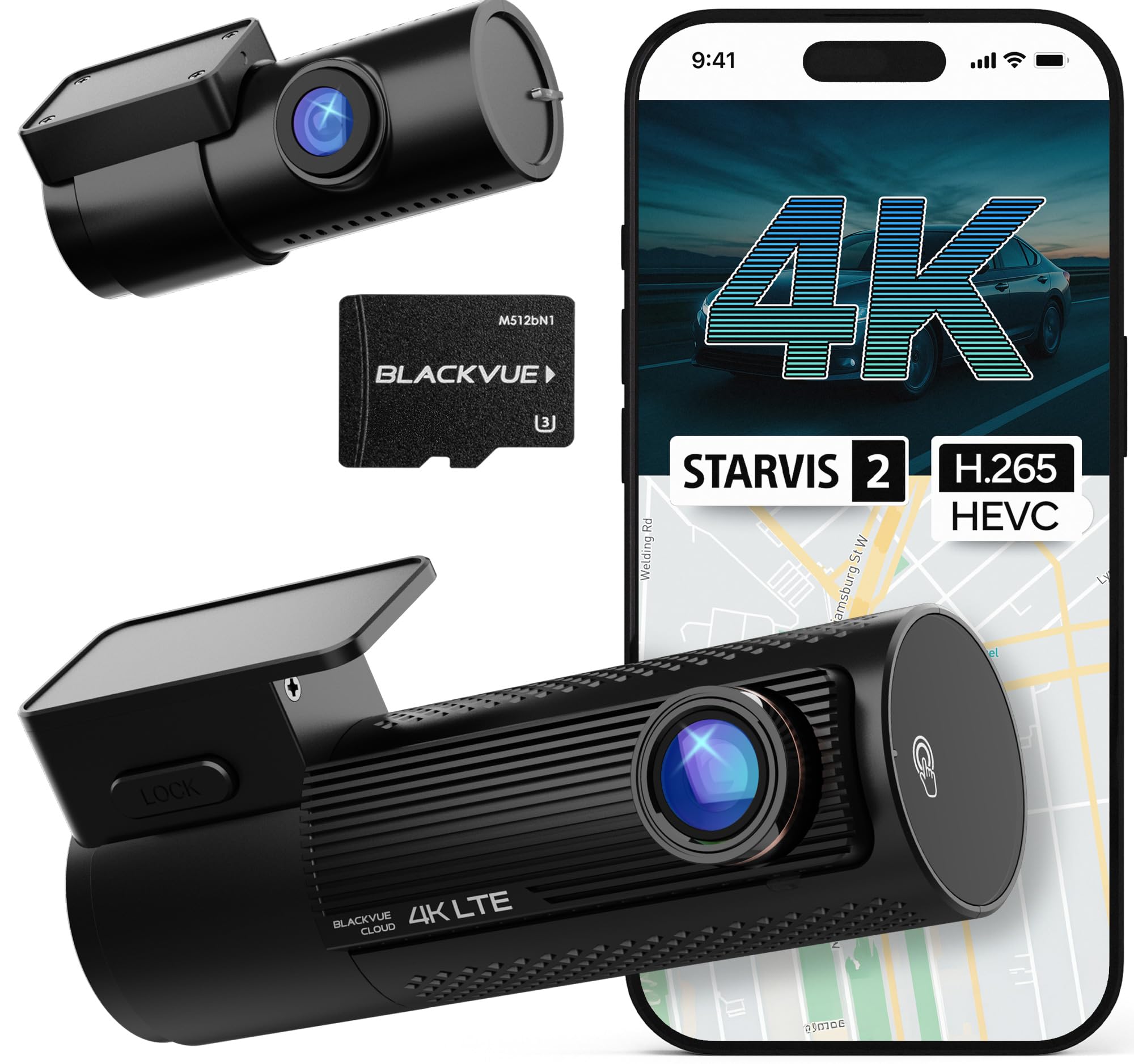
The BlackVue DR970X-2CH LTE Plus II is built around connected access. It is a 2-channel front and rear system with a built-in LTE module.
The front camera records in 4K Ultra HD, while the rear camera records in Full HD. That makes it strongest for drivers who value the front view and cloud features more than matching rear resolution.
Connectivity is the main draw. The system includes built-in 2.4/5GHz Wi-Fi, GPS, a G-sensor, a nano-SIM reader, cloud compatibility, and microSD support in 64GB, 128GB, 256GB, 512GB, and 1TB capacities.
Key highlights
- 2-channel front plus rear system with built-in LTE module
- 4K Ultra HD front recording
- Full HD rear recording
- Built-in 2.4/5GHz Wi-Fi and GPS
- Nano-SIM reader and cloud compatibility
- 64GB, 128GB, 256GB, 512GB, and 1TB microSD support
Pros
- Built-in LTE is cleaner than hotspot-based cloud setups
- Mature BlackVue cloud ecosystem
- Discreet cylindrical cameras suit permanent installs
- Strong front-camera spec with GPS and Wi-Fi included
Cons
- Rear camera is only Full HD
- Cloud/LTE ownership costs can add up
- Video value is weaker than newer dual-4K rivals
Who it's for
Drivers who value BlackVue Cloud and built-in LTE more than rear-camera resolution.
Skip if
Choose a dual 2K or dual 4K system if you want sharper rear footage.
Cobra SC 400D - Best touchscreen front-and-rear cam
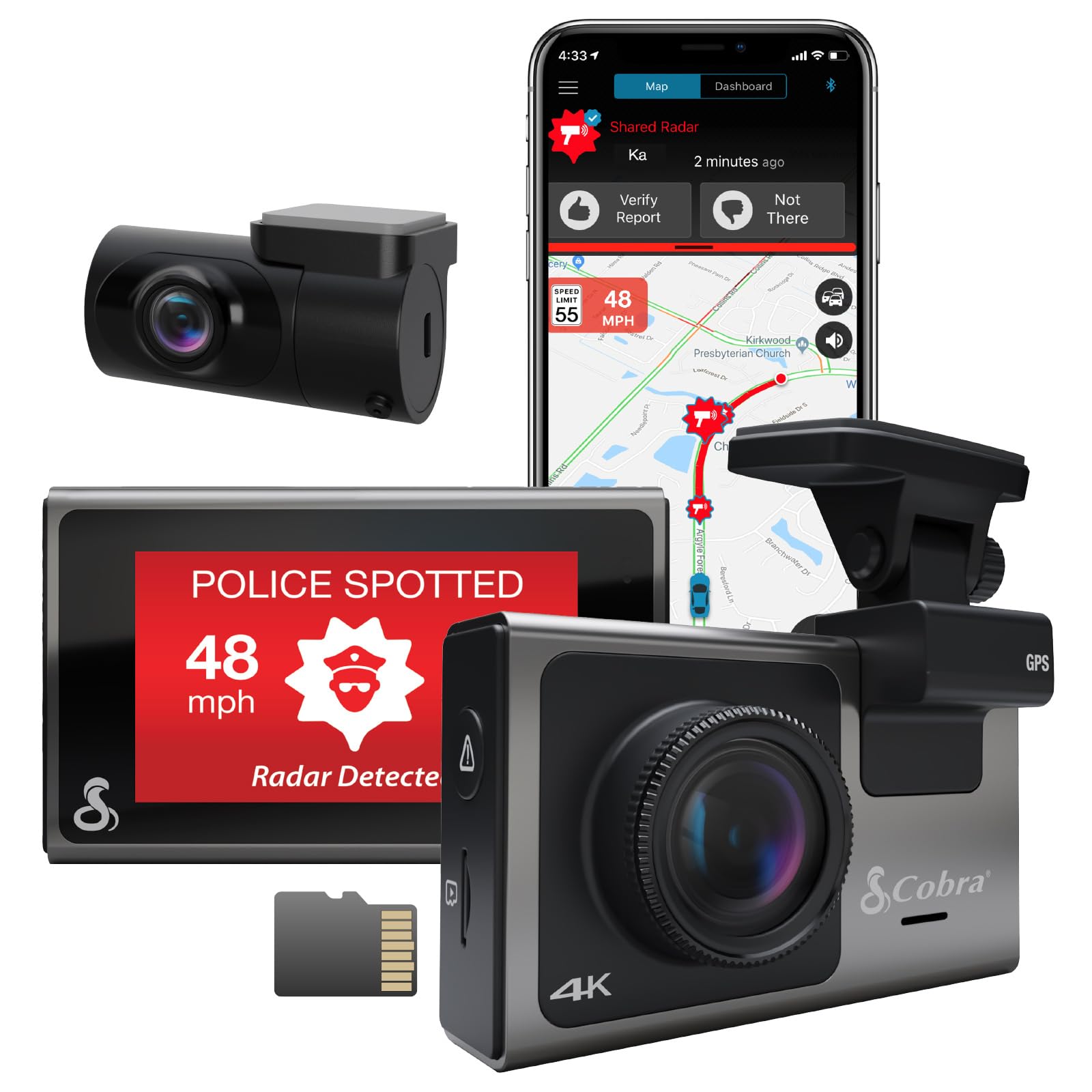
The Cobra SC 400D is the front and rear kit for buyers who prefer camera controls on a screen. Its 3-inch LCD touchscreen gives it a more familiar interface than compact button-driven dash cams.
The front camera records Ultra HD 4K / 2160p video. The included rear-view accessory camera records Full HD 1080p with a 120-degree field of view, and an optional cabin camera can expand the setup to three views.
Cobra adds a broader smart-driving package around the camera hardware, including a magnetic GPS mount, Drive Smarter app alerts, Alexa built-in, and an emergency recording button.
Key highlights
- Front camera plus included rear-view accessory camera
- Optional cabin camera for three-view setup
- Ultra HD 4K / 2160p front recording
- Full HD 1080p rear camera
- 120-degree rear field of view
- 3-inch LCD touchscreen
Pros
- Large touchscreen is easier to operate than tiny button-driven cams
- 4K front camera plus included rear camera
- Cobra/Drive Smarter ecosystem adds alerts and navigation features
- Optional cabin camera expands it to three views
Cons
- Rear camera is only 1080p
- Older platform than the newest STARVIS 2-heavy rivals
- Smart features may be more than some shoppers want
Who it's for
Drivers who want a familiar touchscreen interface and smart-driver features in a front/rear kit.
Skip if
Choose a 2K or 4K rear-camera system if rear-camera clarity is your top priority.
How to Choose
- Prioritize sensor quality over headline resolution. A real 2K or 4K camera with Sony STARVIS 2 and HDR often beats a weak 4K camera in glare, rain, tunnels, and headlight-heavy night driving.
- Check the rear camera closely. Many front and rear kits put the best hardware up front and a 1080p camera in back. If rear-end evidence matters, choose 2K or 4K rear recording with a known sensor.
- Plan storage before you buy. Dual 4K and three-channel systems create large files. A high-endurance 256GB or 512GB card is a better fit than a basic general-purpose card, and SSD support makes sense when you need longer retention.
- Match parking mode to your power setup. Buffered, radar, time-lapse, low-bitrate, and energy-saving parking modes usually need a hardwire kit, OBD cable, or battery pack to work after the ignition is off.
- Decide if cloud access matters. Remote alerts, tracking, and live view can require LTE hardware, a SIM, or a subscription. App-based cameras are simpler when you only need local video access.
- Think through installation. Two-channel kits are easier to route cleanly. Three-channel systems add cabin placement, more cable routing, and more visible hardware.
Do I need 4K front and rear?
No. A good 2K front and 2K rear system is enough for many drivers. Dual 4K is better when rear-end evidence and plate detail behind the car are priorities.
Will a dash cam record while parked?
Most advanced parking modes need a hardwire kit, OBD power cable, or separate battery pack so the camera can keep running after the ignition is off.
How large should the memory card be?
For a two-channel 2K or 4K system, 128GB is a practical minimum, while 256GB or 512GB gives more useful retention. Use a high-endurance card rated for continuous video.
Are cabin cameras necessary?
Cabin cameras are useful for rideshare, delivery, teen drivers, and disputed passenger incidents. Private commuters focused on crash evidence can usually stay with a higher-quality front and rear setup.
Do dash cams drain the car battery?
They can if parking mode is configured poorly. Use low-voltage cutoff, OBD battery protection, or a dedicated dash-cam battery pack for longer parking surveillance.
Share this article
More in News
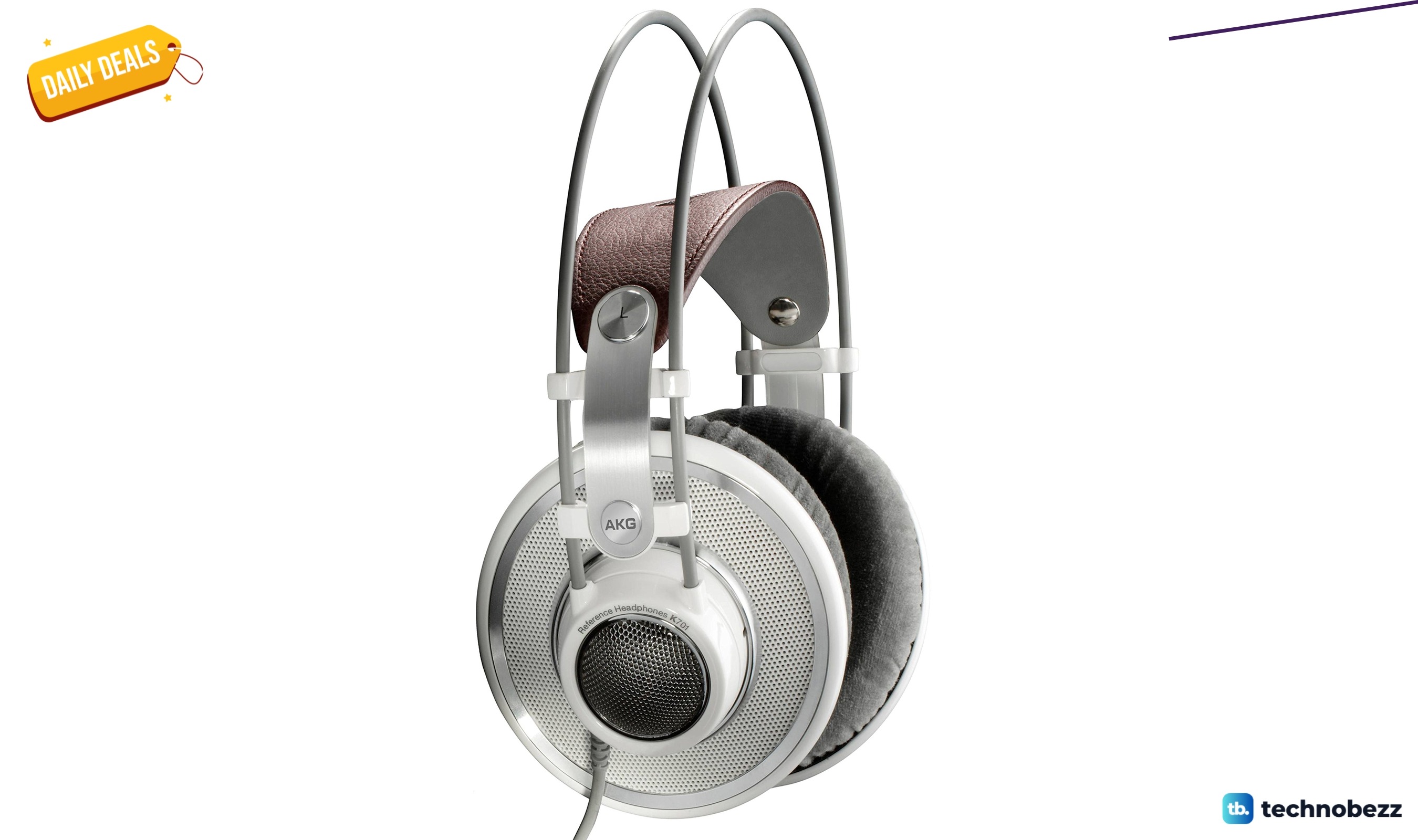
AKG K 701 Ultra Reference Class Stereo discounted to $247.37
AKG K 701 headphones drop to $247.37 on Amazon, a 47% discount that sits below recent 30, 90, and 180-day average prices.
5 min read
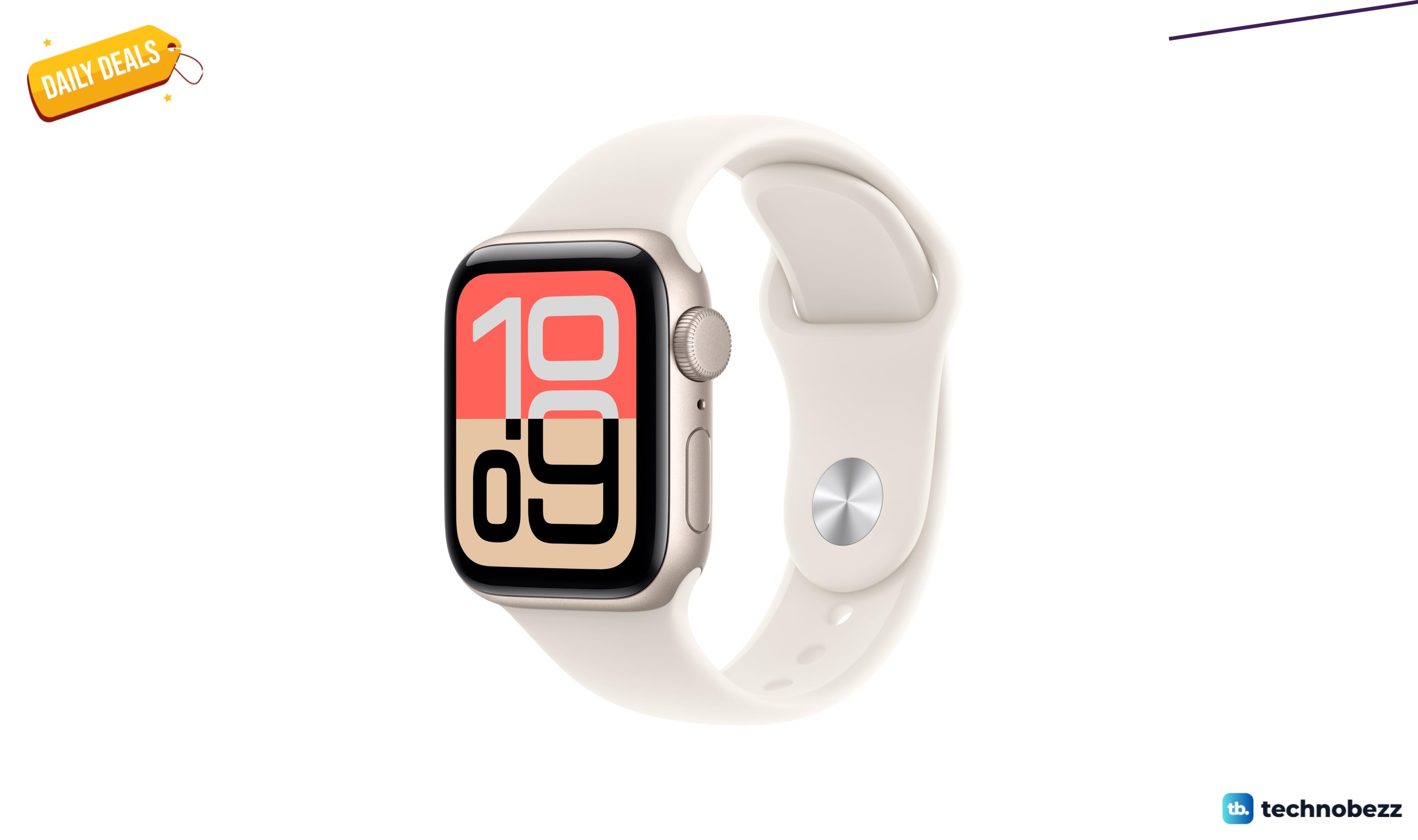
Apple Watch SE 3 GPS 40mm Smartwatch discounted to $189.97
Save $59.03 on the Apple Watch SE 3 GPS 40mm at Amazon, matching its lowest recorded price with health and sleep tracking.
5 min read
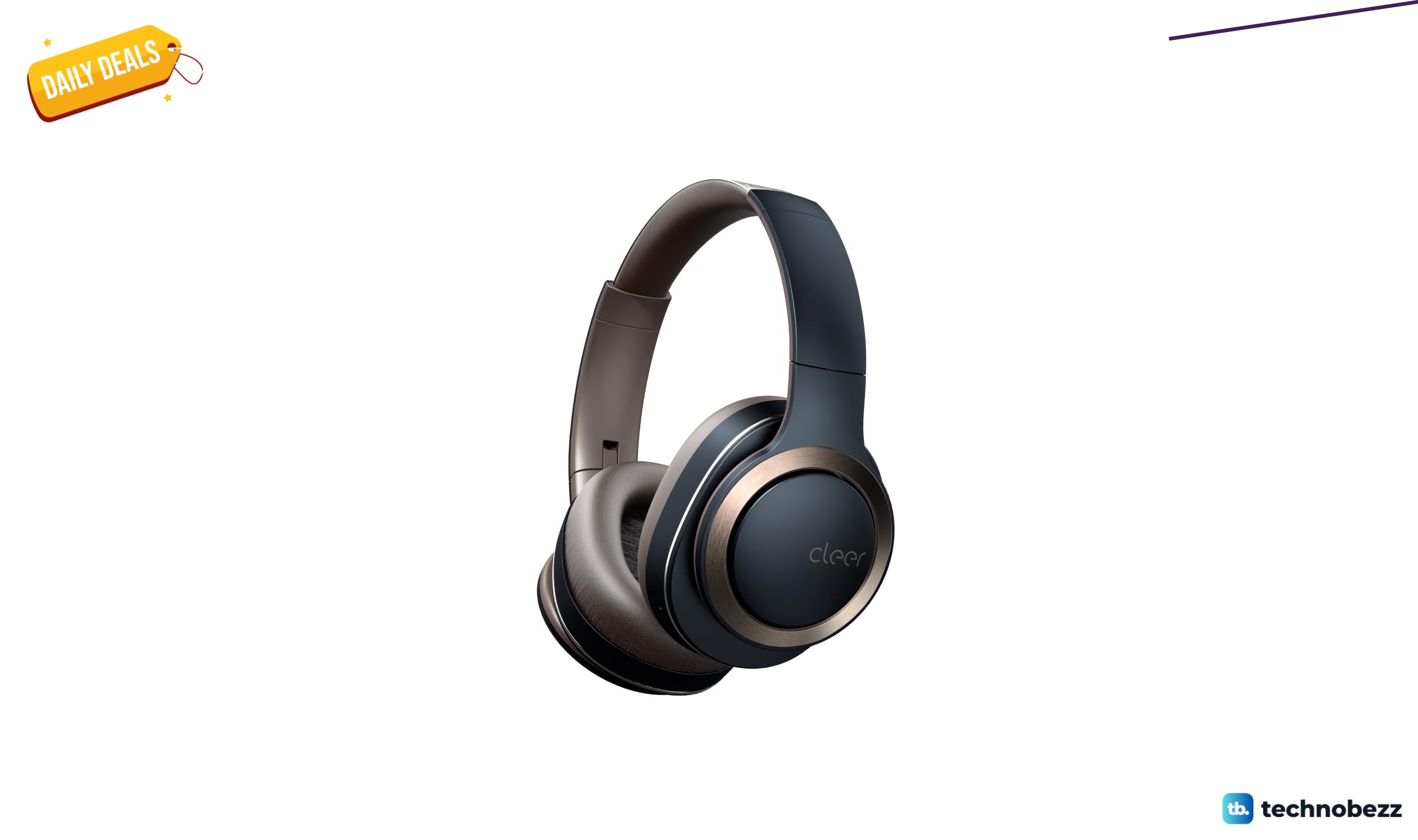
Cleer Audio Enduro ANC Noise Canceling Headphones price drops to $94.99
Save 47% on Cleer Audio Enduro ANC headphones at $94.99, with 60-hour battery, active noise cancellation, and multipoint Bluetooth.
3 min read

Lenovo coupon codes and deals
Browse 5 current Lenovo offers, including 3 coupon codes and 2 online deals.
5 min read

Woot coupon codes and deals
3 min read

Samsung coupon codes and deals
5 min read

Best tech coupon codes and online deals
4 min read
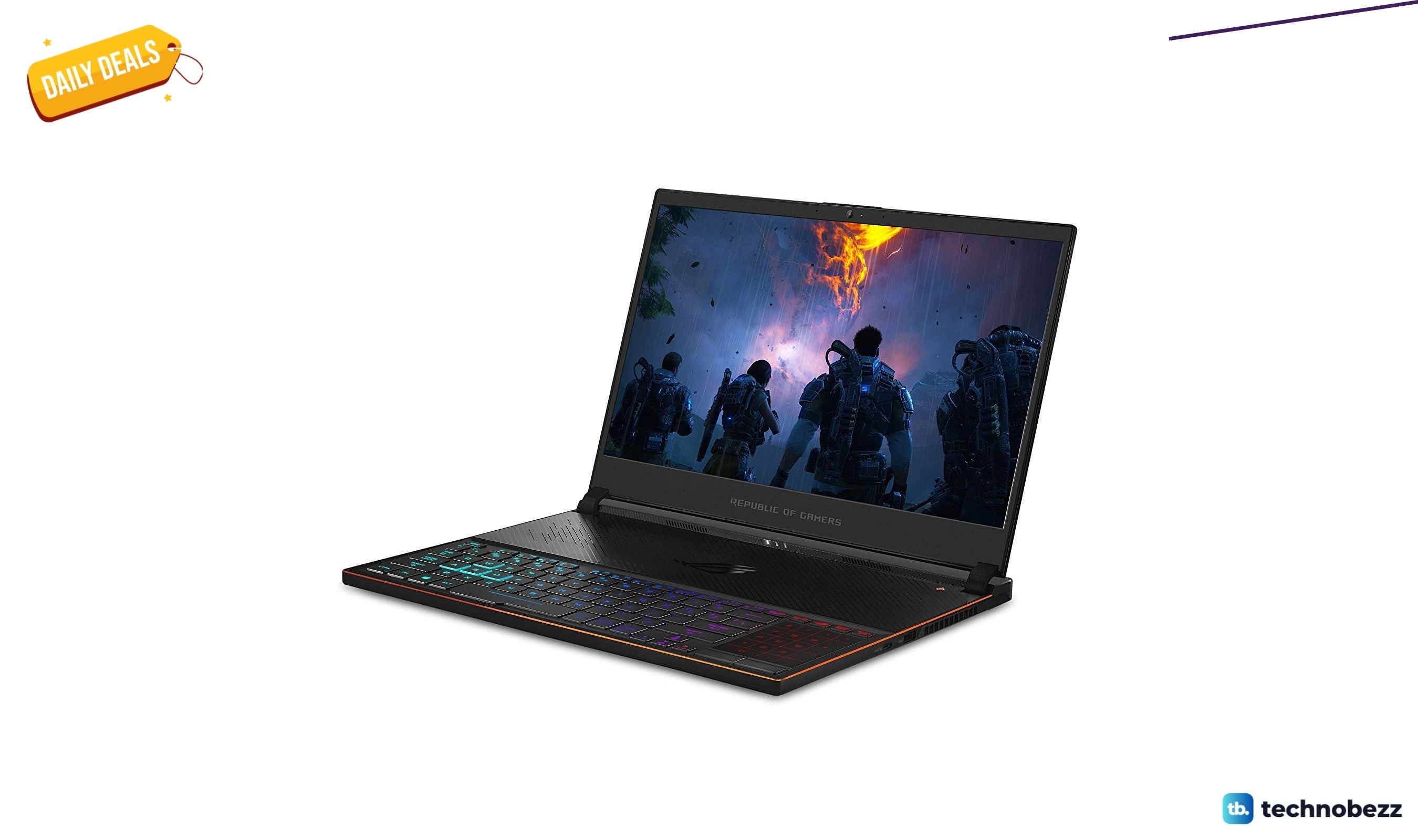
ASUS ROG Zephyrus S Ultra Slim Gaming gets a $660.95 price cut to $1338.05
5 min read
Samsung Galaxy Z Fold8 Unlocked Android Smartphone on sale for $1649.99
3 min read
We found 2 smartwatch deals from $219.99 that are actually worth it
5 min read
Sony WH-CH720 Noise Canceling Wireless Bluetooth Headphones now $87.94, down from $119.99
3 min read
TCL 75-inch F7D QLED 4K TV leads 2 TV deals from $499.99
5 min read