If you want movie theater sound at home, you need more than just TV speakers. The right system can improve dialogue, add bass impact, and create surround sound. Our top pick balances surround format support, setup and smart features for most living rooms.
Technobezz is supported by its audience. We may get a commission from retail offers.
Top 7 Home Theater Systems for 2026
Discover the best home theater systems for 2026. Our top pick is the Sonos Arc system for immersive wireless Dolby Atmos sound at home.
T
Technobezz
Editorial Team
Updated October 12, 2026Oct 12, 2026
•8 min read

Get Deals Like These in Your Inbox
The best prices, straight to your inbox.
Add Technobezz on Google:Preferred SourceGoogle Discover
At a Glance
| Category | Product | Why We Picked It |
|---|---|---|
| Best overall | Sonos Arc Ultra Soundbar | For expandable Dolby Atmos sound |
| Best value | Vizio Elevate SE 5.1.2 | For rotating height speakers and included surrounds |
| Best for cinephiles | Sony BRAVIA Theatre Quad with Subwoofer | For cinematic immersion |
| Best modular system | Bose Lifestyle Ultra Soundbar | For adding Lifestyle Ultra speakers and a subwoofer over time |
| Best budget starter | Klipsch Reference Cinema System 5.1.4 | For Dolby Atmos speaker quality on a budget |
| Also recommended | Technics SC-C65 | An all-in-one 2.1 music system with optical input |
| Also recommended | Samsung HW-Q990D | 11.1.4-channel surround with Q-Symphony for compatible Samsung TVs |
How we chose
We chose these home theater systems from makers' published specs, looking at surround format support, channel layout, whether a subwoofer and surround speakers are included or can be added, and how each system connects to the TV. We also weighed codec compatibility, room-size suitability, and the tuning and app controls each maker lists for movies, sports, and music.
The best home theater systems right now
Sonos Arc Ultra Soundbar - Best overall

The Arc Ultra is a standalone Dolby Atmos soundbar with upward-firing tweeters and a built-in Sound Motion woofer. It connects to your TV over HDMI; a separate Sonos subwoofer and rear speakers are optional purchases.
Key highlights
- Dolby Atmos with upward-firing height speakers
- Seamless multi-room audio integration
- Easy setup through Sonos app
- Voice control with Alexa and Sonos Voice Control
- Expandable with additional speakers
Pros
- AI-based speech enhancement with four adjustable levels
- No messy speaker wires to run
- Regular software updates add new features
- Works with all major streaming services
Cons
- Premium pricing for full system
- Requires good WiFi for optimal performance
- Limited physical inputs on soundbar
Who it is for: People who want premium wireless audio without compromising on surround sound quality.
Skip if
You prefer traditional wired speakers or have a very tight budget.
Vizio Elevate SE 5.1.2 - Best value
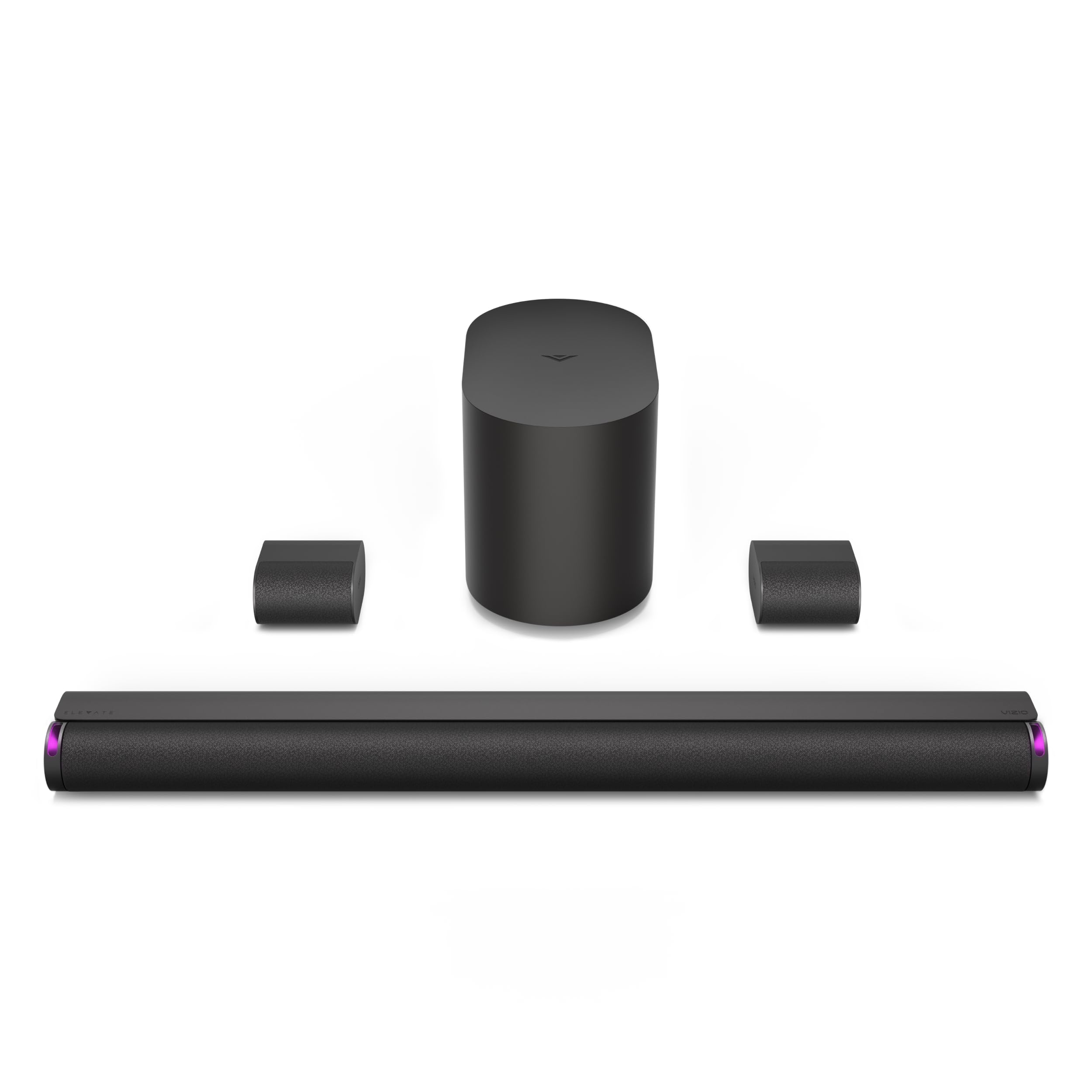
This 5.1.2 system includes a wireless subwoofer and two surround speakers. Its adaptive height speakers rotate upward for Dolby Atmos and DTS:X content, while the rear speakers connect to the subwoofer with cables.
Key highlights
- 5.1.2 system with wireless subwoofer and two surrounds
- Dolby Atmos and DTS:X support
- HDMI eARC connection to the TV
- Automatically rotating height speakers
- Settings controlled through the VIZIO mobile app
Pros
- Separate rear speakers for surround effects
- Easy setup with included cables
- Compact design fits most TV stands
Cons
- Rear speakers require cables to the subwoofer
- Advanced settings require the VIZIO app and an account
- Soundbar remote sold separately
Who it is for: Budget-conscious buyers who want actual surround speakers without breaking the bank.
Skip if
You have a very large room that needs more power.
Sony BRAVIA Theatre Quad with Subwoofer - Best for cinephiles
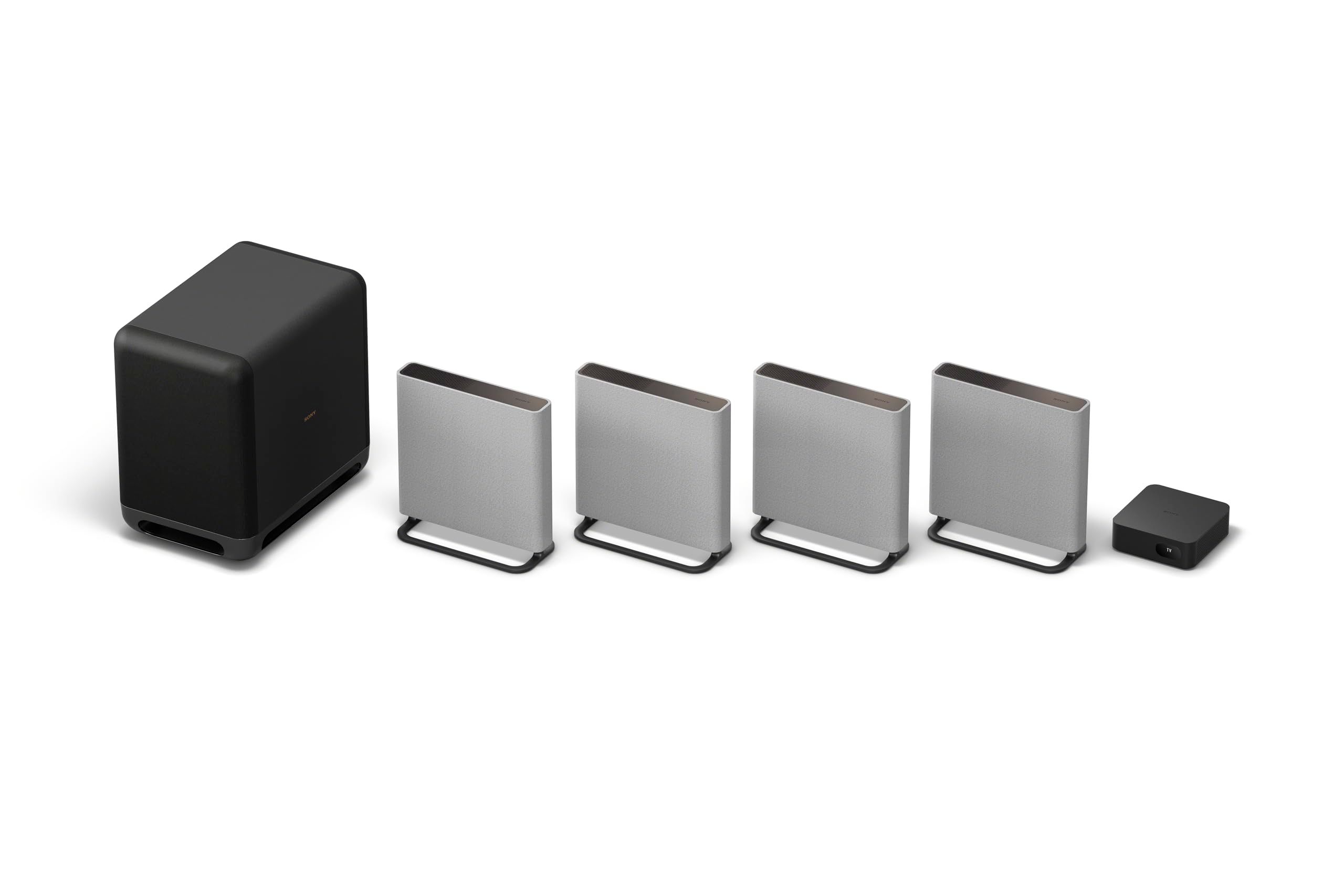
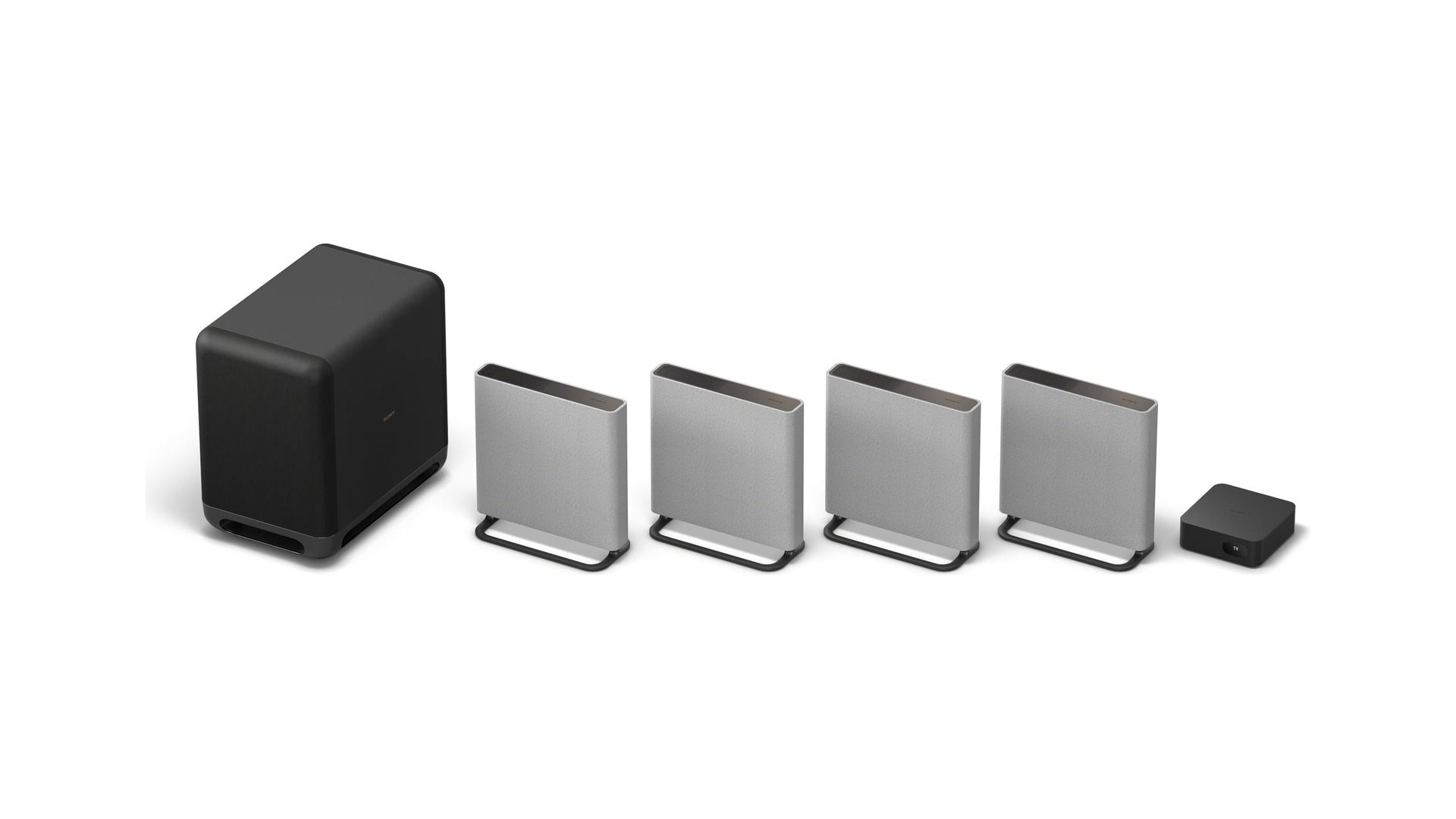
Sony's premium system uses dedicated upward-firing speakers to create precise object-based audio.
Key highlights
- 360 Spatial Sound Mapping technology
- Dedicated upward-firing speakers for height
- BRAVIA TV integration for unified control
- High-resolution audio support
- Compact design with premium materials
Pros
- Seamless integration with Sony ecosystem
- Premium build quality and aesthetics
- Supports Dolby Atmos and DTS:X
Cons
- Expensive compared to similar systems
- Some TV integration features require a compatible BRAVIA TV
- Requires more careful placement
Who it is for: Movie enthusiasts who want precise audio positioning and premium build quality.
Skip if
You prefer a simpler soundbar or a lower-cost setup.
Bose Lifestyle Ultra Soundbar - Best modular system

The Bose Lifestyle Ultra Soundbar lets you start with Dolby Atmos and add a Lifestyle Ultra Subwoofer and two Lifestyle Ultra Speakers later. This listing includes the soundbar only; the subwoofer and surrounds are sold separately.
Key highlights
- Dolby Atmos with upward-firing speakers
- TrueSpatial processing and SpeechClarity dialogue enhancement
- CustomTune room calibration using a compatible phone
- Apple AirPlay, Google Cast, and Spotify Connect
- Built-in Alexa voice control
Pros
- Add compatible surrounds and a subwoofer later
- Room calibration supports iOS and Android
- Wi-Fi and Bluetooth music streaming
Cons
- Subwoofer and surround speakers cost extra
- Older Bose surround speakers are incompatible
- No separate remote included
Who it is for: People who want to build their system gradually or have mixed music and movie needs.
Skip if
You want a subwoofer and rear speakers included, or need to reuse older Bose surround speakers.
Klipsch Reference Cinema System 5.1.4 - Best budget starter
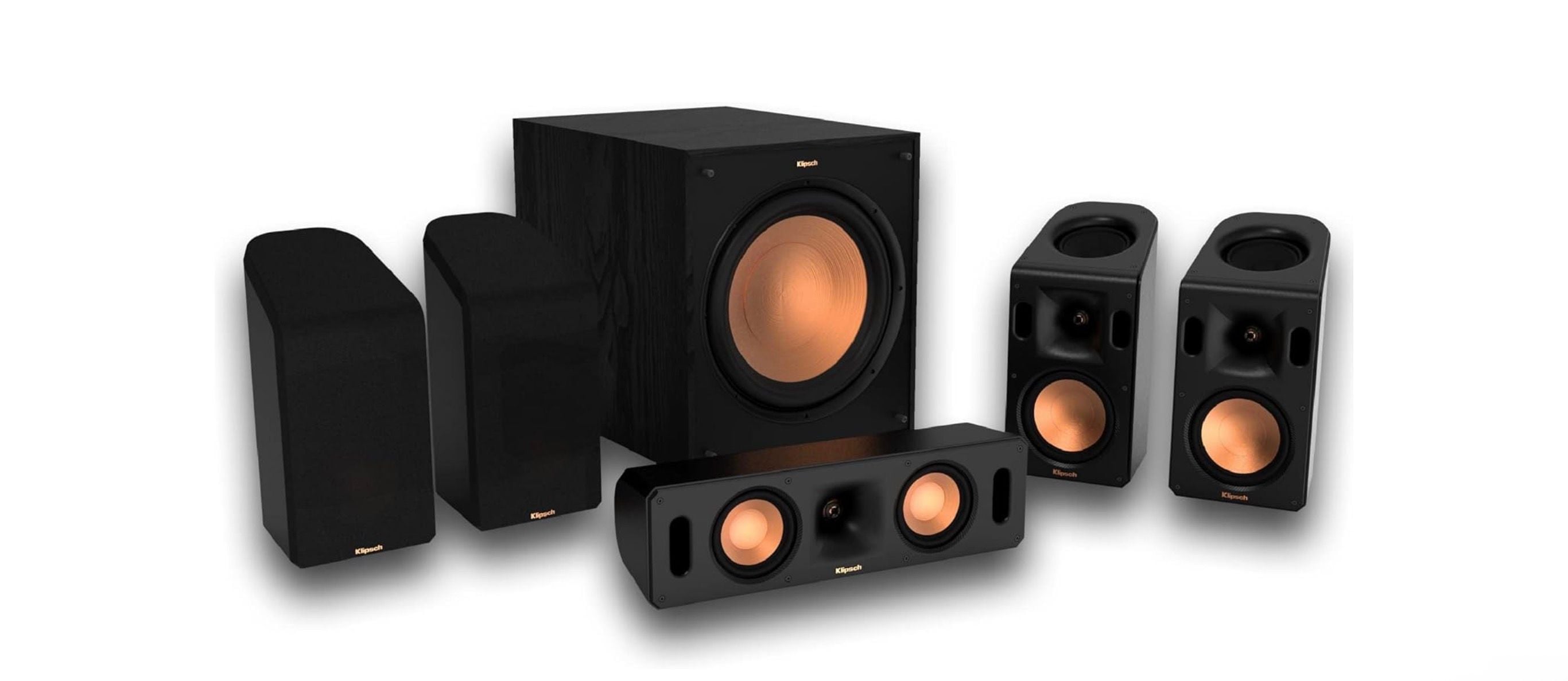
This 5.1.4 Dolby Atmos speaker system uses four satellite speakers with Dolby Atmos technology for height effects and horn-loaded tweeters, making it a great entry into separates.
Key highlights
- Complete 5.1.4 Dolby Atmos speaker system with subwoofer
- Klipsch horn-loaded technology for efficiency
- Compact satellite speakers for easy placement
- 10-inch subwoofer with a 150W continuous, 300W peak amplifier
- Copper-spun IMG woofers
Pros
- Efficient design works with modest receivers
- Compact satellites fit small spaces
- Traditional speaker flexibility and placement
Cons
- Requires AV receiver (not included)
- More cables and setup than soundbars
- Basic subwoofer compared to higher-end models
Who it is for: First-time separates buyers or those upgrading from basic home theater in a box systems.
Skip if
You want wireless simplicity or have no space for an AV receiver.
Also Good
- Technics SC-C65 - an all-in-one 2.1 music system with optical input for a compatible TV; a compact alternative to a surround setup.
- Samsung HW-Q990D - an 11.1.4-channel system with a subwoofer and rear speaker kit included, plus Q-Symphony for compatible Samsung TVs. Check Price on Samsung
How to Choose
Consider these factors when picking your home theater system:
Room size and layout matter more than you think. Small rooms benefit from compact soundbars, while larger spaces need more powerful systems or separates. Open floor plans challenge any system's ability to create focused sound.
Wireless vs wired comes down to your tolerance for cables. Wireless systems offer cleaner installation but may have latency or connectivity issues. Wired systems provide rock-solid performance but require cable management.
Audio formats determine what you can hear. Basic systems handle Dolby Digital, while premium ones add Dolby Atmos and DTS:X for object-based sound. Check what content you actually watch before paying for formats you won't use.
Expansion potential matters if you might add more rooms later. Some systems easily add wireless speakers throughout your home, while others are one-room solutions.
Smart features like voice control and multi-room audio add convenience but can complicate setup. Consider whether you'll actually use these features or if they're just marketing checkboxes.
FAQ
Do I need Dolby Atmos for good home theater sound?
Not necessarily. While Atmos adds height channels for more immersive effects, a well-tuned 5.1 system still delivers excellent surround sound. Atmos matters most for dedicated home theaters with proper speaker placement.
Can I use a soundbar in a large living room?
Yes, but choose carefully. Look for soundbars with separate subwoofers and consider adding wireless surround speakers. High-end soundbars with multiple drivers and good amplification are better suited to larger spaces.
How important is wireless connectivity?
It depends on your setup. Wireless rear speakers still need power; check whether they use outlets, batteries, or cables from a subwoofer. Wireless subwoofers offer placement flexibility. Full wireless systems are great for clean installations but require strong WiFi.
Should I buy a complete system or build piece by piece?
Complete systems offer better value and guaranteed compatibility. Building piece by piece gives you more customization but requires more research and potentially higher cost. For most people, a complete system is the better choice.
Do I need special cables for modern home theater systems?
HDMI cables are essential for modern systems. Look for High Speed HDMI cables that support eARC for the best audio quality. For separates, standard speaker wire works fine for most installations.
Published February 3, 2026 Last updated October 13, 2026
Add Technobezz on Google:Preferred SourceGoogle Discover
More on soundbars
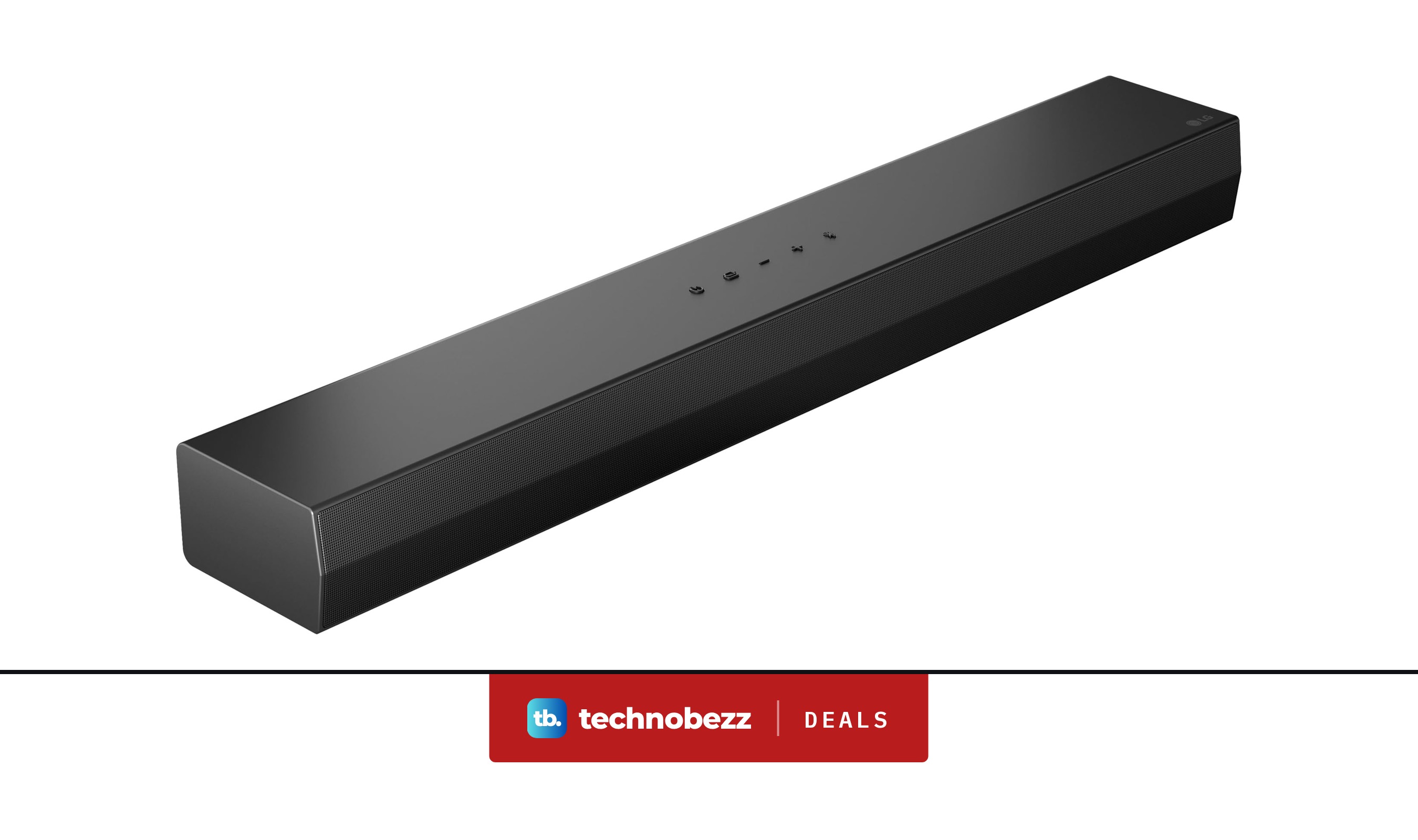
Deal
LG S20A 2.0 ch. Soundbar is $99.99 ahead of Black Friday
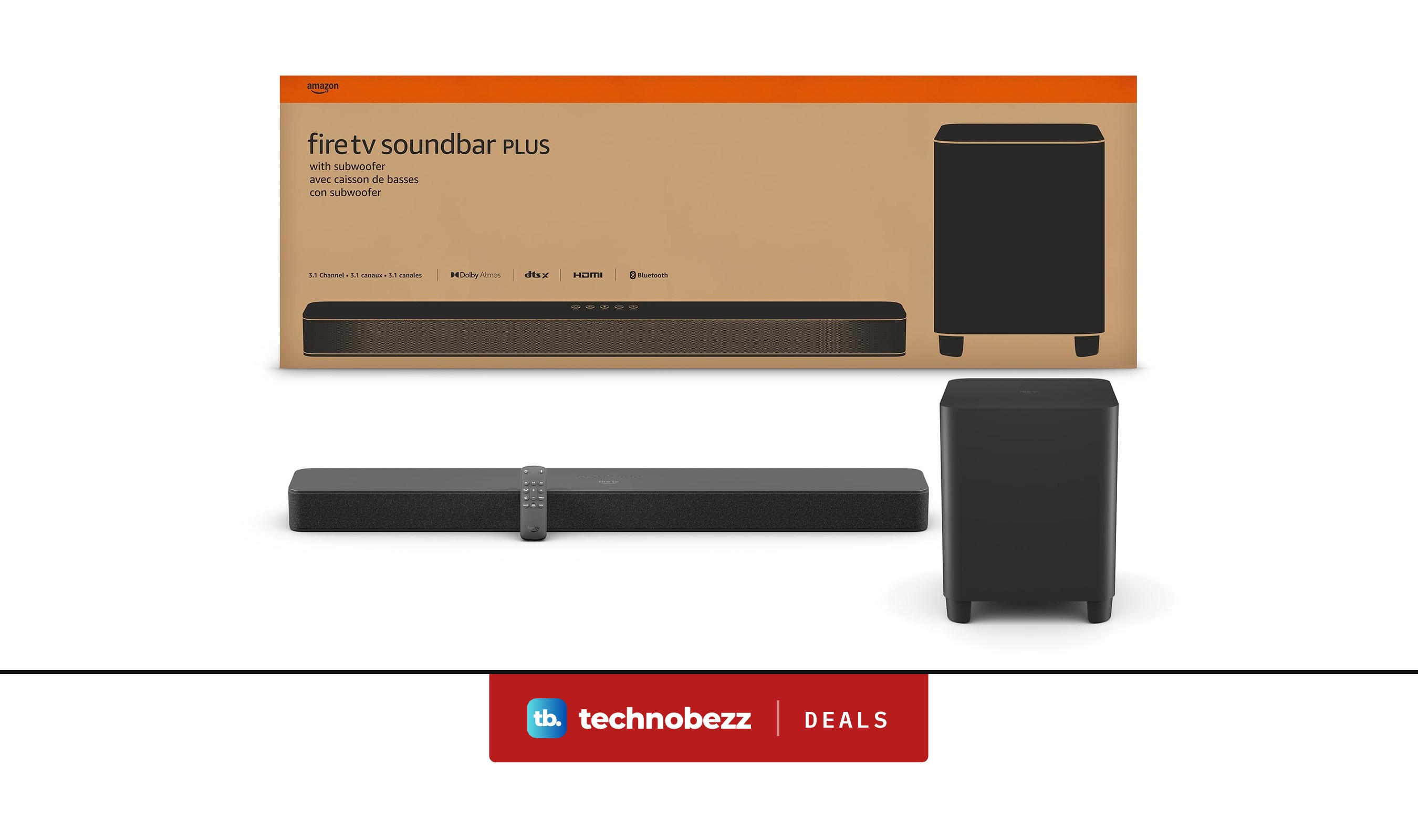
Deal
Amazon Fire TV Soundbar dips to $229.99
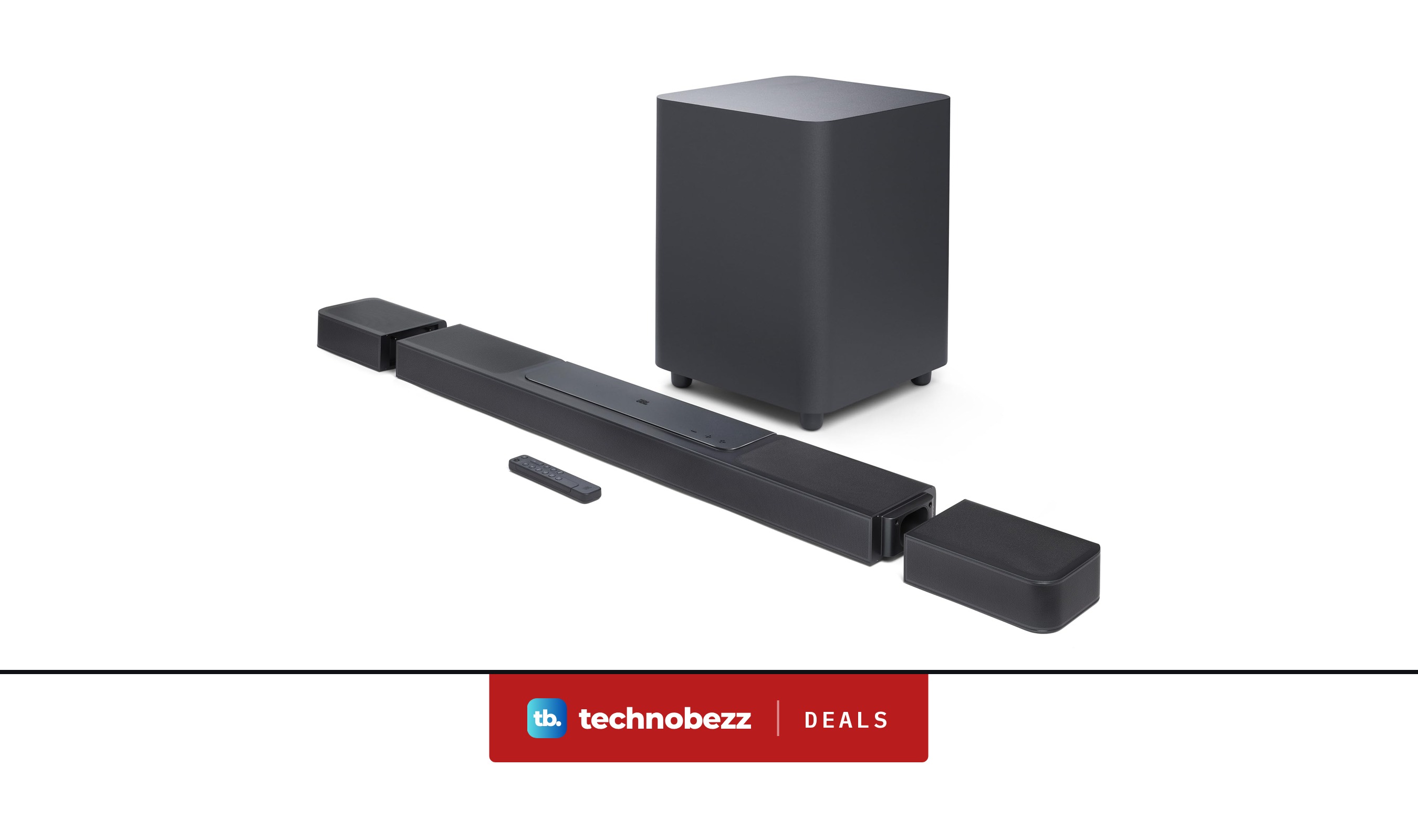
Deal
JBL Bar 1300X 11.1.4-Channel soundbar now $999.95, down from $1699.95
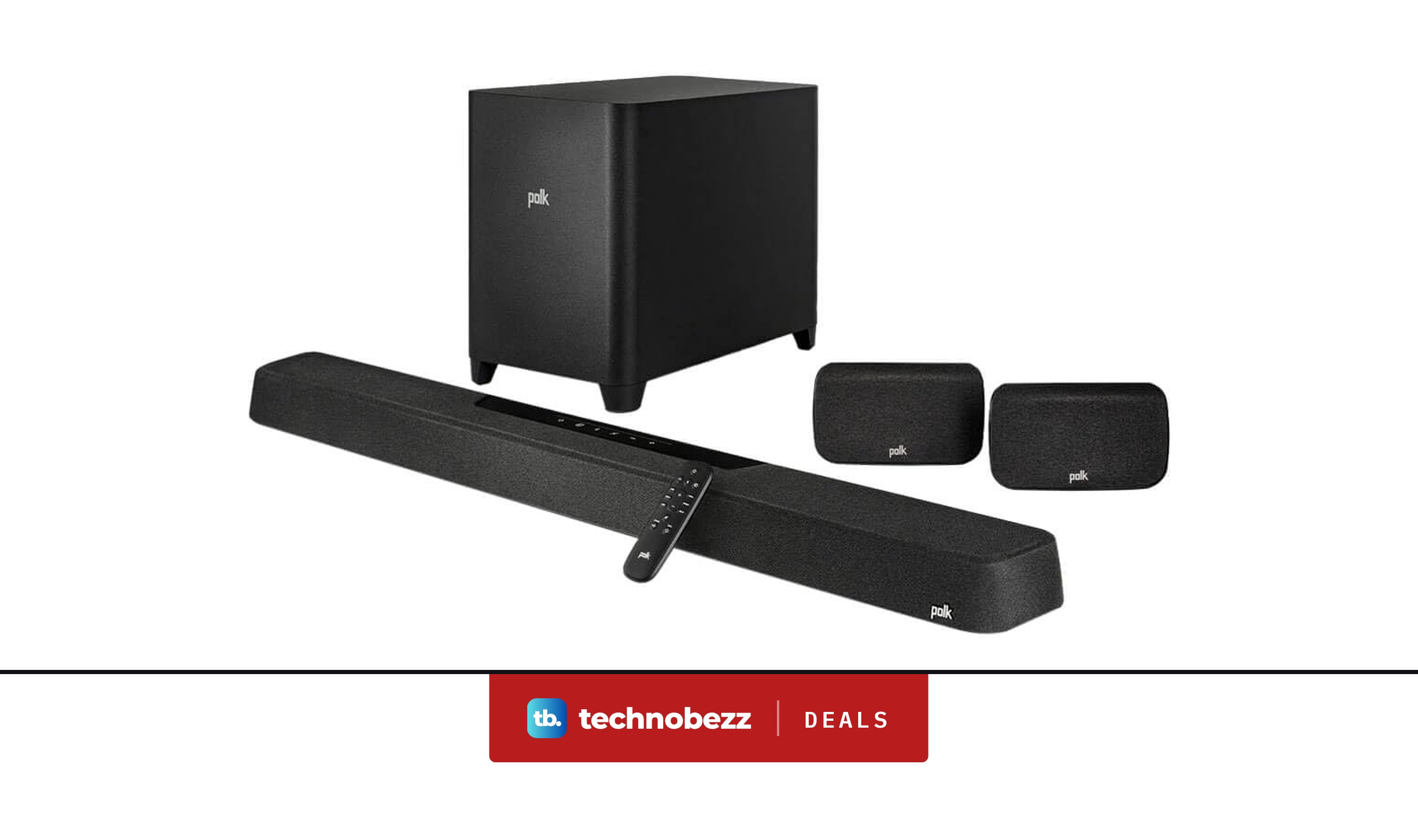
Deal
Polk Audio MagniFi Max AX SR 7.1.2 Soundbar gets a $180 price cut to $719
More buying guides
Buying guide7 Best Keyboards for Mac in 2026Buying guide6 Best Home Security Systems in 2026Buying guide6 Best Home Weather Stations in 2026Buying guide6 Best Samsung Tablets in 2026Buying guide7 Best Kindles in 2026Buying guide5 Best External Hard Drives in 2026Buying guide6 Best Smart Locks in 2026Buying guide6 Best Baby Monitors in 2026