A 4K projector can fill a wall with a picture far larger than any TV, but the right one depends on the room. Brightness, light source, lens flexibility, gaming support and built-in streaming vary a lot between models. Some are built for a dark dedicated theater, while others suit a living room, a game room or a portable movie night.
Technobezz is supported by its audience. We may get a commission from retail offers.
6 Best 4K Projectors in 2026
The Epson Home Cinema LS6000 leads our picks of the best 4K projectors for home theaters, gaming, streaming and portable movie nights, chosen from maker specs.
T
Technobezz
Editorial Team
Updated November 9, 2026Nov 9, 2026
•14 min read

Get Deals Like These in Your Inbox
The best prices, straight to your inbox.
Add Technobezz on Google:Preferred SourceGoogle Discover
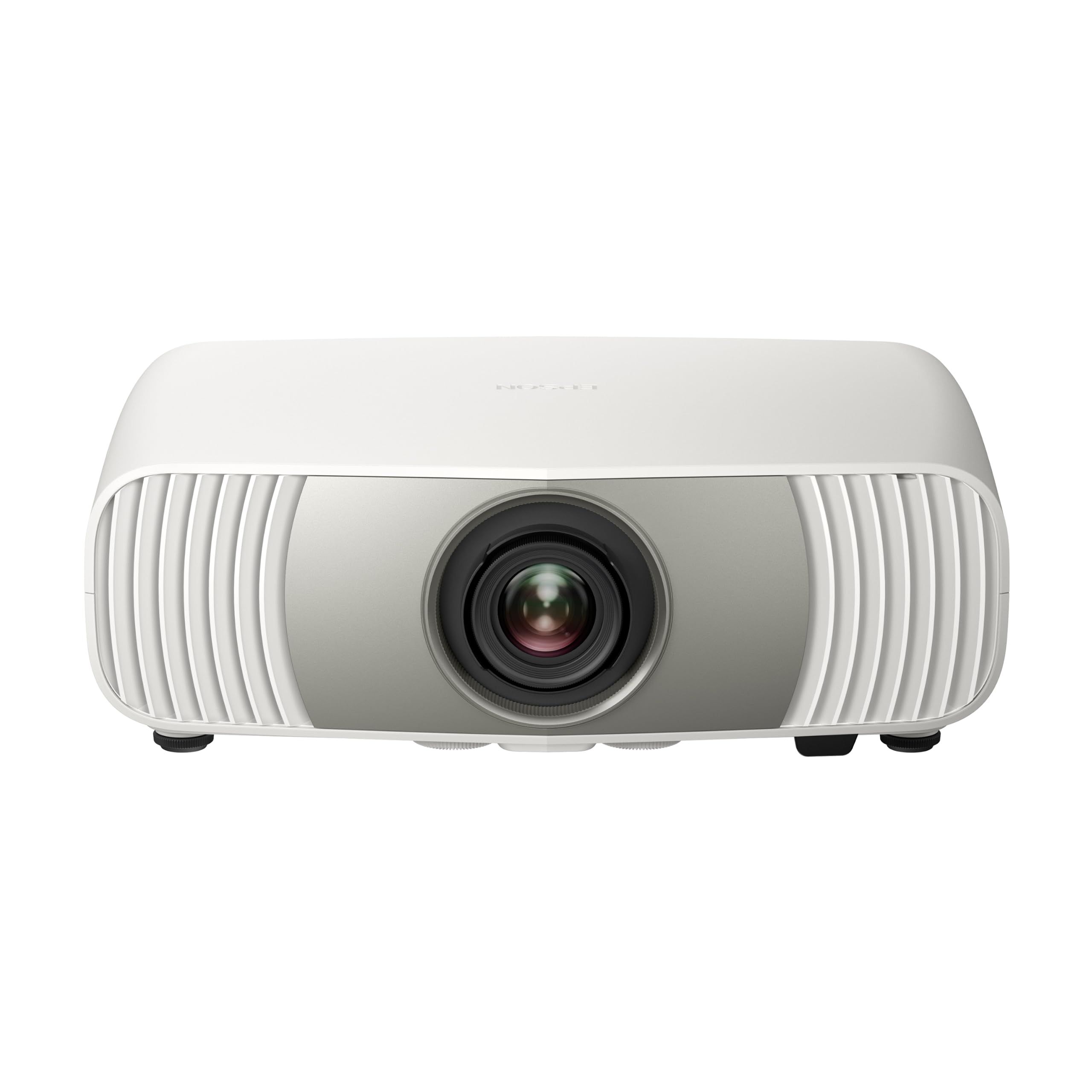
The Epson Home Cinema LS6000 is the best overall pick. It pairs a 3-chip 3LCD engine and a laser light source rated at 3,400 lumens with wide manual lens shift, screens up to 300 inches, and refresh rates up to 120Hz with low input lag. It is the most balanced choice here for movies and console gaming on a big screen.
This page is for US buyers choosing a 4K projector for a home theater, a living room, gaming or occasional use around the house. The other picks cover smart streaming with Dolby Vision, easy setup, a compact laser, Xbox gaming and portable viewing.
At a Glance
| Category | Product | Why We Picked It |
|---|---|---|
| Best overall | Epson Home Cinema LS6000 | 3,400-lumen 3LCD laser, wide lens shift, and up to 120Hz |
| Best smart projector | XGIMI HORIZON 20 Pro | RGB triple laser, Dolby Vision, and Google TV built in |
| Best for easy setup | BenQ TK705i | Auto focus, auto keystone, Google TV, and HDMI 2.1 |
| Best compact laser | Optoma UHZ36 | 3,500 ISO lumens and a long-life laser in a small body |
| Best for Xbox gaming | ViewSonic PX749-4K | Designed for Xbox, with 4.2ms input lag and 4,000 lumens |
| Best portable | Epson Lifestudio Flex Plus | 3.5-pound 4K PRO-UHD projector with Google TV and Bose sound |
How we chose
We compared each maker's published specifications for brightness, light source, HDR support, gaming features, lens and placement options, and built-in streaming, then matched every pick to a specific kind of buyer. We also checked that each pick is sold new on Amazon.
The best 4K projectors right now
Epson Home Cinema LS6000 - Best overall
The Epson Home Cinema LS6000 is the most complete home theater pick in this group. Its 3-chip 3LCD engine runs on a laser array light source rated at 3,400 lumens of both color and white brightness, with an 800,000:1 dynamic contrast ratio. The 4K image comes from pixel shifting, which Epson says puts 8.29 million pixels on screen, rather than from a native 4K chip.
Placement is unusually flexible, with manual lens shift of plus or minus 21% horizontal and plus or minus 59% vertical, and Epson rates its Cinema Lens for screens up to 300 inches. Dual HDMI ports support refresh rates up to 120Hz, and Auto Low Latency Mode brings input lag below 20ms. Epson also lists HDR10 and HLG, 10-bit color processing, and aspect ratios from 16:9 to 21:9.
Key highlights
- 3-chip 3LCD engine with laser array light source
- 3,400 lumens color and white brightness
- 800,000:1 dynamic contrast ratio
- Pixel-shift 4K with 8.29 million pixels on screen
- Up to 120Hz, with input lag below 20ms using ALLM
- Manual lens shift of plus or minus 21% horizontal and 59% vertical
- Screens up to 300 inches
- 2-year limited warranty with full-unit replacement
Pros
- High rated brightness for a laser home theater projector
- Wide vertical lens shift eases shelf and ceiling placement
- Low input lag figure suits console gaming
- Integrated Bluetooth 6.0 for wireless audio
Cons
- 4K comes from pixel shifting, not a native 4K chip
- Epson's page lists no built-in streaming apps, so a streaming device is needed
- Listed HDR formats are HDR10 and HLG, with no Dolby Vision or HDR10+ listed
Who it is for: Buyers setting up a dedicated theater or a large-screen living room who want laser brightness, flexible placement and responsive gaming.
Skip if
You want streaming apps and speakers built into one box, in which case the XGIMI HORIZON 20 Pro or BenQ TK705i fits better.
XGIMI HORIZON 20 Pro - Best smart projector
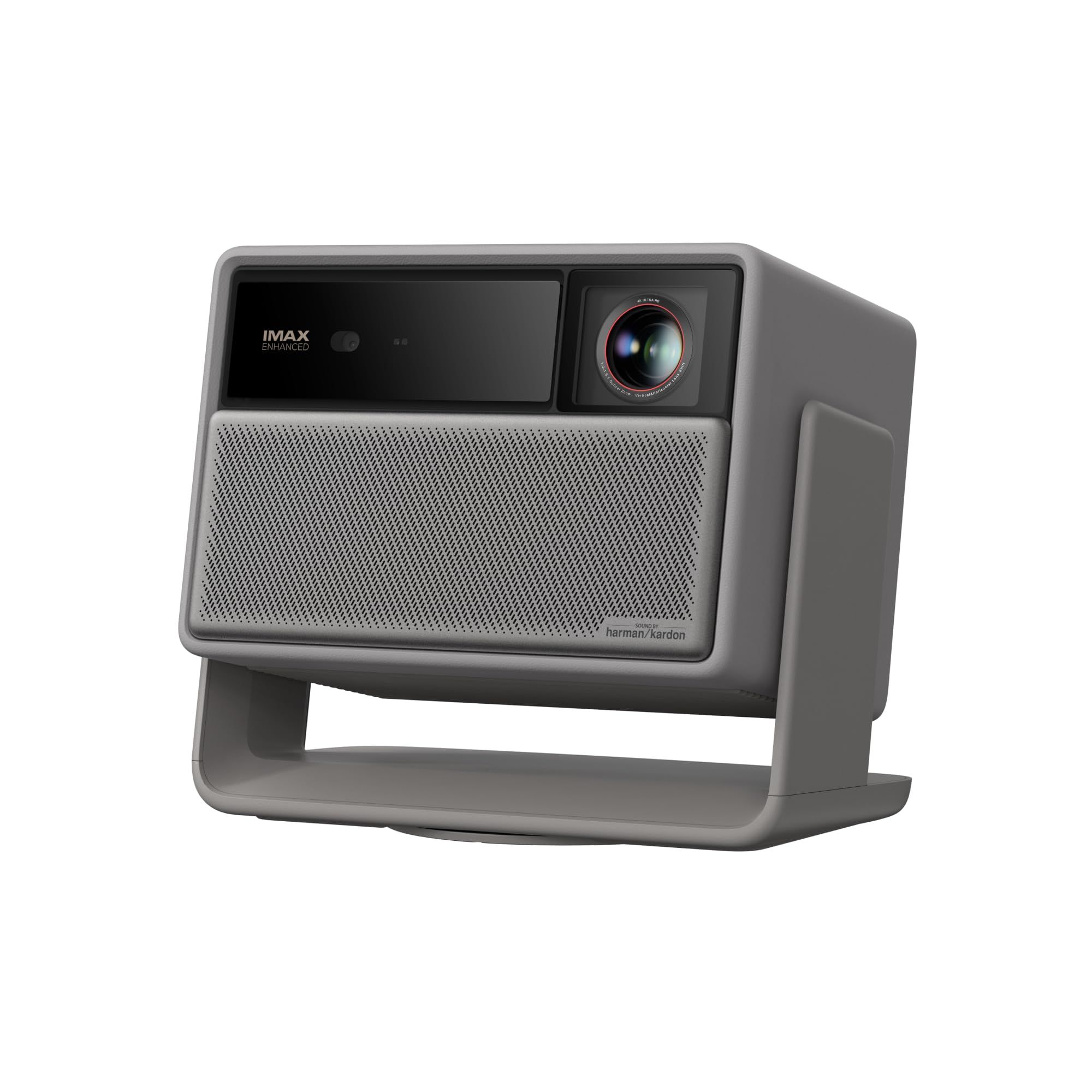
The XGIMI HORIZON 20 Pro puts a full streaming setup and wide HDR support into one premium box. It uses XGIMI's X-Master RGB Triple Laser Engine and supports Dolby Vision, HDR10+, IMAX Enhanced and Filmmaker Mode. Google TV is built in, and Harman Kardon speakers handle sound without extra gear.
XGIMI lists a 20,000:1 viewing contrast ratio and a 1,000,000:1 dynamic contrast ratio, plus a color accuracy figure of Delta E below 0.8. Dynamic lens shift reaches plus or minus 120% vertical and plus or minus 45% horizontal, alongside optical zoom. For gaming, XGIMI quotes 1ms input lag and 240Hz at 1080p, with VRR and ALLM support.
Key highlights
- X-Master RGB Triple Laser Engine
- Dolby Vision, HDR10+, IMAX Enhanced and Filmmaker Mode
- 20,000:1 viewing contrast, 1,000,000:1 dynamic contrast
- Lens shift of plus or minus 120% vertical and 45% horizontal
- Optical zoom
- 1ms input lag and 240Hz at 1080p, with VRR and ALLM
- Google TV and Harman Kardon speakers
Pros
- The broadest HDR format support in this group
- Very wide lens shift range for off-center placement
- Built-in Google TV and speakers reduce extra boxes
- Strong gaming feature list with VRR and ALLM
Cons
- The 1ms and 240Hz gaming figures apply at 1080p, not 4K
- XGIMI's overview page does not list HDMI versions
- Built-in speakers and streaming add cost for buyers who already own a sound system and streamer
Who it is for: Buyers who want one projector that streams, plays Dolby Vision content and handles gaming with minimal extra equipment.
Skip if
You already have a streaming device and sound system and mainly want brightness and lens shift for a dedicated room.
BenQ TK705i - Best for easy setup
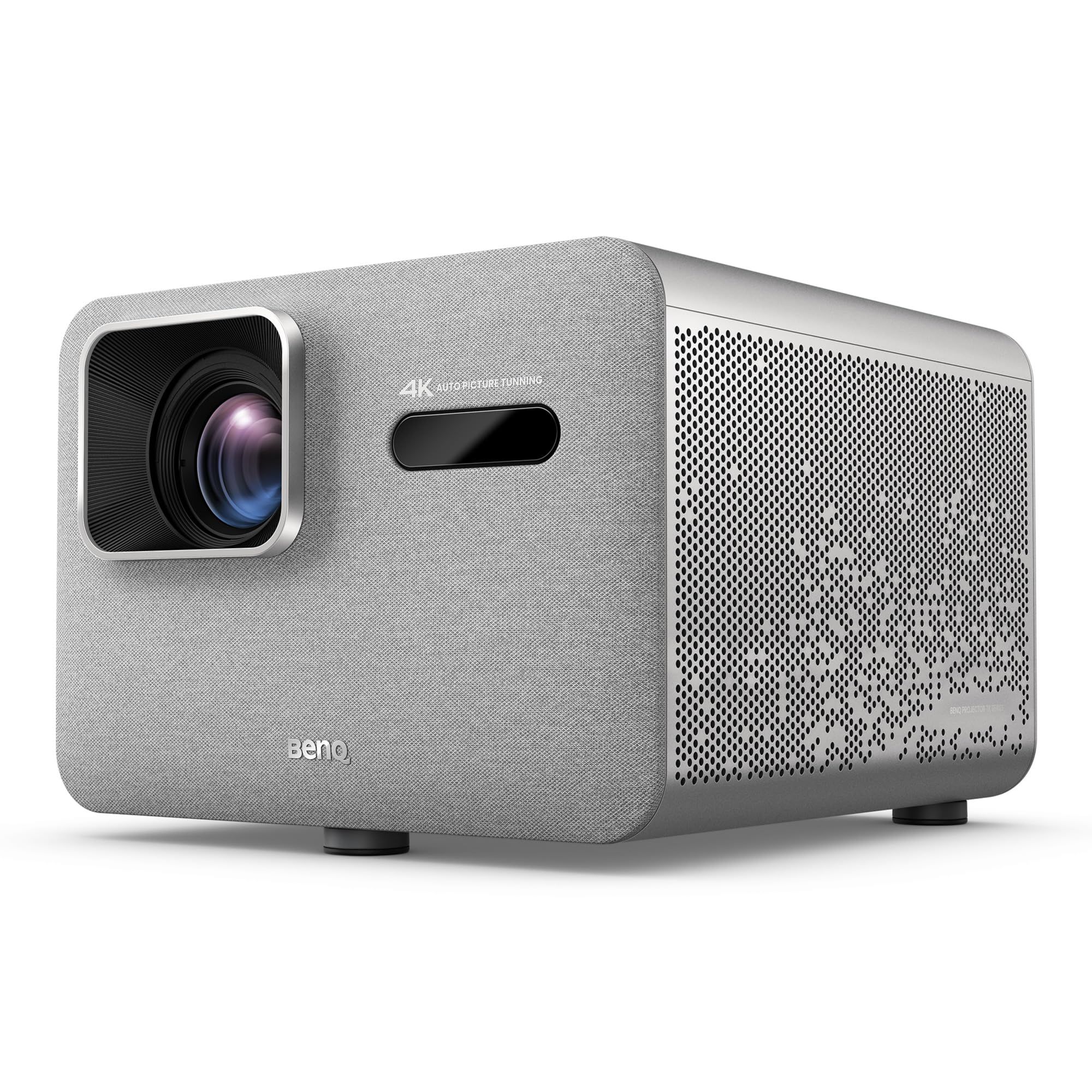
The BenQ TK705i is built to get a 4K picture on the wall quickly. It has auto focus, auto 2D keystone correction, Auto Cinema Mode and what BenQ calls 8-way Smart Image Adaptation. Its 4 LED light source is rated at 3000 ANSI lumens, and BenQ lists 4K UHD resolution at 3840 x 2160 with 98% Rec. 709 color coverage.
Built-in Google TV gives access to Netflix, YouTube, Prime Video and more, and two HDMI 2.1 ports support ALLM with a quoted 5ms input lag at 4K/60Hz. BenQ also lists MEMC motion processing, HDR-PRO tone mapping, built-in speakers, Bluetooth 5.2 and a USB-C port with 30W charging. The 1.0 to 1.3 throw ratio and 150-inch maximum suit living rooms more than large theaters.
Key highlights
- 4K UHD (3840 x 2160)
- 4 LED light source, 3000 ANSI lumens
- 98% Rec. 709 color coverage
- 2x HDMI 2.1 with ALLM
- 5ms input lag at 4K/60Hz
- Google TV built in
- Auto focus and auto 2D keystone
- 1.0 to 1.3 throw ratio, up to 150 inches
- 3-year warranty
Pros
- Automatic setup features make it easy to move or reposition
- Low quoted input lag at 4K/60Hz
- Google TV with major streaming apps built in
- 3-year warranty, longer than the Epson picks
Cons
- 150-inch maximum is half the 300-inch rating of several other picks
- BenQ's page gives no light source life figure
- Color coverage is listed against Rec. 709, with no wider gamut figure given
Who it is for: Living room and casual viewers who want streaming, gaming and auto setup in one projector without fiddling with alignment.
Skip if
You plan a very large screen or want the wide lens shift of the Epson LS6000 or XGIMI HORIZON 20 Pro.
Optoma UHZ36 - Best compact laser
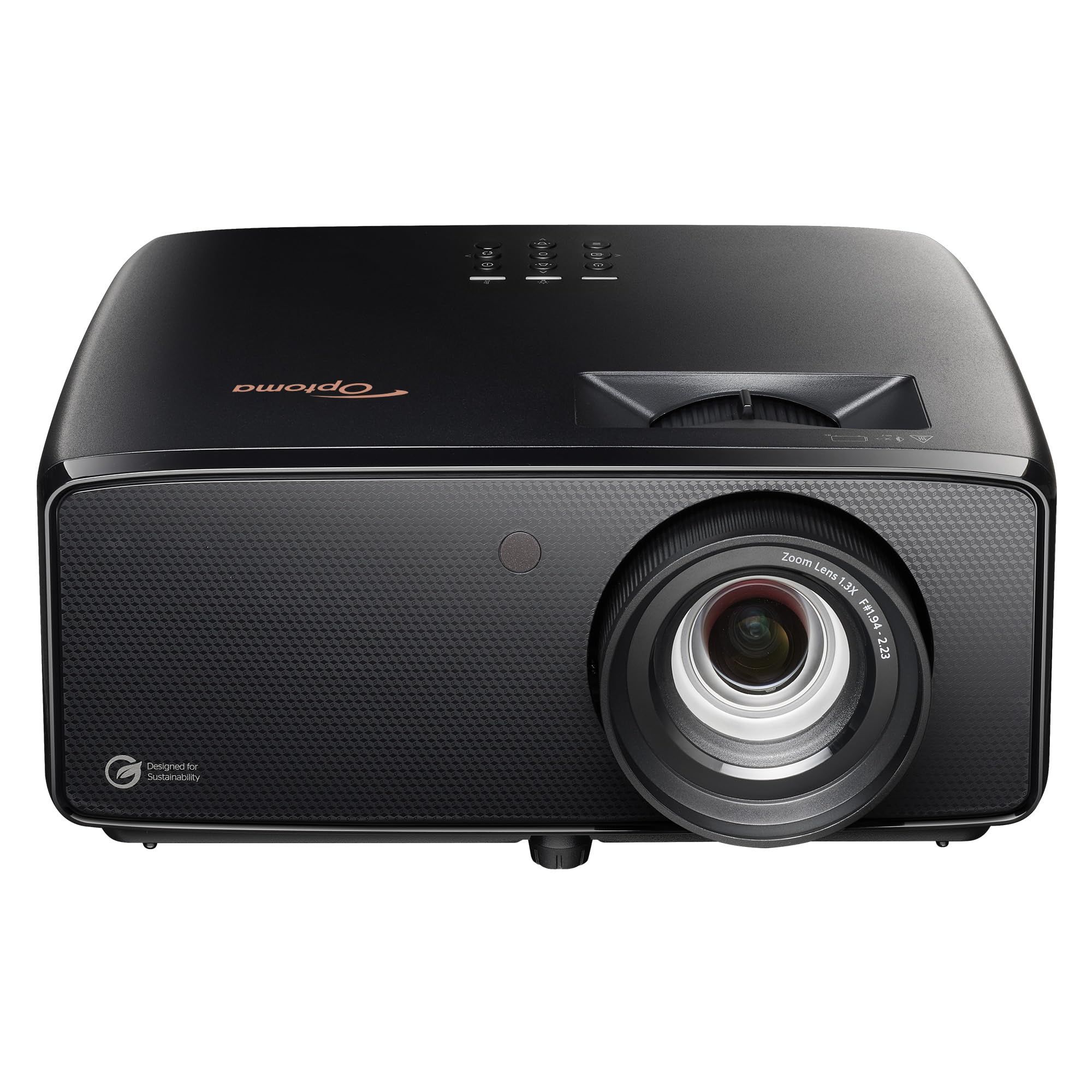
The Optoma UHZ36 brings a laser light source to a small, simple package. Optoma rates it at 3,500 ISO lumens with a 1,000,000:1 contrast ratio, and its laser phosphor light source is listed at 30,000 hours in Eco mode. The DLP projector lists 4K UHD resolution at 3840 x 2160 and HDR support.
At 3.4 kg, it is compact, and it supports 360-degree and 24/7 operation. A 1.3x manual zoom, a 1.21 to 1.59 throw ratio and auto vertical keystone help with setup, and it projects from 28 to 300 inches. Optoma lists two HDMI 2.0 ports, one with ARC out, a 15W speaker, and fan noise of 28 dB in Eco mode and 33 dB in Bright mode.
Key highlights
- 3,500 ISO lumens
- Laser phosphor light source, 30,000 hours in Eco mode
- 4K UHD (3840 x 2160) DLP
- 1,000,000:1 contrast ratio
- 1.3x manual zoom, 1.21 to 1.59 throw ratio
- 28 to 300-inch image size
- 2x HDMI 2.0, one with ARC
- 15W speaker, 3.4 kg
Pros
- Maintenance-free laser with no lamp changes
- High rated brightness in a light body
- 360-degree operation allows unusual mounting angles
- Low rated fan noise in Eco mode
Cons
- No lens shift listed, only keystone correction
- HDMI 2.0 rather than HDMI 2.1
- No built-in streaming platform listed, and specific HDR formats are not named
Who it is for: Buyers who want a bright, low-maintenance laser projector that is easy to place and move.
Skip if
You need lens shift for an off-center mount or want built-in apps.
ViewSonic PX749-4K - Best for Xbox gaming
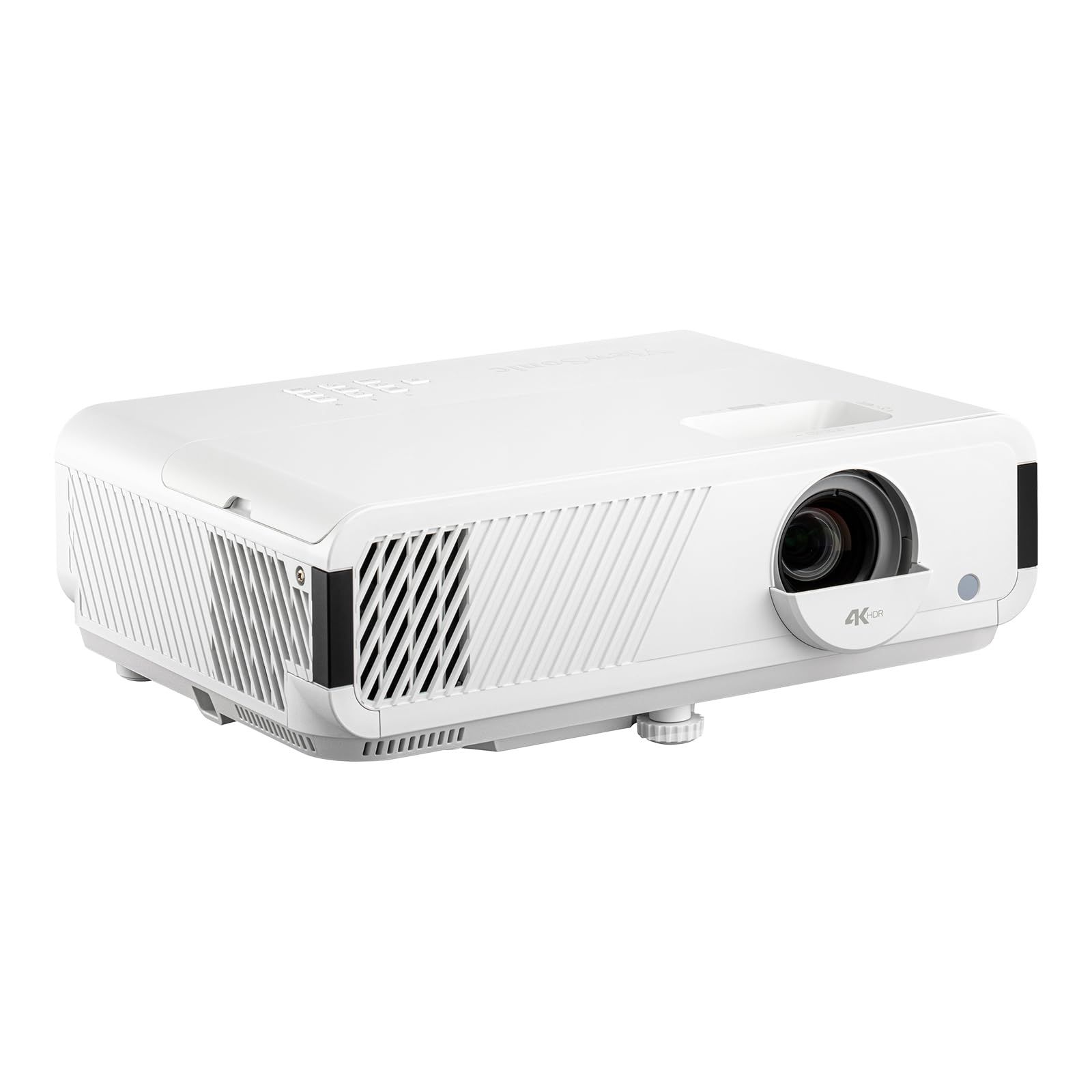
The ViewSonic PX749-4K is a "Designed for Xbox" projector made in partnership with Microsoft. ViewSonic quotes 1440p native resolution at 120Hz for Xbox with 4.2ms input lag, and says it can deliver a 240Hz refresh rate for other games and movies. It lists 4K UHD resolution at 3840 x 2160 with HDR and HLG support.
Brightness is rated at 4,000 ANSI lumens with a 12,000:1 dynamic contrast ratio. A 1.3x optical zoom, a 1.13 to 1.47 throw ratio and plus or minus 40-degree vertical and horizontal keystone help with placement, and ViewSonic says it projects 100 inches from 8.2 feet. It weighs 6.6 pounds and has a 10W speaker, two HDMI 2.0 ports, USB-C and RJ45.
Key highlights
- Designed for Xbox, with 1440p at 120Hz
- 4.2ms input lag
- Up to 240Hz refresh rate
- 4,000 ANSI lumens
- 4K UHD (3840 x 2160), HDR and HLG
- 1.3x optical zoom, 1.13 to 1.47 throw ratio
- 30 to 300-inch image size
- Three-year limited warranty on parts and labor
Pros
- Low 4.2ms quoted input lag for Xbox play
- Bright rating for living rooms (ViewSonic quotes ANSI lumens, others ISO)
- Four-corner adjustment helps on curved or awkward surfaces
- Long warranty on parts and labor
Cons
- Uses a lamp, rated at 4,000 hours in normal mode, that will eventually need replacing
- No built-in streaming platform, so a streaming stick or console is needed
- HDMI 2.0 ports, and ViewSonic does not say at what resolution 240Hz applies
Who it is for: Xbox players and game room owners who care most about responsiveness and brightness on a big screen.
Skip if
You want a laser or LED light source with no lamp replacements, or built-in streaming apps.
Epson Lifestudio Flex Plus - Best portable
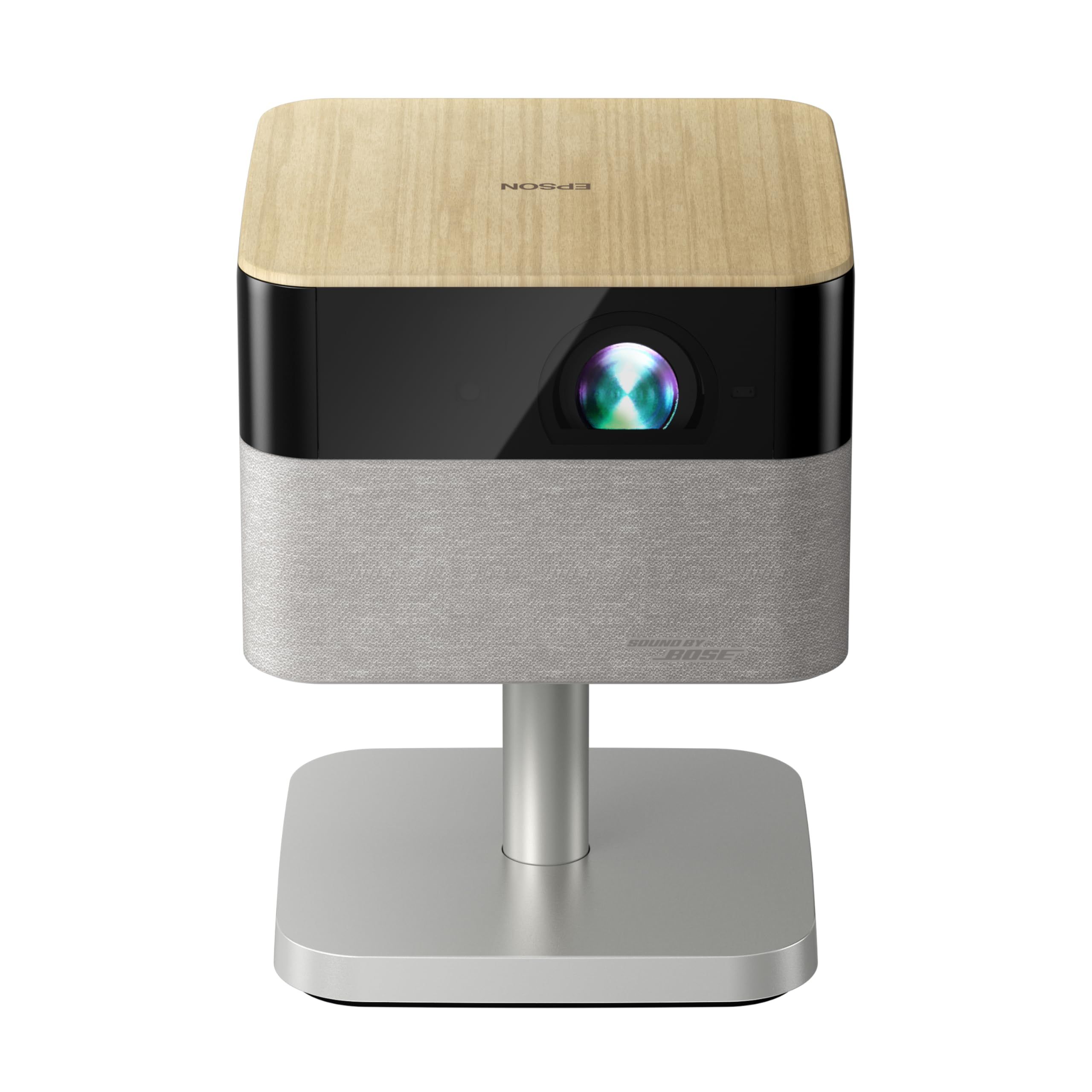
The Epson Lifestudio Flex Plus is a 3.5-pound 4K PRO-UHD projector with a built-in tiltable stand, made to move from room to room. Epson's 3LCD Triple Core Engine uses dedicated red, green and blue LEDs, rated at 1,000 lumens of color and white brightness. Its 4K PRO-UHD picture comes from pixel shifting, and it projects up to 150 inches.
Google TV is built in with Netflix and more than 10,000 apps, and sound comes from Sound by Bose technology. EpiqSense 2.0 auto-setup handles focus, color and alignment, and the Flex Plus adds ambient mood lighting. Epson lists HDMI and USB-C connections, ALLM support for gaming, and a 2-year limited warranty.
Key highlights
- 4K PRO-UHD via pixel shifting
- 1,000 lumens color and white brightness
- 3LCD Triple Core Engine with red, green and blue LEDs
- Google TV with Netflix built in
- Sound by Bose technology
- EpiqSense 2.0 auto-setup
- Up to 150 inches, 3.5 pounds
Pros
- Light and easy to carry between rooms
- Streaming and speakers built in, so it works on its own
- Automatic focus, color and alignment setup
- Mood lighting doubles as ambient room light
Cons
- 1,000 lumens is the lowest rating here, so it suits dim rooms best
- 4K comes from pixel shifting, not a native 4K chip
- 150-inch maximum limits very large screens
Who it is for: Renters, families and casual viewers who want a self-contained 4K projector for movie nights in different rooms.
Skip if
You are building a dedicated theater or want to watch in a bright room.
How to Choose
- Match brightness to the room. A dark theater can work well with modest lumens, but a living room with lights on needs a brighter projector, such as one rated at 3,000 lumens or more.
- Know how the 4K image is made. Many 4K projectors use pixel shifting to place a 3840 x 2160 image on screen from a lower-resolution chip. Makers do not always say which method they use, so check the spec page.
- Plan placement before you buy. Throw ratio sets how far back the projector must sit for a given screen size. Lens shift moves the image without distorting it, while keystone correction is digital and can soften the picture.
- Pick a light source you can live with. Laser and LED light sources need no bulb changes. Lamp projectors can be bright for the money, but the lamp eventually needs replacing.
- Check gaming specs at the resolution you play. Very low input lag and 240Hz figures are often quoted at 1080p. Look for the 4K figure if you game at 4K.
- Decide if you need built-in streaming. Smart projectors with Google TV and speakers work on their own. Projectors without apps need a streaming device and often a soundbar.
FAQ
Is a pixel-shift 4K projector really 4K?
It puts a 4K-resolution image on screen by shifting each pixel rapidly, rather than using a chip with 3840 x 2160 physical pixels. Makers such as Epson state this on their spec pages.
How many lumens do I need for a 4K projector?
For a dark room, around 1,000 lumens can work. For a living room with some ambient light, a projector rated at 3,000 lumens or more is a safer choice. Ratings use different standards, such as ANSI or ISO, so compare carefully.
Is a laser projector better than a lamp projector?
Laser projectors need no lamp changes and usually turn on faster. Lamp projectors cost less to make but need lamp replacements over time.
Do I need a projector screen?
A flat, smooth, light-colored wall can work, but a proper screen usually gives more even brightness and better contrast, especially with ambient light.
Can I game on a 4K projector?
Yes. Look for ALLM, a low quoted input lag, and a high refresh rate. Several picks here quote input lag of 20ms or less.
Published November 9, 2026 Last updated November 9, 2026
Add Technobezz on Google:Preferred SourceGoogle Discover
More on projectors
Deal
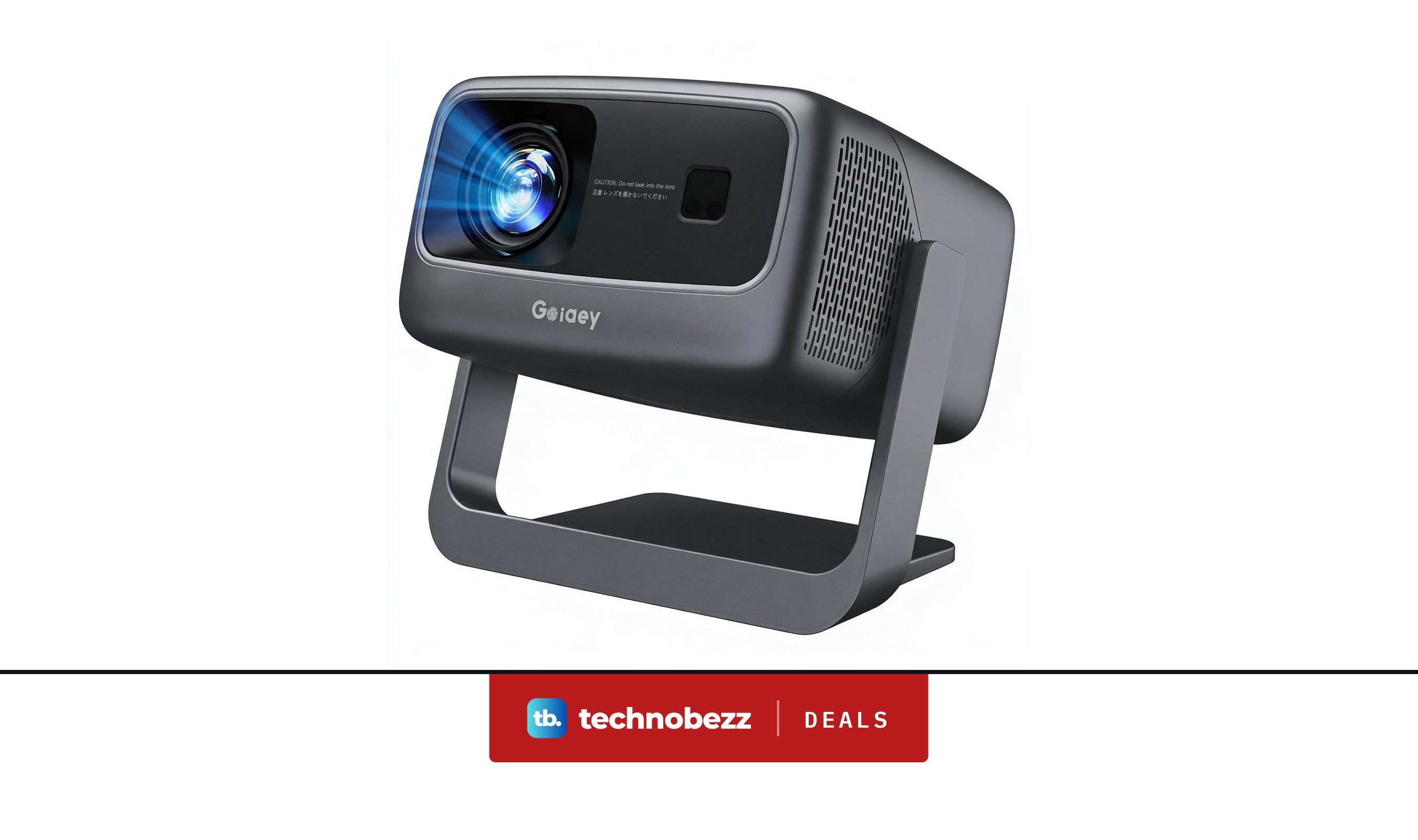
Goiaey 5000 ANSI/VIDAA Live TV/65W Audio 4K-Projector down to $299.99 in latest price cut
Deal
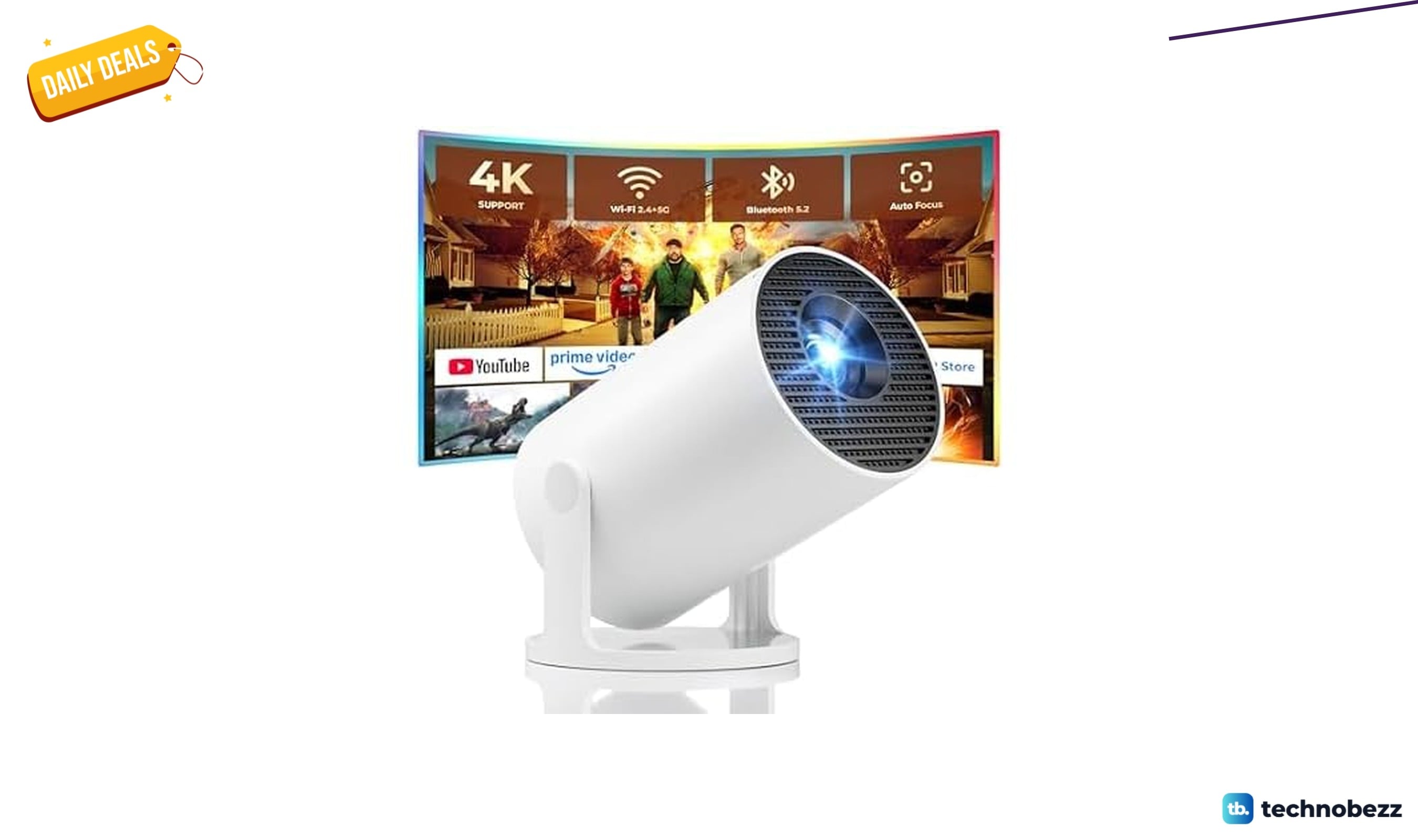
ClokoWe Projector is $49.99 at Woot
Deal
VISULAPEX Projector Screen gets a $28.32 price cut to $72.67

Deal
O.B.E Office Google TV Projector slips to $94.98
More buying guides
Buying guide5 Best 4K Gaming Monitors in 2026Buying guide6 Best Outdoor Speakers in 2026Buying guide5 Best Earbuds for Android in 2026Buying guide6 Best Open-Ear Earbuds in 2026Buying guide7 Best Xbox Controllers in 2026Buying guide7 Best Garmin Watches in 2026Buying guide5 Best PS5 Controllers in 2026Buying guide5 Best 55-Inch TVs in 2026