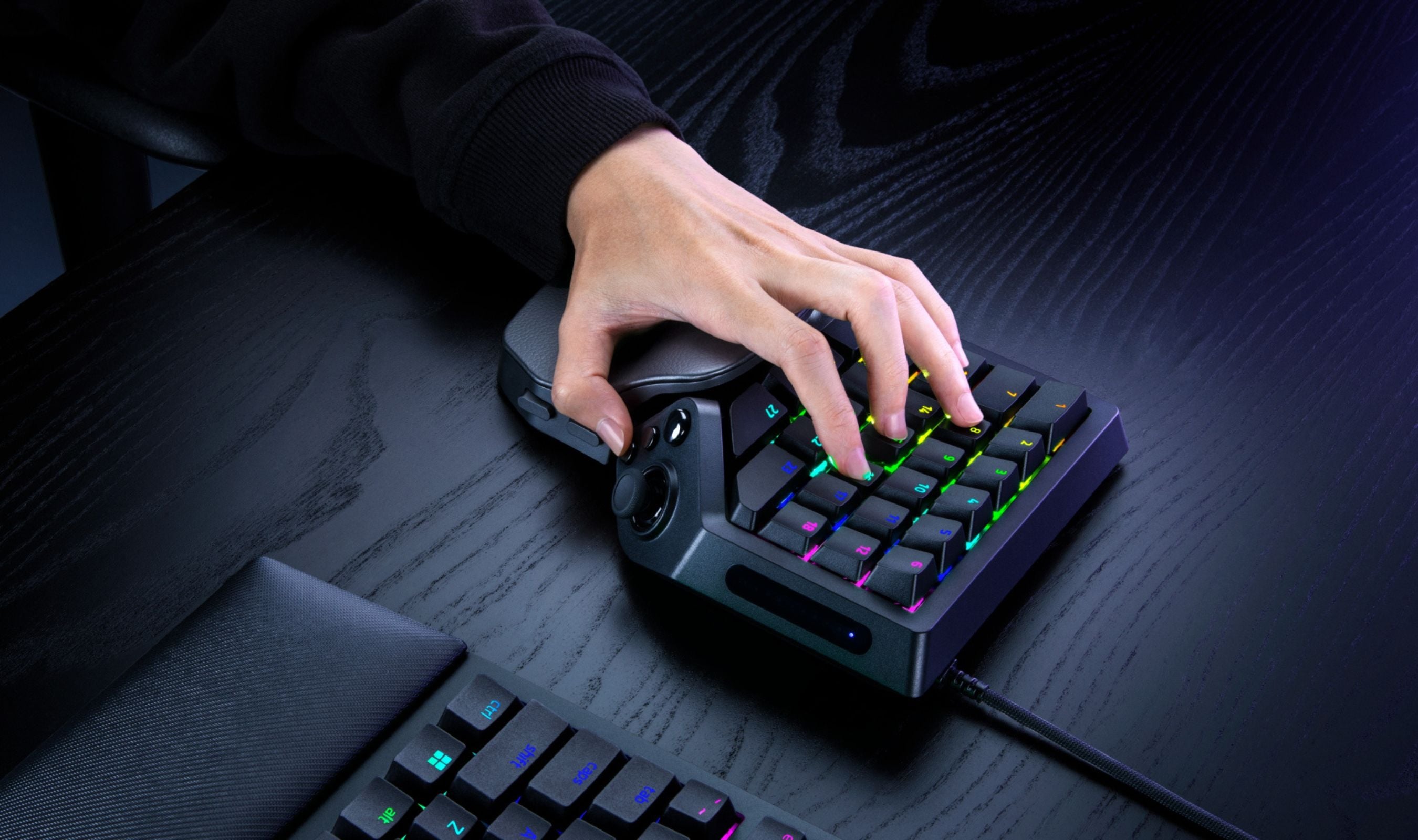
Razer has announced the Tartarus V2 Pro, a gaming keypad that brings the company's Analog Optical Switch Gen-2 technology and true 8000 Hz HyperPolling to the Tartarus line for the first time. The keypad offers 31 programmable controls, a full-sized anti-drift TMR thumbstick, and a wrist rest that slides out and rotates left and right to match a player's hand position. Razer did not disclose a price or a release date in the announcement.
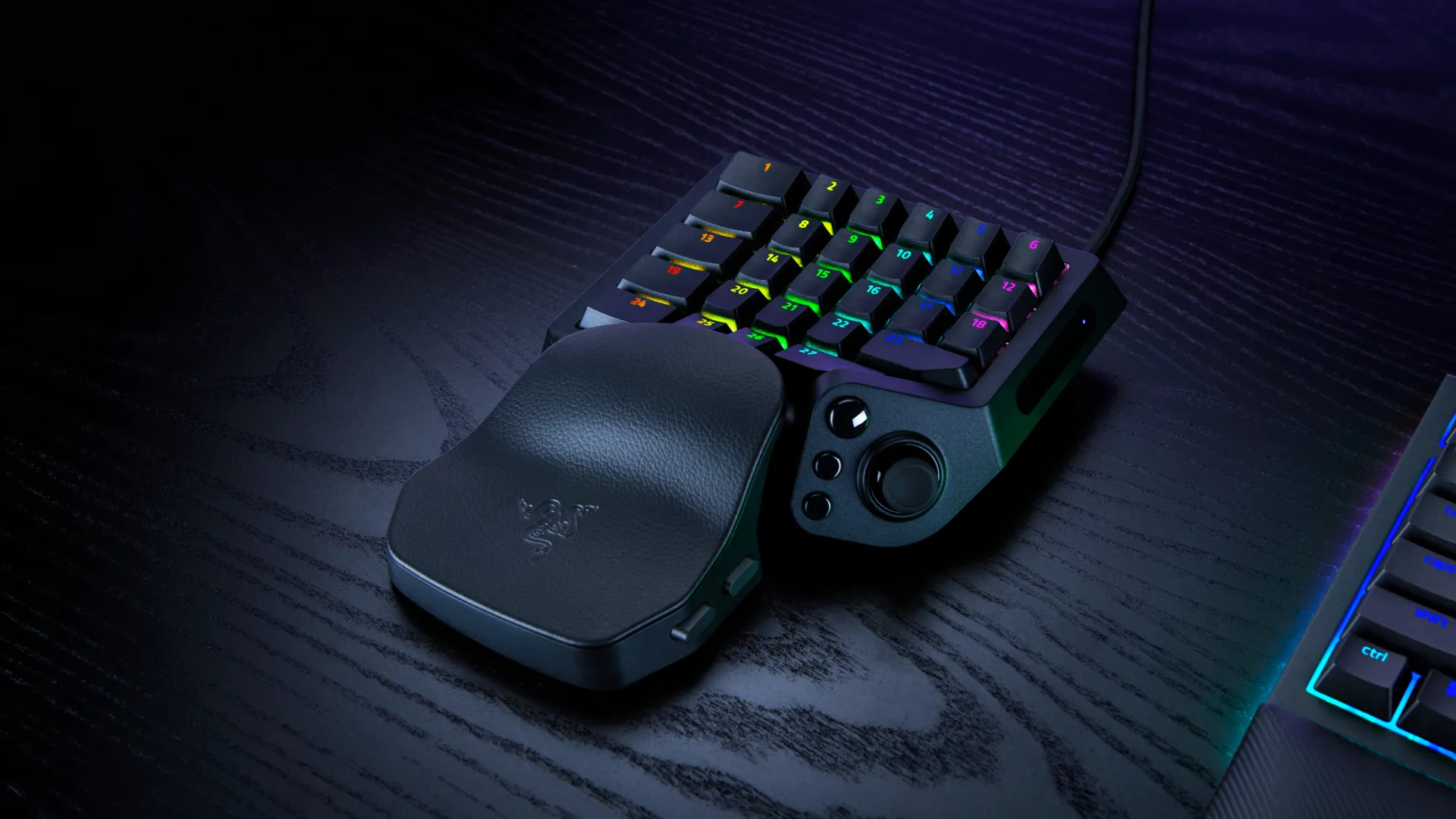
The switches support an actuation range of 0.1 to 4.0mm and Rapid Trigger sensitivity down to 0.1mm for repeated inputs, with each switch individually lubricated and rated for 100 million keystrokes. The thumbstick, which Razer says is drawn from its controllers, is paired with three dedicated buttons.
Read more: Razer Reclusa X Mini 65% Keyboard Announced With Hot-Swap Switches
The wrist rest is the keypad's main ergonomic pitch: rather than a fixed position, it moves with the hand so wrists stay aligned during long sessions. Razer says the design lets players find their own natural angle instead of adjusting their grip to fit the hardware.
For competitive play, the Tartarus V2 Pro carries up to 8000 Hz HyperPolling, which Razer describes as eight times faster than the industry standard, alongside its Advanced Input Control suite including Razer Snap Tap, Razer Snap Flex and Dynamic Keystroke. Players can set up to 24 keymaps across 3 onboard profiles through Razer Synapse, and adjust actuation or Rapid Trigger settings on the device itself using an onboard LED array without software. The keycaps are doubleshot PBT with a textured finish.
"Games have evolved dramatically, and players now expect more control, precision, and flexibility from the hardware they use," said Barrie Ooi, Head of PC Gaming Division at Razer. He added that the Analog Optical Switch Gen-2 lets players decide how each key responds and that the TMR thumbstick provides smooth analog movement with zero stick drift.
The announcement follows Razer's August reveal of the Artisan Keycap, Triple-Headed Snake Edition, which the company called its first artisan keycap and a step toward keyboard customization for its most dedicated fans.
Razer positions the keypad as the next step in the Tartarus line and says it will keep developing the platform as competitive play demands more from every input.