
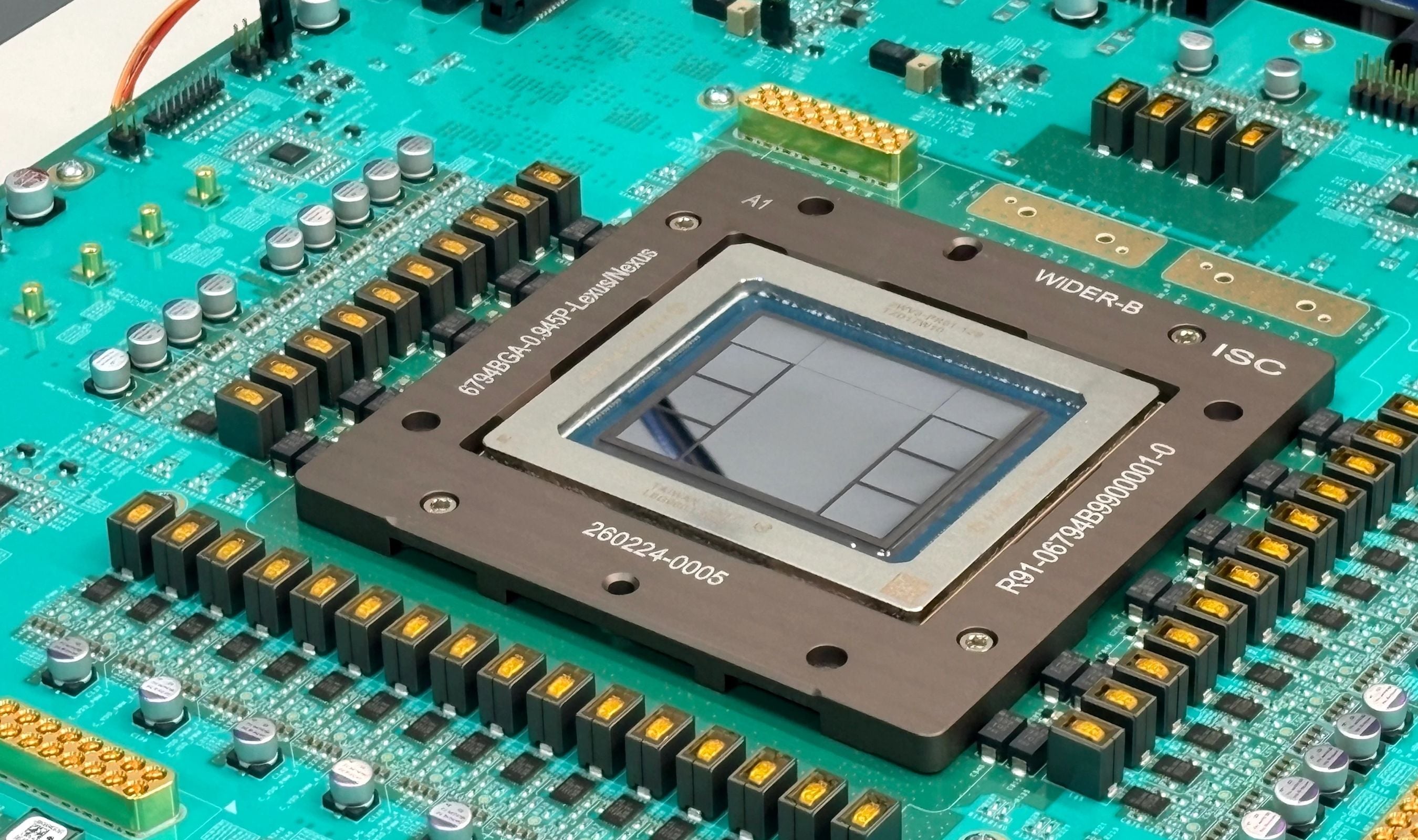
OpenAI claims its custom Jalapeno AI chip has outperformed Nvidia's current systems in key tests, with hardware chief Richard Ho telling Bloomberg News on August 25 that the processor surpassed Nvidia's top-performing GB300 in AI tasks processed per watt and response speed. The company plans to start using Jalapeno to run its AI models later this year, a shift that could lower costs and speed up its AI services.
Jalapeno was developed by OpenAI with semiconductor company Broadcom, and it is designed mainly for AI inference, the stage where an already-trained model responds to user requests. The chip is not built for training AI models, an area where Nvidia's processors remain strong.
Ho said Jalapeno is unusual in that it targets both high throughput and low latency, meaning it can serve many customers cheaply while still delivering fast response times for those who need it.
OpenAI will decide which AI models run on the chip, letting customers choose between options that prioritize lower costs or better performance. In public tests detailed on OpenAI's company blog, the chip ran the company's own small open-source models as well as third-party models from DeepSeek and Moonshot AI, showing greater performance superiority with Moonshot's Kimi model.
Power efficiency is a major selling point. OpenAI says the chip can deliver strong performance while using around 700 watts, and lower power consumption can reduce the cost of operating the large data centers that run AI services.
The company says it will continue using chips from Nvidia and other providers even as Jalapeno comes online.
The chip was not tested against Nvidia's newest Vera Rubin chips, which have recently started shipping. OpenAI has not yet provided a specific timeline for when Jalapeno will enter full production or become available for widespread use.
A custom chip like Jalapeno can sacrifice some versatility for superior performance on the narrow set of operations that dominate AI inference, whereas Nvidia GPUs offer general-purpose flexibility across a wide range of workloads. OpenAI is already working on a second-generation Jalapeno chip and expects to complete its design in the coming months, with third-generation planning underway as the company looks to cut AI infrastructure costs.
Ho said OpenAI will not immediately replace Cerebras' chip technology, which is currently used for relatively small models.