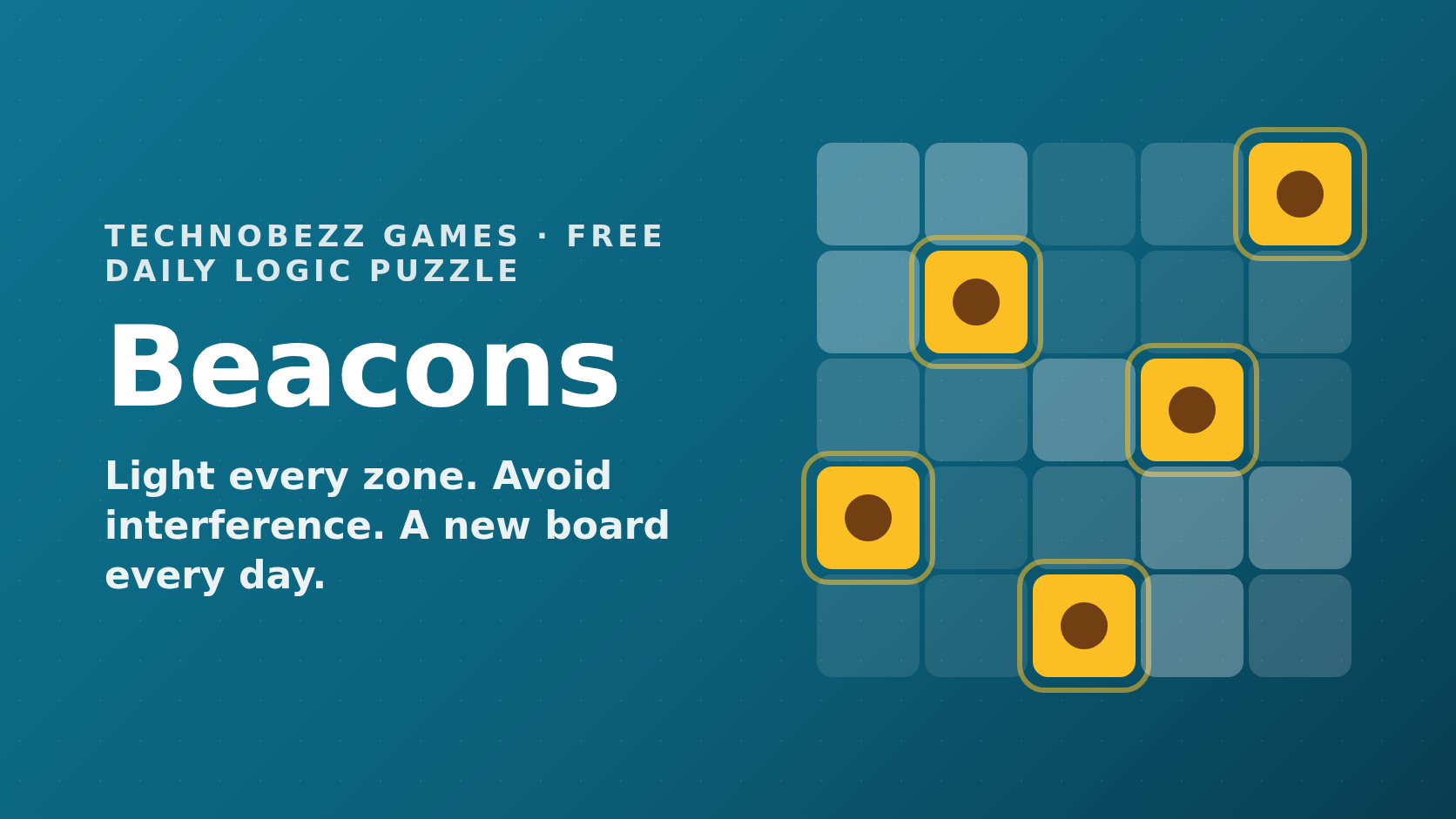
Beacons Daily Logic Puzzle
Play Beacons, a free daily logic puzzle. Place one beacon in every row, column, and zone without any two touching, then keep your streak alive.
9 min read
Technobezz Games
Six spec rows. One mystery gadget. A new puzzle every day. Free, no account.
A new device hides behind six spec rows every day. Row one is open when you arrive, every miss unlocks another row, and you have six guesses to name it.
Techle is our daily gadget guessing game. Each day a new mystery device takes the stage above, hidden behind a six row spec sheet. The first row is already open when you arrive, and the other five unlock as you play.
You get six guesses. Type a device name into the box, pick a match from the suggestions, and submit. A wrong name is crossed out in the guess log and unlocks the next spec row, so even a miss buys you information. Name the device before the guesses run out and the full sheet opens with the answer card.
The sheet always opens with the category, so you know in the first second whether you are hunting a smartphone, a console, a camera, a drone, or something much older. Row two is the release date, usually a month and a year. Rows three and four change with the category and carry the details a reviewer would lead with, such as the display, the chip, the sensor, the battery, or the media it played.
Row five is the launch price, and row six is a written final hint. That order is fixed, and it matters more than it sounds. Because a wrong guess or a skip unlocks the next row, five spent turns leave the entire sheet open in front of you before the sixth and final guess.
The guess box only accepts devices we track, so the submit button stays inactive until your text matches a name on the list. Common nicknames count when they name the day's device, so the shorthand you actually say out loud still wins the round. The suggestion list itself shows full names. When nothing comes to mind, the skip button spends a turn and reveals the next spec without naming a device.
The fastest way to narrow a board is to read the release date and the launch price together. Category plus year sets the era, and the price separates the flagship from the budget model sold in that same year.
Work through a real example. IBM unveiled the IBM PC on August 12, 1981 at a price of $1,565, with 16 kilobytes of memory and no disk drive, according to IBM's own history of the machine. A sheet that reads Desktop, August 1981, and a four figure price leaves very few candidates standing, because the era has already done most of the work. That sheet is an illustration rather than a preview of a scheduled day.
Guessing is almost always better than skipping. Both spend one of your six turns and both unlock the same next row, but a named guess also rules a device out and leaves it in the log where you can see it. Save the skip for a round where the sheet is still too vague to risk a name you only half remember.
When the final hint lands, read it as a sentence rather than a spec. It is written the way a person would describe the device to a friend, so it often points at packaging, marketing, or a quirk that no spec line captures. If it mentions a bundle, a color, or an accessory, chase that detail instead of the numbers above it.
One device per day, the same device for every player, numbered from the day the game launched. Puzzle numbers follow your local calendar date, and the countdown in the results card runs to your own midnight, when the next device unlocks.
Your record stays in this browser. Played, win rate, current streak, and best streak are written to local storage, which MDN describes as storage tied to the site origin that is saved across browser sessions. There is no account, no sign in wall, and nothing to install, and clearing site data for Technobezz resets the numbers.
Sharing produces a spoiler free line. It carries the puzzle number, one magnifier for each guess you spent, a single square for the result, and a link back to the game, so the result row for a win on the third guess reads Techle #12 🔍🔍🔍🟩. A streak line is added once your streak passes a single day. On phones the share button opens the native share sheet, which MDN documents as the device sharing mechanism behind navigator.share, and everywhere else the text lands on your clipboard.
Techle is ours, built in house, and the device list comes out of the same launch coverage we write the rest of the year. Every device in the rotation carries source links recorded next to its spec sheet, which is why the release dates and launch prices read like a product page rather than a memory.
The rotation spans eighteen categories, from smartphones, laptops, tablets, and consoles to earbuds, speakers, cameras, drones, monitors, and routers, plus a retro shelf that reaches back to talking toys and tape players from decades before the smartphone. The suggestions list recognizes hundreds of real devices, so a fair guess is rarely blocked by spelling.
If you enjoy the daily rhythm of Wordle, the word game the New York Times publishes, or the daily puzzle set on LinkedIn that includes Pinpoint and Crossclimb, Techle will feel familiar inside one round. It is not affiliated with either of them, and it is not a clone of either. The board here is hardware, and the reward for knowing gadgets is that the sheet starts talking to you two rows earlier.
Two sibling games launched alongside it. Beacons is our daily logic puzzle, where one beacon goes in every row, column, and zone without any two touching. Sort Circuit hands you sixteen tiles that hide four groups, with four mistakes to spend. All three sit together on our daily games page, next to the hint articles we publish for other people's puzzles.
No. Techle is free, runs entirely in your browser, and keeps no profile. Your stats live in this browser, so a different browser or a different device starts a fresh record.
A guess has to match a device on our list before it can be submitted, which stops a typo from spending a turn. Type two or three characters and pick from the suggestions that appear above the box.
Rarely. A skip and a wrong guess cost the same single turn and reveal the same next row, so a plausible name is the better trade in almost every round.
Yes, for a given calendar day. The daily number is worked out from your local date, so a friend in another time zone meets the same device on their own version of that day.
Once earlier days exist, a replay button offers a random past device, and those rounds never touch your stats or your daily result. On the opening day there is nothing behind the game yet, so the button stays hidden.
Techle is fully playable from the keyboard. Tab reaches the guess box and every button, typing filters the suggestions, the arrow keys move through them, and Enter picks the highlighted device. Escape closes the suggestion list first and releases focus on a second press, so the keyboard is never trapped in the field.
The status line under the board is a live region, so a screen reader hears each reveal, each miss, and the final result without hunting for the change. Interactive controls carry text labels or spoken labels rather than an icon alone, and the guess box shows a visible focus outline.
Motion is deliberately small. The only movement in the game is a short ease as a newly unlocked value settles into place, and nothing loops, flashes, or shifts on its own while you think. No part of the puzzle depends on seeing that motion, because every revealed row stays on screen as plain text.
If small browser tools are your thing, the same no account approach runs through our online device tests and our symbols and keyboard characters reference. A round of Techle takes about two minutes on a good day, and the next device is never more than one local midnight away.
Play Beacons, a free daily logic puzzle. Place one beacon in every row, column, and zone without any two touching, then keep your streak alive.
9 min read
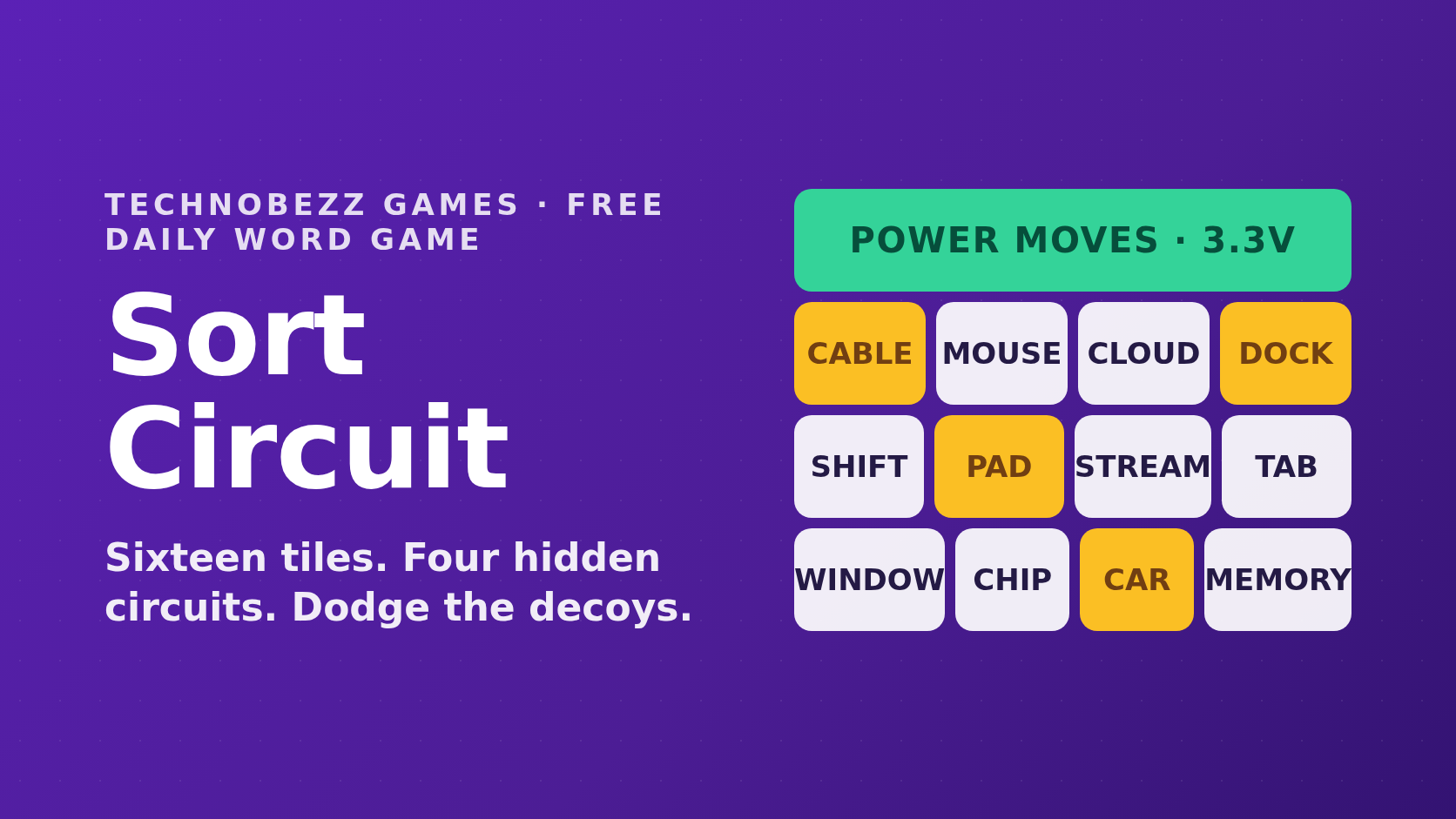
Play Sort Circuit, a free daily word game. Sort sixteen tiles into four hidden circuits, dodge the decoys, and keep your daily streak alive.
9 min read