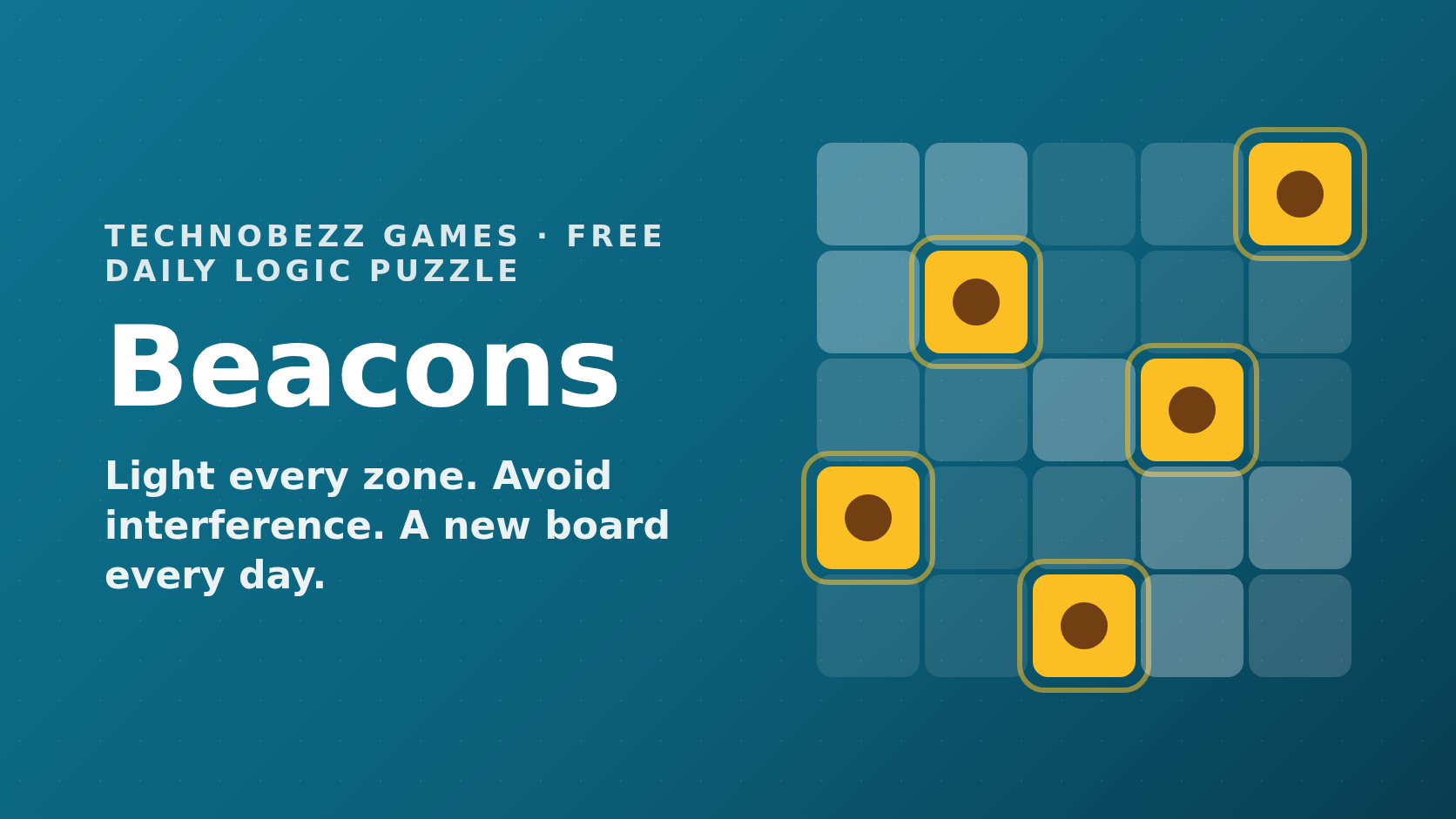
Beacons Daily Logic Puzzle
Play Beacons, a free daily logic puzzle. Place one beacon in every row, column, and zone without any two touching, then keep your streak alive.
9 min read
Technobezz Games
Sixteen tiles. Four hidden circuits. A new puzzle every day. Free, no account.
Sixteen tiles hide four circuits of four related words. Select four tiles, press Connect, and clear all four circuits before four mistakes close the board. Your streak stays in this browser, and the game is free with no account.
Sort Circuit is our daily word grouping puzzle, and the board above is today's. Sixteen tiles, four hidden circuits of four related words, and four mistakes to spend before the board closes. Nothing to install, nothing to sign up for.
We wrote these boards to argue with you. Most of them hold at least three tiles that look perfectly at home in a group they do not belong to, so the quickest way to lose is to trust the first pattern you see. The trick is to stop asking what a tile could mean and start asking which tile has only one place left to go.
Select tiles by tapping or clicking them, up to four at a time. Selected tiles fill with the game color, Deselect all clears the lot, and the Connect button stays disabled until exactly four tiles are lit, so you can browse combinations without risk. Connect is the only control that can cost you anything.
Land all four and the circuit collapses into a full width bar above the grid. Each bar names the group, lists its four words, and prints a voltage, so a finished board reads as a stack of four bars in the order you solved them.
Voltage is our difficulty ramp, and it runs 3.3V, 5V, 12V, then 110V. The 3.3V circuit is the one nearly everyone spots, the middle two carry the real work, and the 110V group is usually wordplay rather than a plain category, written to catch a confident solver out once.
A wrong guess spends one of your four mistakes, tracked by the dots in the toolbar above the board. If exactly three of your four tiles share a circuit, a One away note appears for a moment so you know how close you came, and that near miss still spends a mistake. Run the dots out and the board reveals the circuits you never found, gentlest voltage first.
Count the candidates before you commit. If the category in your head fits five or six tiles, you have found a theme rather than a circuit, and the spare tiles are the decoys we planted. Park the idea and look for a group where you can name exactly four and no more.
Work from the loneliest tile. There is almost always one word that reads as strange no matter which category you hold it against, and that tile usually belongs to the 110V group. Naming that circuit first drains the pool of decoys, and the plain categories tend to fall out on their own afterward.
Shuffle when your eyes stop moving. The layout creates accidental rows and columns that your brain starts reading as meaning, and reshuffling the remaining tiles breaks the spell without costing a mistake or resetting anything you have solved.
Spend a One away result properly. Three of those four tiles really do belong together, so keep the idea and swap out the single tile you were least sure about instead of throwing the whole guess away. Two careless follow ups after a near miss is how most lost boards end.
Everyone playing on the same local calendar day gets the same board and the same puzzle number, counted from our launch day. The next board unlocks at midnight in your own time zone, and the results panel counts down to it.
Your record stays in this browser. We keep games played, win rate, current streak, and best streak in local storage, which browsers hold across sessions with no expiration date until something clears it. There is no account, no sign in, and no sync, so moving to another browser or device or clearing site data starts you at zero, and a private browsing window drops its copy once the last private tab closes.
Finish a board and you can share the shape of your solve. Each row of the share grid is one guess, and each square is colored by the true voltage of the word you picked, so a clean run reads as four solid rows like 🟩🟩🟩🟩 while a messy one shows its scars like 🟩🟦🟩🟧. A streak longer than a day adds a line like 🔥 4 day streak, a board solved with no mistakes gets a ⚡ beside its number, and the tile words never appear, so nothing you post spoils the puzzle for anyone else.
The share button hands that text to your device share sheet where the browser supports one, and copies it to your clipboard everywhere else. Both routes are limited to secure pages, the share sheet has to start from a real press, and nothing is ever sent on its own.
The grouping format is not ours. The New York Times has published Connections, a sixteen term grouping puzzle, since its launch in June 2023, and if that game is already part of your morning, Sort Circuit will feel familiar inside ten seconds. Every board here is written by our own puzzle editor, and the two games are not affiliated in any way.
Difficulty is spelled out rather than implied. Connections sorts its four categories by color, running from the most straightforward to the most difficult. We print a voltage on every solved bar under the group name and its four words, so the ramp stays legible even when color is hard to separate on your screen or with your eyes.
The opening arrangement is fixed for everyone. Our shuffle is seeded from the puzzle number, so the board you meet is the board your friends meet, which keeps a shared result honest. Shuffle is still there whenever you want to break the layout up yourself.
Past boards are replayable and harmless. Once boards have moved into the past, a replay button appears and deals you a random earlier one, and nothing that happens there touches your stats or your streak. Warming up costs you nothing, and no amount of archive play can inflate a record.
Every tile and control is a real button, so a keyboard player can move focus onto a tile and select it with Space or Enter, then reach Shuffle, Deselect all, and Connect the same way. A focused tile takes a thick outline in the game accent color rather than a faint browser default. Escape releases focus from the board, so the grid never traps you.
The line under the board is a polite live status region, so a screen reader announces each result when it changes instead of cutting off whatever it was already reading. Solved bars carry the group name, the four words, and the voltage as text, which means no part of the board state depends on color alone.
Motion stays small. A missed guess nudges the tiles for about a third of a second and a solved circuit settles into place just as briefly, nothing flashes, loops, or moves on its own, and every one of those events is written out in the status line and the mistake dots as well, so you never have to watch an animation to know what happened.
Yes. The daily board and the archive replays are free, there is no account to create, and no part of the game sits behind a sign in.
It does. A guess with three correct tiles is still a wrong guess, so it spends one of your four. The note is there to tell you the idea was sound and a single tile was not.
Once boards have moved into the past, the replay button offers you a random earlier one. Archive play never changes your stats or your streak, so treat it as a practice room rather than a second run at yesterday's record.
In the browser you played in and nowhere else. Nothing is uploaded, so the streak follows the browser rather than you, and clearing site data clears the record for good.
Yes. It shares the grouping shape that several daily puzzles use, and that is where the relationship ends. The categories, the words, the voltage tiers, and every board are ours.
Sort Circuit launched with two siblings. Beacons is the logic puzzle of the set, where you light one beacon in every row, column, and zone without letting any two touch, and Techle hands you a spec sheet one row at a time until you can name the gadget. All three sit on the daily games hub, next to the hints and answers we publish every morning.
Everything here runs inside the page, the same way our browser device tests do, with nothing to install and nothing uploaded. And if the colored squares in the share grid caught your eye, our symbols and keyboard characters tool lets you search and copy those along with the rest of the characters your keyboard hides.
Play Beacons, a free daily logic puzzle. Place one beacon in every row, column, and zone without any two touching, then keep your streak alive.
9 min read
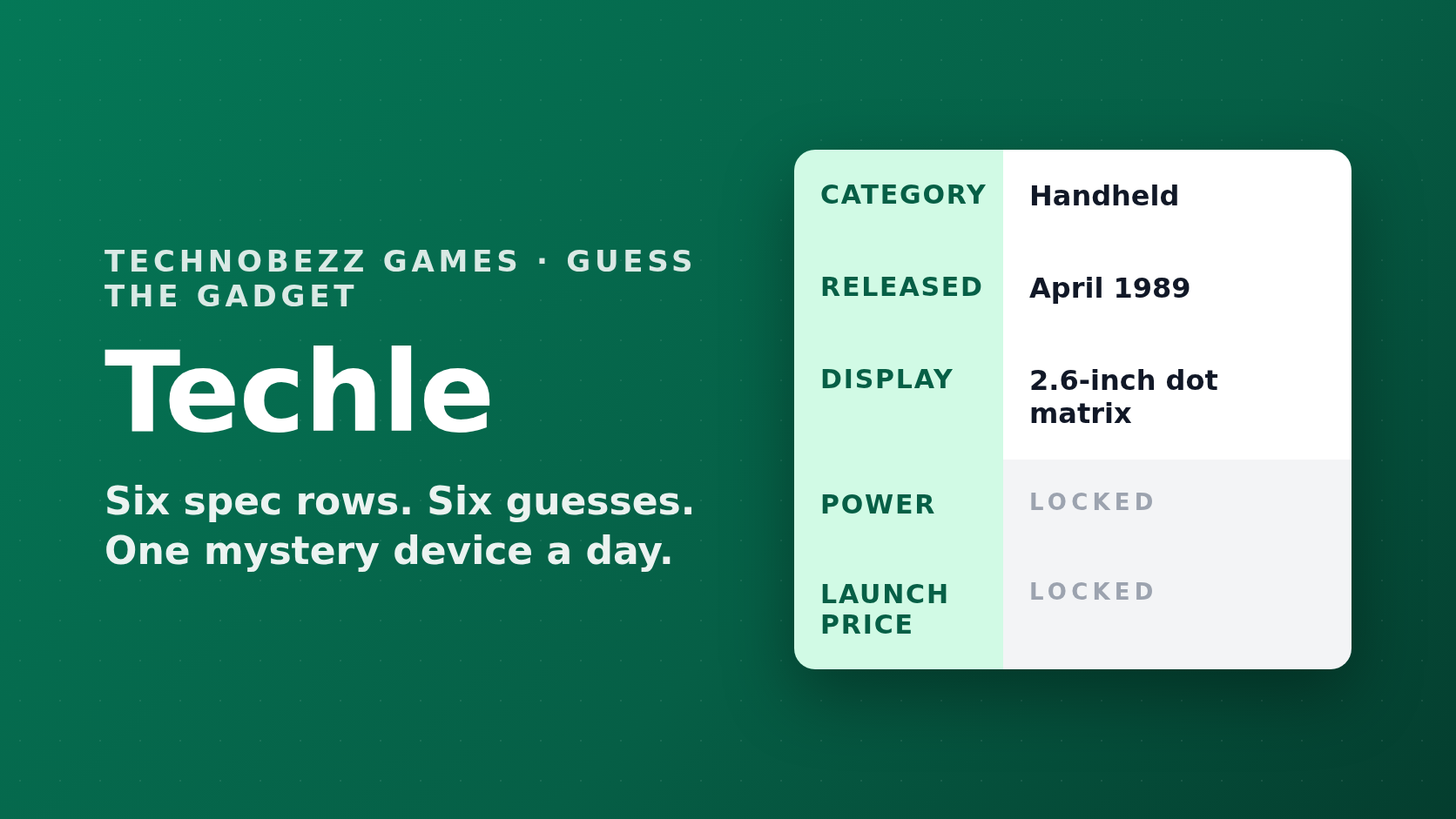
Play Techle, a free daily guessing game from Technobezz. Reveal a mystery device spec sheet row by row and name the gadget in six guesses.
9 min read