NVIDIA introduced Nemotron for Science to help researchers use AI agents to plan experiments, execute code and verify results on computers they control. The toolkit can run on a workstation, DGX Spark or a researcher's own supercomputer, Ian Buck said during the company's SC26 presentation in Chicago on Monday. NVIDIA also introduced Rubin HPC, a scientific computing GPU expected in 2028.
Nemotron for Science pairs the open Nemotron 3.5 Super VL model with an open dataset for chemistry and recipes for post-training in chemistry and life sciences. Buck said an Argonne National Laboratory agent using the toolkit worked from one prompt to develop and test hypotheses, select simulations and find two new binding sites.
Read more: NVIDIA DGX Spark 64GB Rolls Out Friday With New Local AI Tools
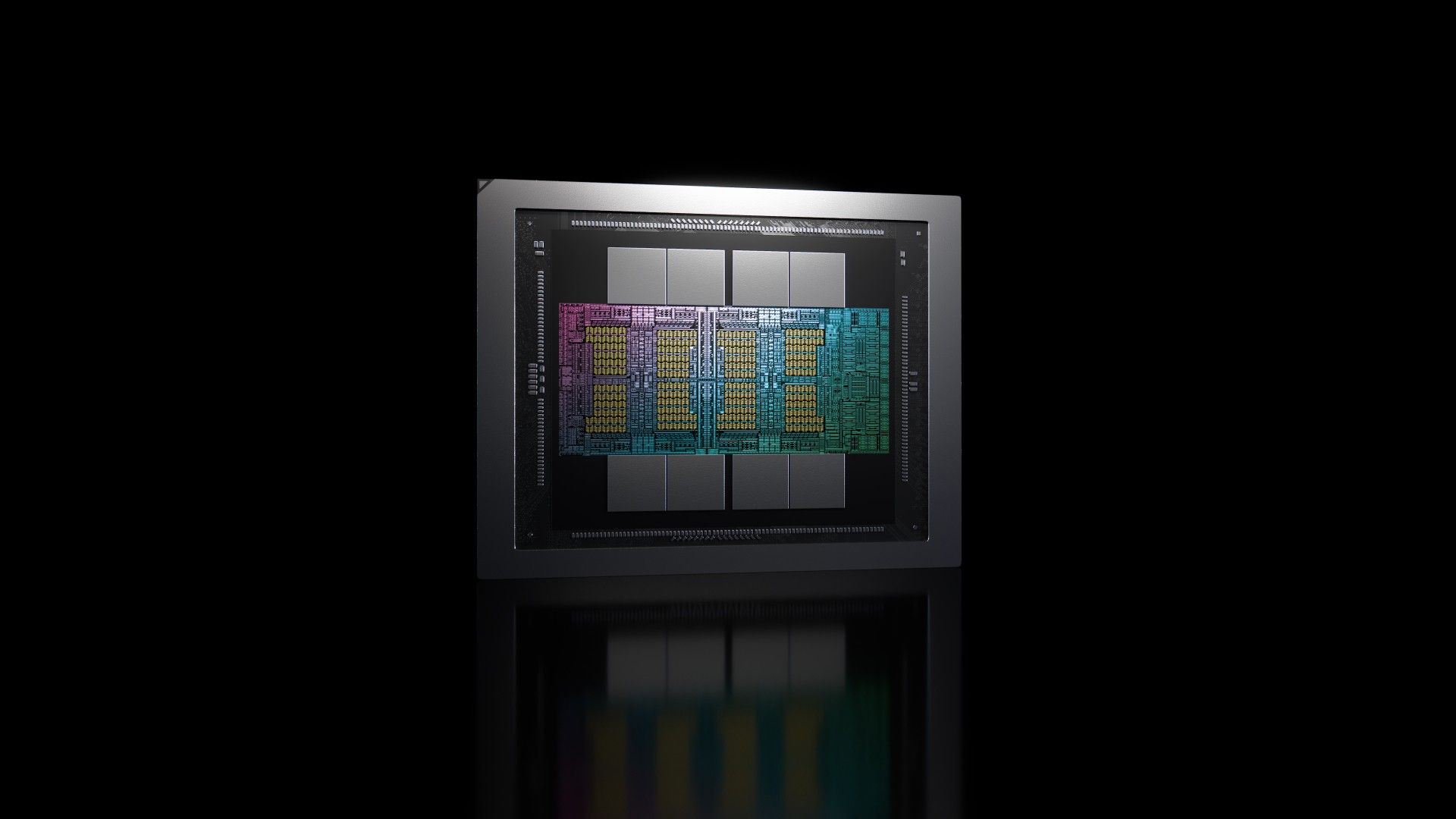
Rubin HPC belongs to the Vera Rubin platform and targets workloads spanning engineering, science, AI and analytics. Its more than 50,000 CUDA cores represent roughly three times Hopper's count, according to Buck. The GPU handles precision levels ranging between FP64 and FP4, accelerates sparse data and uses NVIDIA NVLink in its seventh generation.
NVIDIA also detailed adoption of its Vera CPUs. Buck said agents rely on CPUs to carry out the tool calls that fall between steps taken by a model. DKRZ, the German Climate Computing Center, chose Vera for HLRE-5, a supercomputer expected in early 2028. That selection follows previously announced Vera systems at Texas Advanced Computing Center.
Buck presented examples of agents handling existing research software, including a KTH Royal Institute of Technology agent that repaired GROMACS setups. Running overnight on one DGX Spark, it resolved 81% of test cases, he said. NVIDIA's Nsight AI Porting Agent moved a Weather Research and Forecasting (WRF) model routine onto GPUs and achieved a speedup exceeding 5x while consuming about 150 million tokens, Buck said.
In quantum computing, NVIDIA, IBM and Fermilab outlined plans for a co-design platform supporting applications research and error correction. NVIDIA and IBM are combining NVIDIA DGX B200 systems with IBM quantum computers, including machines using IBM Quantum Nighthawk. Buck said the CUDA-Q decoding algorithm TCBP-JOBS reduces computation for error-correction research from 12 weeks to 45 minutes, while NVIDIA's decoding latency goal is 10 microseconds, down from about 300.