Replit launched Replit Missions on November 17, letting teams assign goals to groups of AI agents that plan, build and test work under agreed spending caps and approval rules. Replit says teams can delegate projects such as replacing older software, improving product performance or pursuing enterprise customers. If spending reaches the limit before the agreed success criteria are satisfied, the agents stop and the mission remains unresolved.
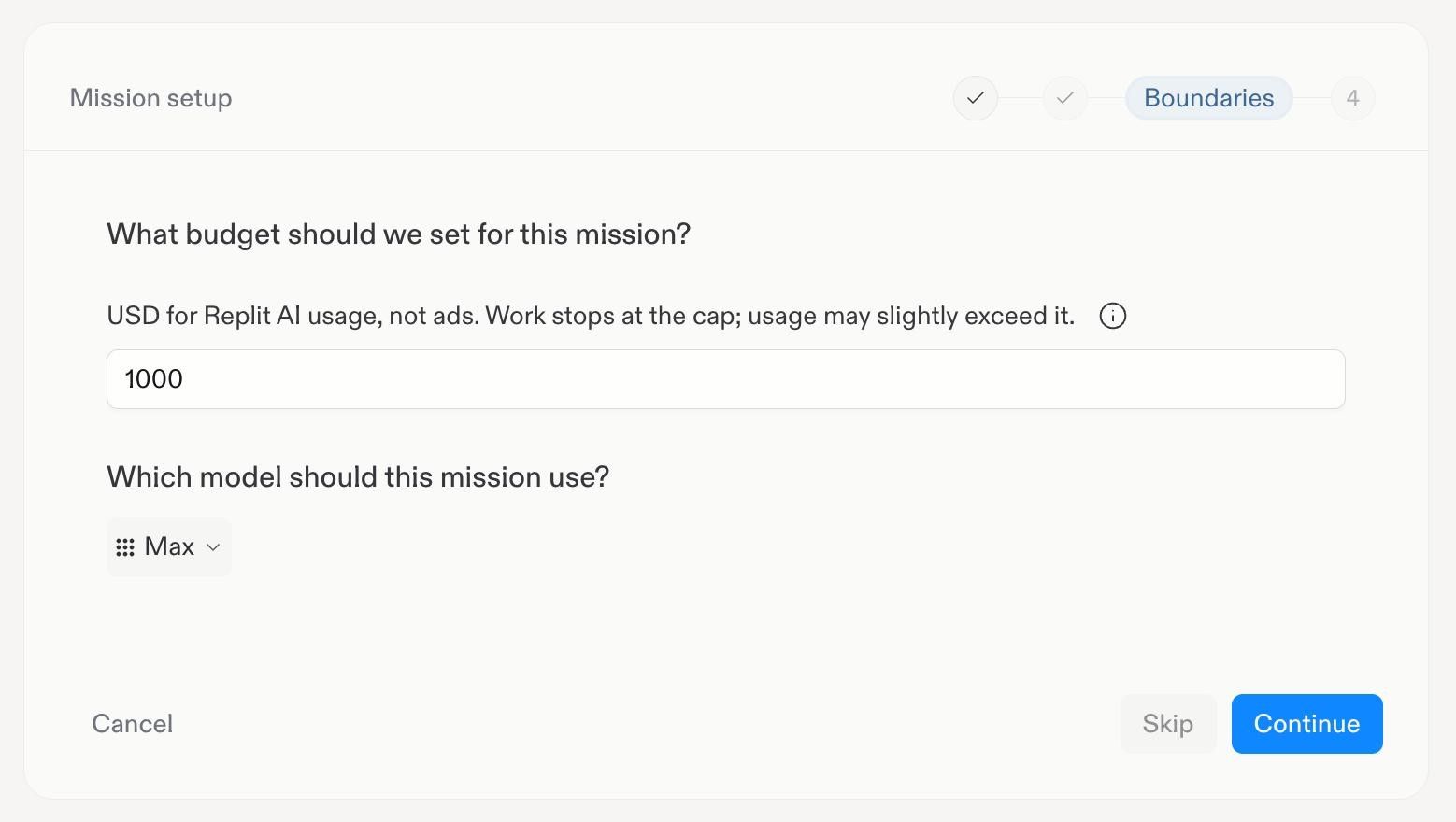
Teams define success during setup, including details such as whether a sales goal counts paid pilots or requires annual contracts above a specified value. They can require permission before agents contact potential customers, send proposals, alter sales materials or commit to product changes. Replit illustrates those controls with a hypothetical $1,000 spending cap, alongside agreed rules governing discounts and paid pilots.
Agents can divide work concurrently, with buyer research and demo development proceeding together before outreach is submitted for approval. Replit says subsequent responses can guide changes to target industries, demos and messaging. Teams choose the frequency of status messages, from immediate notifications to daily or weekly updates, and can inspect finished tasks, ongoing work and pending approvals.
A separate AI judge evaluates results against the criteria agreed with the team, and agents use that assessment to revise their work. Replit says it used Missions to build DataCat, an application monitoring system, in two days under a $3,000 budget. The project produced alerting tools, dashboards and tracing capabilities, plus a server agent and tracing libraries that let DataCat operate independently of the original platform’s components.
In Replit’s testing, DataCat detected an intentionally introduced database fault after 38 seconds, ahead of a 60-second goal. A three-hour load test processed 26 million application activity records and 4.4 million log entries without losing data, while all 51 checks covering correctness and alert reliability passed. Replit also said it is open-sourcing a version of DataCat that users can host themselves.
Replit tested agent groups on 13 NumPy benchmark tasks, reporting speedups with Auto (Max) of up to 4× for one agent, 17× for 16 agents and 19× for 32 agents. Doubling the group from 16 to 32 agents therefore produced a smaller improvement than the jump from one to 16 in those tests. Replit cautions that its controlled DataCat tests do not establish performance on its production systems or against the original monitoring platform’s hosted service.