
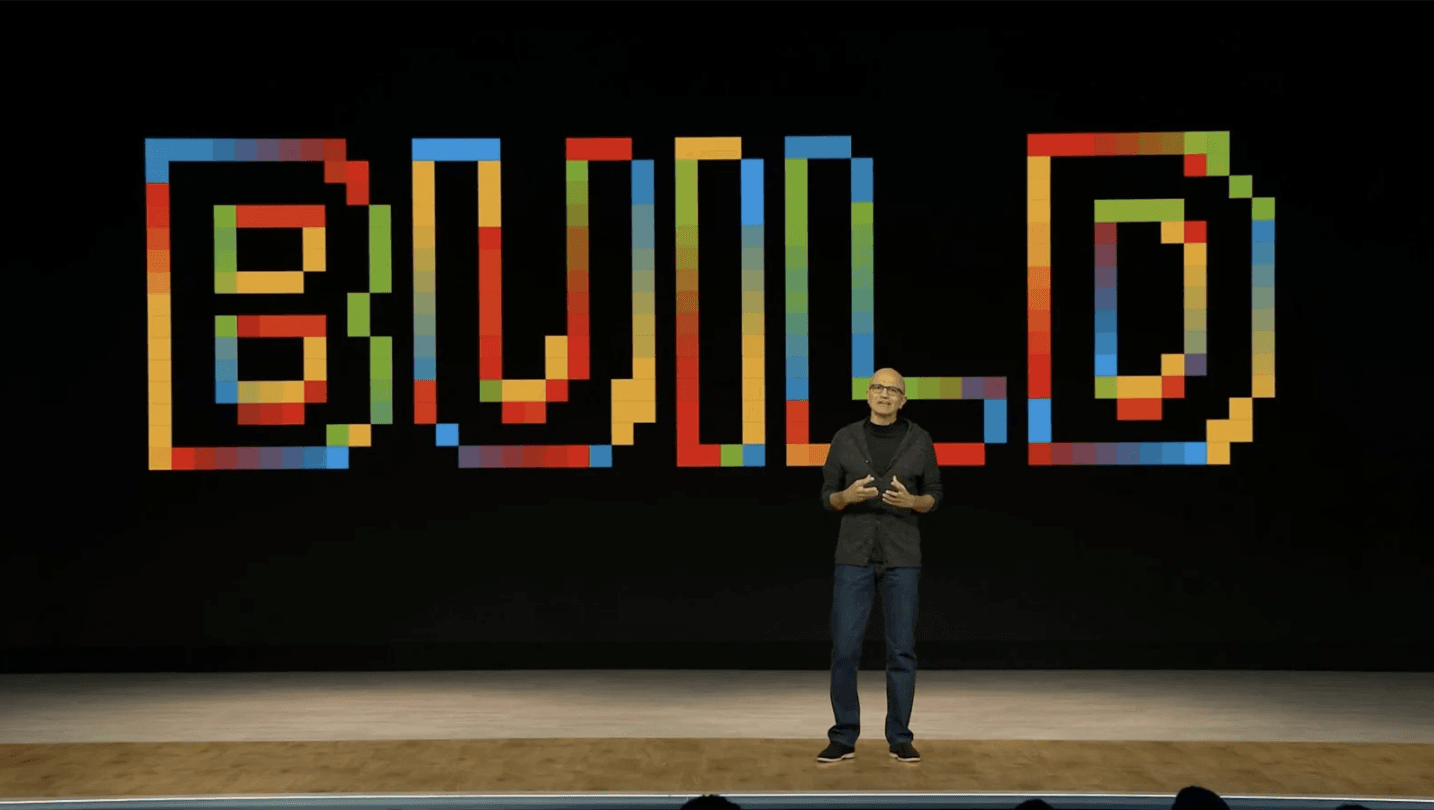
The pair formally separated in late April, and by the time Microsoft CEO Satya Nadella took the stage at Build in San Francisco on June 2, the company had already rolled out seven in-house AI models. The lineup includes MAI-Thinking-1, its first reasoning model, which puts Microsoft in direct competition with the very startup it bankrolled to the tune of $13 billion.
The era of Microsoft as OpenAI's exclusive patron is over. What replaces it is an open war between two giants with divergent strategies, a combined R&D bill approaching $100 billion annually, and the most consequential realignment of AI industry alliances since GPT-4 launched.
When The Investor Becomes The Competitor
Microsoft invested $13 billion in OpenAI across multiple tranches beginning in 2023, securing exclusive cloud rights on Azure and early access to GPT models that it embedded into Bing, Office 365, and GitHub Copilot. The arrangement looked like a perfect flywheel.
OpenAI got near-unlimited compute. Microsoft got frontier AI without having to build it from scratch. But the relationship frayed as both companies scaled in different directions.
According to The Verge, the pair effectively separated in late April, though Microsoft remains OpenAI's primary cloud partner for now. The separation was not a hostile breakup but what both sides describe as "a strategic divergence."
Microsoft wanted to integrate AI deeper into its own product stack on its own terms. OpenAI, preparing for an IPO that CNBC reports could come via a confidential filing, wanted platform neutrality: the ability to sell its API on AWS and Google Cloud without owing allegiance to a single cloud vendor.
Mustafa Suleyman, Microsoft's AI chief executive, told The Verge that
The key moment was renegotiating our contract with OpenAI. That meant that we were allowed to train models at a larger scale and explicitly pursue superintelligence entirely with our own IP, with our own data, no distillation, training from scratch.
That contract renegotiation effectively greenlit the MAI model family and ended the period when Microsoft was content to resell OpenAI's technology.
The Seven Models That Rewrite The Partnership
At Build 2026, Suleyman unveiled MAI-Thinking-1, a mid-sized reasoning model with 35 billion active parameters and a 256,000-token context window, designed for complex multi-step instructions, long-context reasoning, and code generation. According to Euronews, in blind evaluations run by Surge, Microsoft's independent human rating partner, MAI-Thinking-1 was preferred over Anthropic's Claude Sonnet 4.6 and matches Claude Opus 4.6 on coding benchmarks.
Microsoft also released MAI-Code-1-Flash, a coding model that converts natural-language descriptions into source code for applications and websites, now rolling out across GitHub Copilot and Visual Studio Code.
Six other models focused on image generation, voice transcription, and image understanding rounded out the lineup. All were trained from scratch on Azure infrastructure using commercially licensed data, with no distillation from third-party systems.
Suleyman emphasized that point repeatedly to distinguish Microsoft's work from its prior reliance on OpenAI's GPT family. The pricing story is what makes enterprise customers pay attention. According to Microsoft, after tuning its models for the consulting firm McKinsey, the company outperformed OpenAI's GPT-5.5 on quality with what it projects as ten times better cost efficiency, based on public pricing data scaled across model sizes.
Running models on its own Azure hardware lets Microsoft sidestep the licensing fees it previously paid to OpenAI and pass those savings to developers.
Satya Nadella said during the Build keynote:
"We believe the time has come for every company to move from consuming a frontier model to fully participating at the frontier."
The $18 Billion Portfolio Gets Complicated
Microsoft's financial entanglement with OpenAI and, increasingly, with OpenAI's rivals makes this breakup unlike any other in tech. The company has committed $13 billion to OpenAI and an additional $5 billion to Anthropic, maker of the Claude model family, while making both companies' models available through Azure.
Microsoft now holds equity in two of the three frontier labs Suleyman identified as the industry leaders, yet it is building models that compete directly with both. The tension is not theoretical. Anthropic filed confidentially for an initial public offering on June 1, just days after raising $65 billion in a Series H funding round that pushed its valuation to $965 billion, according to CNBC.
OpenAI, valued at $852 billion at its last funding round in March, is also working on its own confidential filing, as CNBC has reported. Both companies will soon answer to public shareholders who will want to know why their biggest investor is also building rival products. The Information reports that OpenAI generated $5.7 billion in revenue in the first quarter of 2026 but with adjusted negative margins of negative 122 percent, meaning it lost $1.22 for every dollar it spent. Microsoft, with substantial quarterly revenue and a diversified business spanning cloud, productivity software, and gaming, can afford to operate its AI division at a loss for years.
OpenAI cannot sustain that burn rate indefinitely, and its IPO timeline reflects that pressure.
Why Platform Neutrality Matters More Than Cash
OpenAI's expected move to end its Azure exclusivity and make its API available on competing clouds responds to a commercial reality the company has been grappling with since ChatGPT's enterprise adoption accelerated. Many of OpenAI's largest potential customers run their infrastructure on AWS or Google Cloud.
Requiring them to route traffic through Azure to access GPT models created friction that Anthropic and Google DeepMind were happy to exploit. The move also opens the door for OpenAI to negotiate more favorable commercial terms with multiple cloud providers, potentially lowering its own infrastructure costs. The company announced a $500 billion investment into US AI infrastructure called Stargate to secure American leadership in AI. But scaling that investment alongside its cloud commitments requires flexibility that the Microsoft exclusivity agreement did not permit. For Microsoft, the strategic logic runs in the opposite direction.
Nadella wants MAI models running inside every layer of the Microsoft stack, including Bing, Office 365, Azure, GitHub, and Windows, where they can be sold as integrated features rather than standalone API calls. The tighter the integration, the harder it is for a customer to unbundle. That is a product strategy, not a platform play, and it is the fundamental reason the two companies could no longer share the same partnership structure.
The $100 Billion AI Arms Race Nobody Wins
Industry analysts tracking capital expenditure across the major AI players predict that combined R&D spending among Microsoft, OpenAI, Google, Anthropic, and Amazon will be enormous. Microsoft alone is on track to spend tens of billions on AI infrastructure and model development this fiscal year, according to projections cited in multiple reports. The scale of this spending has prompted some market observers to question whether the investment can generate corresponding returns. OpenAI's negative 122 percent margins suggest that even the most successful AI product in history has not yet found a profitable unit economics model.
Microsoft's bet is that embedding AI into existing enterprise subscriptions, such as Microsoft 365 Copilot at its subscription price, will produce better margins than selling API tokens by the thousand. But that thesis is unproven at scale.
Adrian Cox, a thematic strategist at the Deutsche Bank Research Institute, told The Guardian that "in some ways OpenAI is acting like a mature, IPO-ready business." But the company's repeated failure to execute monetization strategies, including an advertising business that remains immature, suggests a persistent gap between technological capability and commercial viability.
Mustafa Suleyman acknowledged the competitive market bluntly in his interview with The Verge. "There's a lot of people who are either like chasing startup valuations or about to IPO, so we can operate with a little bit more humility and a little bit more long-term optimization," he said.
We've got the money to be able to buy Anthropic [models] when we need to. We've got the optionality in Azure with 11,000 models, so people can use literally whatever they want whenever they want, but that buys us the time to do it right from the start.
That optionality, the ability to buy Anthropic, use OpenAI, or build Microsoft's own, is the luxury of a company big enough to play all sides. But it also means Microsoft is now competing with the very companies whose technology it resells, creating a channel conflict that will only intensify as MAI-Thinking-1 improves.
What The Breakup Really Means
The most credible objection to the thesis that Microsoft and OpenAI are now true rivals is that Microsoft has never built a top-tier frontier model on its own. Its previous in-house AI efforts, from Cortana to its short-lived Tay chatbot, range from underperforming to disastrous.
OpenAI began releasing reasoning models in the fall of 2024, giving it a lead of nearly two years over MAI-Thinking-1. Google DeepMind and Anthropic each have proven track records of multi-year research pipelines.
Suleyman was candid about this gap.
"The goal is to prove that we can become one of the top four labs in the world," he told The Verge. "There's three labs that matter, Google DeepMind, OpenAI, and Anthropic. We are not one of them at the moment, and that's always been my intention. It's why I came here."
That honesty cuts both ways. It acknowledges the gap, but it also signals that Microsoft is willing to spend whatever it takes to close it. With $13 billion already committed to OpenAI as an investor and an uncapped budget for its own AI division, the company has both the capital and the talent, including Suleyman himself, to make the climb.
Whether it can out-build OpenAI while continuing to sell OpenAI's products to the same enterprise customers is a question with no precedent in the industry. The dissolution of the Microsoft-OpenAI exclusive partnership is not a failure of either company's strategy.
It is a recognition that the AI industry has matured past the point where a single cloud exclusive can work for both parties.
OpenAI needs the broadest possible distribution to justify its $852 billion valuation and prepare for its IPO. Microsoft needs to own the full AI stack to protect its enterprise software margins. The two goals are structurally incompatible, and the separation, though it has been unfolding since the contract renegotiation late last year, confirms that the period of cozy interdependence is finished.
What comes next is a competition between two visions of how AI gets delivered to the world: as a neutral platform available on every cloud, or as a tightly integrated feature of the world's largest software ecosystem. The winner of that competition will define the shape of the AI industry for the rest of the decade.